


So, what's the bottom line on cost? You can generally expect to pay between $8 and $25 per square foot for a professional window security film installation, which covers both the film and the labor.
For a typical home project, that usually shakes out to somewhere between $350 and $950 total. Of course, this all depends on how many windows you’re covering and the specific type of film you choose.
What to Budget for Window Security Film
When you're looking to strengthen your home's glass, the first question on your mind is probably, "How much is this going to set me back?" Getting a precise number requires a pro to come out and measure, but you can absolutely get a solid ballpark idea to start with.
Think of it this way: the total cost is a simple recipe with two main ingredients. You have the price of the film itself and the cost of the skilled labor needed to apply it perfectly. The final bill will move up or down based on your specific windows—their size, shape, and even how hard they are to reach. A few easy-to-access ground-floor windows will cost much less than outfitting a whole wall of second-story picture windows.
A Look at Average Window Costs
To put some real numbers on the table, the average homeowner will spend between $350 and $950 for a standard installation. Because pricing is almost always done by the square foot, the more glass you have, the more you'll invest.
A single, standard-sized window (think a 3-foot by 5-foot window in a bedroom) might run you anywhere from $100 to $250. Bigger projects like sliding glass doors or a large bay window could easily be in the $200 to $400 range per unit. You can learn more about how window size impacts security film installation cost.
The biggest thing to remember is that the final price is directly tied to the total square footage you're covering. More glass means more film and more time for the installer, which all gets factored into the quote.
To help you get a better handle on your potential budget, we've put together a quick cheat sheet with some common window sizes and their estimated costs.
Estimated Installation Cost Per Window
This table provides a quick overview of estimated costs for installing security film on different types and sizes of windows, helping homeowners budget accordingly.
| Window Type / Size | Average Estimated Cost Range |
|---|---|
| Small Window (e.g., bathroom) | $75 – $150 |
| Standard Window (3' x 5') | $100 – $250 |
| Large Window (e.g., picture) | $200 – $350 |
| Sliding Glass Door | $250 – $450 |
Remember, these are just estimates. The best way to get an exact price is to have a professional installer provide a custom quote for your home.
What Goes Into Your Security Film Quote?
When you get a quote for window security film, you're looking at a number that comes from two main places: the film itself and the skilled labor needed to apply it perfectly. It helps to understand both sides of the coin, so you know exactly what you’re paying for.
Let's pull back the curtain and see how the final window security film installation cost is calculated.
The Cost of the Film Itself
First up is the material. Security film is priced by the square foot, and just like picking out tires for your car, you get what you pay for. A basic, all-season tire will get you from A to B, but a high-performance, puncture-resistant tire gives you that extra layer of security and peace of mind on the road—and it costs more.
It’s the same with security films. They come in different grades, and the price tag reflects their capabilities. A standard, clear safety film that just holds glass shards together is your most affordable option. From there, the price climbs as you add more protective features.
The main things that drive up the film's price are:
- Thickness: Measured in mils, a thicker film is tougher to break through, offering more resistance against impact and intruders.
- Added Features: Many films do more than just add security. Options with UV blocking, solar heat rejection, or anti-graffiti coatings will naturally cost more.
- Specialty Grades: At the top of the range are advanced films, like those engineered for bomb blast mitigation, which come at a premium.
At the end of the day, the more glass you need to cover, the higher your material cost will be. This part of the quote is pretty straightforward: the price of the film you choose multiplied by the total square footage of your windows.
The Value of a Professional Installation
The other half of your quote is the labor. This covers the installer's expertise, their time, and the specialized tools of the trade. And honestly, this is where the magic happens. Applying a large sheet of security film without a single bubble, crease, or speck of dust underneath is an art form that takes a ton of practice.
A perfect installation is critical. It's not just about looks; a poorly applied film can peel at the edges and, more importantly, won't hold the glass together the way it's supposed to when it really counts.
Labor costs aren't a flat fee; they're tailored to the unique challenges of your project. An experienced installer will look at a few key things to figure out their rate.
Factors That Influence Labor Fees:
- Window Accessibility: Are your windows high up or in hard-to-reach spots? Skylights and second-story panes take more time, equipment, and risk to work on, which adds to the cost.
- Window Complexity: A simple, flat, rectangular window is a breeze. But arches, circles, or those classic multi-pane French doors require precise, custom cuts and a lot more patience to get right.
- Prep Work: If there's old, bubbling film that needs to be scraped off first, or if the windows are especially dirty, that extra prep time will be factored into the labor charge.
When you bring in a pro from a trusted company like Fortress Security Films, you aren't just paying for the physical act of applying film. You're investing in years of training, professional-grade equipment, and the assurance that the job is done right—giving you a clean, effective installation that will protect your property for years to come.
How Film Thickness and Quality Affect Your Price
When you start digging into the cost of window security film, you'll quickly find it’s not a one-size-fits-all product. The biggest factors driving the price are the film's thickness and any extra features it offers. Think of it like buying a car—you can get a basic model that does the job, or you can opt for a high-end version with all the bells and whistles for a premium.
The real meat of security film is its thickness, which is measured in mils. A "mil" is simply one-thousandth of an inch, and it's a direct indicator of how tough the film is to tear or puncture. Your standard, everyday safety film usually falls in the 4 to 8 mil range. This is plenty for deterring a quick smash-and-grab attempt because it holds the glass together even after it shatters.
But if you need something more serious, you can step up to a thicker 12 to 14 mil film. This is a much beefier option designed to stand up to more determined, aggressive attacks. It's the kind of protection you'd want for a high-risk location or a home in a hurricane-prone area. As you'd expect, that extra resilience comes with a higher price tag.
Security Film Grade and Cost Comparison
To give you a clearer picture, let's break down how different film grades stack up in terms of thickness, use, and what you can expect to pay for the material itself.
| Film Grade | Typical Thickness (Mil) | Primary Use Case | Average Material Cost ($/sq. ft.) |
|---|---|---|---|
| Standard Safety | 4 – 8 Mil | Basic smash-and-grab deterrence, residential safety | $7 – $12 |
| Heavy-Duty Security | 12 – 15 Mil | Enhanced forced entry resistance, storm protection | $12 – $18 |
| Bomb Blast/Ballistic | 15+ Mil (often layered) | Government buildings, high-risk commercial sites | $18 – $30+ |
This table makes it easy to see the direct relationship between a film's toughness and its cost. For most homeowners, a standard film is more than enough, but it's good to know stronger options are available if your situation calls for it.
Beyond Basic Security
Today’s best films do a lot more than just hold glass together. Many come with high-performance layers that add real value, though they also bump up the final cost. These features turn a simple safety product into a comprehensive window upgrade.
Some of the most popular add-ons include:
- UV Protection: This is a big one. These films can block up to 99% of damaging UV rays, which is fantastic for preventing your hardwood floors, furniture, and artwork from fading over time.
- Solar Heat Rejection: If you live in a sunny climate, this feature is a game-changer. It reflects a significant amount of solar heat, keeping your home cooler and helping to lower those summer air conditioning bills.
- Anti-Graffiti Layers: Primarily for commercial buildings, this is a sacrificial outer layer that lets you wipe away spray paint or even acid etching without having to replace the window or the entire film.
This chart shows how those extra benefits impact the overall price.
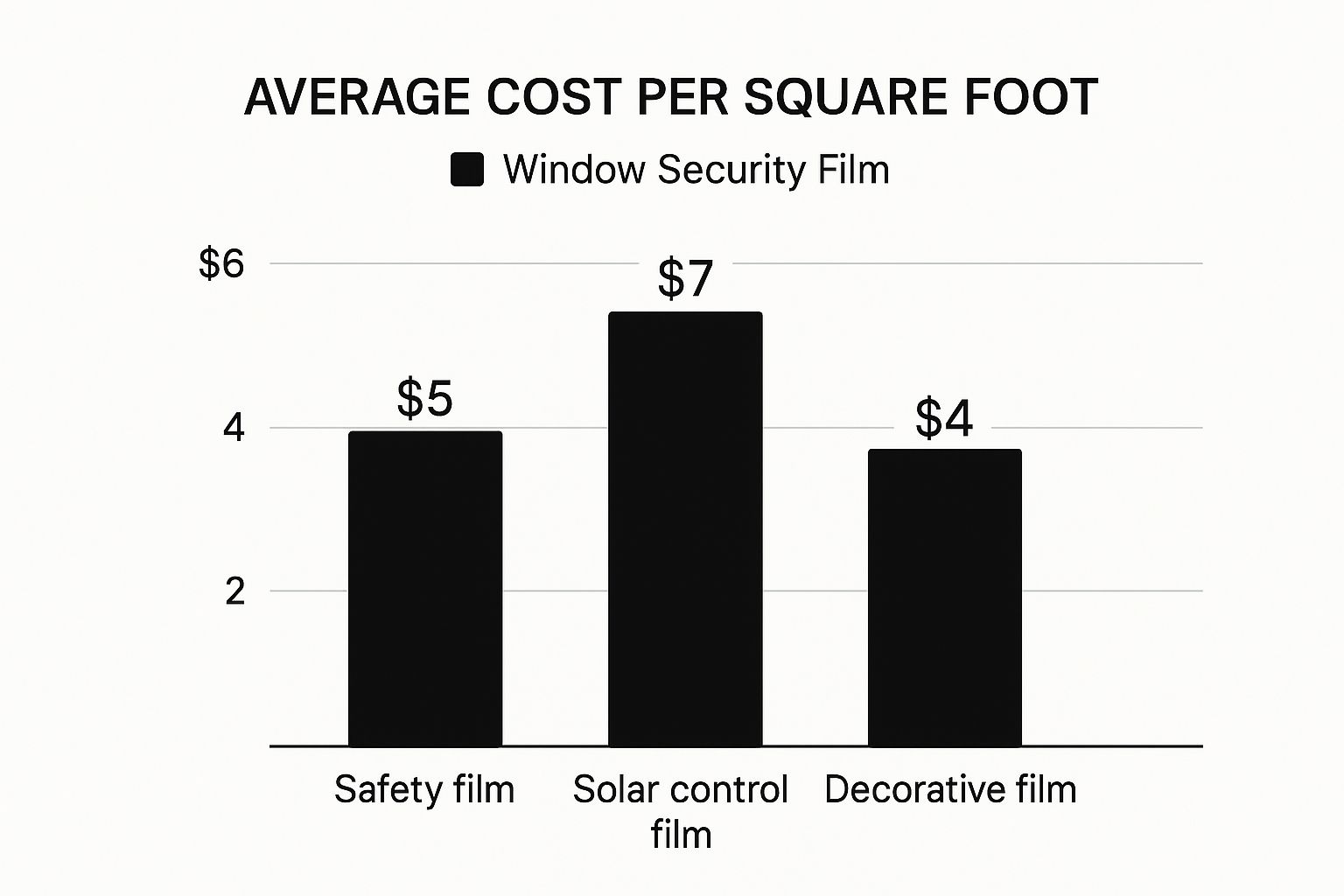
As you can see, films that combine security with solar control are at the higher end of the spectrum, but the long-term energy savings can often justify the initial investment.
The key is to find the sweet spot between your actual security needs and your budget. You probably don’t need bomb-blast-rated film for your suburban home, but adding UV protection to preserve your valuables is a smart move for almost anyone.
The Growing Market and Premium Costs
It's no surprise that demand for these multi-functional films is on the rise. The security window film market was valued at USD 1.5 billion in 2024 and is on track to hit USD 2.8 billion by 2033. A big part of that growth comes from homeowners and businesses wanting more than just basic protection.
Of course, the higher cost of premium films and the specialized labor needed for a perfect, bubble-free installation can be a hurdle for some. If you want to learn more, you can get additional insights about the security film market trends.
Ultimately, picking the right film comes down to honestly assessing your property's weak points and deciding which features will deliver the most bang for your buck. That way, you get the peace of mind you're looking for without paying for overkill.
Hidden Factors That Can Drive Up Installation Costs
The basic formula for window security film installation cost seems simple: film price plus the square footage. But as with any home improvement project, the devil is in the details. A few other variables can sneak into your quote, so knowing what to look for will help you avoid any sticker shock.
It's a lot like getting a room painted. A big, flat, empty wall is a quick job. But if that same room has vaulted ceilings, complex crown molding, and tons of furniture to work around, the price goes up. Why? More time, more skill, and more setup. Installing window film works the same way.
Complex Window Shapes and Accessibility
Not every window is a perfect, easy-to-reach rectangle. Those beautiful arched windows or charming French doors that sold you on the house? They require a ton of extra skill and patience from an installer, and that extra labor will show up on the bill.
Here are the most common culprits:
- Tricky Shapes: Think arches, circles, or odd-angled trapezoid windows. These aren't just a quick measure-and-cut job. They require an installer to meticulously hand-cut the film to match the unique curve or angle, which takes significantly more time.
- Multi-Pane Windows: French doors and windows with lots of small, individual panes (often called divided lites) are a classic example. Instead of one large application, the installer has to treat each tiny pane as its own mini-project, dramatically increasing the labor involved.
- Hard-to-Reach Spots: Skylights are the perfect example. Any window that forces the crew to bring in scaffolding or massive ladders adds time and risk to the job. That extra setup and safety precaution will naturally be reflected in the labor costs.
A great installer isn't just slapping a sticker on glass; they're solving a geometry problem right on the window. The more complex that problem is, the more time and expertise it takes to get that perfect, seamless finish that you won't even notice is there.
The Condition of Your Existing Windows
An installer’s job often starts long before they unroll the new film. The state of your current windows is a huge factor, as the glass has to be absolutely pristine for the film to bond properly and look invisible.
Two main prep-work issues can add to your final cost:
- Old Film Removal: If you have old, sun-baked window tint that’s peeling, bubbling, or cracked, it’s got to go. This isn't a simple peel-and-stick process. It involves scraping and using special solvents to break down stubborn, old adhesive. Honestly, sometimes removing the old stuff can take just as long as putting the new film on.
- Heavy-Duty Cleaning: Windows caked with construction dust, hard water spots, or paint overspray need more than a quick squeegee. This kind of deep cleaning is non-negotiable for a flawless, bubble-free installation, and it will be factored into the labor time.
When you can spot these potential hurdles in your own home, you can go into the quoting process with a much more realistic budget in mind. It helps you understand exactly what you're paying for and have a much better conversation with your installer.
So, you're looking at the numbers and wondering, "Can I just do this myself and save a few bucks?" It's a classic homeowner's dilemma. While grabbing a DIY security film kit off the shelf might seem like a budget-friendly move, this is one of those projects where a little saving upfront can cost you big time down the road.
Let's be clear: applying security film is a whole different ballgame than putting a decal on your car window. For this stuff to work, it needs to form a perfect, molecular-level bond with the glass.
Even the tiniest speck of dust, a single air bubble, or a nearly invisible crease becomes a critical weak point. When an impact happens, that's exactly where the film will fail, completely undermining its ability to hold shattered glass together. What you're left with is a false sense of security.
Why Going Pro is Worth It
This is where the pros really shine. They show up with specialized tools, but more importantly, they bring years of hands-on experience. They have the technique down to a science—from prepping the glass to an absolutely spotless state to wrangling huge, sticky sheets of film without a single mistake.
The result is a flawless, edge-to-edge application that you won't even notice is there.
Think of it this way: professional installation isn't just about making it look good. It’s about making sure the film actually works when a crisis hits. A pro job ensures the film has the structural integrity to protect your family and property.
This isn't just my opinion; the market shows a clear trend. The global demand for professional window film installation is booming, valued at around $2.5 billion in 2025. People are realizing that when it comes to security, quality installation is non-negotiable. You can dig into the numbers yourself in this report on the window film installation services market.
The Deal-Breaker: A Solid Warranty
If you're still on the fence, this should settle it: the warranty. When you hire a certified professional like Fortress Security Films, you're not just buying a product; you're buying a guarantee.
This protection is twofold:
- Manufacturer's Warranty: Covers the film itself against defects like bubbling, peeling, or discoloring.
- Workmanship Guarantee: The installer backs their own work. If there's an issue with the application, they fix it.
If a DIY job goes sideways, you're out the money for the kit and you're right back at square one. A professional installation, on the other hand, means your window security film installation cost includes long-term peace of mind. You know it’s done right and guaranteed to perform.
How to Get Accurate Quotes and Hire the Right Pro
Finding the right installer is where the rubber meets the road. Getting a fair window security film installation cost and a perfect finish comes down to a smart, straightforward approach to vetting your options.
Think of it like hiring a mechanic for a classic car. You wouldn't just go with the cheapest guy on the block. You’d find a specialist who knows the make and model, has the right tools, and a reputation for quality work. The same logic applies here—the installer is just as important as the film itself.
Gathering and Comparing Quotes
First things first, get multiple estimates. Don't ever take the first price you're given. A good rule of thumb is to get at least three different quotes from well-regarded local installers. This isn’t just about price shopping; it’s about seeing how different companies operate, the materials they recommend, and their level of professionalism.
When you get a quote, look for details, not just a single number. A good, honest estimate will be itemized, breaking down the costs so you know exactly what you’re paying for. It should clearly list:
- Specific Film Model: The exact brand and type of security film proposed.
- Material Costs: The price for the film itself, usually listed per square foot.
- Labor Charges: The cost for the installation, including any necessary prep work.
This level of detail is crucial. It lets you compare your options accurately—apples to apples—and makes sure there are no surprises down the line.
A vague quote is a red flag. A true professional will have no problem explaining every line item, from the film's thickness to the time it takes to handle tricky windows.
Vetting Your Potential Installers
With a few quotes in hand, it's time to do a little digging. The price is a big piece of the puzzle, but experience and reliability are what ensure your film will perform as expected for years to come.
Go into the conversation prepared with a few key questions for each installer:
- Experience and Specialization: How long have you been installing security films specifically? Have you worked on windows like mine before?
- Warranty Coverage: What’s the warranty on the film itself (for things like peeling or bubbling) and on your installation work?
- Glass Preparation Process: Can you walk me through how you clean and prep the glass? A perfect bond depends on it.
- Insurance and Licensing: Are you fully insured and do you have the proper local licenses?
And don't just take their word for it. Do a quick search for online reviews on sites like Google or Yelp. A confident, skilled pro like Fortress Security Films will be happy to share local references and show you examples of their work. Doing this homework up front is the best way to hire with total peace of mind.
Common Questions, Answered
Even after breaking down all the numbers, you probably still have a few questions rolling around in your head about the cost and real-world benefits of security film. That's completely normal. Let's tackle some of the most common ones we hear from property owners just like you.
What’s the Ballpark Cost to Install Security Film on a Whole House?
This is the big question, and the answer really comes down to the size of your home. For a typical smaller house with about 10-12 standard windows, a good budget would be somewhere in the $1,200 to $3,000 range.
Now, if you're in a larger home with 20+ windows, or you have some tricky ones like huge picture windows or French doors, the investment will be higher. In those cases, you could be looking at a total cost between $3,500 and $8,000, sometimes more, depending heavily on the specific film you choose.
Does This Stuff Actually Stop a Burglar?
You bet it does. Security film is a fantastic deterrent. It’s designed to do one thing exceptionally well: hold shattered glass together. A would-be intruder can't just punch a silent hole through your window and get in.
Think of it this way: no film can make your glass completely bulletproof. But it does make it incredibly frustrating and loud to get through. Burglars want to be quick and quiet. Security film forces them to be slow and noisy, which is usually enough to make them give up and find an easier target.
Will This Film Ruin the View from My Windows?
Not in the slightest. When you get a high-quality security film installed by a pro, it's optically clear—basically invisible. It's engineered to give you that layer of protection without messing with your view or making your rooms feel dark.
While some films do come with a tint for added privacy or to block UV rays, you can absolutely opt for a completely clear version if your only goal is security. Your windows will look exactly the same, they'll just be a whole lot tougher.
Ready to add a powerful, invisible layer of defense to your property? The expert technicians at Fortress Security Films deliver flawless installations backed by the best warranties in the business. Get your free, no-obligation security assessment today and find the perfect film for your home or business.
