


When most people hear "window privacy," they immediately think of blinds or curtains. And for good reason—they've been the go-to solution for generations. But the world of window privacy treatments has exploded with new ideas that do so much more than just block the view.
These days, modern solutions are all about giving you control. They can blend security, style, and even smart technology to fit the specific needs of a home, a busy storefront, or a school.
The goal has shifted from simply hiding what's inside to actively managing your environment. Imagine getting total privacy without losing a single ray of natural light, or reinforcing your windows against a break-in without anyone even knowing it’s there. It's less about putting up a barrier and more about creating a space that feels open, safe, and thoughtfully designed.
The Expanding World of Window Solutions
This isn't just a niche market, either. The demand for these advanced solutions is surging. The global window film market is already valued at around USD 11.4 billion, and experts predict it will climb to nearly USD 19.7 billion by 2034. North America is leading the charge, which tells you that property owners are seeing these treatments as a crucial upgrade, not just a cosmetic one. You can find more details on this growth in the latest window film market analysis.
To make sense of it all, let’s walk through the main categories. Each one strikes a different balance between aesthetics, privacy, and pure, hard-nosed security.
Modern privacy isn't just about what you keep out; it's about what you choose to let in—like sunlight and peace of mind—while fortifying your space against unwanted risks.
Here's a quick cheat sheet to get you started, breaking down the most common options and where they shine.
Quick Overview Of Window Privacy Options
| Treatment Type | Primary Benefit | Best For |
|---|---|---|
| Blinds & Shades | Adjustable light control and classic style | Homeowners seeking traditional, cost-effective privacy. |
| Decorative Films | Aesthetic appeal and diffused light | Bathrooms, offices, and interior glass partitions. |
| Security Films | Forced entry resistance and impact safety | Retail storefronts, high-value homes, and schools. |
| Smart Glass/Film | Instant, switchable privacy on demand | Conference rooms, modern homes, and tech-forward spaces. |
This table gives you a bird's-eye view, but as you'll see, the real magic is in the details. Each of these solutions has its own set of strengths, costs, and ideal applications.
Comparing The Full Spectrum Of Privacy Solutions
When you start looking at window privacy treatments, you're really balancing three things: aesthetics, security, and technology. To make the right call, you need to understand the whole landscape, from old-school blinds to some pretty futuristic options. Each one has its own job, and knowing the pros and cons is everything.
This map gives you a bird's-eye view of how these three pillars—looks, safety, and tech—all come together in modern window solutions.
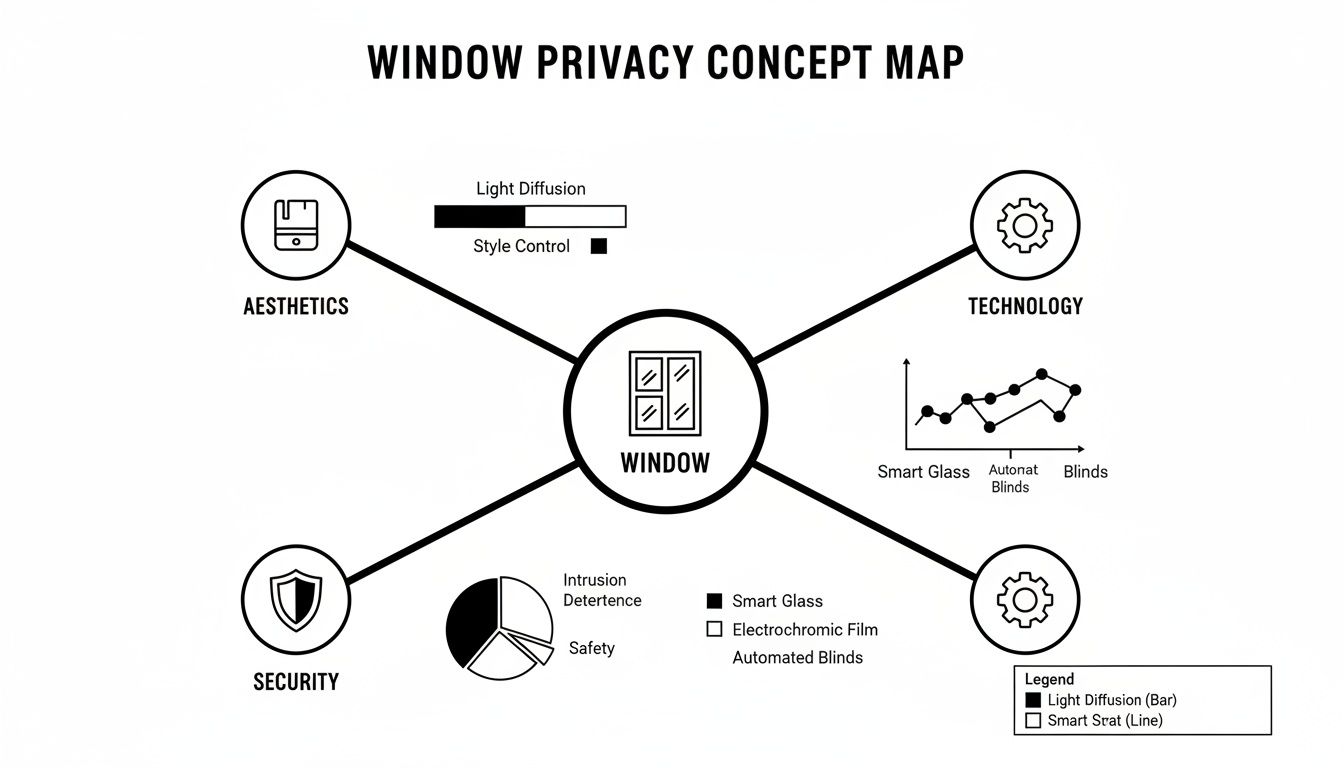
As you can see, the best solutions today aren’t just about one thing; they’re a smart mix of all three. Let's break down what's out there.
Traditional Blinds And Shades
Blinds and shades are the classic go-to for a reason. They're straightforward, letting you tilt slats or pull down fabric to manage light and keep prying eyes out. With tons of materials available—wood, vinyl, fabric, you name it—they can fit just about any room's style.
But here's the catch: they hit a hard limit when it comes to security. While they block the view, they offer zero protection against forced entry. A window with blinds is just as easy to smash as a completely bare one.
On top of that, they can be a pain to maintain. Dust loves to collect on every single slat, and cleaning them is a tedious chore nobody looks forward to. In a building with lots of windows, that upkeep becomes a real time-sink.
Decorative Films: Frosted And Etched Glass Styles
Taking a step up in elegance and permanence, you have decorative films. Options like frosted and etched finishes give you privacy with a touch of class. These films stick right onto the glass, making it cloudy or patterned enough to block a clear view while still letting in that soft, diffused natural light.
They're a perfect fit for places like:
- Bathrooms: Get total privacy without fussy curtains that can get damp and mildewed.
- Office Partitions: Create distinct workspaces in an open office without making it feel dark and closed-off.
- Front Doors: Block a direct line of sight into your home without sacrificing all that welcome daylight.
But just like blinds, these films are all about aesthetics and privacy. They look great, but they don't add any real strength. The glass is still just as vulnerable to a well-aimed rock or a crowbar.
High-Performance Security Films
This is where the game really changes. We move from just hiding what's inside to actively protecting it. High-performance security films are engineered with thick, heavy-duty layers of polyester, fused to the glass with an incredibly strong adhesive. The best part? They are often optically clear, making them virtually invisible.
So what happens when an intruder tries to break a window with security film? The glass might crack, but the film holds all those dangerous shards together, right in the frame. It creates a tough, flexible barrier that's incredibly difficult to get through. This delay is often enough to make a would-be thief give up and move on.
Think of it like this: a standard window is like a single sheet of paper—it tears instantly. A window with security film is like that same paper laminated on both sides. You can bend it and crease it, but it’s a serious struggle to actually tear it apart.
This technology completely redefines what a window treatment can do. You’re no longer just obscuring a view; you’re adding an active layer of defense. You get to keep your crystal-clear views and all the natural light, but with a powerful, unseen shield protecting one of your property's weakest points.
There’s a clear trend toward these multi-purpose solutions, which is why the window film industry is booming. Projections show the market is expected to hit USD 13.45 billion by 2033, and a huge part of that growth comes from property owners demanding more than just basic privacy. You can dig into the numbers and trends in this comprehensive industry report.
Smart Glass: The Premium Tech Option
At the very top of the technology ladder, you'll find smart glass, sometimes called switchable glass. This stuff is straight out of a sci-fi movie. It uses a low-voltage electrical current to shift the glass from perfectly clear to completely opaque in an instant. All it takes is the flip of a switch or a tap on an app.
You’ll typically see it in high-end environments:
- Corporate boardrooms that need to go from transparent to confidential at a moment's notice.
- Luxury homes with massive glass walls where modern, minimalist design is key.
- Hospitals and clinics where patient privacy needs to be managed quickly and cleanly.
While the "wow" factor is undeniable, smart glass comes with a hefty price tag, keeping it in the premium category. It offers amazing on-demand privacy, but unless it’s built with security-rated glass from the start, it doesn’t have the same impact resistance you get from a dedicated security film.
Comparing Window Privacy Treatment Options
To help you visualize the trade-offs, here’s a quick comparison of how these options stack up against each other.
| Treatment Type | Privacy Level | Security Level | Natural Light | Aesthetics | Avg. Cost |
|---|---|---|---|---|---|
| Blinds/Shades | High (when closed) | None | Adjustable | Varies Widely | Low |
| Decorative Film | High (obscures view) | None | Good (diffused) | Excellent | Low-Mid |
| Security Film | None (clear) | High | Excellent (clear) | Invisible | Mid-High |
| Smart Glass | Switchable (clear to opaque) | Low (unless specified) | Excellent (when on) | Modern/High-Tech | Very High |
As the table shows, there’s no single "best" option—it all depends on your priorities. If your main goal is an invisible layer of protection that doesn't sacrifice your view, high-performance security films offer a uniquely balanced solution that blends security, visibility, and value.
What Advanced Security Window Films Really Do for You
Most people think window treatments are just for privacy. They block a view, and that’s the end of it. But advanced security films are playing a completely different game. They go far beyond simple concealment to offer active, invisible protection, turning one of your property's biggest vulnerabilities into a quiet source of strength. It’s less about hiding and more about hardening.
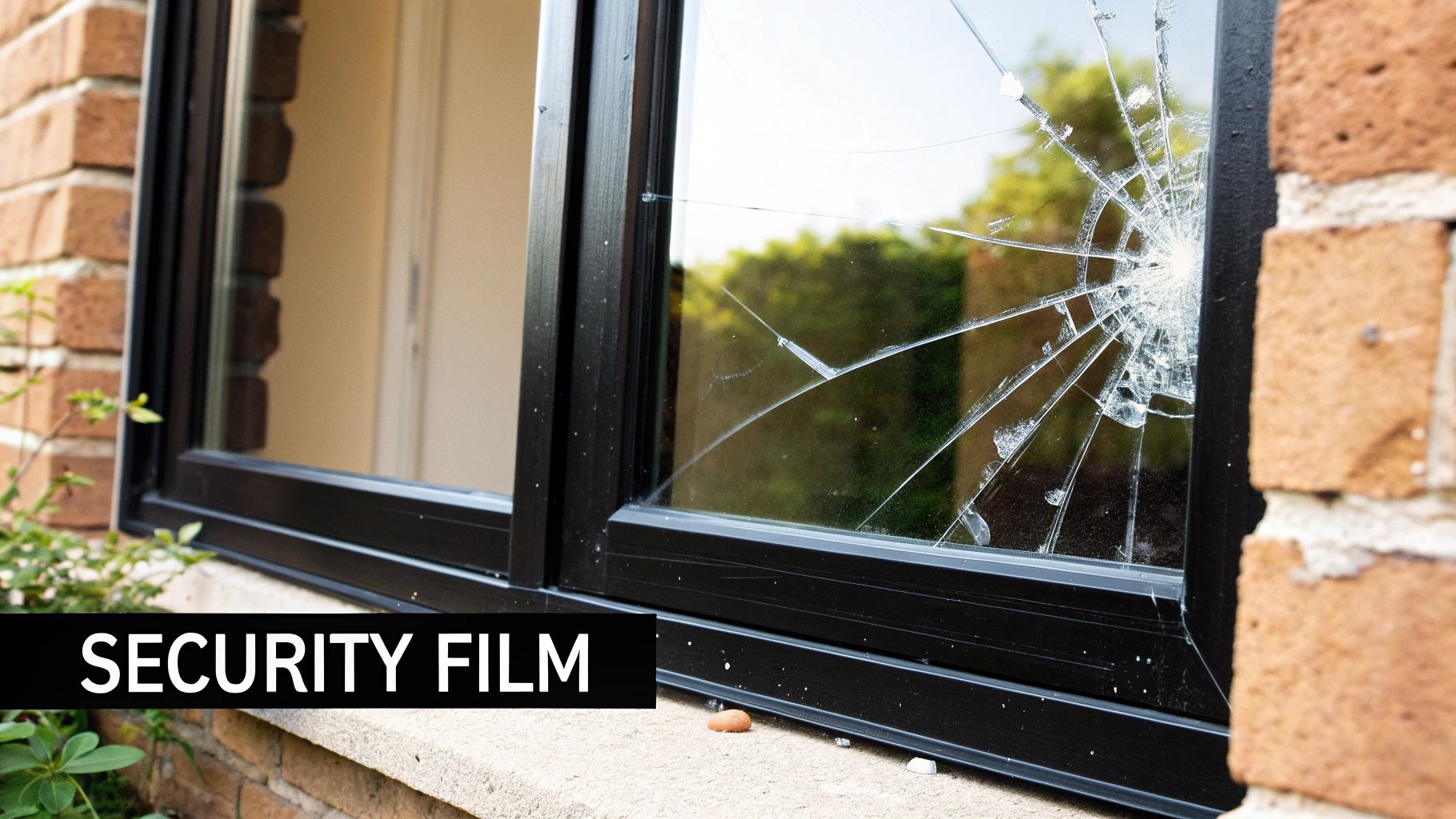
Think of a standard window as a flimsy interior door—it's mostly for show. A window with a high-performance security film, on the other hand, is like a reinforced vault door that looks completely normal. It fundamentally changes the security math without changing your home’s curb appeal one bit.
Resisting Forced Entry and Nasty Impacts
The number one job of a security film is to make it incredibly difficult to get through your glass. When a burglar hits a normal window, it shatters and falls away, creating an instant, easy entry point. Security film flips the script entirely.
Made of tough, multi-layered polyester and bonded to the glass with a super-strong adhesive, the film holds all those broken shards together. The glass might spiderweb and crack under an attack, but it won’t collapse.
This creates a stubborn, frustrating barrier for an intruder. Instead of a quick smash-and-grab, they're stuck hammering away at a window that just won't give, making a ton of noise and wasting precious time. The odds are they'll just give up and look for an easier target. That delay is everything—it gives you time to react and for help to arrive.
The point of security film isn't to make glass unbreakable. It's to make it fail safely. By holding the pane together under extreme duress, the film denies quick entry and contains the danger of flying glass.
This same principle works wonders against other threats, too:
- Severe Weather: In a hurricane or high winds, the film stops flying debris from blowing out your windows and letting the storm inside.
- Accidents: A stray golf ball or a clumsy accident won't send dangerous glass shards flying across the room. The film keeps it contained.
Shielding Your Interiors from Fading and UV Damage
Beyond brute-force protection, these films are also a powerful shield against the sun's invisible damage. Just like sunscreen protects your skin, a quality security film can block up to 99% of harmful ultraviolet (UV) rays.
This invisible barrier makes a huge difference in preserving everything inside your home or business. UV radiation is the main culprit behind the fading and deterioration of:
- Hardwood floors and kitchen cabinets
- Expensive furniture and leather upholstery
- Priceless art and family photos
- Rugs, drapes, and other textiles
By stopping those UV rays right at the glass, the film drastically slows down the aging process, keeping your belongings looking vibrant for years. It’s an investment in protecting your other investments. For homeowners looking to guard their property and possessions, exploring security film for home windows is a smart move for both security and long-term preservation.
Boosting Energy Efficiency and Everyday Comfort
Here’s a benefit that pays you back every month: better energy efficiency. Windows are notorious energy hogs. In fact, some studies show you can lose up to 30% of your home's heating energy right through the glass. Security films with solar control properties tackle this head-on.
In the summer, the film reflects a huge chunk of the sun's heat, keeping it from baking your interior spaces. This gives your air conditioner a much-needed break, which you'll see on your lower energy bills. Come winter, some films even help hold your furnace's heat inside, giving you savings all year round.
This thin layer also works wonders on reducing glare. It tames that harsh, blinding sunlight, making it much more pleasant to watch TV, work on a laptop, or just enjoy the view without squinting. You get a more comfortable, usable space without sacrificing the natural light you love. This blend of security, preservation, and comfort is what makes these films such a versatile and practical upgrade.
How To Choose The Right Privacy Treatment
Picking the right window treatment isn't a one-size-fits-all deal. The best solution for you really hinges on your specific needs, your environment, and what you're trying to achieve. A shop owner on a busy street has completely different priorities than a family in a quiet suburb, and a school has a level of responsibility that's in a class of its own.
Think of it like picking tires for your car. You wouldn't put racing slicks on a 4×4 you plan to take through the mud. In the same way, the "right" window treatment is the one that's perfectly matched to the job it needs to do. Let's dig into how different people can make the right call.
For The Discerning Homeowner
If you own a high-value home, especially in exclusive neighborhoods like Beverly Hills or Palos Verdes, your goal is almost always invisible security. You need to protect your family and your property without plastering ugly bars on the windows or installing clunky shutters that ruin the architecture. The main worries are usually deterring sophisticated break-ins and preventing the quick smash-and-grab thefts that often target master bedrooms and home offices.
This is where optically clear security films are king. They make your glass incredibly tough to break through but are so clear you won't even know they're there. This means you keep your beautiful views and curb appeal, ensuring your home looks like a home, not a fortress.
When you're weighing your options, ask yourself a few questions:
- Is aesthetics a top priority? Is maintaining my home’s original design non-negotiable?
- What am I protecting? Do I have valuable art, electronics, or family heirlooms sitting near vulnerable windows?
- How much is peace of mind worth? Do I want round-the-clock protection that I don't have to think about or actively manage?
It's also worth noting that subtle security upgrades can be a real plus when selling. Understanding things like home staging costs and ROI considerations helps you see how a discreet investment in security can become a valuable selling point.
For The Vigilant Retailer
Retail storefronts are on the front lines, constantly facing the threat of smash-and-grab burglaries. These attacks are over in seconds but can lead to thousands in stolen goods and even more in repair costs. For a retailer, the puzzle is securing the store without making it look like an unwelcoming bunker. After all, visibility is key—you need customers to see in, but you have to keep criminals out.
This is the perfect job for heavy-duty, anti-intrusion security films. These products are built to take a beating from bats, crowbars, or bricks, holding the glass together and preventing a quick breach. That film buys time, which is often all it takes to make a would-be thief give up and run.
For a retailer, every second of delay during a break-in attempt is a victory. Security film transforms a window from a fragile entry point into a formidable, time-consuming obstacle.
Before making a decision, consider these points:
- How much is at stake? What's the value of the merchandise displayed near my main windows?
- What happens after hours? Is my storefront in an area that gets quiet and deserted at night?
- What would a break-in cost me? Think about the lost revenue from being closed for repairs, on top of the cost of the damage and stolen inventory.
At the end of the day, the goal is simple: make your store a tougher target than the one down the street.
For The Protective School Administrator
In any school, from an elementary campus to a university, the duty to protect students and staff is the number one priority. Window security here isn't about looks; it's about life safety. The focus shifts entirely to fortifying weak points against active threats, extreme weather, or even just serious accidents.
Specialized security films, including some with ballistic-resistant features, are designed to do one thing: buy time. By reinforcing a building's most vulnerable points—its glass—these films can delay an intruder long enough for lockdown procedures to kick in and for first responders to get to the scene.
Key questions for any educational facility include:
- Where are our weak spots? Are our main entrances and ground-floor classrooms filled with large panes of glass?
- How does this fit our plan? Can a window security system integrate seamlessly with our existing emergency and lockdown protocols?
- What level of threat are we addressing? Based on our security assessments, what level of protection do we actually need?
This is one area where getting a professional consultation is absolutely critical. To get a better handle on the options, our guide on the best window security film for security provides a much deeper dive into the different levels of protection available.
For The Security-Conscious Vehicle Owner
Let's not forget our cars. Your vehicle is a common target for thieves looking for a quick score. Automotive security film adds a surprisingly strong layer of defense. It holds your side windows together even after a thief shatters them, making it nearly impossible to quickly reach in and snatch a laptop bag or purse from the seat.
It's also a major safety feature. If you're in an accident, the film keeps dangerous shards of glass from flying into the car and injuring you or your passengers. It’s a simple, invisible upgrade that delivers a powerful one-two punch of anti-theft and personal safety benefits.
Professional Installation and Long-Term Care
You've picked out the perfect window treatment—great! But turning that choice into a real-world security upgrade comes down to one critical factor: the installation. For high-performance security films, calling in a professional isn't just a suggestion; it’s absolutely essential for the product to work as intended. A DIY job might seem like a way to save a few bucks, but it often leads to failure right when you need that protection the most.
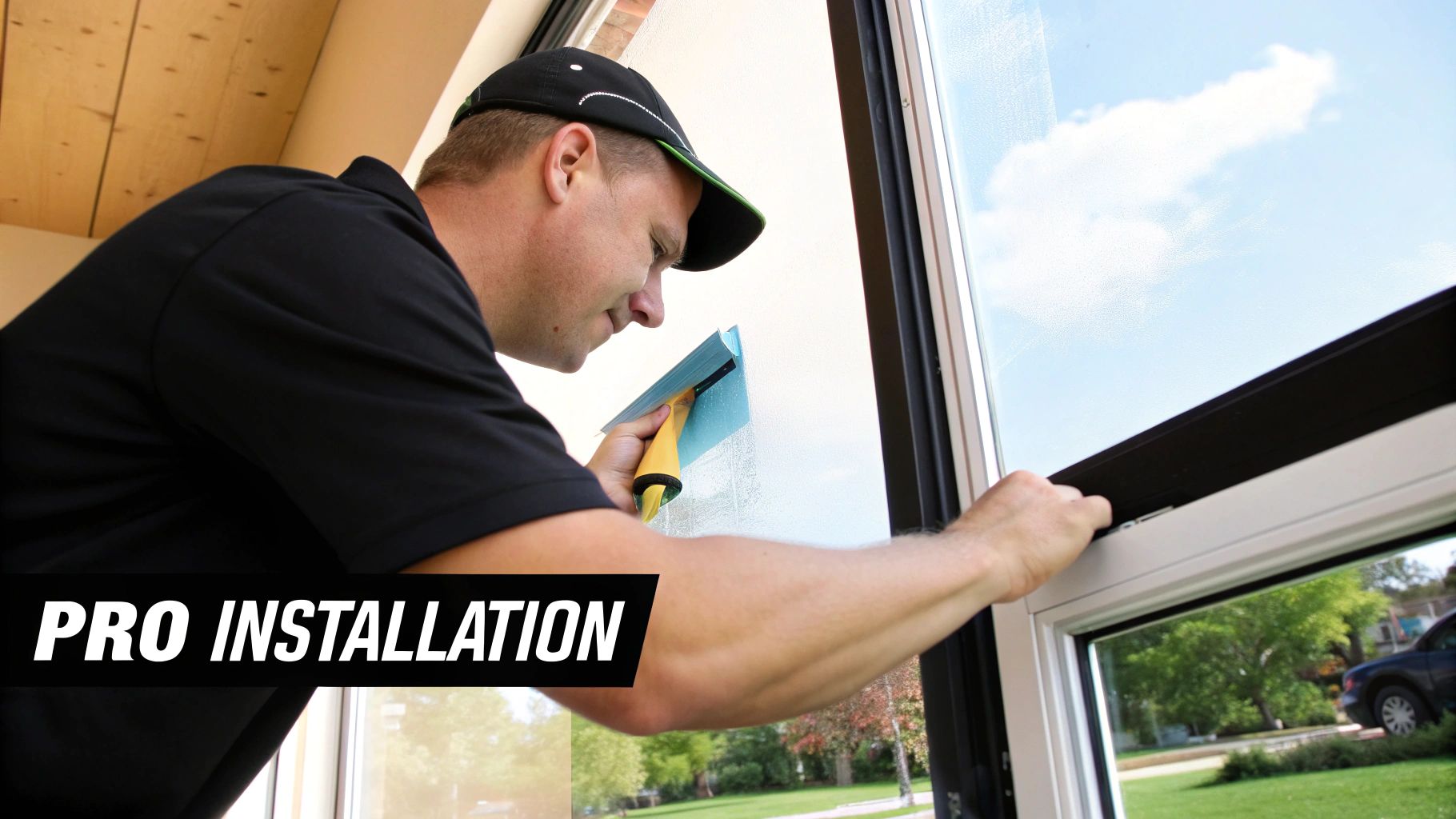
Think of it like this: you wouldn't ask an amateur to install the brakes on your car. The stakes are just too high. A professional film installer has the experience to create a perfect, bubble-free application, but more importantly, they anchor the film directly to the window frame. This crucial step creates an edge-to-edge seal that gives the film its incredible strength, enabling it to hold shattered glass together under extreme pressure. Without that anchor, the film is just a fancy sticker.
What to Expect From the Installation Process
A true professional installation is a clean, efficient process that won't turn your home or business upside down. It’s a craft that combines precision, specialized tools, and a ton of practice to get right every single time.
Here’s a quick look at how it usually unfolds:
- Initial Consultation and Measurement: A technician comes to your site to understand your goals, inspect the windows, and take exact measurements. This is your chance to discuss any specific concerns or unique features of your glass.
- Meticulous Glass Preparation: This is arguably the most important stage. The glass is deep-cleaned to remove every speck of dust, oil, or grime. Even a tiny piece of debris can cause a bubble and weaken the adhesive bond.
- Film Application and Fitting: The installer uses a special slip solution to apply the film, which allows them to slide it into the perfect position. They then use professional-grade squeegees to press out every last bit of air and water, creating a flawless bond.
- Anchoring and Curing: With the film in place, the edges are trimmed with surgical precision and securely anchored to the frame. The film then needs to "cure" as the last bits of moisture evaporate and the adhesive reaches maximum strength.
The installation is where the film’s potential is unlocked. A flawless application ensures the product performs exactly as engineered, providing an invisible shield that will last for decades.
Simple Steps for Long-Term Care
Once your security film is installed and fully cured—which usually takes about 30 days—keeping it in top shape is surprisingly simple. These treatments are designed for the long haul, featuring a tough, scratch-resistant coating that easily handles everyday life.
A little bit of TLC, however, will keep your windows looking pristine.
- Let It Cure: Don’t clean or touch the film for the first 30 days. This gives the adhesive time to fully set without being disturbed.
- Use Soft Tools: Always clean with a soft microfiber cloth or a gentle rubber squeegee. Stay far away from abrasive pads or razor blades.
- Pick a Gentle Cleaner: A simple mix of mild dish soap and water works perfectly. Most standard ammonia-free glass cleaners are also fine.
- Dry With Care: After cleaning, gently wipe the window dry with a clean microfiber cloth to avoid streaks or water spots.
Following these easy rules will ensure your window privacy treatments remain a powerful and invisible layer of your property's security for years. If you're curious about the technical details, our guide on the security window film installation process dives even deeper.
Have Questions About Window Privacy Solutions? You're Not Alone.
Even after you've seen the benefits, it's completely normal to have questions before pulling the trigger on advanced window treatments. Thinking about how they'll look, what they'll cost, and if they really work is just part of the process. Let's tackle some of the most common questions we hear every day.
Getting straight answers helps you see these treatments for what they are: a serious, long-term investment in your safety and peace of mind. Let’s clear things up so you can make a confident decision.
Will Security Window Film Make My Home Look Dark and Gloomy?
This is probably the biggest myth we have to bust. When people hear "window film," their minds often jump straight to that dark, bubbly tint you see on old cars. Let me assure you, modern security films are in a completely different league.
The best security films are engineered to be optically clear. Think of them as invisible armor for your glass. Their main job is to add a thick, powerful layer of reinforcement, not to block light. You keep the bright, sunny rooms and crystal-clear views you love, but with a layer of security that intruders can't see.
Now, if you also want solar control or daytime privacy, tinted and reflective options are definitely available. But the core security films are designed for pure, unadulterated clarity. Your home's aesthetic and curb appeal remain exactly as they are.
So, What's the Price Tag on Professional Window Privacy Treatments?
This is where the answer is, "it depends." The cost can swing wildly based on what you choose. Simple blinds might be a quick, low-cost fix, while something like high-tech smart glass is a major premium investment.
Advanced security films typically fall somewhere in the mid-to-high end of the spectrum. The final cost really comes down to a few key things:
- Film Thickness: The beefier the film, the more protection it offers—and the higher the cost.
- Total Square Footage: This is a simple numbers game. The more glass you need to cover, the more it will cost.
- Installation Complexity: Got hard-to-reach second-story windows? Oddly shaped panes? These can add to the labor cost.
It helps to shift your perspective on the cost. Instead of comparing it to a set of curtains, think of it as a permanent security upgrade, like a high-end alarm system or steel-reinforced doors. It’s a one-time investment that provides 24/7 protection against break-ins, storms, and accidents for years, even decades.
The real value of security film isn’t measured by its price per square foot. It’s measured by the cost of the single disaster it prevents—a burglary, a shattered window during a hurricane, or a serious injury from broken glass.
When you look at it that way, you realize you're not just buying a product; you're investing in proactive protection and lasting security.
Can I Just Install Security Window Film Myself?
I get it. The temptation to roll up your sleeves and save a few bucks on a DIY project is strong. But with security film, this is one area where you absolutely don't want to cut corners. The film's entire ability to stop a determined intruder hinges on a flawless installation.
A professional application is a true craft. A certified installer ensures there are zero bubbles, no trapped dust particles, and no peeling edges that could compromise the film's strength. But here's the most critical part: they use specialized techniques to anchor the film directly to the window frame.
This frame-to-film bond is what allows the entire system to absorb and distribute the massive force of an impact, keeping shattered glass safely in one piece. A DIY job will almost always miss this crucial step, meaning the film will likely fail right when you need it most. An improper installation doesn't just waste your money; it also voids the manufacturer's warranty.
Are Security Films Actually Bullet-Resistant?
This is a really important distinction to make clear. Standard security films, even the thickest anti-intrusion ones, are bullet-resistant, not bulletproof. Let me repeat that: not bulletproof. Their primary purpose is to stand up to blunt force—think hammers, crowbars, bricks, and flying debris from severe weather.
However, for high-risk situations, true ballistic-resistant film systems do exist. These aren't your everyday security films. They are highly specialized, multi-layered systems engineered and certified to meet specific threat levels set by organizations like the National Institute of Justice (NIJ).
These advanced systems are a serious step up and are typically reserved for:
- Government Buildings and other sensitive facilities that require hardened perimeters.
- Schools and Universities that are fortifying main entryways and classroom windows.
- High-Profile Commercial Locations that could be specific targets for attack.
Choosing a ballistic-rated system isn't a simple decision. It requires a formal threat assessment from a security professional who can match the right level of protection to the specific risks you're facing. For most people, forced-entry film is the right tool for the job; ballistic systems are for a much higher threat level.
Ready to secure your property without sacrificing its beauty? The experts at Fortress Security Films provide professional consultations and installations for homes, businesses, and vehicles. Discover the peace of mind that comes with invisible protection. Learn more at https://fortresssecurityfilms.com.
