


Are you tired of battling high energy bills, complaints about hot and cold spots in the office, and watching expensive furniture fade in the sun? The problem might just be your windows, and the solution is simpler and more effective than you think. Window film for commercial buildings isn't just about tinting glass; it's a serious performance upgrade that can solve these persistent issues and directly impact your bottom line.
The Smart Upgrade Modern Buildings Are Making
Let's be honest, your building's windows are a double-edged sword. They let in beautiful natural light and offer great views, but they're also the weakest link in your building's insulation. In the summer, they let solar heat pour in, and in the winter, they let valuable warmth seep out.
This constant tug-of-war forces your HVAC system to work overtime, creates those dreaded "hot spots" by the windows, and casts frustrating glare across computer screens. It's an efficiency nightmare.
Modern window film acts like a smart filter for your glass. It's a sophisticated, micro-thin layer of polyester applied directly to your existing windows that selectively manages the sun's energy. It’s no surprise that this is the kind of practical, high-return investment that savvy building owners and facility managers are turning to.
What’s Really in It for Your Property?
This single upgrade tackles several operational headaches at once, making it a powerful tool for any property manager.
- Slash Your Energy Costs: By rejecting a huge chunk of solar heat, window film gives your air conditioning a much-needed break. The result is often a dramatic reduction in your monthly utility bills.
- Strengthen Your First Line of Defense: Specialized security films turn your windows into a formidable barrier. They hold shattered glass together during break-in attempts or severe weather, protecting both people and property inside.
- Preserve Your Interior Assets: Window films are designed to block up to 99.9% of damaging UV rays. This is the single biggest cause of fading for your flooring, furniture, artwork, and retail merchandise.
- Improve Everyone's Comfort: By cutting down on glare and balancing out temperatures, the film creates a far more comfortable and productive environment for your tenants and employees. No more squinting or fighting over the thermostat.
This isn't a niche product anymore. The global window film market was valued at around USD 11.56 billion in 2023 and is on track to hit USD 16.56 billion by 2030. That kind of growth tells you something.
This isn't just about looks; it's a strategic capital improvement. Installing high-performance window film is one of the most cost-effective ways to boost a building's energy performance without the headache and expense of a major renovation.
As property owners increasingly look for strategies for sustainable commercial buildings, window film stands out. It directly lowers a building's carbon footprint by cutting energy use, making it an essential piece of any modern green building plan.
How Window Film Technology Actually Works
It's tempting to think of window film as just a fancy sheet of tinted plastic, but that’s like calling a modern smartphone just a piece of glass. The reality is that high-performance window film for commercial buildings is a sophisticated, multi-layered product, engineered with incredible precision. Its main job? To act like a smart gatekeeper for sunlight.
Think of sunlight as a mix of different energy types. You’ve got the visible light we need to see, the invisible infrared (IR) rays we feel as heat, and the damaging ultraviolet (UV) rays we can’t see or feel. Window film is designed to tell these apart, letting the good stuff (daylight) in while kicking the bad stuff (excess heat and UV) to the curb.
This whole process relies on a complex sandwich of materials, where each layer has a very specific role to play.
The Anatomy of a High-Performance Film
To really get what's going on, you have to look inside that micro-thin sheet. While the exact recipe changes from one product to another, most advanced films are built with several key layers working in concert.
- Scratch-Resistant Coating: This is the tough outer layer facing into the room. It’s a durable hard coat that has to stand up to daily cleaning and resist scuffs and scratches, keeping the film looking crystal clear for years.
- Polyester Film Layers: The backbone of the film is made of one or more layers of incredibly clear polyester. This is what gives the film its strength, stability, and distortion-free optical clarity. Without a high-quality base, the view would be warped and the film wouldn't last.
These layers provide the structure, but the real performance comes from the specialized, high-tech layers laminated between them.
The real breakthrough in window film isn't just about blocking the sun. It’s about spectrally selective technology. This is what allows a film to reject massive amounts of solar heat—up to 82%—without plunging a room into darkness. For any commercial space, that's the holy grail.
The Engine That Drives Performance
The most critical components are the microscopic particles embedded deep within the film's core. These are what give the film its powers, whether it's rejecting heat, adding privacy, or enhancing security.
1. Metalized (Sputtered) Films
Imagine spray painting, but at an atomic level. Inside a vacuum chamber, microscopic particles of durable metals—like silver, gold, or bronze—are fused onto the polyester film. These metal particles are fantastic at reflecting solar energy away from the glass, which is why these films deliver some of the highest heat rejection on the market. This is the tech behind the classic mirrored look you see on so many corporate high-rises.
2. Ceramic (Nano-Ceramic) Films
But what if you don't want your building to look like a mirror? That’s where ceramic films come in. Instead of metals, these films are infused with nano-particles of non-conductive ceramic materials. These tiny particles are amazing at absorbing and rejecting infrared heat without reflecting visible light. The end result is a film that’s virtually invisible yet still blocks a huge amount of heat, preserving your building’s architectural design.
Finally, all these layers are held together by a specialized adhesive that bonds the film to the glass. This isn't your average glue; it’s an optically clear adhesive engineered to cure perfectly, creating a powerful, distortion-free bond that makes the film a seamless part of the window.
Unlocking the Core Benefits for Your Property
When you move past the technical jargon, the true value of installing window film for commercial buildings becomes crystal clear. It’s all about the tangible, day-to-day returns you see on your property. This is where the investment stops being a line item on a budget and starts acting as a strategic asset, actively boosting your building's performance and financial health.
One of the most compelling reasons property managers make the switch is the direct impact on their bottom line, especially when it comes to achieving significant energy savings by easing the massive strain on heating and cooling systems.
Radical Energy Savings and Lower Bills
Think about your building’s windows on a hot summer day. They essentially act like giant magnifying glasses, letting solar heat pour in and forcing your HVAC system to run non-stop just to keep the temperature bearable. That constant battle is a huge drain on your utility budget.
Solar control window film provides a powerful, invisible shield against this heat gain. By rejecting a huge chunk of the sun's infrared radiation, the film helps keep interior spaces cooler without you having to do a thing. This means your air conditioning doesn't have to work nearly as hard, leading to a serious drop in your monthly energy bills.
The image below breaks down the financial impact, showing how cutting down on heat gain translates directly into cost savings and a surprisingly quick payback period.
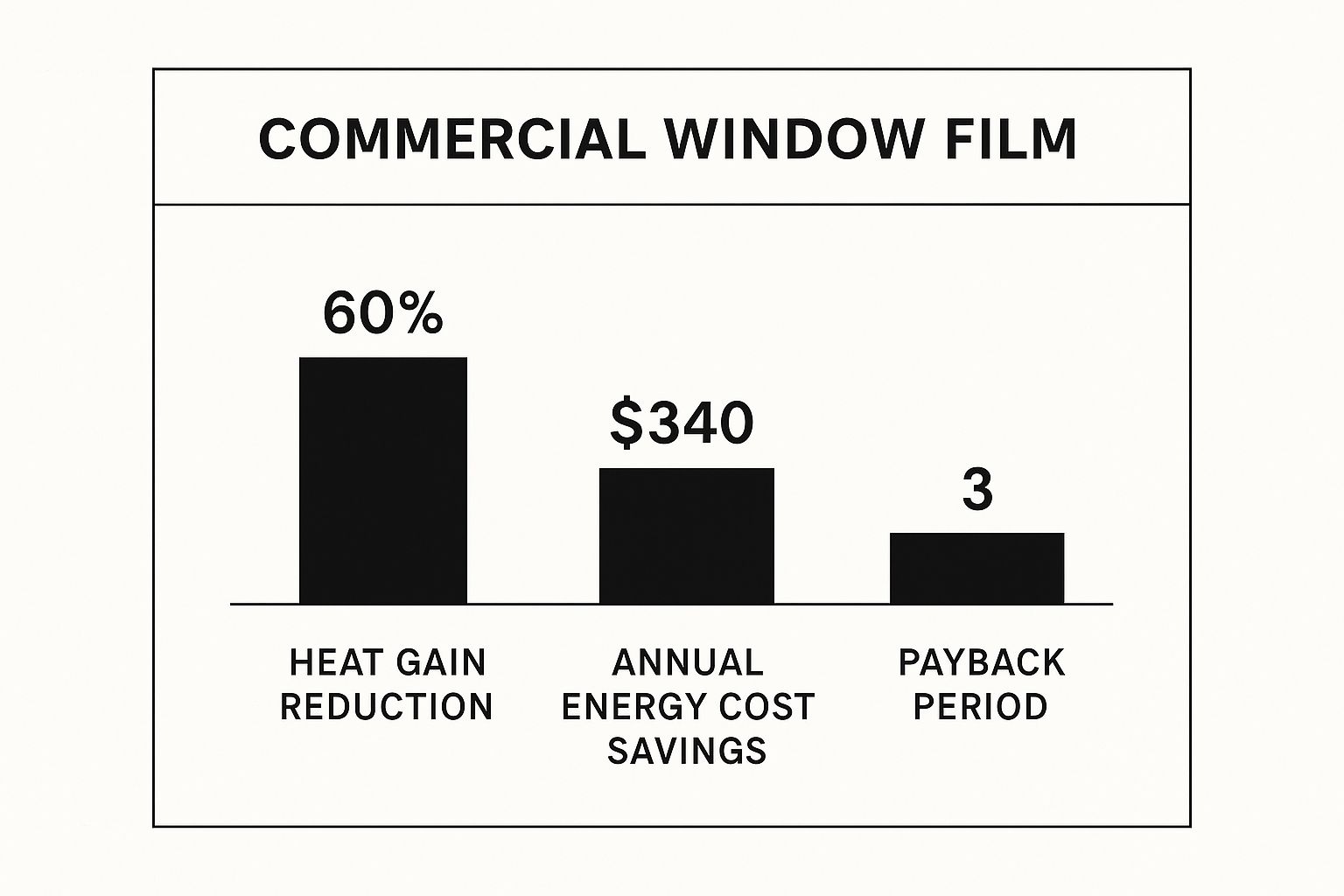
As you can see, a major reduction in heat gain has a direct line to lower annual costs. In many cases, the initial investment pays for itself in just a few years.
This powerful ROI is a key driver behind the market's explosive growth. The architectural window film sector, which mainly serves commercial properties, was valued at around USD 1.82 billion in 2024 and is on track to hit nearly USD 2.83 billion by 2032.
Enhanced Safety and Building Security
Let's face it: glass windows are a building's weak spot. They're the go-to target for forced entry and can become a serious hazard during severe weather or accidents, sending dangerous shards of glass flying. Security window film completely changes that equation.
Made from a much thicker polyester and bonded with an incredibly strong adhesive, security film holds shattered glass in place. Instead of the window exploding inward, the film creates a tough, spiderweb-like barrier that stays in the frame. This simple but brilliant technology offers a few critical advantages:
- Forced Entry Deterrence: It makes a quick smash-and-grab almost impossible. Intruders are delayed significantly, which often gives security systems time to alert the authorities and convinces them to just give up and move on.
- Blast and Impact Mitigation: During an explosion or a major storm, the film contains the broken glass, protecting people inside from high-velocity projectiles that could cause devastating injuries.
- Accident Prevention: It's a safety net against everyday accidents. Whether it's in a busy lobby or a hallway, the film keeps broken glass contained, dramatically reducing the risk of cuts and injuries.
By reinforcing your building's most fragile points, security window film transforms a vulnerability into a line of defense. It's a silent guardian that strengthens your property's resilience against a variety of modern threats.
Superior Comfort and Asset Protection
The benefits don't stop at safety and savings. Window film also creates a more productive and pleasant indoor environment while protecting your expensive interior assets. The main villain here is ultraviolet (UV) radiation—the invisible part of sunlight that causes almost all fading and sun damage.
A good quality commercial window film can block up to 99% of harmful UV rays. This has two massive upsides. First, it’s like putting sunscreen on your entire building, protecting pricey furniture, flooring, artwork, and retail merchandise from fading away. This keeps your spaces looking sharp and extends the life of your assets.
Second, the film puts an end to frustrating glare. Harsh sunlight bouncing off computer screens causes eye strain, headaches, and kills productivity. By softening the light, window film creates a much more comfortable visual environment. No more tenants constantly drawing the blinds and working in the dark. The result? Happier tenants, more productive employees, and a workspace that feels bright and comfortable all year long.
To help you visualize how these films stack up against each other, here’s a quick comparison of their primary functions and best-fit applications.
Commercial Window Film Performance Comparison
| Film Type | Primary Benefit | Ideal Use Case | Typical UV Rejection | Glare Reduction |
|---|---|---|---|---|
| Solar Control | Energy savings, heat rejection | Offices, retail spaces, buildings in sunny climates | 99% | High |
| Security/Safety | Intrusion delay, blast mitigation | Ground-floor windows, government buildings, high-risk areas | 99% | Low to Medium |
| Decorative | Privacy, aesthetics, branding | Conference rooms, glass partitions, storefronts | 90-99% | Varies |
| Anti-Graffiti | Surface protection, easy replacement | Public transit, storefronts, restrooms, elevators | 90-99% | Low |
| Low-E | Year-round insulation (keeps heat in and out) | Buildings in climates with both hot summers and cold winters | 99% | Medium to High |
This table makes it easy to see that there's a specialized film for nearly every commercial need, from cutting energy costs to protecting your property and people.
Choosing the Right Film for Your Building's Needs
Picking the right window film for a commercial building isn’t a one-size-fits-all deal. The best choice comes down to the specific problems you're trying to solve and what you want to achieve for your property. Think of it like buying tires for a car—you wouldn’t put slick racing tires on a heavy-duty work truck.
It’s the same logic here. A west-facing boardroom that gets baked by the afternoon sun has completely different needs than a street-level retail shop worried about break-ins. The first step is getting to know the main types of film so you can match the product to your building's unique goals and get the best possible return on your investment.
Solar Control Films for Energy Efficiency
Solar control films are the real workhorses of the window film world. Their entire purpose is to fight heat and glare. These films are engineered to reflect a huge chunk of the sun's infrared heat—some can block up to 82%—before it ever gets through the glass.
What does that mean for you? A much lighter load on your HVAC system. This translates directly into lower energy bills and a more consistently comfortable temperature inside. It’s why solar films are the go-to for office buildings, hotels, and any commercial space where keeping cooling costs down and people happy is a priority.
A lot of people think that powerful heat rejection means you have to get a dark, tinted film. That's not the case anymore. Modern ceramic films are nearly invisible but still pack a serious punch when it comes to solar control, so you don't have to sacrifice your building's appearance.
Security Films for Asset and Occupant Protection
When protecting people and property is your number one concern, security films are the only way to go. These films are built differently, using thick layers of heavy-duty polyester bonded to the glass with a super-strong adhesive. Their main job is simple but critical: to hold shattered glass together when it breaks.
This creates a tough, flexible barrier that makes a smash-and-grab attempt incredibly difficult, often causing would-be intruders to give up and move on. It’s also a huge safety benefit during storms or accidents, as it stops deadly glass shards from flying through the air. For ground-floor storefronts, government facilities, or schools, this layer of defense is invaluable. Many property managers are looking into the specifics of commercial retail security film to secure their most vulnerable entry points.
Decorative Films for Privacy and Branding
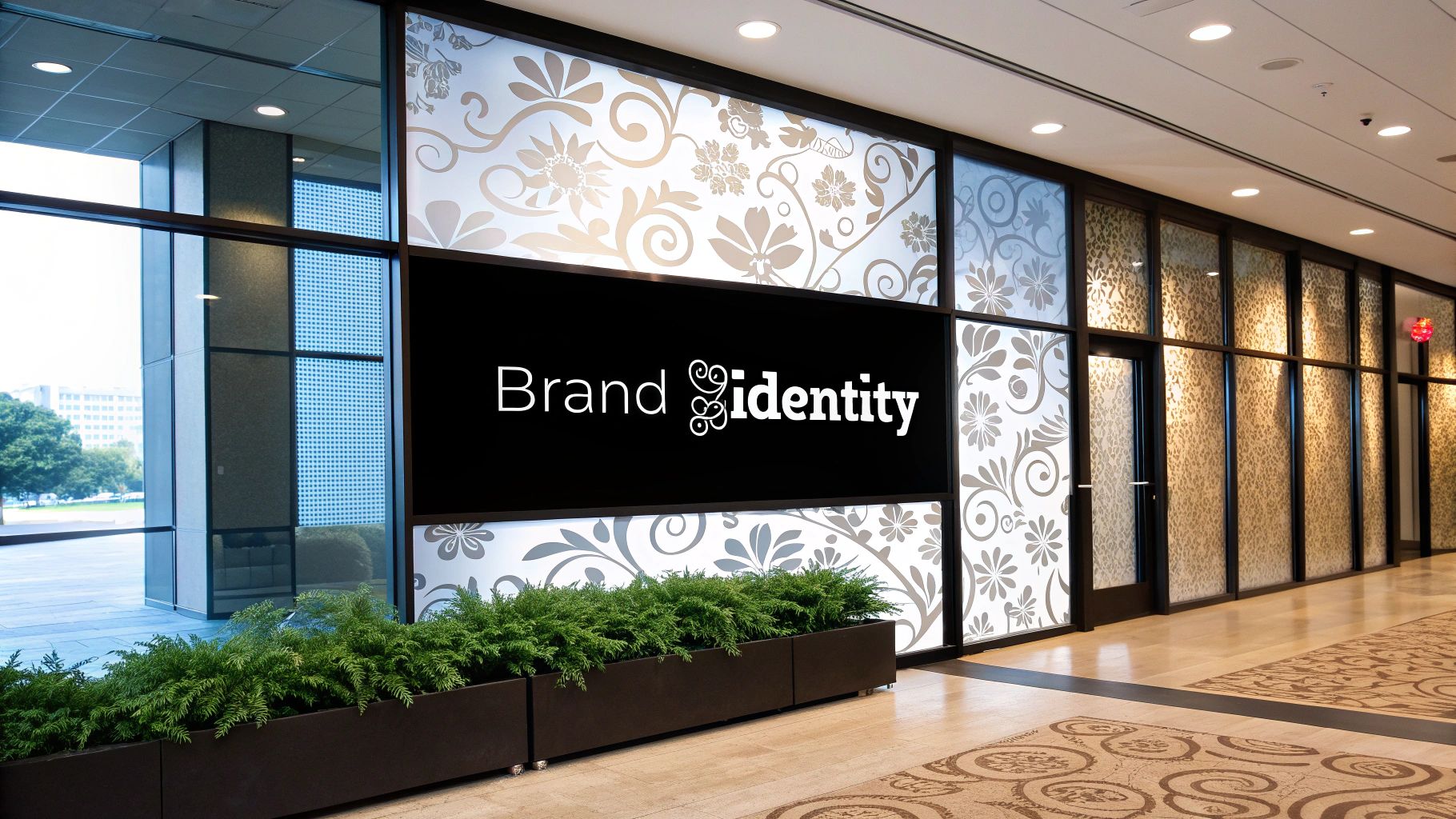
Window film isn't just about performance; it can also completely change the look and feel of a space. Decorative films are fantastic for turning plain glass into a design feature, creating privacy, and reinforcing your company’s brand.
They come in a massive range of patterns, colors, and textures—think frosted, etched, or even custom-printed designs. They’re perfect for a few key applications:
- Creating Privacy: A frosted film on a conference room wall or glass partition can obscure the view without killing the natural light.
- Enhancing Branding: Applying a custom-cut logo to your entryway or storefront window gives you a sharp, professional look.
- Improving Aesthetics: Adding a simple pattern to interior glass can elevate a basic pane into a sophisticated architectural detail.
Decorative films solve practical privacy problems while making your space look great, giving you two benefits in one.
Anti-Graffiti Films for Surface Defense
Vandalism is an unfortunate reality for many businesses, especially those in public-facing locations. Anti-graffiti films act as a clear, sacrificial shield for your glass and other smooth surfaces.
You apply this film to the exterior of windows, mirrors, or even metal panels. It’s designed to take the hit from spray paint, acid etching, or deep scratches. If the property is vandalized, a professional can just peel off the damaged film—and the graffiti along with it—and apply a new layer. It's a quick and relatively inexpensive fix, especially when you compare it to the cost of replacing an entire panel of commercial glass. It’s a must-have for maintaining a clean, professional appearance in high-traffic urban areas.
Getting It Done Right: Professional Installation and Long-Term Care
https://www.youtube.com/embed/DE677bRNbo4
You can have the best window film for commercial buildings in the world, but if it’s not installed perfectly, it simply won't perform as advertised. It's a bit like buying a high-end sports car—the engine is powerful, but you need a skilled driver to get it around the track. Professional installation isn’t just a nice-to-have; it's the only way to guarantee you get the performance, lifespan, and warranty coverage you paid for.
Trying to install film yourself across a large commercial space is a recipe for disaster. You'll likely end up with bubbles, peeling corners, and tiny bits of trapped debris. Not only does this look unprofessional, but it completely undermines the film’s ability to do its job, whether that's blocking heat or reinforcing the glass. Certified installers have the right tools, a steady hand, and years of practice to create a seamless, contamination-free bond that lasts.
The Professional Installation Process
While no two jobs are exactly alike, a professional installation always follows a careful, proven process. Knowing the steps helps you understand what to expect on installation day.
-
Immaculate Glass Prep: This is the most important step, hands down. The crew will meticulously clean every inch of the glass and surrounding frames. They use special scrapers and squeegees to remove any and all residue—because even a single speck of dust can create a noticeable flaw under the film.
-
Precision Application: Next, the film is cut to the precise size of each window pane. Using a special slip solution, the installer glides the film into the perfect position on the glass. They then use a squeegee to methodically push all the water out from between the film and the glass, creating a strong initial bond.
-
Finishing and Sealing: With the film in place, the installer makes a final trim along the edges for a clean, almost invisible finish. A final squeegee pass ensures every last bit of water is removed, sealing the edges and securing the film for the long haul.
This is a level of detail and precision that only comes with professional training and experience. You can get a closer look at what a top-tier installation looks like in our guide on security window film installation.
Keeping Your Film in Top Shape
After the film is installed, it needs time to "cure," which can take up to 30 days. It's totally normal to see a little haziness or some small water bubbles during this period—that's just the last of the application solution evaporating. The most important thing is to leave the windows alone and not try to clean them until this process is complete.
Once the film has fully cured, keeping it looking great is surprisingly easy.
- Clean with the Right Stuff: Never use ammonia-based cleaners (like many common household glass sprays). Ammonia can eat away at the film's adhesive over time. A simple mix of mild dish soap and water is all you need.
- Go Soft: Stick to soft microfiber cloths or clean synthetic sponges for both washing and drying. Paper towels can be surprisingly abrasive and may leave behind lint.
- Be Gentle: There’s no need to scrub aggressively. The film has a durable scratch-resistant coating, but it's not invincible. A gentle, even wipe-down is plenty.
Following these simple care guidelines ensures your investment remains effective and visually flawless, protecting its performance and appearance for its entire lifespan.
The demand for these professional services is on the rise worldwide. In fact, the Asia Pacific region is a huge driver, accounting for about 41% of the global window film market share in 2023. This boom is fueled by widespread new construction where high-performance films are becoming a standard requirement for modern commercial buildings.
Calculating the Real Return on Your Investment
While the performance benefits are impressive, any smart property manager knows that a capital improvement has to make sense on the balance sheet. Installing window film for commercial buildings isn't just another line item expense; it's a strategic investment that pays you back. The most obvious financial win comes from energy savings—often enough to cover the entire project in a surprisingly short time.
Think about your building's HVAC system. It's one of your biggest, most unpredictable operational costs. Solar control film acts as a shield, rejecting a massive amount of solar heat before it ever has a chance to bake your interior. This takes a huge load off your air conditioning units, which means they run less often and use less power.
You'll see that difference on your monthly utility bills almost immediately. For most commercial properties, the savings are so significant that the film pays for itself in just 2-5 years.
The Hard Numbers Behind the Savings
Figuring out the direct return on investment (ROI) is actually pretty straightforward. It’s all about comparing your upfront cost to what you’ll save on energy down the road.
- Initial Project Cost: This covers the film itself and the professional installation. Your total will depend on the type of film you choose and the total square footage of glass being treated. For a deeper dive into the numbers, it's worth checking out resources on the cost of security window film and other film types.
- Energy Savings Calculation: A professional installer won't just give you a guess. They use specialized software to create an energy model for your specific building. They’ll plug in your window types, building orientation, local climate, and current utility rates to generate a remarkably accurate savings forecast.
With those two numbers in hand, the math is simple. Just divide the total project cost by the annual energy savings, and you'll know exactly how many years it will take to break even.
By directly lowering operating costs, window film transforms a building's windows from a source of energy loss into an asset that actively contributes to the bottom line. It’s a capital improvement that pays you back month after month.
Exploring the Valuable Soft ROI
The savings on your utility bill are just the beginning. Window film also delivers a powerful "soft" ROI—benefits that might not show up as a line item but add serious value to your property.
1. Improved Tenant Retention
Let’s be honest: happy tenants stay. Window film makes a noticeable difference in comfort by eliminating those frustrating hot spots near windows and cutting down on eye-straining glare. A more comfortable environment leads to happier tenants, which means fewer vacancies and lower turnover costs.
2. Enhanced Property Value
Energy-efficient buildings are simply more desirable. Having documented energy savings and a more comfortable interior are huge selling points for potential buyers and tenants alike. This can directly boost your property's market value and even allow you to command higher lease rates.
3. Potential Insurance Premium Reductions
If you opt for security window film, you might get a pleasant surprise from your insurance provider. By protecting against break-ins, mitigating storm damage, and reducing the risk of injury from shattered glass, you’re showing insurers that you’re serious about risk management. They often reward that proactivity with lower premiums.
Your Top Questions About Commercial Window Film, Answered
Even after seeing all the benefits, you probably have a few practical questions. It’s only natural. Let's walk through some of the most common things building owners and facility managers ask before they commit.
How Long Does Commercial Window Film Last?
This is a big one, and the answer is simple: a very long time. When you have a high-quality film installed by a professional, you're looking at a solution built for the long haul. Most manufacturers back their commercial films with a 10 to 15-year warranty, but we often see it performing perfectly well long after that.
Of course, things like the specific film you choose, your local climate, and how much direct sun the windows get will play a part. But this isn't a temporary fix; it's a lasting capital improvement.
Think of it this way: a single application gives you over a decade of continuous energy savings, UV protection, and improved comfort. It's an investment built to endure.
A little care goes a long way, too. Just stick to gentle, non-ammonia cleaners and a soft cloth when you wash the windows. That's all it takes to keep the film clear and secure for its full service life.
Can We Remove or Replace the Film Later On?
Absolutely. While the film creates a strong bond with the glass, a professional can remove it cleanly without leaving a scratch or any damage behind. This is a huge plus if your needs change down the road or when newer, even more advanced film technology comes out.
The process is pretty straightforward for an expert. They use special techniques to soften the adhesive, which allows the film to peel away without a fuss. We always recommend calling a pro for this—trying to DIY the removal often leads to a sticky, stubborn mess that’s tough to clean up.
Will Window Film Make Our Building Too Dark Inside?
This is probably the most common myth we hear about window film for commercial buildings. People picture those old, dark, bubbly tints from decades ago. Today’s technology is a world apart.
While you can still get dark or reflective films if that’s the look you want, the real game-changers are the modern spectrally selective and ceramic films. These are engineered to be virtually invisible. They can block an incredible amount of heat and UV radiation while letting up to 70% or more of the natural light pour in.
So, you get all the energy savings and protection without sacrificing the bright, open feel of your space. The goal is to make the building more comfortable, not turn it into a cave. Any good installer will have samples on hand so you can see for yourself how it will look on your windows.
Ready to see how window film could improve your building's security, efficiency, and comfort? The team at Fortress Security Films is here to help you find the perfect fit. Explore our advanced window film options today.
