


When you hear "commercial window film," it's easy to think of simple window tinting. But that's not the whole story. We're actually talking about a high-tech laminate, usually made from polyester, that's applied directly to your building's glass.
Think of it less like a sticker and more like a high-performance upgrade for what is often a building's biggest vulnerability: its windows.
Why Window Film Is a Smart Commercial Upgrade
For most commercial properties, untreated glass is a massive, overlooked liability. Windows are the main entry point for oppressive solar heat, damaging UV rays, and, of course, potential security breaches.
Installing professional window film commercial solutions flips that script. Suddenly, your weakest points become strategic assets. It's an investment not just in aesthetics, but in the building's core operational efficiency and the comfort of everyone inside. By cutting down on heat gain, for example, you immediately ease the burden on your HVAC system, which shows up as lower energy bills.
A Multifunctional Shield for Your Building
The best part is that modern films are engineered to solve multiple problems at once. Instead of tackling high energy costs, security vulnerabilities, and tenant comfort as separate, expensive projects, a single installation can offer a comprehensive solution.
Here’s a quick rundown of the main advantages:
- Slash Energy Costs: High-quality solar control films can reject up to 84% of the sun's heat. That means cooler spaces in the summer and less reliance on air conditioning.
- Boost Security and Safety: Specialized security films are much thicker and are designed to hold shattered glass in place. This can significantly delay a break-in attempt or prevent dangerous flying glass during a storm.
- Protect Your Assets: The film acts like a powerful sunscreen for your building's interior, blocking over 99% of harmful UV rays that cause expensive furniture, flooring, and inventory to fade.
- Improve Occupant Comfort: Cutting down on harsh glare and eliminating hot spots makes for a more comfortable and productive environment for employees and a more inviting one for customers.
Here's a helpful way to think about it: You insulate your walls and roof, right? Window film does the same job for your glass. It completes the building's thermal envelope, sealing up a major source of energy loss and vulnerability.
Commercial window film is a fantastic example of a sustainable upgrade. You can learn more about the broader benefits of green technology to see how these kinds of improvements pay dividends for both your bottom line and the planet. This guide will walk you through everything you need to know to choose and benefit from the right film for your property.
Exploring the Different Types of Commercial Window Film
When it comes to commercial window film, it’s crucial to understand that not all films are created equal. You wouldn't use a screwdriver to hammer a nail, and the same logic applies here. Different films are engineered with specific materials and properties to solve distinct business challenges.
Think of it this way: each type of film is a specialist. Some are champions of energy savings, while others act as an invisible shield for your glass. Getting a handle on these categories is the first real step toward choosing a solution that will actually deliver value for your property.
Solar Control Film for Energy Efficiency
Solar control film is the undisputed workhorse of the commercial window film world. Its main job is to manage the sun's energy, acting like a highly sophisticated filter. It’s designed to reject heat and block damaging ultraviolet (UV) rays before they can even get inside your building.
This goes way beyond simple tinting. Modern films use advanced, spectrally-selective technology, which means they can pinpoint and block infrared heat—the kind you feel on your skin—while letting plenty of visible light shine through. This keeps your workspaces bright and welcoming without the massive heat gain, taking a significant load off your HVAC system and directly lowering your energy bills.
It's no surprise that this focus on efficiency has made solar control film the top product category, capturing a massive 38.6% of the global market. This trend highlights the huge demand for smarter glazing solutions in commercial buildings. For a deeper dive, check out the full report on the global window film market.
Security and Safety Film for Asset Protection
While solar film is busy managing the sun, security and safety film is engineered to handle physical threats. It’s built from much thicker layers of heavy-duty polyester and bonded to the glass with incredibly strong adhesives, fundamentally reinforcing the window's structural integrity.
Think about a standard pane of glass—it's brittle and shatters into a thousand dangerous pieces on impact. But when you apply security film, it holds all those shards together, creating a tough, flexible membrane that stays locked in the frame.
This delivers two huge benefits:
- Forced-Entry Deterrence: It dramatically slows down intruders, often stopping them cold. A would-be burglar expecting a quick smash-and-grab is met with a window that just won't break, buying precious time for alarms to go off and help to arrive.
- Hazard Mitigation: During a severe storm or an accidental impact, the film prevents glass from becoming deadly projectiles, protecting everyone inside from serious injury.
Security film essentially transforms your weakest entry points into fortified barriers. It’s an invisible yet powerful upgrade that enhances the safety of both people and property.
This type of film is an absolute must-have for ground-floor retail, government facilities, and any commercial space where physical security is a top concern.
Decorative and Privacy Film for Aesthetics and Branding
Decorative film is easily the most creative and versatile category of commercial window film. It offers a surprisingly elegant and affordable way to add privacy, elevate your interior design, or reinforce your brand—all without the hefty price tag and permanence of etched or frosted glass.
The possibilities are practically endless. You can use simple frosted films to obscure sightlines into conference rooms or get custom-cut logos to greet clients in your lobby. These films can carve out private offices in an open-plan space, direct foot traffic with clear signage, or just add a touch of class to glass partitions.
Unlike other solutions that darken a room, decorative films are designed to diffuse light. This means you can get total privacy while keeping the space bright and airy, which is a huge factor for employee morale and well-being. It's a smart, modern solution for offices, healthcare clinics, and retail environments.
Anti-Graffiti Film for Surface Protection
Finally, there’s anti-graffiti film, which acts as a sacrificial, invisible shield for your glass and other smooth surfaces. This optically clear layer is designed to take the hit from vandals, whether it's spray paint, acid etching, or deep scratches.
When vandalism happens, you don't have to replace the entire window. The damaged film is simply peeled off and a new layer is applied, all for a fraction of the cost of glass replacement. This makes it a fantastic proactive maintenance strategy for any property in an urban area or location prone to graffiti.
You’ll often find it applied to:
- Ground-floor storefronts
- Public transit windows and shelters
- Elevator interiors
- Bathroom mirrors
By protecting your valuable surfaces, this film helps you maintain a professional, clean appearance and sidestep the high costs tied to graffiti removal and repairs.
To help you see how these films stack up at a glance, here’s a quick comparison.
Commercial Window Film Comparison
This table breaks down the primary purpose and best-fit applications for each major type of commercial window film, helping you quickly identify which solution might be right for your property's specific needs.
| Film Type | Primary Function | Ideal Commercial Application | Key Benefit |
|---|---|---|---|
| Solar Control | Rejects solar heat, blocks UV rays | Office buildings, retail stores, hotels with high sun exposure | Lower energy costs, improved tenant comfort |
| Security/Safety | Strengthens glass, holds shards together | Ground-floor retail, government buildings, schools, data centers | Deters forced entry, mitigates injury from broken glass |
| Decorative | Adds privacy, enhances aesthetics, reinforces brand | Corporate offices, medical facilities, restaurants, glass partitions | Cost-effective privacy and design without permanent alterations |
| Anti-Graffiti | Provides a sacrificial barrier against vandalism | Storefronts, public transit, elevators, mirrors in public areas | Protects surfaces and dramatically reduces repair costs |
Ultimately, understanding the strengths of each film type is the key to making an informed decision. Whether your priority is cutting energy costs, hardening your building's security, or enhancing your brand's image, there's a specialized film designed to do the job.
Calculating the ROI of Your Window Film Investment

While the technical specs for window film commercial products are impressive, let's be honest—the final decision always comes down to the numbers. As a property manager or business owner, you need to see a clear financial return. The good news is that window film isn't just an expense; it’s a capital improvement with a surprisingly fast and measurable payback.
Calculating that return isn't about a single number. It's a combination of direct cost savings, what you don't spend by avoiding risk, and even how your people and property benefit. When you look at it from all angles, the business case for installing high-quality film becomes incredibly compelling.
Slashing High Energy Costs
The easiest and most immediate ROI to track comes from energy savings, especially if you're battling high cooling costs. Think of your untreated windows as giant radiators, letting solar heat flood your building. This forces your HVAC system into overdrive just to keep things comfortable.
Solar control film is the frontline defense against this. By rejecting a huge chunk of solar heat before it gets inside, the film dramatically lightens the load on your air conditioning. This translates directly to lower monthly utility bills. For most commercial properties, these savings alone are enough for the film to pay for itself in just 2 to 5 years.
A smart way to look at it is not as an upfront cost, but as a pre-paid energy discount. You make one investment to lock in lower utility bills for the next 15-20 years.
This isn't a theoretical benefit. It's a consistent, predictable financial win that forms the bedrock of any window film ROI analysis.
Mitigating Risk with Enhanced Security
The ROI for security is all about loss prevention. A single break-in can cost thousands in stolen equipment, property damage, and the chaos of operational downtime. Security film turns your most vulnerable entry point—your glass—into a formidable barrier.
When you're running the numbers on security, consider these factors:
- Forced-Entry Prevention: Security film holds shattered glass together, which can delay a burglar by several critical minutes. That delay is often all it takes for them to give up and move on, preventing a loss before it even happens.
- Reduced Repair Costs: After an attempted break-in or act of vandalism, you might just need to replace a damaged layer of film instead of an entire, expensive pane of glass.
- Potential Insurance Benefits: Many insurance carriers see certified security film as a serious risk-reduction measure. It’s always worth a conversation with your provider to see if installing film could lower your annual premiums.
This part of the ROI is about the costs you avoid. Every incident that doesn't happen is a major financial win, making security film a critical piece of your risk management puzzle.
Boosting Productivity and Protecting Assets
The financial upside doesn't end with energy bills and break-ins. The quality of your indoor environment directly impacts your people and your physical assets, contributing to the bottom line in ways that are just as real.
First, there’s your team. Glare on computer screens causes headaches and eye strain, while hot and cold spots near windows are a constant distraction. Solar film solves both problems by cutting harsh glare and stabilizing the indoor temperature, creating a work environment where people can actually focus and be productive.
Second, think about everything inside your building. The same UV rays that cause sunburn are also silently destroying your expensive furniture, flooring, artwork, and retail merchandise. Window film blocks over 99% of this damaging radiation. This dramatically extends the life of your interior assets, pushing back costly replacement cycles and protecting the value of your inventory. It's this long-term preservation that adds another powerful layer to the financial case for a window film commercial project.
Getting to Grips with Performance Ratings and Standards
To make the right call for your property, you have to look past the glossy brochures and get into the real data behind how a window film commercial product performs. The spec sheets can look a little technical at first glance, but they're your best friend for comparing products apples-to-apples.
Think of these ratings like the nutrition label on your food. They're standardized measurements that tell you exactly what you’re getting, so you can make a decision based on hard facts, not just clever marketing. You only need to understand a few key metrics to decode these labels and pick a film that actually solves your building's problems.
Decoding Solar Performance Metrics
For solar control films, it’s all about managing the sun's energy. A few key ratings work together to give you a complete picture of how a film will behave once it’s on your glass. Getting a handle on these is crucial.
-
Total Solar Energy Rejected (TSER): This is the big one. TSER tells you how much of the sun's total energy—the visible light, the infrared heat, and the UV rays—is being blocked. It’s the film's overall defensive power. A higher TSER means more heat is being kept out of your building, which translates directly into lower cooling costs.
-
Visible Light Transmission (VLT): This number simply tells you how much visible light gets through the film. Think of it as the tint level on a pair of sunglasses. A lower VLT means a darker tint and less glare, while a higher VLT keeps the space bright with natural light.
-
UV Rejection: A straightforward but critical spec. This is the percentage of damaging ultraviolet rays the film blocks. Any quality commercial film should block over 99% of UV rays, protecting your interiors, merchandise, and flooring from fading and sun damage.
-
Shading Coefficient (SC): This one is a bit more technical. It compares the solar heat gain of a window with film to a standard, unfilmed clear window. The key takeaway is that a lower SC number means the film is doing a better job at blocking heat gain.
A classic mistake is to focus only on VLT, assuming a darker film is automatically better at rejecting heat. The truth is, modern high-performance films can have a high VLT (letting in plenty of natural light) while still boasting an excellent TSER (rejecting a ton of heat). Always look at the TSER value for the real energy-saving story.
Why Certification and Safety Standards Matter
Impressive numbers are one thing, but proof from a third party is what gives them teeth. This is where independent organizations and established safety standards come in, giving you the confidence you need to trust a manufacturer's claims.
The demand for certified, high-performance building materials is on the rise. The global window film market, valued at around USD 12.45 billion, is expected to grow to USD 18.65 billion by 2033, driven largely by this focus on proven energy efficiency and safety. You can dive deeper into the window film market growth data from IMARC Group to see the trend.
For energy-saving films, the most important name to know is the National Fenestration Rating Council (NFRC). They provide independent, uniform ratings for window performance that you can trust.
When you see an NFRC certification on a window film commercial product, it means its performance claims have been put through the wringer and verified. This validation isn't just for peace of mind—it's often a prerequisite to qualify for valuable local utility rebates and tax credits, sweetening your ROI.
When it comes to security films, performance is all about withstanding brute force. Here are the key standards to look for:
- Impact Resistance (ANSI Z97.1, CPSC 16 CFR 1201): These standards test how well the film holds shattered glass together after a direct hit. This is what prevents dangerous shards from flying into a room during a break-in or accident.
- Blast Mitigation (GSA-TS01): This is the gold standard for high-security buildings. It certifies that a film and its anchoring system can withstand a specified explosive force, protecting occupants from the primary danger in a blast event: flying glass.
By insisting on certified data, you cut through the marketing noise and get to what matters—proven performance. It’s the only way to ensure your investment is both effective and safe.
How to Choose the Right Film for Your Building
Picking the right commercial window film can feel like a daunting task, but it really just boils down to one simple question: What problem are you trying to solve? Are you looking to beat back the brutal summer heat, make your glass tougher to break, or just add some privacy to an open-plan office?
The absolute most important first step is to have a clear goal in mind. Think of it like a diagnostic check-up for your building. When you pinpoint your biggest pain point right away, the huge range of film options suddenly becomes a much shorter, more manageable list of real contenders. This approach keeps you from getting lost in a sea of technical specs that might not even apply to your situation.
Identify Your Primary Goal
Before you even glance at a film sample, take a walk around your property. Where are the real issues? Are the west-facing offices turning into saunas every afternoon? Is that ground-floor retail space a prime target for a smash-and-grab? Do people in the glass-walled conference room feel like they're on display?
Your answers will immediately steer you toward the right category of film.
- Battling Heat and High Energy Bills? You'll want to focus on solar control films, looking specifically for a high Total Solar Energy Rejected (TSER) rating.
- Worried About Security? Your search should start and end with security films. Pay close attention to their thickness (measured in mils) and any certifications they have for impact resistance.
- Need More Privacy or Branding? Decorative films are what you're after. These range from simple frosted looks to completely custom-printed graphics.
This thought process is a simple decision tree—it helps you see which performance metric is the one that truly matters for solving your main problem.
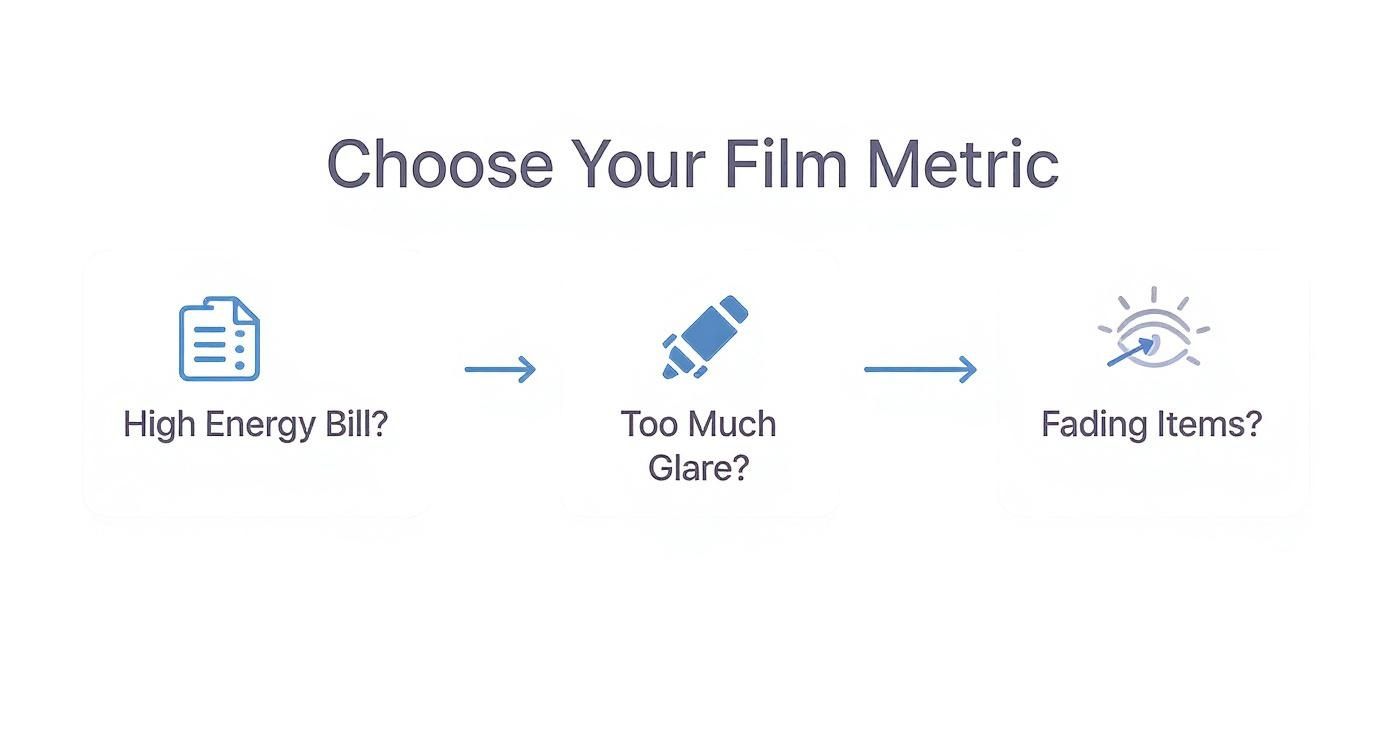
As you can see, your core problem—whether it's high energy bills, annoying glare, or faded inventory—maps directly to a key performance number like TSER, VLT, or UV Rejection.
Assess Your Building and Climate
Once you know what you're trying to fix, it's time to look at the unique personality of your building. The exact same film can work very differently from one place to another. A professional consultation is the best way to get this right, but you can get a solid head start on your own.
First, think about which way your windows face. The south and west sides of a building get blasted with the most intense sun for the longest part of the day, so they'll get the biggest benefit from a high-performance solar film. Your local climate also plays a huge role. A business in the desert Southwest will obviously want to prioritize heat rejection above all else, while a company in a milder climate might care more about cutting glare or adding security.
It’s a common myth that you need a dark, tinted film to get real heat control. The truth is, modern spectrally-selective films can be virtually clear while blocking a massive amount of invisible infrared heat. This means you can solve your energy problem without sacrificing all the natural light that makes a space feel welcoming.
Balance Competing Needs
It's pretty common to have more than one problem to solve. Maybe you need to cut the heat but also need to keep a crystal-clear view for your retail storefront. This is where you have to start balancing priorities.
The good news is that many of today's films are multitaskers. You can find security films that also have great solar control properties, or solar films that do a fantastic job of cutting glare. The trick is to lay out all your needs for your installer. They have the experience to point you to a product that strikes the right balance, like a film with a high TSER and a high Visible Light Transmission (VLT).
Finally, and this part is critical, you have to verify glass compatibility. You can't just slap any film on any window. Putting the wrong product on certain types of glass (especially double-pane or specially treated glass) can cause thermal stress, which can lead to cracked panes and failed seals. Any reputable professional will check this first to make sure the film is safe for your windows and won’t void your glass warranty. This step is absolutely non-negotiable if you want to protect your investment.
The Installation Process and Long-Term Care
Even the most advanced window film commercial product won't perform as promised without a flawless installation. The real-world success of your project comes down to two things: a skilled, professional application and simple, routine maintenance.
Let’s be clear: attempting a DIY installation on a commercial property is a recipe for frustration and wasted money. Professional installers have the specific tools and experience needed for a perfect, bubble-free finish. Just as important, using a certified installer is almost always a requirement to keep the manufacturer's warranty valid.
What to Expect During Installation
The whole process is much cleaner and less disruptive than most people imagine. A professional crew works with a well-practiced rhythm, moving through a few key steps to get the job done right.
- Meticulous Glass Preparation: First, the glass is deep-cleaned and scraped to get rid of every last speck of dirt or residue. This is the single most important step for a strong, permanent bond.
- Precise Film Application: The film is cut to the exact size of the window pane. The installer then uses a special slip solution, which allows them to slide the film into the perfect position before squeegeeing the water out.
- Final Trimming and Sealing: Once it's perfectly placed, the edges are trimmed with surgical precision for a seamless look. A final pass with the squeegee pushes out any remaining water and ensures the edges are sealed tight.
After the film is on, it needs time to "cure." Don't be alarmed if you see some small, hazy water pockets under the film for a few days. This is just the last bit of moisture evaporating as the adhesive creates a permanent bond with the glass. It's best to leave the windows alone for this period, which can take up to 30 days.
Long-Term Care and Lifespan
Keeping your commercial window film in top shape is surprisingly easy. After it has fully cured, you can clean your windows like you always have, just with a few simple precautions.
- Use Soft Materials: A soft microfiber cloth or a clean rubber squeegee is all you need.
- Choose Gentle Cleaners: Stick to mild, ammonia-free cleaners. A simple mix of soap and water works great.
- Avoid Abrasives: Never use abrasive pads, harsh chemicals, or anything sharp on the film. These can easily damage the scratch-resistant coating.
Think of it like caring for a car's paint job. You wouldn't use a scouring pad or harsh chemicals on it, and the same principle applies here. Gentle, consistent care is all that's needed to keep it looking new.
A quality commercial window film is built to last. When installed correctly, you can expect a lifespan of 15 to 20 years. Most leading manufacturers back their products with solid warranties, often for 10-15 years, covering problems like cracking, peeling, or fading. This gives you peace of mind that your investment is protected and will keep delivering returns for years to come.
Got Questions About Commercial Window Film? We’ve Got Answers.
When you're thinking about a major building upgrade like commercial window film, questions are a given. This is a significant investment in your property's security, energy savings, and overall comfort, so it’s smart to do your homework. We hear a lot of the same questions from property managers and business owners, so we've gathered them here with some straight-to-the-point answers.
Getting these practical concerns sorted out upfront makes the whole process clearer. Let's dive into what you need to know about durability, warranties, and more, so you can make a decision that pays off for years to come.
How Long Does Commercial Window Film Last?
This is usually the first thing people ask, and for good reason—it’s all about ROI. The simple answer is that professionally installed, high-quality window film is built to last. You can realistically expect it to perform without issues for 15 to 20 years.
Reputable manufacturers back their products with solid warranties, often for 10-15 years. This isn't just a piece of paper; it's a guarantee against problems like bubbling, peeling, cracking, or discoloration. Think of it less as a temporary fix and more as a long-term upgrade to your building's glass.
This kind of durability is why window film has become so popular globally. The Asia Pacific region, for example, now holds a massive 41.25% of the market, driven by new construction and a serious focus on energy efficiency. You can read more about the global window film market dynamics from Fortune Business Insights.
Will Installing Film Void My Window Warranty?
A very valid concern, and one we hear all the time. The short answer is no, not if you work with the right professionals. While it's true some window manufacturers might claim that adding any film voids their warranty, the top window film companies have a solution for this.
Most major film manufacturers provide a "warranty match." If a window seal fails after film is installed and the window company tries to blame the film, the film manufacturer’s warranty kicks in to cover the replacement cost. It’s a seamless safety net that protects your investment.
The key is to partner with an experienced installer. They will ensure the film is compatible with your specific glass and give you all the warranty details in writing before the job starts, so you're completely covered.
Can Window Film Be Installed on Any Type of Glass?
Mostly, yes—but this is where professional expertise is absolutely critical. Today's films are designed to work with almost all standard single-pane and double-pane windows. However, some types of glass can be tricky and require very specific films to prevent thermal stress, which can cause the glass to crack.
A professional assessment is non-negotiable for glass types like these:
- Triple-pane glass: These have complex thermal properties that demand a specialized film.
- Treated or coated glass: Factory-applied coatings, like Low-E, can interact with certain adhesives and films.
- Laminated or wired glass: These specialty safety glasses also need careful consideration to ensure compatibility.
An expert consultation is the only way to be sure you're getting the right film for your windows. It’s a crucial step that protects your glass and guarantees you get the performance you paid for.
Ready to enhance your building's security and efficiency with a solution that's both powerful and discreet? The experts at Fortress Security Films offer advanced, nearly invisible window protection for commercial properties. Strengthen your glass against threats while maintaining perfect clarity. Secure your free consultation with Fortress Security Films today and take the first step toward a safer facility.
