


When we think about home security, our minds usually jump to beefy front door locks and high-tech alarm systems. Windows? They often get overlooked. But for a burglar, that pane of glass is an open invitation. It’s the path of least resistance.
A standard window is just a thin sheet of glass in a frame, held shut by a flimsy lock that came from the factory. It’s a weak point, and criminals know it.
Why Burglars Love Windows
Think about it from their perspective. A side window, partially hidden by landscaping, is the perfect target. It’s low to the ground, out of sight from the street, and probably the last thing you checked before leaving the house. A quick, muffled pop of the glass or a simple pry of the lock, and they're inside your home in under a minute.
This isn't some Hollywood heist scene; it's the bread and butter of residential break-ins. FBI statistics consistently reveal that around 23% of burglars gain entry through a first-floor window. They’re counting on you underestimating just how vulnerable those windows are.
The real goal of burglar-proofing your windows isn't to build an impenetrable fortress. It's about making your home a tougher target. You want to add just enough difficulty, noise, and delay to convince a would-be intruder to just move on.
From Vulnerability to Deterrent
Most burglars are opportunists, not master criminals. They're looking for the easy score. The moment they encounter real resistance—a window that won’t shatter easily, a lock that holds firm—they’re likely to abandon the attempt and look for an easier house down the street. This is where you can tip the scales in your favor.
You don't need to live behind steel bars. The secret is understanding your home's weak spots and addressing them with smart, practical solutions.
This guide is all about giving you that practical, actionable advice. We’re going to walk through exactly how to:
- Pinpoint the most at-risk windows in your home.
- Select the right security upgrades for your specific situation and budget.
- Correctly install products like security film to get the most out of them.
- Reinforce your windows with better locks and simple hardware fixes.
By the time you're done, you'll have a clear plan to turn your home's biggest vulnerability into one of its strongest security assets.
Think Like a Burglar: How to Spot Your Home's Weakest Windows
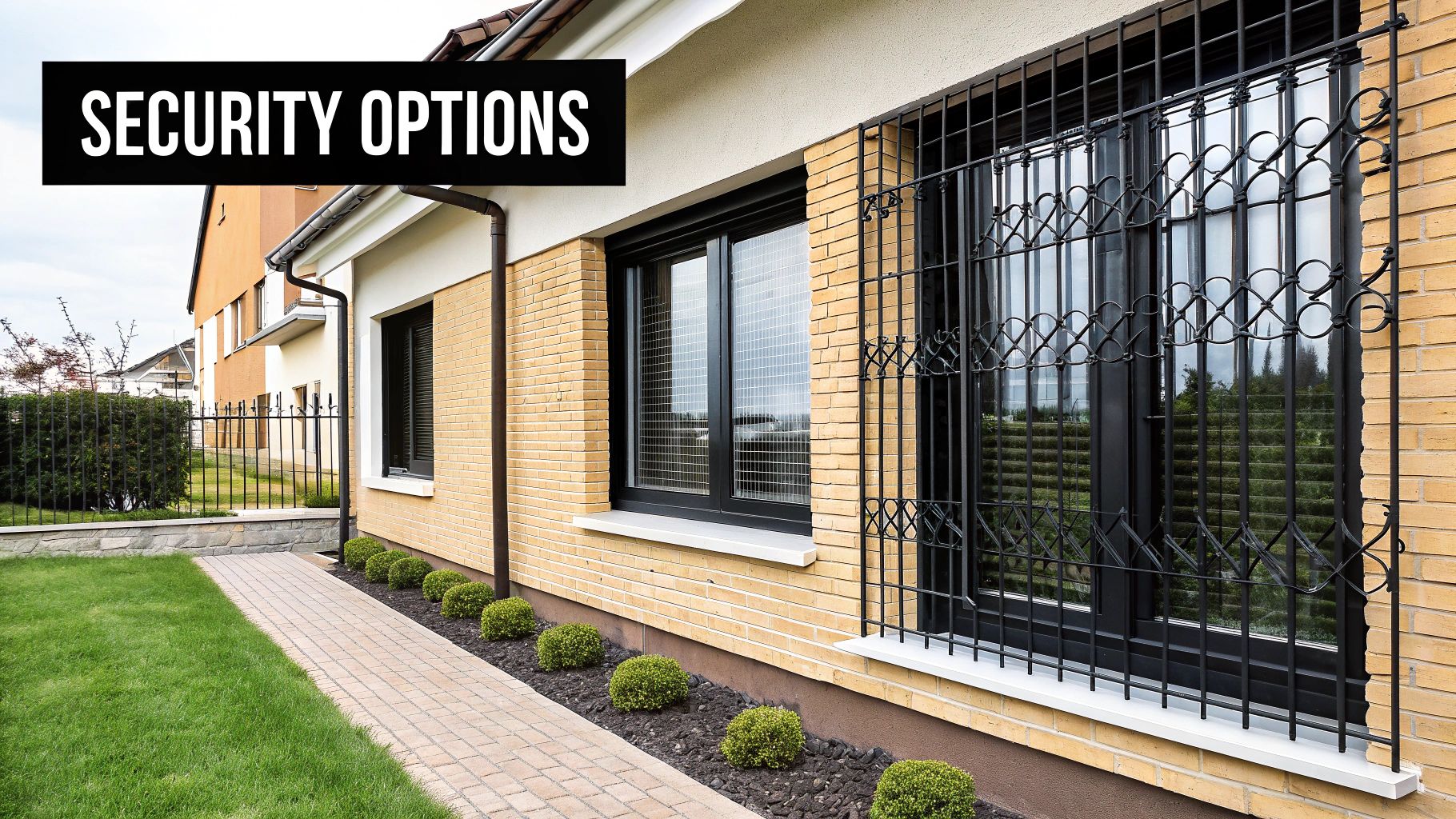
Before you spend a dime on new locks or films, the first step in window burglar proofing is to see your home the way a criminal would. This simple shift in perspective is incredibly powerful. Take a walk around your property, both outside and in, and you'll quickly start to see which windows are practically rolling out the welcome mat for intruders.
Start by looking for anything that offers an intruder cover. That small ground-floor bathroom window hidden behind a big, bushy hedge? That’s a classic weak spot. Burglars aren’t looking for a challenge; they’re looking for privacy to do their work. Overgrown landscaping, tall fences, and even a backyard shed can create the perfect blind spots for them to force a window open, completely hidden from the street or your neighbors.
Finding the Easiest Ways In
Don't just think horizontally; look up. A second-story window might feel secure, but if it’s sitting right above a flat garage roof or next to a sturdy trellis, it’s just a quick climb away from being a major vulnerability. Burglars are opportunistic and surprisingly good at using your home's own features against you.
I always recommend people create a quick "vulnerability map" of their home. Just walk the perimeter with a notepad and jot down any window that fits these descriptions:
- Hidden Windows: Any window on the ground floor that’s blocked from street view. This is priority number one.
- Easily Reached Upper-Floor Windows: Look for any that are above porches, low roofs, or even near sturdy drainpipes that could be used as a ladder.
- Forgotten Basement Windows: These are often out of sight and out of mind, which is exactly why they’re targeted. They frequently have older, weaker locks and frames.
- Back-of-House Windows: The rear of your home is usually the most private area, making those windows a prime target for a break-in attempt.
Doing this little audit doesn't take long, but it helps you immediately prioritize. Instead of feeling overwhelmed and trying to secure every single window at once, you can focus your time and money where it will have the biggest impact right away.
Check Your Window Hardware—It's Not Just About the Glass
Once you've pinpointed your high-risk windows, get up close and inspect their physical condition. From my experience, many break-ins don't involve the dramatic smash of glass you see in movies. They happen quietly by exploiting weak locks and deteriorating frames.
Look at the locks on each window. Are they the cheap, flimsy latches that were installed by the builder? Many of these can be jiggled or pried open with a simple screwdriver. Now, check the frame itself. A rotting wooden frame can be splintered and forced open with a single kick, making the lock completely irrelevant. If you have sliding windows, try lifting them up and out of their tracks—if it's easy for you, it's a well-known and silent entry method for a burglar.
A critical part of window security involves more than just the glass. Burglars will always test the path of least resistance, which often means exploiting a weak lock or a deteriorating frame before resorting to smashing a pane.
This growing awareness around robust security is driving major innovations in protective glass. The entire bulletproof security glass industry, a high-end form of window burglar proofing, is projected to hit $30.38 billion by 2032. This shows a massive consumer demand for stronger, more reliable barriers against forced entry, and you can learn more about the growth of the security glass market if you're interested in the tech.
Choosing The Right Window Security Solutions
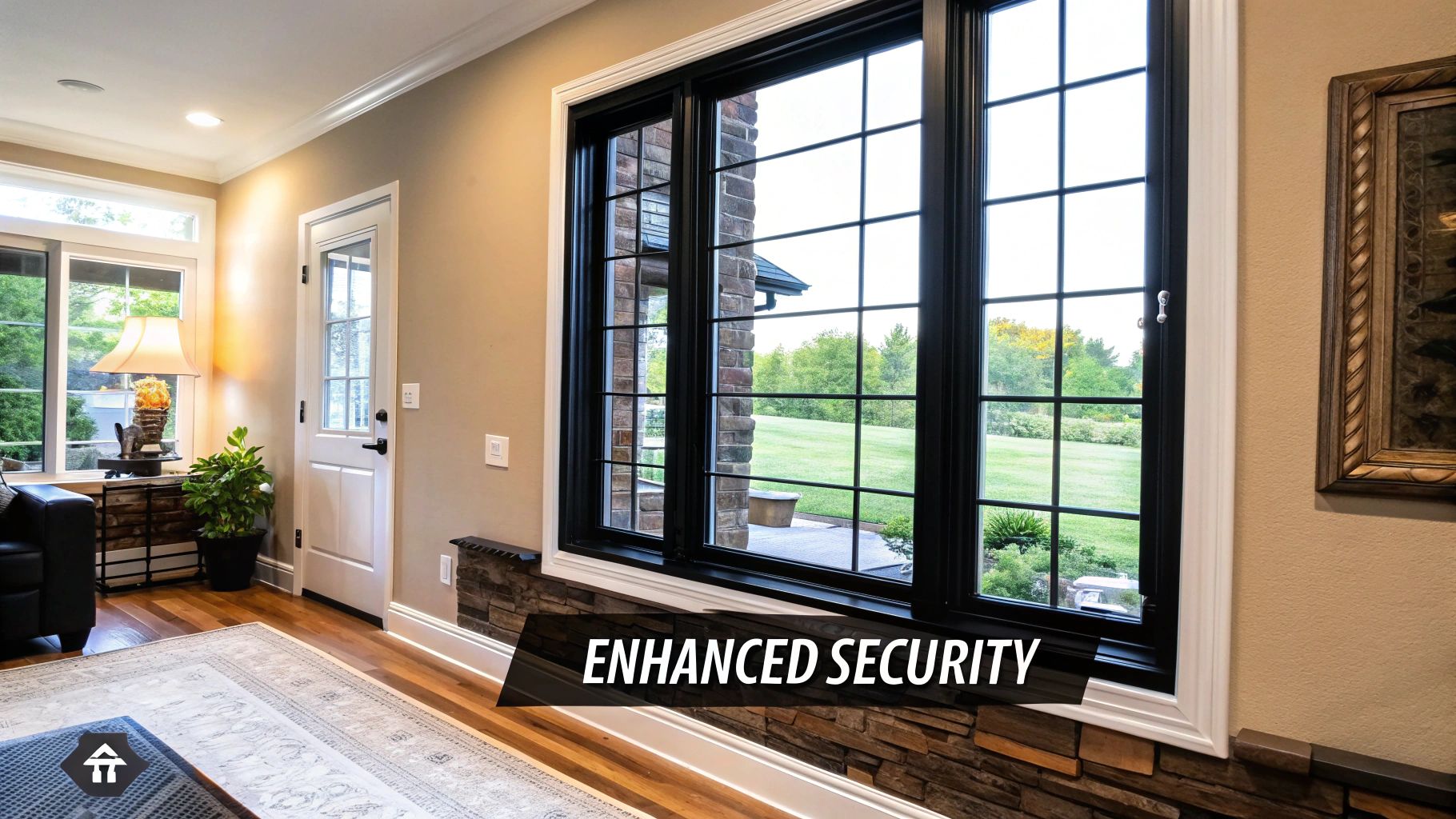
Once you’ve pinpointed your home's most vulnerable windows, it's time to sift through the hardware and upgrades that will make a real difference. The market for window burglar proofing is huge, offering everything from simple five-minute fixes to professional-grade installations that can stop a brick. What you choose ultimately comes down to your budget, your security goals, and how much work you’re willing to put in yourself.
For a lot of people, especially renters, the best solutions are effective without being permanent. This is where options like high-quality security films and secondary locks really come into their own. A good security film can seriously slow down an intruder, holding shattered glass together even after a heavy blow. When you couple that with a simple, non-drilling sash jammer, you’ve instantly boosted your security without leaving a mark.
Layering Your Defenses
The whole point is to create layers of defense. A determined burglar might get past one obstacle, but forcing them to defeat multiple security measures buys you precious time and dramatically increases the noise and risk of them getting caught.
-
Security Film: Think of this as a clear polyester shield applied directly to the inside of your window. It reinforces the glass, making it incredibly tough to smash through. It's an excellent DIY project that delivers a high level of protection for what it costs. Digging into the details of residential security film installation can help you decide if it’s the right move for you.
-
Upgraded Locks: Let’s be honest—the factory latches on most windows are flimsy at best. Swapping them for more robust key-operated locks or adding secondary bolts is a quick upgrade that makes a massive difference against prying.
-
Window Bars or Grilles: While they offer the absolute highest level of physical protection, bars are usually a last resort. They can impact your home's look and, more importantly, can be a serious fire hazard if not installed correctly. Modern designs are a bit more decorative, but they are a major investment.
The most effective window security strategy almost always involves combining a few solutions. For example, a strong security film makes the glass itself a formidable barrier, while an upgraded locking mechanism ensures the entire frame holds firm against force.
Comparing Window Security Solutions
Making the right choice can feel overwhelming, so let's break down the most popular options. This quick comparison table looks at the key factors—security level, cost, and installation difficulty—to give you a clear picture of what to expect from each.
| Solution | Security Level (1-5) | Average Cost (per window) | DIY Friendliness (1-5) |
|---|---|---|---|
| Security Film | 4 | $50 – $150 | 4 |
| Sash Jammers | 3 | $15 – $30 | 5 |
| Keyed Window Locks | 4 | $25 – $60 | 3 |
| Window Bars/Grilles | 5 | $150 – $400+ | 1 |
As you can see, security film offers a fantastic balance of strong protection, reasonable cost, and DIY feasibility. This kind of advanced protection is becoming more mainstream.
The demand is growing so much that the global market for bulletproof safety windows—a high-end segment of this industry—is expected to jump from $1.5 billion in 2025 to over $2.7 billion by 2033. This trend shows a clear shift toward more robust home security, and you can see more insights into this growing market for safety windows and how homeowners are taking protection more seriously than ever.
How to Install Window Security Film Like a Pro
Applying security film is one of the most satisfying and effective DIY projects you can do for window burglar proofing. But let's be honest, the devil is in the details. A rushed job full of bubbles and peeling edges doesn't just look awful; it completely undermines the film's ability to stand up to an impact. Get it right, though, and you transform a standard pane of glass into a surprisingly tough barrier that can buy you critical minutes during a break-in attempt.
The process itself isn't rocket science, but it absolutely demands patience and a steady hand. I've seen it time and time again: success comes down to three things. An immaculately clean glass surface, the right application solution, and a good squeegee technique. Professionals have this down to a science, and with a little guidance, you can too.
This guide will walk you through the three key stages: measuring and material choice, surface prep, and the final installation.
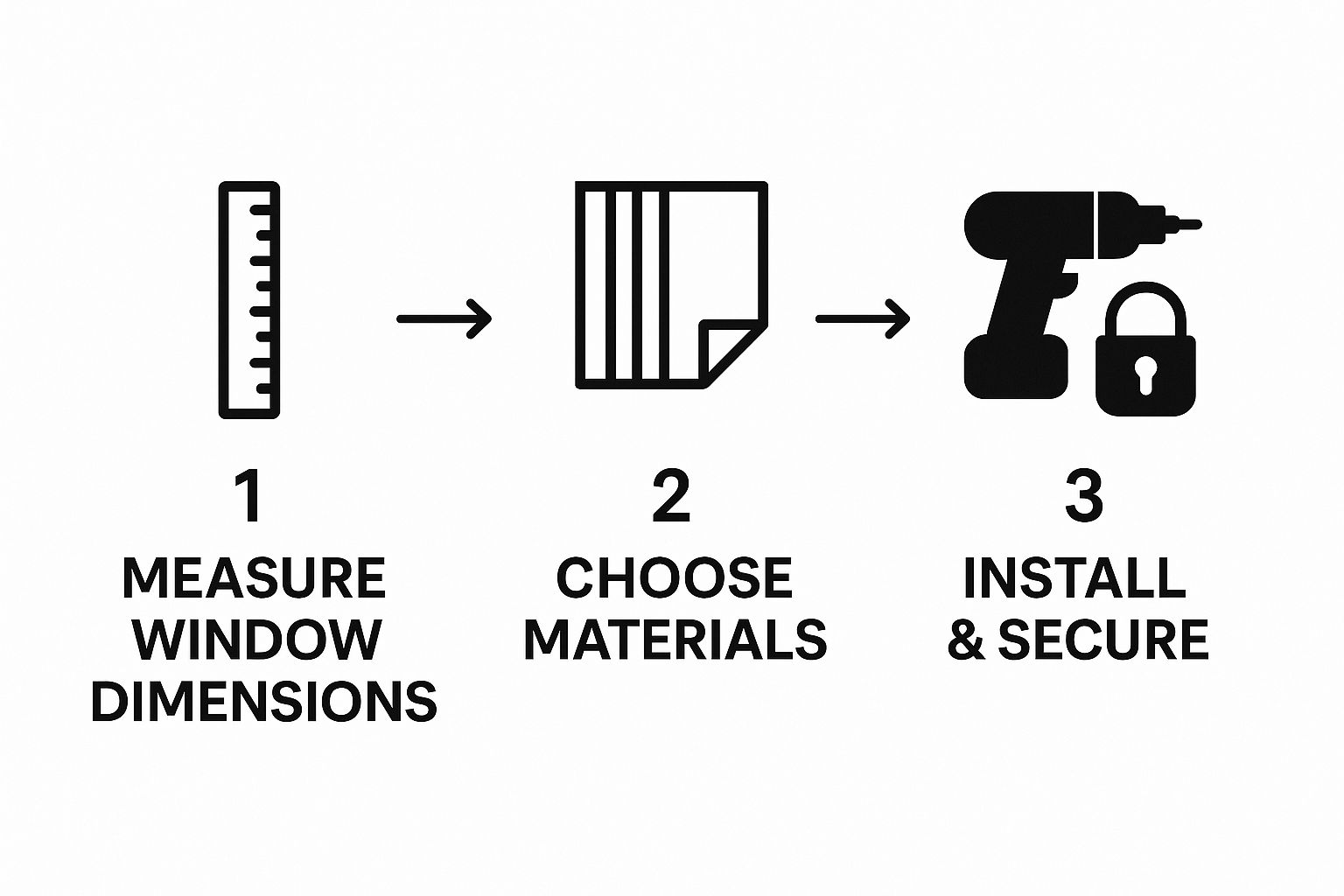
As you can see, a successful installation starts long before the film ever touches the glass. It all hinges on careful preparation.
Preparation Is Everything
First thing's first: put away the Windex. Any cleaner with ammonia can actually degrade the film's adhesive over time. Your best friend for this job is a simple spray bottle filled with water and just a few drops of baby shampoo or another pH-neutral soap. You're not looking for a sudsy mess, just a slightly slippery solution that lets you slide the film into place before it grabs hold.
Now, clean the window like you've never cleaned it before. I mean it. Use a new razor blade scraper, held at a shallow angle to avoid scratching the glass, to lift off any invisible paint flecks or caked-on grime. After that, spray and wipe the entire pane and the surrounding frame with your soap solution and a good, lint-free cloth. Every single speck of dust you miss will become a permanent, glaring bubble under the film.
The number one reason for a failed installation isn't a bad squeegee technique—it's a poorly cleaned surface. If you treat the glass preparation as 90% of the job, the application itself will be surprisingly straightforward.
The Application Process
Measure your window pane carefully, then cut your film so it’s about one inch larger on all sides. This overlap is your safety net. It gives you some wiggle room and makes trimming for a perfect, edge-to-edge fit much easier later on.
Now for the part that trips up most beginners: separating the film from its clear protective liner. Here’s a pro tip that works every time: stick a piece of tape on both sides of one corner and pull them apart. The liner will peel right off. As you separate it, generously spray the sticky, adhesive side of the film with your soap solution. At the same time, drench the clean window pane until it’s dripping wet. You really can't use too much solution here.
With the film’s adhesive side wet, carefully bring it to the wet glass. The soapy water acts as a lubricant, letting you slide the film around until it’s perfectly positioned. Once it's centered, give the outside of the film a good spray too. This helps the squeegee glide smoothly without catching.
Using firm, overlapping strokes, start squeegeeing from the center of the window and work your way out. Your goal is to push all the water and air bubbles toward the edges. Once the film is flat and looks good, grab a sharp utility knife and a straight edge. Trim the excess film, leaving a tiny 1/16-inch gap between the film's edge and the window frame. This tiny gap is essential—it’s how the last bits of moisture escape, ensuring a perfect cure.
For an even more detailed walkthrough, checking out a comprehensive window security film installation guide can offer extra visual aids and tips to guarantee you get that flawless, professional finish.
Small Tweaks to Locks and Frames That Make a Big Difference
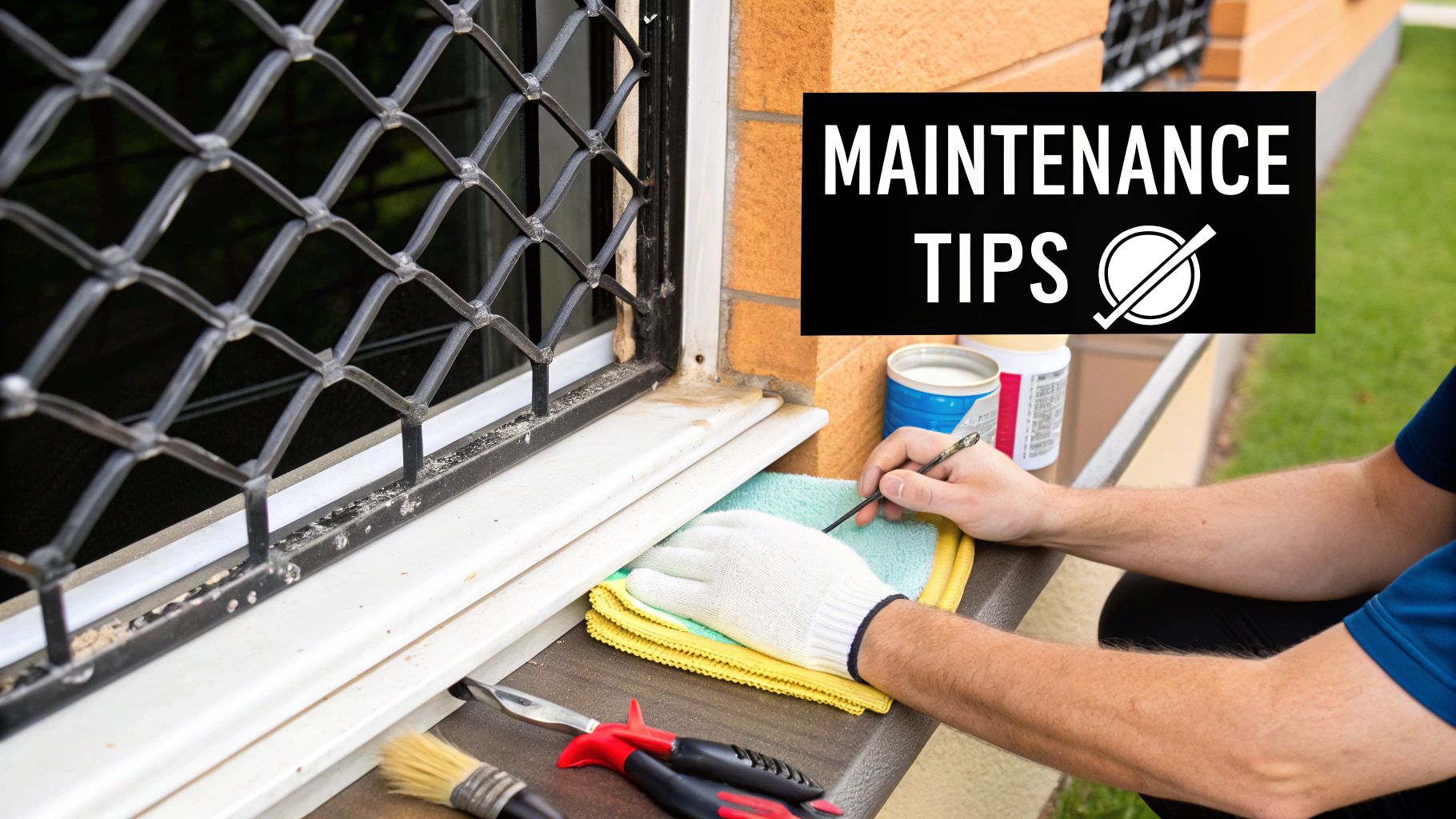
While security film is an incredible defense against a brute-force smash, it won't do much if your window's lock or frame is the real weak spot. A determined burglar always looks for the easiest way in. If they can pry the window open faster than they can break the glass, the film suddenly becomes less important.
This is exactly why a few small, deliberate upgrades can provide a massive boost to your overall security. When it comes to window burglar proofing, sometimes the most impactful changes are the simplest ones that take just a few minutes to complete.
Beef Up Your Existing Locks
Go take a hard look at the strike plate on your window’s main lock. Chances are, it's held in place by a couple of flimsy, half-inch screws. Those little things barely grip the soft wood or vinyl of the window frame, offering next to no real defense against a pry bar or a swift kick.
Here’s a five-minute fix that changes everything:
- Ditch the Factory Screws: Take out those short, standard screws.
- Go Long: Replace them with heavy-duty three-inch screws.
- Anchor to the Stud: Drive those new screws through the window frame so they bite deep into the solid wood stud of the wall itself.
This one simple swap turns a flimsy latch into a heavily anchored barrier. It exponentially increases the amount of force needed to bust the lock, which is often enough to make a burglar give up and move on.
Throw in a Secondary Lock
Beyond strengthening what's already there, adding a second locking device is one of the cheapest and most effective ways to truly secure a window. These gadgets create another physical stopping point, completely frustrating any attempt to jimmy the main latch open.
Think of it this way: Your primary lock was built for convenience. A secondary lock is built for one thing—security. It’s a physical roadblock designed to stop a forced entry dead in its tracks.
For instance, sash jammers are a fantastic addition to vinyl or double-hung windows. They're small, pivoting levers you mount on the frame that physically block the sash from being pried open. If you have sliding windows, look into simple pin locks or track locks. These prevent the window from being lifted off its track or slid open, even if the main latch has been bypassed.
These kinds of practical devices are becoming more and more popular as homeowners get smarter about security. In fact, the market for these window security devices is growing steadily, reflecting a clear demand for better safety solutions. By pairing a reinforced primary lock with a dedicated secondary one, you create a layered defense that's far tougher than either component alone.
Don't Let Your Windows Be the Weakest Link
Burglar-proofing your windows is a fantastic step, but it shouldn't be your only step. Think of it this way: a castle isn't defended by just a strong gate. It has high walls, a moat, and guards on patrol. Your home security should work the same way—as a complete, layered system.
A truly secure home is all about creating layers of defense. Security film makes the glass incredibly tough to break. When you add reinforced window frames and high-quality secondary locks into the mix, you've created a seriously tough obstacle. A would-be intruder might get past one of those layers, but the effort, noise, and time it takes to get through all three is usually enough to make them give up and move on.
Think Beyond the Glass
Great security isn't just about what's on your windows; it's also about what's around them. A little strategic thinking about your property can make a huge difference.
- Clean Up Your Landscaping: Overgrown bushes and tall hedges right next to your house are a burglar's best friend. They provide the perfect cover to work on a window without being seen from the street. Trim them back.
- Light It Up: Motion-activated floodlights are one of the best deterrents out there, especially for the sides and back of your house. Nothing sends a prowler running faster than being suddenly blasted with bright light when they're expecting darkness.
Peace of mind doesn't come from a single purchase, but from a thoughtful strategy. It’s the combination of hardened windows, smart lighting, and good habits that transforms a vulnerable house into a secure home.
Getting started can feel like a big project, but it doesn't have to be. Just begin with that one window you identified as your biggest risk. Taking that first, small action today is the most important move you can make toward a safer home.
Frequently Asked Questions
It's smart to have a solid plan for your window security, but it’s totally normal to have a few questions before you commit. Let's tackle some of the most common things people ask us.
Will Security Film Make My Windows Unbreakable?
That's a common misconception, but no, security film doesn't make glass unbreakable. What it does do is far more practical: it holds the shattered glass together in the frame when it's hit.
Think about it from an intruder's perspective. They expect a quick, quiet tap to break the glass and get in. Instead, they're faced with a noisy, spider-webbed mess that's still a solid barrier. This noise and delay are a burglar's worst nightmare, and it's often enough to make them give up and move on.
Are Window Bars A Good Idea For Homes?
Physically, window bars offer top-tier protection, but they come with some serious trade-offs, especially for a home. The biggest concern, by far, is fire safety.
Unless they have a quick-release mechanism that you know works (and test regularly), bars can easily become a trap in an emergency. They're generally a better fit for windows you'd never use as an escape route, like in an empty basement or a detached garage.
The best window burglar proofing isn't about a single magic bullet. It’s about building layers of defense. Combining security film with better locks and smart landscaping creates a much tougher target for any would-be intruder.
What Are The Best Security Options If I Rent?
Renters have some great options that won't get them in trouble with their landlord. You're looking for solutions that are effective but can be completely removed when you move out.
Here are a few solid choices:
- Removable Security Film: High-quality films can be applied and later taken off without leaving a trace or damaging the glass.
- Sash Jammers: These are secondary locks that physically block a window from being pried open. Many can be installed without drilling any new holes.
- Contact Alarms: These are simple, battery-powered alarms. You just stick one part to the window and the other to the frame, and they'll let out a piercing siren if separated.
If you're looking for more ideas, there are plenty of non-permanent security upgrades out there. For a closer look at different strategies, check out the Fortress Security Films security blog.
