


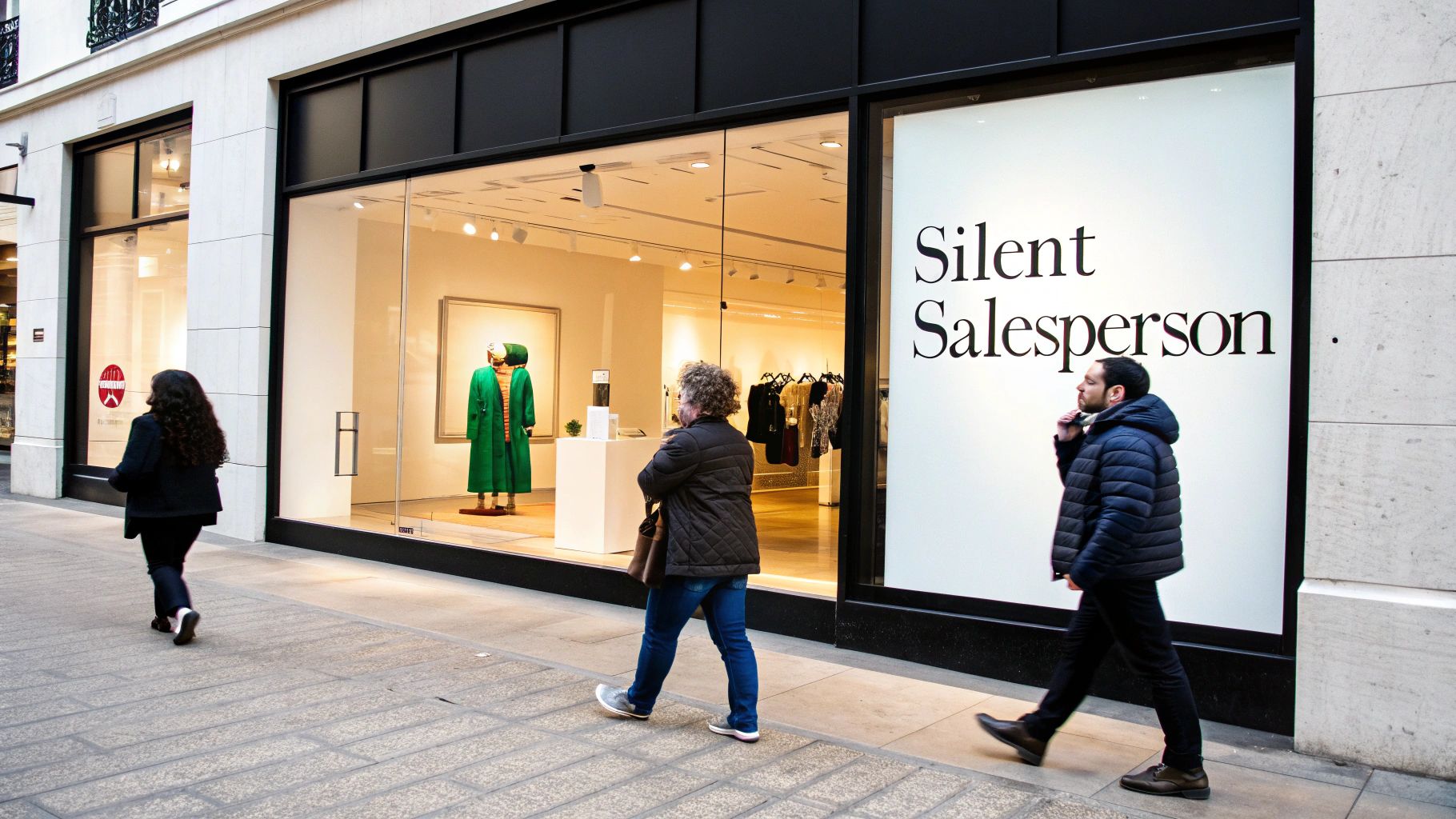
Your storefront windows are so much more than just glass in a frame. Think of them as your business's first handshake, your silent, around-the-clock salesperson. They're one of the first things a potential customer sees, and they play a huge role in shaping that critical first impression.
Why Your Storefront Windows Are Your Silent Salesperson
Let's be honest: your storefront is the face of your business, and the windows are its eyes. They tell a story before anyone even walks through the door. Are they bright, clean, and inviting? Or are they dated, grimy, or worse, damaged? The right windows don't just let in light; they actively work to pull people in and project an image of quality and trustworthiness.
This guide is all about helping you make the right choices to turn your windows from a simple building feature into a powerful business asset. We'll cover everything from the materials you choose to the security features that protect your investment.
What Your Windows Are Really Doing for You
Today’s high-performance commercial windows wear a lot of hats. Understanding just how much they do is the first step in making a smart decision that pays off for years.
- Attraction & Merchandising: Your windows are a stage. Crystal-clear, low-reflection glass showcases your products and services, effectively turning sidewalk traffic into interested shoppers.
- Brand Image & Curb Appeal: The style of your windows—the frames, the layout, the condition—is a massive part of your brand's look and feel. They have to work with your other visual branding, like the various types of commercial signs, to create a professional, cohesive storefront.
- Security & Protection: This is a big one. Modern glazing can be a formidable barrier against break-ins, but it also protects your merchandise from fading under harsh UV rays and can even hold up against severe weather.
- Energy Efficiency & Comfort: Good windows are good for your bottom line. Proper insulation helps keep your store's temperature stable, which means lower HVAC bills and a more pleasant environment for customers and staff.
When you start seeing your windows as an active part of your business strategy, the conversation changes. It's no longer just about filling a hole in the wall; it's about making a strategic investment in your sales, security, and day-to-day operating costs.
Decoding Your Window: Frames, Glazing, and Materials
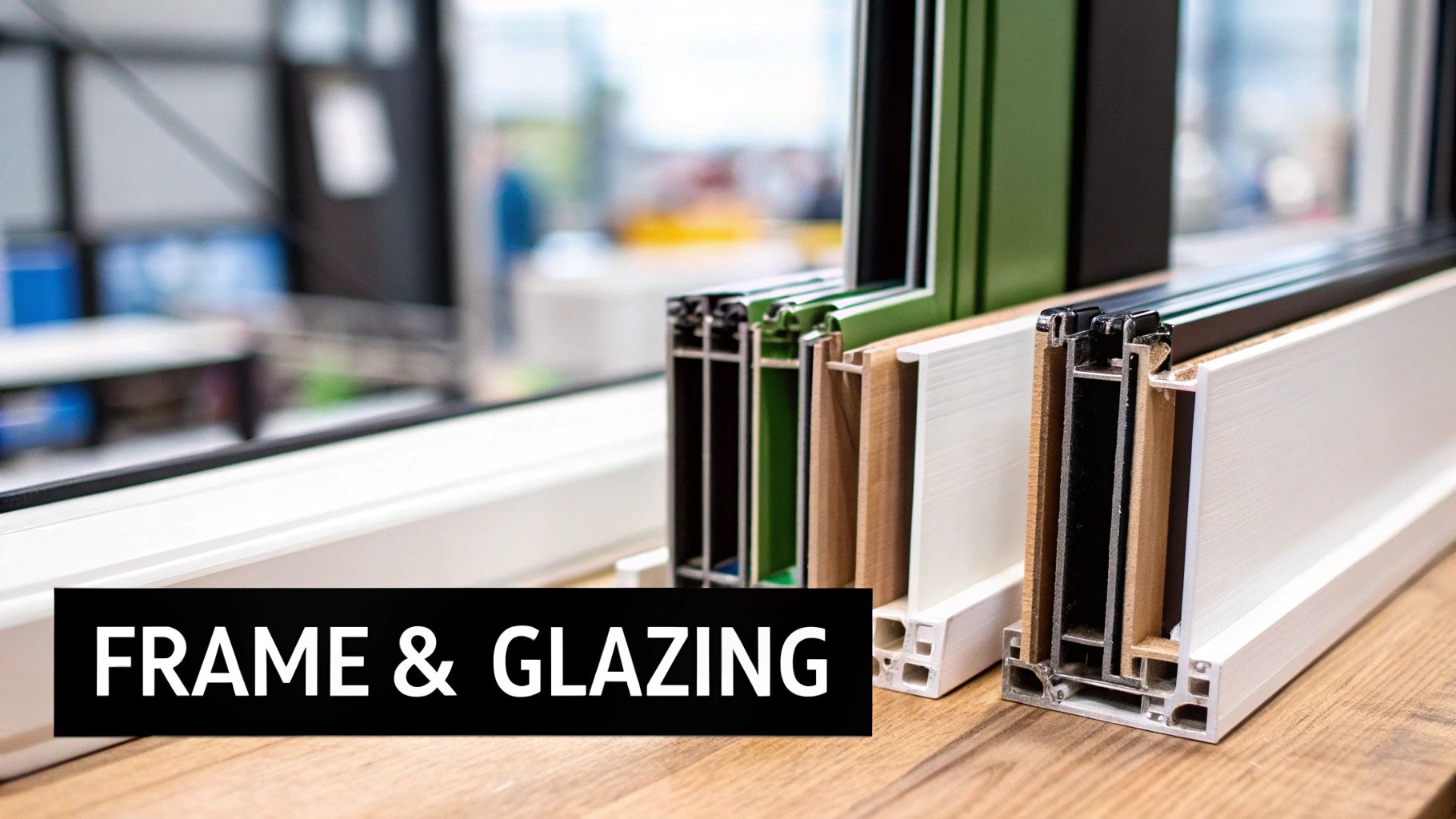
A storefront window isn't just a single sheet of glass. It’s a complete system, and the two most critical parts are the frame holding everything together and the glazing—the glass itself. Getting these two components right is the secret to a window that not only looks good but actually performs for your business.
Think of the frame as the window's skeleton. It’s responsible for the overall strength, how long it will last, and a surprising amount of its insulating power. The material you pick for that skeleton has real, long-term consequences for everything from your maintenance budget to your monthly energy bills.
Choosing the Right Window Frame Material
Every framing material comes with its own set of trade-offs. You're constantly balancing strength, cost, maintenance, and how well it keeps the heat in or out. For most commercial buildings, aluminum is the undisputed king. It’s incredibly strong for how little it weighs, which means it can support huge, heavy panes of glass without needing bulky, view-obstructing frames.
But standard aluminum has a big weakness: it’s a terrible insulator. Heat and cold travel right through it. That’s why you’ll almost always want to look for thermally broken aluminum. These frames have a tough plastic strip that separates the inside metal from the outside metal, creating a barrier that stops temperature transfer in its tracks. It's a simple change that makes a massive difference to your energy costs.
To help you weigh your options, here’s a quick breakdown of the most common materials used for commercial window frames.
Commercial Window Frame Material Comparison
| Material | Key Advantages | Primary Disadvantages | Best For |
|---|---|---|---|
| Aluminum | Lightweight yet very strong, durable, and corrosion-resistant. Sleek, modern aesthetic. | Poor insulator unless "thermally broken." Can be more expensive than vinyl. | Most storefronts, curtain walls, and buildings requiring large, uninterrupted glass spans. |
| Steel | The strongest option available. Unmatched security and can be shaped for unique designs. | Very heavy, most expensive, and can be prone to rust if not properly maintained. | High-security locations, landmark architectural projects, and fire-rated applications. |
| Vinyl | Excellent thermal insulator and often the most budget-friendly choice. Low maintenance. | Lacks the structural strength for very large window openings. Can warp in extreme heat. | Smaller commercial buildings, offices, and multi-family residential where cost is a primary driver. |
Ultimately, the right frame depends on your priorities. For most retailers, a thermally broken aluminum frame strikes the perfect balance between performance, aesthetics, and long-term durability.
Understanding Your Glazing Options
The glass, or glazing, is where all the high-tech magic happens. We’ve come a long way from the single-pane windows of the past. Today’s options are engineered to manage sunlight, block heat, and stand up to physical threats.
For any business, the absolute baseline should be an Insulated Glass Unit (IGU).
An IGU isn't one piece of glass—it's two (or even three) panes separated by a sealed space filled with air or an inert gas like argon. This gap acts as a buffer, just like the vacuum in a thermos, preventing outdoor temperatures from bleeding inside.
But you can take performance a step further. One of the most valuable upgrades is a Low-E (low-emissivity) coating. This is a transparent, microscopically thin layer of metal oxide that’s applied directly to the glass surface.
This invisible coating is a game-changer. It reflects long-wave infrared heat, which means it keeps the sun’s heat out in the summer while keeping your building’s heated air in during the winter. A window with a good Low-E coating can slash energy loss by as much as 30-50%. When you pair a Low-E coated IGU with a thermally broken aluminum frame, you get a powerhouse window system that keeps your space comfortable, your energy bills down, and your merchandise protected.
Your Window's Performance Report Card
Think of a window's performance label as its report card. It tells you exactly how that window will handle energy, light, and comfort in your commercial space. Getting a handle on these ratings is one of the most important steps you can take to make sure you're choosing windows that will save you money and create a genuinely inviting store.
These aren't just arbitrary numbers, either. They're standardized ratings from the National Fenestration Rating Council (NFRC), which means you can compare products from different manufacturers apples-to-apples. Let's break down the key "grades" you'll find on this report card.
What the Key Performance Numbers Really Mean
When you look at a window's NFRC label, you'll see a few key metrics. They might look technical at first glance, but they actually represent simple concepts that directly impact your store's environment and, more importantly, your utility bills.
-
U-Factor (The Insulation Grade): This is all about heat loss. U-Factor tells you how well the window keeps your heated air inside. The lower the number, the better the insulation. For anyone in a colder climate, a low U-Factor is non-negotiable for keeping heating costs in check.
-
Solar Heat Gain Coefficient (SHGC) (The Heat-Blocking Grade): SHGC is the flip side of U-Factor. It measures how much of the sun’s heat the window blocks from getting in. A lower SHGC is a huge deal for businesses in hot climates, as it directly cuts down on how hard your air conditioning has to work.
-
Visible Transmittance (VT) (The Natural Light Grade): This one's straightforward. Expressed as a number between 0 and 1, VT tells you how much visible light makes it through the glass. A higher VT means more beautiful, natural daylight floods your space, which can seriously cut down your electricity bill for lighting.
A retail store in Arizona, for instance, would put a very low SHGC at the top of its list to fight off that intense desert sun. On the other hand, a coffee shop in Seattle would probably prioritize a high VT to maximize whatever natural light it can get on those famously gray days.
The Non-Negotiables: Building Codes
Beyond just performance, your storefront windows have to meet local and national building codes. These aren't just suggestions—they are legal requirements put in place to ensure both safety and energy efficiency. Getting this wrong can lead to failed inspections, expensive rework, and serious liability issues.
Building codes will dictate several key things about your windows:
-
Energy Codes: Most areas follow some version of the International Energy Conservation Code (IECC). This code sets the minimum U-Factor and SHGC your windows must have, based on your specific climate zone.
-
Safety Glazing Standards: Codes are very specific about where safety glass (like tempered or laminated glass) must be used. Think doors, large windows close to the floor, and any other area where someone might accidentally impact the glass. This is all about preventing serious injury from shattered panes.
Trying to figure all this out on your own can be a massive headache. This is exactly why partnering with an experienced, professional installer is so critical. They'll make sure the windows you choose not only look great and perform well but also tick every single legal box for safety and efficiency right from the start.
Layering Your Defenses Against Threats
A shattered storefront window is more than just broken glass. It’s a direct hit to your business—leading to stolen merchandise, frustrating downtime, and a real blow to the sense of safety for your team and customers. The key to protecting your assets isn't about finding a single magic bullet; it's about building a layered defense strategy that's tough, smart, and designed for your specific risks.
Your First Line of Defense: Security Window Film
The simplest and most effective starting point for most businesses is a professionally installed security window film. Picture it as an invisible shield for your existing glass. This tough, micro-thin polyester material is applied directly to the interior of your windows.
When a thief tries to smash the glass, it will likely crack and break, but the film’s powerful adhesive holds all those dangerous shards together, right in the frame.
This one upgrade does two critical things:
- It stops smash-and-grab thieves cold. The film creates a noisy, frustrating barrier that slows them down dramatically. Most opportunistic criminals are looking for a quick score; when faced with this much resistance, they almost always give up and move on.
- It keeps everyone safe. By containing the broken glass, the film prevents a spray of sharp fragments from flying into your store, protecting people and inventory from harm.
Moving Beyond Films to Fortified Glass
While films are a fantastic retrofit solution, your next layer of security involves building protection directly into the glass itself. This is where you get into options like laminated and tempered glass, which offer a more permanent and heavy-duty defense for your storefront commercial windows.
Laminated Glass: The Unyielding Barrier
Laminated glass is basically a glass sandwich. It’s made of two or more panes of glass bonded together with a tough, clear plastic interlayer (usually polyvinyl butyral, or PVB). This is the exact same technology used in your car’s windshield, and for good reason.
When struck, the glass may crack, but that sticky inner layer holds everything together. It prevents a hole from forming and maintains a solid barrier against intruders, flying debris from a storm, or even explosions.
Key Insight: The real magic of laminated glass isn't just in stopping the initial impact, but in its ability to stay in one piece and remain a formidable barrier even after it's been damaged. This sustained protection is absolutely critical during a prolonged event like a hurricane or a determined break-in attempt.
Tempered Glass: Strength and Safety
Tempered glass, on the other hand, gets its strength from a different process. It's heated to extreme temperatures and then rapidly cooled, a process that makes it about four times stronger than regular annealed glass.
Its main security feature is actually how it breaks. Instead of shattering into large, jagged shards, it crumbles into thousands of small, relatively harmless pebble-like pieces. This makes it an excellent "safety glazing," perfect for high-traffic areas like doors where accidental impacts are a real possibility.
Comparing Your Options
Choosing the right glazing is a balancing act between security needs, building codes, and budget. Here’s a quick breakdown to help you compare the most common solutions.
Security Glazing Options at a Glance
| Solution | Protection Level | Typical Cost | Best For |
|---|---|---|---|
| Security Film | Good | $ | Retrofitting existing windows; smash-and-grab deterrence. |
| Tempered Glass | Better | $$ | High-traffic areas, doors; meeting safety codes. |
| Laminated Glass | Best | $$$ | High-risk areas; protection against forced entry and storm damage. |
| Film + Glass | Ultimate | $$$$ | Maximum security locations requiring multi-layered defense. |
Each option has its place, and the best strategy often involves a mix-and-match approach to cover all your bases effectively.
Putting It All Together for a Comprehensive Plan
The most resilient security plans rarely rely on just one solution. A smart approach might involve using code-required tempered glass in your main doors, installing robust laminated glass in your large, vulnerable display windows, and then adding a security film over everything for an extra layer of forced-entry resistance.
This multi-layered thinking creates a defense that can handle different kinds of threats all at once. It's no surprise the demand for these advanced solutions is growing; the global storefront glass market is projected to grow at a CAGR of 5% through 2032 as businesses across major economies continue to prioritize both security and aesthetics. You can explore more data on this growing market and what’s driving it.
Budgeting for Long-Term Value, Not Just Upfront Cost
It’s easy to look at new storefront windows as a one-time line item on a budget. But that’s a rookie mistake. A much smarter way to think about it is as a strategic investment—one with a real, measurable return that pays you back for years.
The initial price tag is just the beginning of the story. The total size of the windows, the frame material you pick (like thermally broken aluminum), and any special features or high-performance glass will all shape your quote. And while the cheapest option might look good on paper, it almost always costs you more in the long run.
Calculating Your Return on Investment
The true worth of a good window system shows up month after month on your utility bills and, believe it or not, in your sales numbers. This is your return on investment (ROI), and it’s where a smart purchase really starts to shine.
So, how do high-performance features translate into real money?
-
Energy Efficiency: Think of insulated glass units with Low-E coatings as a shield for your building. They drastically cut down how hard your HVAC system has to work. This means smaller heating bills in the winter and lower cooling costs in the summer, with savings that can easily hit 15-30% a year, depending on where you're located.
-
Enhanced Security: A single smash-and-grab can cost you thousands in lost inventory, not to mention the damage and downtime. Upgraded security glazing is a powerful deterrent that stops these crimes before they even start.
-
Improved Curb Appeal: Your storefront is your handshake with the world. Bright, modern, and inviting windows do more than just look good—they pull people in. When your products are showcased behind crystal-clear, attractive glass, you'll see a real bump in foot traffic and sales.
This shift toward performance isn't just a hunch; it's a massive market trend. The global commercial storefront window market was valued at $3.5 billion in 2023 and is expected to rocket to $6.0 billion by 2032, all because businesses are demanding more energy-efficient and secure solutions. You can dig into the numbers in this commercial storefront window market report.
The smartest budget allocates funds not just for the windows themselves, but for the value they create. Think of it as purchasing lower energy bills, better security, and a stronger brand image for years to come.
On top of all that, many high-efficiency window projects are eligible for federal or local tax credits. These incentives can shave a good chunk off the initial cost, speeding up your ROI and making the whole project an even bigger win.
When you add it all up—the energy savings, the security, the curb appeal, and the tax breaks—it becomes clear that the most affordable window is rarely the cheapest one.
Protecting Your Investment with Proper Care
You can invest in the best storefront windows on the market, but if they aren't installed correctly and looked after, they simply won't perform. Think of a flawless installation as the bedrock for everything else—it's what guarantees you get the energy efficiency and security you paid for.
The job is so much more than just slotting a frame into a hole in the wall. A professional installer is creating a complete, weatherproof barrier. They obsess over the details that matter most, like getting the proper flashing and air sealing perfect around the entire window unit. It’s this painstaking work that stops water leaks from causing rot and structural damage, and it’s what keeps drafts from sending your heating and cooling bills through the roof. When you're vetting installers, always ask for proof of certification and a portfolio of commercial projects like yours.
A Simple Maintenance Checklist
Once your new windows are in, a little proactive care goes a long way in stretching their lifespan. A simple, regular checklist is all it takes to catch small issues before they snowball into expensive headaches. Think of it as a small time investment to protect a major asset.
- Routine Cleaning: At least once a quarter, give the glass a good cleaning. Use a mild, non-abrasive soap and a professional-grade squeegee. This isn't just about looks; it prevents the buildup of hard water deposits and pollutants that can permanently etch the glass over time.
- Seal and Gasket Inspection: Twice a year, do a quick visual check of the seals around the glass and frame. You're looking for any signs of cracking, shrinking, or peeling—little clues that your window's insulating barrier is starting to fail.
- Hardware Function Check: Every six months, operate all the moving parts. Do the locks engage smoothly? Do the handles turn without a fight? A little lubrication on stiff hinges or locks can make a world of difference.
Consider this routine care a regular health check-up for your building's facade. Consistent maintenance doesn't just preserve the window's performance and appearance; it's often required to keep the manufacturer's warranty valid, protecting your investment from every angle.
This straightforward approach helps you or your facility manager stay ahead of the curve, ensuring your windows continue to safeguard your business and maintain a professional look for years to come.
Common Questions About Storefront Commercial Windows
When you're getting down to the final details of choosing storefront windows, a few practical questions always seem to pop up. Let's walk through some of the most common ones to help you feel confident in your decisions.
How Long Do Commercial Windows Really Last?
This is probably the number one question we hear, and for good reason—it's a major investment. A high-quality commercial window system, especially one with sturdy aluminum frames, can have a surprisingly long life. With proper installation and just a bit of routine care, you can expect the frames to last anywhere from 20 to 40 years.
The glass itself is a different story. The insulated glass units (IGUs) are the real workhorses, but their seals can break down over time. You’ll typically get a solid 10-20 years out of them before you might start seeing fogging or a drop in efficiency.
Do I Have to Replace Everything at Once?
Thankfully, no. If your frames are still in good shape but the glass is cracked, foggy, or just outdated, you can often just replace the glazing. This is called retrofitting, and it’s a fantastic, cost-effective way to upgrade your building's performance without the expense and disruption of a full frame-out replacement.
You're not alone in thinking about window performance. The global demand for modern glazing is skyrocketing. In fact, the Asia Pacific commercial glazing market is expected to jump from $19.4 billion in 2025 to a staggering $101.5 billion by 2035. It's a clear sign that businesses everywhere are investing in better window technology. You can dig into the data behind this remarkable market growth to see the trend for yourself.
What About Upkeep and Financial Perks?
Keeping your windows in top shape is the best way to get the most out of them. It's mostly about keeping them clean and inspecting the seals and frames periodically. For some great tips from the pros, check out these answers to common questions about window cleaning.
And yes, there are often financial incentives to help with the cost! Many federal, state, and local governments offer tax credits for businesses that install energy-efficient windows. It’s definitely worth looking into these programs, as they can significantly offset your initial investment.
Once you've made that investment, protecting it from day one is critical. Fortress Security Films offers a nearly invisible shield for your new windows, reinforcing the glass against break-ins, vandals, and storm damage. Keep your business secure without changing its look. Visit https://fortresssecurityfilms.com to see how.
