


Noise pollution is more than just a minor annoyance. It’s a constant, nagging intrusion that can shatter the peace and quiet of your home. One of the most common solutions people turn to is soundproofing film for windows. Think of it like a pair of noise-canceling headphones for your house—a nearly invisible layer that filters out the chaos from the world outside.
This technology is especially good at reducing high-frequency sounds like screeching traffic, piercing sirens, and loud conversations. As a bonus, it also adds a valuable layer of security.

Your Guide to Quieter Living Spaces
Constant noise from the street can turn your peaceful sanctuary into a source of stress. Whether you're dealing with the roar of city traffic, the endless drone of construction, or just noisy neighbors, that unwanted sound has a favorite way into your home: your windows.
Glass is a natural conductor for sound. When sound waves hit it, the pane vibrates, and that energy travels right into your living room, bedroom, or office. This is where soundproofing window film makes a real difference. It’s a smart, effective retrofit solution that dampens those vibrations without forcing you to rip out and replace your existing windows.
What This Guide Will Cover
This article is your roadmap to understanding how you can finally reclaim your peace and quiet. We'll walk you through everything from the basic science to practical, real-world comparisons, giving you the information you need to make the right choice.
Here's what you can expect to learn:
- The Science Explained: We'll break down how sound dampening film actually works by absorbing and scattering vibrational energy before it has a chance to become noise inside.
- Realistic Results: You'll get a clear picture of what kind of noise reduction you can realistically expect, especially when it comes to those frustrating high-frequency sounds.
- Solution Comparisons: We'll put film head-to-head with other options like double-glazing, laminated glass, and window inserts so you can see how they stack up.
- Security and Sound: Discover how a single film can pull double duty, offering both impressive sound reduction and enhanced physical security against break-ins.
By the time you're done with this guide, you'll have a solid understanding of how soundproofing film for windows can completely change your environment. It’s not about achieving total, absolute silence—it’s about bringing back comfort and giving you control over your own space.
Our goal is simple: to give you the knowledge you need to decide if this is the right solution for your home or business. We'll dig into the technology, look at its performance, and lay out the practical steps toward making your property a more serene and protected place.
Let's start by looking at how this technology actually works.
How Sound Dampening Film Actually Works
Think of your windowpane like the skin on a drum. When sound waves from traffic, construction, or even just loud conversations hit the glass, it vibrates. Those vibrations travel right through the pane and into your room, becoming the noise that shatters your peace and quiet. It's a surprisingly simple process.
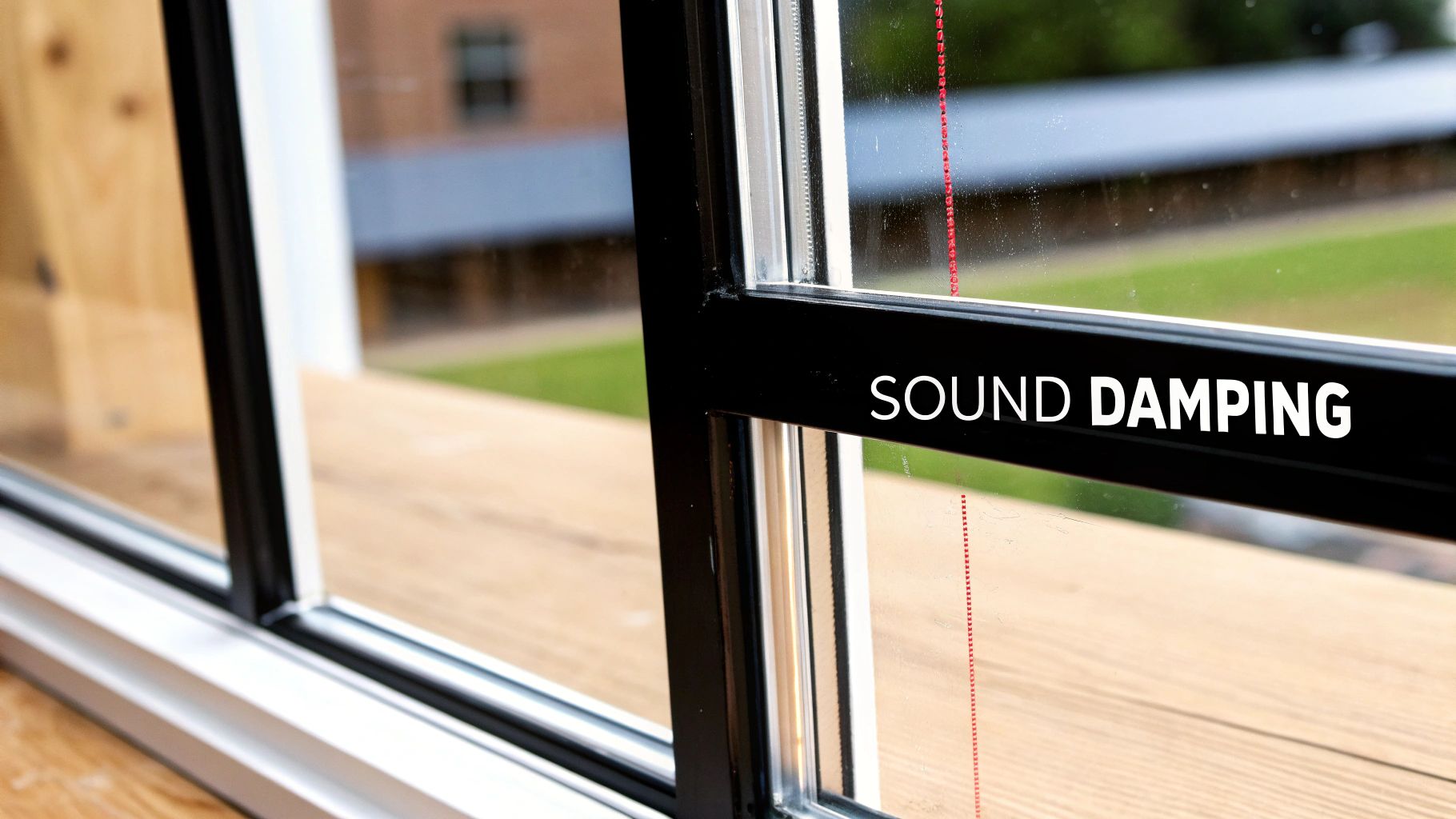
This is where sound dampening film steps in. It acts as a sophisticated shock absorber for your glass. Instead of letting that vibrational energy pass through freely, the film's job is to intercept it, absorb it, and dissipate it. It’s an advanced, multi-layered material engineered to interrupt the transfer of sound energy, effectively muffling the noise before it ever gets to you.
The technical term for this is constrained layer damping. By adding a soft, flexible layer to your window, we fundamentally change how it behaves. This new layer is specifically designed to convert sound energy into a tiny, harmless amount of heat.
The Materials Behind the Magic
The real secret lies in the film’s unique composition. Top-tier soundproofing films are made from advanced polymers, and a key player is polyvinyl butyral (PVB). PVB is a fascinating material—it’s viscoelastic, which means it exhibits properties of both a liquid (viscous) and a solid (elastic).
This dual nature is precisely what makes it so good at dampening sound.
- Elasticity: Lets the film flex and move right along with the glass as it vibrates.
- Viscosity: Creates internal friction that resists that very movement, converting the sound energy into heat.
Imagine trying to run through a swimming pool filled with honey. The honey (our viscoelastic film) provides way more resistance than air, slowing you down and absorbing your energy. The film’s polymer layers do the same thing to sound waves, stopping them in their tracks. It’s also why high-quality security films from Fortress Security Films offer a two-for-one benefit—the same properties that muffle sound also help hold shattered glass together.
The core principle is simple but incredibly effective: by adding a specialized, energy-absorbing layer directly to your existing glass, you fundamentally change its acoustic properties. The window goes from being a transmitter of sound to a barrier against it.
There's a reason the demand for this technology is skyrocketing. The global window films market, which includes both soundproof and sun control films, was valued at USD 14.5 billion in 2025 and is projected to climb to USD 26 billion by 2035. This boom is tied directly to the push for better energy efficiency and noise control, especially with the rise of green building mandates. You can learn more about these window films market growth and trends and see for yourself.
High vs. Low Frequency Sounds
It’s really important to know that soundproofing film performs differently depending on the type of noise you’re dealing with. Sound waves have different frequencies, measured in Hertz (Hz), and that changes everything.
- High-Frequency Sounds: These are the sharp, distinct noises that are often the most irritating—think human speech, sirens, birds chirping, or the squeal of tires. Sound dampening film is extremely effective at blocking these frequencies.
- Low-Frequency Sounds: This is the deep, rumbling stuff, like the bass from a car stereo, the drone of a truck engine, or vibrations from heavy construction. The film can definitely reduce these sounds, but they are much tougher to stop completely. Their long wavelengths carry more energy and can travel right through solid structures like walls and floors.
Understanding this distinction is the key to setting realistic expectations. While the film can make a huge difference in cutting down those sharp, intrusive noises, it isn't going to create a silent, bank-vault-like room. The goal is to bring disruptive noise down to a comfortable, manageable level.
Setting Realistic Noise Reduction Expectations
The first question I always get is, "So, how much quieter will it actually be?" It's the most important question, and the answer isn't about creating a silent void. It’s about taking back control and dialing down the disruptive noise to a comfortable, manageable level.
To understand what you can realistically expect from soundproofing film for windows, we need to talk about decibels (dB). The decibel scale is a bit quirky because it's logarithmic, which is a fancy way of saying a small drop in the numbers makes a big difference to our ears.
For instance, a reduction of just 3 dB is enough for the human ear to notice a change. A drop of 5-6 dB feels like a significant and welcome relief.
The magic number in acoustics is 10 dB. A reduction of that size is perceived by our ears as cutting the noise level in half. It can turn a racket into a background hum.
So, where does window film land? A professionally installed, high-quality soundproofing film will typically get you a reduction in that critical 3-6 dB range. It doesn't sound like much on paper, but in the real world, it makes all the difference.
Putting Decibels into Context
Let’s translate those numbers into real-world sounds. Heavy city traffic rumbling past your window? That’s often around 85 dB, a level that can cause hearing damage with long-term exposure. A loud conversation outside is about 60 dB, and a neighbor’s barking dog can easily hit 70 dB.
The whole point of soundproofing film is to knock those high numbers down. It’s especially good at tackling high-frequency sounds—the sharp, piercing noises that really get on your nerves. Think squealing tires, blaring sirens, or shrill voices from the sidewalk.
The film essentially acts as a damper on the glass. It absorbs the vibrational energy from those specific sound waves before they have a chance to enter your room. This targeted approach is what makes it such a smart solution for homes and offices in noisy areas.
The Real-World Impact on Health and Wellness
This isn't just about peace and quiet; it's about your health. The constant barrage of noise from the outside world takes a serious toll. The World Health Organization estimates that noise pollution is responsible for 1.6 million healthy life years lost annually in Western Europe alone, tied to everything from heart disease to severe sleep disruption.
Closer to home, over 100 million people in the United States deal with daily urban noise, leading to related healthcare costs of around $12 billion each year. This is driving a huge demand for effective retrofit solutions like window films. You can learn more about the global push for soundproofing solutions and what's behind it.
When you invest in a quieter environment, you're not just blocking sound—you're protecting your well-being.
What to Expect from Professional Installation
So, what does this look like in practice? The table below breaks down how a professional soundproofing film can affect common noises. Just remember, the final results will depend on your specific windows, the film's thickness, and, most importantly, the quality of the installation.
This table illustrates the typical decibel (dB) levels of common noises and the realistic reduction you can expect from professional soundproofing window film.
Expected Noise Reduction for Common Urban Sounds
| Noise Source | Average Decibel Level (dB) | Perceived Loudness | Estimated Reduction with Film (dB) | Resulting Loudness Perception |
|---|---|---|---|---|
| Heavy Traffic (Distant) | 70-85 dB | Very Loud | 4-6 dB | Clearly Noticeable Reduction |
| Loud Conversation | 60-70 dB | Intrusive | 3-5 dB | Muffled, Less Distracting |
| Dog Barking | 65-75 dB | Sharp, Annoying | 4-6 dB | Significantly Less Piercing |
| Construction Noise | 90-100 dB | Extremely Loud | 3-5 dB | Less Harsh, More Tolerable |
| Emergency Sirens | 110-120 dB | Painfully Loud | 3-5 dB | Noticeably Muted |
As you can see, the goal is to take the "edge" off sharp, intrusive sounds, making them far less disruptive. While it won't completely silence heavy construction, it will absolutely reduce the harshness, creating a much more pleasant indoor atmosphere. Setting these clear expectations from the start is the key to a successful project.
Comparing Film With Other Window Soundproofing Solutions
Picking the right way to quiet your space can feel like a major project. While soundproofing film for windows is a fantastic and straightforward option, it’s one of several tools in the noise-reduction toolbox. Knowing how it measures up against the more traditional methods is the key to making a smart decision you’ll be happy with for years to come.
This isn’t about finding one "best" solution for everyone. It's about finding the best fit for your specific noise problem, budget, and building. Some solutions require a full-blown renovation, while others, like film, are designed to work with what you already have, minus the headache and disruption.
Soundproofing Film vs. Dual-Pane Windows
Most people think of dual-pane (or double-glazed) windows as the pinnacle of insulation, both for temperature and sound. They work by creating a sealed pocket of air between two panes of glass, which acts as a buffer. It’s a great concept, and it does work.
But here’s the reality: swapping out all your single-pane windows for dual-pane units is a huge job. It's expensive, messy, and can be a real challenge in older homes or buildings with unique architectural details. Soundproofing film offers a compelling alternative by upgrading your existing windows to perform better acoustically, all without tearing out a single frame.
Film vs. Laminated Glass
Laminated glass is another heavy-hitter in the soundproofing world. It’s made by sandwiching a layer of polyvinyl butyral (PVB) between two sheets of glass—the very same material that gives high-quality soundproofing films their muscle. That PVB layer is brilliant at absorbing sound vibrations, making laminated glass a top performer against both high-frequency chatter and low-frequency rumbles.
The catch? You guessed it: cost and complexity. Just like dual-pane windows, installing laminated glass usually means a full window replacement. Soundproofing film applies that same vibration-damping technology directly to your glass, giving you a significant chunk of the acoustic benefits at a mere fraction of the cost and installation hassle.
Plus, many security films are built on similar multi-layer technology, so you get sound reduction and enhanced protection in one package. You can see how films add a layer of safety in our guide on hurricane window protection options.
Film vs. Temporary Window Inserts
Window inserts are basically another window pane—often made of acrylic or glass—that you fit snugly inside your existing window frame. They create an extra air gap that can be very effective at blocking sound, often cutting noise by 50% or more. Because they're usually removable, they can be a decent option for renters.
The downside is how they look and feel. Inserts can be bulky, making your windows feel cluttered. They can also be a pain to take out when you want to open a window for fresh air or just give things a good cleaning. Soundproofing film, on the other hand, is applied directly to the glass, so it's practically invisible and doesn't get in the way of using your windows normally.
This decision tree helps visualize where film really shines—tackling specific noise problems without needing a complete overhaul.
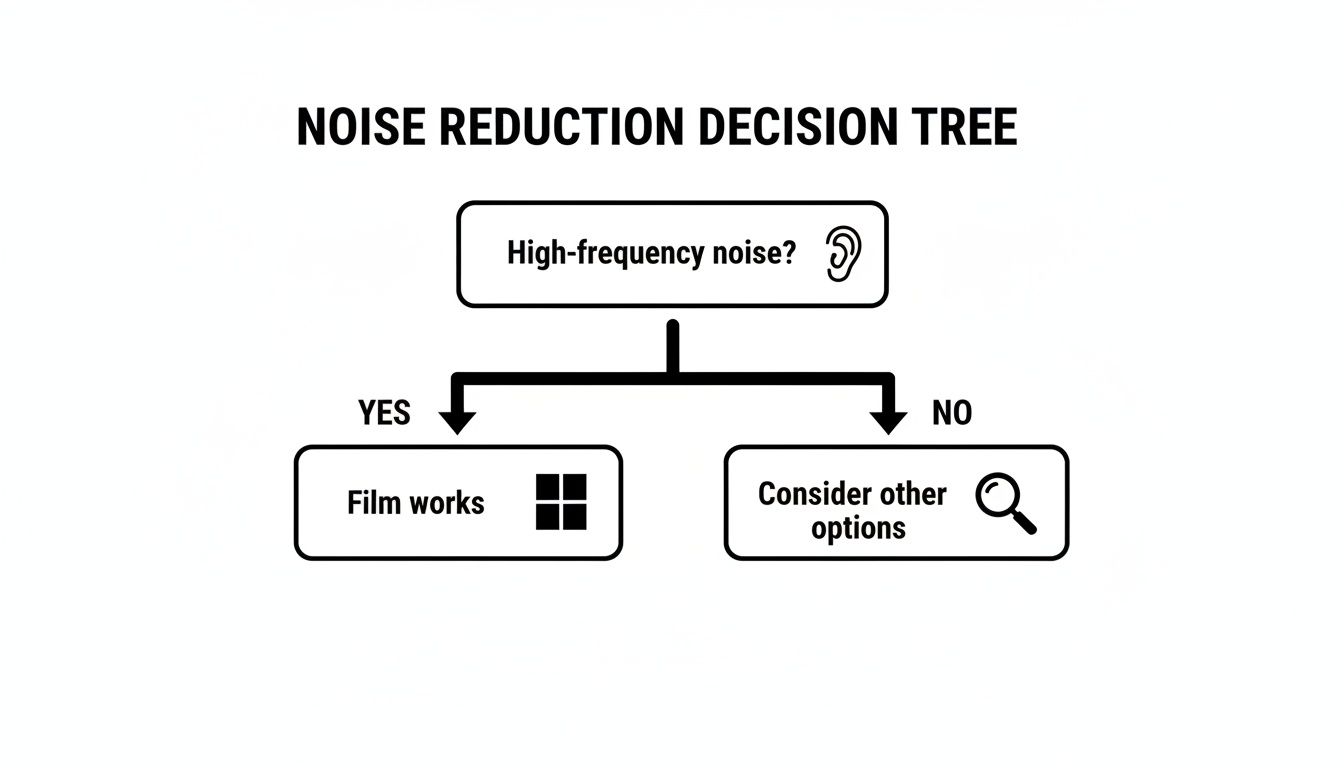
The big takeaway here is that for those common, irritating city sounds—the high-pitched ones that really get on your nerves—film is a direct, effective, and minimally invasive fix.
Soundproofing Window Solutions Head-to-Head Comparison
To help you see the differences at a glance, we've put together this straightforward comparison of the most common soundproofing solutions. It lays out how each option stacks up across the factors that matter most to homeowners and property managers.
| Solution | Typical STC Improvement | Estimated Cost | Installation Complexity | Aesthetic Impact | Added Security |
|---|---|---|---|---|---|
| Soundproofing Film | 2-5 points | Low to Moderate | Low (Professional) | Minimal / Invisible | Yes (Varies by Film) |
| Dual-Pane Windows | 5-10 points | High | High (Full Replacement) | Varies by Style | Moderate |
| Laminated Glass | 6-12 points | Very High | High (Full Replacement) | Varies by Style | High |
| Window Inserts | 7-15 points | Moderate | Low (DIY/Professional) | Noticeable / Bulky | Low |
This table shows why film has become such a popular choice. It hits a sweet spot, offering tangible sound reduction without the extreme cost or disruption of a full window replacement.
The market backs this up. The global soundproof window film market was valued at USD 1.2 billion in 2024 and is expected to more than double to USD 2.5 billion by 2033. That growth is being fueled by increased urbanization and the simple fact that people living and working in cities need practical ways to find some peace and quiet.
At the end of the day, soundproofing film excels as a retrofit solution. It delivers a noticeable and immediate improvement in your daily comfort without the cost, mess, and disruption of a major renovation.
Of course, film can be just one part of a larger strategy. Exploring various window treatment ideas like heavy curtains or cellular shades can complement the film, adding another layer of sound dampening along with light control. But for many people, the balance of performance, convenience, and cost makes soundproofing film the most logical first step to reclaiming their quiet.
The Hidden Benefit of Combined Sound and Security Film
When you start looking into noise reduction for your windows, you're usually focused on one thing: peace and quiet. But what if that same investment could tackle another major concern at the same time? It turns out, many of the advanced window films designed to dampen sound come with a powerful side benefit—security. This turns a simple quality-of-life upgrade into a serious protective layer for your home.
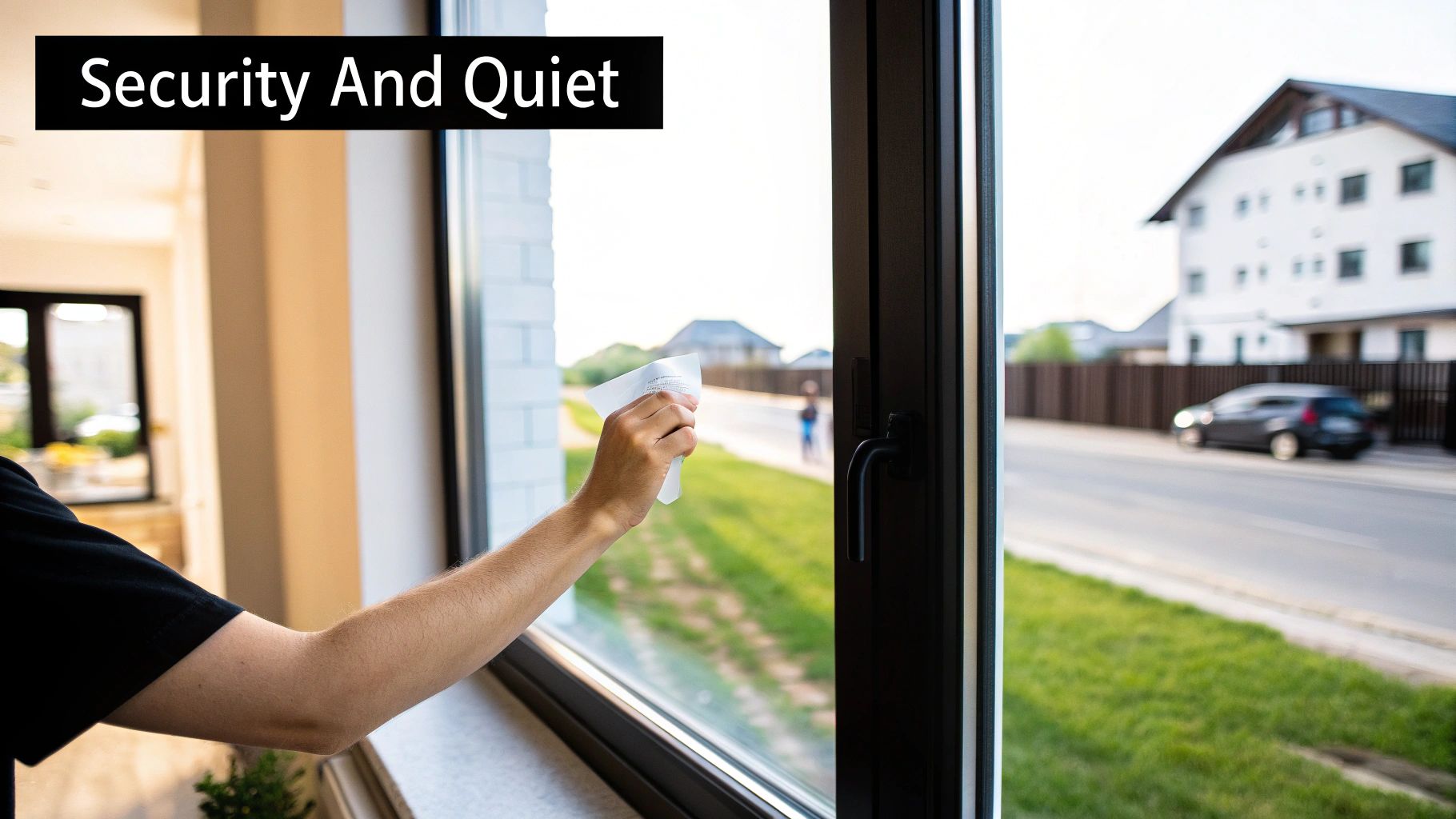
The secret lies in the material science. The very same technology that makes soundproofing film for windows so good at absorbing sound vibrations is what gives it its surprising strength. These films are made from multiple layers of high-performance polymers, engineered to be both tough and flexible. It's this layered design that's the key to it all.
From Sound Waves to Shock Waves
Think about how it works. When a sound wave from a noisy street hits your window, the film’s unique viscoelastic properties absorb and deaden the vibrations, turning that sound energy into a tiny, unnoticeable amount of heat. The result is a much quieter room.
Now, let's swap that sound wave for a different kind of energy: a physical blow.
Whether it’s a stray golf ball, debris from a major storm, or an intruder trying to break in, the film reacts in a very similar way. It absorbs and spreads the shockwave across the entire pane of glass. The glass itself might still crack under heavy force, but the film's powerful adhesive keeps all those dangerous shards locked together in the frame.
That single feature is a game-changer. A would-be intruder expects the glass to shatter and fall away, giving them easy access. Instead, the window remains a solid barrier, buying you critical time and often deterring them completely.
Real-World Scenarios Where Dual-Function Film Shines
Once you realize a film can offer both quiet and protection, you start seeing its value everywhere. It’s an investment in peace of mind that delivers on multiple fronts.
Just think about these common situations:
- Smash-and-Grab Attempts: A burglar's favorite tactic is a quick, forceful entry. For ground-floor windows or a retail storefront, security film makes this incredibly difficult. The glass simply won't give way like they expect.
- Severe Weather: During a hurricane or a storm with high winds, flying debris is a major threat. A security-grade film can keep a broken window intact, preventing wind and water from pouring into your home and causing catastrophic damage.
- Everyday Accidents: Life happens, especially with kids and pets around. A ball thrown in the house or a rock kicked up by a lawnmower can easily break a window, but with the film in place, you dramatically reduce the risk of injury from shattered glass.
This dual benefit is really at the heart of modern window protection. As you look into security film for home windows, you'll find that the most robust options naturally provide fantastic sound reduction.
An Investment in Total Protection
At the end of the day, opting for a combined sound and security film is just a smarter, more efficient way to fortify your home’s weakest points. You’re not just blocking out the drone of traffic; you’re installing an invisible shield that protects your family and property 24/7.
The synergy is what makes it so compelling. The same product that helps you get a good night's sleep also stands guard against real-world threats. It’s a practical, elegant solution for modern living.
Your Guide to Choosing and Installing Window Film
So, you’ve decided that soundproofing film for windows is the right move. Great! The next step is making sure you pick the right product for your specific situation and get it installed perfectly. This isn't a one-size-fits-all game; a little bit of homework up front ensures you get the peace and quiet you're paying for.
It all starts with a quick assessment of your space. Just a few key questions can help narrow down the ideal film thickness and type, making sure the end result hits your targets for both noise reduction and maybe even a little extra security.
Your Pre-Installation Checklist
Before you make any calls, take a minute to run through this checklist. Having clear answers will make your consultation with a professional incredibly efficient and helps them pinpoint the exact solution for your property.
- What's the Main Noise Source? Are you battling the high-pitched whine of traffic, the shriek of sirens, or just the low-level hum of a busy street? Knowing the enemy helps us choose the right weapon for acoustic damping.
- How Serious Are Your Security Needs? Are your windows on the ground floor, hidden from view, or easily accessible? It might make sense to invest in a dual-purpose film that tackles both sound and potential break-ins.
- How Are Your Windows Holding Up? Take a good look at the frames and seals. Any existing gaps or cracks will let sound sneak right past the film, so those should be fixed first.
- Any Aesthetic Preferences? Our best films are optically clear, but maybe you'd like some added perks. Think about things like UV protection to stop your furniture from fading, or even a subtle tint for a bit more privacy.
Running through this quick exercise helps you define the problem you’re actually trying to solve. It’s the first step to choosing a product that truly delivers.
The big takeaway here is that the film itself is only half the battle. The quality of the installation is what makes or breaks its performance. A sloppy job can completely cancel out the film's sound-dampening benefits.
Why Professional Installation Is a Must
I get it—it’s tempting to think of window film as a DIY weekend project. But when we’re talking about soundproofing and security, professional installation isn't just a recommendation; it's essential.
Even the tiniest air bubble, a spec of dust, or a slight gap along the edge creates a weak point. Sound vibrations will find that flaw and pass right through. It's like building a soundproof wall but leaving a small crack in it—the whole system is compromised.
Certified technicians are trained to get that perfect, edge-to-edge seal that's so critical for acoustic performance. They have the right tools and techniques to bond the film directly to the glass without a single imperfection. This seamless application is what allows the film to do its job: absorb and deaden sound energy. If you're investing in a quieter, safer home, our guide to the security window film installation process shows just how much precision is involved.
Finally, a pro installation often involves anchoring the film to the window frame, which is a game-changer for security. A job done right not only quiets your world but also comes with a solid warranty, protecting your investment for years to come.
Got Questions About Soundproofing Film? We've Got Answers.
Even after seeing how it works, you probably have a few lingering questions. It’s completely normal. Most of our clients, both homeowners and business managers, have the same ones.
Let's cut through the noise and give you some straight answers to the most common questions we get about soundproofing film.
Will This Film Make My Room Completely Silent?
Let's set expectations right from the start: no, it won't. And you should be wary of any product that promises total silence. The goal here is significant noise reduction, not complete elimination.
Think of it this way: the film dampens the vibrations that travel through your window glass. It’s incredibly effective at taking the edge off sharp, high-frequency sounds—think screeching tires, barking dogs, or nearby construction. You’ll notice that jarring racket turns into a much more manageable background hum. Many of our clients say it feels like the outside noise has been turned down by about a third, sometimes even half. It won't create a recording studio, but it will restore your peace.
The real aim of soundproofing film is to give you back comfort and control. It brings disruptive noise down to a level where you can finally focus, relax, or get a good night's sleep.
How Will This Film Change the Look of My Windows?
It won't, and that's one of its biggest selling points. A professionally installed, high-quality soundproofing film is practically invisible. It’s optically clear, so you won’t have to deal with a distorted view, a strange haze, or darkened rooms.
This is a huge advantage over clunky alternatives like secondary glazing or bulky window inserts. The film preserves the original look of your property, inside and out. Plus, as an added bonus, our films block 99% of UV rays, which protects your furniture, floors, and artwork from fading over time.
Do I Really Need a Professional to Install It?
Absolutely. This isn't a DIY weekend project, and here’s why: the performance of the film is entirely dependent on a flawless installation. The film needs to be perfectly flush against the glass with zero air bubbles and cleanly sealed edges.
Even the tiniest imperfection can create a weak spot, allowing sound vibrations to sneak right past the film and rendering it useless.
- An Airtight Seal is a Must: A perfect application leaves no gaps for sound to leak through. It’s that simple.
- Anchoring for Security: If you opt for a film that also provides security benefits, it has to be anchored to the window frame. This is a critical step that ensures the film can actually withstand an impact.
- Protecting Your Investment: Manufacturer warranties almost always require installation by a certified professional. A pro installation ensures your warranty is valid for years to come.
Ready to reclaim your peace and quiet with a solution that actually works? The experts at Fortress Security Films can walk you through the options and help you find the right dual-purpose film for both sound reduction and security.
Contact us today for a free consultation and find out just how much quieter your world can be.
