


Think of a smart home security system as your home's own digital nervous system. It’s a network of connected devices—cameras, sensors, locks, and more—all working together to keep an eye on things, ready to alert you instantly if something is amiss. It’s a far cry from a simple, noisy alarm; this is about giving you real-time information and control, right in the palm of your hand.
How Smart Home Security Systems Actually Work
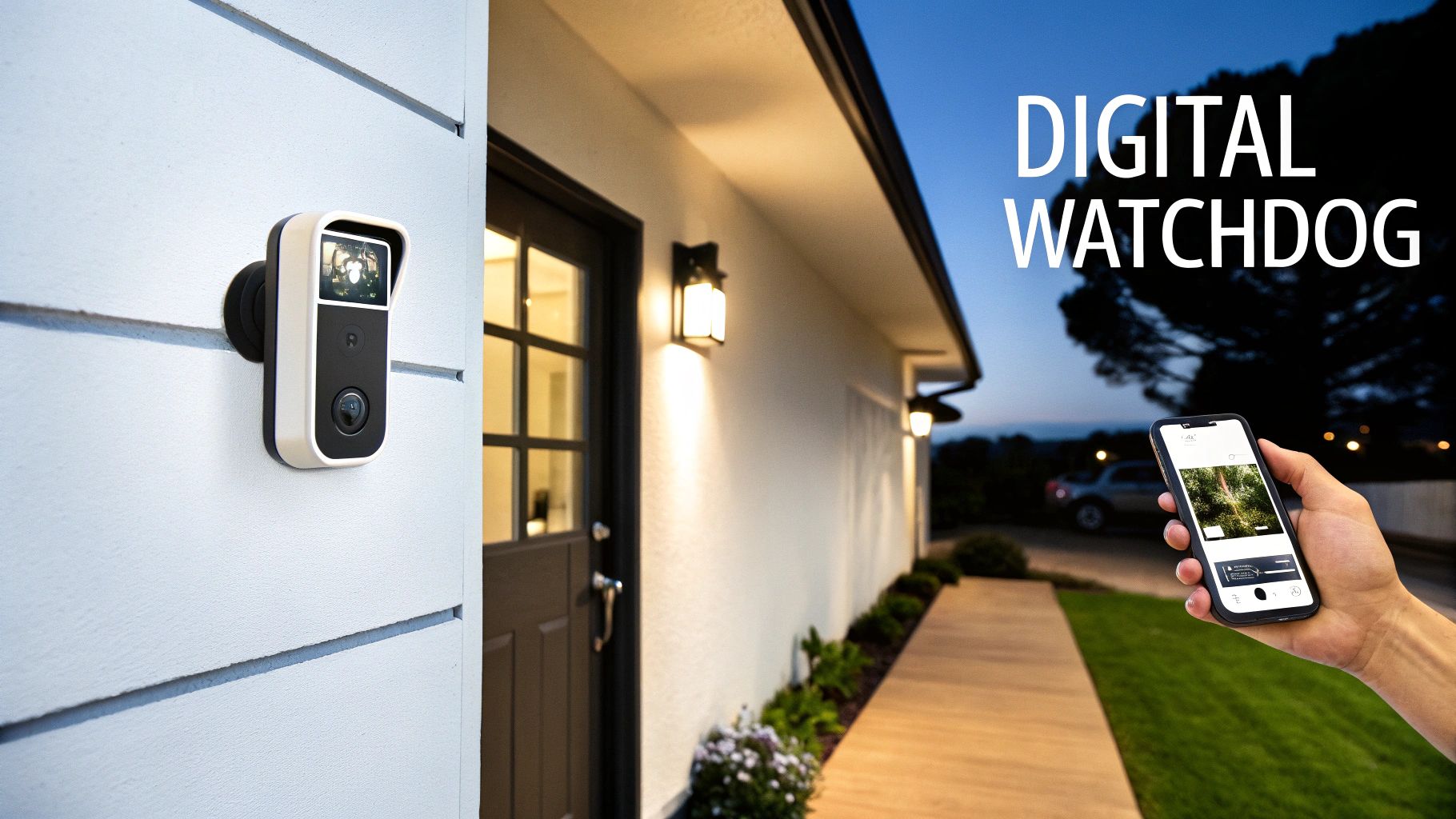
Imagine a digital watchdog that’s on duty 24/7. This watchdog doesn't just bark; it shows you exactly what’s happening, lets you speak through a built-in speaker, and can even lock the doors for you remotely. That’s the fundamental difference here—we’ve moved from old-school, reactive alarms to a proactive, interconnected ecosystem.
This technological leap is all thanks to the Internet of Things (IoT), which basically means giving everyday objects an internet connection. Every piece of the puzzle, from a motion sensor on your back patio to a camera at your front door, talks to a central hub. This hub acts as the brain of the operation, processing all the information and firing off instant alerts directly to your phone.
The Big Leap: From Isolated Alarms to Integrated Networks
Old-school security systems were pretty one-dimensional. A sensor gets tripped, a loud siren goes off, and that’s about it. You’d often come home to a blaring alarm with no clue what actually happened or when.
Smart systems, on the other hand, tell you a story. You get an alert that tells you what triggered the alarm, where it happened, and even shows you a live video feed of the event. This modern, integrated approach brings some massive advantages to the table.
When you look at the old and the new side-by-side, the difference is night and day.
Smart Security vs Traditional Security Systems
| Feature | Traditional Security System | Smart Home Security System |
|---|---|---|
| Alerts | Loud local siren, maybe a call to a monitoring center. | Instant push notifications to your phone with details. |
| Control | Keypad on the wall, often inside the home. | Control from anywhere via a smartphone app. |
| Verification | No easy way to check if an alarm is real or false. | Live video and audio feeds to verify threats instantly. |
| Integration | Standalone system; doesn't connect to other devices. | Connects with lights, locks, and other smart home devices. |
| Cost | Typically requires professional installation and long contracts. | DIY-friendly options are common; flexible monitoring plans. |
This table just scratches the surface. The real power comes from how these features work together. Here are a few key benefits:
- Remote Access: Arm or disarm your system from work, on vacation, or anywhere you have a signal.
- Real-Time Notifications: Get an immediate heads-up for everything from a door opening to a package delivery.
- Enhanced Context: Video lets you (or a monitoring service) see if an alert is a genuine emergency or just the cat knocking something over.
- Smart Automation: Set up routines, like having your porch lights turn on automatically when your doorbell detects motion after sunset.
This evolution from basic alarms to intelligent networks has completely changed the game for home protection. It gives homeowners a level of control and awareness that was unthinkable a decade ago, turning a passive security box on the wall into an active part of your daily life.
A Market That's Growing Fast
It’s clear people want this level of control and peace of mind. The global smart home security market isn't a niche anymore; it's a major economic force. For context, market analysts pegged the industry at around USD 33.94 billion in 2024, and they expect it to skyrocket to roughly USD 82.07 billion by 2030. You can dig into more of this data on smart security market trends on Grandviewresearch.com.
This explosive growth shows just how much homeowners prefer these smarter, more connected solutions. But remember, a digital alert is only half the battle. While a sensor can tell you a window was just struck, it can’t physically stop an intruder from coming through it.
This is exactly where combining a digital break glass alarm with physical reinforcement creates a truly powerful defense. Real security is all about layers—merging those instant digital warnings with strong physical deterrents to build a formidable shield around your property.
What Makes Up a Modern Security System?
A smart home security system isn't a single gadget. It’s a whole team of specialized devices working together to keep your property safe. Think of it like a neighborhood watch, but one where every member is always on duty, communicating instantly, and managed by a single captain—you. Understanding what each part does is the key to building a defense that actually works.
Every component fills a specific gap in your home's armor, from the front door to the back windows. When they’re all connected, you get layers of protection that are far more powerful than any standalone device. Let's meet the key players on this high-tech security team.
Your Digital Eyes and Ears
The most obvious parts of any security setup are the cameras and sensors. These are your frontline lookouts, constantly scanning for anything out of the ordinary and reporting back to base.
-
Smart Cameras: These are a huge leap beyond simple recording devices. Modern cameras use smart technology to tell the difference between a person, a pet, and a passing car, which cuts down on those annoying false alarms. They are your eyes on the ground, giving you live video feeds and recorded clips right on your phone. To add another layer of protection, many systems now integrate advanced biometric security to reduce fraud risk, using things like your fingerprint or face to grant access.
-
Door and Window Sensors: These are the unsung heroes of perimeter security. They’re simple, small devices that send an alert the second a door or window is opened when it shouldn't be. They create an invisible tripwire around your home, making sure no entry point is left unchecked.
-
Motion and Glass Break Sensors: Motion detectors keep an eye on the inside, scanning rooms for movement. At the same time, glass break sensors are tuned to listen for the specific sound of shattering glass. They work as your interior guard, letting you know if someone has somehow slipped past the first line of defense.
The Brain and the Command Center
While sensors and cameras are out there gathering intel, two other components are busy making sense of it all and putting the controls right in your hands. This is where the "smart" part of the system really shines.
The central hub is the brain of the whole operation. It’s the one device that all your sensors, cameras, and locks talk to. It takes in signals from every component, processes the information, and decides what to do next—whether that’s blasting an alarm, sending an alert to your phone, or calling for backup from a monitoring service.
Your mobile app is the command center. It's your direct line to your security system, letting you arm or disarm it, check live camera feeds, talk through two-way audio, or lock your doors from anywhere on the planet. It turns a passive system into an active tool you can manage in real-time.
Locking Down Access and Calling for Backup
Finally, two critical elements add physical control and a professional response, turning a collection of gadgets into a true security solution.
Smart locks completely change the game for managing who comes and goes. You can lock and unlock your doors remotely, create temporary keypad codes for guests or repair services, and get a notification every time the door is used. It gives you total control over who can enter your home.
Professional monitoring services act as your own 24/7 security dispatch team. When an alarm goes off, trained experts can immediately check in—often by looking at camera footage—to see if it’s a real emergency. If it is, they’ll dispatch the police or fire department for you. This human oversight is crucial for getting a fast, appropriate response when every second counts.
These systems are becoming incredibly common. By 2025, it's estimated that 94 million U.S. households will have some kind of security system. Video surveillance is a huge part of that, making up about 46% of smart home security revenue in 2024. And while people increasingly prefer wireless setups (around 67%), professional installation is still a popular choice, with about 61% of U.S. customers opting for it to make sure everything works perfectly from the start. For a deeper dive, check out these home security industry statistics from SafeHome.org.
Moving Beyond Detection with Integrated Physical Security
A smart home security system is fantastic at telling you something's wrong. A notification pings your phone, your camera starts recording, and maybe a siren wails. But what if you could do more than just get a warning? What if you could actively stop an intruder in their tracks, right then and there?
This is where we move past simply knowing about a threat and start physically preventing it.
Think of it this way: your smoke detector is brilliant at alerting you to a fire, but it’s the sprinkler system that actually fights the flames. In home security, your smart cameras and sensors are the detectors. High-performance security window film is your sprinkler system—it’s designed to protect your home’s weakest points: its glass windows and doors.
A swift kick or a hard strike is all it takes to shatter a standard window, giving an intruder instant access. But a window treated with professionally installed security film is a different beast entirely. It’s an optically clear, yet incredibly tough, layer of polyester that bonds directly to the glass. When that window is hit, the film holds the thousands of shattered pieces together, creating a formidable barrier that is surprisingly difficult to break through.
This diagram shows how all the pieces of a smart system work in harmony—the central hub acts as the brain, coordinating the cameras, sensors, and professional monitoring.
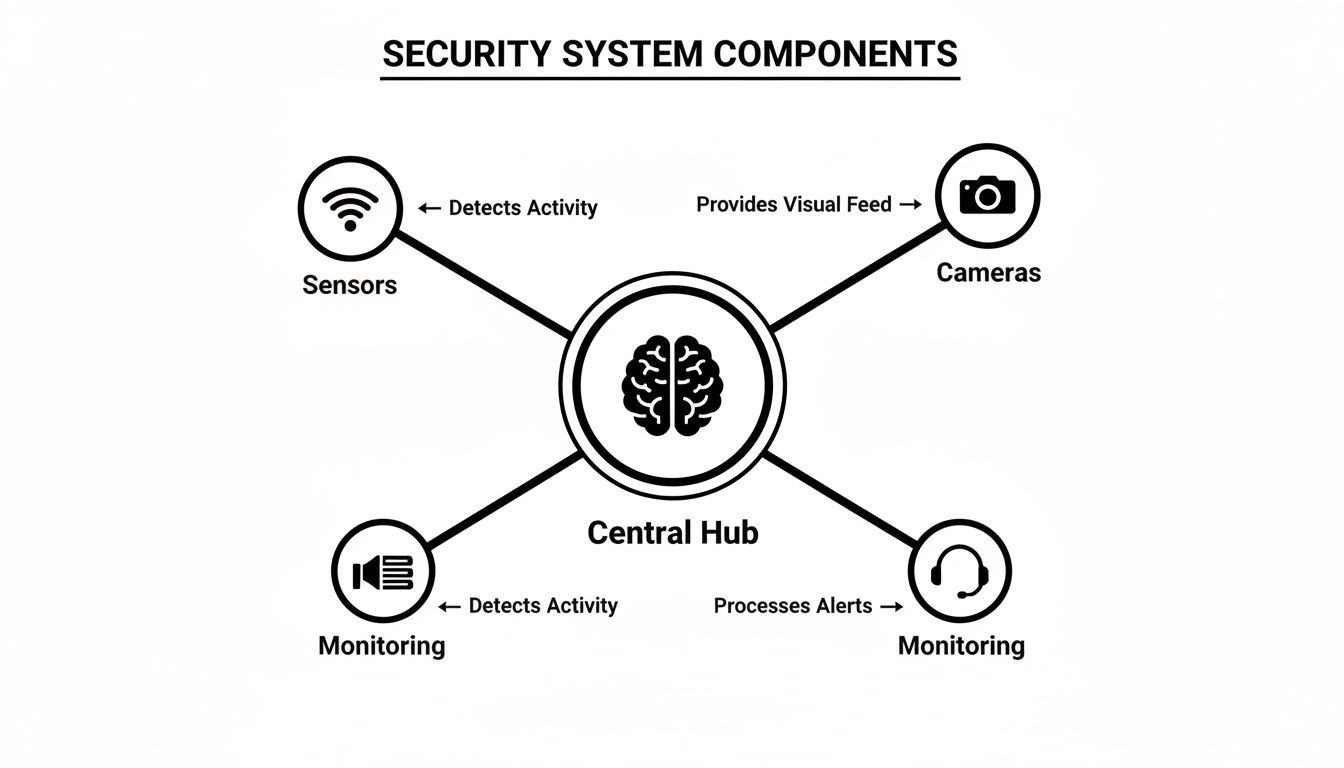
This network is top-notch at detection, but adding a physical barrier like security film elevates it from a reactive alert system into a truly proactive defense.
The Power of Delay in Modern Security
For any burglar, time is the ultimate enemy. Their entire plan revolves around a "smash-and-grab" that takes only a few seconds. By holding shattered glass firmly in the frame, security film robs them of that speed.
Instead of a quick, quiet entry, they're faced with a stubborn, flexible barrier that demands a loud, sustained, and attention-grabbing effort to defeat. That delay changes everything.
Those extra minutes are priceless. They give your smart security system the crucial window it needs to do its job effectively.
- Sensor Activation: The second the glass is struck, your glass break or shock sensors trip the alarm.
- Instant Notification: You and your professional monitoring service get an immediate alert about the break-in attempt.
- Threat Verification: The monitoring service can tap into your camera feeds to confirm a real intrusion is underway.
- Law Enforcement Dispatch: With visual proof, dispatchers can report a verified crime in progress, which often earns a higher-priority police response.
Without that physical delay, a thief could be in and out before police are even on the way. The film creates the time buffer needed for your digital security to mount a real defense.
Creating a Truly Layered Defense
A rock-solid security strategy is all about layers. Each layer works to slow down and discourage a threat, making your home a much harder and less appealing target. Smart systems provide the essential digital layer of detection and alerts; physical reinforcements provide the critical barrier layer.
The following table shows just how powerful this layered approach can be, turning a split-second vulnerability into a multi-minute obstacle.
Effectiveness of Layered Security Defenses
| Security Layer(s) | Typical Intrusion Time | Overall Effectiveness |
|---|---|---|
| Standard Glass Window (No Security) | 1-3 seconds | Very Low |
| Smart Sensors + Monitoring Only | 1-3 seconds (Intrusion successful, but detected) | Low (Reactive) |
| Security Film Only | 1-3 minutes | Moderate (Deters entry but lacks alert) |
| Smart System + Security Film | 1-3 minutes (Intrusion delayed, alarm triggered) | High (Proactive Defense) |
This combination of immediate detection and significant physical delay is the key to a robust defense, giving you and law enforcement the best possible chance to respond effectively.
A layered approach that combines digital alarms, professional monitoring, and physical barriers creates the strongest defense against forced entry. Market analysis shows that while smart devices are great for detection, reinforcing windows with security film can extend break-in attempts from mere seconds to several minutes—a crucial buffer that significantly increases the chance of a successful law enforcement response.
Industry data backs this up. While smart sensors and cameras are great for catching criminals on video, they don't stop the crime itself. Layered strategies that combine alarms, monitoring, and physical barriers consistently produce the largest reductions in successful burglaries.
By pairing the intelligence of a smart system with the brute strength of physical protection, you turn your home from a potential target into a true fortress. You can explore a variety of options for security film for home windows to see how this technology can be tailored to your property. This synergy is the secret to moving beyond simply detecting threats to actively preventing them.
Putting Smart Security to Work in the Real World
It’s one thing to understand the components of smart home security systems, but it's another thing entirely to see how they perform when things get real. The true power of an integrated setup—one that pairs digital alerts with physical defenses—shines in those critical moments where every second counts. These scenarios show how a layered strategy is so much more than just a notification on your phone; it’s an active defense for your property.
Let's walk through how these systems hold up in different settings, from a quiet suburban home to a busy retail shop. Each story shows just how effective smart tech becomes when it's backed up by physical reinforcement.
Thwarting a Smash-and-Grab at Home
Picture this: Sarah is at her desk at work when her phone buzzes. It's an alert from a shock sensor on her patio door. At that exact moment, her backyard camera starts recording, sending a live feed straight to her phone and to the professional monitoring service.
She watches in real-time as a burglar tries to smash the glass, expecting it to shatter instantly. But Sarah had previously installed high-performance security film on all her ground-floor windows and doors. The glass cracks into a spiderweb, but the powerful film holds it firmly in the frame. It doesn't give way.
Frustrated, the intruder keeps hitting the glass, making a huge racket and wasting precious time. Meanwhile, the monitoring service confirms the break-in attempt through the live camera feed and immediately dispatches police, reporting a verified crime in progress. Before the intruder can finally break through that resilient barrier, the wail of approaching sirens sends them running.
In this scenario, the smart system was the lookout, but the security film was the bodyguard. The sensor gave the instant alert, but the film bought the crucial time needed for help to arrive.
This story shows the perfect partnership in action. The digital alerts did their job flawlessly, but it was the physical reinforcement that stopped the crime in its tracks, turning a potential disaster into a real-life win for layered security.
Protecting High-Value Retail Inventory After Hours
Now, let's look at a small business owner named Mark. He runs a boutique electronics store, and his biggest fear is an after-hours smash-and-grab. His solution? A comprehensive system blending smart locks, motion sensors, and HD cameras with security window film on his massive storefront displays.
Late one night, a pair of thieves show up. Their plan is simple: break the front window, grab armfuls of expensive gear, and be gone in less than 60 seconds.
The instant their crowbar makes contact with the glass, a chain reaction kicks off:
- The Alarm Triggers: The glass break sensor sets off the store's deafening siren.
- Instant Alerts are Sent: Mark and the monitoring service get an emergency notification with a link to the live video feed.
- The Physical Barrier Holds: The security film does its job, refusing to shatter. The thieves are stopped cold, forced to make a loud, sustained effort just to make a small hole.
- Smart Automation Kicks In: The system automatically flicks on all the interior lights, putting the intruders on full display for the cameras and anyone passing by.
The blaring alarm, the surprisingly tough window, and the sudden flood of light create total chaos. The thieves panic, abandon their plan, and flee empty-handed long before police arrive. Mark’s system didn’t just record a crime—it actively prevented one, saving thousands of dollars in inventory.
How to Choose and Install Your Ideal Security System
Deciding to get a smart security system is a big step, but figuring out the right one doesn't have to be overwhelming. Think of it less like buying a product and more like designing a personalized shield for your home or business. Your first major decision point is how you want that shield built.
DIY vs. Professional Installation
This choice really boils down to two things: your comfort with tech and how much time you're willing to spend.
A Do-It-Yourself (DIY) system puts you in the driver's seat. These kits are designed to be user-friendly, with simple peel-and-stick sensors and app-based instructions that walk you through everything. It’s a great option if you want flexibility and a lower upfront cost.
On the flip side, professional installation is all about getting it right from the start. A trained technician knows the best spots for sensors, the optimal angles for cameras, and how to get everything networked perfectly. It’s the "peace of mind" route, ensuring your system is working at its best from day one, with zero guesswork on your part.
Wired vs. Wireless Systems
Next up is how all your devices will talk to each other. This decision affects not just the installation but also how the system performs over the long haul.
-
Wireless Systems: By far the most popular option, wireless devices use your Wi-Fi network to communicate. This gives you amazing flexibility—you can place sensors and cameras almost anywhere without having to drill holes or run wires through your walls. The trade-off? They depend on batteries and a strong Wi-Fi signal.
-
Wired Systems: These are the old-school workhorses. Components are physically wired to a central hub, creating a rock-solid connection that won't be bothered by Wi-Fi dead spots. The installation is definitely more involved, but once it’s done, you have a set-and-forget system without ever having to think about changing batteries.
There's no single right answer here—it depends on your property and what you value most. Renters love the non-permanent nature of wireless systems. Homeowners building a new house or those who crave maximum reliability might find a wired system is the smarter long-term investment.
Conducting Your Personal Security Audit
Before you even think about adding items to a shopping cart, take a walk around your property. Put yourself in the shoes of a would-be intruder. Where are the easy targets? This simple walkthrough is the most important step in figuring out what you actually need.
Be on the lookout for weak spots like:
- Ground-floor windows obscured by landscaping.
- Sliding glass doors with basic, flimsy locks.
- Side entrances or garage doors in poorly lit areas.
- Any large panes of glass that look like an easy smash-and-grab entry point.
This screenshot from our own site shows how we think about fortifying these exact physical weak points.
The focus on "Forced-Entry Protection" is key because a complete security strategy isn't just about digital alerts—it's about physical defense, too.
A professional security assessment takes this audit to a whole new level. An expert can spot vulnerabilities you'd never think of, like identifying which of your windows has the most fragile type of glass. They can recommend solutions that layer technology with physical hardening.
For instance, an expert might agree a motion sensor is good, but then point out that pairing it with professional security window film installation on that same vulnerable window creates a far more formidable barrier. This kind of insight is what helps build a truly robust security plan that closes both digital and physical loopholes.
Maintaining Your System and Protecting Your Privacy
Putting in a smart security system is a great start, but it's not a "set it and forget it" deal. Think of it like a car—it needs a little upkeep to run reliably when you really need it. This ongoing care isn't just about protecting your home; it's about protecting your digital life, too.
Luckily, regular maintenance is pretty simple. It's more about building good habits than having a ton of technical know-how. A few minutes of your time every so often will keep your system sharp and your investment paying off for years.
A Simple Maintenance Checklist
To keep your system in peak condition, just run through these quick checks every few months. It's the best way to catch a small issue before it turns into a real problem.
- Test Your Sensors: Every now and then, just open a door or window you've got a sensor on. Make sure you get the alert on your phone. This quick check confirms everything is still talking to the hub correctly.
- Check Camera Views: Take a peek at your camera feeds. Did a tree branch grow in the way? Did someone move a piece of furniture that now blocks the view? A quick look is all it takes.
- Update Firmware and Apps: This is a big one. Manufacturers constantly release updates to fix bugs and patch security holes. Always install these updates for your devices and your app as soon as they pop up.
- Inspect Batteries: For any wireless gear, your app should show the battery levels. Swap out any that are getting low so you don't have a sensor or camera go dark unexpectedly.
Your security system is only as strong as its weakest link. Consistent maintenance ensures that every component, from the smallest sensor to the main hub, is ready to respond in an emergency.
Safeguarding Your Digital Privacy
With a connected system, your privacy is just as important as your property. The very devices that guard your home are online, and if they aren't properly secured, they can become a weak spot.
It's not just about the cameras and sensors themselves. The bedrock of your smart home's digital safety is your Wi-Fi. You need to know how to secure your home network, because a vulnerable network leaves every connected device exposed.
Here are a few essential steps to lock down your system:
- Use a Strong, Unique Password: Don't use your dog's name or "password123." Create a complex password for your security system account and don't reuse it anywhere else.
- Enable Two-Factor Authentication (2FA): Turn this on immediately. It adds a crucial second step to logging in, usually a code sent to your phone. Even if a thief steals your password, 2FA will stop them in their tracks.
- Review Camera Placement: Be thoughtful about where you put indoor cameras. It’s wise to keep them out of truly private spaces like bedrooms and bathrooms.
- Understand Cloud Storage Policies: Find out how your video clips are stored. Who has access? How long are they saved? Stick with companies that use strong encryption and have clear, easy-to-understand privacy policies.
Answering Your Smart Home Security Questions
It's smart to do your homework before investing in a security system. Even with all the research, a few questions always pop up. Let's tackle some of the most common ones we hear from homeowners.
Can I Add Security Window Film to My Existing Smart Security System?
Yes, you absolutely can. Think of security window film as a powerful, standalone upgrade that works hand-in-hand with any smart security system you already have. It doesn't need any complicated technical hookup to do its job.
Your glass break sensors are great—they'll alert you the second an intruder tries to break in. But the security film is what buys you precious time by physically holding the glass together. That delay is often all your monitoring service needs to confirm the break-in and get help on the way. A professional can easily look at your windows and recommend the right film to complement your system.
How Much Does a Professionally Monitored Smart Security System Cost?
Your total cost usually breaks down into three parts: the gear itself, the installation, and the monthly monitoring plan.
- Equipment: This can be a few hundred dollars for a basic starter kit or run into the thousands if you're outfitting a large home with lots of cameras and sensors.
- Installation: Most companies charge a one-time fee for a professional to come out and set everything up correctly.
- Monitoring: Expect to pay somewhere between $20 to $60 a month. The price difference usually comes down to features like video verification or having a cellular backup in case your Wi-Fi dies.
Keep an eye out for bundled deals. Many security providers will roll the equipment cost into a contract, which can make the upfront investment much easier to handle.
Are Wireless Smart Security Systems Reliable?
They definitely are. Today's wireless systems are a world away from the early models. They use encrypted signals to prevent anyone from tampering with them and have built-in fail-safes for when things go wrong.
The most important features to look for are battery backups in the devices and a cellular backup in the main hub. This combo ensures your system keeps running and communicating even if the power goes out or a burglar cuts your internet line.
The best part about wireless is the simple installation and flexibility—you can place sensors and cameras exactly where they're needed without drilling holes or running cables. Just remember to check the batteries every so often to keep everything running smoothly.
A truly secure home uses layers of protection. Smart detection is the first step, but physical strength is the crucial follow-through. At Fortress Security Films, we deliver that physical barrier, making your windows a powerful deterrent. See how our advanced security films can complete your home’s defense strategy by visiting Fortress Security Films.
