


When you hear the term "shatter resistant window," don't picture something out of a spy movie that's completely unbreakable. That's a common misconception. Instead, think of it as a smart safety feature designed to hold dangerous glass fragments together when the window takes a hit.
The real job of this technology is to manage the aftermath of an impact—whether it's from a stray baseball, a severe storm, or an attempted break-in. It uses either special laminated glass or advanced security films to stop a single impact from turning into a shower of razor-sharp shards.
How Does Shatter Resistant Technology Actually Work?
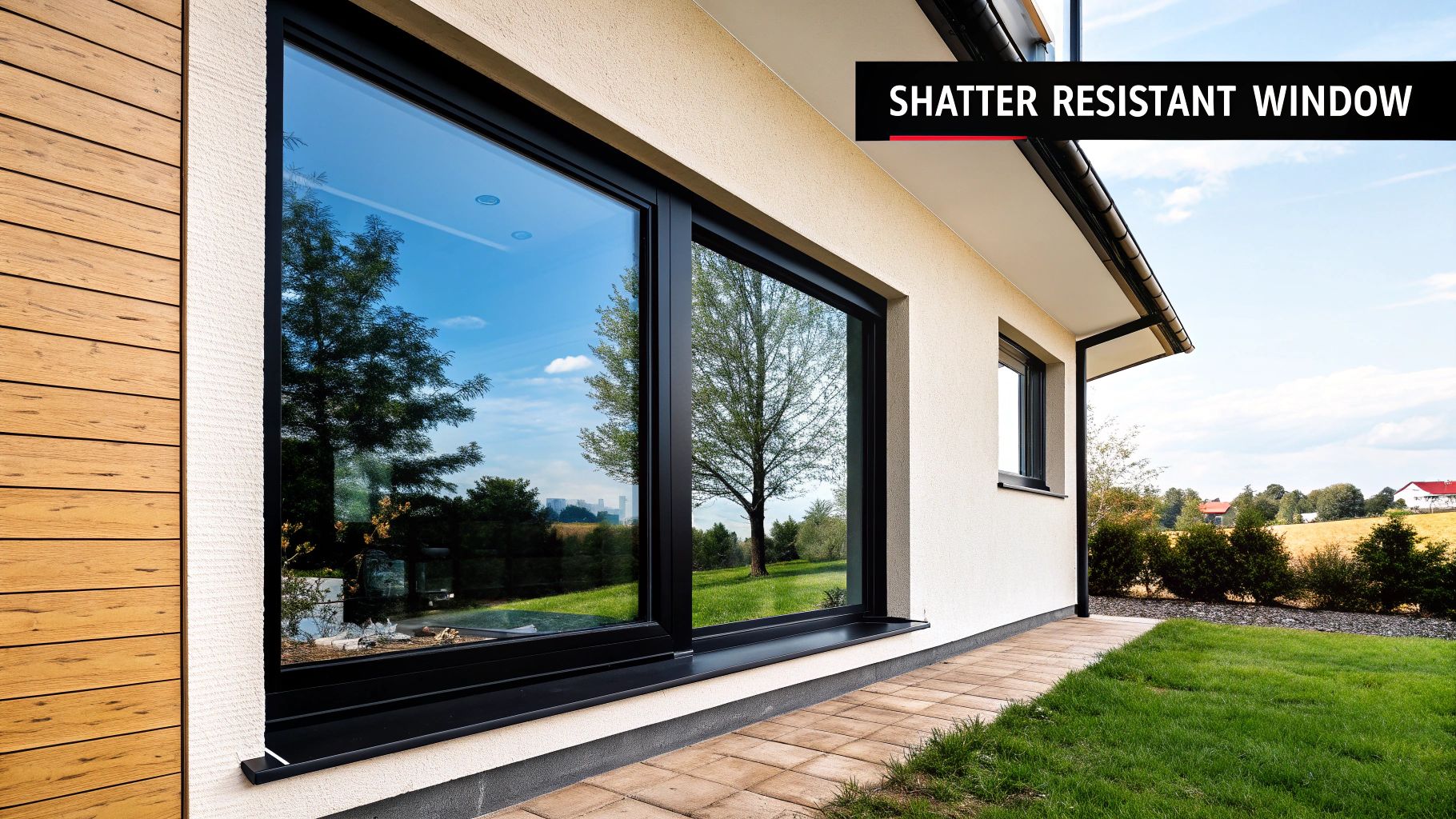
The core idea behind a shatter resistant window is containment, not total invincibility. A standard pane of glass is incredibly brittle. When it breaks, it explodes. Those flying pieces are not only a serious injury risk, but they also leave your home or business wide open. Shatter resistant tech changes that dangerous equation by keeping the broken glass in one piece.
There are two main ways to achieve this.
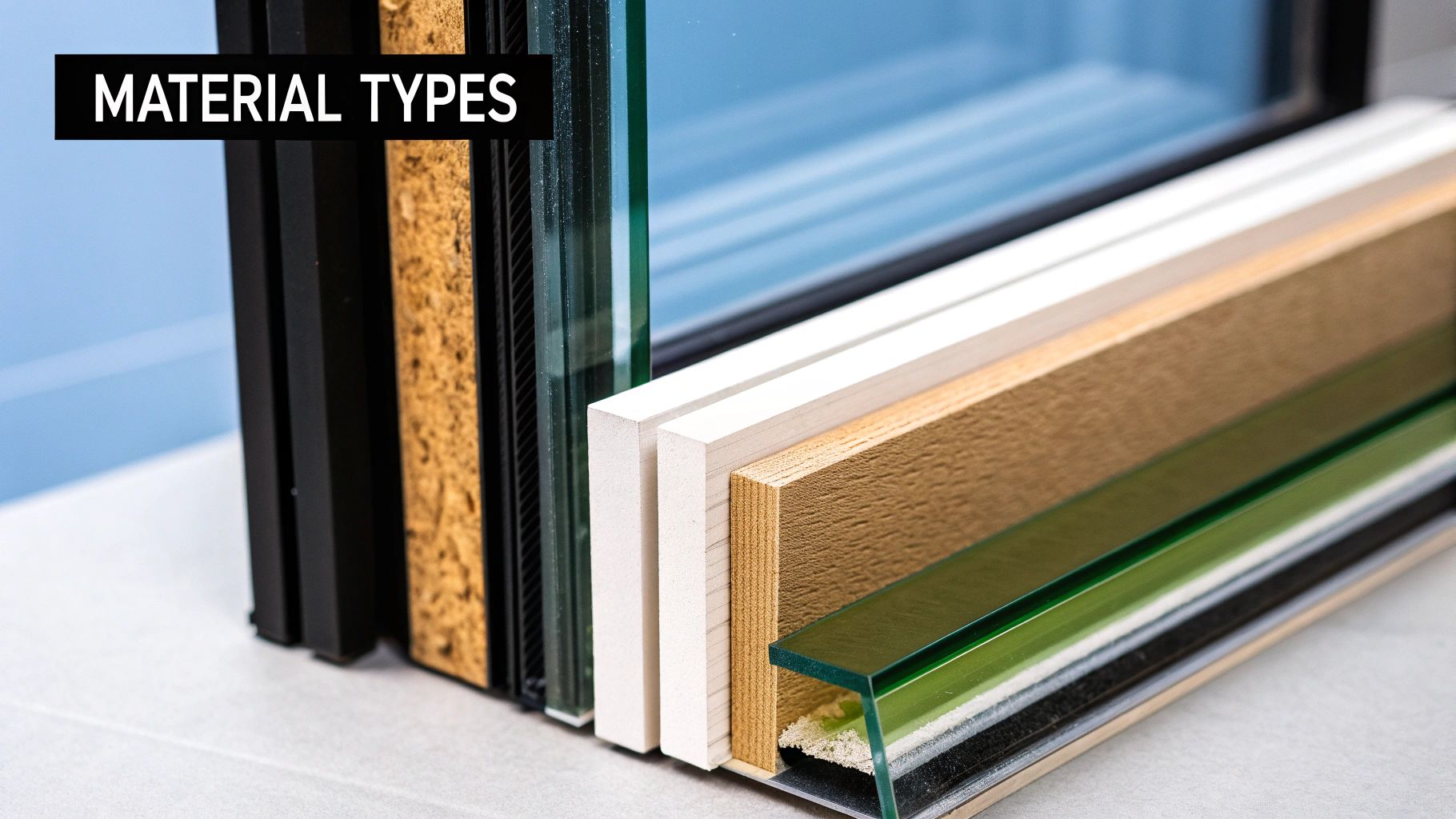
The first is by using laminated glass. This is essentially a glass sandwich. You have a tough, clear polymer layer—usually polyvinyl butyral (PVB)—bonded tightly between two sheets of glass. When something strikes the window, this inner layer absorbs a ton of the impact energy. The glass might crack, but the pieces stay glued to that interlayer instead of flying everywhere.
The second, and often more practical, method is to apply a shatter resistant window film to your existing windows. This is a super-strong polyester film that adheres directly to the glass. It acts like a tough membrane, so if the window breaks, the film holds the entire pane together. It effectively turns a weak point into a much more resilient barrier.
It's All About Safety and Buying You Time
Let's be clear: the goal isn't to build an impenetrable fortress. It's about managing risk in a smart, effective way. By keeping the glass from shattering inward and spraying across a room, these windows give you some critical advantages.
- Preventing Nasty Injuries: This is the big one. They dramatically cut down the risk of getting hit by flying glass shards during a storm or from an accident.
- Deterring Forced Entry: Burglars rely on speed. A window that cracks but stays in its frame is a major roadblock. It makes a quick "smash and grab" much, much harder. Understanding how to protect windows from a break-in really starts with seeing how these barriers frustrate an intruder's efforts.
- Holding Strong in a Disaster: During an earthquake or hurricane, these windows help keep the building sealed. Even if the glass is broken, the intact pane can keep wind and rain from pouring inside.
A shatter resistant window fundamentally changes how a window fails. Instead of a sudden, catastrophic event, you get a controlled break. It’s all about making sure the window fails safely, protecting people and property from the immediate, dangerous consequences of an impact.
How Shatter Resistant Technology Works
So, how does a window go from a fragile pane to a resilient barrier? It’s all about clever materials science. The goal is simple: stop glass from exploding into a million dangerous pieces upon impact. But achieving that goal relies on one of two powerful methods, each designed to absorb and spread out the force of an impact.
Method 1: The Laminated Glass "Sandwich"
The first approach is something you probably interact with every day: laminated glass. It's the exact same technology that keeps your car's windshield in one piece during a collision.
Instead of a single sheet, laminated glass is a "sandwich." Two panes of regular glass are bonded together with a tough, clear plastic interlayer, usually made of polyvinyl butyral (PVB). When something hits the window, this flexible PVB layer is the unsung hero. It absorbs the shock, so while the outer glass might crack, the interlayer stretches and holds all the broken shards tightly in place. The window stays put.
Method 2: Upgrading with Security Film
What if you don't want to replace your windows? That's where the second method comes in. You can apply a specialized shatter resistant window film directly to the glass you already have. Think of it as an incredibly strong, invisible suit of armor for your windows.
This isn't just a decorative sticker. These high-tensile polyester films are bonded to the interior of the glass with a powerful, specialized adhesive. When the window is hit, the film and its adhesive work together to absorb the energy and hold the fractured glass together in a single sheet. The glass is broken, but it’s not going anywhere, which denies entry and prevents those razor-sharp fragments from flying through the room.
The real magic here is that both technologies completely change how glass fails. Instead of a dangerous, catastrophic shatter, you get a controlled, localized fracture. This simple shift is the foundation of all the safety and security benefits.
The image below gives you a sense of just how wide-ranging the benefits of this technology are.
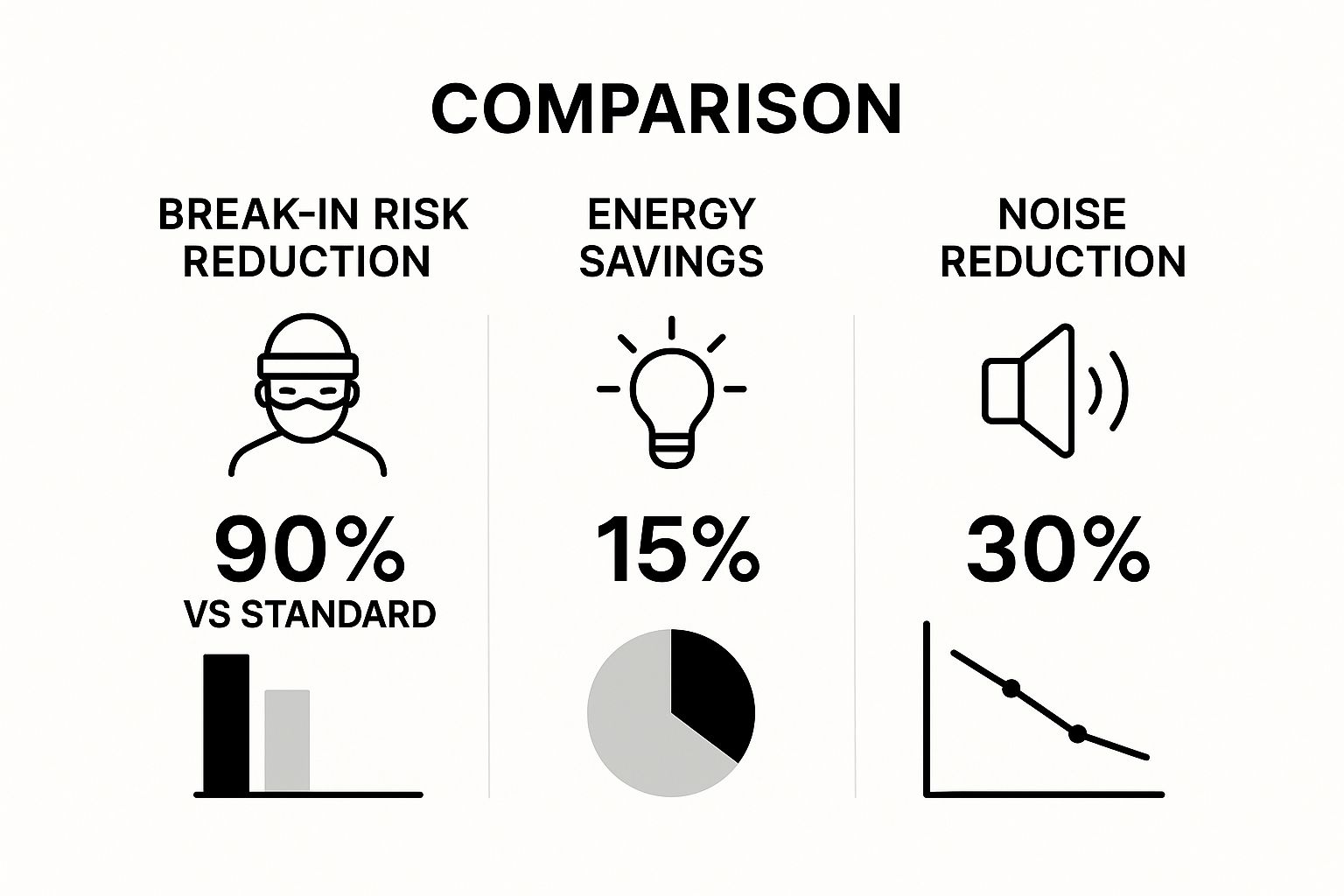
As you can see, it's about so much more than just stopping a baseball. These systems offer real upgrades in security, energy savings, and even day-to-day comfort.
Comparing Your Options Head-to-Head
So, which one is right for you? Laminated glass or security film? The answer often depends on where you are in your project. Laminated glass is typically built into the plan for new construction or a full window replacement. Security films, on the other hand, are the go-to solution for fortifying windows that are already installed.
To help you get a clearer picture, let's put them side-by-side.
Laminated Glass vs Security Film at a Glance
This table breaks down the core differences between the two primary shatter resistant solutions. Use it to weigh the pros and cons based on your specific needs, budget, and project type.
| Feature | Laminated Glass | Shatter Resistant Window Film |
|---|---|---|
| Installation | Requires complete window replacement; installed as a single unit. | Retrofitted onto existing glass by trained professionals. |
| Cost | Significantly higher upfront investment due to materials and labor. | A more budget-friendly upgrade for existing windows. |
| Performance | Excellent built-in impact resistance and fantastic sound dampening. | Superior flexibility and tensile strength, with performance tied to film thickness. |
| UV Protection | Blocks up to 99% of damaging UV rays right out of the box. | Also blocks up to 99% of UV rays, preventing interior fading. |
| Best For | New construction projects or major home renovations. | Upgrading security and safety in existing homes and commercial buildings. |
While both offer tremendous protection, their practical differences in cost and installation make them suited for very different scenarios. Laminated glass is the integrated, heavy-duty choice for a new build, while security film provides an accessible and highly effective path to upgrading the windows you already have.
The Growing Demand for Safer Glass Solutions
The move toward shatter resistant windows isn't just a fleeting trend—it's a direct response to the world we live in today. More and more, property owners are looking for practical ways to secure their homes and businesses. They're realizing that an alarm system is great, but reinforcing the building itself provides a critical first line of defense.
Windows have always been the weakest link in a building's armor, and that's precisely why they're getting so much attention now. This shift is really driven by two things: a growing unease about property crime and the undeniable reality of more frequent, severe weather. For many, the peace of mind knowing their glass can withstand a heavy impact is worth its weight in gold.
Stricter Codes and Evolving Dangers
It’s not just homeowners and business owners pushing this forward. Building codes are catching up, too. In many coastal and storm-prone areas, regulators now mandate impact-resistant glass for new builds and significant renovations. These rules are there to do more than just prevent property damage; they're designed to save lives during hurricanes and tornadoes.
At the same time, the threats we face have changed. Burglars often rely on "smash-and-grab" tactics, where speed is everything. A shatter resistant window completely upends their strategy. When glass refuses to break, it creates a delay and a lot of noise, which is usually more than enough to send a would-be intruder running.
This isn't just a niche upgrade anymore. The move toward resilient glass is a mainstream solution driven by a global shift toward safer, more durable construction for both homes and businesses.
You can see this change reflected in the market numbers. Impact resistant glass is a massive global market, valued at around $31.1 billion and projected to more than double to over $64 billion by 2034. If you're curious, you can explore more data on the impact resistant glass market to see just how significant this growth is.
That kind of financial momentum points to a simple truth: people are willing to invest in proactive safety. A shatter resistant window is no longer a luxury item but an essential part of modern property protection, valued for its simple ability to hold strong when it matters most.
Unlocking the Full Value of Your Windows
Sure, the main job of a shatter-resistant window is to keep broken glass from flying everywhere. But that’s just scratching the surface. It's better to think of this technology not as a single-purpose safety feature, but as a complete upgrade package for your property. When you invest in shatter-resistant windows, you're actually solving several common problems at once, getting a real return on your money through better security, preservation, and day-to-day comfort.
The most obvious bonus is a major security boost. Burglars are all about speed and quiet—a window is often their go-to entry point. A shatter-resistant window completely flips the script. When a would-be intruder tries to break it, the glass might crack and spiderweb, but it stays locked in the frame. This creates a loud, frustrating, and time-consuming barrier that most thieves will give up on.
That delay isn't just an annoyance for them; it’s a critical window of opportunity for you. It gives you precious time to react and for your alarm system to do its job and contact the authorities.
More Than Just a Physical Barrier
Beyond stopping a break-in, these windows act as silent protectors for everything inside your home. The tough polymer layers or specialized films that give the glass its strength have another trick up their sleeve: they're fantastic at blocking ultraviolet (UV) radiation.
This is a game-changer for keeping your belongings from getting ruined by the sun. Here’s a quick look at what this protects:
- Flooring and Rugs: Hardwood floors, pricey carpets, and decorative rugs are all vulnerable to fading from years of sun exposure.
- Furniture: The fabric on your couches and chairs, along with the finish on wood tables and cabinets, can be bleached and damaged by UV rays.
- Artwork and Photos: That beautiful painting or your favorite family photos can lose their color and vibrancy without protection.
By blocking up to 99% of harmful UV rays, shatter-resistant windows are basically putting a powerful, invisible layer of sunscreen on your home. They protect your most valuable investments without you ever having to think about it.
Creating a Quieter, More Efficient Home
The perks keep coming. The layered construction of both laminated glass and security films adds extra mass and density to your windows. This has a wonderful side effect: it dampens outside noise significantly. Those layers disrupt sound waves, which means you'll notice a real reduction in noise from traffic, nearby construction, or even just loud neighbors. It makes for a much more peaceful and quiet home.
On top of that, many of the more advanced films come with solar control properties. They can reject a surprising amount of solar heat during the summer, easing the burden on your air conditioning. This reduction in heat gain translates directly into lower energy bills, helping the upgrade pay for itself over time. At the end of the day, that one investment in shatter-resistant windows delivers a whole suite of improvements for your home’s security, comfort, and efficiency.
Shatter Resistant Windows in the Real World

It's one thing to talk about the technology, but the real value of shatter resistant windows clicks into place when you see them in action. This isn't just an abstract concept; it's a practical, essential upgrade for ground-floor bedroom windows, sliding glass doors where kids play, or a sprawling storefront on a busy street. These aren't just niche add-ons—they are smart solutions for everyday weak spots.
For homeowners, the applications are all around us. If you live in a storm-prone area, these windows are your first line of defense against gale-force winds and flying debris. When a standard window shatters, it's an open invitation for wind and rain to wreak havoc inside. A shatter resistant window, even if cracked, holds its ground and keeps the building sealed.
The demand for this kind of protection is booming. The global shatterproof glass market, a close relative of shatter resistant window tech, was valued at $14.2 billion in 2023. It’s on track to nearly double, hitting a projected $25.6 billion by 2032, largely because more and more people are prioritizing safety and security. You can find more data on this impressive growth at Dataintelo.com.
Residential Peace of Mind
Beyond preparing for Mother Nature, personal security is a huge reason homeowners make the switch. A shatter resistant window can turn a burglar's favorite entry point into a noisy, frustrating barrier.
Think about these common household scenarios where this technology makes a world of difference:
- Ground-Floor Windows: These are the low-hanging fruit for intruders. Reinforcing them with security film makes a quick, quiet entry practically impossible. The noise and delay are often enough to send a would-be thief running.
- Sliding Glass Doors: That beautiful, big pane of glass is a tempting target. Security film holds the shattered pieces together, stopping a classic "smash-and-grab" in its tracks.
- Windows Near Play Areas: For any parent, this one is huge. The film acts as a safety net, protecting against serious injuries if a child accidentally runs into the glass or a baseball goes astray.
We cover this topic in much more detail in our guide to security film for home windows.
The key for homeowners is to think proactively. Instead of just dealing with the aftermath of a break-in, you're actively reinforcing your home's most vulnerable points before anything happens.
Protecting Commercial and Public Spaces
In the business world, the stakes are just as high. Urban storefronts are constant targets for smash-and-grab robberies. A shatter resistant window can be the deciding factor between a failed attempt and thousands of dollars in stolen goods and repair costs.
It's no surprise that schools, government offices, and other public buildings are increasingly making this technology a standard requirement. For them, it’s all about public safety—preventing injuries from everything from accidental bumps and vandalism to more serious threats like blast events. In these high-traffic environments, controlling how glass breaks is a critical part of keeping people safe.
Choosing the Right Shatter Resistant Solution
Picking the right shatter resistant window solution isn't about grabbing the thickest film off the shelf. It’s a bit more personal than that. It all starts with one simple question: what are you trying to protect your property from?
The perfect choice for a coastal home bracing for hurricane season looks very different from what a downtown storefront needs to prevent smash-and-grab burglaries.
First things first, you have to pinpoint your primary threat. Are you in an area with high winds and the risk of flying debris? Or is your main goal to stop a criminal from getting inside? That answer will steer the rest of your decisions. For instance, a film designed to deter a determined burglar needs to be much thicker and more robust than one meant for basic accident protection, like keeping kids safe from a broken window.
Assess the Strength and Thickness
When it comes to security film, thickness is everything. We measure it in mils, which is just a shorthand for one-thousandth of an inch. The thicker the film, the more punishment it can take.
- Safety Films (4-7 mil): This is your everyday protection. It’s perfect for handling accidental impacts—think a stray baseball from the kids next door or someone tripping and falling into a glass door. The film holds the glass in place, preventing a shower of dangerous shards.
- Security Films (8 mil and up): Now we're talking serious protection. Films that are 8 mil or thicker are engineered to withstand deliberate, heavy force. This is the go-to standard for thwarting break-ins and minimizing damage during violent weather events.
When you're looking at any shatter resistant window film, always ask about the mil thickness. It's the key spec that tells you if the product actually meets your security needs. We dive deeper into how different films can secure windows from break-ins in our detailed guide on the topic.
Why Professional Installation is Essential
Here’s a hard truth: the best security film in the world is completely useless if it's installed incorrectly. This is one of those jobs where calling a professional is non-negotiable if you want real security.
A pro installer brings a critical element to the table: an attachment system. Sometimes called an anchoring system, this is what mechanically bonds the film, glass, and window frame together into one solid unit.
Without an attachment system, a strong push could pop the entire pane of glass—film and all—right out of the frame. The anchor is what truly locks everything together, creating a unified, resilient barrier that is incredibly difficult for an intruder to defeat.
Finally, don't forget the other details. Do you need a tinted film for extra privacy or to cut down on solar heat? Do you have local building codes or insurance policies with specific impact-resistance requirements? Thinking through these questions upfront ensures the solution you choose is not just effective, but also compliant. A little bit of planning goes a long way in making sure your investment delivers the protection and peace of mind you’re looking for.
Got Questions About Shatter Resistant Windows? Let's Clear Things Up.
Thinking about upgrading your windows for better security is a smart move, but it's totally normal to have a few questions before you commit. Getting straight answers is the best way to feel confident you're making the right choice. Let's dive into some of the things people ask us about most.
First off, let's tackle a big one: are "shatter resistant" and "bulletproof" the same thing? Absolutely not. It’s a common mix-up, but the two are worlds apart. A shatter resistant window is designed to keep the glass intact when hit by things like a hammer, a heavy branch in a storm, or even a small blast. Bullet-resistant glass, on the other hand, is a much thicker, multi-layered beast specifically designed and rated to stop bullets.
Answering Your Top Questions
A lot of folks also ask if they can just install security film themselves. You’ll definitely see DIY kits out there, but for real, dependable security, this is a job for the pros. A professional installer does more than just get the film on smoothly; they add a crucial anchoring system that chemically bonds the film to the window frame itself.
Think about it: without that anchor, a determined intruder could just push the entire pane of glass—film and all—right out of its frame. The film would do its job holding the glass together, but it wouldn't stop the entry. That anchoring system is what truly secures the window.
And what about durability? It's a fair question. You want to know your investment will last. The good news is that high-quality, professionally installed shatter resistant window film is incredibly tough. Most top-tier films come with impressive warranties, often ranging from 10 years to a lifetime for home installations. This isn't a temporary fix; it's a long-term upgrade for your security and peace of mind.
Ready to add a powerful, nearly invisible layer of protection to your home or business? The team at Fortress Security Films is here to help. Contact us to schedule a free security consultation and we'll help you find the perfect solution for your property.
