


When we talk about security windows and doors, we're not just talking about a stronger lock or a thicker piece of glass. These are complete, engineered systems built from the ground up to stop someone from getting in.
They combine reinforced frames, shatter-resistant glazing, and complex multi-point locking systems to turn your property's weakest spots into its strongest.
Why Your Entry Points Need More Than a Lock
It's easy to think of home security in terms of alarms and cameras, but your first and most important line of defense is physical. It's the sheer strength of your windows and doors. This guide is all about that fundamental layer of protection—what's often called "hardening your home's envelope." We'll dig into why these entry points are the go-to targets for intruders.
Think of it this way: a standard door is like a flimsy chain lock on a garden gate. It might stop a casual passerby, but anyone determined will break it in seconds. A true security door is a different beast entirely. It's the equivalent of a fortified steel gate built right into a stone wall.
The Weakest Link in Home Security
An alarm system is reactive. It's designed to go off after someone is already inside. Security windows and doors, on the other hand, are proactive. Their entire purpose is to prevent that breach from ever happening. That's a critical distinction and the cornerstone of any smart, layered security plan.
An intruder wants one thing above all else: a fast, quiet entry. By reinforcing the physical structure of your windows and doors, you take that option off the table. You force them to make a choice—either give up and move on, or create a huge amount of noise and spend a lot of time trying to get in. Both dramatically increase their chances of getting caught.
This proactive strength completely changes the dynamic. You're no longer just relying on a siren to scare someone off; you're building a physical barrier that actively keeps them out.
More Than Just Stopping Break-Ins
While keeping intruders out is the primary job, the benefits of upgrading don't stop there. A tough, well-built physical defense system does more than you might think, making your property safer and more resilient in other ways too.
- Impact Resistance: These systems are built to handle serious force, whether it's from a crowbar or from flying debris in a hurricane or major storm.
- Time is Your Ally: A properly installed security door or window can delay an intruder for several crucial minutes. That's precious time for you to react and for law enforcement to get there.
- A Full-Perimeter Mindset: Protecting windows and doors is key, but a truly secure property considers every possible access point. Other entryways, like driveways, also need attention to guard against modern threats. To round out your strategy, you can learn more about robust security for property entry points and see how a layered approach works.
The Anatomy of a Truly Secure Window and Door
When you're looking at a security window or door, what you're really seeing is a system. It's not one single feature that makes it tough, but how all the parts work together. Think of it like a chain: it's only as strong as its weakest link. For a window or door to truly stand up to an attack, its frame, glazing, and hardware must all be up to the task.
If you understand these three core components, you can cut through the marketing noise and spot a product that's genuinely built to protect. Let’s break down each element and see how they create a powerful barrier against forced entry.
The Foundation: The Frame
First, you have the frame. This is the skeleton of the whole unit, the part that has to hold everything together under extreme force. If the frame bends, cracks, or warps, even the most advanced glass or lock is useless. It’s the anchor.
The market for high-quality frames is massive—valued at USD 105 billion and expected to climb to USD 148.8 billion by 2034. A huge chunk of that, about 47.1%, is driven by demand for advanced uPVC frames, prized for their insulation and cost-effectiveness. With the UN predicting that 68% of the world's population will live in cities by 2050, the need for secure, well-built urban housing is only going to grow.
Comparing Frame Materials for Security Windows and Doors
Choosing the right frame material is a balance of strength, budget, and maintenance. Each option has its place, and the best choice really depends on your specific security needs and environment.
| Material | Strength & Durability | Cost | Maintenance | Best For |
|---|---|---|---|---|
| Reinforced Steel | Highest resistance to brute force. Extremely durable and rigid. | High | Requires painting to prevent rust, especially in humid climates. | High-security commercial buildings, panic rooms, or residential properties where maximum security is the top priority. |
| Aluminum | Very strong and naturally corrosion-resistant. Lighter than steel. | Moderate | Low; typically has a powder-coated or anodized finish that lasts for years. | Modern homes, coastal properties, and businesses wanting a sleek look without compromising on strength. |
| Advanced uPVC | Strong when reinforced with a steel or aluminum core. Excellent thermal insulation. | Low-Moderate | Very low; just needs occasional cleaning. Won't rot, rust, or fade. | Most residential homes and commercial buildings where a balance of security, energy efficiency, and cost is key. |
As you can see, there isn't a single "best" material. Steel is the brute, aluminum is the sleek protector, and reinforced uPVC is the smart all-rounder.
The Shield: The Glazing
Glazing is the clear part of your window or door, and in a security product, it has to do a lot more than just let in sunlight. Its job is to absorb and deflect impact, staying in place even after being hit repeatedly. Standard glass shatters on the first try, giving an intruder a quiet, easy way in.
Security glazing flips that weakness on its head.
Think about throwing a baseball at a regular windowpane versus a car windshield. The regular glass shatters into a million pieces. But the windshield, made of laminated safety glass, just spiderwebs. It cracks but stays together because of a plastic interlayer. Security glazing works on the same principle, just on a much more robust scale.
To really get a feel for how this works, it helps in understanding different types of glass and their properties. The go-to options for security are laminated glass, which uses a polymer interlayer to hold the pane together when it shatters, and polycarbonate, a plastic that's virtually unbreakable and often layered with glass for ultimate protection.
The infographic below shows how these physical barriers are your first and most important layer of defense.
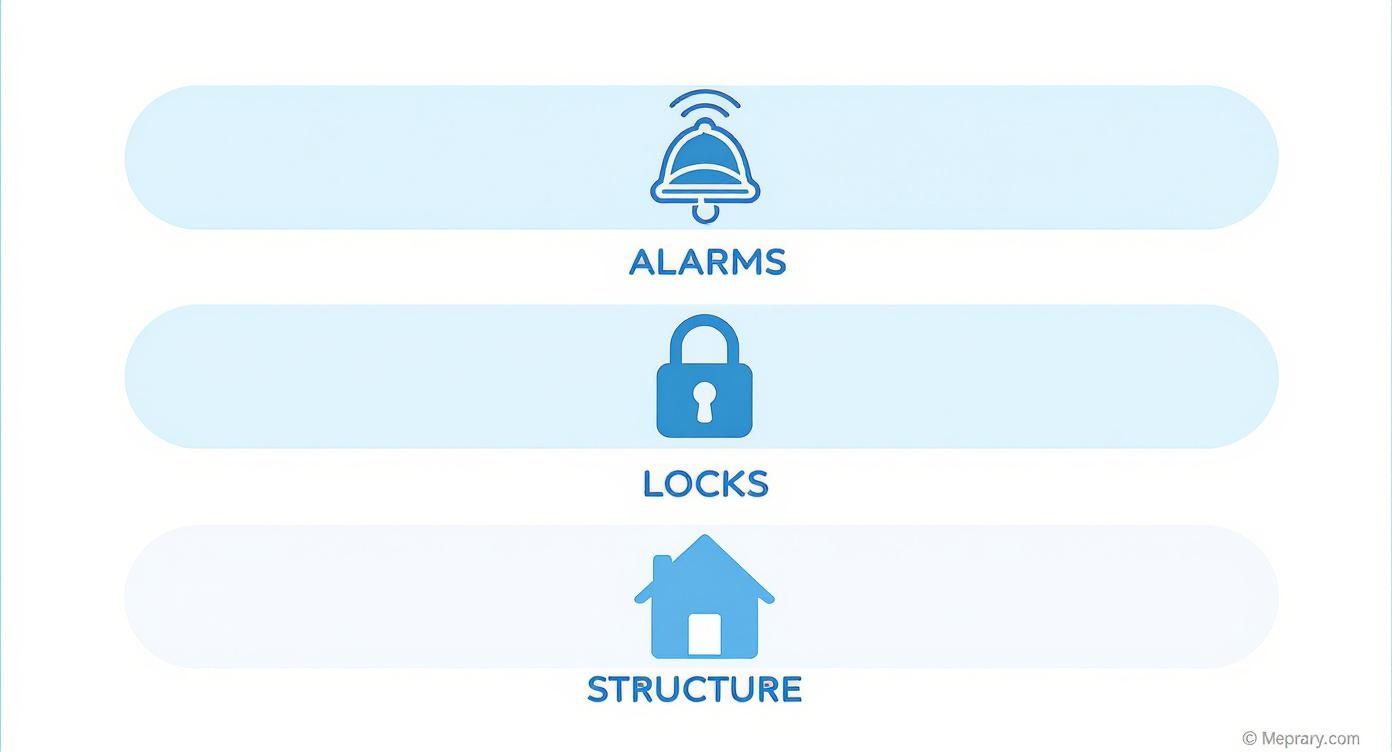
Alarms and cameras are great, but they're reactive—they tell you when someone is already trying to get in. A strong window or door is a proactive barrier that stops them in their tracks.
The Lock and Key: The Hardware
Finally, we have the hardware. This is the crucial last piece of the puzzle—the locks, hinges, and handles that physically bolt the door or window to the frame. Cheap hardware can be pried, drilled, or picked with surprising ease, making a strong frame and tough glass totally pointless.
Look for these key features in high-quality security hardware:
- Multi-Point Locking Systems: Instead of one deadbolt, these systems use several bolts that engage at the top, middle, and bottom of the frame. This spreads out the force from an attack, making it almost impossible to pry open.
- Heavy-Duty Hinges: Hinges are a classic weak spot. Good security hinges have features like non-removable pins or interlocking studs that keep the door in the frame even if a burglar manages to knock the pins out.
- Reinforced Strike Plates: The strike plate is that small metal piece on the door jamb that the lock bolt slides into. Standard ones are held in with short screws. A reinforced plate is heavy-gauge steel anchored with long screws that bite deep into the wall stud, making a kick-in attack much, much harder.
How to Decode Security Ratings and Certifications
Navigating the world of security ratings can feel like you're trying to decipher a secret code. You’ll see a jumble of letters and numbers—ASTM F1233, UL 752—but what do they actually mean for your safety? These certifications are your single best tool for making sure a security window or door will actually do its job when things go sideways.
Think of it this way: anyone can sell a product and call it "tough." A certification is independent proof. It means an accredited lab put that window or door through a series of brutal, standardized tests designed to mimic real-world attacks. It’s the difference between a marketing claim and a verified result.
Understanding Forced Entry Ratings
For most homes and businesses, the ratings you'll care most about are for forced entry. These tests are built to simulate a determined attacker using common tools to break through a locked door or window. The point isn’t to find something unbreakable—given enough time and heavy equipment, nothing is. The goal is to see how long it can delay an intruder.
That delay is everything. Security experts agree that if a burglar can't get inside within a few minutes, they’re very likely to give up and find an easier target.
A key standard you'll run into comes from ASTM International, a globally recognized organization that sets the bar for product performance. Their tests are methodical and intense.
- ASTM F588: This one specifically tests window assemblies against forced entry, using tools like pry bars and screwdrivers.
- ASTM F476: This is the equivalent for door assemblies, subjecting them to battering rams, prying, and attacks on the lock itself.
- ASTM F1233: This is a much tougher test that simulates a mob-style attack, with multiple attackers and heavy tools over a sustained period.
The performance levels in these tests are often measured in minutes. A product rated to hold up for 5 minutes offers a completely different world of protection than one rated for 15 minutes. That extra time could be the critical window you need for law enforcement to arrive.
When you see a forced-entry rating, don't just see a code. See a stopwatch. That number tells you how much time you are buying for yourself, your family, or your employees in a crisis. It translates directly into safety and peace of mind.
Ballistic and Blast Resistance Ratings
For high-risk locations like government buildings, banks, or certain retail storefronts, security goes well beyond just stopping a break-in. This is where you start to see ballistic (bullet-resistant) and blast-mitigation ratings. These are governed by different, far more extreme standards.
The most common certification for bullet resistance comes from Underwriters Laboratories (UL).
The UL 752 standard lays out ten distinct levels of protection. Each level specifies the exact firearm, ammunition, and number of shots a material must stop cold to earn that rating. For instance:
- Level 1: Has to withstand three shots from a 9mm handgun.
- Level 3: Needs to stop three shots from a powerful .44 Magnum handgun.
- Level 8: Must stop five shots from a 7.62mm rifle, the same ammunition used in an AK-47.
Choosing the right level is all about matching it to the specific threat you're facing. A corner store worried about handgun robberies might be perfectly served by a Level 1 or 2 system. A federal courthouse, on the other hand, might require nothing less than Level 8 protection. These ratings give you a clear, objective way to measure a product’s ability to protect people during the most violent attacks imaginable.
Choosing the Right Security for Your Property Type
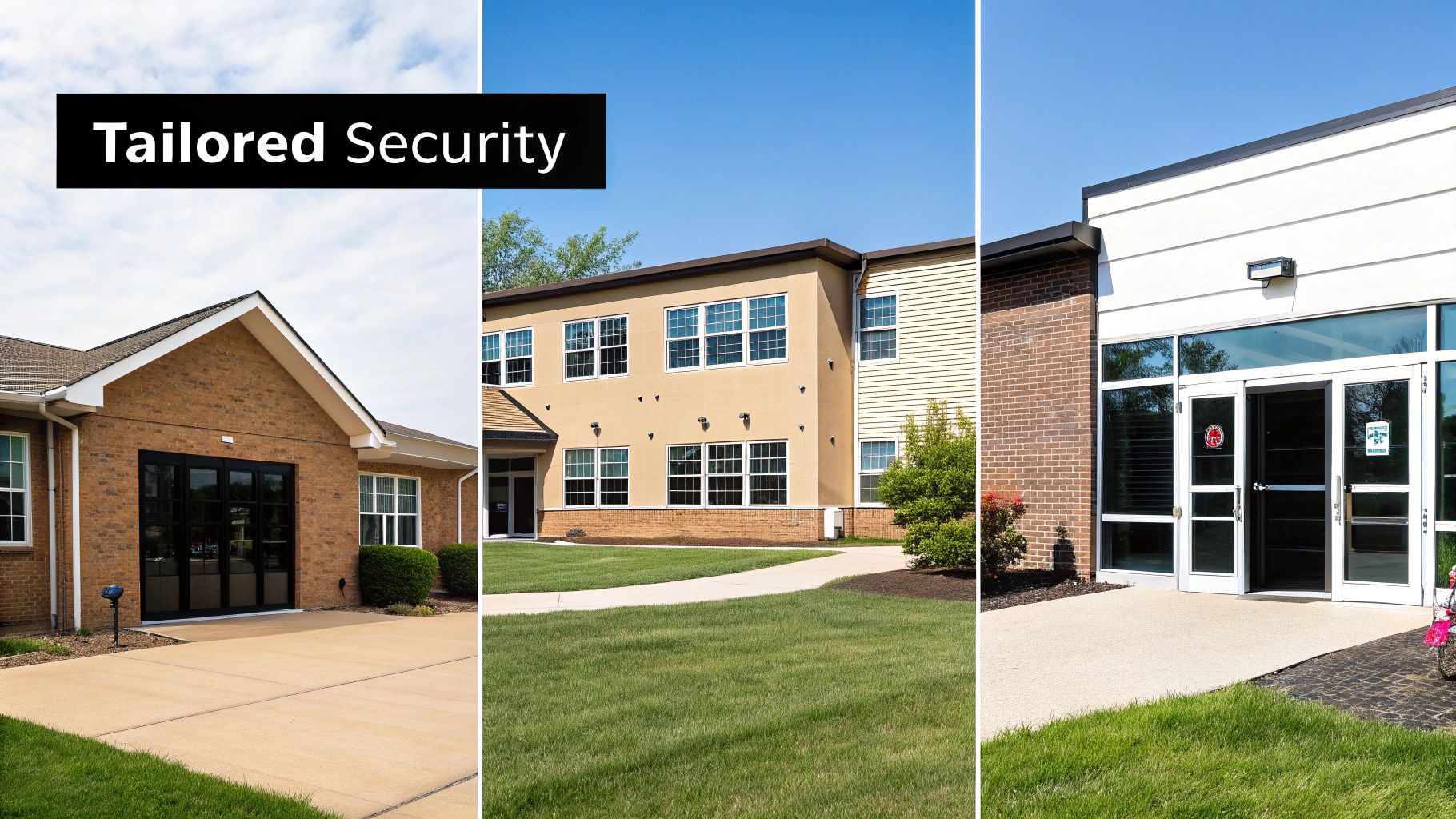
It’s pretty obvious that a bustling downtown storefront and a quiet suburban home face entirely different threats. A bank vault door on your bedroom would be ridiculous, but a standard residential door won't cut it for a high-value commercial property. Choosing the right security windows and doors is all about matching the solution to the real-world risks your environment faces.
This isn't a one-size-fits-all game. It's about a strategic assessment to find a system that gives you serious protection without making daily life a hassle or ruining the look of your building. By breaking it down by property type—residential, commercial, and institutional—we can zero in on the features that will actually deliver the security you need.
Security Solutions for Residential Homes
For homeowners, it's a constant balancing act between feeling safe and maintaining curb appeal. You want to fortify your home, not make it look like a fortress. Thankfully, modern security products are masters of disguise, offering powerful protection that blends right in.
The focus here is on solutions that look good and work well together. Think of a steel security door with a beautiful wood-grain finish that’s indistinguishable from traditional timber. For windows, this could be a high-strength, clear security film that makes the glass incredibly tough to shatter, yet is practically invisible.
Key things for homeowners to think about:
- Aesthetic Integration: Products have to complement the home's architectural style, whether it’s sleek and modern or classic and traditional.
- User-Friendly Operation: Everyone in the family should be able to use the locks and windows effortlessly. No one wants to wrestle with a complicated multi-point locking system every day.
- Natural Light and Views: Security should never mean living in a dark, closed-off space. Solutions like security films keep your windows crystal clear.
A well-chosen residential security system gives you peace of mind not just when you’re away, but when you’re home, too. It turns your house into a sanctuary where your family feels safe without feeling trapped, seamlessly merging strength with everyday living.
Fortifying Commercial and Retail Spaces
Business owners are up against a different beast entirely. Commercial properties are often packed with high-value assets—inventory, equipment, sensitive data—and they have to manage a lot of foot traffic. Here, the focus shifts from pure aesthetics to more rugged, functional security.
For a retail shop, stopping a smash-and-grab robbery is a huge priority. Laminated glass or a tough security film can dramatically slow down an intruder, often making them give up and move on. In an office building, integrating security doors with electronic access control is key to managing who goes where and when.
This need for robust protection is a big deal globally. The windows and doors market was valued at USD 216.04 billion and is expected to hit USD 270.39 billion by 2030. Doors claim a dominant 58.56% of that revenue, driven heavily by the commercial sector's need for security doors and fire-rated assemblies. You can explore more data on these market trends to see how this impacts building security.
For high-risk businesses like jewelry stores or banks, the stakes are even higher. They often need top-tier protection, like ballistic-rated glass and doors engineered to withstand extreme force, or even blasts.
Protecting Educational and Institutional Buildings
When we talk about schools, universities, and public buildings, the security equation changes again. The absolute priority is protecting people during a crisis. The goal is to create safe, controllable spaces that still allow for orderly movement and a rapid emergency response.
In these environments, security windows and doors have to pull double duty. They need to stop unauthorized entry while also enabling swift lockdowns and safe evacuation routes.
Here are some of the critical functions for these settings:
| Feature | Primary Function | Example Application |
|---|---|---|
| Controlled Egress | Stops doors from being opened from the outside in a lockdown but lets people exit safely from inside. | Classroom doors that can be locked remotely by administration but still allow students and staff to get out. |
| Impact-Resistant Glazing | Delays or prevents intruders from breaking glass to get in, buying precious time for first responders to arrive. | Reinforced glass or security film on ground-floor windows and the sidelights of the main entrance. |
| Access Control Integration | Links doors to a central system that can instantly lock down the entire campus with one command. | Keycard or fob systems that can be deactivated during an emergency to secure the perimeter. |
In the end, the right security solution is the one that’s tailored to your world. By carefully thinking through the specific threats and day-to-day needs of your property—whether it’s a home, a business, or a school—you can invest in a system that delivers not just a physical barrier, but true peace of mind.
Why Professional Installation Is Non-Negotiable
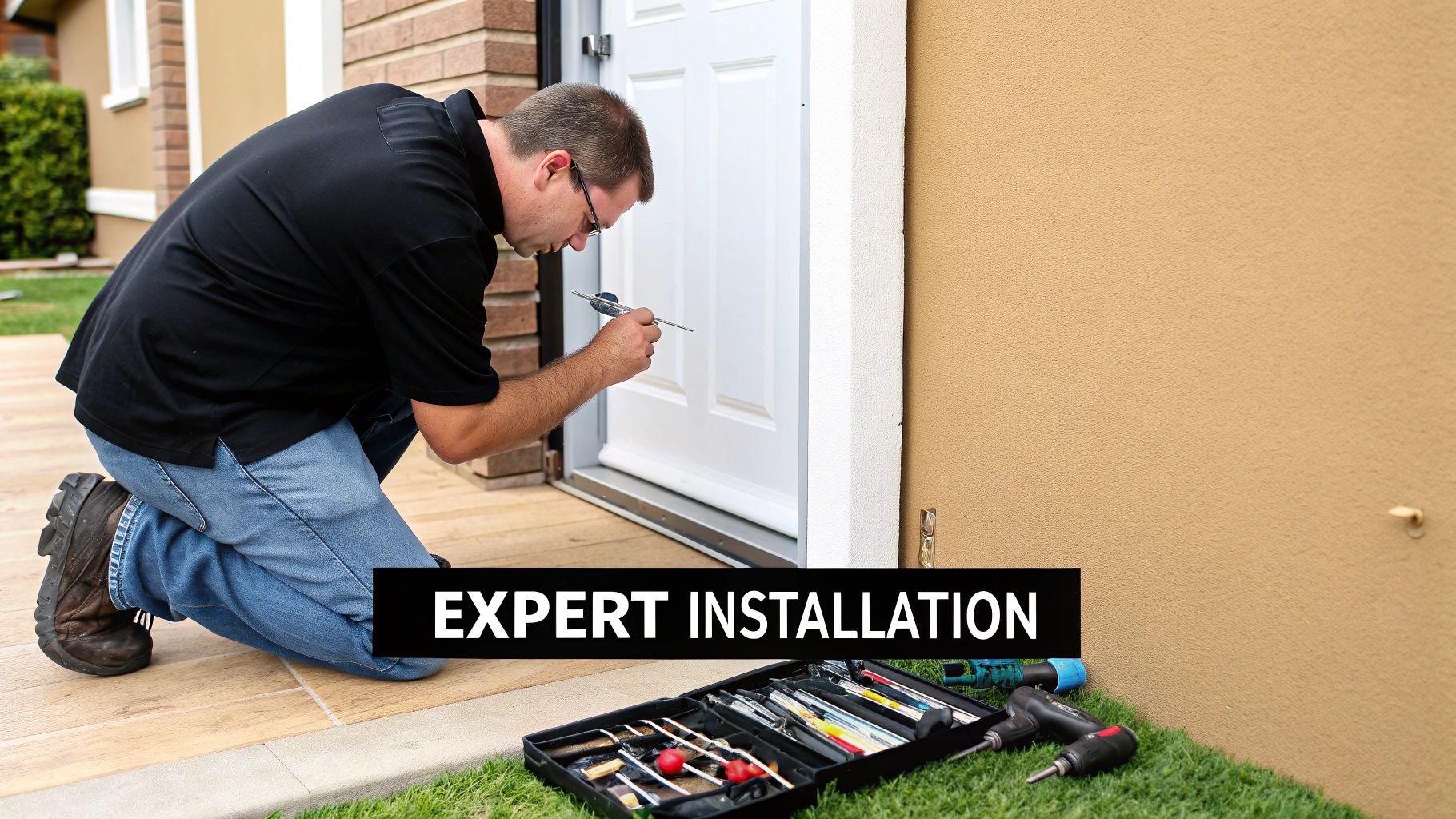
You can spend a fortune on the most advanced, highest-rated security door on the market, but if it's installed incorrectly, you’ve basically bought a very expensive decoration. The real-world effectiveness of security windows and doors is completely dependent on the quality of the installation.
Think of it this way: a high-security door in a poorly fitted frame is like a bank vault door set into a drywall frame. The door itself might be impenetrable, but the surrounding structure is an obvious and exploitable weak point. Professional installation isn't just an optional upgrade; it's what makes the entire system work.
Certified installers know that the door or window is just one piece of the puzzle. The real skill is in integrating that unit into the building's structure so seamlessly that it becomes part of the wall itself, leaving no gaps or vulnerabilities for an attacker to leverage.
The Anatomy of a Flawless Installation
A true professional installation is a meticulous process. It's about much more than just setting a frame and tightening a few screws. The objective is to create a single, unified, and reinforced entry point.
Here's what that process looks like in practice:
- Structural Assessment: Before a single tool comes out, an expert technician will inspect your existing wall studs, header, and frame. They need to confirm the structure can even support the significant weight and potential stress of a new security unit.
- Frame Reinforcement: This is where the magic happens. The installer will often reinforce the wall cavity around the opening, sometimes adding new structural supports to handle the extreme force of a determined break-in attempt.
- Precise Anchoring: Forget standard screws. Professionals use long, heavy-duty fasteners to anchor the frame directly into the building's structural studs. This is what prevents the entire unit from being kicked or pried out.
- Mechanism Calibration: Multi-point locking systems and deadbolts are incredibly precise. An installer will carefully align and calibrate every moving part to ensure they engage perfectly, creating an unyielding seal with zero play.
- Weatherproofing and Sealing: A proper weatherproof seal is applied around the entire unit. This not only stops air and water leaks but also prevents the frame from warping or deteriorating over time, which would compromise its integrity.
Common Shortcuts That Create Critical Vulnerabilities
Amateur or rushed jobs are notorious for shortcuts that completely undermine a product's security features. These "small" mistakes create huge vulnerabilities that a determined intruder will spot and exploit in seconds.
Think of a proper installation as building a complete defensive system. A shortcut is like leaving a side gate unlocked. It doesn't matter how strong the front door is if there's an obvious, easy way around it. An inadequate fastener or a poorly reinforced frame is that unlocked gate.
Watch out for these common installation errors:
- Using short, inadequate screws that only bite into the thin door jamb instead of reaching the solid wall stud.
- Failing to properly shim and square the frame, which misaligns the locks and prevents them from engaging correctly.
- Neglecting to create a weatherproof seal, which invites rot and structural weakness over time.
A Simple Maintenance Checklist to Protect Your Investment
Once your security windows and doors are installed by a pro, a little routine maintenance goes a long way in keeping them in fighting shape for years to come. A quick check-up every few months can help you catch small issues before they become big security risks.
- Inspect All Hardware: Give the screws on your hinges, strike plates, and locks a check to make sure they're all tight.
- Clean Tracks and Channels: For sliding doors and windows, keep the tracks clear of dirt and debris. This ensures they operate smoothly and don't get jammed.
- Test Locking Mechanisms: Regularly operate all the locks. They should engage smoothly, without any grinding, sticking, or resistance.
- Check Seals and Weatherstripping: Look for any cracks or gaps in the seals around the frame. If they look brittle or worn, it's time to replace them.
What to Expect on the Price Tag and Long-Term Value
When you're looking at top-tier security for your windows and doors, the initial price tag can give you pause. It’s a serious purchase, but it's important to frame it correctly. This isn’t just an expense; it’s a long-term investment in safety, the value of your property, and, frankly, your own peace of mind. That price directly reflects the advanced materials, precise engineering, and certified testing that separate a truly secure barrier from a standard one.
The cost for these systems can vary wildly, and it all comes down to the level of protection you actually need. For example, a reinforced steel door for a home might start in the low thousands. On the other end of the spectrum, a custom-built, ballistic-rated entry system for a commercial building could easily run into five figures.
Several key factors will move that price up or down:
- Materials Used: There's a big difference in cost between a solid steel door and a steel-reinforced uPVC one. The same goes for glazing—multi-layered laminated glass is a much larger investment than a professionally applied security film.
- Security Certification: Products that have passed demanding third-party tests for ratings like UL 752 (for ballistic resistance) or ASTM F476 (for forced entry) will naturally cost more. That price includes all the R&D and verification needed to earn that stamp of approval.
- Size and Customization: Standard sizes are always more budget-friendly. Once you get into custom dimensions, unique architectural designs, or integrated tech like electronic access control, the investment grows.
Calculating the Return on Your Security Investment
The real value of security windows and doors isn't just what you pay for them on day one. It's what they give back over their entire lifespan, both in real dollars and in less tangible ways. Of course, the peace of mind you get from knowing your property is truly protected is priceless, but there are some very concrete financial benefits that make this a smart investment.
While the initial cost may seem significant, the long-term benefits far outweigh the investment. By safeguarding high-value areas and minimizing risks, these features contribute to both employee well-being and the longevity of the building itself.
Thinking about it this way shifts the conversation from a simple purchase to a durable asset. The value is built on more than just stopping a break-in.
Long-Term Financial and Lifestyle Benefits
Installing certified security solutions can have a positive ripple effect on your finances and day-to-day life. Over time, these benefits can easily offset the initial cost of the products.
- Potential Insurance Discounts: Many insurance companies offer lower premiums for properties with professionally installed, certified security measures. From their perspective, you've significantly lowered the risk of a claim from theft or damage, and they'll often reward you for it.
- Increased Property Value: High-end security upgrades are a powerful selling point. For both residential and commercial properties, they can boost market value and make your building more attractive to potential buyers.
- Improved Energy Efficiency: A happy side effect of all that robust construction is fantastic insulation. The heavy-duty frames and superior seals on security windows and doors are excellent at preventing heat transfer, which can lead to noticeable savings on your heating and cooling bills.
- Significant Noise Reduction: The same features that stop intruders and drafts also do an amazing job of blocking outside noise. The result is a much quieter, more peaceful, and less stressful indoor environment.
Answering Your Questions About Security Windows and Doors
Even with a good grasp of the materials and ratings, you probably still have some practical questions. That’s completely normal. Investing in security windows and doors is a big decision, and it pays to get all your concerns addressed upfront.
Let's walk through some of the most common questions we hear from property owners just like you. Getting clear, straightforward answers will help you move forward with confidence and choose a solution that’s right for your property, budget, and peace of mind.
Can I Just Make My Current Windows and Doors More Secure?
Absolutely. You don't always have to rip everything out and start from scratch. Upgrading what you already have can be a fantastic, cost-effective first step. For windows, applying a professional-grade clear security film is a game-changer. It makes the glass incredibly resistant to shattering from impacts or break-in attempts.
As for your doors, a few simple hardware tweaks can make a world of difference.
- Swap the Deadbolt: Ditch your standard lock for a Grade 1 deadbolt. It's the highest security rating you can get for a residential property.
- Beef Up the Strike Plate: The small plate on your door frame is a major weak point. Replace it with a heavy-duty version secured with long, three-inch screws that bite deep into the wall stud, not just the thin door jamb.
- Secure the Hinges: Use heavy-duty hinges, and make sure they have non-removable pins. This simple fix stops a common method of prying a door open from the hinge side.
Just keep in mind that while these retrofits offer a significant security boost, they won't quite match the fully integrated, lab-tested strength of a purpose-built security window or door system.
Do Security Products Have to Look Ugly and Industrial?
Not anymore! This is probably one of the biggest myths out there. The days of feeling like you have to live behind ugly steel bars or bulky, prison-like frames are long gone. Today's manufacturers have gotten incredibly good at blending top-tier protection with beautiful design.
Today’s security solutions are masters of disguise. You can have a door that looks like warm, elegant natural wood but secretly hides a reinforced steel core. You can install sleek, minimalist windows with multi-point locking systems that are completely invisible. You truly don't have to sacrifice your home's curb appeal for safety.
The whole idea is to make security seamless. Whether you own a historic home or a modern commercial building, there's a huge range of designs, finishes, and colors available to match your property's unique style.
Are Security Solutions Also Energy-Efficient?
Yes, and it's one of the best side benefits. High-quality security products are often fantastic for energy efficiency simply because of how they're built. Their robust construction is a natural insulator.
Think about it: the tough, multi-chambered frames, advanced weather seals, and multi-pane glazing (like laminated glass) that stop an intruder also happen to be excellent at stopping heat transfer. This creates a powerful thermal barrier that helps keep your space cooler in the summer and warmer in the winter, which can lead to real savings on your energy bills.
For proof, look for products that carry official ENERGY STAR or NFRC (National Fenestration Rating Council) ratings alongside their security certifications. It’s the best way to know you’re getting a product that’s a top performer all around.
Ready to secure your property without compromising its appearance? At Fortress Security Films, we specialize in advanced, nearly invisible window security films that provide powerful protection for homes, businesses, and vehicles. Discover how our certified solutions can safeguard your world by visiting us at https://fortresssecurityfilms.com.
