


Security window film installation reinforces existing glass with a clear, multi-layer polyester film and adhesive system. When glass breaks, the film helps hold fragments together in the frame and can delay forced entry. Professional preparation, fitting, and edge finishing matter to the result. Fortress Security Films provides installation consultations for homes, businesses, and other properties across Burbank, Los Angeles, and Southern California.
Why Security Window Film Is a Smart Home Upgrade
Most people think of alarms and cameras when they hear "home security." And those are great, but they don't address the most obvious entry point: your windows. Security film tackles this vulnerability head-on. The goal isn't to make the glass unbreakable, but to make it incredibly tough to get through.
Don't confuse this with a standard window tint. Real security film is a seriously robust, micro-layered polyester that’s engineered to absorb impact and keep shattered glass in one piece.
Imagine a burglar trying to break in. They expect a quick, quiet tap to shatter the pane. But with security film, the glass just spiders with cracks. It won't cave in. The film's powerful adhesive creates a membrane that refuses to let go, forcing them to make a ton of noise and waste precious time trying to bash their way through. That's usually more than enough to send them running.
More Than Just Break-In Prevention
Deterring intruders is a huge benefit, but a security window film installation brings so much more to the table. It’s one of those upgrades that improves your home’s overall resilience in a few key ways.
- Severe Weather Protection: When high winds start throwing debris around, your windows are the first line of defense. Security film holds the glass together if it shatters, preventing dangerous shards from flying inside and keeping wind and rain out.
- Accident Mitigation: Life happens. A stray baseball from the kids or someone tripping and falling against a glass door can be disastrous. The film contains the broken glass right in the frame, drastically cutting the risk of severe injuries.
- UV Ray Blocking: This is a fantastic bonus. Most quality security films block up to 99% of damaging UV rays. This helps protect your family, and it stops your furniture, floors, and artwork from fading—all without making your rooms feel dark.
Homeowners are catching on. The global market for security window film hit around $1.5 billion in 2025 and is on track to reach an estimated $2.8 billion by 2033. That kind of growth shows a real shift in thinking, as people realize this film does a lot more than just basic security. You can dig into more of the numbers and market insights on Data Insights Market.
Key Takeaway: Installing security window film is about more than just stopping criminals. It's a comprehensive safety upgrade that protects your home from accidents, storms, and UV damage, giving you peace of mind from multiple angles.
To help you get a handle on what's available, I've put together a quick chart breaking down the main features you'll come across when choosing a film. It makes it much easier to see what really matters for your home.
Quick Guide to Security Film Features
| Feature | What It Means for You | Typical Range/Options |
|---|---|---|
| Film Thickness (Mil) | The higher the number, the stronger the resistance to impact and forced entry. | 4-7 mil for basic safety; 8-14+ mil for high security. |
| Visible Light Transmitted | Determines how much natural light passes through. Clear options are nearly invisible. | Clear (70-90%), Lightly Tinted (35-60%), Privacy (<30%). |
| UV Protection | The percentage of harmful UV rays the film blocks from entering your home. | Most quality films block over 99%. |
| Adhesive System | The type of adhesive used impacts durability and bonding strength. | Pressure-Sensitive or Detonation-Hardened Adhesives. |
This table should give you a solid starting point for comparing products and asking the right questions. Remember, the best film is always the one that fits your specific security goals and budget.
How to Choose the Right Security Film
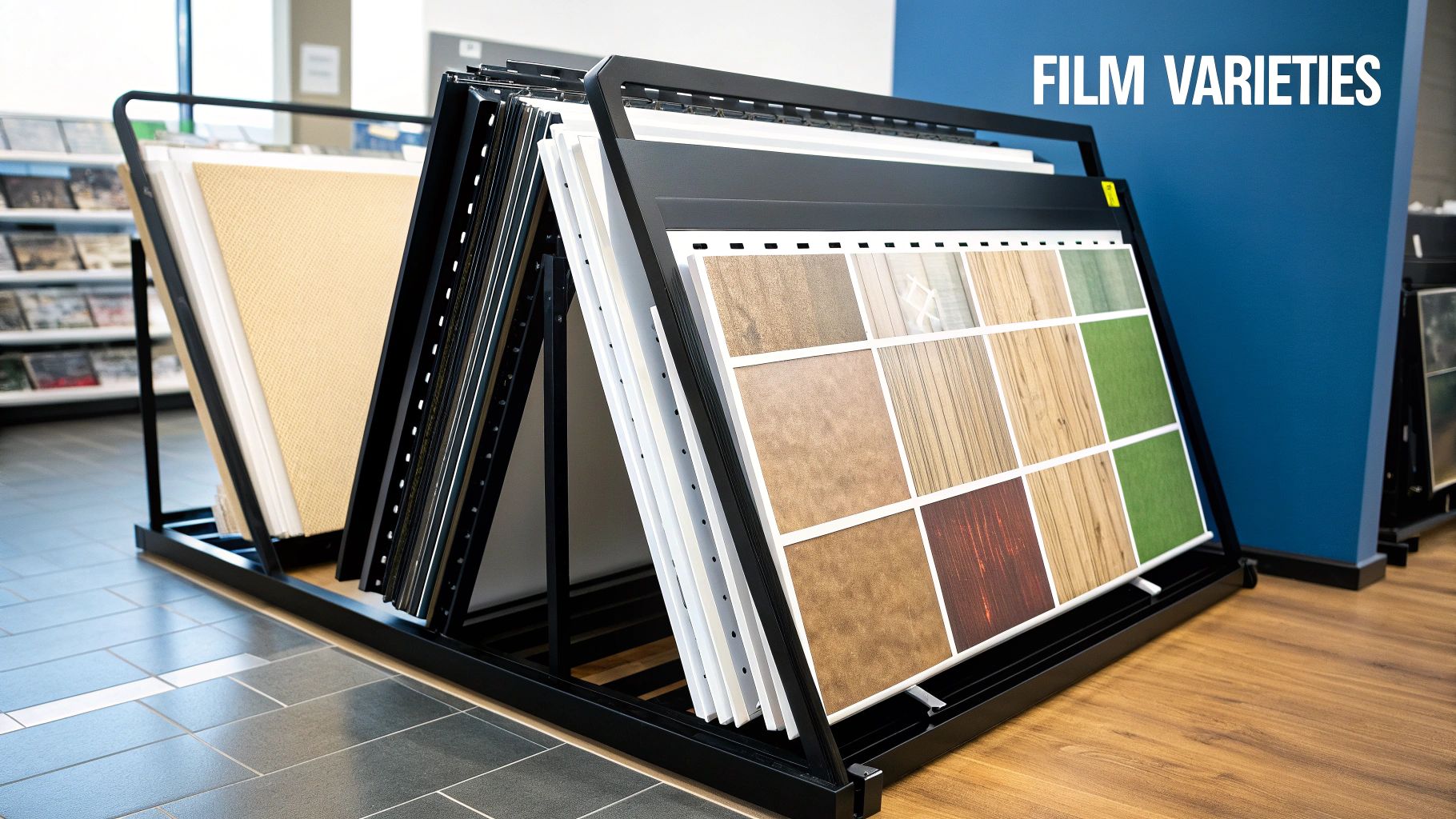
Choosing the right security film is easily the most important decision you'll make in this entire process. The film's real-world performance comes down to a simple question: did you match its capabilities to your specific needs? This isn't a one-size-fits-all product. A film designed for a coastal home bracing for hurricanes has very different properties than one meant to stop a smash-and-grab at a downtown shop.
This decision goes way beyond just picking a brand. To get it right, you have to understand the technical specs that define how a film performs, and the most critical of these is its thickness. That's where the real protective power lies, turning your vulnerable glass into a surprisingly tough barrier.
Decoding Film Thickness: Why Mils Matter
The single most important factor in a film's strength is its thickness, which is measured in mils. One mil is simply one-thousandth of an inch. It sounds tiny, I know, but the difference in impact resistance between a 4-mil film and a 14-mil film is absolutely massive.
Let’s put this into a real-world context. Imagine a ground-floor apartment in a busy city where the main threat is a quick, opportunistic break-in. A film in the 4 to 7 mil range is often the perfect fit. It won’t stop a determined burglar with a crowbar and lots of time, but it will prevent a brick from instantly shattering the glass. That creates noise and, more importantly, delay—often more than enough to convince them to move on.
Now, contrast that with a secluded suburban home where the owner is more concerned about a determined, forceful entry. In this case, stepping up to a thicker film of 8 to 14 mils or more makes all the sense in the world. This level of protection can take repeated, heavy blows from bats or hammers, buying precious time for an alarm to blare and for help to arrive.
Expert Insight: Thicker isn't always better for every situation. It's easy to over-spec your film, and that's just an unnecessary expense. The real key is a clear-eyed assessment of your actual risk, which is why a professional consultation for your security window film installation can be so valuable.
Aesthetics and Functionality: It's Not Just About Being Clear
While security is the main goal, you don't have to turn your home into a fortress that looks like one. Modern films come in a whole range of styles that can add privacy and comfort without giving up an ounce of strength.
- Clear Films: By far the most popular choice for homes. Once installed, they are virtually invisible, so your home's appearance doesn't change and you get to keep all that beautiful natural light. At Fortress Security Films, we specialize in these options to make sure your views stay crystal clear.
- Tinted and Reflective Films: These are fantastic for adding daytime privacy—they make it tough for anyone outside to see in. As a bonus, they offer serious solar heat rejection, which can actually help lower your energy bills in the summer.
- Frosted or Decorative Films: While less common for pure security applications, these are perfect for bathrooms, front door sidelights, or even interior glass partitions where you want both privacy and shatter resistance.
The demand for these solutions has been growing steadily. Between 2021 and 2025, the security window film market shot up from about $860 million to a projected $1.09 billion. This boom is driven by rising security concerns and a broader awareness of protective building materials. You can dig deeper into these trends in the full security building window film market report.
Matching Film to Your Specific Scenario
To really nail this down, it helps to look at the different film thicknesses and where they truly shine. The chart below breaks down the options by their most common use cases, helping you align your choice with the threats you're most likely to face.
Security Film Thickness vs Protection Level
| Film Thickness (Mil) | Primary Use Case | Protection Level | Best For |
|---|---|---|---|
| 4-7 Mil | Smash-and-Grab Deterrence | Basic to Moderate | Retail storefronts, ground-floor residential windows in low-to-moderate risk areas. |
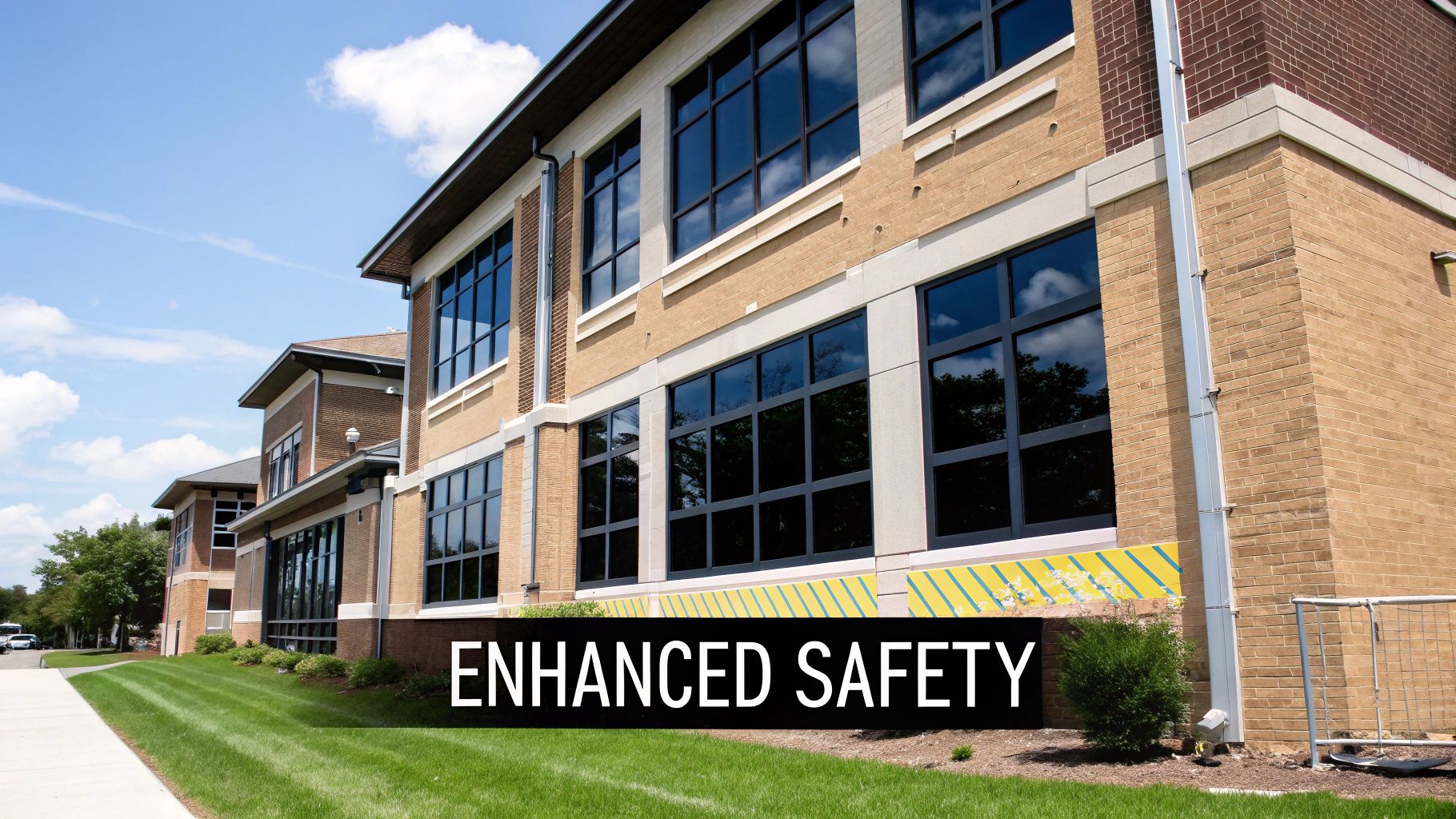
| 8-11 Mil | Forced Entry Resistance | High | Secluded homes, commercial buildings, schools, and high-value properties needing delay time. |
| 12-14+ Mil | Extreme Threat Mitigation | Very High | Government facilities, high-risk commercial sites, and homes in hurricane or tornado zones. |
| Ballistic Rated | Bullet & Blast Resistance | Maximum | Specialized applications like banks, embassies, and high-security zones requiring NIJ-certified protection. |
By breaking it down like this, you can move from a vague idea of "needing security" to a confident decision about the exact product that will deliver the protection you actually need.
Should You Hire a Pro or DIY Your Window Film Installation?
You’ve done the research and picked the perfect security film. Now comes the real question: do you roll up your sleeves and install it yourself, or call in a professional?
There’s no single right answer here. The best path for you really boils down to your budget, how big the job is, and frankly, how much you can tolerate a few small mistakes. Let's walk through what each choice actually looks like in the real world.
The Case for a Professional Installation
Bringing in a certified installer from a reputable company like Fortress Security Films is about more than just convenience. It's about getting the job done right, ensuring the film performs exactly as it's supposed to when it counts.
These pros show up with specialized tools and, more importantly, years of hands-on experience. They know precisely how to handle thick, unforgiving adhesive films without creating a single crease. They also understand that the prep work—cleaning the glass to an almost microscopic level—is everything. Even one tiny speck of dust or a stray pet hair can ruin the bond and create an ugly bubble.
Expert Insight: A truly professional installation should be invisible. You shouldn't see any gaps, bubbles, or debris trapped underneath. This isn't just about aesthetics; a perfect, edge-to-edge bond is what gives the film its maximum strength against impact.
On top of that, professionals often have access to premium, contractor-grade films you can't just buy online. These products usually come with a solid manufacturer's warranty covering things like peeling, bubbling, or discoloration. But there's a catch: that warranty is almost always void unless the film is installed by a certified technician.
The Realities of a DIY Approach
Let’s be honest—the main reason anyone considers a DIY installation is to save money on labor. And if you're a patient, detail-oriented person working on a small, straightforward window (like in a garage or basement), you can absolutely pull it off and feel great about it.
But it’s important to go in with your eyes open. Security film is a whole different beast compared to the decorative films you might have seen before. It's thicker, stiffer, and much less forgiving. Trying to manage a large, sticky sheet while spraying both it and the window is a recipe for frustration if you’re not prepared.
Here are the most common snags people hit when going it alone:
- Contamination: Dust, lint, and pet hair are your mortal enemies. They love to get trapped under the film, creating permanent blemishes.
- Bubbles and Creases: Not squeegeeing with the right technique and pressure will leave you with trapped water bubbles or, even worse, permanent creases.
- Messy Edges: Getting a perfectly straight cut along the window frame is tough. Uneven edges not only look sloppy but are prime spots for the film to start peeling later on.
- Wasted Film: It’s incredibly easy to mis-cut or botch your first piece, forcing you to buy more material than you planned for.
The window film market is booming—it's projected to hit $24.09 billion by 2029, driven by demand for both security and energy savings. This growth just highlights how important a proper application is to get those benefits. A botched job doesn't just look bad; it can completely undermine the film's ability to protect your home. You can dig into the numbers in this full market analysis on Research and Markets.
Making the Final Call
So, how do you decide? Just weigh these three key factors.
-
Project Size and Complexity: Is this for one small bathroom window or a wall of floor-to-ceiling glass doors? The bigger and more complicated the job, the more you should lean toward hiring a pro.
-
Your Budget: Before you do anything, get a quote from a professional installer. Then, price out the film and the necessary tools for a DIY job. You might find the price difference is smaller than you think, especially once you add in the value of a professional warranty and your own time.
-
Your Expectations: Can you live with a few minor flaws, or are you aiming for a flawless finish that looks like it came from the factory? If you want perfection, a professional is really the only way to guarantee it.
So, you've decided to tackle window film installation yourself. Fantastic. Let's walk through how to get a professional-looking result, because when it comes to security film, the quality of the installation is just as important as the quality of the film itself.
This isn't a race. The difference between a flawless finish and a bubbly mess comes down to patience and, most importantly, preparation.
Think of it this way: professionals spend most of their time just getting the window ready. Why? Because every single speck of dust, stray pet hair, or bit of grime left behind will be permanently entombed under that film, staring back at you for years. It’s the one part of the job you absolutely cannot rush.
Your Pre-Installation Checklist
Before you even think about unrolling the film, you need to get your workspace and tools in order. I like to think of it as setting up a mini operating room right in front of the window. Find a well-lit spot and kill any air movement—turn off ceiling fans and close nearby vents to keep dust from floating around.
Here’s the gear you'll want within arm's reach:
- A quality utility knife with a pack of new blades. A dull blade will tear, not cut.
- A proper hard-card squeegee.
- A spray bottle for your application fluid.
- A couple of lint-free microfiber cloths.
- A tape measure and a reliable straight edge.
For the application fluid, don't waste money on pre-made solutions. Just fill a spray bottle with water and add a few drops of baby shampoo or a very mild dish soap. This "slip solution" is the secret sauce that lets you move the film around on the glass to get the positioning just right before the adhesive grabs hold.
The whole process really breaks down into a few key stages, as you can see here.
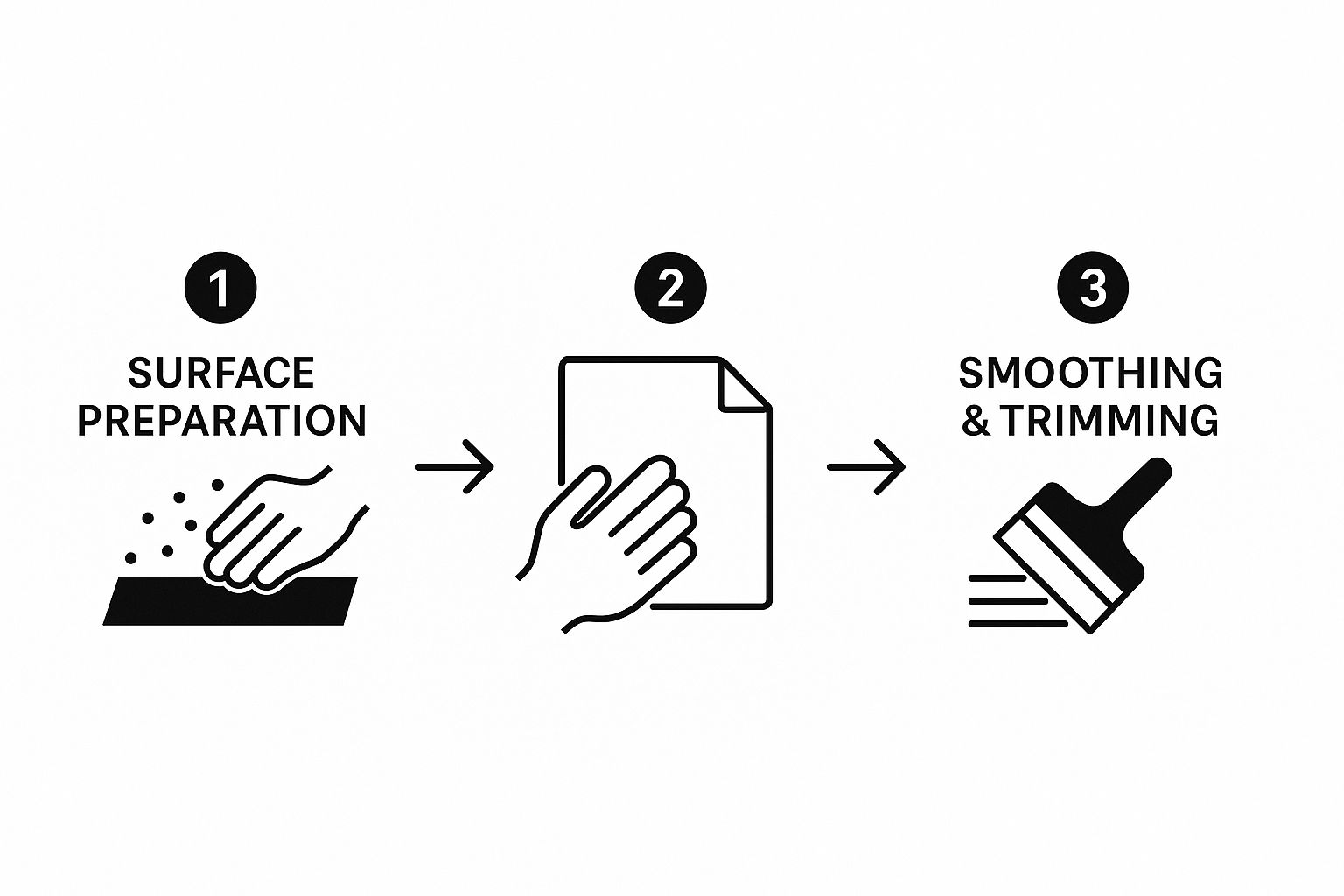
It’s a logical flow: get everything spotless, apply the film carefully, and finish with a bit of finesse.
Applying the Film: The Wet Method
With your glass surgically clean and your tools laid out, you're ready for the main event. We use what's called the "wet method" because it’s forgiving and gives you the best shot at a perfectly smooth finish.
First, go to town with your slip solution. Spray the window until it's literally dripping wet. Now, the tricky part: start peeling the clear liner off the back of the film. As you expose the sticky side, spray it generously with your solution. Don’t be shy here—any dry spot that touches the glass will stick instantly, and you'll have a real fight on your hands.
My Two Cents: Trying to handle a big, floppy, sticky sheet of film alone is a recipe for frustration. If you can, grab a friend to help. If you're flying solo, here's a trick: peel back only the top few inches of the liner, position it on the wet glass, and then slowly pull the liner downward as you smooth the rest of the film onto the window.
Once the film is floating on the glass, slide it into place. You're aiming for a tiny, uniform gap around the entire perimeter—about 1/16th of an inch. This little channel is critical; it’s where all the water will escape when you start squeegeeing.
The Art of the Squeegee and the Final Trim
Now for the satisfying part. Grab your squeegee and start from the center, pushing outward toward the edges with firm, overlapping strokes. Your goal is to force every last drop of water and every air bubble out from underneath. I usually work top to bottom first, then go from the center to the sides.
As you work the water out, wrap your hard card in a paper towel to soak up the excess moisture that gets pushed to the edges.
Finally, the trim. This is where a steady hand and a fresh blade are non-negotiable. Use the window frame as a guide and make a single, clean cut. A dull blade will snag and ruin your perfect edge. Once it's trimmed, give the edges one last, firm pass with the squeegee to make sure they are sealed down tight.
Caring for Your Newly Installed Security Film
So, the installers have packed up and your new security film is officially on the glass. But the job isn't quite done yet. Now comes the curing phase—a critical period where the last bits of moisture evaporate and the film’s adhesive forms a permanent bond with your window.
Honestly, this is the most important part of the whole process. How you treat your windows over the next few weeks will directly determine how well the film performs and for how long. It really comes down to a little patience.
Navigating the Curing Process
The film needs time to fully dry, a process that can take anywhere from a few days to a full month. In colder or more humid parts of the country, it can sometimes take even longer. During this time, you'll probably notice a few things that look a bit…off. Don't panic; this is completely normal.
You might see:
- A slightly hazy or cloudy look: This is just trapped moisture slowly making its way out through the film's pores.
- Small water pockets or bubbles: These are also part of the drying process. As the moisture evaporates, they will shrink and eventually disappear completely.
The absolute best thing you can do right now is nothing at all. Resist every urge to poke at a bubble or try to press out a hazy spot. Messing with the film before it's fully cured can trap air, damage the adhesive, and create permanent flaws. Just let it do its thing. The haziness will clear up and the bubbles will vanish on their own.
Your First Cleaning and Long-Term Care
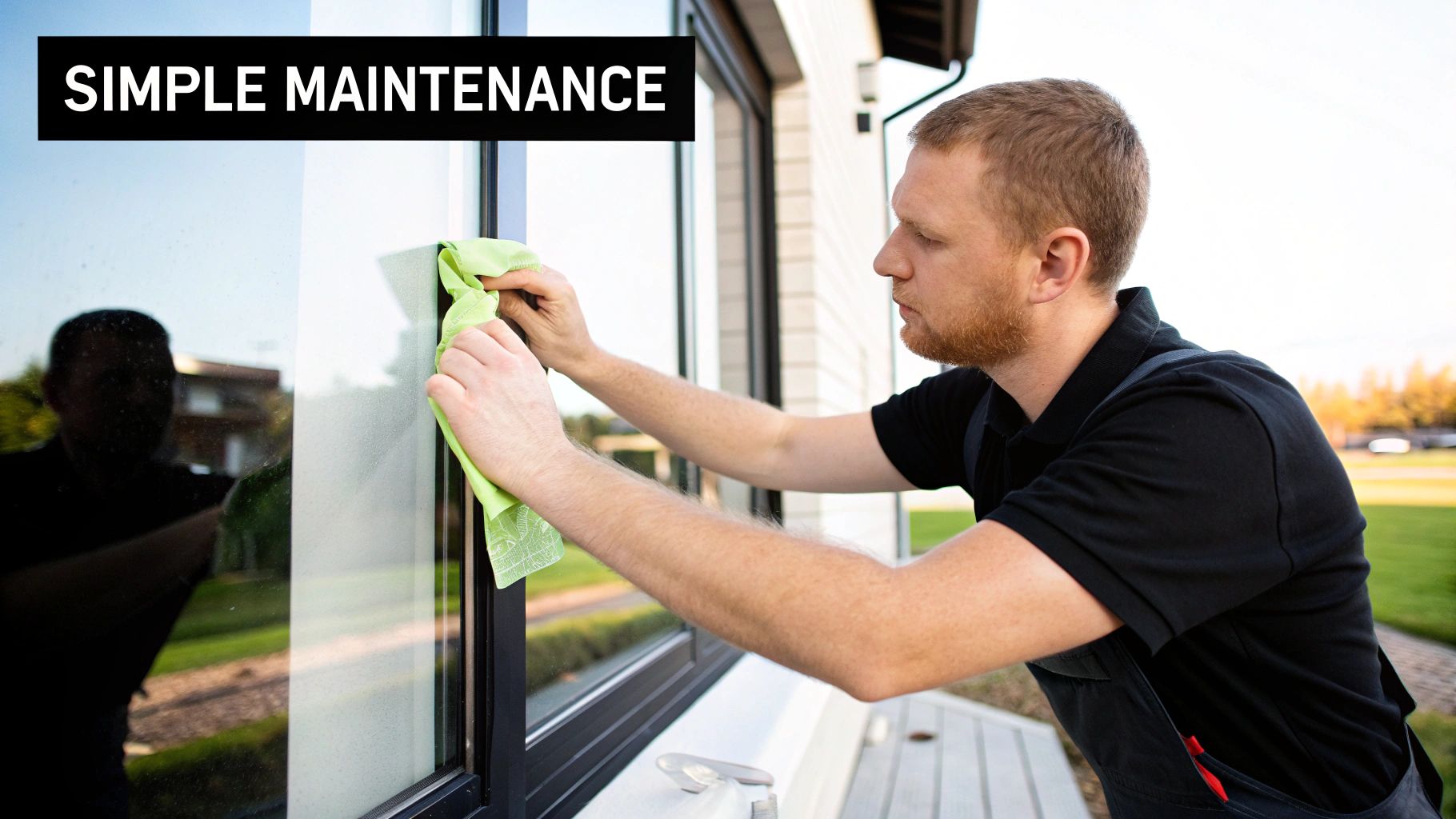
Here’s a hard and fast rule: wait at least 30 days after installation before you even think about cleaning your windows. This gives the adhesive more than enough time to set, ensuring you don't accidentally peel up an edge or cause damage.
When that month is up and it's time to clean, steer clear of harsh chemicals. That means your standard ammonia-based glass cleaner is out. Over time, those chemicals can eat away at the film's protective hard coat, causing it to discolor and fail years before it should.
Pro Tip: The best cleaning solution is also the simplest. Just mix a few drops of a mild dish soap (like Dawn) into a spray bottle filled with water. It’s all you need to cut through grime without harming the film.
When you're ready to wipe, always grab a soft microfiber cloth or a fresh rubber squeegee. Never, ever use paper towels, scouring pads, or razor blades on the film. They will leave a web of fine scratches on the surface. A gentle touch is all it takes to keep your windows looking great.
Recognizing Signs of Wear and Tear
A professionally installed, high-quality security film is built to last. When you work with an experienced provider like Fortress Security Films, you can realistically expect your film to perform for 15-20 years, sometimes longer with proper care. But nothing lasts forever. It's a good idea to give your windows a quick inspection once a year.
Keep an eye out for:
- Peeling or lifting at the corners: This is usually the first sign that the adhesive is starting to fail.
- Large bubbles that never went away: If you see bubbles months after the installation, it could indicate a problem.
- Discoloration or a yellowish tint: This is a clear signal that the film's materials are breaking down from years of UV exposure.
Spotting these issues early gives you plenty of time to plan for a replacement. A little bit of care goes a long way in making sure your security film—and your home—stays protected for years to come.
Security Window Film Installation FAQs
Choosing a security window film installation is a property-specific decision. These answers explain durability, glass retention, and compatibility so you can decide whether to request a professional assessment.
We’ve heard just about every question in the book from homeowners considering security window film, so let's walk through some of the most common ones.
How Long Does Professionally Installed Security Film Last?
This is a big one, and the good news is, you can expect it to last a very long time. A professionally installed, high-quality film usually comes with a manufacturer's warranty that can range from 10 years to a lifetime for home installations.
Realistically, with just basic care, you can expect the film to perform flawlessly for at least 15-20 years without any of the tell-tale signs of aging like bubbling, peeling, or yellowing. A lot of that longevity comes down to the quality of the film, your climate, and how much direct sun hits the glass, but the most critical factor? The installation itself. A perfect application is what sets you up for decades of performance.
Does Security Film Make Windows Unbreakable?
No. Standard security film does not make glass unbreakable. Its purpose is to hold shattered glass together in the frame and delay forced entry. Ballistic-resistant performance applies only to a specific tested system and should not be assumed for every security film. A Fortress consultation can help match the film and attachment system to your property.
Think of it this way: the film turns a fast, quiet smash-and-grab into a loud, frustrating, and time-consuming mess for a would-be intruder. By keeping the broken glass in one piece within the frame, it creates a powerful deterrent and drastically increases safety by preventing dangerous shards from spraying into your home.
Can Security Film Be Installed on Double-Pane Windows?
Absolutely. In fact, it’s one of the most common applications we see. Modern security films are engineered to be completely safe for almost all window types, including double-pane (or dual-pane) units and windows that already have a factory tint.
The key is making sure the right film is used. Certain dark, heat-absorbing solar films can sometimes cause thermal stress on sealed double-pane windows, but the clear security films we're talking about are specifically designed to avoid that problem. When in doubt, a quick chat with the film manufacturer or a professional installer will confirm compatibility and ensure you don’t accidentally void your window's warranty. Any good pro will check this for you as a standard part of their consultation.
Ready to get answers tailored to your specific home or business? The experts at Fortress Security Films can provide a detailed security assessment and help you choose the perfect solution. Schedule your free consultation today!
For residential projects, explore our residential security film service in Burbank and greater Los Angeles.
