


When you think about home security, what comes to mind? Alarms? Cameras? What about your windows? They're often the most vulnerable entry points in any building. A security window covering is essentially a purpose-built layer of protection designed to reinforce this weak spot against forced entry, extreme weather, and other impacts.
These aren't just your grandma's old storm shutters. Today's solutions range from nearly invisible security films to heavy-duty screens, all designed to make your glass tougher to beat.
Understanding Your First Line Of Defense
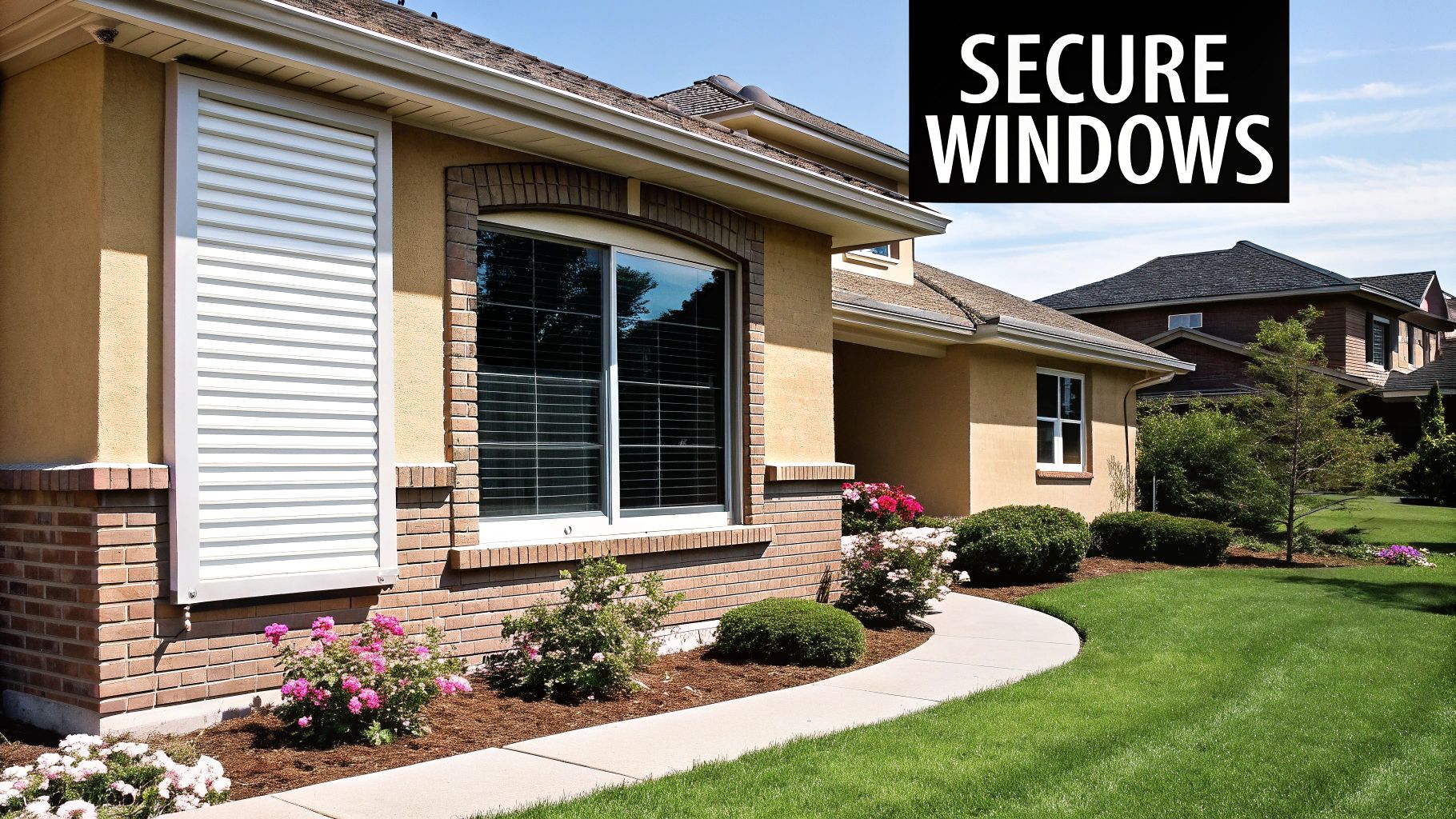
Think of a security window covering as armor for your glass. A standard windowpane can shatter with one well-aimed rock, but a window fortified with a security covering is a different story. It’s engineered to absorb shock and hold the glass together, even after it breaks.
The main goal is to buy you time. It might be just enough time to react during a break-in attempt or enough to prevent a tree branch from sailing through your living room during a storm. Instead of an easy target, your window becomes a formidable obstacle.
More Than Just A Physical Barrier
Beyond just stopping brute force, these coverings are a smart piece of a modern home security puzzle. They give you a sense of security and tackle several key vulnerabilities all at once.
At their core, this is what they are built to do:
- Deter and Delay Intruders: Making a window incredibly difficult to smash discourages casual thieves and significantly slows down more determined ones.
- Mitigate Storm Damage: In a hurricane or severe storm, they act as a shield against flying debris that would otherwise shatter glass and lead to catastrophic damage.
- Enhance Personal Safety: By holding shattered glass in place, they prevent dangerous shards from flying inward, drastically reducing the risk of injury.
A security window covering isn't just a product; it's a proactive security measure. It transforms a passive feature of your home into an active component of your protection plan, working 24/7 to safeguard your property and family.
To give you an idea of their purpose, here’s a quick breakdown of what these coverings are designed to handle.
Primary Functions Of Security Window Coverings
This table summarizes the key protective roles that security window coverings serve for homes and businesses.
| Function | Primary Benefit | Common Application |
|---|---|---|
| Forced-Entry Resistance | Delays or prevents intruders from gaining access. | Residential homes, storefronts, and ground-floor offices. |
| Blast Mitigation | Holds glass fragments together to reduce injury from explosions. | Government buildings, commercial high-rises, and embassies. |
| Storm Protection | Protects against wind-borne debris during hurricanes or tornadoes. | Coastal homes and buildings in storm-prone regions. |
| Accident Prevention | Prevents injury from accidental impacts, like a child or ball hitting the glass. | Schools, daycares, and homes with young children. |
Ultimately, a security window covering is an investment in resilience. It's a layer of defense that's always on duty.
The growing demand for this kind of integrated safety is clear. The global window covering market was valued at USD 28.05 billion in 2024 and is expected to jump to USD 41.02 billion by 2030. This isn't just about looks; it's driven by innovations that blend real security with everyday life. Better yet, studies have shown that visible security measures can slash burglary rates by up to 60%.
From advanced security film for home windows to reinforced shutters, each option offers a distinct level of defense. To fully grasp the possibilities, it's also worth looking into how different privacy window treatments for stylish security can add another valuable layer to your home’s protection.
Exploring Different Types of Window Protection
Choosing the right security window covering is a lot like picking the right tool for a job—what works best depends entirely on the situation. Each option out there strikes a different balance between strength, how it looks, and how you see through it.
Let's walk through the most common choices. Think of them as being on a spectrum. On one end, you have nearly invisible protection that strengthens your existing windows. On the other, you have imposing physical barriers that send a very clear message to anyone thinking about breaking in.
Security Window Films: The Invisible Armor
Security window film is the ultimate undercover solution. It’s essentially a micro-thin, heavy-duty polyester sheet that bonds directly to your existing glass, creating a layer of invisible armor.
If something hits the window—a burglar's tool, a flying branch in a storm, you name it—the glass might crack, but the film holds all the dangerous pieces together. This prevents the window from shattering inward, turning a weak point into a tough, flexible barrier that’s surprisingly difficult to get through.
This type of security window covering is perfect for anyone who wants serious protection without changing the look of their home or losing natural light. It's a go-to for historic buildings, modern homes, and storefronts where a clear view is everything. For homeowners who want to fortify their property without making it look like a fortress, it's worth learning about the alternatives. We cover this in-depth in our guide on how to secure windows without bars.
Security Screens: The Modern Moat
If films are invisible armor, think of security screens as a modern-day moat—a visible but still stylish first line of defense. These aren't the flimsy bug screens you're used to. We're talking about custom-fitted screens built from high-tensile materials like stainless steel or aluminum, woven into a super-fine, tough-as-nails mesh.
This mesh is incredibly strong; it's designed to resist cuts, impacts, and prying. The real magic of security screens is in their versatility:
- Secure Ventilation: You can leave your windows wide open for a nice breeze without worrying about security.
- Visible Deterrent: Just seeing them is often enough to make a potential intruder think twice and move on.
- Aesthetic Appeal: From a short distance, they look just like regular window screens, so they don't hurt your home's curb appeal.
Screens hit that sweet spot between a formidable physical barrier and everyday usability, making them an excellent choice for ground-floor windows, patio doors, and homes in warmer climates.
Roller Shutters: The Deployable Shield
When you need absolute, no-compromise protection, roller shutters are the answer. Picture them as a deployable shield for your windows. They're typically made from interlocking aluminum or steel slats that roll down to cover the entire window, creating a solid wall of metal.
When they’re down, they block everything: access, light, and even noise. They are a powerful visual deterrent and offer top-tier protection against forced entry, severe weather, and vandalism. You can operate them manually or have them motorized and tied into your smart home system for convenience.
Roller shutters offer the highest level of active security. While you can't see out when they're closed, their ability to turn a vulnerable glass window into a solid wall provides unmatched peace of mind, especially for vacation properties or when you're away for a long time.
This infographic gives you a quick visual on how different security options stack up in terms of protection and cost.
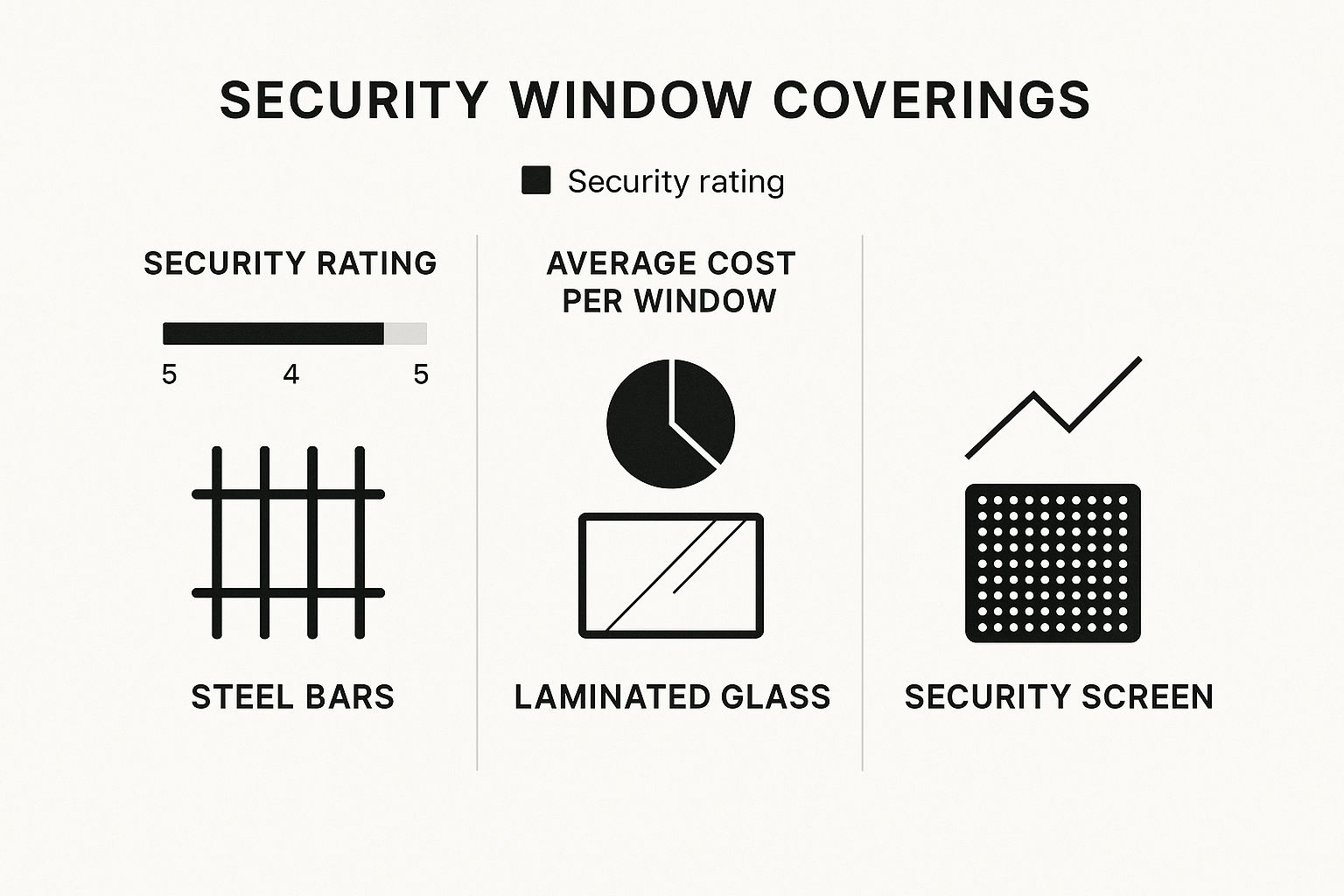
As you can see, security screens really offer a compelling middle ground—a high security rating without the high cost or aesthetic trade-offs of traditional steel bars.
Comparing Security Window Covering Options
With so many choices, it helps to see everything laid out side-by-side. The table below compares the most popular options across the factors that matter most when making a decision.
| Covering Type | Security Level (1-5) | Visibility/Aesthetics | Typical Cost | Best For |
|---|---|---|---|---|
| Security Window Film | 3 | Excellent. Nearly invisible, preserves original look. | Low to Mid | Discreet protection, preserving views, and slowing down intruders. |
| Security Screens | 4 | Good. Visible barrier that looks like a normal screen. | Mid to High | High-security areas where ventilation and a visual deterrent are key. |
| Roller Shutters | 5 | Poor (when closed). Completely blocks views. | High | Maximum security, storm protection, and properties left vacant. |
| Reinforced Blinds | 2 | Excellent. Functions as a normal blind. | Low to Mid | Adding a moderate layer of security while prioritizing interior design. |
This comparison should give you a solid starting point for figuring out which solution aligns best with your security goals, your home's style, and your budget.
Reinforced Blinds and Shades: Where Style Meets Strength
There's a growing trend that blends everyday window treatments with some clever security upgrades. Reinforced blinds and shades look and work just like the ones you have now, but they’re built with stronger materials and locking mechanisms.
For example, you can find blinds with reinforced slats and guide rails that make them much harder to pry open. While they won't stop a determined intruder like a shutter or screen will, they add an important extra layer of deterrence. This market is booming; the global window coverings market was valued at USD 34.50 billion in 2023 and is expected to reach USD 60.16 billion by 2030. With blinds and shades making up 40% of that market, adding security features is a big deal for homeowners. These options are a great fit for anyone who puts aesthetics first but still wants an upgrade over standard window coverings.
The True Benefits of Installing Window Protection
When you think about installing a security window covering, the first thing that comes to mind is probably stopping a break-in. And you're right, that's its primary job. But the real value goes so much deeper than just that single function. It’s an investment that pays dividends in ways you might not have considered, enhancing everything from your safety during a storm to your daily comfort.
Let's start with the most obvious benefit: intrusion prevention. Your standard window is shockingly fragile; a swift, hard strike and an intruder is inside in seconds. A window fortified with a security screen or film, however, completely changes the equation.
Picture this: a burglar tries to smash their way in. Instead of the glass shattering and falling away, it cracks into a spiderweb pattern but stays locked in the frame. That delay is everything. The intruder is left struggling, making noise, and attracting attention, giving you precious time to get to safety and call for help.
Protection Beyond Break-Ins
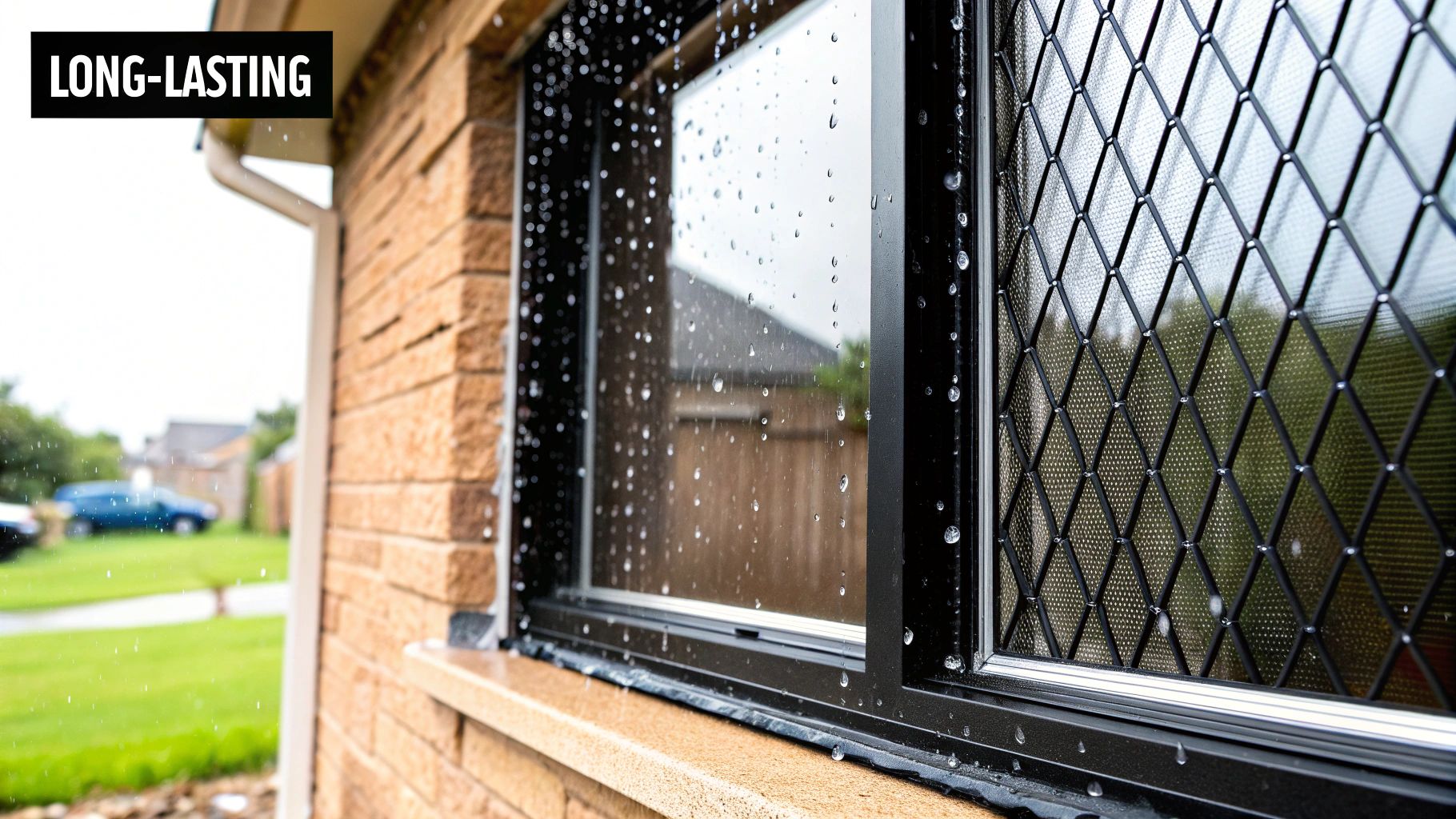
The same resilience that foils a burglar also protects you from Mother Nature's fury. During a hurricane or severe storm, high winds can turn loose branches and patio furniture into high-speed projectiles. A direct hit can blow out a window, leaving your home vulnerable to rain, wind, and devastating pressure changes that can literally lift the roof.
A good security window covering acts as a powerful shield. It's designed to absorb those impacts, keeping the storm outside where it belongs and protecting your family and your property from the chaos.
The real advantage of modern window protection is its multifunctionality. It's a single investment that addresses a wide spectrum of risks, from human threats to natural disasters, enhancing your home's overall resilience.
Beyond these critical safety features, security window coverings also bring some fantastic everyday perks to the table.
Everyday Comfort And Preservation
This is where people are often surprised. The benefits don’t stop once the threat is gone; they keep working for you 24/7, especially if you opt for a high-quality security film.
-
UV Ray Filtration: Think of it as sunscreen for your house. These films can block up to 99% of harmful ultraviolet (UV) rays, preventing your floors, furniture, and artwork from fading and aging prematurely.
-
Enhanced Privacy: Certain films and shades give you great daytime privacy. You can enjoy the view and natural light, but people on the outside can't easily see in.
-
Noise Reduction: That extra layer on your glass does a surprisingly good job of dampening outside noise. Whether it's traffic, lawnmowers, or noisy neighbors, your home becomes a noticeably quieter sanctuary.
-
Glare Reduction: Tired of that annoying glare on your TV or computer screen? Security film cuts down on the harshness of direct sunlight, making your living and work spaces far more comfortable without having to live in the dark.
At the end of the day, installing a security window covering is about creating a home that is safer, more resilient, and genuinely more enjoyable to live in. It’s a smart upgrade that reinforces your home's most vulnerable points while adding subtle improvements that you'll appreciate every single day.
How to Choose the Right Security Solution
Picking the right security for your windows isn't just about grabbing the toughest thing on the shelf. It’s about finding the right fit for your life and your home. Think of it like buying a coat: you don't need an arctic parka for a mild autumn day, but a light windbreaker won't do you any good in a blizzard.
What works for a downtown jewelry store is overkill for a quiet suburban home, and what protects a coastal home from hurricanes isn't necessarily what a city apartment needs for break-in prevention. It all comes down to balancing your property's real-world risks, your personal style, your budget, and sometimes, even local building codes. A little thought upfront ensures you get genuine peace of mind, not just a product.
First, Get Real About Your Threat Level
Start with an honest look at your situation. What are you actually trying to protect against? Is your biggest worry a smash-and-grab burglary in a busy neighborhood, or are you more concerned with flying debris during a major storm? Your answer immediately points you in the right direction.
For instance, a house in a hurricane zone would benefit most from impact-rated roller shutters or heavy-duty security screens built to stop projectiles. On the other hand, if your main concern is slowing down a burglar, a high-quality security film might be the perfect solution. It's discreet but adds precious minutes to a break-in attempt, which is often enough to send them running.
The most important question you can ask is: "What specific threat am I trying to solve?" Answering this will instantly narrow your choices, saving you from overspending on features you don't need or, worse, underspending on a product that fails when you need it most.
Once you know your primary risk, you can start looking at the solutions actually built to handle it.
Balance How It Looks with How It Protects
Let's face it, nobody wants their home to look like a fortress. A common worry is that security products will kill your home's curb appeal. Luckily, today’s options are much sleeker and more integrated than the old-school bars on windows.
Think about the visual trade-offs:
- Want it to be invisible? Security films are your best bet. They are practically undetectable, so your view and your home's original look are completely preserved. Natural light streams in just like before.
- Want a visible deterrent that still looks good? Security screens are a great middle ground. Up close, they're tough as nails, but from the street, they look just like regular window screens. They blend right in.
- Want maximum, no-nonsense protection? Roller shutters are the heavyweights. They form an imposing physical barrier when closed, but the best part is they can be rolled up and hidden away completely when you don't need them.
The goal is to feel safe without feeling like you're in lockdown. There’s almost always a solution that will protect your home while complementing its style.
Material and Thickness Really Matter
Not all security products are built the same, and the devil is in the details. When it comes to things like films and screens, the specific materials and their thickness tell you everything you need to know about their strength.
For security film, thickness is measured in "mils" (which is one-thousandth of an inch). A basic 4-7 mil film is great for holding glass together from an accidental bump. But for serious forced-entry protection, you'll want to look at films in the 8-14 mil range, or even thicker. These beefier films are incredibly tough to puncture or tear, buying you critical time during an attack.
It's the same story with security screens. The mesh material is what counts. High-tensile stainless steel mesh is far superior to standard aluminum, offering much greater strength and resistance to rust. Always ask a potential installer for the technical specs and impact ratings. This ensures the product you’re buying is actually engineered to handle the threats you've identified.
Getting Installation and Long-Term Maintenance Right
You've done the hard work of picking the right security window covering. Now for the crucial next step: installation and upkeep. Think of it this way—a flawless installation is what unlocks the product's full protective potential, while good maintenance is what keeps that protection strong for years to come.
Getting this part right isn't overly complicated, but the details matter. A lot.
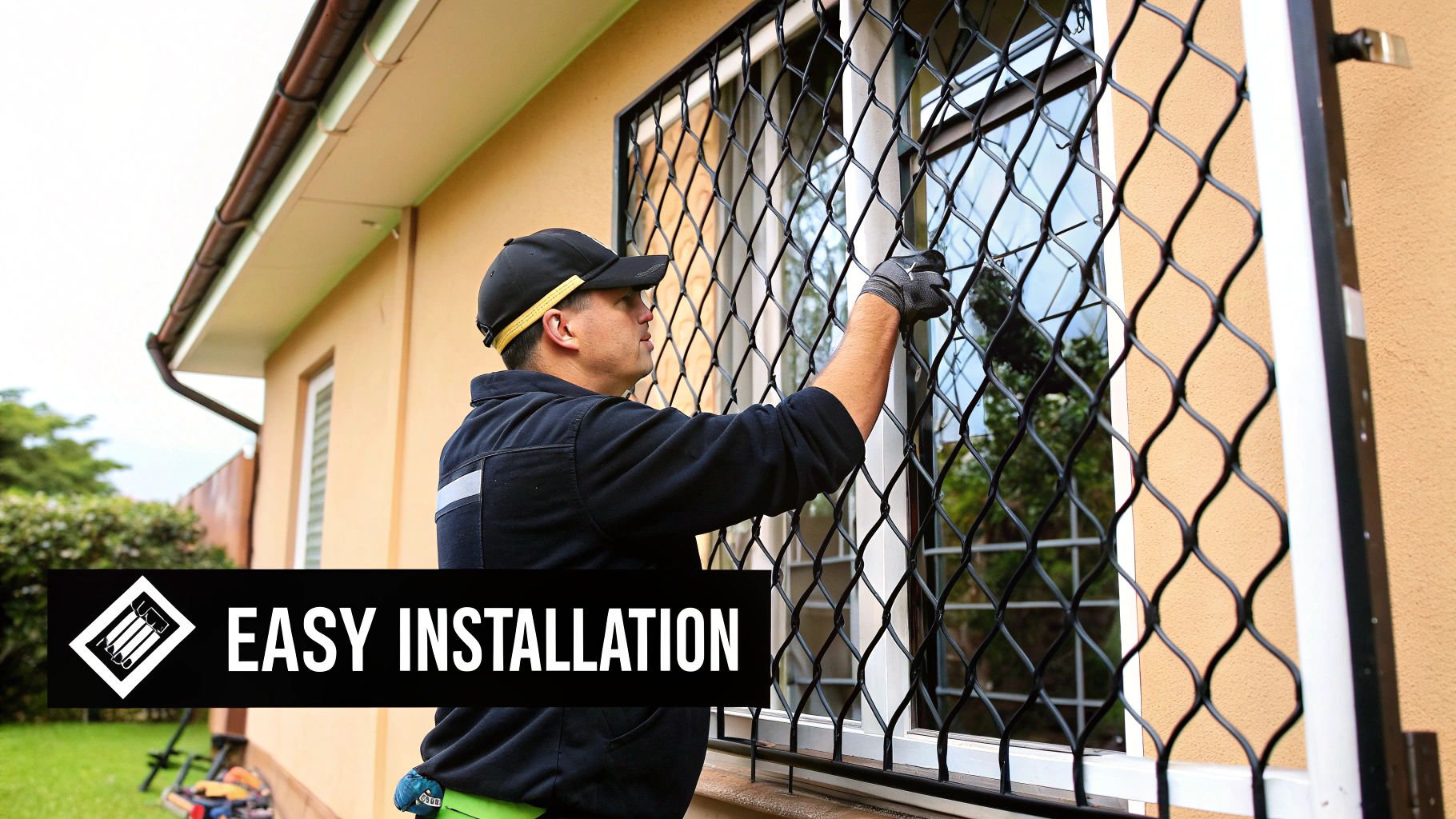
The first question is always: DIY or call in a pro? It’s tempting to try and save a few bucks, I get it. But for products that demand precision—like security films that need perfect adhesion or shutters that require an exact fit—professional installation is almost always the right call. One small mistake can create a weak spot, and a single weak spot can defeat the entire purpose.
On top of that, many manufacturers will only honor their warranty if the product is installed by a certified professional. A botched DIY job could mean you're out of luck if something goes wrong down the line.
What to Expect From a Professional Installation
Bringing in an expert takes all the guesswork out of the equation. They’re trained to deal with tricky architectural features and have the right tools for the job, ensuring you get the performance you paid for from day one.
Here’s a look at what the process typically involves:
- Precise Measurement: A technician comes to your property to measure every window down to the millimeter. No "close enough" here.
- Surface Preparation: This is key. The glass and frame are thoroughly cleaned and prepped. For films, this ensures a strong bond; for hardware, it guarantees a solid anchor.
- Expert Application: Using specialized tools, the installer gets to work. For a film, that means a perfectly smooth, bubble-free finish. For shutters or screens, it means everything is securely mounted and perfectly aligned.
- Final Inspection and Cleanup: The installer double-checks everything, cleans up the work area, and walks you through how to operate and care for your new system.
A professional installation isn't just a service—it's the final piece of the puzzle. It's what turns a high-quality product into a fully functioning security system.
If you want to dive deeper into what a technician actually does, especially for technical products like films, this guide on security window film installation offers a great behind-the-scenes look at the process.
Your Long-Term Maintenance Checklist
Once everything is installed, a little bit of care goes a long way. Proper maintenance keeps your security coverings looking good and performing as they should, year after year.
Just follow these straightforward tips depending on what you have:
- For Security Films: Hold off on cleaning for 30-60 days to let the film cure completely. After that, use a soft, lint-free cloth and a simple, ammonia-free cleaning solution. Never use anything abrasive that could scratch the film.
- For Security Screens: Every so often, use a soft brush and some mild soapy water to clean dust and grime from the mesh. It’s also a good idea to check the frame and locks to make sure they're still tight and working smoothly.
- For Roller Shutters: Keep the tracks clear of leaves, dirt, and other debris so they can operate without jamming. A quick wipe-down of the slats a couple of times a year is usually all they need. If you have a motorized system, give the motor and remote a test run periodically.
Your Final Step Toward a More Secure Home
You've made it this far, which means you're serious about protecting your home and family. That's a huge step. Think of it this way: your windows have likely been passive, vulnerable openings. Now, you have the know-how to turn them into an active part of your security system.
We've covered a lot of ground, from nearly invisible films to fortress-like shutters. The key takeaway is that there’s no single “best” option—only the right solution for your specific needs. The right choice doesn't just deter a burglar; it can stand up to severe weather, add value to your home, and bring a real sense of comfort.
Moving From Knowledge to Action
The real work starts now, as you shift from reading and researching to actually doing something about it. Armed with a solid understanding of the different types of protection and what to look for, you can now talk to security pros with confidence.
You're no longer just taking a sales pitch at face value. You can ask sharp questions, challenge recommendations, and weigh their advice against your own assessment of your home's risks and your personal style. This puts you in the driver's seat, ensuring you get a solution that truly fits, not just a generic product off a shelf.
You are now equipped to make an informed choice that will protect what matters most. The goal isn't just to buy a product, but to implement a solution that brings tangible security and lasting peace of mind to your daily life.
To take that final step, here’s a clear path forward:
- Consult with Professionals: Get in touch with certified installers and security consultants. Use what you've learned here to have a meaningful conversation about your threat assessment and what you hope to achieve.
- Request On-Site Evaluations: An expert's eyes on your actual property is invaluable. Have them come out to give you personalized recommendations and accurate quotes based on your specific windows and architecture.
- Compare Your Options: Lay out the proposals you get side-by-side. Don't just look at the price tag; consider the product quality, the warranty offered, and the installer's reputation.
Creating a Layered Defense
As you finalize your plans, remember that security window coverings are one powerful piece of a much larger puzzle. They are incredibly effective, but they shine brightest when they're part of a connected system.
Think about how your new window protection will work alongside your alarm system, motion-activated lighting, and high-quality locks. This creates a multi-layered defense that is much harder to defeat. As you finalize steps toward a more secure home, consider how security window coverings integrate with broader home protection strategies. Taking this holistic view ensures every weak point is covered, turning your home into a true sanctuary.
Got Questions About Security Window Coverings? We’ve Got Answers.
When you're thinking about adding a layer of protection to your home, a few questions always pop up. It's completely normal. You want to be sure you're making the right choice, and that means getting straight answers without the sales pitch.
Let's walk through some of the most common things homeowners ask when considering security for their windows. We'll skip the jargon and get right to the practical stuff you need to know.
Will These Make My House Look Like a Fortress?
This is easily the number one concern, and for good reason! You want your home to be safe, not unwelcoming. The good news is, most modern options are surprisingly discreet.
Security window films, for example, are designed to be optically clear. Once a professional applies them, they are virtually invisible from both the inside and out. You get the protection without changing your home’s appearance or losing that beautiful natural light.
What about screens? While they are more visible up close, from the street they look just like regular insect screens, blending right in. And roller shutters? They're only noticeable when you deploy them. When they’re up, they retract neatly into a housing box, completely out of sight.
The whole point of many of these solutions is to add serious protection without advertising it. You can make your home a much harder target without sacrificing its curb appeal.
Is Security Film Actually Bulletproof?
This is a really important distinction to make. Standard security films, even the heavy-duty ones, are not bullet-resistant. Their job is to absorb impact from things like bricks, bats, or crowbars by holding shattered glass together. They're incredibly effective for forced entry attempts, but they aren't designed to stop a high-velocity bullet.
That said, true ballistic-resistant glass and film systems are available. These are highly specialized, multi-layered products built for extreme threats and are tested to meet specific ballistic ratings (like those set by the National Institute of Justice). You'll find these in places like government buildings, banks, and schools. They are far thicker and more complex than what's needed for a typical home.
If you absolutely need that level of protection, make sure you're looking at products with a certified ballistic rating. For home security, though, a quality forced-entry film is usually the right tool for the job.
What's This Going to Cost Me?
The price for securing your windows can vary quite a bit, much like buying tires for your car—the size, brand, and performance level all play a role. There's no one-size-fits-all answer, but we can break down what drives the cost.
Here are the main factors that will influence your final quote:
- The Product You Choose: Security films tend to be the most affordable entry point. Custom security screens and motorized roller shutters are more of an upfront investment.
- Your Windows: It stands to reason that larger windows and unusual shapes (like arches or circles) will cost more due to the extra material and labor involved.
- The Level of Protection: A thicker 14-mil film will cost more than a standard 8-mil one. For screens, a high-tensile stainless steel mesh is a bigger investment than aluminum.
- Project Size: The total number of windows you're covering is obviously a major factor in the overall price.
As a general ballpark, you can expect professionally installed security film to run somewhere between $15 and $35 per square foot. Screens and shutters will naturally be higher. The only way to get a firm number is to have a certified installer take a look at your home and provide a detailed quote.
Ready to secure your property with a solution that's as strong as it is discreet? The experts at Fortress Security Films can provide a personalized security assessment and help you choose the perfect protection for your home or business. Learn more and get your free quote today.
