


Security film for rental properties can reinforce existing glass, help hold shattered pieces together, and add a measured layer of protection without changing the property’s overall appearance. For owners and managers, the product decision is only one part of the project. Tenant communication, access, glazing records, approvals, and a repeatable installation schedule matter just as much.
Request a free consultation with Fortress Security Films, or call (949) 903-1099 to discuss a rental-property assessment.
This guide explains how to plan a security-film project for apartments, single-family rentals, mixed-use properties, and other managed buildings. It is educational information, not a promise that any film makes glass unbreakable or prevents crime. The right solution depends on the glazing, frame, exposure, building use, and installation conditions.
How Security Film for Rental Properties Fits a Coordinated Plan
A homeowner can often make a window decision for one household. A rental-property owner or manager has to coordinate a building, a schedule, and the people who live or work there. That changes the planning process.
- Multiple occupants: Residents need clear information about what will happen, when access is needed, and how long each area may be unavailable.
- Different window conditions: A property may combine older single-pane glass, insulated units, sliding doors, sidelites, and repaired or replaced panes.
- Operational constraints: Installation may need to work around move-ins, inspections, leasing tours, maintenance visits, school calendars, retail hours, or quiet periods.
- Recordkeeping: Owners need a practical way to document treated openings, product selections, installation dates, and future service questions.
The goal is not to apply the same film everywhere by default. It is to build a scope that matches the building’s exposures and can be installed with minimal disruption.
Use this planning matrix to keep the project organized before requesting a quote:
| Planning Stage. | What to Document. | Manager Action. | Project Benefit. |
|---|---|---|---|
| Property walk-through. | Opening location, glass type, frame condition, and visible damage. | Group openings by building, floor, unit, and exposure. | A clearer scope based on the actual property. |
| Approval review. | Owner, manager, tenant, association, and lease requirements. | Confirm who can approve the work and resident communication process. | Fewer delays and clearer expectations. |
| Access planning. | Occupied or vacant status, access limits, and work-area needs. | Sequence units and common areas into manageable zones. | Less disruption for occupants and staff. |
| Closeout. | Product, treated opening, installation date, and care information. | Store the project record for maintenance and future managers. | Easier service and replacement decisions. |
Use the matrix as a coordination document, not as a substitute for a site assessment. It gives owners and managers a shared record before an installer measures each opening. That record can also help explain why two windows in the same unit may receive different recommendations.
For larger properties, keep the planning file organized by building, floor, unit, and opening identifier. Add a simple status for each opening, such as assess, approve, schedule, install, or close out. This makes it easier to identify missing access details and prevents a crew from arriving at an opening that is not ready.
When requesting proposals, give each installer the same basic scope and ask them to identify assumptions. A useful proposal should distinguish the film system, glass conditions, edge or attachment details, preparation requirements, sequencing, and closeout documentation. Clear scope language makes proposals easier to compare without reducing the decision to a label or a single strength claim.
How Should Owners Assess Glass, Frames, and Exposure?
The first useful step is a site assessment. Before choosing a film, identify which openings create the greatest concern and what the existing assembly can support.
Map the Openings
Walk the property with a floor plan, unit list, or opening schedule. Note ground-floor windows, accessible balcony doors, lobby glazing, sidelites beside entry doors, street-facing glass, and areas where residents or staff gather. A property manager can also flag openings that have experienced repeated damage or require special access coordination.
Review the Glazing Assembly
Record the approximate glass type, pane size, frame condition, existing coatings, and any visible damage. Film is one layer in a glazing system. It does not correct a failed seal, a cracked pane, an unsuitable frame, or a structural problem. Those conditions should be identified before installation is scheduled.
For a deeper technical discussion of how the film, glass, and frame work together, see Fortress Security Films’ guide to security film frame attachment systems. Owners can use that information to prepare better questions for an installer without assuming that every opening needs the same attachment method.
Prioritize by Exposure
Give priority to openings where forced entry, accidental impact, storm debris, or glass fallout would create a higher consequence. This does not mean every property needs a specialty or ballistic system. Ordinary security film is best described as a protective layer that helps retain shattered glass and may delay forced entry. Product-specific ballistic performance belongs only to a certified system with supporting documentation.
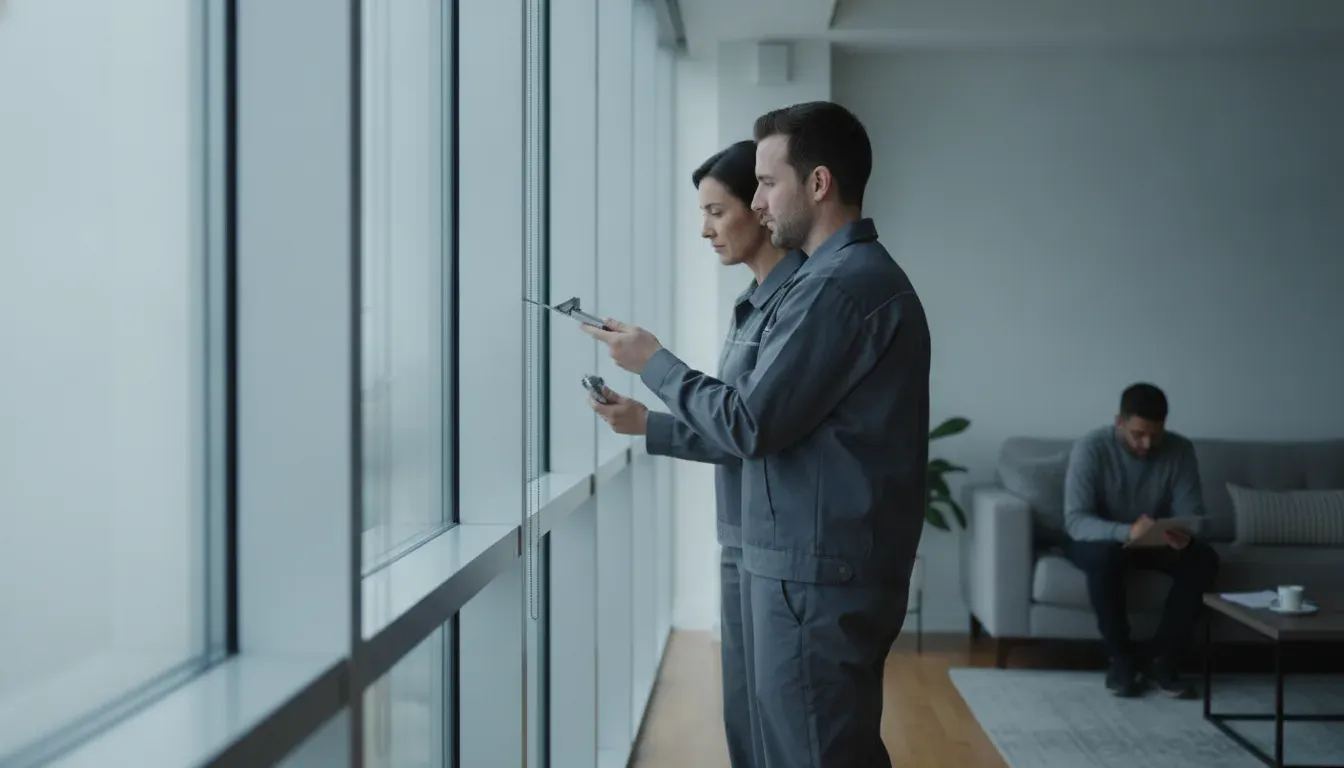
Confirm Ownership, Approval, and Tenant Communication
Security upgrades can touch a resident’s home, belongings, schedule, and privacy. Put the project process in writing before the first appointment.
Confirm Who Can Approve the Work
Clarify whether the owner, asset manager, property manager, homeowners association, commercial tenant, or another party must approve the scope. Check existing management agreements, lease language, building rules, and insurance or risk-management requirements. These documents can vary by property, so a contractor should not present one universal notice period or approval rule as a legal requirement.
Explain the Work in Plain Language
A resident notice should state what is being installed, which windows or doors are included, how access will be arranged, and whom to contact with questions. Explain that the film is intended to reinforce and retain glass, not to make the window impossible to break. Honest language builds cooperation and helps prevent unrealistic expectations.
For California owners and managers, the California Department of Real Estate’s landlord-tenant guide is a useful general reference for reviewing responsibilities and communication practices. It is not a substitute for property-specific legal advice or the terms of an individual lease.
Plan for Special Circumstances
Ask whether any units have pets, children, mobility concerns, medical equipment, sensitive work-from-home requirements, or residents who need additional scheduling notice. The goal is not to collect unnecessary personal information. It is to identify access constraints early enough to create a respectful installation sequence.
Need help deciding which openings to prioritize? Explore Fortress residential security film, then call (949) 903-1099 for project guidance.
How Can Managers Schedule Installation Around Occupants?
A strong schedule is specific enough for residents and flexible enough for building operations. Start by dividing the property into manageable zones rather than treating a large building as one appointment.
- Group compatible openings. Organize units or common areas by floor, wing, building, access conditions, and film scope.
- Set an access process. Decide how appointments are confirmed, how keys or escorts are handled, and what happens if a resident is unavailable.
- Protect the work area. Identify furniture, flooring, window treatments, alarms, and nearby finishes that need protection or temporary relocation.
- Sequence occupied and vacant units. Vacant units may offer scheduling flexibility, while occupied units require more communication and coordination.
- Reserve a closeout window. Leave time for inspection, cleanup, resident questions, and documentation before the crew moves to the next zone.
Professional installation typically requires a clean glass surface and careful handling around frames and finishes. Ask the installer what residents should move, how the area will be left, and what temporary care instructions apply after installation. A written scope makes these expectations easier to manage.
Fortress Security Films provides consultation and professional installation from its Burbank base across Greater Los Angeles and Southern California. Its team brings more than 30 years of construction and security experience to property assessments, product selection, and installation planning.
Document the Project for Future Managers and Maintenance Teams
Rental properties change hands, staff changes, and windows are sometimes replaced one opening at a time. A clear record keeps the next decision-maker from guessing.
Keep a project file with:
- Property address, building, unit, and opening identifiers.
- Glass and frame observations made during the assessment.
- Film type, thickness, shade or optical description, and approved scope.
- Any attachment or edge-treatment details used for the specific assembly.
- Installation date, installer contact, and areas completed.
- Resident or staff access notes that are necessary for future service, without retaining unnecessary personal details.
- Care instructions, warranty documents, photographs, and future inspection notes.
This record also helps when a pane is replaced. Do not assume that a new pane can receive the same treatment without checking its glass type, dimensions, frame, and condition.
For ongoing planning, review Fortress’ guide to security window film service life. Service life depends on the product, glass, exposure, installation, cleaning, and site conditions. A general article cannot substitute for an inspection of the actual property.
Choose Protection by Exposure, Not by a Label
Owners often ask for the strongest available film. A better question is what protection the opening needs and what the existing assembly can support.
- Residential and apartment openings: Consider ground-floor access, visible street exposure, common areas, and the property’s aesthetic requirements.
- Entry and lobby glass: Review doors, sidelites, reception areas, and other openings where glass retention and appearance both matter.
- Retail or mixed-use areas: Coordinate security priorities with operating hours, public access, display windows, and tenant requirements.
- Higher-security applications: Ask for product-specific testing and documentation. Do not generalize a certified ballistic solution to ordinary security film.
Clear film can be attractive for properties where owners want an added layer of protection without a visibly altered facade. A consultation can also identify whether solar-control, privacy, or other film characteristics are relevant to the property’s goals. Each feature should be specified for the chosen product rather than assumed across the full film range.
Ready to plan a rental-property project? Request a free consultation from Fortress Security Films for a site-specific recommendation and quote.
Frequently Asked Questions About Security Film for Rental Properties
Can Security Film Be Installed While Units Are Occupied?
Often, yes, but the practical answer depends on access, window condition, furniture, resident needs, and the scope. A zone-based schedule and clear resident instructions can reduce disruption. The installer should confirm preparation and care requirements before work begins.
Does Security Film Make Rental-Property Windows Unbreakable?
No. Security film is a layer of protection that can help reinforce glass, retain shattered pieces, and delay some forced-entry attempts. It does not make every window unbreakable and should not be presented as a guarantee of crime prevention.
Should Every Window in an Apartment Building Receive the Same Film?
Not necessarily. The right scope depends on the glass, frame, location, exposure, building use, and the owner’s priorities. An assessment can separate high-priority openings from areas where a different product or no film is appropriate.
What Should a Property Manager Ask an Installer?
Ask how the installer will assess the glass and frames, what product is proposed for each opening, how the work will be sequenced, what residents need to do, how the project will be documented, and what care or warranty information will be provided. Request supporting documentation for any specialized performance claim.
How Should Owners Plan Security Film for Los Angeles Rental Properties?
Start with the property’s actual exposure and operating conditions. In Burbank, Los Angeles County, and across Southern California, owners may be balancing occupied units, strong sunlight, varied building ages, street-facing glass, and different management requirements. A local professional can evaluate those conditions and build a practical scope.
A Practical Next Step for Owners and Managers
The best rental-property security-film project is measured, documented, and coordinated. Begin with a walk-through of the glass and frames. Identify priority openings. Confirm approvals and resident communication. Then ask a professional installer for a product-specific recommendation, a sequenced scope, and a quote based on the actual site.
Fortress Security Films serves Burbank, Greater Los Angeles, and Southern California with security film consultation and professional installation. Contact Fortress Security Films to discuss the property and determine which next step makes sense.
