


Think of your windows as the most vulnerable points in your home's defense. A single pane of glass is often all that stands between your family and the outside world. This is where security film comes in, acting as a powerful, nearly invisible upgrade that transforms standard glass into a formidable barrier.
It’s essentially a tough, transparent layer of polyester that’s bonded directly to the inside of your windows. But don't let its simple description fool you. This isn't just a thick window tint; it's an engineered solution designed to absorb shock and hold shattered glass together.
An Invisible First Line of Defense
When an intruder tries to smash a window, they expect it to shatter instantly and fall away, giving them quick, quiet access. With security film, that's not what happens.
Instead of collapsing, the glass breaks but remains held tightly in the frame by the film's aggressive adhesive. The would-be burglar is left facing a sticky, spiderwebbed mess that's surprisingly difficult and noisy to get through. That delay is often all it takes for them to give up and move on.
It's About More Than Just Break-Ins
While deterring forced entry is a huge benefit, the film’s real value lies in its all-around safety features. Anyone who has lived through a severe storm knows the danger of flying glass.
During a hurricane or even a powerful windstorm, a broken window can turn into a spray of dangerous projectiles. Security film contains those shards, keeping your family safe from one of the most common causes of injury during severe weather. It's a critical safety measure for any home in a storm-prone area.
The goal of security film isn't to make your windows bulletproof. It's to make them fail safely. The film buys you precious time in a break-in and prevents shattered glass from becoming a hazard during an accident or storm.
Before we dive deeper, let's break down the core features of security film. This table gives you a quick snapshot of what this product does and the peace of mind it delivers.
Security Film Quick Facts
| Feature | Description | Primary Benefit |
|---|---|---|
| Shatter Resistance | A micro-thin polyester film is bonded to glass with a strong adhesive. | Holds glass fragments together upon impact, preventing easy entry and injury. |
| Forced Entry Deterrence | Makes breaking a window a noisy, difficult, and time-consuming process. | Deters burglars who rely on quick, quiet access to a property. |
| Storm & Hazard Safety | Prevents broken glass from becoming airborne during high winds or seismic events. | Minimizes interior damage and protects occupants from dangerous flying shards. |
| UV Protection | Blocks up to 99% of harmful ultraviolet (UV) rays from entering your home. | Protects furniture, flooring, and artwork from fading while safeguarding your skin. |
As you can see, security film is a multi-purpose investment in your home’s safety and security, providing protection that goes far beyond just stopping intruders.
How Does a Thin Film Make Glass So Much Stronger?
It seems almost impossible, doesn't it? The idea that a thin, see-through layer of film can drastically reinforce a heavy, solid pane of glass. But this isn't magic. It's a brilliant application of material science that fundamentally changes how glass reacts to a sudden, forceful impact.
What you're doing is turning a weak point in your home into a surprisingly resilient barrier.
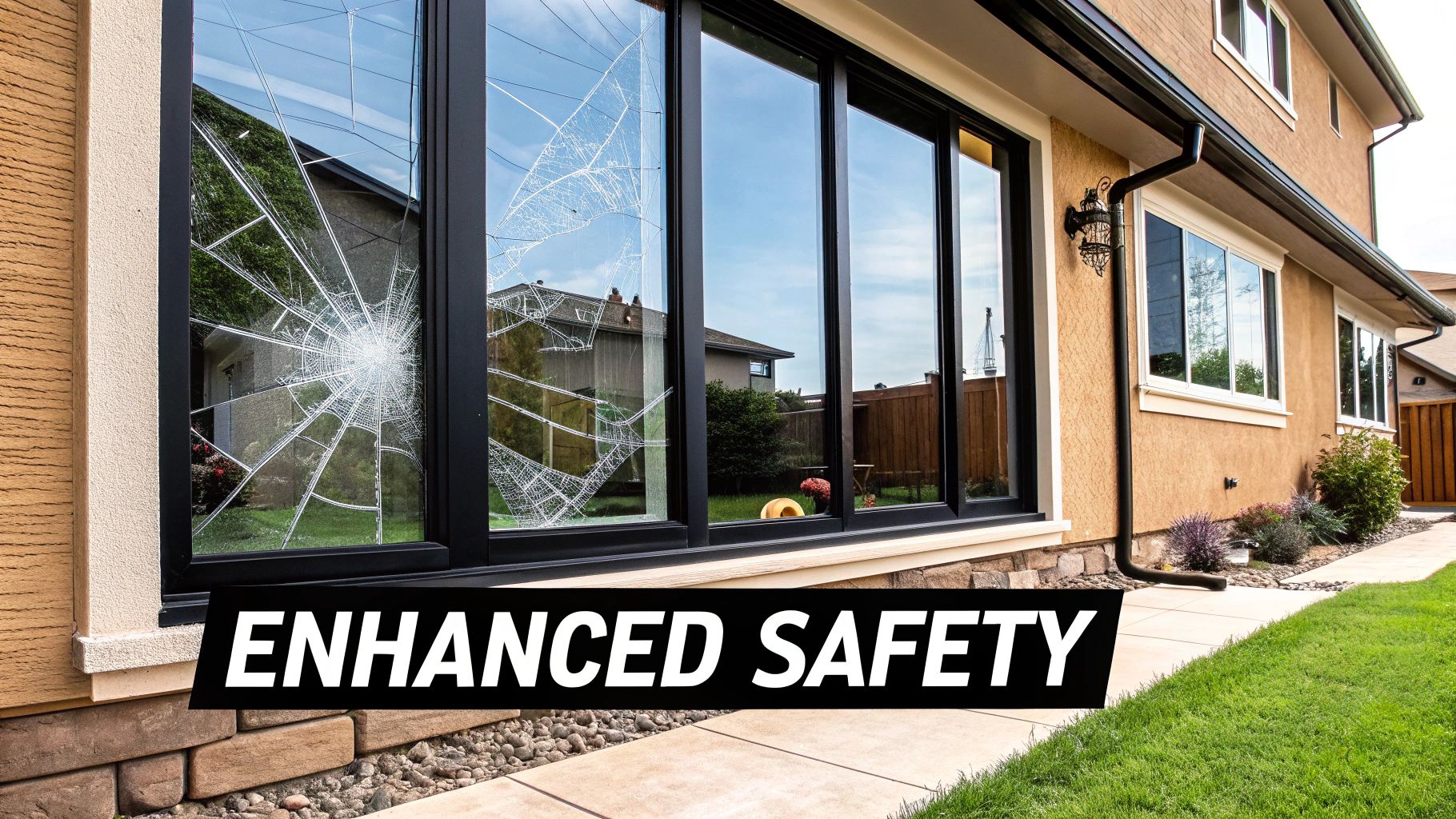
Your average window pane is incredibly brittle. When it's hit hard, it has no ability to flex or absorb that energy. The force creates tiny fractures that instantly spiderweb across the surface, and the whole pane collapses out of the frame. Just like that, someone has an open invitation inside.
This is where high-quality security film for home windows completely changes the game. It adds two things your glass is desperately missing: powerful tensile strength and an extremely aggressive adhesive.
Strength and Stickiness: The One-Two Punch
Think of tensile strength as a material’s resistance to being pulled apart. The film is made of multiple layers of a special polyester that gives it incredible strength. This allows it to stretch and absorb the shockwave from a blow, rather than just shattering.
At the same time, a specialized adhesive forms a molecular bond with the glass. This isn't just sticky tape; it’s a permanent fusion of the film to the window. This bond is so strong that even if the glass cracks under extreme force, it can't separate from the film.
The real secret is how these two elements work together. The film's flexibility absorbs the impact, while the super-strong adhesive locks all the broken shards of glass tightly in place.
It essentially turns your window into a high-tech, invisible net that catches and contains the broken pieces.
What Actually Happens When a Secured Window is Hit
To really get it, let's walk through what happens moment by moment when a burglar tries to smash a window treated with security film.
-
The First Blow: The intruder hits the window with a hammer, rock, or other heavy object. The film immediately disperses the force across its surface, soaking up a huge amount of the initial energy.
-
The Glass Cracks: The glass behind the film will still fracture and spiderweb. From a distance, it might even look like the window broke normally. But this is where everything changes.
-
The Film Holds Strong: Instead of pieces of glass flying everywhere, the film's powerful adhesive keeps every single shard locked together inside the window frame. The would-be intruder is now facing a tough, flexible membrane full of sharp, jagged glass.
-
A Noisy, Slow Frustration: To get through, they have to keep hitting the same spot over and over to try and tear the film and push the dangerous, sticky mess aside. This takes a lot of effort, makes a ton of noise, and—most importantly—takes time. We're talking several minutes, not seconds.
That delay is everything. It takes away the two things a burglar relies on most: speed and silence. Most will simply give up and move on.
More Than Just a Burglar Deterrent
The same science that stops a criminal also offers fantastic protection from mother nature. During a hurricane, tornado, or even an earthquake, one of the biggest dangers inside a home is flying glass propelled by high winds or violent shaking.
When a window breaks in a severe storm, wind pressure can rush into your home, which can lead to catastrophic damage, including the roof being lifted off. By holding the glass in the frame, security film helps maintain your home's protective shell, keeping wind and rain out.
Even more, it prevents those broken shards from turning into deadly projectiles inside your living spaces. This single feature elevates security film for home windows from a simple security upgrade to a comprehensive safety system, protecting your family from multiple threats at once.
Picking the Right Type of Security Film for Your Home
When you first start looking into security film for your windows, it's easy to feel a bit overwhelmed. It’s not a one-size-fits-all solution, and the options can seem technical. But it all really boils down to one key factor: thickness. Get a handle on that, and you're well on your way to choosing the perfect level of protection.
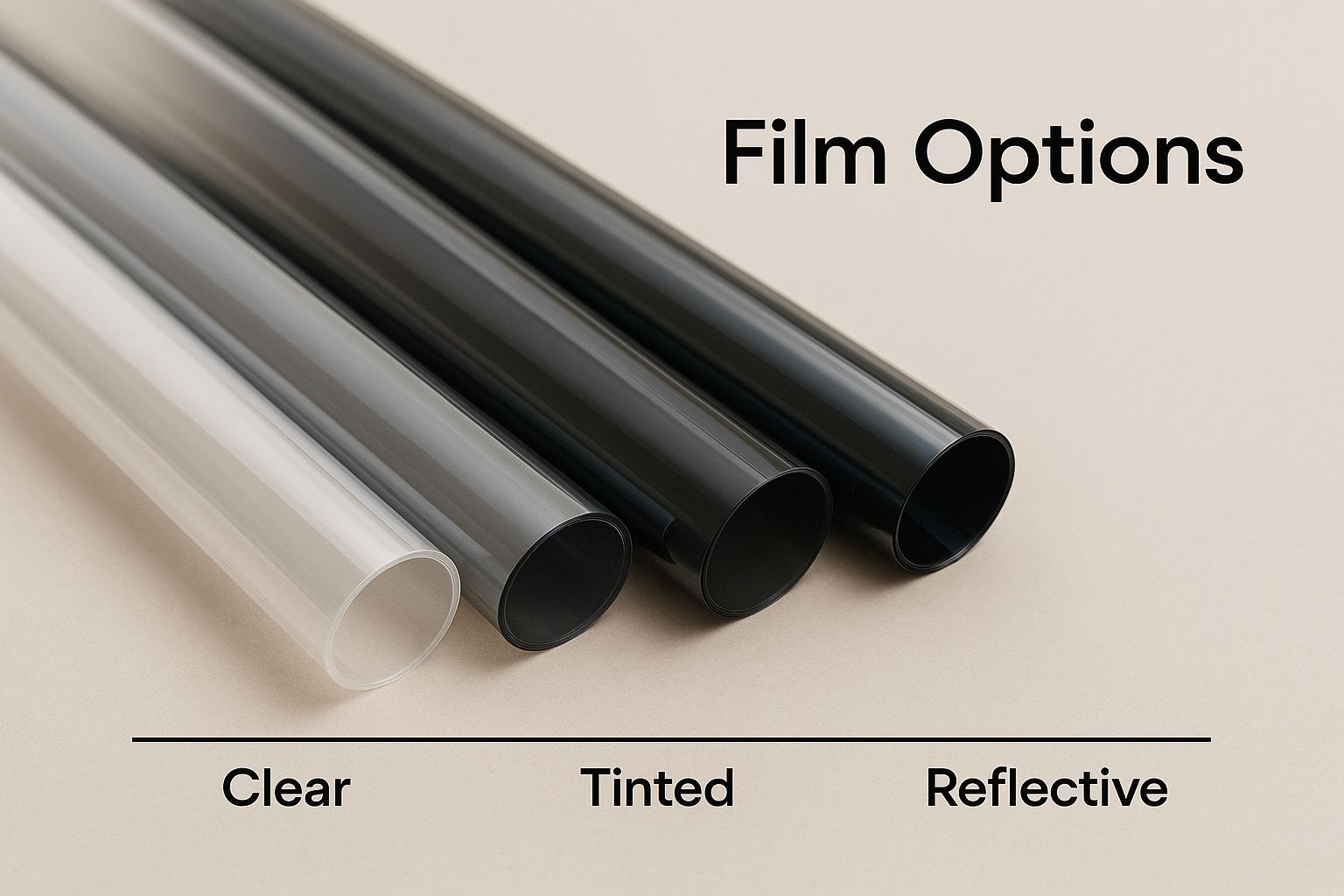
You'll find everything from completely clear films to decorative and tinted versions, so it's not just about security. It's about finding the right balance between safety, style, and privacy for your home.
It's All About the Mils
The muscle behind any security film is measured in mils—one mil is simply one-thousandth of an inch. That sounds tiny, I know, but the difference between a 4-mil film and a 14-mil film is huge in terms of the protection it offers. Think of it like comparing a single cotton sheet to a heavy-duty canvas tarp. One is easy to rip, the other is built to withstand serious force.
-
Standard Security Film (4-8 mils): This is the go-to range for most homeowners. A film in this category is fantastic for everyday safety. It'll hold shattered glass in place from an accidental baseball hit or, more importantly, delay a burglar trying a quick smash-and-grab. It buys you precious time.
-
Heavy-Duty Security Film (8-14 mils): If you're looking for something more robust, this is your zone. These thicker films can stand up to more determined, prolonged attacks. I often recommend them for easily accessible ground-floor windows, sliding glass doors, or any home that needs a serious security upgrade.
-
Advanced Protection Film (15+ mils): You're now in commercial-grade territory. These ultra-thick films are typically reserved for government buildings or storefronts facing significant security threats. They offer incredible impact resistance but are usually overkill for residential use.
It's a balancing act. Thicker is stronger, yes, but it’s also more rigid and requires a skilled professional to install it correctly for a seamless, permanent bond.
A lot of people think they should just go for the thickest film they can find. The truth is, the best choice is the one that actually matches your security needs. For most homes, an 8-mil film is the sweet spot—it provides a formidable barrier without the extra cost and installation challenges of thicker films.
It's no surprise that more and more people are turning to these solutions. The global window film market, currently valued at USD 17.57 billion, is expected to climb to USD 24.09 billion, with security films being a huge part of that growth. You can dig deeper into the window film market trends on ResearchAndMarkets.com for more on that.
More Than Just a Tough Barrier: Multifunctional Films
Today's security films are incredibly sophisticated. They do a lot more than just strengthen your glass. Many modern films are engineered with multiple features baked right in, letting you tackle several problems at once without adding extra layers or compromising on safety. It’s about creating a better, more secure home environment all around.
To help you navigate the options, here's a quick breakdown of what you'll find out there.
Comparison of Home Window Security Film Types
This table compares the most common types of security film, helping you pinpoint the best fit for your home based on thickness, common uses, and the pros and cons of each.
| Film Type | Common Thickness (mils) | Primary Use Case | Pros | Cons |
|---|---|---|---|---|
| Clear Safety Film | 4-8 mils | Basic shatter resistance, deterring smash-and-grab burglaries. | Maintains window clarity, most affordable option, provides foundational security. | Offers no privacy or solar heat rejection. |
| Heavy-Duty Security | 8-15+ mils | High-risk areas, enhanced forced entry prevention, storm protection. | Superior impact resistance, offers maximum delay time for intruders. | More expensive, can be more difficult to install perfectly. |
| Solar Security Film | 4-10 mils | Homes in sunny climates, rooms with valuable furnishings. | Combines security with up to 99% UV blocking and heat rejection, lowering energy bills. | Can slightly alter the view; tint level affects appearance. |
| Decorative Security | 4-8 mils | Bathrooms, front doors, interior glass partitions where privacy is key. | Adds privacy and style (frosted, etched looks) while reinforcing the glass. | The decorative pattern can reduce some incoming natural light. |
| Anti-Graffiti Film | 4-7 mils | Exterior-facing windows in urban areas prone to vandalism. | Sacrificial layer is cheap to replace compared to a new window. | Designed for exterior application, may need more frequent replacement. |
As you can see, your choice depends on whether you're solving a single problem (preventing break-ins) or looking for an all-in-one solution that also boosts comfort and privacy.
Three Popular Multifunctional Film Types
-
Tinted and Solar Security Films: These are a fantastic two-for-one. You get the impact resistance of a top-notch security film combined with powerful solar control. They can reject a huge amount of solar heat—making your home cooler and more energy-efficient—while blocking up to 99% of damaging UV rays that cause your floors and furniture to fade. Plus, they add excellent daytime privacy.
-
Anti-Graffiti Films: While you see these more on storefronts, they're a lifesaver for homes in some urban neighborhoods. This is a clear, tough film that goes on the outside of the glass. If your window gets tagged with spray paint or scratched, you just peel off the film and replace it. It’s far cheaper than replacing an entire pane of glass.
-
Decorative Security Films: Proof that security doesn't have to be boring. These films deliver the same robust protection but come in a variety of finishes like frosted, patterned, or textured. They’re perfect for adding privacy to bathroom windows or the sidelights next to your front door without having to use curtains and sacrifice natural light.
Choosing the Best Security Film for Your Home
Picking the right security film is about more than just thickness. You have to think about how it will fit into your everyday life—balancing serious protection with your home's need for natural light, privacy, and general good looks.
Think of this as the final checkpoint before you commit. Getting these details right means the film you choose won't just strengthen your windows, but actually make your home a better place to live for years to come.
Balancing Visibility and Security
One of the first questions people ask is, "Will this make my house feel dark?" That's a great question, and the answer lies in a term called Visible Light Transmission (VLT). It's just a simple percentage that tells you how much light a film lets through.
A higher VLT percentage means the film is clearer. For instance, a top-quality, optically clear security film for home windows might have a VLT of 80-90%, making it practically invisible once it’s on the glass. On the other hand, if you want to add some privacy or cut down on glare, you could opt for a tinted version with a lower VLT, maybe somewhere in the 20-35% range.
Your goal is to find that sweet spot. Do you want to keep your pristine views and let in every drop of sunlight, or would you prefer the added benefit of daytime privacy? Nailing this down is the first big step in narrowing your choices.
Essential Features to Look For
Beyond how much light gets in, a few other specs really determine a film's performance and value. Don't skip over these, because they make a huge difference in how happy you'll be with the product down the road.
- UV Protection Rating: This is a huge bonus. Nearly all quality security films block up to 99% of harmful UV rays. That means your hardwood floors, furniture, and art are shielded from the fading that sunlight causes over time.
- Total Solar Energy Rejection (TSER): If you live anywhere that gets hot, pay close attention to the TSER value. It's a measure of how much heat the film blocks. A higher TSER can translate directly into real savings on your air conditioning bills.
- Manufacturer's Warranty: A solid warranty tells you a lot about the product's quality. You want to see a lifetime residential warranty that covers things like bubbling, peeling, or the film changing color. It's your peace of mind.
The Non-Negotiable Step: Professional Installation
Here’s the deal: the film itself provides the strength, but its effectiveness is 100% dependent on a perfect installation. This is not a weekend DIY project.
The adhesives used are incredibly strong, and the film is much thicker and stiffer than the decorative tints you might have seen. Professionals use specific tools and have a trained technique to get that perfect, bubble-free, edge-to-edge fit. A bad installation can lead to ugly air pockets, peeling corners, or dust trapped underneath—all of which kill the film’s ability to hold shattered glass together.
Even more importantly, professional installation is almost always a requirement to keep the manufacturer's warranty valid.
Always look for installers who are certified by the film's manufacturer. That certification is your proof that they’ve been properly trained to handle the product. This isn't a niche service anymore, either. With the global market for security window film valued at around USD 1.5 billion and projected to hit USD 2.8 billion, skilled installers are in high demand as more people prioritize safety. You can see more data on the security window film market at datainsightsmarket.com.
Ultimately, choosing the best security film for home windows is about matching the technical specs to your real-world needs. By weighing factors like VLT, UV protection, and the warranty—and by insisting on a pro for the installation—you're ensuring your home is protected by an invisible shield that truly works and is built to last.
What to Expect from a Professional Installation
Buying security film is one thing, but getting it on your windows correctly is a whole different ball game. The film itself is only half the story; its true strength comes from a flawless installation. While you might be tempted to go the DIY route to save a few bucks, this is one area where professional expertise is non-negotiable.
A pro install isn't just about avoiding a few bubbles. It's a precise, multi-step process that ensures the film adheres perfectly, remains optically clear, and holds up under pressure. Let's break down what a certified technician will do, from the moment they walk in the door to the final, critical curing phase.
Stage 1: The Prep Work is Everything
The first and most critical step is preparing the glass. This isn't your average Windex and paper towel job. Installers perform a deep clean of the entire window pane and frame, using specialized scrapers and cleaning solutions. Their mission is to eliminate every last speck of dust, grime, or oil that could get in the way of a perfect bond.
Why all the fuss? Even a microscopic piece of debris can create a tiny air pocket between the film and the glass. That little bubble isn't just an ugly blemish; it's a weak spot that can compromise the film's ability to withstand an impact. The goal here is a surface so clean you could perform surgery on it.
Stage 2: Applying the Film with Precision
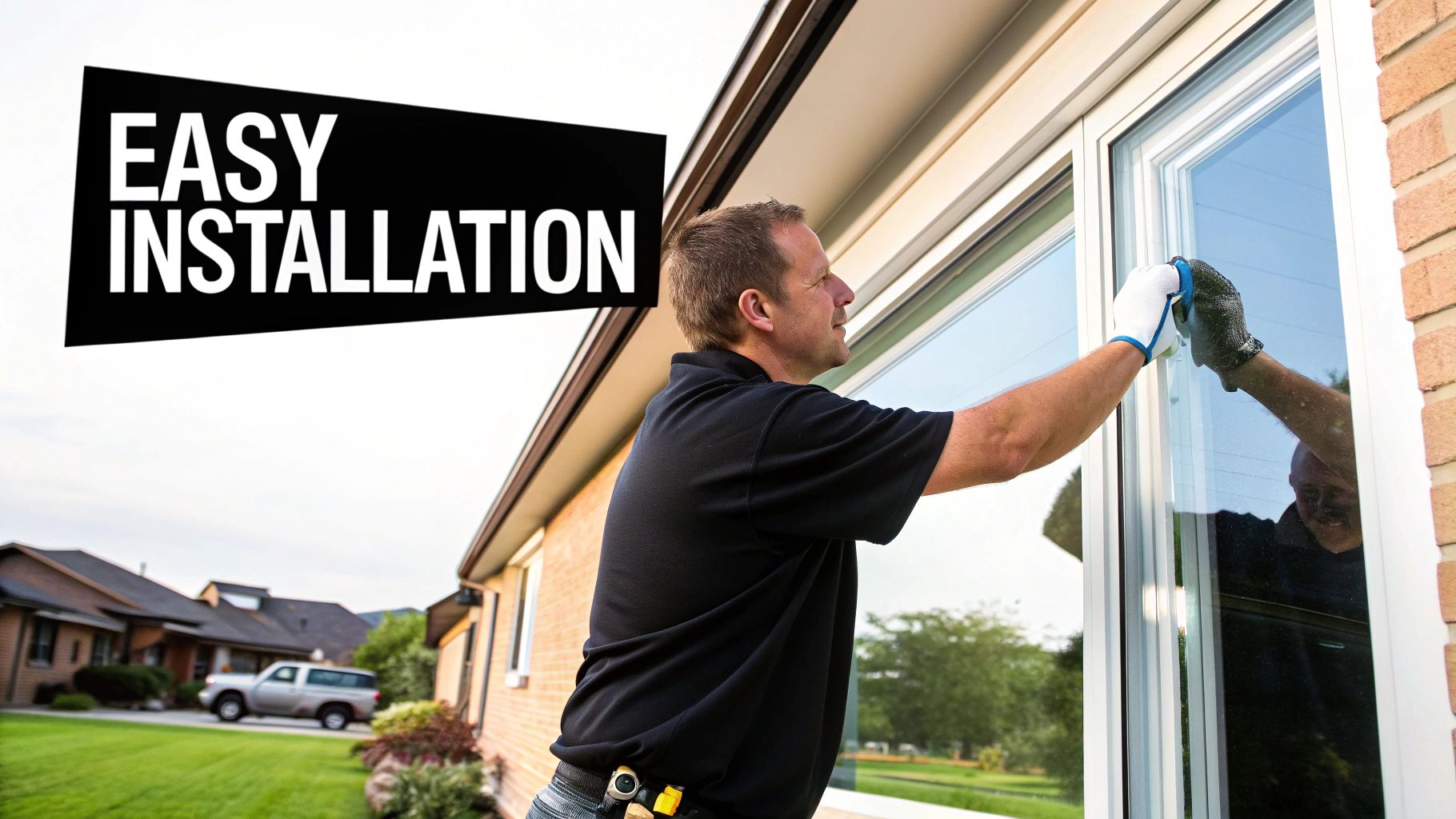
With the glass prepped and pristine, the installer moves on to the main event. They'll measure your window and cut the film to the exact dimensions needed. Next, they spray a special "slip solution" onto both the glass and the adhesive side of the film. This solution is the secret sauce that allows them to slide the film around and position it perfectly, getting it right up to the edge without any gaps.
Then comes the squeegee. Using professional-grade tools, they’ll start in the center and work their way out, methodically pushing all the slip solution and any trapped air to the edges. This process does two things at once: it squeezes out every last bubble and activates the pressure-sensitive adhesive, creating that powerful, permanent bond with the glass. It looks simple, but it takes years of practice to get right every time.
The security window film market is booming, expected to hit USD 2.8 billion soon. This isn't just because people are buying the film; they're investing in the peace of mind that comes with a professional installation. Homeowners are realizing that the install is just as important as the product itself. You can find more details about the security window film market on verifiedmarketreports.com.
Stage 3: The All-Important Curing Time
Once the installer packs up and leaves, the film still has some work to do. It now enters the curing period, a crucial phase where the magic really happens. This can take anywhere from a few days to a few weeks, depending on the film’s thickness and your local climate.
During this time, the last bits of moisture from the slip solution evaporate right through the film, and the adhesive sets completely. You might notice a little haziness or a few small water pockets—don't panic! This is a perfectly normal part of the process and not a sign of a bad install. Just let it be. These little imperfections will vanish as the film cures, leaving you with a crystal-clear, powerfully bonded layer of security. The best thing you can do is simply leave your windows alone until it's done.
Maintaining Your Film for Long-Term Protection
Your security film for home windows is a tough product, but a little care goes a long way in making sure it protects your home for decades. Think of it as a small investment in upkeep to protect your much larger investment in security. The goal is to keep the film crystal clear and its bond to the glass as strong as the day it was installed.
Luckily, maintaining your film couldn't be easier. The most critical rule is patience. You need to let the film fully cure before you touch it, which usually takes about 30 days. This gives the adhesive time to create a permanent, powerful bond with the glass.
Once that initial month is up, cleaning is simple. The main thing to remember is to avoid anything harsh that could scratch the film’s durable outer layer.
Simple Cleaning for Lasting Clarity
You don't need any fancy cleaners or special tools. A gentle touch with the right supplies is all it takes to keep your windows looking great and the film in perfect condition.
Here are the do's and don'ts I always share with my clients:
- DO Use a Gentle Cleaner: A few drops of mild dish soap in a spray bottle of water is my go-to recommendation. If you grab a store-bought cleaner, just make sure it’s ammonia-free. Ammonia can slowly break down the adhesive over the years.
- DO Use Soft Materials: A couple of soft microfiber cloths or a clean synthetic sponge are perfect for the job. They'll clean away grime without leaving behind micro-scratches that can make the film look hazy over time.
- DON'T Use Abrasives: Steer clear of scouring pads, bristle brushes, or anything rough. These will permanently scratch the film's surface, ruining its clarity.
- DON'T Use Razors or Scrapers: Never try to scrape off a stubborn spot with a razor blade or any sharp tool. You’ll slice right through the film and compromise its integrity in an instant.
I always tell people to think of their film’s surface like the clear coat on a new car. You wouldn't take a Brillo pad to your vehicle's paint job, right? The same logic applies here. Gentle cleaning is the key to a long, effective lifespan.
Knowing When It's Time for a Refresh
A high-quality security film from a trusted installer like Fortress Security Films is built to last, often for 15-20 years or even longer. But after more than a decade of sun and weather, you might start to see some subtle signs of age.
Keep an eye out for any peeling or bubbling, especially at the corners, which can mean the adhesive is starting to wear out. You might also notice a slight discoloration or a persistent cloudy look that cleaning doesn't fix. While these issues are rare with a professional installation, they are indicators that it might be time to have an expert take a look. A quick consultation can determine if a replacement is needed to keep your home fully protected.
Your Top Questions About Security Film Answered
Even with all the information, you probably still have a few practical questions rolling around in your head. It's only natural. Let's tackle some of the most common things homeowners ask us, giving you straight answers so you can feel good about your decision.
Is Security Film Actually Burglar-Proof?
Let's be clear: no single product can make your home completely "burglar-proof." What security film does is make your windows incredibly burglar-resistant. Its real job is to buy you time.
Think of it this way: the film holds shattered glass together, so a burglar can't just quietly punch a hole and unlock your window. They have to make a huge, loud, and prolonged effort to get through. That noise and delay are usually enough to send them running, giving your alarm system time to trip and you time to react.
Will This Film Make My Windows Look Different?
Only if you want it to. One of the best things about modern security films is how discreet they can be. Top-tier films are optically clear, meaning once they're on, you'll never even know they're there. You get all the protection without changing your home's look or blocking that beautiful natural light.
Of course, if you're also hoping to cut down on glare, block some of that intense afternoon sun, or add a bit of daytime privacy, you're in luck. You can get security films that are tinted or even reflective. It's all about combining benefits into one product to fit your specific needs.
A lot of people worry that security film will make their home look dark or feel like a bunker. The truth is, a professionally installed clear film is so invisible you'll forget it's even there—right up until the moment you need it.
How Long Does This Stuff Actually Last?
When installed by a pro, security film is a serious long-term upgrade for your home. These films are built tough and designed to last 15-20 years, sometimes even longer, under typical conditions.
Good manufacturers really stand by their products, often offering lifetime warranties for the original homeowner. These warranties cover issues like bubbling, peeling, or cracking. Just keep in mind that you almost always need to have it professionally installed to keep that warranty active, which is a big reason to avoid a DIY job.
Can I Just Install It Myself and Save Some Cash?
I get the appeal of a good DIY project, but this is one area where you really want to call in a professional. Security film for home windows isn't like the decorative vinyl you might stick on a bathroom window; it's much thicker and tougher to handle.
A proper installation requires special tools and a specific technique to get a perfect, bubble-free fit right to the edge of the frame. If you don't get it right, you'll see bubbles, dirt trapped underneath, and peeling corners. Not only does that look bad, but it completely undermines the film's ability to protect you. Plus, you'll immediately void that valuable manufacturer's warranty. Paying for a professional install ensures it looks perfect and performs flawlessly when it matters most.
Ready to add an invisible layer of powerful protection to your home? The certified experts at Fortress Security Films provide tailored consultations and flawless installations to secure your property without compromising its beauty. Strengthen your home's weakest points by exploring our advanced security solutions.
