


When you think about home security, what comes to mind? Alarms? Cameras? What about the glass doors that offer beautiful views but also represent a potential weak spot? That's where security film comes in, acting as an invisible shield for one of your home's most vulnerable entry points.
This isn't just a simple sticker; it's a sophisticated, transparent material made of multiple layers of high-tensile polyester. Once applied directly to your existing glass, it bonds tightly, creating a surprisingly strong barrier without changing the look of your doors.
What Exactly is Security Film?
Think of security film as an invisible suit of armor for your glass. Its job is straightforward but incredibly effective: hold the glass together even after it’s been shattered.
The magic is in its construction. Multiple micro-layers of tear-resistant polyester are fused together and backed by a powerful, specialized adhesive. When this film is professionally installed on the interior of your glass doors, it forms a tough, resilient membrane.
It works a lot like your car's windshield. If a rock hits it, the glass might crack, but it doesn't explode into a shower of dangerous shards. A special inner layer holds everything in place. Security film applies that same life-saving concept to the glass in your home or business.
When an intruder tries to break through, the film absorbs the force of the blow. The glass will likely crack, but the film holds all those sharp, dangerous pieces together. This stubborn resistance creates a frustrating and noisy barrier, which is often enough to deter a would-be burglar looking for a quick and quiet entry.
This simple reinforcement accomplishes two critical things:
- Delays Intruders: A quick smash-and-grab turns into a prolonged, noisy struggle. This delay gives you precious time to react and often sends criminals running.
- Prevents Injury: By holding shattered glass in one piece, it prevents flying shards that could cause serious harm during a break-in, a severe storm, or even a simple accident.
Let's take a quick look at these advantages.
Key Benefits of Security Film at a Glance
This table breaks down the core benefits you get when you install security film on your glass doors.
| Benefit | Description |
|---|---|
| Intrusion Deterrence | Significantly delays forced entry by holding shattered glass together, making it difficult for intruders to create an opening. |
| Injury Prevention | Contains glass fragments upon impact, protecting occupants from dangerous flying shards during accidents or break-ins. |
| Storm & Blast Protection | Provides an extra layer of defense against high winds, debris, and even bomb blasts by reinforcing the glass. |
| UV Ray Reduction | Blocks up to 99% of harmful UV rays, protecting your skin, furniture, and flooring from sun damage and fading. |
| Cost-Effective Security | A smart, affordable upgrade that strengthens your existing doors without the high cost of replacing them with laminated glass. |
As you can see, the benefits go far beyond just stopping a break-in. It's a comprehensive safety solution.
More Than Just a Security Upgrade
While its main job is to protect, security film is a versatile solution that offers much more. It enhances your existing doors without altering their appearance, delivering a powerful upgrade that remains completely unseen.
This isn't just a niche product; its popularity is booming. The global market for security window film was valued at around USD 1.5 billion and is expected to climb to nearly USD 2.8 billion by 2033. This growth shows just how many homeowners and businesses are recognizing its value.
Ultimately, security film provides real peace of mind by turning a fragile pane of glass into a fortified barrier. To see how this and other security measures can protect your property, feel free to explore the topics on our blog.
How Security Film Turns Your Glass Doors Into a Shield
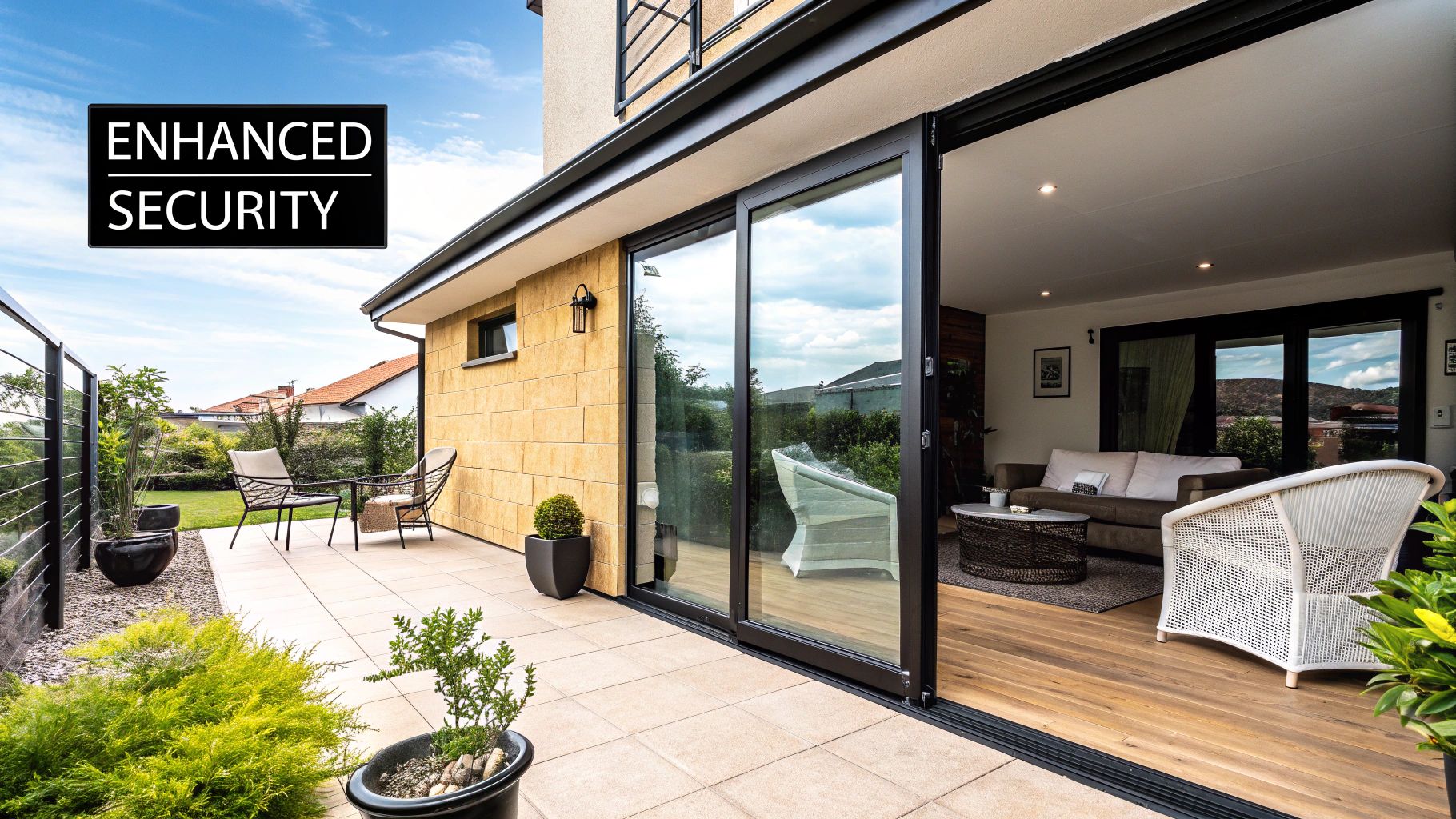
To really get why security film is such a game-changer, you have to look past the idea of it being just a thick sticker for your glass. It’s actually a sophisticated system engineered to take a punch and keep standing. The magic lies in two key elements working together: the material itself and the bond it creates with your glass.
First, the film is made of micro-layered, tear-resistant polyester. The best way to picture this is to imagine dozens of incredibly thin but super-strong plastic sheets laminated together. This layered construction is what gives the film its incredible strength and makes it so difficult to tear or puncture.
That tough film is then bonded to the glass using an aggressive adhesive. This isn't like the glue you'd find in a craft store; it’s a powerful bonding agent that actually cures and forms a molecular-level connection with the glass, creating one solid, unified structure.
Absorbing and Spreading the Force of an Impact
When something hits a normal pane of glass, all of that energy concentrates on one tiny spot. The result? An instant, spiderwebbing shatter. Security film completely flips that script.
Think of it like a trampoline. When a person jumps, the surface flexes, absorbs the energy, and spreads it out evenly. That's exactly what security film does for your glass door.
When a burglar tries to smash the glass with a hammer or a rock, the film’s flexible layers stretch and absorb that initial shock. Instead of letting the force punch right through, it disperses the energy across the entire door. This has a few huge benefits:
- It stops immediate entry. The glass itself might crack under a heavy blow, but the film holds all those dangerous shards together. The door remains a solid barrier.
- It makes breaking in loud and difficult. A would-be intruder who was counting on a quick, quiet smash-and-grab is suddenly faced with a serious challenge. They have to keep wailing on the door just to try and make a small opening, which takes time and makes a ton of noise.
- It protects against storm damage. The same principle holds true for severe weather. High winds and flying debris that would normally shatter a glass door are stopped in their tracks, keeping your property safe from the elements.
This ability to absorb and distribute energy is the core reason security film is so effective at preventing break-ins and minimizing damage.
Why an Attachment System is a Must-Have
While the film alone is a huge security boost, you can take its performance to the next level with an attachment system. This is the final piece of the puzzle that turns a strong window into a truly fortified barrier.
An attachment system is what anchors the edges of the film and glass directly to the door frame. This is usually done with a special structural silicone or a mechanical clamp that physically locks the filmed glass into the frame.
Without an attachment system, a determined intruder could still potentially just push the entire pane of broken glass out of the frame. By anchoring the film to the frame, you've closed that loophole. You're forcing them to try and break through the film itself, which is a nearly impossible task without the right tools and a lot of uninterrupted time.
This anchoring process essentially fuses the glass, film, and frame into a single, cohesive unit. It’s what makes the difference between having reinforced glass and having an integrated security system. For anyone serious about security, an attachment system isn't an optional upgrade—it's essential.
Exploring the Different Types of Security Film
When you start looking into security film for your glass doors, it quickly becomes clear this isn't a one-size-fits-all solution. The market is full of options, each designed for different situations, from stopping a stray baseball to deterring a determined intruder. Figuring out these differences is the key to picking the right film for your home or business.
The single biggest factor that separates one security film from another is its thickness. This is measured in mils, where one mil is just one-thousandth of an inch. It might not sound like much, but a few extra mils can make a world of difference in the film's strength.
Think about it this way: a sliding glass door in a quiet suburban neighborhood probably just needs a basic layer of protection against accidents. But a glass storefront on a busy city street? That requires a much beefier film to stand up to a potential break-in.
Understanding Film Thickness in Mils
The "mil" rating is a direct measure of how well the film can take a punch and slow down anyone trying to get through your glass. Thicker films create a tougher barrier, buying you precious time in an emergency and offering much better protection against severe weather or a heavy impact.
This visual gives you a great at-a-glance idea of how protection scales with thickness.
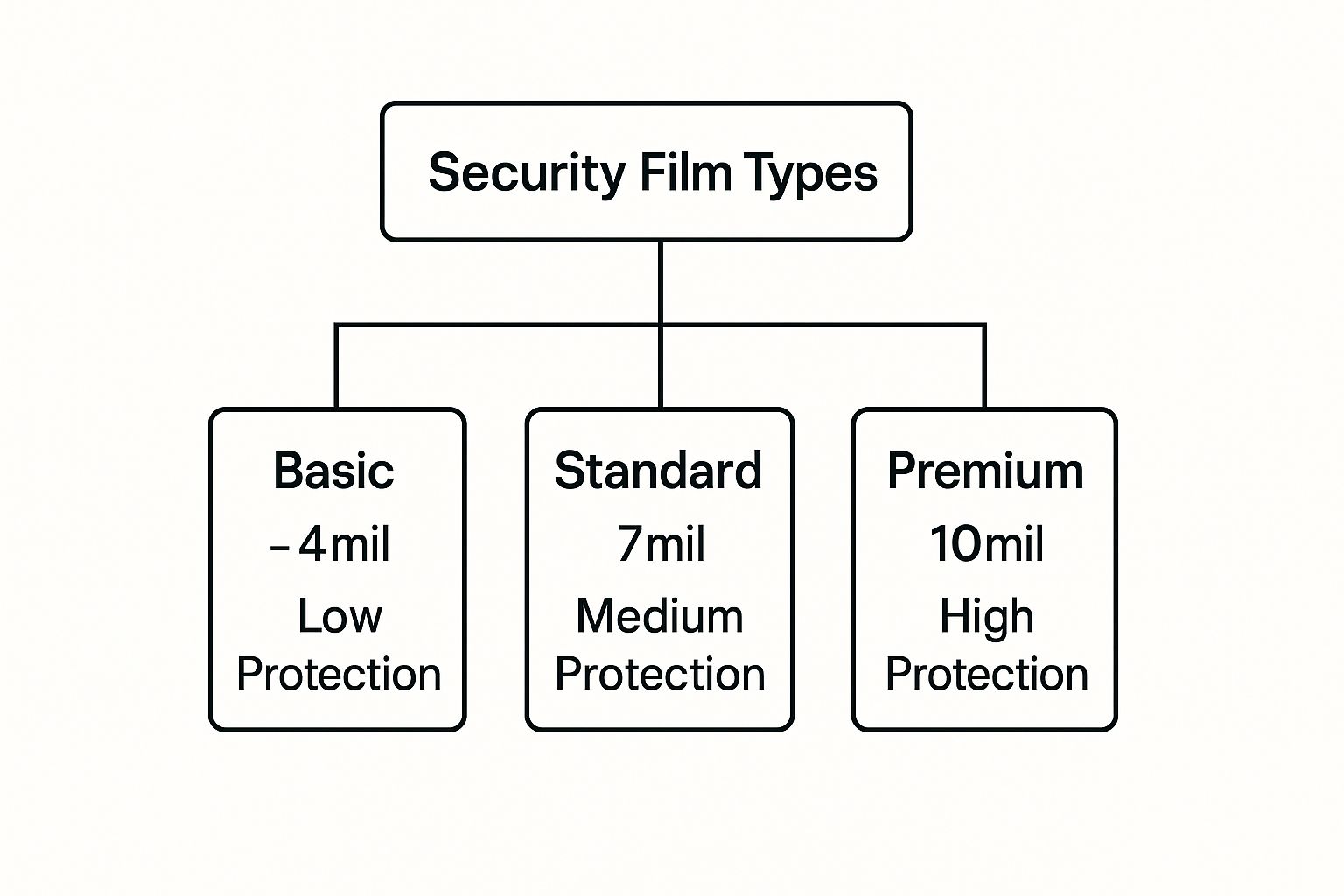
As you can see, jumping from a basic 4-mil film to something 10-mil or thicker is a serious upgrade for your glass doors' defensive capabilities.
Let's break down the common options:
-
4-6 Mil Film: This is your entry-level film, often just called "safety film." It's perfect for preventing injuries if someone accidentally shatters the glass—think a kid running into a patio door. It also offers a small deterrent against a quick smash-and-grab attempt.
-
7-8 Mil Film: This is the sweet spot and the industry standard for most homes and many businesses. A film this thick provides a huge leap in protection, capable of withstanding repeated hits from a hammer or a brick. It makes forcing entry a loud, difficult, and time-consuming ordeal for any would-be thief.
-
10-14 Mil Film (and up): Now we're talking heavy-duty. This is the top tier, built for high-risk locations that need to resist aggressive, sustained attacks. These incredibly tough films are also used to mitigate damage from bomb blasts or protect against debris during extreme weather like hurricanes.
Beyond Thickness: Aesthetic and Functional Variations
Strength is the main goal, but modern security films are much more than just a sheet of plastic. They don't have to ruin your home's appearance or make you feel like you're living in a bunker. In fact, many are designed to be multi-purpose, bundling powerful protection with other valuable features.
A common myth is that security film will make your home dark or noticeably change the look of your windows. The truth is, the most popular films are optically clear, making them virtually invisible after installation. You get all that security without anyone even knowing it's there.
These multi-benefit films are a huge part of why the industry is growing. The entire window film market, which includes security films, was valued at a massive USD 2.40 billion globally. The sun control segment alone, which often gets combined with security features, made up over 46.2% of that market. This shows just how much people value getting multiple benefits from one product. You can dive deeper into the window film market trends to see how it's projected to grow.
Comparison of Security Film Types
To make the choice clearer, here’s a table comparing the different options based on their thickness, best use cases, and extra features. This can help you quickly narrow down what might work best for your specific needs.
| Film Type (Thickness) | Primary Application | Key Features |
|---|---|---|
| 4-6 Mil (Safety) | Basic residential, accidental impact, safety hazards | Prevents glass shatter, minimal smash-and-grab deterrence |
| 7-8 Mil (Security) | Standard residential & commercial, forced entry delay | Withstands repeated blows, significant deterrent to intruders |
| 10-14+ Mil (Heavy) | High-risk locations, bomb blast, extreme weather | Maximum forced entry resistance, high-level threat mitigation |
| Solar Control | All applications needing UV & heat rejection | Blocks up to 99% UV rays, reduces glare and heat, lowers energy bills |
| Decorative/Frosted | Bathrooms, offices, entryways needing privacy | Obscures view while allowing light, combines aesthetics with security |
| Tinted Security | All applications needing daytime privacy & glare control | Reduces visibility from outside, adds a sleek look, controls sunlight |
Ultimately, the best film is the one that addresses your specific concerns, whether that’s purely security, a mix of safety and energy savings, or a need for privacy.
Specialty Films for Added Benefits
Beyond just a clear, strong layer, you can choose films that actively improve your living space. This is where you can solve multiple problems with a single, elegant upgrade.
Here are the most common types you'll encounter:
-
Clear Security Films: This is the go-to for most people. It delivers powerful protection without changing the appearance of your glass one bit, so you can keep your beautiful views and natural light.
-
Tinted Security Films: A great two-in-one, these films combine impact resistance with privacy and solar control. The tint cuts down on glare and makes it difficult for people to peer inside during the day.
-
Frosted or Decorative Films: When privacy is the top priority, these films are the answer. They're perfect for front doors, bathrooms, or glass-walled conference rooms, completely obscuring the view while still letting soft, diffused light through—all with that same tough security layer.
-
Solar Control Security Films: This is the ultimate multi-tasker. It takes a thick security film and merges it with advanced tech that rejects solar heat and blocks up to 99% of harmful UV rays. Not only does this keep your home cooler and lower your energy bills, but it also protects your furniture, floors, and art from fading over time.
By thinking through your property's risk level, your privacy needs, and whether you'd like to improve energy efficiency, you can confidently choose the perfect security film to fortify your glass doors.
The Hidden Benefits Beyond Intrusion Prevention
When you think about security film for glass doors, stopping a break-in is probably the first thing that comes to mind. And you're right, that’s its main job. But the story doesn't end there. Some of the most valuable perks are the ones you'll experience every day, making this a smart upgrade for your property's comfort, safety, and bottom line.
Picture a sunny afternoon. The kids are playing in the backyard and, in a burst of energy, one of them runs straight toward the sliding glass door, not realizing it's shut. It’s a terrifying moment. But instead of a tragedy, it's just a startling thud. The glass might crack, but the film holds every single shard in place, preventing a serious injury.
This incredible safety net is one of the most overlooked benefits. It essentially turns a fragile sheet of glass into a shatter-resistant barrier, offering peace of mind for families and any place where accidents are a risk. For places like schools, this extra layer of protection is absolutely essential. Our deep dive into security window film for schools shows just how critical this technology is for creating safer learning environments.
Protecting Your Valuables from Sun Damage
Beyond physical safety, think of security film as a silent guardian for everything inside your home. The same beautiful sunlight that fills your rooms also carries destructive ultraviolet (UV) rays, which are constantly working to fade your furniture, floors, and artwork.
It’s basically sunscreen for your house. A quality security film can block up to 99% of these harmful UV rays. This invisible shield offers crucial protection for:
- Hardwood Floors: Prevents that faded, discolored look in sun-drenched spots.
- Furniture and Upholstery: Keeps your couches and chairs looking vibrant, not washed out.
- Artwork and Photos: Protects irreplaceable memories and investments from sun damage.
- Rugs and Carpets: Preserves the rich colors of your textiles.
By stopping UV radiation at the glass, the film helps your interior decor stay beautiful for years, safeguarding the investments you've made in your home.
A Major Boost in Energy Efficiency
Here’s where security film starts to pay for itself. Many films include solar control properties that seriously improve your home’s insulation, working all year to lower your energy bills.
In the summer, the film reflects a huge amount of solar heat, keeping your home from turning into an oven. Your AC system doesn't have to struggle nearly as hard to keep things cool. Then, in the winter, it does the opposite, acting as an extra insulating layer that helps hold onto indoor heat. That means less work for your furnace.
This isn't just a minor improvement. Advanced window films don't just bolster security; they are a key player in energy efficiency. With sustainability being a major focus, some reports show that buildings with these films can cut their energy loss by up to 30%.
This dual-action performance makes security film a smart, eco-friendly upgrade that delivers a real return on investment through lower utility bills.
Enhancing Everyday Comfort and Privacy
Finally, let's talk about day-to-day living. Security film just makes your space more comfortable. By cutting the intensity of the sunlight pouring into a room, it dramatically reduces that annoying glare. Suddenly, it’s easier to watch TV, work on a laptop, or just relax without squinting.
On top of that, tinted or reflective films offer a major boost in daytime privacy. You can enjoy the natural light and the view outside without feeling like you're in a fishbowl for the whole neighborhood to see. It’s a simple, elegant way to add a layer of seclusion to your most exposed entry points, making your entire home feel more private and secure.
How to Choose the Right Security Film
Picking the right security film for glass doors can feel a bit like navigating a maze, but it really comes down to a few core considerations. Getting this choice right means you'll have peace of mind without paying for features you simply don't need. Think of it like buying tires for your car—you need the right type for the roads you drive on. The same idea applies here.
The first, and most important, step is to get real about your security goals. Are you mainly trying to prevent injuries from accidental breakage, like a stray baseball or a child tripping into the patio door? Or is your primary concern stopping a determined burglar from smashing their way inside? Your answer points you directly to the right film thickness.
For instance, a quiet suburban home might get all the protection it needs from a standard 4-mil safety film. But a ground-floor retail shop on a busy street? That’s a different story. You’d be looking at a much beefier 8-mil or even 12-mil film to truly stand up to a forced entry attempt.
Matching the Film to Your Door and Budget
Next up, take a look at the door itself. A massive sliding glass door is a much bigger bullseye for an intruder than a set of French doors with smaller, individual panes. Why? Because the larger the single sheet of glass, the more vulnerable it is to breaking under force. A strong, well-installed film is non-negotiable for these big panes.
Of course, we have to talk about budget. It’s always tempting to cut corners and go for the cheapest option, but security film is a true investment in your safety and property. You’re almost always better off with a quality, mid-range film installed by a pro than a cheap DIY kit that might peel or fail when you need it most.
A good gut check on quality? The warranty. A solid manufacturer will back their product with a long-term, comprehensive warranty covering defects like bubbling, peeling, or fading. This isn't just a piece of paper; it’s a direct reflection of the film’s quality.
Look for Industry Certifications
So, how can you be sure a film will actually perform under pressure and isn't just clever marketing? The answer is third-party certifications. These aren't just fancy acronyms; they are hard-earned proof that a product has survived brutal testing against internationally recognized security standards.
Think of certifications as a film's report card. They provide unbiased proof of its strength and resilience, taking the guesswork out of your decision. A film with a recognized certification has passed tough tests designed to simulate real-world threats.
When you're comparing films, keep an eye out for these key standards:
- UL 972: This is the gold standard for burglary-resistant glazing. To earn this, a film has to withstand repeated impacts from different objects without letting them pass through.
- EN 356: A European standard that’s also highly respected, this certification rates glass on how well it holds up against manual attacks. It’s another great sign that the film can delay an intruder.
Choosing a certified product means you can be confident that your security film for glass doors has been proven to meet a high bar for protection.
Common Mistakes to Avoid
Knowing what to do is only half the battle; knowing what not to do is just as critical. One of the most frequent missteps is underestimating the threat and choosing a film that's too thin. This creates a dangerous false sense of security. If you’re on the fence, it's always smarter to go with the slightly thicker option.
Another huge pitfall is trying to DIY the installation on a large or important door. Sure, you can buy DIY kits, but getting a perfectly smooth, bubble-free application that covers every inch of glass is a real skill. A professional installer not only gets it right but will also typically use an attachment system, which anchors the film to the door frame. This one step makes the entire system exponentially stronger.
Getting Your Security Film Installed Correctly
You can choose the thickest, toughest security film for glass doors on the market, but it’s only as strong as its installation. While you might see DIY kits on store shelves, getting that flawless, bubble-free bond needed for real impact resistance is absolutely a job for a professional. Even a small mistake in the application can create a weak point, undermining the very reason you invested in the film.
Professional installation is a craft. The process begins with a meticulous, almost surgical cleaning of the glass to get rid of any spec of dust or oil that could interfere with a perfect bond. From there, experts apply the film using a special solution and skillfully squeegee out every last drop of moisture and air.
This painstaking process ensures true edge-to-edge coverage with no gaps for a potential intruder to exploit. After the film is on, it needs time to cure—a crucial period where the adhesive forms a powerful molecular bond with the glass.
Finding the Right Installation Professional
Picking the right installer is just as critical as picking the right film. After all, you’re trusting them with the security of a major entry point to your home or business. Before you hire anyone, it’s worth taking the time to ask a few direct questions.
A skilled team will be more than happy to walk you through their process and credentials. For a more detailed breakdown of what a high-quality installation involves, our guide on window security film installation covers the specific techniques and standards you should expect.
Here’s a quick checklist to help guide that conversation:
- What’s your experience with this specific film? You want someone who knows the ins and outs of the brand and thickness you’ve selected.
- Do you offer an attachment system? For serious security, anchoring the film to the door frame is a must.
- What kind of warranty do you provide? A reputable installer will always stand behind their work and guarantee it against issues like bubbling or peeling.
- Can I see some of your previous work? Looking at a portfolio or talking to past clients is one of the best ways to gauge their skill and professionalism.
Long-Term Care for Your Investment
Once your film is installed and fully cured, keeping it in great shape is surprisingly easy. With just a little bit of care, high-quality security film can last for 15 years or more without losing its strength or optical clarity.
Think of your security film like the clear coat on your car. Gentle, regular cleaning protects its finish and ensures it performs optimally for its entire lifespan. Harsh chemicals or abrasive tools can cause damage that weakens the surface.
To keep it looking and performing its best, just follow these simple tips:
- Use the Right Cleaner: A simple mix of mild dish soap and water is all you need. Avoid ammonia-based cleaners (like Windex) like the plague—they can break down the film's adhesive over time.
- Stick to Soft Tools: A soft microfiber cloth or a rubber squeegee will do the trick perfectly. Never use paper towels, abrasive scrub pads, or razors on the film.
- Give It Time to Cure: This one is important. Don't touch or clean the film for at least 30 days after installation. This gives the adhesive the time it needs to fully set and harden for maximum strength.
Got Questions About Security Film? Let's Clear Things Up.
Even after learning all about the benefits, it's natural to have a few practical questions about how security film for glass doors really performs. Let's tackle some of the most common ones I hear from homeowners and business owners to make sure you have all the facts.
Can It Stop a Bullet?
This is probably the number one question people ask, and it's a critical one. The short answer is no. Standard security film is bullet-resistant, but it is not bullet-proof.
Think of it this way: its job is to absorb and disperse the energy from blunt force—like a sledgehammer, a brick, or a would-be intruder's kick. It’s incredibly tough, but it's not engineered to stop the high-velocity, piercing force of a bullet. That requires specialized, much thicker, and more expensive ballistic glass systems.
What's the Lifespan? Will I Have to Replace It Soon?
Durability is another major consideration. You’re making an investment, and you want it to last.
The good news is that a professionally installed, top-tier security film is a long-haul solution. You can realistically expect it to last 15 years or even longer. Of course, things like intense, direct sun exposure and extreme climate can influence its lifespan, but a quality product is built to endure for well over a decade.
A huge myth I'm always debunking is that security film will make your rooms dark or ruin your view. While you can get tinted versions for privacy or solar control, the most popular security films are optically clear. Once installed, they are virtually invisible. You get serious protection without sacrificing an ounce of natural light.
This means you can fortify your glass doors without anyone even noticing the film is there. It's a silent guardian, blending in perfectly with your home's aesthetic until the moment it’s called upon to do its job.
Ready to turn your most vulnerable entry points into powerfully reinforced barriers? The experts at Fortress Security Films can design a solution that provides invisible protection for your home or business. Secure your property today by visiting us at fortresssecurityfilms.com.
Fortress also provides a residential glass-door security film service for homeowners who want to reinforce existing doors without replacing them.
