


Think of your car's windows, but with an invisible suit of armor. In a nutshell, that's what security film is—a remarkably tough, multi-layered polyester shield that’s applied directly to the inside of the glass. This one upgrade can turn a car's most vulnerable point into a resilient barrier, deters thieves and protects occupants.
How Security Film Reinforces Your Car Windows
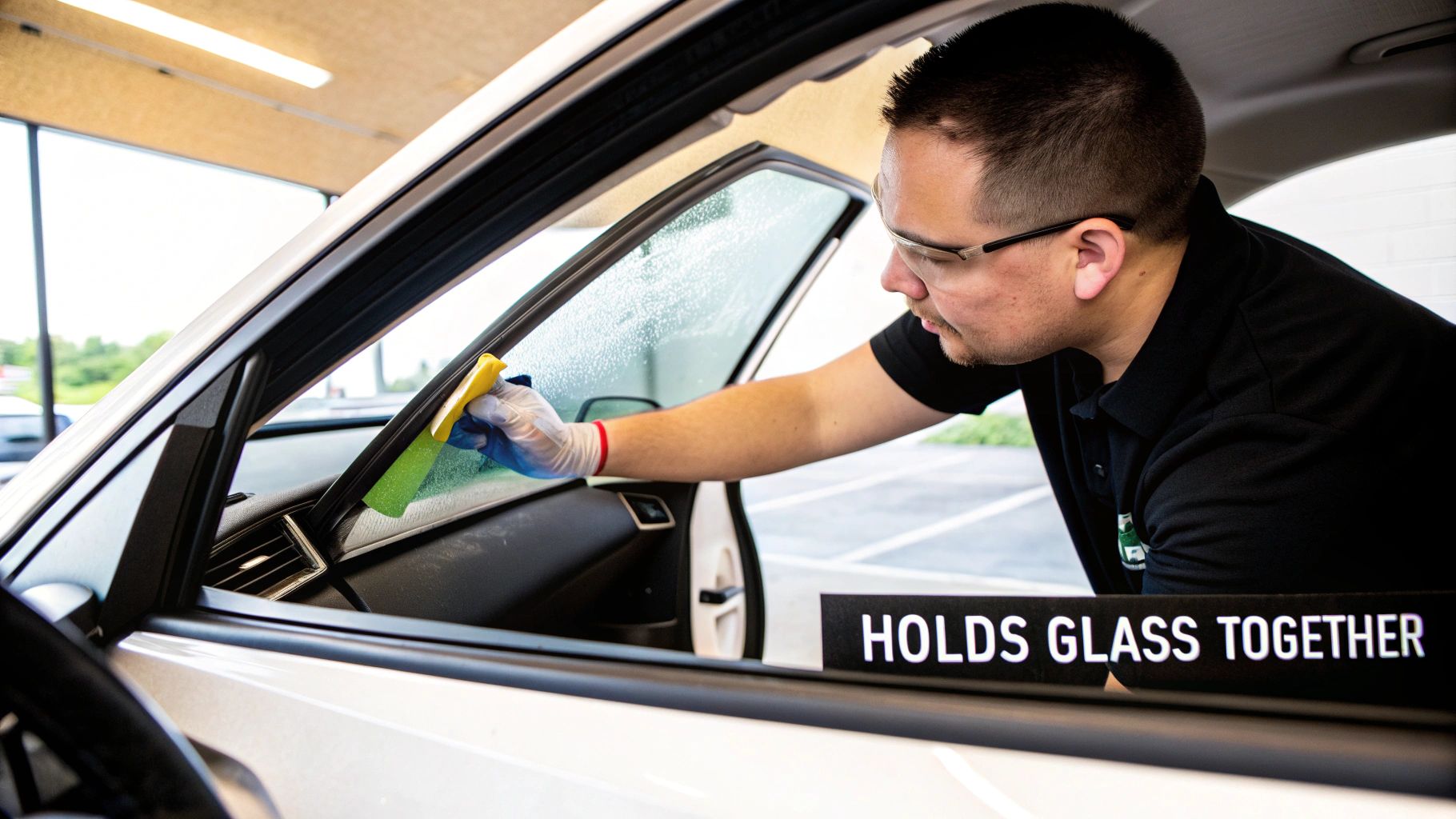
By design, your car's side windows are meant to break into tiny, relatively harmless cubes on impact. It's a key safety feature during a crash, but it's also an open invitation for a criminal. One quick, hard strike and they have instant access to your vehicle.
Security film completely rewrites that script. Its power comes from two things working together: its layered construction and an incredibly strong adhesive.
The Role of Micro-Layers and Adhesive
Imagine trying to tear a single piece of paper versus ripping a thick phone book. The phone book is a challenge because of all its bonded layers. Security film operates on the same principle, using multiple micro-layers of high-tensile polyester to create immense strength.
During installation, a special pressure-sensitive adhesive forms a powerful bond between the film and the glass itself. This bond is the magic behind it all. When a thief strikes the window, the glass will likely crack or even spiderweb, but it won’t fall apart.
The film and its powerful adhesive work together to hold the fractured glass in place, maintaining the window's integrity as a barrier. This simple yet effective mechanism is what turns a weak point into a line of defense.
This isn't just a small inconvenience for a would-be thief; it's a game-changer. Instead of a silent, one-second smash-and-grab, they're now forced to make a loud, prolonged, and very obvious effort to get through. That delay—often 30 to 60 seconds or more—gives you time to get away, lets an alarm do its job, or draws the attention of people nearby. It's no surprise the global automotive window film market, valued at USD 3.07 billion in 2025, is set to climb as more drivers catch on. You can read more research about the growing automotive film market.
More Than Just Security
Beyond stopping break-ins, top-tier security film for car windows packs in a ton of other benefits that just make driving better. Many films integrate solar control technology, giving you:
- UV Ray Protection: Blocks over 99% of harmful UV rays. This protects your skin and stops your car's interior from fading and cracking over time.
- Heat Reduction: Keeps a significant amount of solar heat out of the cabin. Your car stays cooler, and your A/C doesn't have to work as hard.
- Glare Reduction: Cuts down on annoying glare from the sun and headlights, making it easier to see and reducing eye strain for a safer, more comfortable drive.
What Security Film Actually Does for You in the Real World
The specs and technical details are one thing, but what does security film really do for you day-to-day? Its true value comes to life in a crowded parking lot, a surprise traffic accident, or even just sitting under the hot sun. This isn't just about reinforcing glass; it's about turning your vehicle from a vulnerable target into a much safer space.
Think about it. You're just running a quick errand. You park, lock up, and head inside for a few minutes, but you left a laptop bag on the passenger seat. For a thief, that's an open invitation. A standard car window shatters in less than a second, letting them grab your stuff and vanish before anyone even looks up.
This is where security film for car windows completely rewrites the script. When a thief tries to smash a window treated with security film, the glass will fracture and spiderweb, but it won't collapse. It's held together by the film's incredibly strong adhesive. Suddenly, their quick, silent smash-and-grab has turned into a loud, difficult, and attention-grabbing struggle. Most will give up and run.
For more on this, check out our guide on how to prevent car break-ins.
Keeping You Safer in a Crash
The same strength that foils thieves becomes a critical safety feature in a collision. During an impact, side windows can explode inward, spraying the cabin with sharp, high-velocity shards of glass. This can cause serious cuts and eye injuries, making a bad situation infinitely worse.
Security film is like a safety net for your windows. It contains those dangerous fragments on impact.
- No More Flying Shards: The film's powerful bond holds the broken pieces together, keeping them from becoming dangerous projectiles.
- Protecting Occupants: By holding the window pane in one piece, it dramatically lowers the risk of injury from shattered glass.
- Preventing Ejection: In a severe rollover, an intact window helps keep occupants inside the vehicle, which is a major factor in surviving such an accident.
It ensures your windows break in a much safer, more controlled way, shielding everyone inside from one of the most common hazards of a car crash.
A Cooler, More Protected Interior
The benefits don't stop with security. Top-tier security films come with some impressive solar control technology, which makes your drive more comfortable and protects your car's interior from the sun.
One of the biggest perks is that the film blocks over 99% of the sun's damaging ultraviolet (UV) rays. UV radiation is the main reason your dashboard, seats, and trim fade, crack, and wear out over time.
By filtering out these rays, the film essentially acts as a permanent, powerful sunscreen for your car's cabin. It keeps everything looking newer for longer, which helps maintain your vehicle's resale value. Of course, that UV protection is also great for your skin on long drives.
On top of that, the film cuts down on solar heat, so your car stays cooler on hot days. This means your A/C doesn't have to work as hard, which can even give you a slight bump in fuel efficiency. The added privacy of tinted options also helps keep prying eyes off any valuables you have inside, adding another subtle layer of security.
While security film is a huge step up, it works best as one component of a holistic car security system that might also include alarms, GPS trackers, and other deterrents.
Choosing the Right Type of Security Film
Picking the right security film for your car windows isn't a one-size-fits-all deal. The best choice really boils down to what you're trying to achieve, whether that's simple smash-and-grab protection or something much more serious. The market has a whole range of options, each engineered with a unique mix of strength, visibility, and bonus features like heat rejection.
Think of it like buying tires. You wouldn't put racing slicks on the family minivan, and you wouldn't take standard highway tires off-roading. It’s the same idea with security films—they’re designed in different tiers to match different needs and threat levels. Getting a handle on these categories is the first step to making a smart investment in your car's security.
This simple flowchart is a great way to map out your primary goal, whether it's stopping a burglar or keeping everyone safe if an accident happens.
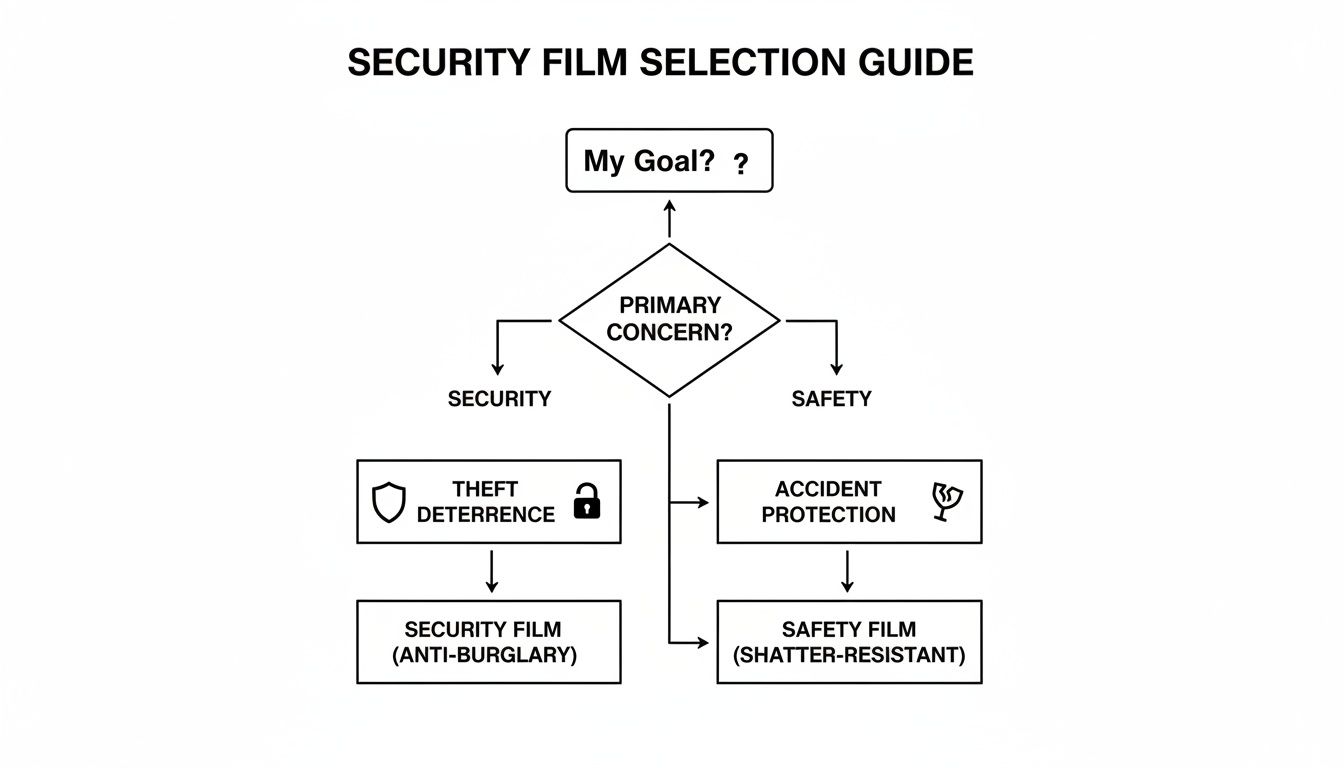
The chart makes it clear: while any security film boosts safety, your main objective—theft prevention versus accident protection—is what will point you to the right film thickness and type.
Understanding Film Thickness and Strength
The single most important factor in a film's strength is its thickness, which is measured in mils (one-thousandth of an inch). A higher mil rating means a thicker, tougher film that can take more of a beating. It’s the key difference between a basic film and a true security barrier.
For instance, a 4-mil film is a fantastic starting point for deterring smash-and-grab thieves and keeping glass from shattering in a collision. But jumping up to an 8-mil or 12-mil film dramatically increases the resistance, forcing a would-be thief to waste precious time and energy just to get through.
The thicker the film, the more impact energy it can absorb and spread out. This directly translates into buying you more time, which is often the only thing you need to stop a break-in completely.
The Main Categories of Security Film
To make sense of it all, let's look at a simple breakdown of the most common film types you'll encounter. Each one offers a different blend of protection and perks.
Automotive Security Film Comparison
| Film Type | Typical Thickness (mils) | Primary Benefit | Ideal Use Case |
|---|---|---|---|
| Standard Clear Film | 4-12 mils | Impact resistance without changing the vehicle's appearance. | Anti-smash-and-grab, accident safety. |
| Tinted Security Film | 4-12 mils | Combines impact resistance with privacy, UV/heat reduction. | Daily drivers, commercial vehicles, family cars. |
| Ballistic Film | 14+ mils (multi-layer) | Stops specific ballistic threats (e.g., handgun rounds). | High-profile individuals, armored transport, executives. |
Ultimately, the best film is the one that lines up perfectly with your security goals and daily driving needs.
Advanced Protection and Certifications
For those who need the absolute highest level of security, ballistic-resistant films are in a class of their own. These aren't your average films; they are specialized, multi-layered systems engineered and tested to meet incredibly demanding standards. The most respected certification in the industry comes from the National Institute of Justice (NIJ).
An NIJ rating tells you the film system has been independently tested and proven to stop certain types of ammunition. For example, a system with an NIJ Level IIA rating can defeat rounds from common handguns like a 9mm or .40 S&W. This level of protection is essential for:
- High-profile individuals and their families
- Armored transport vehicles
- Anyone traveling or working in high-risk areas
When you choose an NIJ-certified option from a provider like Fortress Security Films, you know you're getting a product that’s been put through the wringer and proven to perform when everything is on the line. It turns your vehicle’s most vulnerable points—its windows—into a life-saving shield.
Why Professional Installation Is a Must-Have
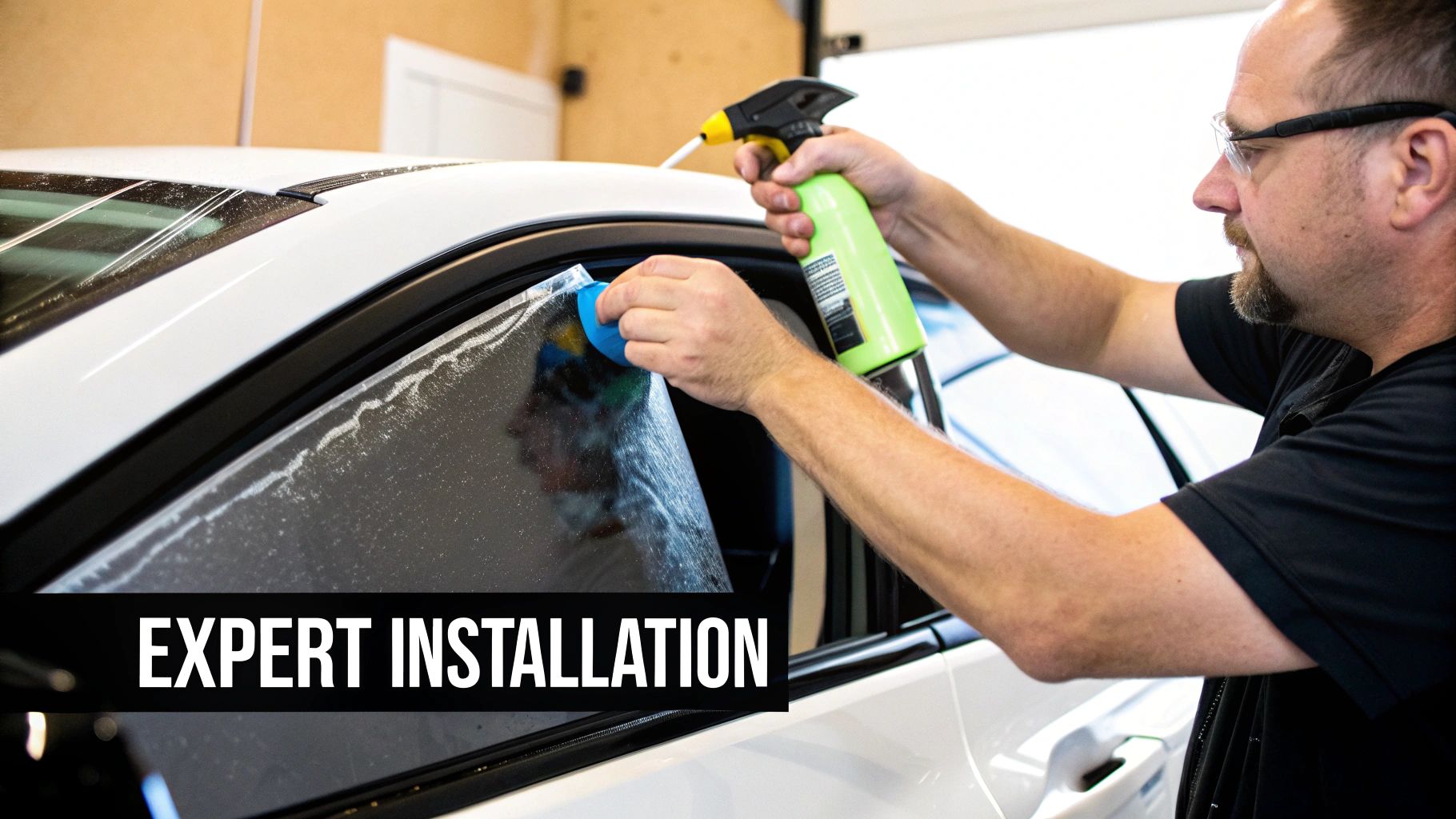
Think about it this way: you wouldn't let an amateur work on your car's brakes. The same logic holds true for its security. While you can find DIY kits for security film car windows, going that route means seriously compromising the very protection you're trying to add. Professional installation isn't just an upsell—it’s the only way to ensure the film acts as a seamless, powerful barrier when you need it most.
The process is less like applying a sticker and more like a surgical procedure. Certified technicians operate in a controlled, clean environment, which is crucial for preventing tiny contaminants from getting trapped and weakening the film's bond to the glass. Every step is precise, demanding specialized tools and years of hands-on experience to get just right.
The Pro Touch vs. DIY Pitfalls
A professional installer starts by deep-cleaning the glass, getting rid of microscopic dust and oils a normal wash can't touch. They then custom-cut the film to the exact shape of your window, leaving no gaps for a true edge-to-edge fit. Using a specific slip solution, they position the film perfectly before using a series of specialized squeegees to force out every last drop of moisture and every single air pocket.
Now, picture a typical DIY attempt in a home garage. It's a recipe for mistakes that can completely negate the film's strength:
- Trapped Debris: Even one tiny speck of dust or a stray hair under the film creates a weak spot. Under pressure, that’s where the adhesive is most likely to fail.
- Bubbles and Creases: These aren't just ugly. They're pockets of air where the film isn't actually stuck to the glass, creating vulnerabilities that an attacker could easily exploit.
- Poorly Sealed Edges: Pros make sure the film’s edges are perfectly sealed against the window frame. This prevents peeling and creates a single, unified surface. DIY jobs often leave exposed edges that are easy to lift.
Any one of these seemingly small mistakes can cause a catastrophic failure during an impact, making your entire investment worthless.
A flawless, bubble-free application isn't just about appearances. It's about creating a perfect, uniform bond between the film and the glass, which is absolutely essential for the film to do its job of absorbing and distributing impact energy.
In the U.S. alone, auto thefts climbed past 1 million incidents in 2023, making a vehicle's vulnerability a real concern. Security films directly combat this by making smash-and-grab attacks much harder and slower. That crucial delay, however, is only possible when the film is installed perfectly.
The Value of a Warranty
Finally, professional installation comes with a guarantee. Reputable installers like Fortress Security Films back their work with a warranty that covers both the film material (against defects like bubbling, peeling, or discoloration) and the installation itself. If an issue pops up, it’s covered. This gives you peace of mind that your investment will perform as expected for years.
When you hire a professional, you're not just buying a product; you're investing in a proven safety system. To see what a top-tier installation looks like, take a look at our complete guide to security window film installation.
Understanding Costs, Maintenance, and Local Laws
So, you're sold on the idea of security film for car windows. That’s the first step. But now come the practical questions: What's this actually going to cost? How do I take care of it? And is it even legal? These are just as important as the tech itself. Think of it as an investment—not just in your vehicle, but in your peace of mind.
Let's walk through these details so you can feel confident you're making the right call.
Breaking Down the Cost Factors
The first thing to know is there’s no single price tag for security film. The final cost really comes down to the level of protection you want and the kind of vehicle you drive. It's not a one-size-fits-all product, which is a good thing—it means you only pay for what you actually need.
A professional quote will usually boil down to a few key variables. Knowing these helps make sense of why prices can range from a few hundred dollars to well over a thousand.
- Vehicle Size and Type: It’s simple, really. A two-door coupe just doesn't have as much glass as a full-size SUV or a minivan. More glass means more film and more labor, which affects the final price.
- Film Thickness and Type: A standard 4-mil anti-smash-and-grab film is a fantastic and affordable deterrent. But if you step up to a much thicker 12-mil film or one of our NIJ-certified ballistic films, the cost naturally increases due to the advanced materials and more complex, multi-layer installation.
- Combined Features: Many people choose a film that does double duty, blending security with top-tier solar control to block heat and UV rays. This might adjust the price compared to a purely clear security film, but the added comfort is often worth it.
While the upfront cost is what most people focus on, the real value is in what you prevent: the headache of replacing a shattered window, the loss of stolen valuables, and the priceless feeling of being safe. To get a better handle on your budget, you can explore a more detailed breakdown of the https://fortresssecurityfilms.com/security-window-film-cost/.
Simple Maintenance for Long-Lasting Protection
Great news: once your security film is on, taking care of it is incredibly easy. The whole point is to avoid damaging the film's tough, protective hard coat, so you just need to steer clear of harsh chemicals and abrasive tools.
Right after installation, your windows will need a few days to cure, so you’ll want to keep them rolled up. Your installer will give you the exact timeframe. After that, cleaning is a breeze.
Pro Tip: Never use an ammonia-based glass cleaner. Over time, ammonia will eat away at the film's adhesive and can cause bubbling or discoloration. A simple mix of mild soap and water in a spray bottle works perfectly and is completely safe.
Always use a soft microfiber cloth or a clean rubber squeegee to wipe down the windows. It might be tempting to grab a paper towel, but they can be surprisingly abrasive and leave behind tiny scratches or lint. Of course, keeping the glass itself clean is just as important. Knowing things like how to remove hard water stains from car windows will keep your view crystal clear.
Navigating Window Tint Laws
This is a big one. After you’ve picked your film, you have to make sure it's legal. Every state has very specific laws about how dark your windows can be. The measurement they use is called Visible Light Transmission (VLT)—it’s just the percentage of light that can pass through the window.
A lower VLT number means a darker tint. For instance, a 5% VLT is what people call "limo tint," while a 70% VLT is almost clear. States have different rules for the front side windows, rear side windows, and the back windshield, and these laws are in place for the safety of law enforcement officers during traffic stops.
This is exactly why a professional installation is non-negotiable. A certified installer at Fortress Security Films knows the local VLT laws inside and out. We’ll help you choose a security film car windows option that gives you the protection you want while keeping your vehicle 100% street-legal. It's the best way to avoid a huge fine or the hassle of having to get illegal film removed.
Got Questions About Security Film? We’ve Got Answers.
It's smart to have a few questions before you decide to add security film to your vehicle. After all, it's a serious upgrade. We get asked a lot of the same things by drivers, so we’ve put together some straightforward answers to help you feel confident about the decision.
Let’s clear up some of the most common queries.
How Long Will This Film Actually Last?
This is probably the number one question we hear, and for good reason. You want to know you're making a lasting investment, not just applying a temporary fix. The good news is that a professionally installed, high-quality automotive security film is built to last. It’s designed to handle everything a car goes through—brutal sun, freezing temperatures, and everything in between.
You can realistically expect a top-tier film to perform flawlessly for more than 10 years. In fact, the premium films we install are backed by a lifetime manufacturer's warranty. This isn't some flimsy promise; it covers real-world problems like bubbling, peeling, cracking, or turning a weird purple color. Your investment is protected for as long as you own the car.
What if I Need to Take It Off Later?
Absolutely. While the adhesive used is incredibly strong—it has to be to stop an attack—it's not a one-way street. A trained professional can remove security film cleanly, without leaving any sticky mess or damaging the glass underneath.
This is a really important feature for a couple of reasons:
- Leased Cars: You can add this incredible layer of protection to a leased vehicle and simply have it removed before you turn it in. No lease agreement violations.
- Selling Your Vehicle: Some buyers might prefer the stock look. Having the option to remove the film can make the sale that much easier.
- Future Upgrades: Film technology is always improving. You might decide you want an even more advanced film a few years down the road.
So, Is This Stuff Actually Bulletproof?
This is a critical point to get right. While high-level films offer incredible ballistic resistance, no clear film is truly "bulletproof" in the way an armored steel plate is. The correct term is bullet-resistant, which means the entire system—film and glass together—is tested and rated to stop certain types of bullets under specific conditions.
An NIJ-certified film isn't about turning your car into a tank. It’s about creating a barrier that can stop a specific threat, giving you the crucial seconds you need to drive away from a life-threatening attack.
For example, a film with an NIJ Level IIA rating is certified to stop rounds from many common handguns. The goal is to turn a lethal event into a survivable one, not to endure a prolonged firefight.
Will It Mess with My Phone or GPS Signal?
That's a valid concern, mostly because older, metal-based window tints were notorious for causing signal interference. They could wreak havoc on your GPS, cell phone, and radio. Thankfully, the technology behind security film for car windows has come a long way.
Modern security films are made with ceramic, non-metallic technology. These materials are specifically engineered to be completely signal-transparent. You get all the protection without any of the frustration—no dropped calls, no GPS blackouts, and no issues with your satellite radio.
Ready to turn your vehicle's weakest points into its strongest? At Fortress Security Films, our certified installers provide flawless, street-legal installations of the world's most advanced security films, including NIJ-certified ballistic options. Contact us today for a professional assessment and secure your ride.
