


So, what exactly is secondary window glazing? In simple terms, it's about adding a second, separate pane of glass or acrylic to the inside of your existing windows. It's a clever way to dramatically boost your home's insulation, quieten things down, and improve security without the cost and hassle of ripping out your original window frames.
Think of it as giving your windows a high-performance inner shield.
Understanding Secondary Window Glazing
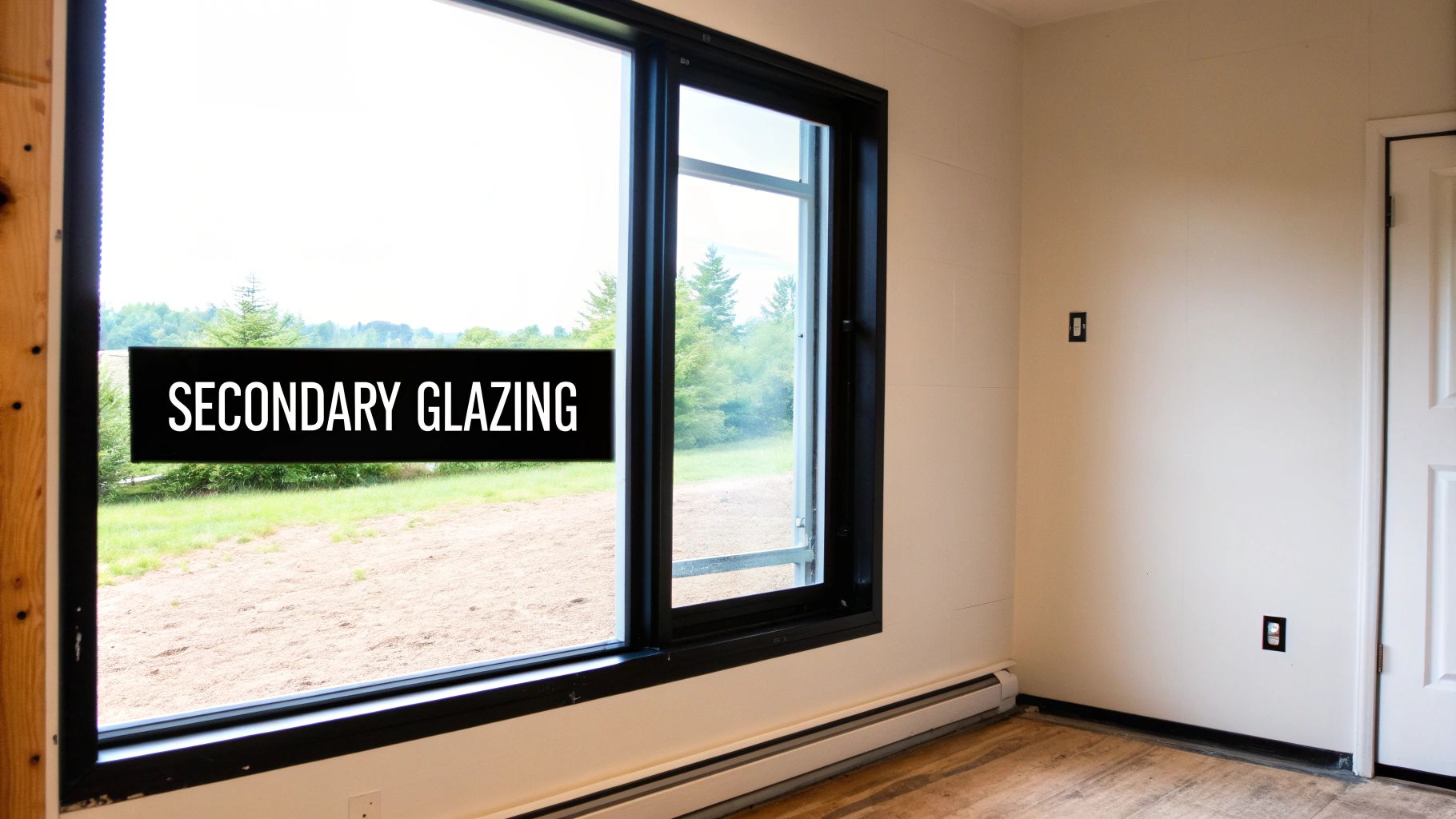
The idea behind secondary glazing is brilliantly simple. Imagine you're out on a cold, blustery day wearing just a light jacket. You'll definitely feel the wind. Now, what if you add a second jacket? That pocket of air trapped between the two layers acts as a powerful insulator, keeping you far warmer.
Secondary glazing applies that very same principle to your home's windows.
By fitting a second pane, you create a sealed air gap between it and the original window glass. This gap is the magic ingredient. It serves as a thermal and acoustic buffer, drastically slowing the transfer of heat and muffling sound waves from the outside world.
The Key Components Working Together
A secondary glazing system isn't just a loose sheet of glass. It’s a fully engineered unit designed to fit perfectly with your existing windows. Each part plays a specific role, and they all work together to deliver some impressive results.
- The Inner Pane: This is usually glass, but high-quality acrylic is also an option. You can even choose different thicknesses and types of glass to focus on specific goals, whether that’s maximum thermal efficiency, noise reduction, or security.
- The Frame: The new pane is held in a slimline frame, which is most often made from discreet aluminium, uPVC, or sometimes timber to blend in with your interior. The whole point is for it to be as unobtrusive as possible while being strong and secure.
- The Seals: This is a critical detail. High-performance seals run around the unit to create a completely airtight cavity. This is what stops drafts and moisture in their tracks, which is essential for preventing condensation and getting the full insulating benefit from that trapped air gap.
By creating this insulated pocket of air, secondary glazing can reduce heat loss through windows by as much as 65%. This doesn't just make your home feel more comfortable; it translates into real, noticeable savings on your energy bills.
More Than Just Insulation
While keeping your home warmer is often the main reason people look into secondary glazing, the benefits don't stop there. That same air gap that’s so good at trapping heat is also fantastic at disrupting sound vibrations.
If you live on a busy road, near a railway line, or under a flight path, secondary glazing can cut external noise by up to 80%. That can be the difference between a noisy house and a peaceful sanctuary.
On top of that, the extra pane is a serious physical barrier. It adds another tough layer that any potential intruder would have to get through, which is a powerful deterrent and can significantly delay a break-in attempt. It’s a smart, multi-purpose upgrade that genuinely improves your home's comfort and safety.
The Big Three Benefits: Warmth, Quiet, and Security

So, what’s all the fuss about secondary glazing? At its heart, it’s a simple idea: add another pane of glass inside your existing window. But don't let that simplicity fool you—the results can be transformative for your home. This one upgrade delivers a powerful trifecta of improvements, hitting three of the most common homeowner pain points: comfort, peace, and safety.
The magic happens in the air gap sealed between your original window and the new interior pane. This pocket of air acts as a buffer, disrupting the flow of energy—whether that’s heat trying to escape or sound trying to get in. It also adds a tough physical barrier, making your home a more comfortable and secure place to live.
Boost Your Thermal Performance
If you've ever felt a chilly draft near an old window, you know how much heat they can leak. Single-pane windows are basically thermal holes in your walls, letting expensive heat pour out in winter and allowing the sun to bake your rooms in summer.
This is where secondary window glazing makes its biggest and most immediate impact. By trapping a layer of air, it creates a powerful insulating barrier. The effect is dramatic, capable of slashing heat loss through your windows by as much as 65%.
What does that mean for you? A home that stays warmer when it’s cold and cooler when it’s hot, without your heating or cooling systems having to work nearly as hard. You get a more stable, comfortable living space and lower energy bills. While things like thermal curtains can certainly help, they just can't match the permanent, high-performance seal you get from a properly installed secondary glazing system.
Create a Peaceful Sanctuary with Acoustic Insulation
Life is noisy. Whether it's the rumble of traffic, the nearby construction crew, or just loud neighbours, constant noise can really grind you down. Secondary glazing is a fantastic solution for reclaiming your peace and quiet.
Interestingly, it often outperforms standard double glazing when it comes to soundproofing.
The secret is the wider air gap and the fact that you have two completely separate frames. This setup is brilliant at disrupting sound vibrations across all sorts of frequencies. The result? You can cut external noise by up to an incredible 80%, turning a chaotic street into a calm retreat.
This level of sound reduction is a true game-changer for so many people:
- Urban Dwellers: Finally, a way to muffle the constant hum of sirens and city traffic.
- Homes Near Transport Hubs: It dramatically cuts the noise from nearby airports, motorways, or train lines.
- Families with Light Sleepers: Helps ensure a quieter home for kids, shift workers, or anyone easily disturbed.
The ability to shut the door and truly leave the noise of the world outside is one of the most priceless benefits of this upgrade.
A Formidable Upgrade in Home Security
Let’s be honest: a single pane of glass isn’t much of a deterrent for an intruder. It's one of the weakest points of any property. By adding a second, sturdy internal pane, you're not just adding a layer of glass—you're adding a serious layer of security.
This second barrier makes a forced entry much more difficult. A potential burglar now has to break through two separate panes, which is louder, takes more time, and requires a lot more effort. That extra delay is often enough to make them give up and move on. It’s a simple, visible deterrent that makes your home a much harder target.
This security advantage is a major reason why the global secondary glazing market, already valued at USD 1.2 billion, is set for significant growth. More and more homeowners are realising it's a smart investment in creating a safer, more protected home.
Comparing Your Window Upgrade Options
Deciding on the right window upgrade can feel overwhelming, but it really boils down to three things: your budget, the performance you need, and what your property can accommodate. Let's walk through how secondary window glazing stacks up against two other common choices—a full window replacement with double glazing and professionally applied security films.
Getting your head around these differences is key. A full replacement is a serious renovation project. Security films offer a very specific, targeted benefit. Secondary glazing sits in a unique sweet spot, giving you a whole host of benefits without the hassle of tearing out your existing windows.
Secondary Glazing vs. Double Glazing
The most frequent question I get is how secondary glazing compares to ripping out old windows and installing brand-new double-glazed units. While both are trying to make your home warmer and quieter, they take completely different paths to get there.
A full replacement means just that—your old window frames are removed entirely and new ones are put in. This gets expensive fast, creates a lot of mess, and can be seriously disruptive to your daily life. Secondary glazing, on the other hand, is a retrofit. It leaves your original windows completely untouched, adding a slim, discreet second pane on the inside.
This is a massive deal if you live in a historic or listed building. In these homes, the original windows are often protected and can't be modified or removed. Secondary glazing is often the only approved way to boost performance while preserving the building's character and charm.
When it comes to blocking out noise, secondary glazing actually tends to outperform standard double glazing. That wider gap between the panes and the two separate frames is a nightmare for sound waves, capable of cutting external noise by up to 80%. Many standard double-glazed units top out around 50%.
And then there's the cost. A full window replacement is a major investment, often costing at least double what you'd pay for a professional secondary glazing installation. That makes secondary glazing a much more approachable choice for homeowners who want serious performance gains without breaking the bank.
The Role of Security Window Films
It's easy to pit security films against secondary glazing, but it’s much more helpful to think of them as potential partners. They solve different primary problems, but they can work in tandem to create an incredibly secure window.
A security film is an ultra-thin sheet of tear-resistant polymer that’s applied directly to your existing glass. Its main job is to hold the glass together if it shatters, preventing dangerous flying shards and, crucially, making it much harder for someone to get inside. It’s a fantastic defense against smash-and-grab break-ins.
Secondary glazing adds a completely separate physical barrier—a second pane of glass or acrylic. This alone is a huge visual and physical deterrent, forcing a potential intruder to defeat two distinct layers.
The ultimate security setup? You combine them. By applying a high-performance security film from Fortress Security Films to your main window and then installing secondary glazing, you create a multi-layered defense. An attacker would have to break the strengthened outer pane (which the film holds together) before even starting on the second, separate pane of glass. It’s a formidable obstacle.
Window Upgrade Options Compared
To help you see the differences at a glance, here’s a straightforward comparison across the features that matter most. As you weigh your options, remember that the type of glass itself can play a role; for instance, the properties of ultra-clear glass can enhance the aesthetics and clarity of any glazing solution you choose.
| Feature | Secondary Glazing | Double Glazing (Full Replacement) | Security Films |
|---|---|---|---|
| Thermal Efficiency | Excellent (Reduces heat loss up to 65%) | Excellent (Modern units are highly efficient) | Minimal (Not its primary function) |
| Noise Reduction | Superior (Can reduce noise up to 80%) | Good (Reduces noise around 50%) | Minimal (Not designed for acoustic insulation) |
| Security Level | High (Adds a physical second barrier) | Moderate (Tougher than single pane) | High (Prevents glass shatter, delays entry) |
| Installation | Low Disruption (Installed internally, no frame removal) | High Disruption (Requires full frame removal) | Very Low Disruption (Film applied to existing glass) |
| Cost | Moderate (Roughly half the cost of replacement) | High (Significant investment) | Low (Most affordable option) |
| Heritage Suitability | Ideal (Preserves original windows) | Unsuitable (Requires removal of original features) | Ideal (Invisible application) |
At the end of the day, the right choice really comes down to your priorities. For top-tier performance without touching your home's exterior—especially in a period property—secondary glazing is the clear winner. If you're doing a new build or a full renovation and want a complete aesthetic change, double glazing makes sense. And for a targeted, budget-friendly security boost, security films are unbeatable, particularly when layered with other solutions.
Choosing Your Installation Method
So, you've decided secondary glazing is the right move. The next big question is: how will you get it installed? This decision really boils down to balancing your budget, how comfortable you are with DIY projects, and the specific results you're after. Your options run the gamut from simple, temporary kits to permanent, professionally fitted systems, and each has its own place.
Think of it this way: you could assemble a piece of flat-pack furniture yourself, or you could hire a carpenter to build custom cabinets. The first option is fast, affordable, and gets the job done. The second delivers a flawless, high-performance finish that's built to last. Let's dig into the common approaches so you can find what works best for you.
Do-It-Yourself Secondary Glazing Solutions
If you're handy around the house or keeping a close eye on your budget, a DIY secondary glazing kit is a fantastic entry point. These kits are designed to be installed without needing to call in the pros and usually come in one of two flavours.
The most popular by far is magnetic secondary glazing. It's a clever system where you apply a self-adhesive magnetic tape to your existing window frame and another to the new acrylic or polycarbonate pane. The two strips just snap together, forming a surprisingly tight seal. Best of all, it's a breeze to install and just as easy to take down for cleaning or to store away in the summer.
Key Takeaway: Magnetic kits are a brilliant, low-cost way to try out secondary glazing. While they won't quite match the thermal or sound-blocking power of a permanent frame, they make a real difference in stopping drafts and improving comfort, all for a fraction of the cost.
Of course, there are trade-offs. The seals are good, but not airtight, and the lightweight nature of the system means it can't support heavier glass needed for serious security. Still, if you're just looking to cut down on drafts and take the bite out of winter chills, they are an excellent choice.
This decision tree can help you visualise the best path forward based on what matters most to you.
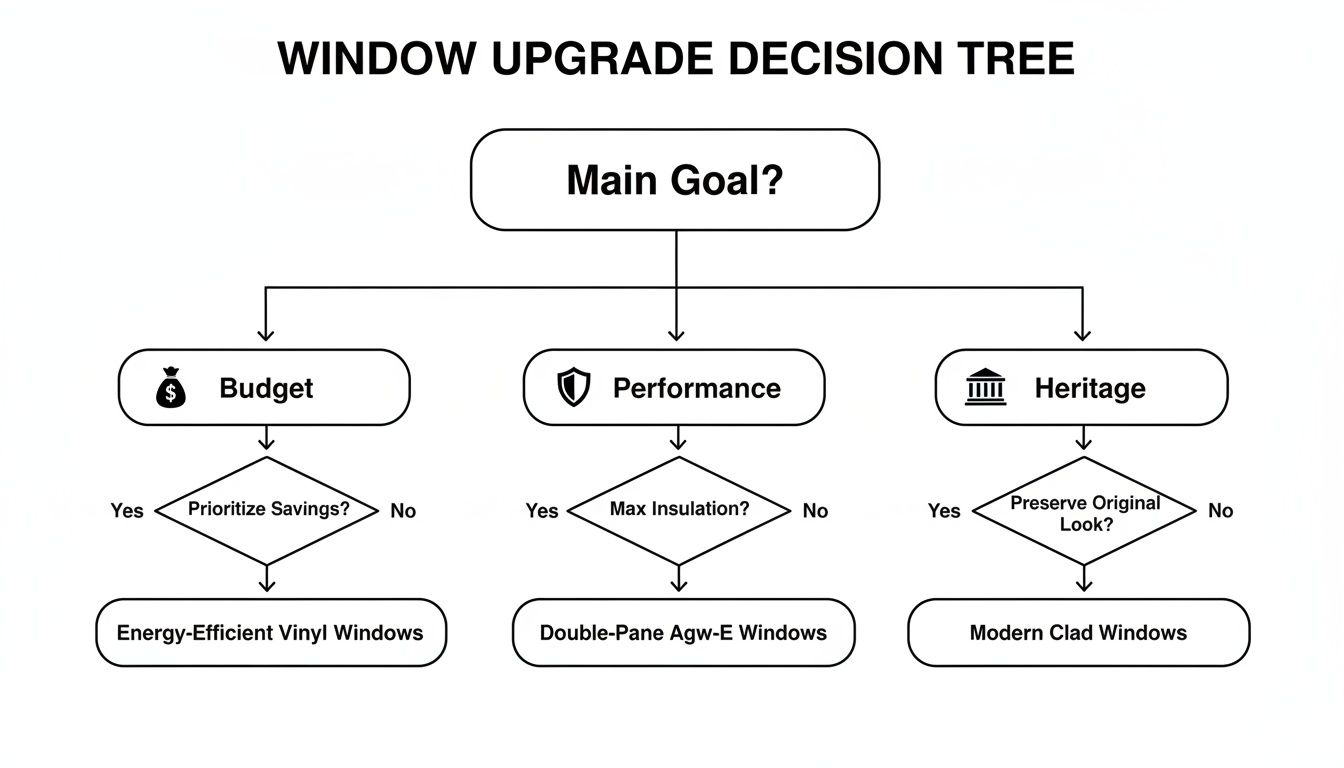
As you can see, your main goal—whether it's sticking to a budget, maximising performance, or preserving original features—points you directly to the most logical solution.
Professional Installation for Maximum Performance
When your top priorities are serious thermal efficiency, dramatic noise reduction, or a major boost in security, then calling in the professionals is the only way to go. This approach guarantees that every part of the system is perfectly fitted and sealed, giving you the robust, high-performance results you’re paying for.
Professionally installed systems use high-quality, long-lasting frames, usually made from one of three materials:
- Aluminum: A top pick because it’s strong, slim, and blends in discreetly.
- uPVC: A cost-effective choice that also offers great thermal insulation.
- Timber: Perfect for period homes, as it can be custom-matched to existing wooden frames for a seamless look.
A professional installer takes precise measurements to ensure the new unit fits perfectly inside your window reveal. This creates the all-important airtight cavity, which is the secret to getting top-tier performance. It’s this meticulous fitting that allows you to hit those impressive numbers—a potential 65% reduction in heat loss and up to 80% noise reduction.
This is also where security becomes a serious benefit. A properly installed frame adds a formidable second barrier that significantly slows down anyone trying to force their way in. For those wanting to create an even more comprehensive defence system, understanding the security window film installation process can show how layering different solutions creates an incredibly tough obstacle.
In the end, while DIY kits offer a great starting point, a professional installation unlocks the true power of secondary window glazing. It elevates it from a simple home improvement to a lasting investment in your property's comfort, quiet, and security.
What’s the Real Cost and Payback?
When you’re thinking about an upgrade like secondary glazing, the first thing on your mind is probably the price tag. But just looking at the upfront cost is missing half the story. It’s better to think of it as a long-term investment in your property’s comfort, security, and overall value—one that pays you back in more ways than one.
The initial expense can swing quite a bit depending on how you go about it. A simple DIY magnetic kit for a standard window is surprisingly affordable and can be a great starting point. On the other hand, if you opt for professionally installed, custom-built frames with high-performance glass, you're looking at a more significant investment.
Breaking Down the Financial Benefits
The return on your investment isn't just a single number. It's a blend of hard savings, a bump in property value, and those quality-of-life improvements you can’t really put a price on.
-
Direct Energy Savings: This is the easiest one to measure. By creating that crucial insulating air gap, secondary glazing can slash heat loss through your windows by up to 65%. This means lower heating bills all winter and less need for air conditioning in the summer. Many homeowners see their annual energy costs drop by around 15%.
-
Increased Property Value: A home that's quieter, more efficient, and more secure is a home that sells. These are tangible, desirable features for any potential buyer, and they can genuinely boost your property's market value. The initial cost often comes back to you when it's time to sell.
-
Priceless Comfort and Security: What's a good night's sleep worth to you? Or the peace of mind knowing your home is a much tougher target for a break-in? The acoustic and security benefits deliver a return you'll appreciate every single day.
Secondary glazing is one of those rare strategic upgrades. It pays you back through lower bills and a higher property valuation, all while making your home a much nicer place to live.
A Growing Market Backed by Experts
The value here isn't just a homeowner secret; it's recognized across the industry. The insulating glass window market, which includes secondary glazing, was valued at USD 14.5 billion and is expected to keep growing. This isn't just market hype—it's backed by initiatives like the U.S. Department of Energy's innovation prize, which is funding new advancements in secondary glazing to help modernize buildings. You can dig deeper into this growing market and what's driving it over at Precedence Research.
Comparing Costs for a Clearer Picture
When you're crunching the numbers, it helps to put them in context with other options. For example, secondary glazing gives you a powerful mix of thermal, acoustic, and security perks. But it's worth understanding the specific security window film cost to see how different protective measures stack up against your budget. This gives you the full financial picture, helping you decide where your money is best spent. For many, the all-around value of secondary glazing makes it a clear winner.
Solutions for Heritage Buildings and Special Properties
If you own a historic or listed property, you know the struggle. You want modern comfort, but you’re bound by the need to preserve the building’s unique architectural character. The original windows are a huge part of that charm, but they’re also a huge source of drafts, noise, and sky-high energy bills. Replacing them is almost always a non-starter.
This is where secondary window glazing comes in as the perfect—and often the only—approved solution.
Because the entire system fits on the inside of your existing windows, the building's exterior façade remains completely untouched. Think of it as a high-performance, invisible upgrade that works from the inside out. It’s a brilliant way for property owners to satisfy the strict requirements of conservation officers while finally getting the thermal, acoustic, and security benefits of modern windows.
Preserving Character Without Compromise
For heritage projects, it’s all about subtlety. You want to boost performance without messing with the visual soul of the building. That’s why manufacturers have designed some incredibly discreet systems just for this purpose.
These specialized secondary glazing units often feature:
- Ultra-slimline frames: These are typically made from slender aluminum profiles that can be powder-coated to match the color of your interior window frames perfectly, making them almost disappear.
- Minimal sightlines: The whole point is to maximize the glass and shrink the frame, ensuring the beautiful original window remains the main attraction.
- Custom shaping: Got arched, curved, or other quirky period windows? No problem. The units can be custom-made to fit these unique shapes for a seamless, perfect fit.
This non-destructive approach is a game-changer for listed buildings. It allows owners to dramatically improve their home's energy efficiency—slashing heat loss by up to 65%—without a single change to the protected exterior. It’s the ultimate win-win for preservation and performance.
Gaining Approval and Enhancing Security
Navigating the rules and regulations for a listed building can feel like a minefield, but secondary glazing is a widely accepted solution. Since it’s considered a reversible alteration, historical commissions and conservation officers are far more likely to approve it than any other window upgrade. It honors the original craftsmanship while adding a much-needed layer of modern function.
Beyond just comfort, this internal barrier adds a serious layer of security. Let’s face it, the original, often delicate windows on a heritage property can be a real weak spot. Adding a tough internal pane creates a formidable obstacle for any potential intruder, giving your home’s security a major boost.
This is a crucial point for owners looking for total protection. To dive deeper into fortifying your home's most vulnerable points, our guide on how to secure windows without bars offers some excellent additional strategies. For those with special properties, combining discreet secondary glazing with other security measures brings complete peace of mind, protecting both the people inside and the irreplaceable history of the building itself.
Answering Your Questions About Secondary Glazing
It’s only natural to have a few practical questions when you’re thinking about an upgrade like secondary glazing. How will it fit into your daily life? What’s it actually like to live with? Let’s walk through some of the most common things people ask, so you can feel confident it’s the right move for you.
We'll get into the nuts and bolts—from opening windows to cleaning—clearing up any lingering questions you might have.
Can You Still Open Your Windows?
This is easily the number one question we hear, and the answer is a definite yes. The whole point of a good secondary glazing system is to add a new layer of comfort without taking away the function of your original windows. You aren't sealing them shut forever.
Professional systems are cleverly designed to match how your existing windows operate.
- Hinged Units: These swing open into the room, just like a classic casement window, giving you easy access.
- Sliding Units: If you have sash windows, you can get horizontal or vertical sliders that move in the same way.
- Lift-Out Panels: For windows you rarely open, these panels are a great option. They're lightweight and can be removed completely when you want some fresh air or need to clean.
You absolutely don't have to sacrifice a cool breeze for a warmer, quieter home.
Does Secondary Glazing Cause Condensation?
It's actually the other way around. Secondary glazing is one of the most effective ways to tackle condensation for good. That pesky moisture shows up when the warm, humid air inside your home hits the cold surface of a single-pane window.
By adding an inner pane, you create an insulating air gap. This gap keeps the new interior pane much closer to room temperature, so the water vapor in the air has no cold surface to condense onto. No more crying windows, no more puddles on the sill.
A well-fitted secondary glazing system is a game-changer for condensation. It keeps the inner pane of glass warm, stopping moisture in its tracks and protecting your wooden frames and sills from the damp that leads to rot and mould.
How Do You Clean Secondary Glazing?
Cleaning is surprisingly straightforward. You just have two surfaces to clean instead of one, and you don’t need any special products. First, wipe down the side of the secondary pane that faces into your room.
Then, just open the unit or lift out the panel. This gives you plenty of room to clean the other side of it, as well as the inside of your original window. It’s a simple two-step process that keeps everything looking crystal clear.
For homeowners who want to add an invisible shield against break-ins, Fortress Security Films provides a powerful layer of forced-entry resistance. Our films work beautifully with secondary glazing to create a truly formidable barrier, protecting what matters most. See how our solutions can help at https://fortresssecurityfilms.com.
