


Think of your home's windows. They let in light and offer beautiful views, but they're also the most fragile and vulnerable entry points. What if you could wrap them in a nearly invisible layer of armor? That's exactly what residential security window film does—it turns a weak point into a source of strength.
This isn't just a simple sticker; it's a sophisticated, multi-layer polyester film that bonds directly to your glass, reinforcing it against all kinds of impacts.
Your First Line of Defense Against Forced Entry
We've all heard that dreaded sound in the middle of the night—a sudden, sharp noise that instantly puts you on high alert. For one Southern California homeowner, that sound was someone trying to smash their way through a patio door. The intruder gave up and ran, but the feeling of being so exposed lingered. That's what sends people looking for better security, something more elegant than ugly bars or view-blocking shutters.
The search often ends with security window film, a solution that fundamentally changes how glass behaves under stress.
Here’s the genius of it: when the glass is struck hard enough to break, the film holds all the shattered pieces together in the frame. A quick smash-and-grab attempt is completely foiled. Instead, a would-be burglar is met with a stubborn, spiderwebbed barrier that just won't give way, even after repeated hits. That delay is everything. It's usually enough to make them give up and provides you with critical time to react and call for help.
More Than Just Security
While its main job is to fortify your home, a high-quality security film brings a whole host of other benefits to the table. It’s a smart upgrade that improves daily life, not just your peace of mind during a crisis. While film is a fantastic physical barrier, it's wise to consider it as one component within a larger strategy; exploring different approaches to home security helps create a truly layered defense.
Here are some of the other perks you'll get:
- UV Ray Protection: The film blocks up to 99% of harmful UV rays, acting like sunscreen for your home. This prevents your expensive furniture, hardwood floors, and precious artwork from fading over time.
- Glare Reduction: It cuts down on that annoying glare that washes out your TV or computer screen, all without making your rooms feel dark. It just makes the light more pleasant.
- Enhanced Safety: During an earthquake, a major storm, or even just a stray baseball, the film contains the dangerous shards of broken glass, preventing potentially serious injuries.
Quick Take: A quality security film can dramatically slow down a forced entry, block up to 99% of UV rays, and preserve your home's natural light and views, making it a powerful, multi-purpose upgrade.
What's Really Inside Security Window Film?
It’s easy to think of security window film as just a thick sticker, but the technology is far more sophisticated. The best way to picture it is like a high-tech, multi-layered sandwich, where every single layer has a crucial job to do in protecting your glass.
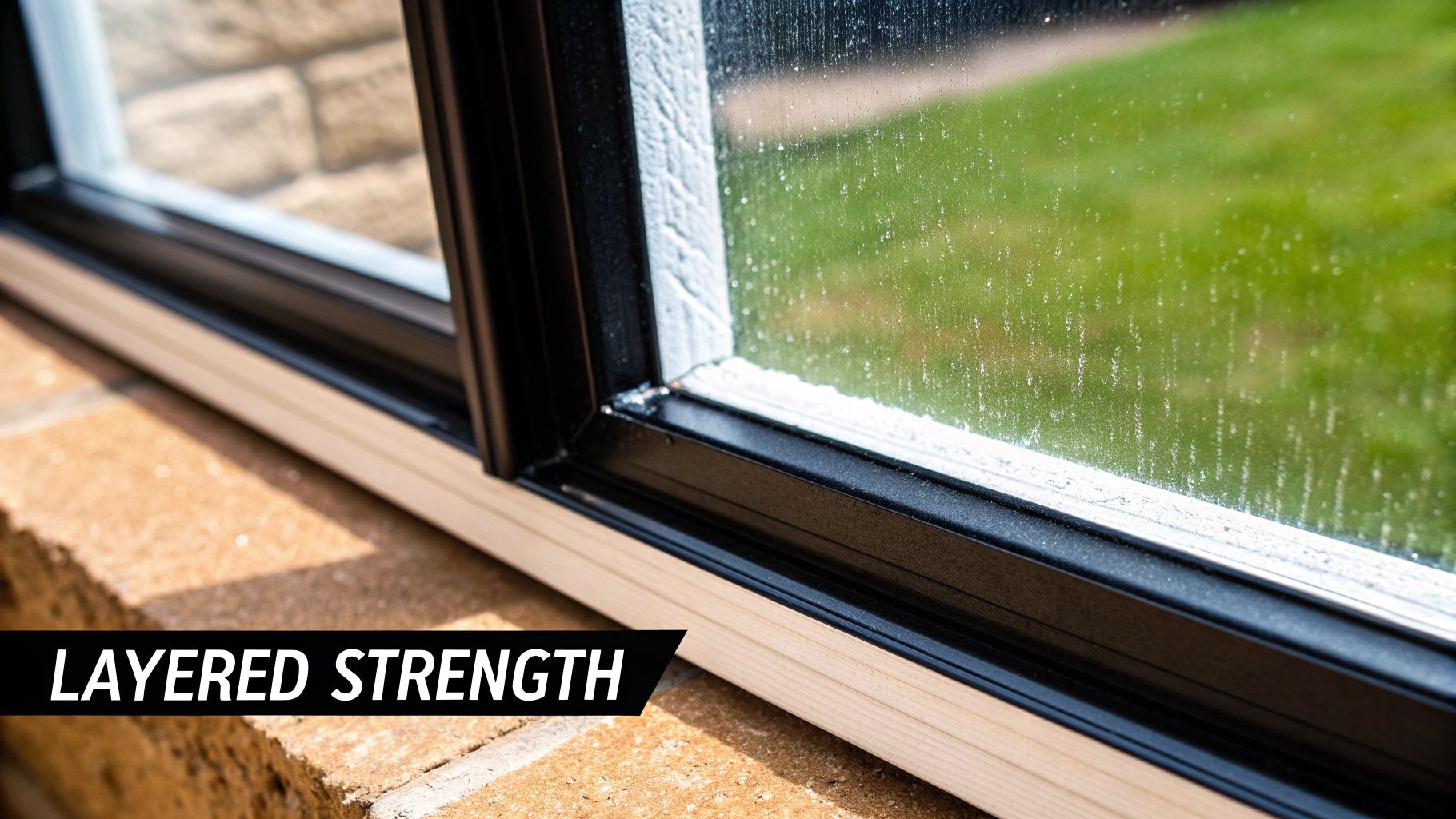
At its core, you have a polyester base that provides incredible tensile strength and flexibility. Think of this as the film's backbone. Fused to this is a powerful, high-bond adhesive designed to create a molecular-level grip on the glass, which is what prevents it from shattering outwards upon impact.
Topping it all off is a tough, scratch-resistant coating that protects the film itself from the daily grind—think cleaning, wind-blown debris, and general wear and tear. When these layers work in concert, they absorb and disperse the energy from an impact, holding the dangerous shards of glass together even when the window itself breaks.
In essence, this process turns a standard pane of glass into a robust safety barrier. When a would-be intruder or a flying object strikes the window, the glass might crack, but it won't explode. Instead, the film holds the broken pieces firmly in place, creating a "spiderweb" pattern that continues to act as a shield.
How Each Layer Contributes
Let's break down how this teamwork happens.
The polyester foundation is the muscle. It’s not just a single sheet; it's a micro-layered mesh that can stretch and absorb a tremendous amount of force without tearing. This is what gives the film its brute strength.
Then you have the adhesive. This isn't your everyday glue. It's engineered with high-shear molecular bonds that cling tenaciously to the glass, remaining effective through intense humidity, big temperature swings, and the blunt force of an attempted break-in.
Finally, that scratch-coating often contains nano-ceramic particles to keep your view crystal clear. It’s a transparent shield that fends off the minor abrasions that could otherwise degrade the film over time.
Key Insight
Each layer is just microns thick, but together they deliver a powerful combination of properties, from UV rejection and solar heat control to incredible shatter resistance.
It's also worth noting that polymer chemistry has come a long way. Modern films are a world apart from older, acrylic-based products that were prone to yellowing and bubbling.
Today’s advanced polymers offer:
- Enhanced tensile strength to handle more significant impacts.
- Superior optical clarity that you'll barely notice is there.
- Increased UV stability to prevent fading and sun bleaching.
This evolution is why modern residential security window film performs so reliably for years, even in the harsh Southern California sun.
Putting Key Properties into Perspective
So, what does this technology actually deliver in real-world terms?
- UV Rejection: Blocks up to 99% of harmful UV rays, protecting your skin, furniture, and flooring from sun damage.
- Shatter Control: Can withstand impacts of up to 5,000 psi, holding glass shards together and denying quick entry.
- Clarity Retention: Maintains over 85% transparency for years, so you don't have to sacrifice your view for safety.
Imagine a home on the coast that gets battered by the occasional hailstorm. A professionally installed film system can deflect those hailstones or, if one is large enough to crack the glass, contain the break completely. The film acts almost like a trampoline, absorbing and dispersing the impact energy across its surface instead of letting it concentrate on a single point.
This growing awareness of what film can do is fueling major market growth. The security window film market was valued at around USD $1.5 billion in 2025 and is projected to hit nearly USD $2.8 billion by 2033, growing at a 7% CAGR. It’s clear that homeowners and businesses are taking security more seriously. You can read more about these market growth insights on Data Insights Market.
In the next section, we’ll dive into how to match different film grades to specific threats, from smash-and-grabs to natural disasters.
Future Material Innovations
The technology isn't standing still. The next generation of films will incorporate nano-reinforced polymers and even self-healing topcoats to extend their lifespan and boost performance.
Early lab tests are showing these new materials can provide up to a 20% increase in impact absorption with virtually zero optical distortion. For homeowners, this means even stronger, clearer, and longer-lasting protection is just around the corner.
Film Types And Performance Ratings
When you start looking into residential security window film, you’ll quickly realize it’s not a one-size-fits-all product. The level of protection varies dramatically, from lightweight films designed to catch flying debris in a storm to high-end ballistic grades that meet rigorous NIJ 0108.01 standards. Each grade offers a different balance of thickness, clarity, and cost.
A good way to think about it is like choosing personal protective gear. A basic 4 mil film is like a bicycle helmet—great for protecting against everyday bumps and scrapes, or in this case, windborne debris. Stepping up to a 7 mil mid-grade film is more like wearing a soft Kevlar vest, designed to resist determined attacks with hand tools. At the top end, the 12–14 mil ballistic options are the full-on tactical vest, engineered to stop serious threats.
To really compare apples to apples, here are the key metrics you’ll see:
- Thickness Range: Films typically run from 4 mil to 14 mil. The thicker the film, the more impact it can handle.
- Impact Resistance: This is often measured in pounds per square inch (psi). A higher number means the film can absorb more force before it gives way.
- UV Block Percentage: Most quality security films block over 90% of harmful UV rays, which is a fantastic side benefit for preventing glare and sun-fading on your floors and furniture.
- Glare Reduction Scores: This tells you how much visible light is filtered out, improving comfort inside your home without making it feel like a cave.
Matching Grades To Threat Levels
For most homeowners, the main concerns are storm protection, accidental impacts (think stray baseballs), or deterring a casual smash-and-grab. In these cases, a light-duty 4–6 mil film is usually more than enough. It’s an affordable and effective first line of defense.
If you’re looking for more serious forced-entry resistance, you’ll want to consider a mid-grade film in the 7–10 mil range. These are tough enough to stand up to repeated strikes from a hammer or a pry bar, buying you precious time for alarms to sound and law enforcement to arrive.
For properties in high-risk areas or for homeowners who want the absolute best in protection, the 12–14 mil ballistic-grade films are the way to go. These are engineered to meet strict NIJ 0108.01 standards for ballistic resistance and provide an incredible barrier against determined attackers.
Key Takeaway
The right film grade acts like layers of armor for your home. You can scale the protection from a simple "helmet" to a full "tactical vest" based on your specific security needs.
The demand for this kind of protection is growing. Recent industry analysis shows the global window film market was valued at approximately USD 12.45 billion in 2024 and is expected to climb to USD 18.65 billion by 2033. You can read more about these market growth findings on IMARC Group.
Industry Standard Benchmarks
When a film claims to be "ballistic-rated," what does that actually mean? It means it has been tested against established industry benchmarks. The image below shows the official NIJ standards, which are the gold standard for testing bullet-resistant materials.
This table breaks down the different threat levels and the specific tests a material must pass to earn a certain rating. It's a clear, data-driven way to know exactly what kind of performance you're getting.
Here are the key standards you’ll encounter:
- UL 972: This standard specifically covers resistance to forced entry, testing how well a material holds up against tools like hammers and chisels.
- ANSI Z97.1: This benchmark deals with safety glazing and how materials behave upon human impact, ensuring they break safely without creating dangerous shards.
- NIJ 0108.01: This is the big one for top-tier security. It outlines the testing protocols for ballistic resistance against various types of small arms fire.
Comparison Of Security Film Types And Ratings
To make sense of all these numbers, it helps to see them side-by-side. This table breaks down the common film grades and their typical performance ratings to help you find the right fit for your home.
| Film Type | Thickness (mil) | NIJ Rating | Impact Resistance | UV Rejection |
|---|---|---|---|---|
| Light-Duty | 4–6 | None | Moderate | 90–95% |
| Mid-Grade | 7–10 | UL 972 | High | 95–98% |
| Ballistic-Grade | 12–14 | NIJ III | Very High | 98–99% |
As you can see, moving up in thickness provides a significant jump in impact resistance and often comes with enhanced UV protection as a bonus.
Balancing Clarity And Protection
One of the biggest concerns homeowners have is whether security film will ruin their view or make their home look like a fortress from the outside. That’s a valid worry, but modern films are incredible. Most high-quality products maintain over 85% optical clarity, so you’ll barely notice it's there.
Still, there are a couple of aesthetic factors to consider:
- Tint Level: Do you want a perfectly clear film, or would you prefer a slight tint to help reduce glare? It’s a personal preference that affects how much visible light comes through.
- Reflectivity: Some films have a slightly reflective or mirror-like finish, which can be great for daytime privacy but might not match every home’s architectural style.
Thinking through these points will help you find that perfect balance between robust security and the look and feel you want for your home.
Choosing The Right Film Grade
So, how do you pick the right one? It really comes down to a careful assessment of your property’s unique situation, your local environment, and your personal preferences. A quick site survey from a certified Fortress Security Films technician is the best way to get a clear recommendation that fits your threat profile and your budget.
Next, we’ll dive into what you can expect during the installation process, from timelines to cost and the long-term return on your investment.
Benefits Compared To Other Window Solutions
When you're looking to secure your home's windows, you've got a few choices. But honestly, residential security window film brings a unique mix of invisible strength and daily convenience that really sets it apart. Sure, things like metal grilles or storm shutters are tough, but they come with some serious downsides—they kill your view, block out natural light, and can really change the look of your home for the worse.
Security window film is different. Think of it as an invisible suit of armor for your glass. It strengthens your windows without you even knowing it's there, so the look and feel of your home stay exactly the same. Unlike bulky bars that can make a house feel like a prison, a professionally installed film is practically undetectable. Your home still looks open and welcoming, but it’s packing a serious defensive punch.
Aesthetics, Performance, And Cost Trade-Offs
Choosing the right window security really comes down to balancing three big factors. This is where security film truly shines.
-
Aesthetics: If you care about your home’s curb appeal, film is the hands-down winner. It doesn't give you that "caged-in" feeling you get from bars, and you don't have to deal with the daily hassle of opening and closing shutters.
-
Performance: A steel grille might be technically stronger, but security film is a fantastic deterrent. It buys you precious time by delaying intruders, which is often more than enough to make them give up and move on. Plus, it pulls double-duty by offering 99% UV protection and holding shattered glass together during an accident or storm—benefits you just don't get from mechanical barriers.
-
Cost: Let's talk money. Replacing all your windows with laminated safety glass or installing custom shutters can get incredibly expensive, fast. Security film delivers a very similar level of protection and peace of mind for a fraction of the price, making it a much more accessible investment for most homeowners.
It's also worth thinking about how film works with other simple security measures. For instance, things like window restrictors are great for limiting how far a window can open, but they do nothing to stop the glass from being broken. Film adds that critical layer of shatter resistance that other devices simply can't provide.
Key Insight: Residential security window film delivers a powerful combination of delayed entry, UV protection, and enhanced safety without sacrificing your home’s natural light or visual appeal, making it a uniquely versatile solution.
The infographic below gives a great visual breakdown of the different grades of security film, from basic safety films to high-performance ballistic options for ultimate protection.
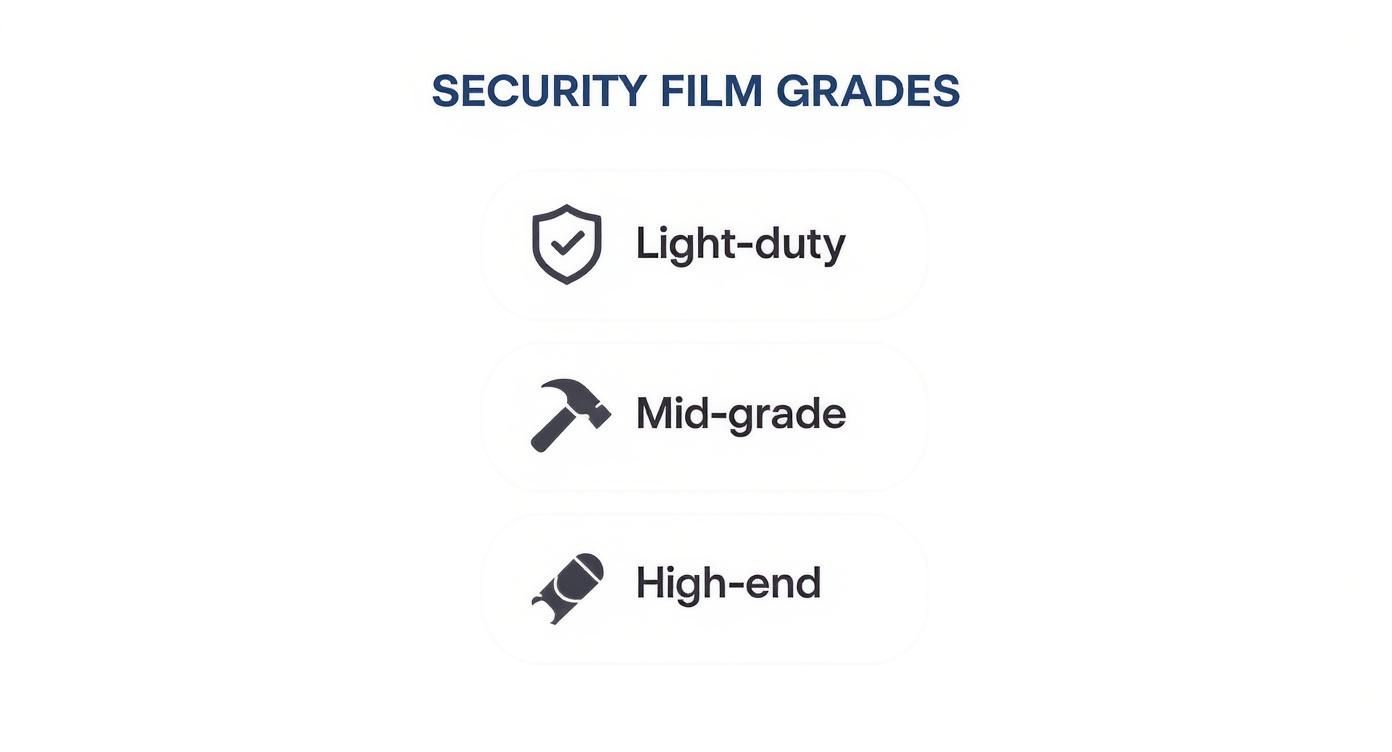
As you can see, you can really dial in the exact level of protection you need based on your specific concerns and budget.
The Clear Advantage In The Market
More and more, homeowners are leaning towards security solutions that are effective but don't scream for attention. It's no surprise that in the wider window film market, North America held a massive 45.8% market share back in 2022, with a huge chunk of that demand coming from security applications.
People are catching on to how film reinforces one of the most vulnerable points of their home—the glass—without making it look like a fortress. This shift is all about smarter, more integrated security that works with your home's design, not against it.
Planning Installation And Calculating Costs
If you’re ready to fortify your home with residential security window film, laying out the process and budget in advance can save time and headaches. It’s like planning a road trip: you want clear checkpoints—from the initial survey to the final inspection—so nothing catches you off guard. With a solid roadmap in hand, the project flows smoothly and stays on budget.
The first step is a professional site survey. A certified technician from Fortress Security Films will walk every room, inspect frame conditions, identify glass types (tempered, laminated, annealed), and flag areas that see the most foot traffic or potential impact. They’ll talk through your security goals, discuss optional solar control or decorative finishes, and note any historic window requirements if you’re in a preserved property.
Armed with those insights, the crew drafts a detailed project plan and provides an accurate quote. That estimate will list each window by size, film grade, labor hours, and any extra materials—like edge sealant or specialized primers. You’ll know exactly what goes in, and what you’re paying for, before the work begins.
When it’s time to install, every detail matters. Technicians use industry-grade cleaners and lint-free wipes to remove microscopic debris. Then they mix a precise application solution so the film slides easily into place without trapping air or dust. This isn’t a quick spray-and-stick job; it’s a carefully choreographed series of steps that yield a strong, lasting bond.
Expert installers trim edges by hand, seal seams, and double-check thermal tolerances for high-heat zones like sunrooms. Their goal is a flawless finish that performs for years.
A Look At The Installation Timeline
How long will it take? The answer depends on variables like home size, window complexity, and weather conditions. A single-story ranch with standard double-hung windows often wraps up in a single day. A multi-level house with arched, frosted, or hard-to-reach panes may stretch over several days.
-
Glass Preparation
Technicians spend 15–30 minutes per pane meticulously cleaning with a pH-neutral solution. A debris-free surface is non-negotiable for a bubble- and wrinkle-free application. -
Film Cutting and Application
Each section of film is custom-cut to match the exact dimensions of your glass. Using a special slip solution, installers position the film, then squeegee out water and air pockets. -
Edge Seaming and Detailing
After the main application, they trim the edges to sit flush with the frame. This step uses precision blades and sealants to keep edges from lifting over time. -
Curing Process
Once the film is in place, it needs several days to bond fully. Humidity and temperature affect drying time—Southern California’s dry heat can speed up curing, while cooler coastal areas might take a week or more.
Important Note:
During the curing phase, you might see a slight haze or cloudy patches on the glass. That’s totally normal. It clears up as the moisture evaporates, revealing a clean, reinforced window.
Calculating Your Investment And Return
Most residential security film installations fall between $8 and $25 per square foot, all in. The two biggest cost drivers are film thickness and performance rating. A simple 4 mil film for basic safety checks in at the lower end, while a 14 mil NIJ/ballistic-grade option sits near the top.
Labor rates reflect the skill needed to handle specialty films, work around unique window shapes, and comply with local building codes. Remote locations or tight timeframes can also nudge costs upward.
When you compare that upfront price to the long-term benefits, security film starts to look like more than an expense:
-
Energy Savings
Many security films include solar control properties. You can cut cooling costs by up to 30% during sizzling summer months, thanks to reduced solar heat gain. -
Avoided Costs
Stopping a break-in or accidental window break spares you from paying to replace shattered glass, filing insurance claims, or recovering stolen valuables. -
UV Protection for Furnishings
Blocking up to 99% of harmful UV rays preserves hardwood floors, artwork, and fabrics—saving you on expensive restoration or replacement down the road. -
Insurance Premium Discounts
Some insurers offer reduced rates when you install certified security film, reflecting the lower risk of theft or impact damage.
Think of security window film as a modular home upgrade rather than a sunk cost. It slots neatly into your schedule and can often be added to an existing renovation project.
Many homeowners see a full return on investment within 3–5 years, thanks to lower energy bills, fewer repair expenses, and potential insurance savings. After that point, you’re essentially enjoying free benefit years—ongoing security, comfort, and value.
Ready to see how security film fits your home? Contact Fortress Security Films for a no-obligation assessment and quote.
Taking Care of Your Investment: Maintenance, Warranties, and Local Factors
So, you've had your security window film professionally installed. Now what? The great news is that keeping it in top condition is surprisingly simple. Think of it less like a high-maintenance sports car and more like a high-quality appliance—it’s built to do its job for years with just a little common-sense care.
All it really takes is cleaning it the right way. Grab a soft cloth or a rubber squeegee and use a gentle cleaning solution, like a few drops of mild dish soap in some water. Steer clear of anything with ammonia, like many popular glass cleaners. Those harsh chemicals can slowly eat away at the film's protective topcoat and adhesive.
How to Clean Your Film Without Wrecking It
The number one thing that causes issues with window film isn't a product defect—it's usually just an accident during cleaning. Aggressive scrubbing or using a razor blade near the edge can easily cause the film to lift or peel, which ruins the seamless, protective seal.
To keep your film looking and performing like new for decades, just follow these simple rules:
- Give It Time to Set: The most important rule? Don't touch it for 30 days after installation. The film needs that time for the mounting solution to fully evaporate and for the adhesive to form a permanent bond with the glass.
- Be Gentle: Always use soft materials. A microfiber cloth is perfect. A clean synthetic sponge or a good rubber squeegee works great, too. Avoid paper towels, as they can be surprisingly abrasive and leave lint behind.
- Wipe Smart: Use a gentle, smooth motion. When you get to the edges, it’s best to wipe from the center of the window out toward the frame. This helps prevent you from accidentally catching an edge and causing it to lift.
While quality security films are incredibly tough, it's still smart to give them a quick look every now and then. If you ever spot bubbling, peeling, or delamination (which is when the layers of the film start to separate), call your installer right away. These problems are rare but are almost always covered by your warranty.
Expert Tip: Nearly all film "failures" come down to either improper cleaning or physical damage. Using the right tools and being a little mindful is the single best thing you can do to protect your investment and keep your warranty valid.
What Your Warranty Actually Covers
A professional installer like Fortress Security Films will always provide you with a solid manufacturer’s warranty. For residential projects, these typically run anywhere from 10 to 15 years, and some of the premium products even come with a lifetime warranty for as long as you own your home.
It’s always worth taking a few minutes to read the warranty documents to know exactly what’s covered. Most will protect you against manufacturing defects like:
- Bubbling, peeling, or cracking
- The film changing color or turning purple
- Adhesive failure and delamination
What isn't covered is usually damage you cause yourself, like scratches from abrasive cleaning, or problems with the window frame itself. Just be sure to file away your invoice and warranty paperwork in a safe place in case you ever need to make a claim.
Special Considerations for Your Area
Where you live matters. Here in Southern California, our homes face some unique environmental pressures that make certain types of film a much smarter choice.
- The Southern California Sun: In sunny communities from Arcadia to Palos Verdes, a film with 99% UV rejection is a must-have. Not only does it stop your furniture, floors, and art from fading, but it also protects the film itself from breaking down over time from constant sun exposure.
- Retrofitting Older and Historic Homes: Working with older homes requires a delicate touch. Before installing film on a historic property, a good technician will carefully inspect the condition of the glass and the window frames to make sure they can handle the installation without any risk of damage.
- Local Building Codes: Some areas, especially those in earthquake or high-wind zones, have specific codes for window safety. An experienced local installer will know these regulations inside and out and can guide you to a film that meets or exceeds them.
Answering Your Top Questions
Even after learning the basics, most people have a few more practical questions about how residential security window film fits into their daily lives. We get it. Here are the answers to the questions we hear most often from homeowners just like you.
How Long Does Security Film Last On Residential Windows?
Think of high-quality, professionally installed security film as a long-term upgrade for your home. You can realistically expect it to last and perform well for 10 to 15 years, sometimes even longer.
The key to its longevity is simple, proper care. Sticking to gentle, non-ammonia cleaners and giving the edges a quick check once a year for any peeling will keep it in top shape, ensuring it's ready to protect your home for a decade or more.
Will The Film Make My Rooms Darker Or My Views Blurry?
This is probably the number one concern we hear, and the answer is a resounding no. Today's advanced security films are engineered to be virtually invisible. Most top-tier films boast over 85% transparency, so you genuinely won't even know it's there.
The technology is pretty amazing. You get incredible shatter resistance that strengthens your glass, all while letting the beautiful natural light pour in. The film also filters out damaging UV rays and cuts down on annoying glare without compromising the crystal-clear views from your windows.
Can I Just Install This Myself?
While you might see DIY kits on the market, installing security film is a job best left to the pros. It's a meticulous process, and a certified installer has the tools and experience to get a perfect, bubble-free application every time.
Here's why it matters: A professional ensures the film adheres perfectly and seals the edges just right. This is absolutely critical for the film to work as intended during an impact and, just as importantly, it’s required to keep your manufacturer's warranty intact.
How Do I Know Which Film Is Right For My Home?
The right film really depends on your specific needs and where you live. A good starting point is to consider your local environment. Are break-ins a concern in your neighborhood? Do you live in an area prone to high winds or severe storms?
The best way forward is to have a security film expert take a look. They can perform a proper risk assessment and recommend a solution that truly matches your home’s vulnerabilities and gives you the right level of protection.
Ready to see how Fortress Security Films can reinforce your home's most vulnerable entry points? Request a complimentary security assessment and personalized quote today!
