


An impact-resistant sliding glass door is more than just a beautiful entryway; it's a sophisticated security system designed to handle serious force. Whether it's from hurricane-force winds, flying debris, or an attempted break-in, these doors are engineered so their reinforced glass and frame stay put, adding a serious layer of protection to your home.
The Hidden Strength of Your Sliding Glass Door
Sliding glass doors are a fantastic feature. They connect our living spaces to the outdoors, fill rooms with natural light, and offer sweeping views. But let's be honest, that big pane of glass can also feel like a major weak point. It’s a common worry for homeowners—is that beautiful door an easy target during a storm or for a burglar?
Thankfully, that narrative is changing. Modern materials and engineering are turning these potential vulnerabilities into impressive security features.
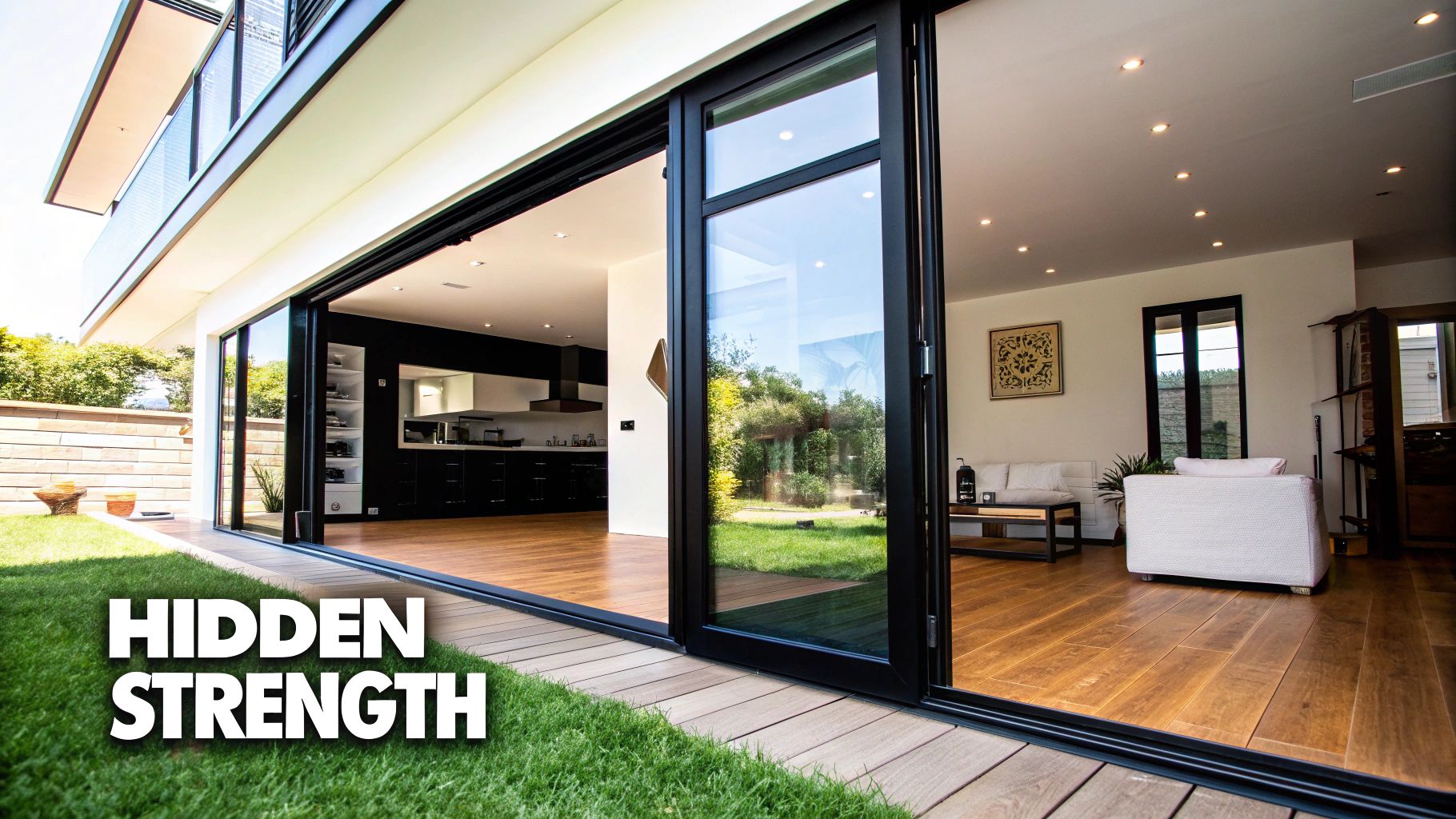
The whole point of an impact-resistant sliding glass door is to be deceptively strong. It’s built for resilience, not just for looks. This guide will break down exactly how these doors get their strength and help you figure out the best way to secure your own home.
Why Standard Doors Just Don't Cut It
Your typical sliding door likely has single-pane or basic tempered glass. This offers very little resistance to a direct hit. A thrown rock, a piece of debris in a storm, or a swift kick from an intruder can shatter it in seconds.
Even the locks on standard doors are often a weak link, easily forced with basic tools. This leaves your home and family exposed. Impact-resistant solutions are designed to tackle these weak points directly, turning an easy entry point into a formidable barrier.
Two Main Paths to Stronger Glass Doors
Boosting your door's security doesn't always mean tearing everything out and starting from scratch. Homeowners generally have two great options, each with its own pros and cons.
- Full Door Replacement: This is the comprehensive approach. You install a brand-new, factory-built impact-resistant sliding glass door. These are complete systems—the reinforced frame, advanced locks, and specialized laminated glass are all designed to work together seamlessly for maximum protection.
- Security Film Retrofitting: A more budget-friendly and less messy option is to apply a high-performance security film to your existing glass. This tough, clear film bonds to the pane and acts like a net, holding the glass together even if it shatters. This dramatically slows down anyone trying to force their way in.
The demand for these solutions is skyrocketing. The global market for impact-resistant glass is on track to hit USD 44.04 billion by 2030, which shows just how seriously people are taking this kind of protection. You can read more in this detailed industry report.
Choosing between a full replacement and a retrofit is a big decision. For more help, our guide on how to secure glass doors offers some great insights to help you weigh your options.
How Impact-Resistant Glass Actually Works
To really get why impact-resistant sliding glass doors are so tough, you first have to picture how normal glass breaks. Think of a standard pane of glass like a single, thin sheet of ice. One sharp hit, and the whole thing shatters into big, dangerous daggers. There's no give, no second line of defense—the force just blasts right through it.
Impact-resistant systems are a whole different ballgame. Instead of that one fragile sheet, they’re built more like a frozen lake with multiple layers. If a heavy object cracks the surface, the tough layers underneath absorb the shock and hold the whole structure together. You might get a crack, but you don't get a hole.
The real goal isn't to make the glass "unbreakable," because anything will break with enough force. The secret is making it "unbreachable." It's designed to take a beating, stay put in its frame, and keep whatever's outside from getting in.
The Power of the Glass Sandwich: Laminated Glass
The most common technology you'll find in impact-resistant doors is lamination. The easiest way to think about it is like a sandwich: two pieces of glass are the "bread," and a super-strong, clear polymer is the "filling."
This "sandwich" is made of:
- An outer pane of glass.
- A tough, flexible interlayer—usually polyvinyl butyral (PVB) or SentryGlas Plus (SGP).
- An inner pane of glass.
These layers are bonded with intense heat and pressure until they become one solid panel. When something hits the door, the outer glass might crack, but that sticky, elastic interlayer grabs onto all the broken pieces like a high-tech safety net. It absorbs the energy from the impact and stops the glass from flying everywhere. This is why a burglar with a crowbar will only create a spiderweb of cracks instead of an open invitation into your home.
Hardened by Fire: Tempered Glass
Another major player here is tempered glass. While it’s often combined with lamination for maximum effect, it gets its strength from a totally different method. Picture a blacksmith forging a sword—it's a similar idea. The glass is heated to over 1,000°F and then blasted with cold air to cool it down instantly.
This rapid cooling, known as quenching, makes the outside surfaces of the glass harden much faster than the inside. This creates a state of constant tension, with a super-compressed outer layer and a tense inner core. The result? Tempered glass is about four to five times stronger than regular glass of the same thickness.
The biggest safety feature of tempered glass is how it breaks. Instead of creating dangerous shards, it shatters into thousands of small, dull, pebble-like pieces, which dramatically reduces the chance of serious injury.
But here’s the thing: on its own, tempered glass isn’t a security solution. Once it breaks, it’s gone, leaving a wide-open hole. That’s why the best impact-resistant systems are a hybrid, pairing the brute strength of tempered glass with the shatter-proof grip of a laminated interlayer. You get the best of both worlds.
The Retrofit Solution: Security Window Film
So, what if you already have perfectly good sliding doors and don't want to rip them out? That’s where security window film comes in. It’s a fantastic retrofit option that brings the same principles of lamination to your existing glass.
This isn't the flimsy decorative film you might be thinking of. Security film is a thick, multi-layered polyester sheet that’s bonded directly to the inside of your glass by a professional. Once it cures, it creates a powerful, invisible shield.
If an intruder tries to smash the window, the glass itself will still break. But the film will hold every last piece together in the frame, maintaining a solid barrier. This buys you critical time and denies them the quick entry they were counting on. It’s a clever way to upgrade a standard door into a high-performance security panel without the cost and mess of a full replacement.
New Doors vs. Security Film: What Is the Right Choice?
When it comes to securing your home's biggest glass entry point, you’ve got a major decision on your hands. Should you go all-in and invest in a complete, factory-built impact-resistant sliding glass door? Or is it smarter to upgrade your existing door with a high-performance security film?
Both options get you to a safer place, but they take very different roads to get there. One is a complete system replacement, while the other is a powerful, less disruptive upgrade. Let's dig into the details to help you figure out which path makes the most sense for you.
The All-In-One Solution: A Full Door Replacement
Choosing a brand-new impact-resistant sliding glass door means you're buying a fully engineered system. The glass, the frame, the locks—everything is designed and tested to work in harmony as a single, tough-as-nails unit. This integrated approach is its greatest strength.
These doors are literally built from the ground up to take a beating.
- Integrated Strength: The frames are usually made of heavy-duty aluminum or reinforced steel, designed specifically to prevent bending or breaking under serious force.
- Advanced Glazing: They arrive with multi-layered laminated or hybrid glass already installed, meeting strict certifications for impact resistance right out of the box.
- Superior Locking: Multi-point locking systems are pretty much standard. They bolt the door shut at the top, middle, and bottom, making them worlds stronger than a simple latch.
But, this all-in-one perfection comes with a price. The upfront cost is significantly higher, often several times what you'd pay for a film retrofit. The installation is also a much bigger deal—it can be a multi-day project that involves construction and disrupts your daily life. For bigger projects, especially in shared buildings, bringing in professional condo remodeling services is a good idea to navigate the structural complexities.
The Strategic Upgrade: Retrofitting with Security Film
For anyone who's generally happy with their current sliding doors but craves a serious security upgrade, retrofitting with security film is a fantastic option. Think of it like adding a flexible suit of armor to your existing glass. This advanced, multi-layer film is professionally applied to the inside surface of the glass, creating an invisible but powerful shield.
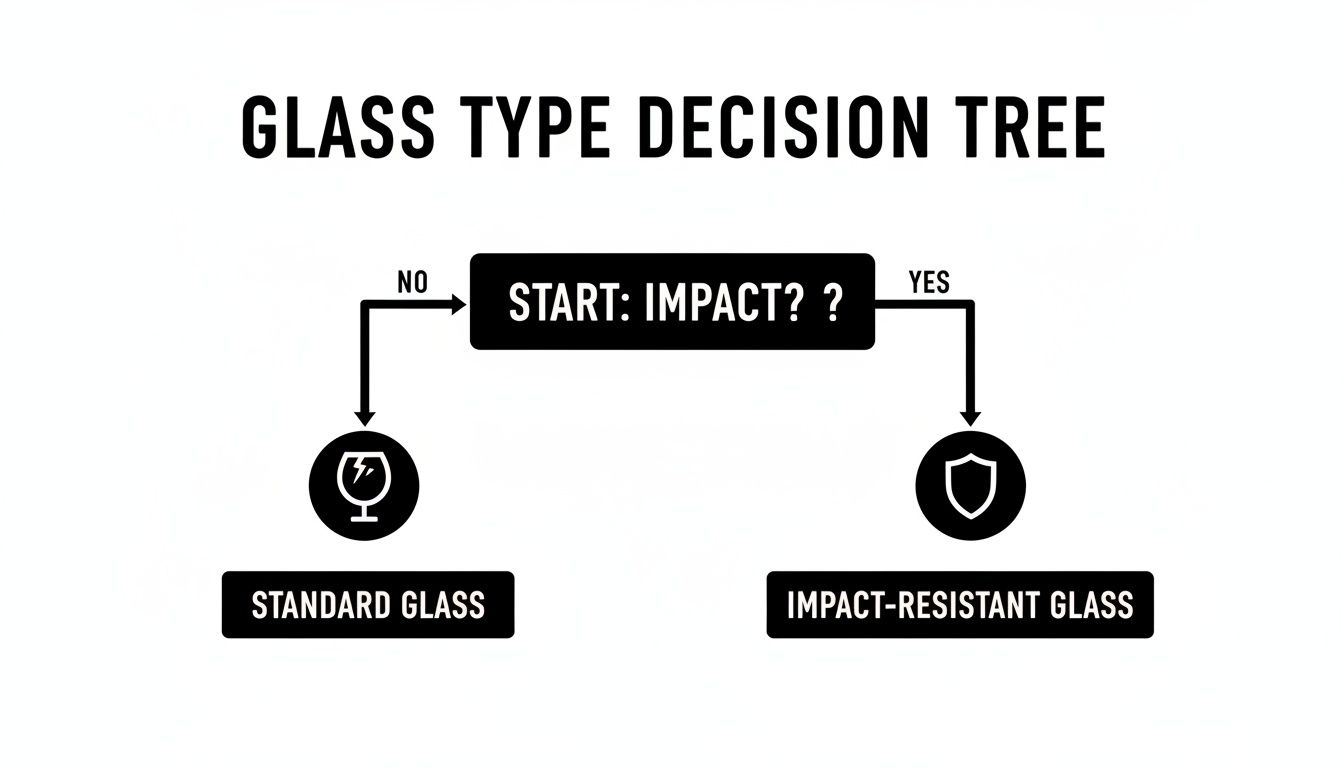
The real magic of security film is its ability to hold shattered glass together. If an intruder—or a piece of storm debris—manages to break the glass, the film keeps all the pieces interlocked and stuck in the frame. This denies entry and, just as importantly, prevents a rain of dangerous glass shards from flying into your home. You can get a much better sense of how it turns regular glass into a protective barrier by exploring the details of applying security film for glass doors.
The core function of security film is delay. By holding the glass in place, it frustrates and deters intruders who rely on a quick, quiet entry. That delay provides crucial time to react and for alarms to sound.
This approach has some pretty compelling advantages. The cost is a fraction of a full replacement, putting top-tier security within reach for more homeowners. Installation is also incredibly quick and clean. A pro can usually finish a standard sliding door in a few hours with absolutely no mess.
Making Your Decision: A Side-by-Side Look
So, how do you choose? It really comes down to your budget, your existing door's condition, and your tolerance for disruption. A full replacement offers a certified, integrated system, while security film provides a formidable and cost-effective upgrade to what you already have.
To make it easier, let's compare them directly.
Full Replacement vs Security Film: A Practical Comparison
| Factor | New Impact Resistant Door | Security Film Retrofit (e.g., Fortress Security Films) |
|---|---|---|
| Upfront Cost | High (Thousands of dollars) | Low to Moderate (Significantly less than a new door) |
| Performance | Excellent (Engineered as a complete system) | Excellent (Dramatically increases shatter resistance) |
| Installation | Invasive (Requires construction, takes 1-3 days) | Non-Invasive (Applied to existing glass, takes a few hours) |
| Frame & Locks | New & Reinforced (Integrated multi-point locking) | No Change (Relies on the strength of your existing hardware) |
| Aesthetics | New Style (Opportunity to update your home’s look) | Preserved (Optically clear film is virtually invisible) |
| Best For… | New construction, major renovations, or replacing old, failing doors. | Upgrading structurally sound doors in good condition for enhanced security. |
In the end, whether you choose a new door or a film retrofit, you're making a smart move to protect your home. Weighing these factors against your own situation will point you to the right solution for your peace of mind.
Understanding Impact Ratings and Certifications
It’s easy to see the words "impact-resistant" on a label and assume you’re getting serious protection. But in the world of security, that label is just the start. The real proof is in the paperwork—the rigorous, standardized tests a product has to pass before it ever reaches your home.
Think of these certifications as a door’s resume. They tell you exactly what kind of threats it has been tested against and how it performed. Knowing what these ratings mean helps you cut through the marketing fluff and understand the true strength of what you're buying. They're the language of safety, and they guarantee an impact-resistant sliding glass door will hold up when you need it most.
The Gold Standard for Hurricane Resistance
When it comes to hurricanes, one set of tests is legendary for its brutality: the Miami-Dade County protocols. Born from the devastation of Hurricane Andrew, these standards are now the benchmark for storm readiness across the country. If a product can pass these, it can handle just about anything nature throws at it.
Here’s a look at what it takes to earn this top-tier certification:
- TAS 201 Large Missile Impact Test: This is the main event. A 9-pound 2×4 wooden stud is fired from an air cannon directly at the glass at 50 feet per second (roughly 34 mph). The glass can crack, but it can't shatter in a way that leaves a gaping hole.
- TAS 202 Structural Test: After taking that direct hit, the entire door assembly is put through its paces. It's subjected to thousands of cycles of intense inward and outward pressure, mimicking the punishing, fluctuating winds of a real hurricane.
- TAS 203 Cyclic Wind Pressure Loading: Finally, the battered door is tested to make sure it's still weathertight. This check for water and air leaks ensures your home’s interior stays protected from the storm, even after the initial impact.
A door that survives this gauntlet is certified for use in High-Velocity Hurricane Zones (HVHZ), the most vulnerable coastal areas.
Broader Standards for Debris and Safety
While the Miami-Dade tests are the peak of hurricane-proofing, other essential standards set the baseline for safety in different regions. The most common come from ASTM International, a globally recognized standards organization.
You'll often see references to ASTM E1886 and ASTM E1996. These are the foundational standards for any exterior window or door system designed to resist windborne debris. They lay out the specific procedures, missile types, and impact speeds for different wind zones.
Essentially, the ASTM standards are the rulebook that tests like the Miami-Dade protocols follow. They create a consistent, reliable benchmark for product testing nationwide. When you see these codes, you know the product has been scientifically evaluated against a widely accepted standard for storm safety.
Beyond Weather: Burglary Resistance Ratings
A tough-as-nails impact door does more than just stop storms—it's also a formidable barrier against break-ins. While storm ratings are critical, you should also look for certifications that specifically address forced entry. The key standard here comes from Underwriters Laboratories (UL).
The most important rating to look for is UL 972, the Standard for Burglary Resisting Glazing Material. This test isn't about wind; it's about simulating a real-world burglary attempt.
A lab technician attacks the glass with various tools and impacts. In one part of the test, a 5-pound steel ball is dropped multiple times from a height of 10 feet to see if it can penetrate the glass. A product that earns a UL 972 rating has proven it can frustrate and delay intruders, buying you valuable time and often convincing them to give up entirely.
When you’re shopping around, don’t hesitate to ask for the testing documents. Any reputable manufacturer will be proud to show you what their doors have achieved. This paperwork is your best assurance that you’re investing in proven, reliable protection.
The Financial Case for Impact Resistant Doors
When you look at the price tag for an impact resistant sliding glass door, it's easy to see it as a major expense. But that's missing the bigger picture. A better way to think about it is as a strategic investment—one that pays you back in very real, tangible ways over the long haul.
The real value isn't just in the tougher glass and sturdier frame. It’s in what that protection saves you down the road. So, instead of asking, "How much does this cost?" the smarter question is, "What does this save me?" From lower insurance premiums to avoiding the nightmarish cost of storm damage or a break-in, this is about investing in proactive defense, not just paying for reactive repairs.

Unpacking the Initial Investment
Let's be clear: there's an upfront cost. A full replacement with a brand-new, certified impact door system is the premium option. It's a complete structural upgrade, and the price reflects the heavy-duty reinforced frames, multi-point locking systems, and advanced laminated glass.
On the other hand, retrofitting your existing door with a professional security film installation is a much more accessible route. It’s still a premium upgrade, but the cost is significantly lower because you're reinforcing the door you already have. The final price tag will depend on factors like the size of the glass and the thickness of the film you choose. To get a better handle on the numbers, a detailed guide on security window film cost can offer specific breakdowns to help with your budget.
The Multifaceted Return on Investment
The real financial story starts the moment the installation is complete. An impact-resistant upgrade begins paying for itself in several key ways—some immediate, others providing invaluable long-term security.
- Significant Insurance Premium Discounts: This is one of the quickest wins. Many insurance carriers offer hefty discounts—sometimes as much as 45%—on homeowner policies for properties with certified impact protection. Why? Because they know it dramatically lowers their risk of paying out huge claims for storm damage or burglaries.
- Preventing Catastrophic Repair Costs: The cost to rebuild after a hurricane blows through or to replace stolen valuables after a break-in can be financially crippling. A single prevented incident can easily pay for the entire security upgrade, often many times over.
- Deterring Costly Break-Ins: Burglars are all about finding the path of least resistance. An impact-resistant door or security film is a powerful deterrent. The sheer noise and effort needed to get through it robs them of the quick, silent entry they rely on, usually convincing them to just move on.
By transforming a vulnerable glass door into a hardened barrier, you are actively reducing your property's risk profile. This not only protects your assets but also makes your home a less attractive target for opportunistic criminals.
Added Perks with Financial Benefits
Beyond the primary goals of storm protection and security, these upgrades often come with some fantastic financial bonuses. High-performance security films, for instance, are often engineered with powerful UV-blocking capabilities.
This invisible shield can block up to 99% of the sun's damaging ultraviolet rays. That doesn't just protect your skin; it stops the sun from fading your expensive hardwood floors, furniture, rugs, and artwork. By preserving the life and color of your interior furnishings, you sidestep thousands of dollars in premature replacement costs over the years. It's just one more layer of value added to your initial investment.
Common Questions About Impact-Resistant Doors
Thinking about a major security upgrade like an impact-resistant sliding glass door? It’s a big decision, and you probably have a few questions. This isn't just another weekend project; it's an investment in your family's safety, your home's value, and your own peace of mind.
To help you get the lay of the land, we’ve put together straightforward answers to the most common questions we hear from homeowners and property managers. From how long it takes to how it looks, here's what you need to know.
How Long Does It Take to Install Security Film?
One of the biggest perks of going with a security film retrofit is just how fast and clean the whole process is. A full door replacement can mean days of dust and disruption, but a professional film application is surprisingly quick.
For a typical residential sliding glass door, a certified technician can usually wrap up the job in about 2 to 4 hours. The work is precise—it involves deep cleaning the glass, carefully applying the film, and squeegeeing it perfectly to get a seamless, bubble-free bond. It’s a low-mess, low-stress process, and you can use your door again almost right away after a short curing period.
Will an Impact-Resistant Film Make My Glass Door Bulletproof?
This is a really important distinction to make. High-performance security films are designed to be bullet-resistant, but that is not the same as bulletproof. The two terms mean very different things.
Security film is engineered to deny or significantly delay a forced entry. It’s made to absorb and spread out the energy from blunt force—think hammers, crowbars, or flying debris in a hurricane—by holding shattered glass together in its frame.
True protection against firearms requires a specialized, multi-layered ballistic system, which is a much thicker and more complex product. For most homeowners, the real goal is to stop break-ins and withstand storm damage, and that’s where standard security film truly shines. If you have specific ballistic concerns, you'll need to talk to a security expert to get the right certified product for that threat level.
Does Security Film Change the Look of My Glass Door?
You’d be surprised. One of the best things about today’s security films is their incredible optical clarity. When a pro puts it on, high-quality film is virtually invisible. It’s specifically engineered to be crystal clear, with no distortion, cloudiness, or hazy effects.
Your view to the backyard stays just as sharp, and all that beautiful natural light still streams in. This lets you add a serious layer of protection that doesn't mess with your home's style. The film won’t yellow or peel, so your door will look exactly as it did before—it’ll just be exponentially stronger. And if you're thinking about other upgrades, there are plenty of best window treatments for sliding glass doors that can complement the new, secure view.
Can I Install Impact-Resistant Window Film Myself?
You might see DIY window film kits at the hardware store, but those are almost always for decorative or solar-control purposes, not security. Getting the flawless, edge-to-edge bond that’s necessary for real impact resistance is a skill that takes special tools, proper training, and a lot of practice.
Honestly, this is a job for the pros. Here’s why:
- A Perfect Application: Professionals know how to work cleanly, keeping dust, hair, and tiny particles from getting trapped under the film. A single speck can compromise the bond.
- Proper Curing and Adhesion: An expert knows exactly how to prep the glass and apply the film so it bonds completely, creating that tough, shatter-resistant membrane you’re paying for.
- Warranty Protection: This is the big one. Almost every manufacturer’s warranty is void without professional installation. This guarantees your investment is protected and that the film will perform as advertised when you need it most.
Trying to do it yourself often leads to bubbles, peeling edges, and a weaker bond, which pretty much defeats the whole purpose of getting security film in the first place.
Ready to transform your home’s most vulnerable entry point into its strongest defense? The experts at Fortress Security Films provide professional security film installations that offer powerful, invisible protection for your peace of mind. Contact us today for a free security assessment.
