


Impact resistant glass is a highly specialized safety product, but it's not complicated to understand what it does: it’s engineered to take a punch. Whether that punch comes from a hurricane-force gust of wind, flying debris, or an intruder trying to break in, this glass is designed to hold strong.
Unlike the standard glass in most windows that explodes into a spiderweb of dangerous, razor-sharp shards, impact resistant glass has a multi-layered construction that keeps the pane intact even when it breaks. This creates a critical barrier, turning a weak point into a line of defense and dramatically boosting a property's security and safety. It's a fundamental upgrade for any modern building.
Rethinking Window Security and Safety
We tend to think of windows as just openings for light and air, but in reality, they're the most vulnerable spots in any building. A standard window is like a cheap lock on your front door—it might deter an opportunist, but it won't stop a determined threat.
Upgrading to impact resistant glass is like swapping that flimsy lock for a full-fledged security system. It fundamentally transforms a weak point into a fortified barrier.
This shift in thinking is essential for anyone serious about protecting their home or business. The demand for stronger, more resilient glass has skyrocketed, driven by a dual threat: rising concerns over break-ins and the undeniable reality of more extreme weather events. The market numbers tell the story. The global market was recently valued at USD 31.1 billion, with the U.S. market alone making up USD 7.5 billion. You can dig into the trends in this detailed report from marketmindsadvisory.com.
At the heart of this protective technology are a few key innovations:
-
Laminated Glass: Think of this as a "safety sandwich." It's made by bonding a tough polymer interlayer between two panes of glass. If the glass breaks, that sticky inner layer grabs onto all the fragments, holding the pane together and preventing anyone or anything from getting through.
-
Tempered Glass: This glass gets its strength from a special process of extreme heating and rapid cooling. The result is a pane that's about four times stronger than regular glass. When it does break, it crumbles into small, dull, pebble-like pieces instead of sharp shards, which significantly reduces the risk of injury.
-
Security Window Films: These are micro-layered polyester films applied directly to the surface of your existing glass. They work by absorbing the shock of an impact and holding the shattered glass firmly in place, providing a powerful retrofit solution that can delay intruders for critical minutes and contain the mess.
By reinforcing the most fragile entry points, impact resistant glass and security films provide more than just physical protection. They offer peace of mind, an invisible shield that buys you precious time in an emergency.
While tough glass is a game-changer, it's just one piece of a complete home defense plan. To see how it fits into the bigger picture, exploring comprehensive home security strategies can give you a much broader understanding. Now, let's dive deeper into how these technologies actually work, the standards they have to meet, and how you can choose the best option to protect what matters most.
How Impact Resistant Technologies Work
To really get a feel for what makes impact-resistant glass so effective, you have to look past the surface. We're not just talking about thicker or stronger glass; we're talking about materials engineered from the ground up to handle extreme force. Standard annealed glass—the kind in most older windows—shatters on impact. These advanced solutions, however, are designed to absorb and redirect that energy in very specific ways.
Think of it less like a simple pane of glass and more like a complete security system built into your window. The real genius is in how each type is constructed and, more importantly, how it reacts when put under serious stress. Let's pull back the curtain on the three main players: laminated glass, tempered glass, and security window film.
The Safety Sandwich: Laminated Glass
Laminated glass is the classic example of impact resistance, and for good reason. The best way to picture it is as a "safety sandwich." It's a surprisingly perfect analogy. We start with two or more layers of regular glass and bond a tough, clear polymer interlayer—usually polyvinyl butyral (PVB)—between them using intense heat and pressure. The result is a single, fused pane that looks like normal glass but behaves completely differently.
When something hits laminated glass, the outer layer might crack, but that’s where the story changes. The PVB interlayer is incredibly strong and flexible; it soaks up the impact's energy and tenaciously holds onto all the broken shards.
That inner layer acts like a tough, invisible net, catching the fragments and keeping the window's structure intact. This is what stops a burglar's hammer or a storm-flung projectile from creating a gaping hole.
It’s this design that gives laminated glass its incredible staying power. It doesn’t just block the first hit; it manages the damage to keep the barrier sealed and secure.
This is the core idea behind upgrading from a standard, vulnerable window to a truly fortified one.
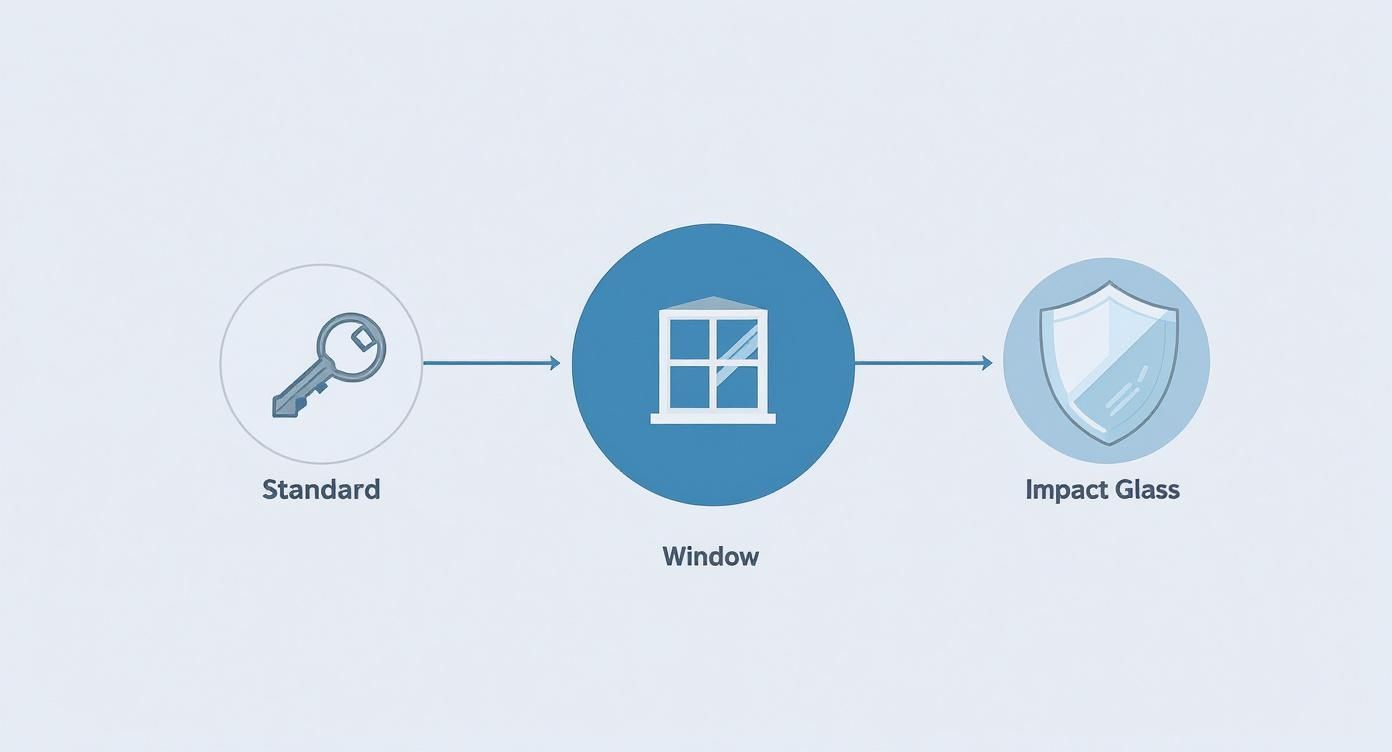
As you can see, adding an impact-resistant layer transforms a window from a weak point into a real asset for your security.
The Inner Strength of Tempered Glass
Tempered glass gets its muscle from a totally different, more dramatic process: extreme heat treatment. A sheet of standard glass is heated to over 1,100 degrees Fahrenheit and then hit with jets of high-pressure cold air in a process called "quenching." This rapid cooling forces the outer surfaces to solidify almost instantly while the inside remains molten.
As that molten core slowly cools and shrinks, it pulls inward on the now-rigid outer layers. This creates a fascinating dynamic: the surface is locked in a state of high compression, while the center is in a state of tension.
This constant internal stress is what makes tempered glass so tough—about four to five times stronger than ordinary glass. That compressed surface is like a suit of armor, making it highly resistant to blunt force and sudden temperature changes.
But its real safety feature is revealed when it finally breaks. All that stored energy is released at once, causing the entire pane to disintegrate into thousands of small, pebble-like, relatively harmless pieces. This "dicing" prevents the dangerous, jagged shards you get from standard glass, making it a true safety glass.
The Flexible Defense of Security Window Films
For those not looking to replace their windows entirely, security window films offer a fantastic retrofit solution. These aren't your average decorative films; they are incredibly tough sheets made of micro-thin layers of high-tensile polyester, all bonded together with powerful adhesives. A professional installer applies the film directly to the interior surface of your existing glass.
When an impact occurs, the film works in two critical ways:
- Shock Absorption: The pliable polyester material flexes and absorbs a huge amount of the impact's energy, spreading it out across the entire window.
- Fragment Retention: If the glass cracks, the film's aggressive adhesive grips every last piece, keeping the window together and preventing a breach.
For maximum effectiveness, the film should be paired with an attachment system. These systems anchor the film to the window frame itself, which stops an attacker from simply pushing the entire broken pane—film and all—out of the opening. This transforms your window into a durable, flexible shield that can delay intruders for minutes and contain the mess from an accidental impact. At Fortress Security Films, we specialize in these integrated systems to ensure your windows provide the highest level of protection possible.
Comparing Impact Resistant Glass Technologies
Each of these technologies offers a unique approach to strengthening your glass. To make it easier to see which might be right for you, here’s a quick side-by-side comparison.
| Technology | How It Works | Failure Mode | Best For | Retrofit Option? |
|---|---|---|---|---|
| Laminated Glass | A tough polymer interlayer (PVB) is sandwiched between two layers of glass. | Cracks but stays in place, held together by the interlayer. Maintains a barrier. | Forced entry prevention, hurricane zones, blast mitigation, sound reduction. | No |
| Tempered Glass | Glass is rapidly heated and cooled, creating high surface compression. | Shatters into thousands of small, dull, pebble-like pieces. | Safety applications where human impact is likely (showers, doors, tables). | No |
| Security Window Film | A multi-layered polyester film is applied to existing glass with strong adhesive. | Glass breaks, but fragments are held together by the film. Barrier remains intact. | Upgrading existing windows for security, safety, and smash-and-grab deterrence. | Yes |
As the table shows, there's no single "best" solution—it all depends on your specific goals. Laminated glass offers the highest level of breach prevention, tempered glass excels at preventing injury from breakage, and security film provides a powerful and versatile upgrade for existing windows.
Decoding Protection Levels and Standards
When you hear "impact resistant glass," it's easy to picture a single, unbreakable product. The reality is that this term covers a whole spectrum of strengths, and the only way to know what you’re really getting is to look at the certifications.
These standards aren't just bureaucratic fluff. They're a language that translates a window's real-world performance into a grade you can trust. It’s the difference between hoping your glass holds up and knowing it’s been tested against the very threats you're worried about. Let’s break down the codes that matter.
Foundational Safety Glazing Codes
At the most basic level, we have standards designed to prevent accidental injury. Think of a kid tripping and falling into a sliding glass door. These codes aren't about stopping a burglar; they're about making sure that when glass breaks, it doesn't create a life-threatening hazard.
The main standard you'll see here is ANSI Z97.1. It's the benchmark for tempered and laminated glass used in places like doors, stairwell railings, and poolside windows.
- What it tests: It mimics a human stumbling into the glass, checking that the pane either withstands the blow or breaks in a predictable, safer way (like crumbling into small pieces).
- Why it matters: This is the baseline. A product with this certification won't shatter into dangerous, razor-sharp shards, which is the bare minimum for any glass labeled as "safety."
Consider ANSI Z97.1 the entry ticket. It confirms protection against everyday accidents, but it says nothing about forced entry or extreme weather.
Simulating an Attack: Forced Entry Standards
When your main goal is stopping a break-in, you need glass that’s been tested against deliberate, focused force. This is where forced-entry standards, specifically ASTM F1233, come into play. They simulate the tools and brute force a burglar would actually use.
This isn’t just a simple impact test. It's a grueling process that assigns different class levels based on how long a window can hold up against a sustained attack using everything from blunt objects to sharp tools.
Crucially, ASTM F1233 doesn't just test the glass itself. It tests the entire system—the glass, the security film, and the frame—to see how long it can delay a determined intruder. That delay is everything. It buys you time to react and for police to respond.
A window that passes a high level of this standard has proven it can do more than just stop a rock. It can withstand a prolonged assault, which is a critical feature for homes in high-net-worth areas like Beverly Hills or for retailers trying to put an end to smash-and-grab robberies.
Hurricane and High-Wind Protocols
For properties that face severe weather—and yes, that includes the powerful Santa Ana winds in Southern California—the most demanding certifications come out of Miami-Dade County. Born from the sheer devastation of Hurricane Andrew, these protocols are the undisputed gold standard for impact resistance against storms.
The Miami-Dade tests are nothing short of brutal:
-
TAS 201 Large Missile Impact: First, they fire a 9-pound 2×4 lumber stud at the window at roughly 34 miles per hour. This simulates the kind of heavy, wind-borne debris a hurricane can throw at a building. The glass has to absorb the hit and stay in its frame.
-
TAS 203 Cyclic Wind Pressure: Next, the already broken window is hammered with 9,000 cycles of intense positive and negative pressure. This mimics the relentless push-and-pull forces of hurricane winds that can suck a compromised window right out of the wall.
-
TAS 202 Uniform Static Air Pressure: This final test verifies the structural integrity of the entire window unit, making sure it can handle the enormous pressure differentials a major storm creates.
If a product has passed these tests, it has proven it can be the last line of defense when nature is at its most destructive. By matching the certification to your specific threat—whether it’s an accident, a break-in, or a storm—you ensure the protection you’re paying for is the protection you actually get.
Where Security Glass Makes a Real-World Difference
The technical specs are one thing, but the real test of security glass is how it performs in the real world. This isn't just some lab-tested theory; it's a practical shield that’s already protecting homes, businesses, and public buildings every single day. From stopping a burglar in their tracks to standing up to Mother Nature, its uses are as diverse as the threats we all face.
Of course, every situation is different. A luxury home in Beverly Hills doesn't have the same vulnerabilities as a downtown retail shop or a local elementary school. The trick is to match the right type of security glass to the specific risk, turning a building’s weakest link—its windows—into a genuine source of strength.
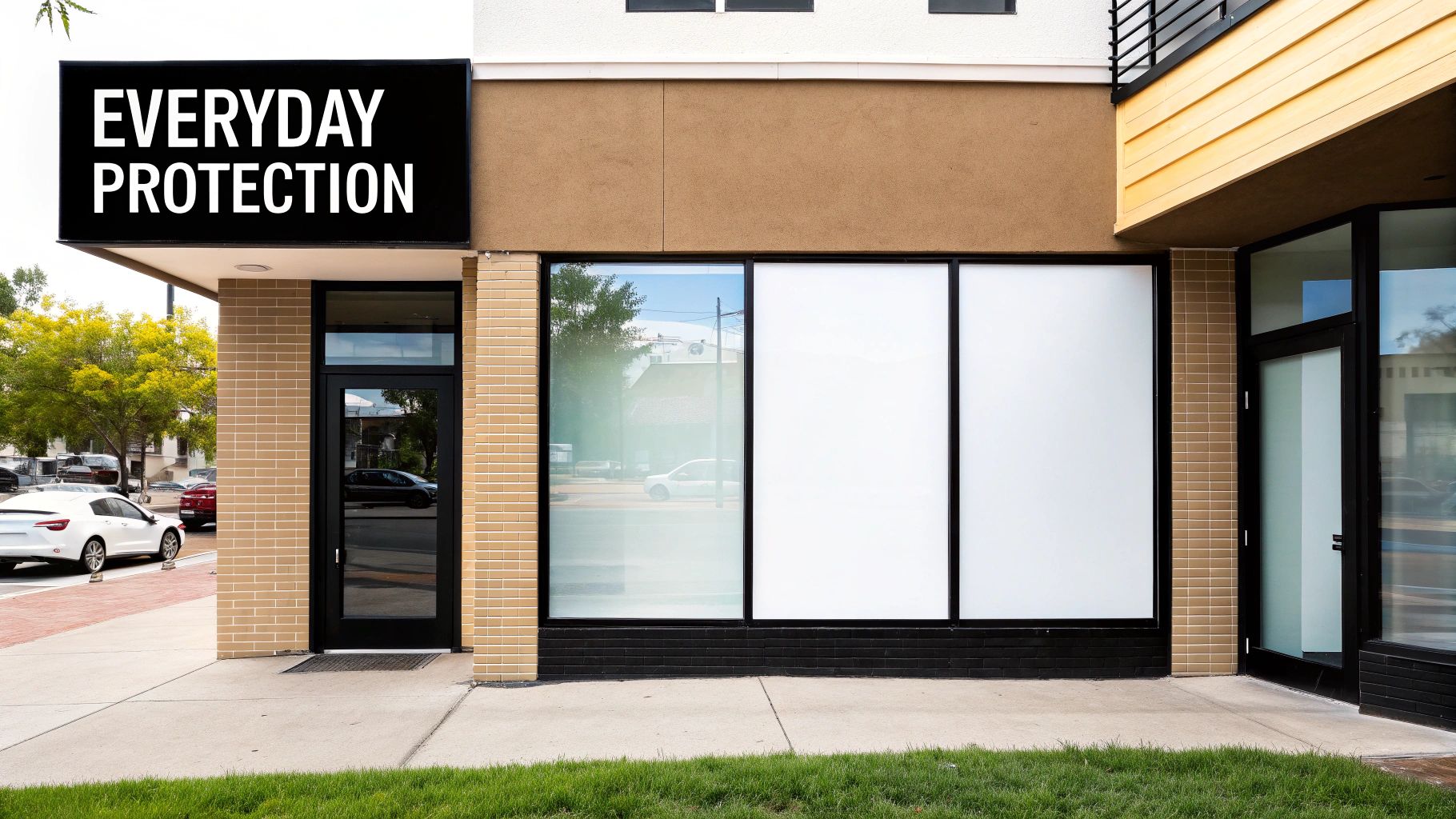
Defending High-End Homes
For anyone living in a high-net-worth property, security goes way beyond a simple alarm. Burglars know that windows are often the fastest and quietest way in. A standard pane of glass can be smashed in a heartbeat, giving them instant access to your home.
Impact-resistant glass flips the script. A window fortified with laminated glass or a tough security film isn't going to yield to a hammer, a crowbar, or a rock. Instead of shattering and falling away, it holds together, creating a loud, frustrating, and time-consuming barrier. Most intruders will simply give up and move on. It’s that active resistance that serves as such a powerful deterrent.
And here in Southern California, we have another constant worry: earthquakes. When the ground starts shaking, flying shards from broken windows can cause horrific injuries and leave a home dangerously exposed. Impact-resistant solutions keep the glass safely contained in the frame, protecting everyone inside.
Securing Retail and Commercial Spaces
Smash-and-grab robberies have become a massive problem for retailers. A single incident can wipe out thousands of dollars in merchandise and cause extensive damage, all in the blink of an eye. These crimes depend entirely on speed—break the glass, grab the goods, and be gone in less than a minute.
This is exactly where impact-resistant glass proves its worth as a frontline defense.
- It Delays Entry: By refusing to shatter, the glass denies thieves the quick entry they’re counting on. That delay is almost always enough to send them running.
- It Protects Your Inventory: The fortified barrier keeps high-value merchandise safely behind the display window, even after it's been hit repeatedly.
- It Minimizes Disruption: Even if the glass is cracked, it stays in one piece. This means no emergency board-ups and no need to shut down while you wait for a repair.
By transforming a vulnerable storefront into a hardened barrier, impact resistant glass acts as both a physical and psychological deterrent, signaling to potential thieves that this target is not worth the risk.
The big push for stronger building materials really took off after disasters like Hurricane Andrew in the 1990s showed just how fragile standard construction was. This led to the widespread adoption of impact-resistant glass, with laminated glass now making up about 45% of all product sales. The construction sector, focused on building more resilient government facilities, hospitals, and commercial properties, now leads the market with over 50% of the share. You can learn more about these market trends in the full research from Mordor Intelligence.
Protecting Schools and Public Buildings
When it comes to schools, government offices, and other public spaces, the number one priority is controlling access and buying time in an emergency. Windows and glass doors are almost always the most vulnerable entry points for any active threat.
Impact-resistant glass and security films create a critical access-delay barrier. While they aren't typically rated to be "bulletproof," they are designed to withstand repeated, heavy blows. That forced delay is often the difference between life and death. It gives people inside precious minutes to get to safety and allows first responders the crucial time they need to arrive and neutralize the threat. It's an absolutely essential layer of protection for keeping our communities safe.
Choosing the Right Protective Solution
Picking the right impact-resistant glass solution is a big decision, and it should feel that way. You’re not just buying a window; you're investing in a critical part of your property's defense system. To get it right, you have to move past the generic idea of "stronger glass" and really dig into your specific risks, needs, and goals.
It all starts with a clear-eyed look at the threats you face. Are you a homeowner in a high-net-worth area like Palos Verdes, worried about sophisticated break-in attempts? Maybe you're a retailer trying to stop those costly smash-and-grab robberies that are over in seconds. Each scenario points to a different solution.
By figuring out your primary risks first, you can immediately start narrowing down the options and make sure whatever you choose is perfectly matched to the threats you actually face.
Conducting a Personal Threat Assessment
Before you even look at a single product, take a moment to evaluate your unique situation. This simple exercise brings a ton of clarity and helps you prioritize what really matters for your property.
Ask yourself a few key questions:
- What's my biggest security worry? Is it a burglar forcing their way in, severe weather like the Santa Ana winds, or maybe just reducing the risk of injury if a window accidentally breaks?
- What's my budget for this? Am I ready to do a full window replacement, or am I looking for a more cost-effective way to upgrade the windows I already have?
- How much do aesthetics matter? Is it absolutely crucial that the solution is invisible and doesn't change the look of my home or storefront?
Answering these questions honestly gives you a practical framework. For example, if your main concern is storm damage and you have the budget, then full-on hurricane-rated laminated glass might be the perfect fit. But if your goal is to deter break-ins without changing your home's curb appeal, you’ll probably want to go a different route.
Full Replacement vs. Retrofit Upgrades
When it's time to act, you generally have two paths: completely replacing your windows with new impact-resistant units or retrofitting your existing glass with a high-performance security film. Both are incredibly effective, but they serve different needs and come with very different price tags.
A full window replacement means ripping out your old windows and installing brand-new units with impact-resistant glass built right into heavy-duty frames. It’s a comprehensive approach, but it’s also the most expensive and disruptive.
On the other hand, retrofitting with security film is a powerful alternative. This involves applying a micro-layered, tear-resistant polyester film to the inside of your current windows. You get comparable shatter resistance and forced-entry delay for a fraction of the cost, and you avoid a major construction project.
For many property owners, security film hits that sweet spot between performance, cost, and convenience. It’s a serious security upgrade that strengthens the windows you already own, preserving your property's architectural look while making it significantly harder to breach.
The Critical Role of Professional Installation
It doesn't matter which solution you pick—its effectiveness comes down to one thing: the quality of the installation. Even the most advanced impact-resistant glass is useless if it’s not properly secured in its frame. An attacker could just push the entire broken pane out of the opening, completely defeating the purpose of the upgrade.
This is why professional installation is not optional; it’s essential. At Fortress Security Films, our certified technicians don't just stick film on glass. They integrate it into the window system itself using specialized attachment systems that anchor the film and the glass securely to the window frame.
This anchoring process turns the window, film, and frame into one unified, resilient barrier. It ensures that even if the glass shatters, the entire pane stays locked in place, maintaining a formidable shield that continues to delay intruders. This complete system approach is what turns a regular window into a genuine security asset.
Maintaining Your Protective Investment
Once your impact-resistant glass or security film is installed, it needs a little bit of care to ensure it performs for the long haul. Proper maintenance protects your investment and keeps your windows looking crystal clear for years.
Just follow these simple guidelines:
- Let It Cure: Don’t clean the film for about 30 days after installation. This gives the adhesive time to fully cure and bond to the glass.
- Use Gentle Cleaners: A soft cloth or a squeegee with simple soapy water or a standard glass cleaner is all you need.
- Avoid Abrasives: Never use things like scrub pads, bristle brushes, or ammonia-based cleaners. They can scratch or damage the film’s protective surface.
With just a little bit of proper care, your professionally installed security film will provide reliable, invisible protection for decades, giving you continuous peace of mind.
Got Questions About Impact Resistant Glass? We've Got Answers.
When you start looking into upgrading your windows for better security, a lot of practical questions pop up. It’s one thing to understand the tech, but another to figure out how it applies to your property, your budget, and your aesthetic. Let's tackle some of the most common questions head-on so you can make a smart, confident decision.
Is Impact Resistant Glass the Same Thing as Bulletproof Glass?
This is easily the most common question we hear, and the answer is a hard no. They are fundamentally different products designed to stop completely different threats.
Think of it this way: a professional hockey goalie's mask is designed to stop a frozen puck flying at 100 mph. A soldier's helmet is designed to stop shrapnel or a bullet. You wouldn't use one for the other's job, right? Same principle.
Impact resistant glass is engineered to withstand repeated blunt-force trauma—think hammers, crowbars, flying debris in a storm. Its primary job is to hold together, stay in the frame, and keep someone (or something) from getting through.
Bullet-resistant glass, on the other hand, is a much thicker, heavier, and more complex assembly of layered materials. It’s specifically tested and rated to stop projectiles from firearms under strict National Institute of Justice (NIJ) standards. While a top-tier security film makes your window incredibly tough, it absolutely does not make it bulletproof.
What’s the Real Cost of Impact Resistant Glass?
There's no single price tag here; the investment really depends on which route you take. The cost can range from a modest upgrade to a significant capital expense.
- Full Window Replacement: This is the top-of-the-line option, involving brand new laminated glass windows with heavy-duty frames. You can expect to pay anywhere from 50% to 100% more than you would for standard, non-impact windows.
- Tempered Glass: On its own, tempered glass is a solid safety upgrade from basic annealed glass, but it's more about preventing injury from sharp shards than stopping an intruder. It's a moderate cost increase.
- Retrofit Security Film: For most people, this is the sweet spot. Applying a professional-grade security film to your existing windows gives you phenomenal shatter resistance and forced-entry delay for a fraction of what a full replacement would cost. It's a powerful and accessible security boost.
Of course, the final price will always hinge on the size and number of windows you're treating, how easy they are to access for installation, and the specific performance level you need.
Can You Put Security Film on Any Kind of Window?
Pretty much. High-quality security films are incredibly versatile and can be professionally installed on most common glass types—single-pane, double-pane (insulated), and even tempered glass.
The real key to a successful installation is a professional assessment. An expert needs to check the condition of your glass and, just as importantly, your window frames to ensure they're up to the task. For true forced-entry protection, the film must be installed with an attachment or anchoring system.
This system is what mechanically bonds the filmed glass to the window frame, creating one solid, unified barrier. Without it, an intruder could smash the glass and just push the whole sheet—film and all—right out of the opening. The attachment system is non-negotiable for serious security.
Will This Stuff Make My Windows Look Weird?
Not at all. One of the best things about modern security glass and films is that they deliver incredible protection without messing with your view or your property's curb appeal.
Both laminated glass and premium security films are engineered to be optically crystal-clear. Once they're professionally installed, you won't even know they're there. You get a formidable barrier against intruders without any distortion, tinting (unless you want it), or changes to the look of your home or storefront.
In fact, these products often add an extra layer of value. Solutions like ours at Fortress Security Films block over 99% of damaging UV rays. This helps prevent your furniture, hardwood floors, artwork, and merchandise from fading, protecting your investments on the inside while securing the building from the outside.
Ready to turn your property's weakest points into a serious line of defense? The experts at Fortress Security Films provide professional consultations to help you find the perfect, optically clear security solution for your home or business. Secure your windows without sacrificing your view by visiting us at https://fortresssecurityfilms.com.
