


Impact resistant glass doors are engineered to take a serious hit without falling apart. They’re built to withstand the force of flying debris during a storm or even a determined intruder, and while they might crack under extreme pressure, they won't shatter and leave a gaping hole. The best way to think about it is like your car's windshield—it's designed with a tough, clear interlayer sandwiched between panes of glass to prevent a total blowout and keep the elements (and unwanted guests) outside.
Demystifying Impact Resistant Glass Doors
When people hear "impact resistant," they often imagine something completely unbreakable. That's not quite how it works. These doors aren't indestructible; they’re incredibly resilient. The entire point is to maintain your home's protective envelope, even after taking a direct impact.
The real magic is in the layered construction. A typical impact-resistant glass door is a sandwich: two panes of glass bonded to a tough, transparent interlayer. This middle layer, usually made from Polyvinyl Butyral (PVB) or SentryGlas Plus (SGP), is the unsung hero of the system.
When something hits the door hard, the outer layer of glass might crack, but that strong interlayer absorbs the shock and holds all the broken pieces firmly in place. This is what stops dangerous shards from flying into your home and prevents wind, rain, or an intruder from getting through. It's this “crack but hold” capability that makes all the difference.
More Than Just Storm Protection
While these doors are a must-have in hurricane zones, their benefits go way beyond severe weather. They offer a potent mix of safety, security, and everyday comfort, making them a smart upgrade for any home, anywhere. The growing demand for these durable products is undeniable. The impact-resistant glass market was recently valued at around USD 32.68 billion and is expected to climb to USD 44.04 billion, growing at a rate of 6.15% annually. This surge shows just how much homeowners and builders are prioritizing resilience. You can read the full research about this expanding market and its key drivers.
Let's take a quick look at the main advantages that come with installing impact-resistant glass doors.
| Benefit | Description |
|---|---|
| Enhanced Security | The same tough interlayer that stops storm debris also creates a powerful barrier against forced entry, making it extremely difficult for intruders to break through. |
| Noise Reduction | The multi-layer construction is a fantastic sound insulator, significantly dampening outside noise from traffic, neighbors, or airports for a more peaceful home. |
| UV Ray Filtration | The interlayer blocks over 99% of harmful UV rays, protecting your furniture, flooring, and artwork from fading and sun damage over the years. |
As you can see, the benefits are layered, just like the glass itself.
A great way to visualize this is to think of an impact resistant door like a high-end screen protector on your smartphone. If you drop your phone, the protector might crack, but your expensive screen underneath stays safe and functional. The door operates on the exact same principle—it sacrifices its outer layer to protect everything inside.
Ultimately, choosing impact-resistant glass doors is about investing in total protection. They don't just defend against the obvious threat of a storm; they also guard against the silent threats of UV damage, constant noise, and potential break-ins, giving you peace of mind all year round.
The Science Behind a Stronger Door
The incredible strength of an impact-resistant glass door isn't just about using thicker glass. It’s the result of a cleverly engineered system, where every single component works together to create a powerful shield for your home.
The real magic happens in the glass itself. It’s a sophisticated sandwich made of specialized glass panes bonded to a tough, plastic-like inner layer. This combination is what provides a formidable barrier against impacts.
Think of it like reinforced concrete. Concrete on its own is strong, but it can be brittle and crack under pressure. But when you add steel rebar into the mix, it becomes exponentially stronger, able to absorb and distribute immense force without completely failing. In our door, the glass acts as the rigid surface, while that inner layer is the flexible "rebar" that holds everything together.
This technology is why the market for impact-resistant windows and doors is booming. Currently valued at around $8 billion, it's on track to grow by 7% each year, potentially reaching nearly $14 billion. This surge is fueled by a growing need for better security and reliable protection from severe weather. You can dive deeper into these market findings to see what's driving the industry forward.
The Critical Interlayer Showdown
The secret weapon in impact-resistant glass is that inner layer, known as the interlayer. Two materials really dominate the market here: Polyvinyl Butyral (PVB) and SentryGlas Plus (SGP). They both do the job, but they offer very different levels of performance.
PVB is the classic choice. It's been used for decades in everything from car windshields to standard security glass. It’s flexible and sticky, which is great for ensuring that if the glass does crack, the dangerous shards stay bonded to the interlayer instead of flying everywhere.
SGP, on the other hand, is the new powerhouse. It's a next-generation ionoplast interlayer that is up to 100 times stiffer and five times stronger than its PVB counterpart. This incredible rigidity means it can handle much higher wind loads and keeps the opening sealed even after a major impact, offering superior protection when it matters most.
This infographic breaks down the key performance differences between PVB and SGP, showing why one might be chosen over the other.
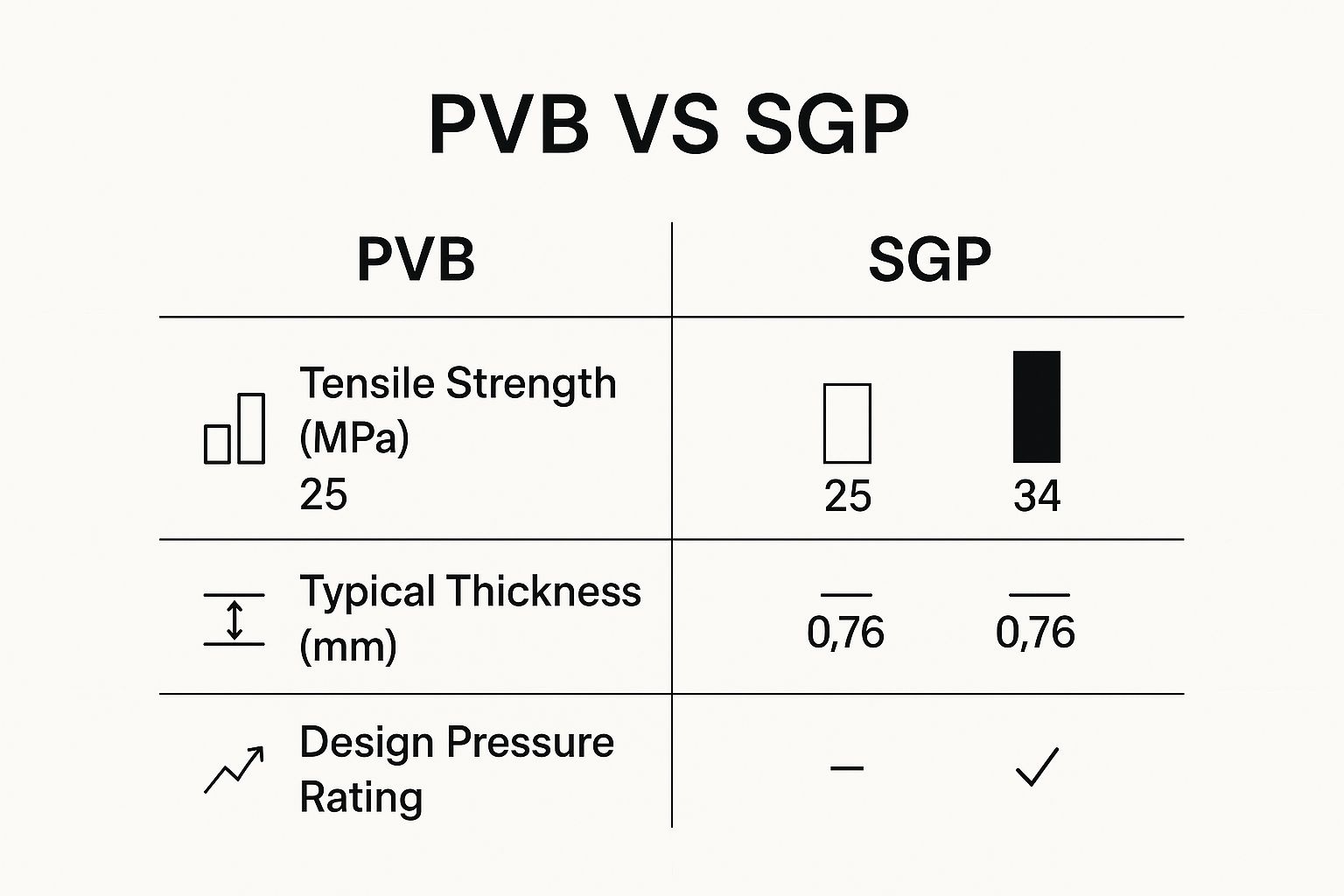
As you can see, SGP's raw strength and stiffness allow it to achieve much higher Design Pressure ratings. This makes it the go-to option for coastal areas and regions that face the most extreme weather threats.
Decoding Performance Ratings
When you start looking at impact resistant glass doors, you’ll come across a few technical ratings. Don’t let them intimidate you—they’re just there to tell you how tough the door really is. Understanding them is the key to picking the right product for your home.
The two main ratings you need to know are the Missile Impact Rating and the Design Pressure (DP) rating.
- Missile Impact Rating: This tells you what kind of flying debris the door can take a hit from. During testing, a 2×4 piece of lumber is literally fired at the door at high speed to mimic debris in a hurricane. To pass, the glass can crack, but the interlayer must prevent the 2×4 from breaking through.
- Design Pressure (DP) Rating: This is all about wind resistance. It measures how well the door stands up to both positive pressure (wind pushing in) and negative pressure (wind pulling out). The higher the DP rating, the stronger the door is against powerful winds.
A good way to think about a DP rating is like a boxer's weight class. A heavyweight can take a much harder punch than a lightweight. Similarly, a door with a DP of 70 can withstand far greater wind forces than one with a DP of 30, making it essential for high-risk coastal environments.
These ratings aren't just for show; they are often required to meet local building codes, especially in hurricane-prone zones. Before you buy, always check your local requirements to make sure the door you choose offers the certified protection you need. Once you understand the science behind the interlayer and know how to read these performance labels, you can choose a door that truly safeguards your home.
Choosing The Right Frame And Style
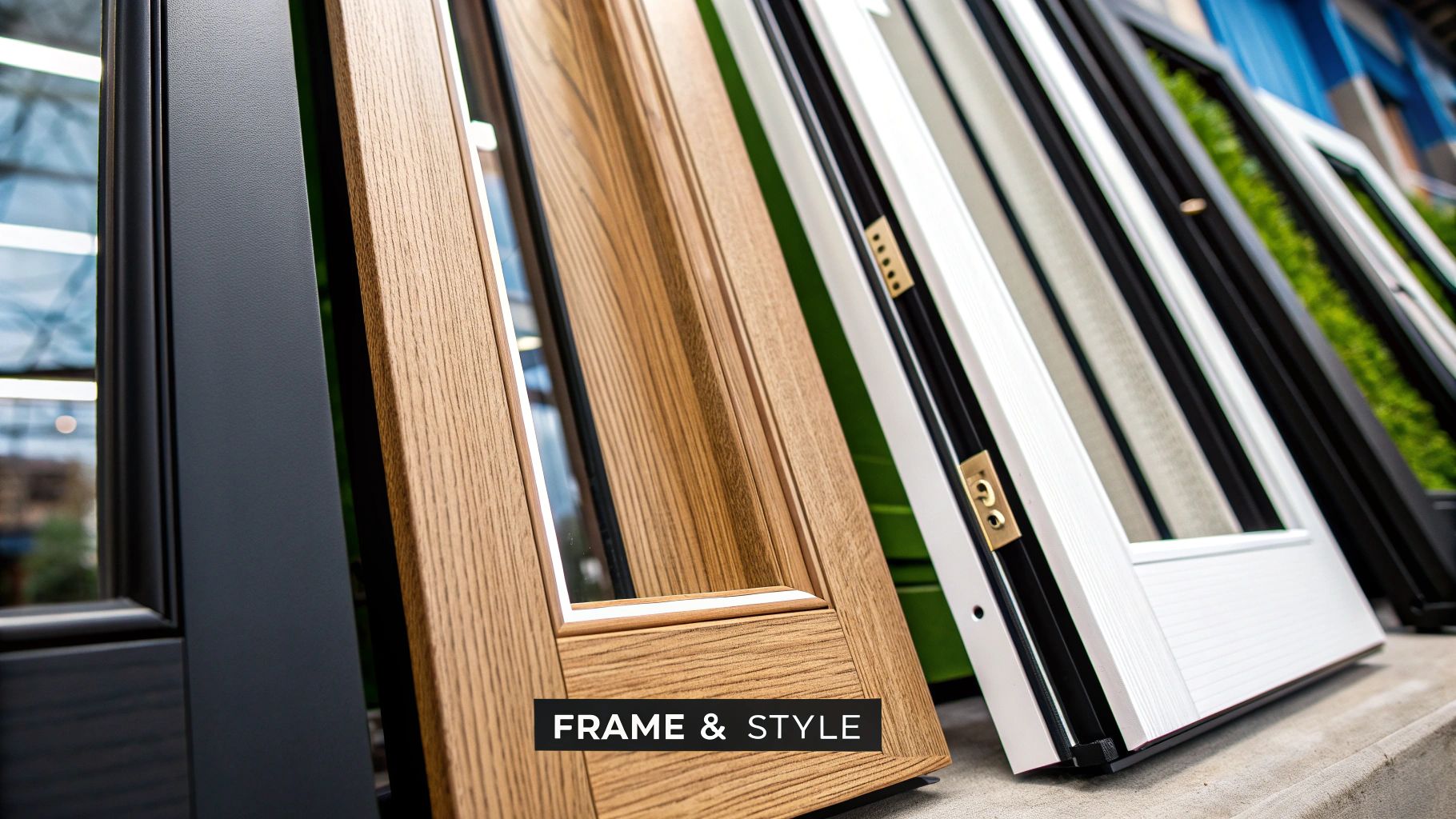
The incredible strength of impact-resistant glass is just one part of the puzzle. A door is a complete system, and that system is only as strong as its weakest link—which is often the frame. The most advanced glass in the world won't do its job if the frame holding it shatters under pressure.
So, picking the right frame material is just as critical as understanding the glass itself. Each material offers a unique mix of strength, energy efficiency, maintenance needs, and of course, style. Your choice will directly impact your door’s long-term performance and how well it complements your home.
Comparing Impact Door Frame Materials
When you're shopping for impact resistant glass doors, it becomes clear that not all frames are built the same. The material has to be tough enough to anchor the heavy, specialized glass and withstand the same intense forces it's rated for. Let's walk through the most common options you'll encounter.
The table below breaks down the pros and cons of the leading frame materials, giving you a clear picture of how they stack up against each other in key areas.
Comparing Impact Door Frame Materials
| Material | Strength & Durability | Energy Efficiency | Maintenance | Cost |
|---|---|---|---|---|
| Aluminum | Excellent strength, ideal for large openings. Naturally resists corrosion. | Good, but often requires a "thermal break" to prevent heat/cold transfer. | Very low. Resists rust and doesn't need painting. | Moderate to High |
| Vinyl | Good, especially when reinforced with steel or aluminum. Can be very robust. | Excellent. The material itself is a great insulator, reducing energy bills. | Very low. Won't rot, peel, or corrode. Wipes clean. | Low to Moderate |
| Wood | Strong and heavy, providing a solid feel. | Good natural insulator. | High. Requires regular sealing or painting to prevent rot and warping. | High |
| Fiberglass | Excellent. Resists dents, scratches, and warping better than most materials. | Excellent. Often filled with foam insulation for top-tier thermal performance. | Very low. Can be painted but holds up well to the elements. | Moderate to High |
Choosing the right material really comes down to balancing your budget, local climate, and personal style. For coastal homes, aluminum is a fantastic choice, while reinforced vinyl offers a great all-around value.
Beyond Strength: Designing With Safety In Mind
Your front door is a major architectural statement, and thankfully, choosing an impact-resistant model doesn't mean you have to compromise on style. Modern engineering has made it possible to weave these critical safety features into virtually any door design, from timeless to ultra-modern.
You can find the perfect style to match your home's aesthetic while getting the top-tier protection you need.
- French Doors: Offer a classic, elegant look that creates a grand entrance without sacrificing security.
- Sliding Glass Doors: Perfect for patios and decks, these space-savers are built to handle hurricane-force winds while giving you wide-open, unobstructed views.
- Pivot Doors: For a dramatic and contemporary entryway, large pivot doors can be engineered with impact-resistant glass, creating a stunning focal point that's also incredibly secure.
Customizing Function And Curb Appeal
Once you’ve settled on a frame material and door style, you can dial in the details with features that boost both performance and appearance. These options let you tailor your door to your exact needs, from saving on energy bills to adding a bit more privacy.
A popular upgrade is a Low-E (low-emissivity) coating on the glass. Think of it as an invisible, heat-reflecting shield. It bounces heat away during the summer and helps keep warmth inside during the winter, which can lead to real savings on your energy bills.
If privacy is a concern, options like frosted or obscure glass are an elegant solution. They let light flood in while blurring the view, which is perfect for front doors or rooms facing a busy street. For another layer of protection, you can explore professional applications of security film for glass doors to enhance shatter resistance on interior glass or other non-impact surfaces. By combining these elements, you create a door that’s not just a barrier, but a beautiful and hardworking part of your home.
Why Professional Installation Is a Must
When you invest in a high-quality impact resistant glass door, you're buying more than just a door; you're buying a complete security system for your home. But here’s the critical part: the door itself is only half the battle. The installation is what truly activates its protective power.
This isn't your average weekend DIY project. An impact door is an engineered system where every single piece—the reinforced frame, the laminated glass, the heavy-duty hardware—is designed and tested to work together. If just one component is installed incorrectly, the entire system can fail under pressure, right when you need it most.
What a Flawless Installation Really Looks Like
A certified professional isn't just hanging a door. They are meticulously integrating a security barrier into the very structure of your home. It's a process that demands specialized knowledge of building codes, manufacturer requirements, and the physics of force.
A proper installation always involves a few non-negotiable steps:
- Precision Measurements: The process starts with taking exact measurements of the rough opening. This ensures a perfect fit, leaving no gaps that could compromise the door's integrity or weather seal.
- Structural Anchoring: This is key. Installers use specific, manufacturer-mandated fasteners to anchor the door frame directly to the structural studs of your home. This is what gives the door the strength to resist incredible force.
- Expert Weatherproofing: Using professional-grade flashing and sealants, the installer creates a completely waterproof and airtight seal around the frame. This not only boosts energy efficiency but also prevents catastrophic water damage during a storm.
Think of it like a vital component on a race car. You could have the most powerful engine, but if it's not bolted to the chassis with absolute precision, it's going to fail on the very first turn. Professional installation is your expert pit crew, ensuring every piece is secured perfectly for peak performance.
The Real Dangers of Cutting Corners
Trying to save a few bucks on installation is a high-stakes gamble. A seemingly minor mistake can completely negate the door's impact rating and leave your home dangerously exposed.
For instance, using the wrong screws—even if they're just a half-inch too short—means the frame isn't truly secured to your home's structure. When hit with hurricane-force winds, the entire door and frame could be torn from the wall. Likewise, improper sealing might look fine on a sunny day, but it can let torrents of water into your home during a storm, causing thousands in damage.
This is why understanding the nuances of proper security installation is so important, whether for doors or other protective measures like window films. For a closer look at the expertise required, you can find great insights on professional security window film installation, which highlights how precision is a common theme across all home security upgrades.
Ultimately, hiring a certified professional for your impact resistant glass doors is the only way to guarantee your investment works as intended, giving you genuine peace of mind when the weather turns.
Understanding the True Cost and Value
It's easy to look at the price tag for impact resistant glass doors and see it as just another home expense. But that's missing the bigger picture. Think of it less like a cost and more like a strategic investment—one that pays you back in safety, home value, and even lower monthly bills.
Yes, the initial outlay is more than you'd pay for a standard door. That higher price, however, isn't just for show. It reflects the advanced materials and precision engineering that go into creating a barrier designed to withstand incredible forces.
What Drives the Initial Cost
The final price of an impact-resistant door system comes down to a handful of key decisions you'll make. Each choice directly influences the door's performance and, in turn, its cost.
Here’s a breakdown of the main factors:
- Door Size and Style: A massive multi-panel sliding door or a set of grand French doors will naturally cost more than a single door. More material and more complex engineering mean a higher price point.
- Frame Material: As we've covered, high-performance materials like fiberglass and thermally broken aluminum provide incredible strength and insulation, but they come at a premium compared to basic vinyl.
- Glass Package: The type of interlayer used (like the top-tier SGP), the thickness of the glass panes, and any extra coatings like Low-E for energy efficiency all play a part in the final cost.
- Hardware and Finishes: The heavy-duty, corrosion-resistant locks, handles, and hinges aren't just for looks. They are critical components that must pass rigorous impact testing, which adds to the overall price.
Don't forget about installation. A simple replacement in an existing frame will be much more affordable than a project that requires cutting into your wall or making other structural changes. Getting a clear picture of the total investment is key, a principle well-covered in this guide to security product installation costs.
The Long-Term Return on Investment
This is where impact-resistant doors really start to make sense financially. They begin paying for themselves the moment they're installed, through a combination of direct savings and a boost in your home's equity. It’s a purchase that quickly turns from an expense into a genuine asset.
The global doors market, currently valued at USD 10.91 billion, is expected to swell to USD 16.37 billion. A huge driver of this growth is the rising demand for secure, durable products, especially in high-risk areas. This isn't just a niche trend; it shows that the market as a whole is recognizing the real value of resilient home components like these doors.
These doors are a rare home upgrade where the benefits are both immediate and long-lasting. You feel safer the day they're installed, see the insurance savings on your next bill, and reap the rewards of higher property value when you decide to sell.
Let's look at the powerful financial benefits:
- Significant Insurance Discounts: Many insurance companies will give you a major break on your premiums for having certified wind mitigation features. We're talking reductions of up to 45% in some cases.
- Lower Energy Bills: The multi-layered glass and incredibly tight seals are fantastic insulators. They keep the summer heat out and the winter warmth in, which means your HVAC system doesn't have to work as hard, saving you money month after month. The value proposition is similar to other security upgrades, which you can read about in our guide to security window film cost.
- Increased Property Value: In many markets, particularly along the coasts, impact-resistant doors are a huge selling point. They can seriously boost your home's resale value and make it much more attractive to discerning buyers.
Maintaining Your Doors for Lasting Protection
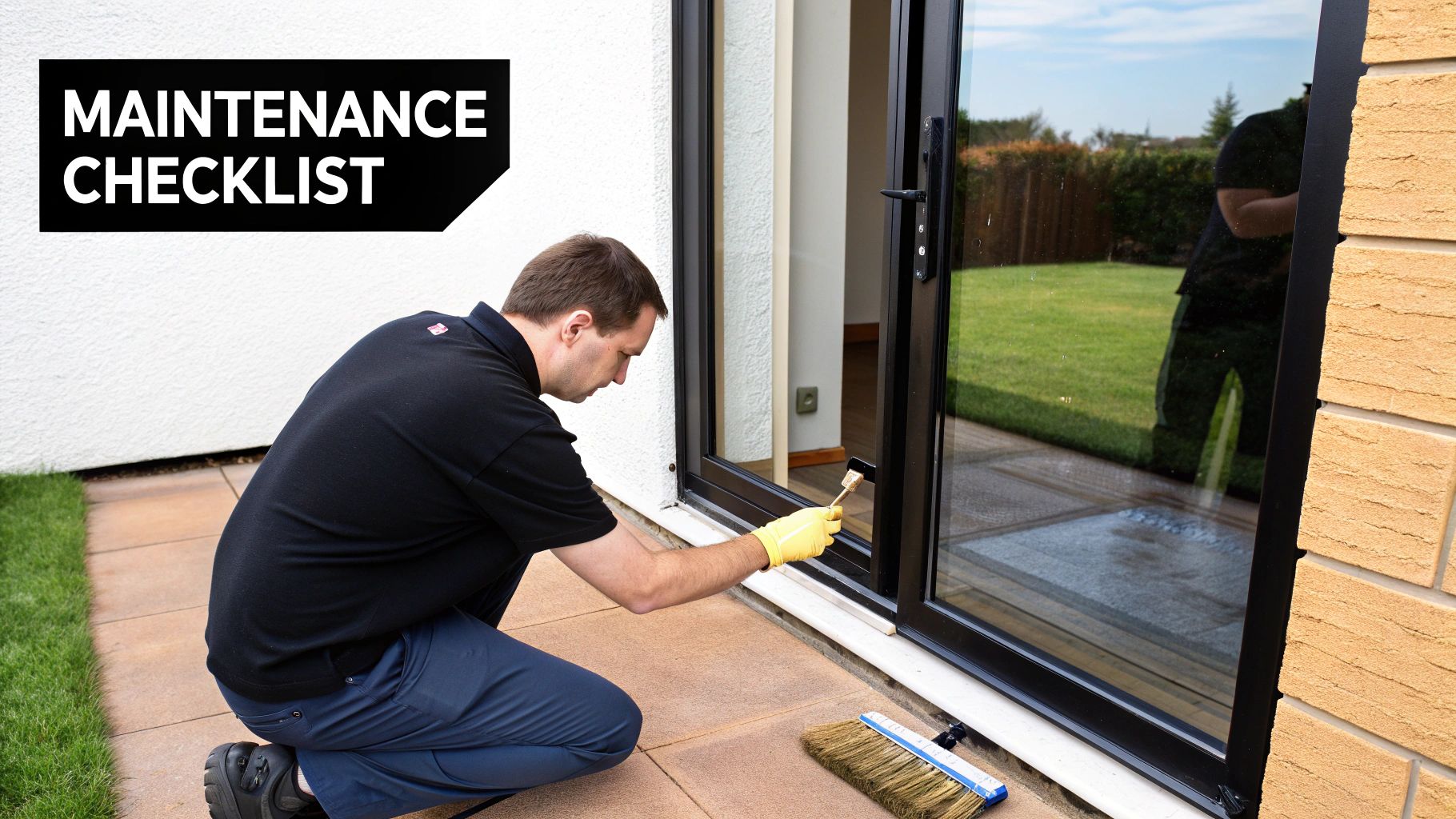
You've invested in some serious protection with your impact-resistant doors. But like any quality piece of equipment, they need a little TLC to keep them performing at their best for the long haul. A bit of routine care is all it takes to maintain their strength and good looks.
Think of it like keeping a car tuned up. You wouldn't ignore the engine and just hope for the best, right? The same logic applies here. A few simple, consistent habits will ensure your doors are always ready to stand up to whatever comes their way.
Your best first step is a simple cleaning routine. For the glass, steer clear of harsh chemicals like ammonia or alcohol-based cleaners, as they can strip away protective coatings like Low-E. All you really need is a mild solution of dish soap and warm water.
Your Routine Inspection Checklist
Beyond a quick wash, it's smart to give your doors a thorough once-over a couple of times a year. A seasonal check-in is a great habit to get into. This is all about spotting the small stuff before it has a chance to turn into a real headache.
A quick visual and hands-on check will tell you everything you need to know about your door's condition.
- Inspect Seals and Weatherstripping: Get up close and look at the seals around the glass and the weatherstripping in the frame. You're looking for anything that looks cracked, brittle, or is peeling away. A broken seal is an open invitation for drafts and water.
- Clean Sliding Door Tracks: If you have sliding doors, you already know the tracks are magnets for gunk. Dirt, sand, and leaves are the biggest culprits behind a door that sticks or grinds. A quick pass with a vacuum's brush attachment will keep things gliding smoothly.
- Test All Hardware: Work the door a few times. Open it, close it, and lock it. Does the handle feel wobbly? Does the lock engage with a solid, secure click? Tighten up any loose screws and consider a silicone-based lubricant for any stiff moving parts.
A little bit of proactive maintenance is your first line of defense. A door that’s well-cared-for is a door you can count on. By keeping an eye on the seals, tracks, and hardware, you’re making sure the entire system is ready to perform when you need it most.
When to Call a Professional
Most of this upkeep is easy enough to handle yourself. However, some symptoms are a clear sign that it's time to bring in an expert. If your door suddenly becomes a struggle to open, the lock won't engage properly, or you're noticing new drafts or water leaks, don't put it off. These issues often point to a deeper problem with the door's alignment or the frame itself.
Getting in touch with a certified installer is the right move. They have the know-how to make precise adjustments without compromising the door's impact rating or voiding your warranty. This simple step protects your investment and ensures your impact resistant glass doors continue to deliver the protection you paid for.
Common Questions About Impact Doors
When you start looking into serious home protection, a lot of questions come up. That's completely normal. For something as important as impact-resistant glass doors, you need clear, straightforward answers to feel confident in your decision.
Let's cut through some of the common industry jargon and get right to what these doors can really do for your home, no matter where you live.
Are Impact Resistant and Hurricane Proof Doors the Same?
This is probably the most common question we hear, and it’s a critical one. The correct term is "impact resistant." You'll often hear people say "hurricane-proof," but in reality, nothing is truly indestructible when faced with Mother Nature's full force.
An impact-resistant door is a complete system that has been put through some incredibly tough tests to earn its certification. It's built to handle specific wind speeds and, more importantly, direct hits from flying debris during a storm. The genius of the design is that the glass might crack under extreme stress, but it won't shatter and fly apart. It stays in the frame, keeping your home sealed and protected from wind and water.
Can Impact Resistant Doors Actually Lower My Energy Bills?
Yes, they definitely can. It turns out that the features making these doors so tough also make them fantastic insulators. The laminated glass itself is a much better barrier against heat transfer than the single pane of glass found in older doors.
Many modern impact doors also come with optional Low-E coatings. Think of it as an invisible, heat-reflecting shield that keeps your home cooler in the summer and warmer in the winter. When you combine that with a robust frame and a professional installation that seals up any potential air leaks, you'll likely see a real difference in your energy bills.
Is Applying a Security Film to My Doors a Good Substitute?
While a quality security film is a solid upgrade for existing glass, it's not in the same league as a certified impact door system. A true impact door isn't just about the glass; it's a completely engineered unit where every part works together.
The system's strength comes from the combination of laminated glass, a heavily reinforced frame, specialized anchoring, and heavy-duty hardware. The entire assembly—not just the glass—is what passes the stringent impact tests. Film alone cannot upgrade the frame, which is a critical component for withstanding severe forces.
Are These Doors Only for Homes in Hurricane Zones?
They’re a must-have in hurricane-prone areas, for sure, but their benefits go far beyond storm protection. If security is a priority, an impact-resistant glass door is one of the best deterrents against a break-in. It's a formidable barrier.
Beyond security, these doors offer a few other perks you might not expect:
- Noise Reduction: They provide excellent sound insulation, which is a huge plus if you live near a busy street or airport.
- UV Protection: They block nearly 99% of harmful UV rays. This helps protect your furniture, wood floors, and artwork from fading over time.
Ready to enhance your home's protection with a solution that's as strong as it is beautiful? Fortress Security Films offers advanced security solutions designed to safeguard your property without compromising on style. Explore our services and secure your peace of mind today.
