


When you think about securing your windows, do iron bars come to mind? For a lot of us, they do. But let’s be real—nobody wants their home to look like a fortress. Bars block the view, kill the natural light, and can tank your home's curb appeal.
Thankfully, we've moved past the idea that you need to live behind bars to feel safe. Modern home security is smarter, more discreet, and frankly, a lot more effective.
Beyond Bars: Your Guide to Modern Window Security
The new school of thought on home protection is all about creating layers of defense. Instead of one big, ugly barrier, you create a series of obstacles that work together. Each layer makes a potential break-in harder, louder, and more time-consuming for an intruder. Usually, that’s more than enough to make them give up and move on.
Why So Many People Are Ditching Window Bars
Homeowners today are looking for security solutions that fit their lifestyle. They want to feel safe without feeling like they're trapped inside. It's about finding that sweet spot between robust protection and maintaining a welcoming home. This is exactly where newer technologies and clever strategies shine.
The real goal of modern security is to deter and delay. You want to make your home such a tough target that a burglar decides it isn't worth the risk. A good system buys you precious time for alarms to go off and for help to arrive.
This guide is your roadmap to getting there. We're going to walk through the most practical and effective ways to secure your windows—no bars required.
We'll cover a few key areas:
- Reinforcing the Glass: We'll look at advanced security films that keep glass from shattering into a million pieces.
- Upgrading Your Hardware: This means installing better locks and latches that can stand up to force.
- Integrating Smart Technology: Think sensors and alarms that give you instant alerts and actively scare off intruders.
- Landscaping for Security: You can actually use your garden as a natural barrier to make windows harder to get to.
By the time we're done, you'll have a clear, actionable plan to make your home secure without sacrificing the things that make it feel like home.
Strengthen Your Glass with Security Film
A great lock doesn't mean much if an intruder can just smash the glass and walk right in. Glass is almost always the weakest link, so making it stronger is one of the smartest first moves you can make to secure your windows without ugly bars. This is where security film shines—it's a nearly invisible layer of serious protection.
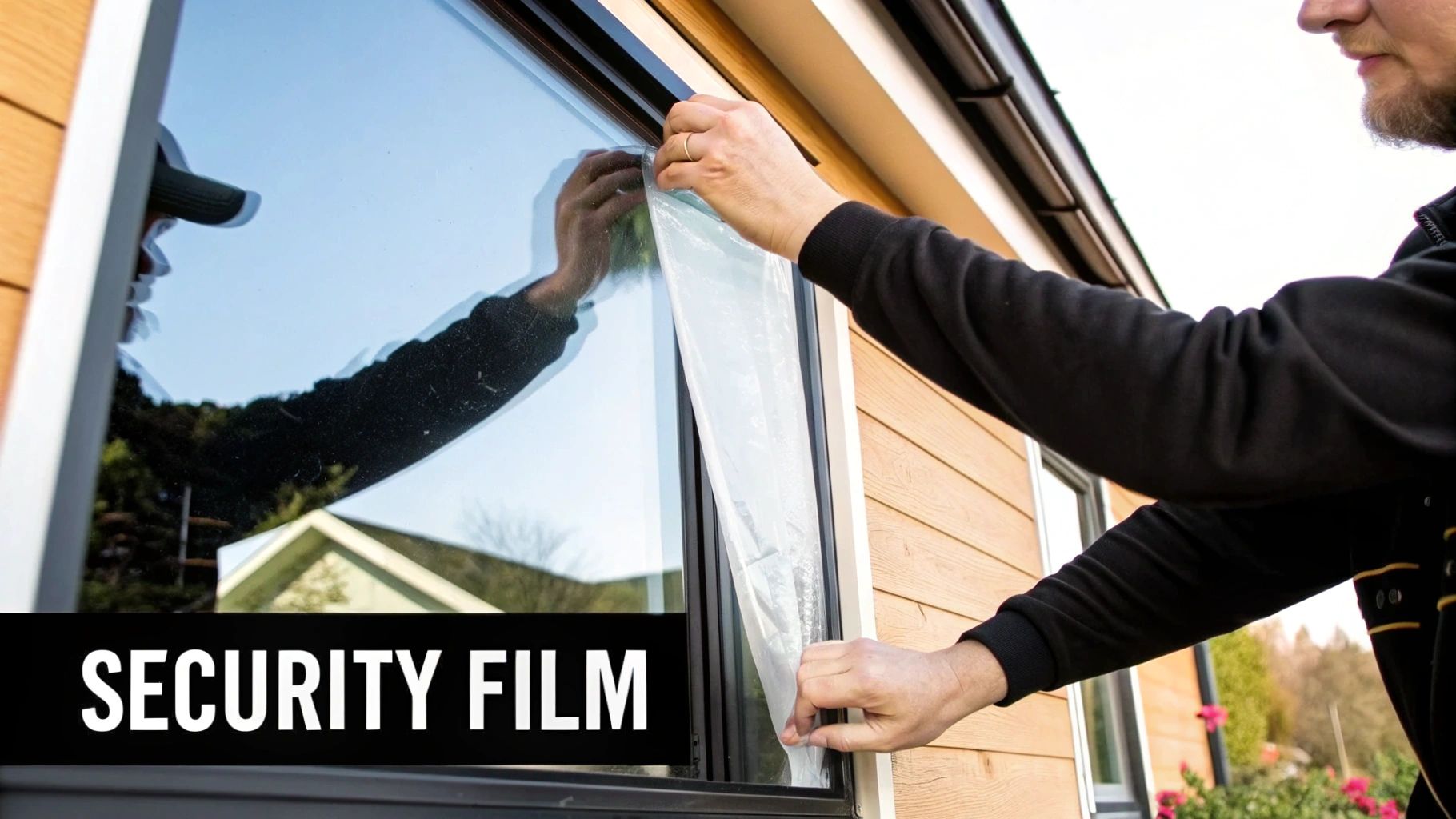
Think of security film as body armor for your windows. It's a tough, clear polyester sheet that bonds directly to the inside of the glass. Its main job is to take a punch and hold the glass together even after it shatters.
This one simple upgrade can make a huge difference in how long it takes someone to get through your window. Instead of a quick, quiet smash-and-grab, a burglar is left dealing with a noisy, frustrating mess of cracked glass that just won't give way.
How Security Film Works in a Real-World Scenario
Picture this: a burglar targets your ground-floor sliding glass door. With normal glass, one hard hit and they're inside your home in under five seconds. But if you have a quality security film installed, that same hit just creates a spiderweb of cracks. The film holds everything in place.
Now, the intruder has to keep wailing on the window, making a ton of noise and drawing attention.
That delay is the whole game. An easy target just became a loud, high-risk problem. Most burglars will cut their losses and run rather than stick around to make a scene.
Security film is a fantastic alternative to bars. It uses modern material science to beef up your existing glass without changing how your home looks. Top-tier films can withstand a staggering 400 pounds of force, which is more than enough to frustrate a forced entry attempt. The results speak for themselves; some neighborhoods have seen burglaries drop by as much as 60% after homeowners started installing it.
Best of all, this is a budget-friendly security upgrade. Having film professionally installed typically costs 40-70% less than replacing your windows with laminated security glass, putting powerful protection within reach for most homeowners.
Choosing the Right Film and Getting It Installed
You'll quickly find that not all security films are the same. Their toughness is measured in mils (one-thousandth of an inch), and the thickness you need depends on your goals.
- 4-7 Mil Films: This is a great starting point. It's perfect for deterring casual smash-and-grab attempts and adds a significant safety element by preventing glass shards from flying during an accidental break.
- 8-14 Mil Films: Now we're talking true security grade. These much thicker films are designed to resist determined, repeated attacks from things like hammers or pry bars. This is what you want for maximum forced entry protection.
Once you've picked a thickness, you have to decide between DIY or professional installation. While you can buy kits and do it yourself, I almost always recommend going with a pro. A professional ensures a perfect, bubble-free application and, more importantly, anchors the film to the window frame. This step is absolutely critical for the film to perform under pressure. You can get a better sense of what's involved in a professional window security film installation to see why it's worth it.
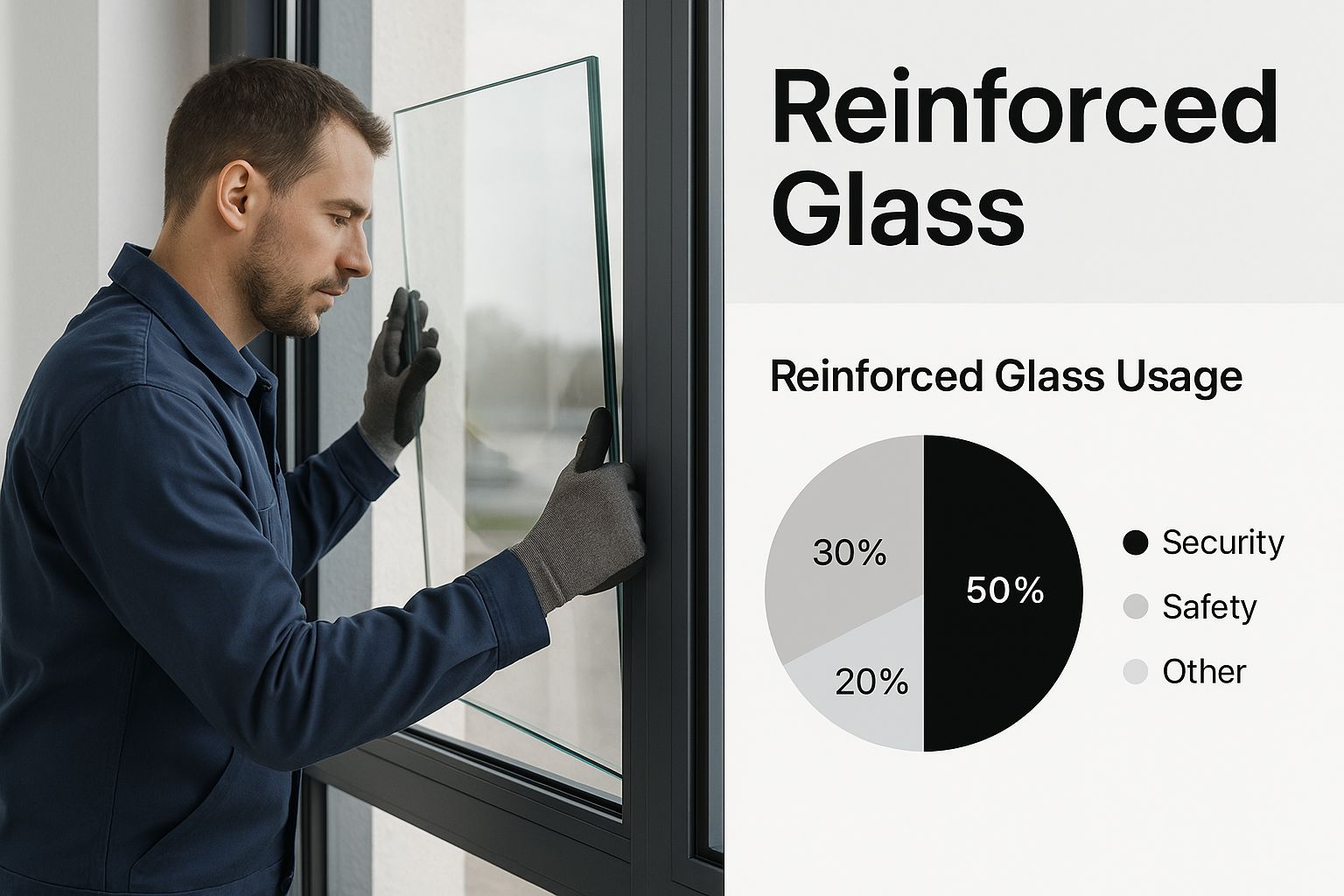
This image captures the careful, detailed work required to properly reinforce glass. Whether it's applying a thick security film or installing a new pane of laminated glass, precision is key to making sure your security investment pays off when you need it most.
Comparing Window Reinforcement Methods
It's helpful to see how security film stacks up against other options, like laminated glass. Laminated glass is essentially a sandwich of glass with a tough plastic interlayer, and it's incredibly strong. But it requires a full window replacement. The table below breaks down the key differences.
| Feature | Security Film | Laminated Glass |
|---|---|---|
| Cost | Lower | Higher |
| Effectiveness | Good to Excellent | Excellent |
| Installation | Moderate (retrofit) | High (full replacement) |
| Appearance | Nearly Invisible | No Change |
| Best For | Upgrading existing windows | New construction/major renovations |
Ultimately, laminated glass offers top-of-the-line protection, but it's a much bigger, more expensive project. For most people looking to secure their existing home, security film delivers the ideal blend of high performance, affordability, and minimal disruption.
Upgrade Your Window Locks and Latches
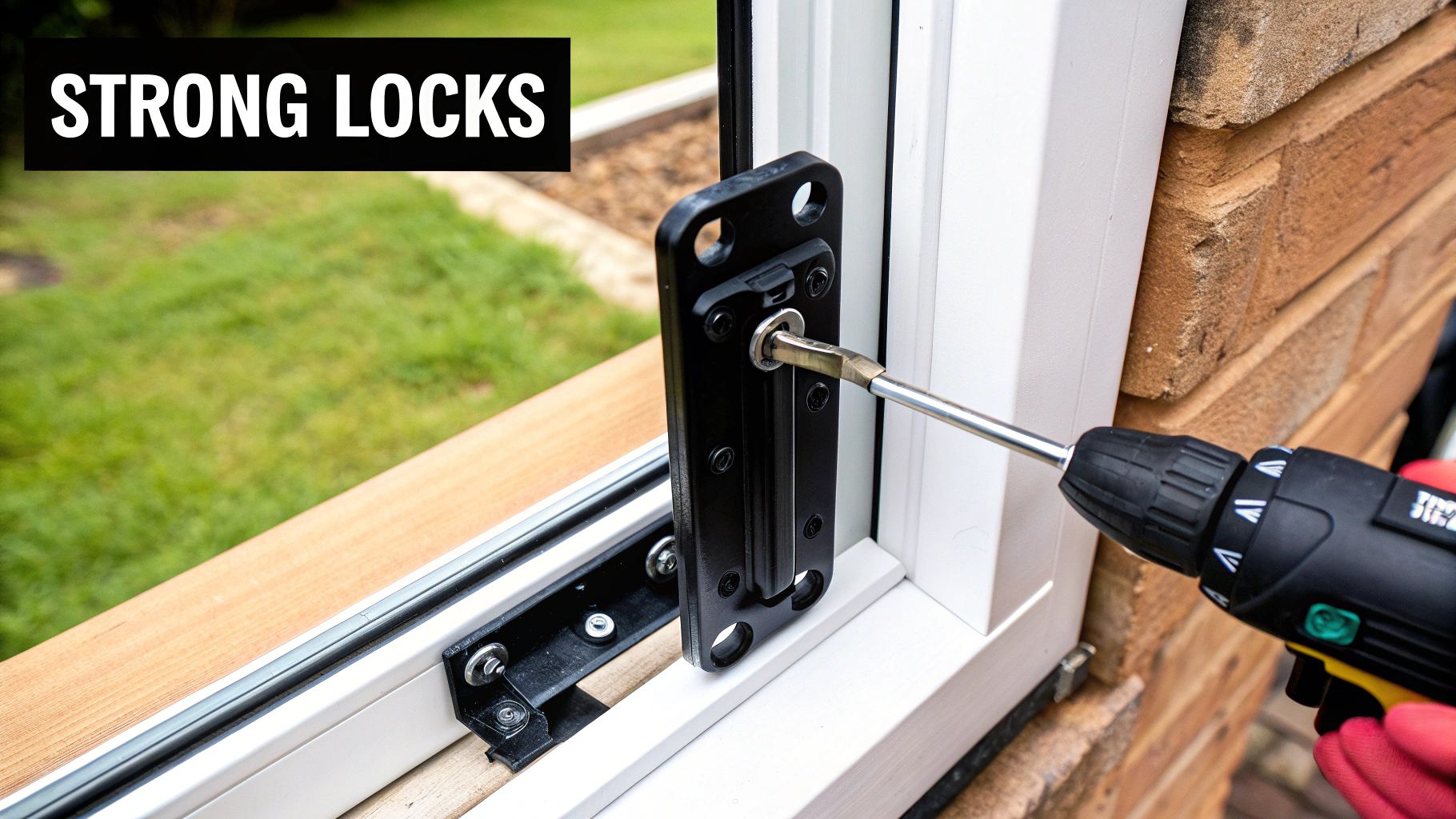
Once you’ve dealt with the glass, your next target should be the hardware holding the window shut. That little factory-installed latch on most windows? It’s often the weakest link, easily defeated with a simple pry bar. Upgrading your window locks is one of the biggest bangs for your buck when it comes to securing your home without bars.
Think of it this way: the standard latch is really just there to keep the window closed against the elements. It was never truly designed to stop a determined intruder. A proper aftermarket lock, on the other hand, is built from the ground up to resist force, transforming a major vulnerability into a real headache for any would-be burglar.
Choosing the Right Lock for Your Window Type
The kind of lock you need really depends on the type of window you have. Whether it's a double-hung, a slider, or a casement window, the goal is always the same: add a secondary locking point that foils the two most common break-in methods—prying the window open or lifting it right off its track.
Here are a few of the most effective options I've seen and installed over the years:
- Keyed Sash Locks: These are a direct replacement for the standard latch on double-hung or sliding windows. The big advantage? They need a key. Even if an intruder smashes a small hole in the glass to reach the lock, they won't be able to turn it.
- Window Locking Pins: A brilliantly simple and tough-as-nails solution. You drill a hole straight through the inner window sash and into the frame behind it, then slide in a hardened steel pin. This physically bolts the sashes together, making it impossible to slide or lift the window open.
- Hinged Wedge Locks: Perfect for sliding windows. These little devices screw onto the track. When you flip the wedge down, it creates a solid block that stops the window in its tracks. A great feature is that they often allow you to lock the window while it's still open a few inches for ventilation.
Upgrading your window hardware is all about creating layers of mechanical resistance. A keyed lock combined with a locking pin forces an intruder to defeat two separate mechanisms, which takes a lot more time and makes a lot more noise.
This multi-lock strategy is at the heart of securing windows effectively without bars. You're moving away from a single point of failure and building a much tougher physical defense.
A Practical Look at Upgrading Hardware
Let’s walk through a real-world scenario. Say you have a ground-floor sliding window—a classic target for burglars. They know the latch is flimsy and that they can often just lift the entire sliding pane right out of its track.
Here’s a solid upgrade plan:
- Primary Lock: First, ditch the factory latch and install a heavy-duty, keyed sliding window lock. This immediately stops the simple "smash-and-reach" attack.
- Secondary Lock: Next, install two window locking pins. Drill the first pin's hole to secure the window when it's fully closed. Then, drill a second one about four inches higher up. This gives you a secure way to get a breeze without leaving your home vulnerable.
This two-step process costs very little and is a straightforward DIY project for a Saturday afternoon. The result? You've completely neutralized the most common ways burglars attack that type of window, making it exponentially harder to get through.
Locks for Different Window Styles
Your approach might need a slight tweak depending on the window's design. For casement or awning windows that use a crank, the lock is already part of that mechanism. These are generally more secure to begin with, but you can make them even tougher. Adding a separate keyed lock that secures the sash directly to the frame makes it much harder to pry open at the corner.
Ultimately, by beefing up the hardware, you're adding a formidable layer of defense that's completely invisible from the outside. You keep your home's curb appeal while making it a much, much harder target.
Use Smart Sensors for Active Deterrence
So far, we’ve covered how to make your windows physically tougher with stronger glass and better locks. Those are your passive defenses. Now, let’s talk about adding an active, intelligent layer of security that’s on guard 24/7.
Smart sensors turn your windows from simple weak points into a vigilant part of your home security network.
Unlike a lock that just sits there, a sensor is designed to spot a threat and immediately raise hell—both with a loud alarm and a notification straight to your phone. This is a game-changer when learning how to secure windows without bars because it gives you real-time alerts and actively scares intruders away.
The second someone tampers with a window, you’ll know about it, whether you're in the next room or on vacation miles away.
Window Entry and Glass-Break Sensors
When it comes to smart window security, you're looking at two main players: entry sensors and glass-break detectors. They protect your windows in different ways, and honestly, using them together is the closest you can get to a foolproof system.
-
Window Entry Sensors: These are your classic two-piece magnetic sensors. You stick one part on the window sash and the other on the frame. When the window opens, the magnetic field breaks, and the alarm goes off. They’re perfect for catching anyone trying to slide or force a window open.
-
Glass-Break Detectors: Think of these as tiny, specialized microphones. They are tuned to listen for the very specific sound frequency of shattering glass. The beauty here is that a single sensor can cover multiple windows in one room, acting as a crucial backup if a thief decides to skip the lock and just smash their way in.
The rise of smart home tech has completely changed how we think about protecting our homes. Data shows that between 2015 and 2025, the adoption of smart window sensors and glass-break detectors shot up by over 150% in key markets.
Even more telling, when these sensors are part of a monitored alarm system, they’ve been shown to cut down on window-related burglaries by about 70%. That’s a serious testament to their power. You can learn more about the growth of smart home security and see the numbers for yourself.
Strategic Placement and Psychological Deterrents
Where you put these sensors matters just as much as having them in the first place.
For entry sensors, make sure they’re placed where they won't get accidentally knocked off or be obvious to someone trying to disable them.
For glass-break detectors, they need a clear "line of sight" to the windows they're guarding. A great tactic is to place one on a wall directly opposite a large picture window or a cluster of smaller windows.
Pro Tip: Don't ever forget about the power of a simple sticker. Placing decals from your alarm company on a few key windows is an incredibly effective psychological deterrent. It's a clear warning sign to any would-be intruder that your home is not an easy target.
That little sticker forces a burglar to do a risk assessment on the spot. They know that smashing that window will almost certainly trigger an alarm, and that’s often more than enough to convince them to move on to a softer target. It's a tiny investment for a huge impact on your layered defense.
Build Layers of Defense Outside Your Home
Real window security doesn't start at the glass pane. It starts in your yard. The whole idea is to make your property an unwelcome, noisy, and highly visible place for anyone trying to sneak up to your windows. Think of it as a natural deterrent—a way to stop a break-in long before a lock is tested or glass is shattered.
If you want to know how to secure windows without bars, you have to get inside a burglar's head. They're looking for three things: darkness, cover, and silence. Smart landscaping and lighting can take all three of those advantages away, making your home a much harder target.
Weaponize Your Landscaping
Believe it or not, your garden can be your first line of defense. Those overgrown shrubs and dense trees right next to the house? They’re the perfect hiding spot, giving an intruder all the time in the world to work on a window without being seen.
The trick is to create an environment under your most vulnerable windows that's hostile and revealing.
- Plant Thorny Bushes: It’s a classic move because it works. Planting something prickly like barberry, hawthorn, or even a climbing rose directly beneath ground-floor windows creates a painful, noisy barrier. Nobody wants to crawl through a bed of thorns in the middle of the night.
- Use Crunchy Ground Cover: Ditch the soft mulch and lay down gravel or crushed rock in the areas right under your windows. The loud crunching sound it makes when stepped on is a fantastic early-warning system. It completely ruins any chance of a silent approach.
- Maintain Clear Sightlines: Keep those trees and shrubs trimmed back. You want to eliminate any and all potential hiding places. Your windows should be easy to see from the street and from your neighbors' homes, stripping away the cover burglars depend on.
This is the same defensive thinking used in high-security situations, like when installing security window film for schools to protect large, vulnerable glass areas.
Illuminate to Intimidate
Darkness is a burglar's best friend. A property that’s lit up is a huge turn-off, and with today’s lighting options, it’s both easy and affordable to keep your home's exterior bright.
A sudden blast of light is one of the single most effective ways to spook a potential intruder and send them packing. It throws a spotlight on them, making them feel instantly exposed.
Motion-activated floodlights are your best friend here. Get them installed over key entry points—that means windows, garages, and back doors. That unexpected wash of bright light is often all it takes to convince an intruder the risk just isn't worth it.
For an extra layer of security, use low-voltage landscape lighting along your walkways and around the foundation of your house. This gets rid of all those shadowy corners. Combining the surprise of motion lights with consistent, low-level illumination creates a powerful security shield.
Your Top Window Security Questions Answered
When you start looking into how to secure windows without bars, a lot of practical questions pop up. You're probably wondering about the cost, what actually works, and the best way to approach it. Getting solid answers is key to making a choice you feel good about—one that protects your home without breaking the bank. Let's dig into a few of the questions I hear most often from homeowners.
How Much Should I Budget to Secure My Windows?
Honestly, you can make a huge difference without spending a fortune. Your budget can be as small as a weekend DIY project or scale up to a professional installation, all depending on how many layers of security you want to add.
A quick look at the numbers shows how accessible this is:
-
Upgrading Your Locks: This is a fantastic, low-cost starting point. Swapping out standard locks for keyed sash locks or adding simple window pins can run you as little as $15 to $50 per window.
-
Adding Security Film: If you're handy, a DIY security film kit might cost you around $30 to $60 for a standard window. Just remember, professional installation ensures a perfect, bubble-free application and, more importantly, proper anchoring to the frame. That’s what really gives it its strength.
-
Installing Smart Sensors: You can grab a starter kit with a hub and a couple of entry sensors for under $100. Individual glass-break detectors usually fall in the $30 to $70 range.
When you compare these options to the cost of replacing your windows entirely with laminated glass, you can see why these upgrades are so popular.
Are Security Films Enough to Stop a Burglar?
This is a great question. While nothing is 100% "burglar-proof" if someone is determined enough, security film is exceptionally good at its main job: slowing an intruder down and making a ton of noise.
Think of it this way: a normal window can be smashed in a second or two, almost silently. With security film, that quick smash turns into a loud, sustained, and exhausting effort to get through the glass.
The real purpose of security film isn't to be unbreakable. It's to make the process of breaking in so loud, difficult, and time-consuming that the would-be burglar gives up and moves on. That delay is everything—it's the time your alarm needs to sound and for help to be on the way.
It’s one of the single most effective upgrades you can make to protect the glass itself.
Should I Combine Different Security Methods?
Yes, absolutely. In my experience, the best security strategies are always layered. If you rely on just one thing—say, a lock—and it fails, you're left completely exposed. By combining different methods, you create a much more robust defense where each element backs up the others.
Let’s take a vulnerable ground-floor window as an example. It becomes a much tougher target when you protect it with:
- Security Film to make the glass itself incredibly difficult to breach.
- A Keyed Lock so the window can't just be jimmied open.
- An Entry Sensor that instantly triggers an alarm if the window is opened or disturbed.
This combination creates a physical barrier, an audible alert, and a strong visual deterrent. If you're looking for more ways to build out your home’s defenses, you can find a ton of ideas on our home security blog.
At Fortress Security Films, our expertise lies in creating these invisible, yet powerful, layers of protection. Our advanced security films offer a formidable defense against forced entry, all without changing the look of your home. Secure your peace of mind and protect what matters most. https://fortresssecurityfilms.com
For homeowners considering a discreet glass upgrade, see our residential security film service.
