


When it comes to truly securing a sliding glass door, you need a three-pronged strategy: a solid security bar, better locks, and a specialized security film. This combination hits all the door's weak spots, making it incredibly difficult for someone to lift it, force it open, or simply smash the glass. For total peace of mind, integrating these physical upgrades with your alarm system is the way to go.
The Hidden Weakness in Your Home Security
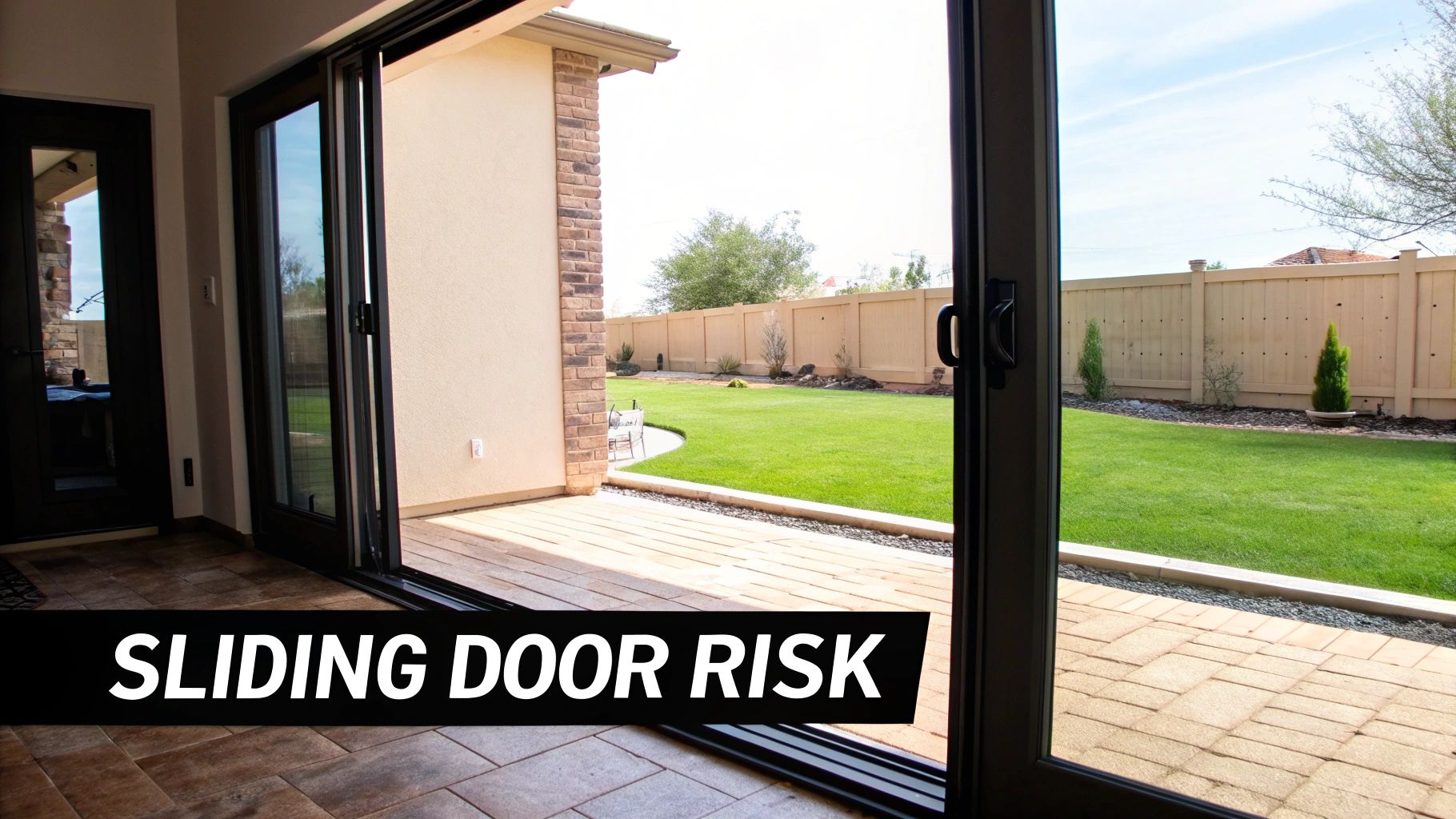
That beautiful sliding glass door you love? It’s probably the biggest hole in your home's security. It's a classic mistake to rely on that tiny, factory-installed latch. I’ve seen firsthand how flimsy they are—a little bit of force, and they give way, leaving your home wide open to an intruder.
The problem runs deeper than just the lock. The entire design of a sliding door creates security headaches that a simple wooden dowel in the track just can't fix.
Why Your Sliding Door Is Such a Tempting Target
It’s easy to overlook just how vulnerable a standard sliding door is until something goes wrong. You've got a weak lock, a huge pane of glass, and it's usually tucked away at the back of the house. For a burglar, that’s the perfect combination.
This isn't just a hunch; the numbers tell the story. A staggering 22% of break-ins happen through sliding glass doors, especially those on the back of a house where an intruder can work unseen. The problem is universal—in places like England and Wales, over 76% of home burglaries involved forcing a door or window. You can dig into more home security stats over at SteelShieldSecurity.com.
To give you a better idea, let's break down the common failure points.
Sliding Door Vulnerability Snapshot
Here's a quick look at the most common security flaws found in standard sliding glass doors and the professional-grade solutions that counter them.
| Common Weakness | Associated Risk | Effective Security Solution |
|---|---|---|
| Flimsy Factory Latch | Easily jimmied or forced open with a pry bar, offering almost no resistance. | Upgraded keyed locks, double-bolt locks, or security pins. |
| Large Glass Pane | Tempered glass is designed to shatter, making it easy for silent, quick entry. | Applying 3M™ security window film to reinforce the glass against impact. |
| Lift-Out-of-Track Design | Older doors, in particular, can be lifted off their tracks from the outside, bypassing locks. | A security bar, foot-activated bolts, or anti-lift devices. |
| Secluded Location | Rear-facing doors offer intruders privacy to work without being seen. | Motion-activated lighting, visible security cameras, and alarm sensors. |
As you can see, each vulnerability has a specific countermeasure. Relying on just one fix leaves you exposed elsewhere.
Moving Beyond Old-School Fixes
That old trick of dropping a cut broomstick in the track? It’s better than nothing, but it only stops the door from sliding. It does absolutely nothing to stop an intruder from shattering the glass or simply lifting the door panel right out of its frame.
The reality is that modern security threats require modern solutions. A single, low-tech fix gives you a false sense of security, leaving you vulnerable to a determined burglar who knows exactly where to push.
A real security strategy needs layers. As we get into the specifics of how to secure sliding glass doors, we're going to move past these outdated methods. We'll look at robust, reliable upgrades that turn this weak point into a hardened barrier. To see just how critical comprehensive protection is, check out our article on the security failures that led to break-ins at the homes of Hollywood stars.
Quick, Inexpensive Ways to Secure Your Sliding Door
You don't need to spend a fortune to make your home significantly safer. When it comes to sliding glass doors, some of the most effective security upgrades are surprisingly cheap and can be done this weekend. These aren't just flimsy, temporary patches; they are smart, foundational layers of security that can stop a break-in cold.
The idea here is to create both physical roadblocks and psychological hurdles that make a burglar think twice. Let’s dive into the most effective and affordable tools you can use right now.
You Can't Beat a Good Old-Fashioned Security Bar
A solid security bar—sometimes called a "charlie bar"—is one of the simplest and most powerful devices you can install. We’ve all seen the old broomstick-in-the-track trick, but a purpose-built security bar is a massive upgrade. It’s designed to fit snugly, often with a pressure-mounting system, physically jamming the door and preventing it from being forced open.
When you're shopping for one, look for a bar made from heavy-gauge steel that you can adjust to fit your door's width perfectly. A tight fit is absolutely critical, as a loose bar can be jiggled out of place by a determined intruder. This one simple addition is a powerful visual and physical deterrent against brute-force attacks.
Stop Burglars From Simply Lifting the Door Out
Here’s a vulnerability that most people completely miss with older sliding doors: they can often be lifted right out of their tracks from the outside. A thief with a pry bar can pop the entire door panel out in seconds, making your fancy lock completely useless. Thankfully, the fix is incredibly easy and costs next to nothing.
All you have to do is install anti-lift devices or even just drive a few screws into the upper track of the door frame. These act as stoppers. You just need to leave enough of a gap for the door to slide without catching, but not enough room for it to be lifted up and out. It’s a tiny adjustment that shores up a common, and surprisingly effective, break-in method.
It’s a classic mistake to focus only on the lock and ignore the door's basic structural flaws. Preventing the door from being lifted is just as crucial as stopping it from sliding.
This little hardware fix costs just a few bucks and takes minutes to install with a drill, but it closes a huge security hole.
The Power of Making Burglars Think Twice
Security isn't always about physical barriers. Sometimes, just creating the illusion of a fortress is enough to make a potential intruder skip your house and look for an easier target. This is where visual deterrents shine.
Here are a couple of low-cost, high-impact ideas:
- Security System Decals: You don't actually need a $2,000 alarm system to benefit from the sticker. Placing a decal from a well-known security company on your glass door plants a seed of doubt. It makes a burglar wonder if the home is monitored, and that hesitation is often all you need.
- Motion-Activated Lights: A motion-sensing floodlight mounted above your sliding door is one of the best security investments you can make, period. Criminals hate the spotlight. A sudden blast of light exposes them, draws attention, and almost always sends them scrambling for the shadows.
These psychological tricks mess with an intruder’s game plan by adding unpredictability and raising the stakes. When you combine them with physical hardware like a security bar and anti-lift screws, you’ve built a seriously tough, layered defense without breaking the bank.
Choosing the Right Hardware for Lasting Security
While a dowel in the track is a decent start, real security comes from investing in permanent hardware. We're talking about fundamental upgrades that transform your sliding door from a weak point into a fortified barrier. This isn't about temporary patches; it's about building a defense that will actually stand up to a determined intruder.
The goal here is simple: physically anchor the moving door panel to its frame so effectively that forcing it open becomes a noisy, difficult, and time-consuming task. This means installing hardware specifically designed to defeat common break-in tactics like prying or lifting the door right off its track.
Upgrading to a Secondary Lock
Let's be blunt: the factory-installed latch on most sliding glass doors is notoriously weak. It’s often the first thing to fail. That's why a secondary, aftermarket lock isn't just a good idea—it's non-negotiable. These devices install separately from the main handle, providing a much stronger, independent locking point.
You've got a few solid options, and each brings something different to the table:
- Pin Locks: A classic for a reason. You simply drill a hole through the sliding door's inner frame and into the stationary one, then insert a hardened steel pin. It's a brilliantly simple and effective way to physically bolt the two panels together.
- Keyed Loop Locks: These are a nice step up. A lock body mounts on the door frame and a tough steel loop attaches to the door itself. When you turn the key, the loop engages the lock, creating a very strong connection that can’t be jiggled open.
- Double-Bolt Locks: For my money, this is one of the best aftermarket solutions out there. These locks throw two separate bolts into the frame, usually one high and one low. This two-point connection makes it incredibly difficult for someone to get enough leverage to pry the door open.
For most people, a quality double-bolt lock strikes the perfect balance between high security, ease of use, and a reasonable price tag.
The Ultimate Upgrade: Multi-Point Locking Systems
If you're looking for the highest level of security possible, a multi-point locking system is the answer. Period. Unlike a standard lock that secures the door at a single point, a multi-point system engages the frame in several places at once when you turn the handle or key.
This design distributes any force across the entire length of the door, making it exceptionally resistant to prying. Think about the difference in strength between one person holding a door shut versus three people pushing against it at the top, middle, and bottom. It's a game-changer.
This is especially important when you consider how people perceive these doors. Research from Origin's homeowner survey found that only 13% of homeowners viewed sliding doors as the most secure option. That perception is based on the flimsy single-point locks of the past. A modern system with 8-12 locking points per panel completely flips that script.
A multi-point locking system is the difference between a door that's simply closed and one that's truly fortified. It anchors the door to the frame like a bank vault, eliminating the leverage points that burglars rely on.
This decision tree can help you map out your first steps, especially if you're working with a tight budget.
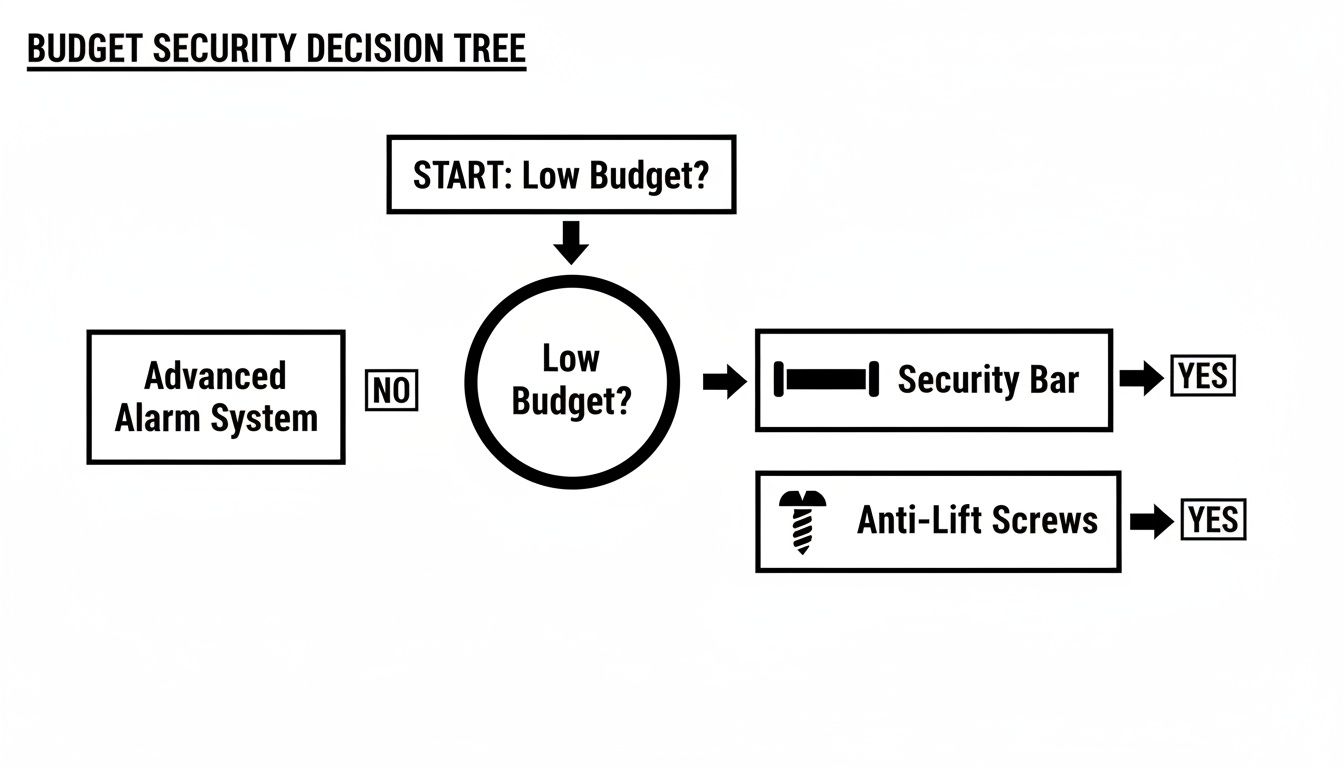
As you can see, even small, affordable upgrades like a security bar or anti-lift screws provide a huge security boost right from the start.
Making an Informed Hardware Choice
So, which hardware is right for you? It really comes down to balancing your security goals, your budget, and your specific situation. A ground-floor door in a high-traffic area probably needs a more robust solution than a second-story balcony door.
Here’s a quick comparison to help you break down the options.
A Comparison of Sliding Door Security Hardware
This comparison breaks down different locking mechanisms, helping you choose the most effective hardware for your specific needs and budget.
| Hardware Type | Security Level | Typical Cost | Ideal for |
|---|---|---|---|
| Security Pin Lock | Good | $15 – $30 | DIY enthusiasts looking for a simple, effective, and low-cost security boost. |
| Keyed Loop Lock | Better | $40 – $80 | Homeowners wanting keyed security that's stronger than a pin lock without a complex installation. |
| Double-Bolt Lock | Excellent | $50 – $120 | Anyone seeking a high-security aftermarket solution that provides a powerful defense against prying. |
| Multi-Point System | Maximum | $300 – $800+ | New door installations or major upgrades where achieving the absolute highest level of security is the top priority. |
No matter which path you choose, installing upgraded hardware is one of the most significant steps you can take to secure your sliding glass doors. You're moving your defense from passive to active, creating a real physical barrier that can stop an intruder in their tracks. This investment isn't just about security—it's about buying invaluable peace of mind.
How to Reinforce Your Sliding Door Glass
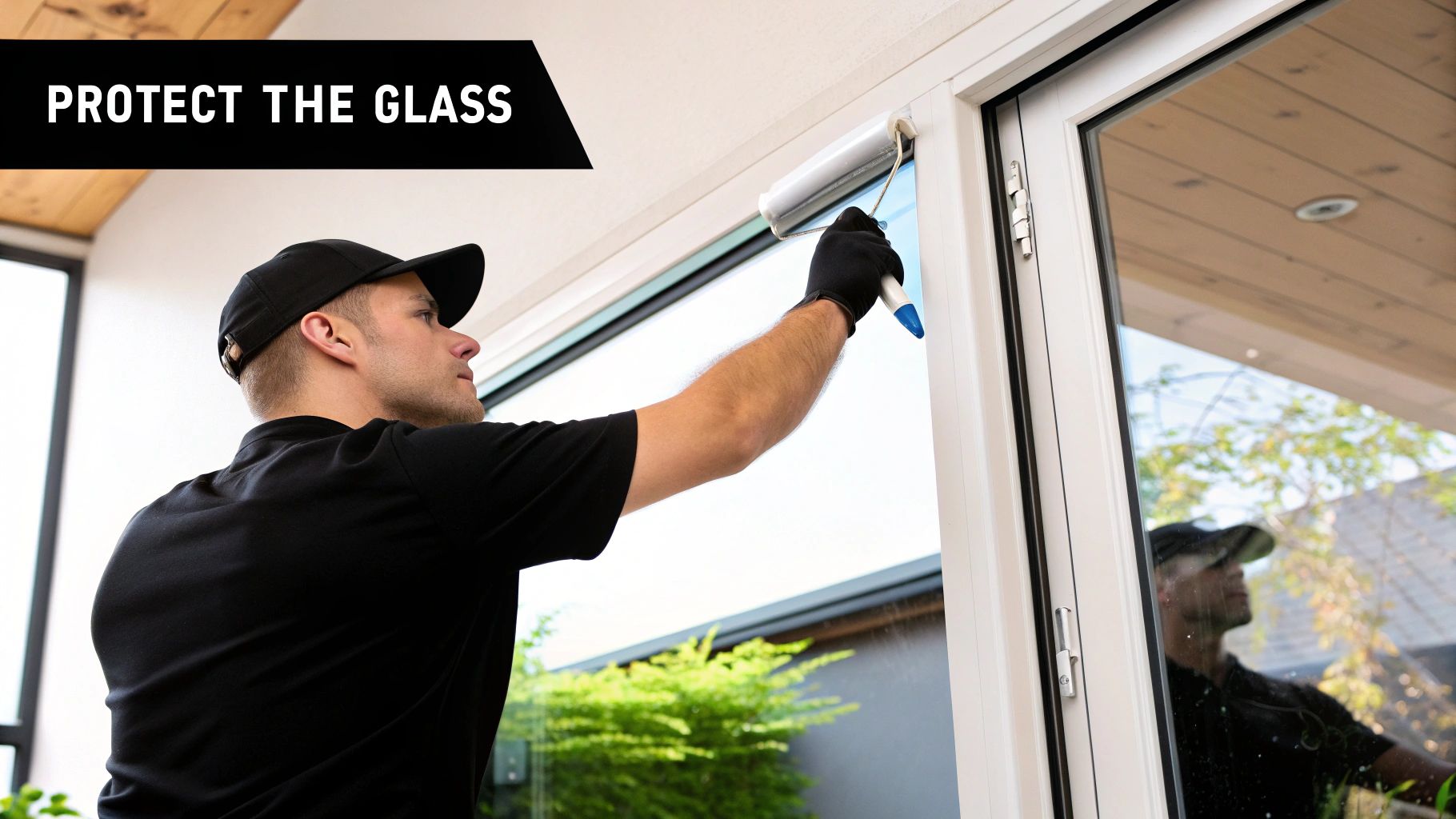
Upgrading your locks is a huge step, but what good is a powerful lock when the largest part of your door is a massive pane of glass? An intruder can bypass even the most advanced locking system with a single, well-aimed strike. This is why reinforcing the glass itself is one of the most critical moves you can make.
The very nature of standard tempered glass presents a hidden security flaw. It’s designed to shatter into thousands of tiny, relatively harmless pieces to prevent injuries—a great safety feature, but it also makes a burglar's job incredibly easy. They can create a gaping hole for entry in mere seconds.
This is where a high-performance security window film completely changes the game.
How Security Film Fortifies Glass
Think of security film as an invisible suit of armor for your glass. It's a tough, micro-layered polyester material that bonds directly to the interior surface of the door. When the glass is struck, it still cracks, but the film does something far more important: it holds all those shattered pieces tightly together.
Instead of collapsing into a pile on the floor, the glass remains in the frame as a single, flexible, and surprisingly strong barrier. A burglar expecting a quick smash-and-grab is suddenly faced with a frustrating and time-consuming obstacle. They have to keep hitting the glass, trying to tear a hole through the tough, reinforced pane.
This delay is everything. It turns a silent, two-second entry into a loud, minutes-long struggle. That noise buys you precious time for alarms to sound and for help to arrive. With 22% of home invasions targeting backdoors, this is no small detail. A quality security film can extend the break-in time from seconds to between three and seven minutes—often more than enough to send an attacker running.
Not All Security Films Are Created Equal
As you start looking into security films, you'll see they come in different thicknesses, measured in "mils" (one-thousandth of an inch). The right thickness really depends on your specific security goals.
Here's a quick breakdown of what you'll find:
- 4-7 Mil Film: This is a solid entry-level choice for basic safety and security. It’s great for protecting against accidental impacts, severe weather, and opportunistic "smash-and-grab" attempts.
- 8-14 Mil Film: For serious forced-entry protection, this is the sweet spot. Films in this range are significantly tougher and can withstand prolonged attacks with heavy objects like bats or pry bars.
- 15+ Mil Film: These ultra-thick films are typically reserved for high-risk applications, offering extreme protection against things like bomb blasts and, in some specialized cases, even ballistic threats.
For most homeowners looking to secure their sliding glass doors, a film between 8 and 14 mils offers an exceptional level of protection against typical burglary attempts. You can learn more about how this technology is used specifically for glass doors with this helpful guide on security film for glass doors.
The Critical Role of Professional Installation
I know DIY kits are tempting, but this is one area where professional installation is worth every single penny. A film's effectiveness isn't just about its thickness; it's about how well it's applied and anchored to the door frame.
A professional installer ensures a flawless, bubble-free application that makes the film virtually invisible. But more importantly, they use a technique called an attachment system. This involves applying a structural silicone sealant to bond the edges of the film directly to the frame.
An attachment system is what truly elevates the performance of security film. It anchors the film-and-glass unit to the frame, preventing an intruder from simply pushing the entire shattered pane out in one piece. Without it, you’re missing out on a huge part of the film's protective capability.
Think about a downtown retail store. After a series of smash-and-grab robberies in the area, the owner installed an 8-mil security film with an attachment system on their large glass storefront. A few weeks later, a would-be burglar tried to break in with a hammer. Security footage showed them hitting the glass over and over, only to get frustrated as it cracked but refused to give way. The noise drew attention, and they fled empty-handed. That’s the power of a properly installed system.
Integrating Smart Technology and Alarms
While strong locks and reinforced glass are your physical front line, modern tech is what gives you the crucial early warning. Tying your secured sliding door into a smart home or alarm system is what turns a passive barrier into an active, intelligent defense network. It's the difference between just stopping a break-in and catching it in the act.
The core of this strategy is a web of sensors, each designed to spot a specific type of threat. When you combine them, you cover virtually every angle a burglar might use to get past your door.
Choosing the Right Sensors for Your Door
You wouldn't use a hammer to turn a screw, and the same logic applies to security sensors. For a sliding glass door, layering a few different types is by far the most effective approach. You want to know about any breach, whether it's loud and forceful or quiet and sneaky.
Here are the must-have sensors I recommend:
Entry Sensors: These are your digital tripwires. A simple two-piece magnetic sensor goes on the door and the frame. The moment the door slides open, that magnetic connection breaks, and the alarm is triggered. It’s a beautifully simple and reliable way to know the instant someone opens that door.
Glass Break Sensors: A smart intruder knows to avoid the frame and might just shatter the glass. This is where a glass break sensor comes in. It’s tuned to listen for the specific two-part sound of breaking glass—the initial low-frequency "thud" of impact followed by the high-frequency "crash." This smart design helps it ignore a dropped plate in the kitchen and avoid false alarms.
Motion Sensors: Think of this as your safety net. Position a motion sensor inside, aimed at the general area of the sliding door. If an intruder somehow gets past all your locks and other sensors without making a peep, the second they step inside, their movement sets off the alarm.
Using these three together creates a layered defense that's incredibly tough for an intruder to bypass silently.
The Power of Monitored Security
Having sensors is great, but having them professionally monitored is a game-changer. A self-monitored system just pings your phone. But what happens if you’re on a plane, in a movie, or sleeping?
A monitored service provides a guaranteed, professional response 24/7. When an alarm trips, a signal goes straight to a central station where a trained operator can verify the emergency and dispatch police or fire services immediately.
This is the critical link that turns a simple detection into a real intervention, dramatically increasing the odds of catching an intruder and preventing a major loss. You can dive deeper into how these systems work in our guide to understanding the role of a break glass alarm.
Smart Locks for Remote Control and Peace of Mind
Going beyond sensors, smart locks bring a level of convenience and oversight that traditional locks just can't offer. These systems let you lock or unlock your sliding door from anywhere using a phone app, check if you remembered to lock it after leaving home, and get instant alerts when it's opened.
Think about it—you could let a dog walker in while you're at work without handing out a key, or get a notification if the door is unlocked at 3 AM. For an even more robust setup, you can look into companies that deploy intelligent security systems with smart surveillance cameras to add visual confirmation to your alerts.
When you pair solid physical hardware with a smart network of sensors and locks, your sliding glass door stops being a weak point. It becomes a fully integrated, actively defended part of your home's security.
Keeping Your Secure Door in Fighting Shape
You've put in the work to upgrade your sliding glass door—don't let that effort go to waste. Security isn't a "set it and forget it" project. It's about simple, ongoing upkeep to ensure those shiny new locks and reinforced glass do their job when it counts.
Think about it this way: a little attention now and then protects your investment and guarantees your peace of mind for the long haul. A track gummed up with dirt and pet hair can cause the door to stick, putting unnecessary strain on the very locks you installed to keep you safe.
A Quick Seasonal Security Check-Up
I recommend running through this quick check every few months, especially as the seasons change. It only takes a few minutes but makes a world of difference in keeping your defenses solid.
Here’s a simple routine to follow:
- Scrub the Tracks: Grab a vacuum and a stiff brush to clear out all the gunk—dirt, leaves, pebbles—that accumulates in the door tracks. A smooth-gliding door ensures your locks align and engage perfectly every time.
- Wiggle the Hardware: Don't just look at your locks; test them. Physically engage every pin, bar, and keyed lock. Does it feel solid? Is there any unexpected give or looseness? Catching a problem early is key.
- Eye the Film: Take a close look at the edges and corners of your security film. You're looking for any peeling or bubbling. A professional job should last for years, but it's always smart to check for wear and tear.
- Prune the Hiding Spots: Overgrown bushes right next to your patio door are a burglar's best friend. Trim them back! You want clear sightlines to your door from the street and other windows.
A perfectly installed lock is useless if the door it's on can't close properly. Regular upkeep is the final piece of the puzzle. It's what turns a good security upgrade into a great one.
Ultimately, consistent sliding glass door maintenance is what ensures all these components work together flawlessly. By following these simple steps, you'll keep that door a formidable barrier against intruders for years to come.
Answering Your Lingering Questions
Even after you've picked out the best hardware and reinforcements, a few questions can still pop up. It's totally normal. Let's tackle some of the common concerns I hear from people when they're putting the finishing touches on their sliding door security.
Will Security Film Make My Glass Look Weird?
This is a big one, but you can put your mind at ease. Modern, professional-grade security films are completely optically clear. Once they're installed, you won't even know they're there.
The whole point is to invisibly strengthen your glass without ruining your view or blocking that beautiful natural light. You get all the protection without any aesthetic downside.
A Security Bar or a Better Lock: Which One Is More Important?
That's like asking if you need a steering wheel or tires on a car—you really need both for the best results. They serve different but complementary purposes.
A good security bar is your brute-force defense. It physically stops the door from being slid open and acts as a great visual deterrent. On the other hand, an upgraded lock, especially a multi-point system, is designed to prevent the door from being pried or jimmied open at the latch.
Think of it as a one-two punch for security. The bar stops the slide, and the lock stops the pry. Using them together creates a layered defense that is much tougher to beat.
What's the Real Cost to Fully Secure a Sliding Glass Door?
The final number really depends on how far you go, but here’s a ballpark breakdown to help you budget:
- A solid, well-made security bar will likely run you somewhere between $30 and $100.
- For a professionally installed high-security lock, you can expect to invest anywhere from $200 to $500.
- Security film is priced by the square foot, usually falling in the $9 to $25 range, depending on its thickness and the specific installation needs.
Your best bet is always to get a custom quote for your door, but these figures give you a realistic starting point.
Ready to turn your most vulnerable entry point into a fortified barrier? The experts at Fortress Security Films provide professional-grade security film installations that hold glass together against forced entry, giving you invaluable peace of mind. Learn how our invisible protection can safeguard your home by visiting our website.
