


Securing a sliding glass door isn't about just one fix; it's about a layered approach that goes far beyond the flimsy lock it came with. To truly make it secure, you need to think about installing auxiliary locks, reinforcing the glass itself with security film, and preventing the door from being lifted clean off its track. When you combine these strategies, you build a powerful defense against the most common ways burglars get in.
Why Your Sliding Glass Door Is a Security Weak Spot
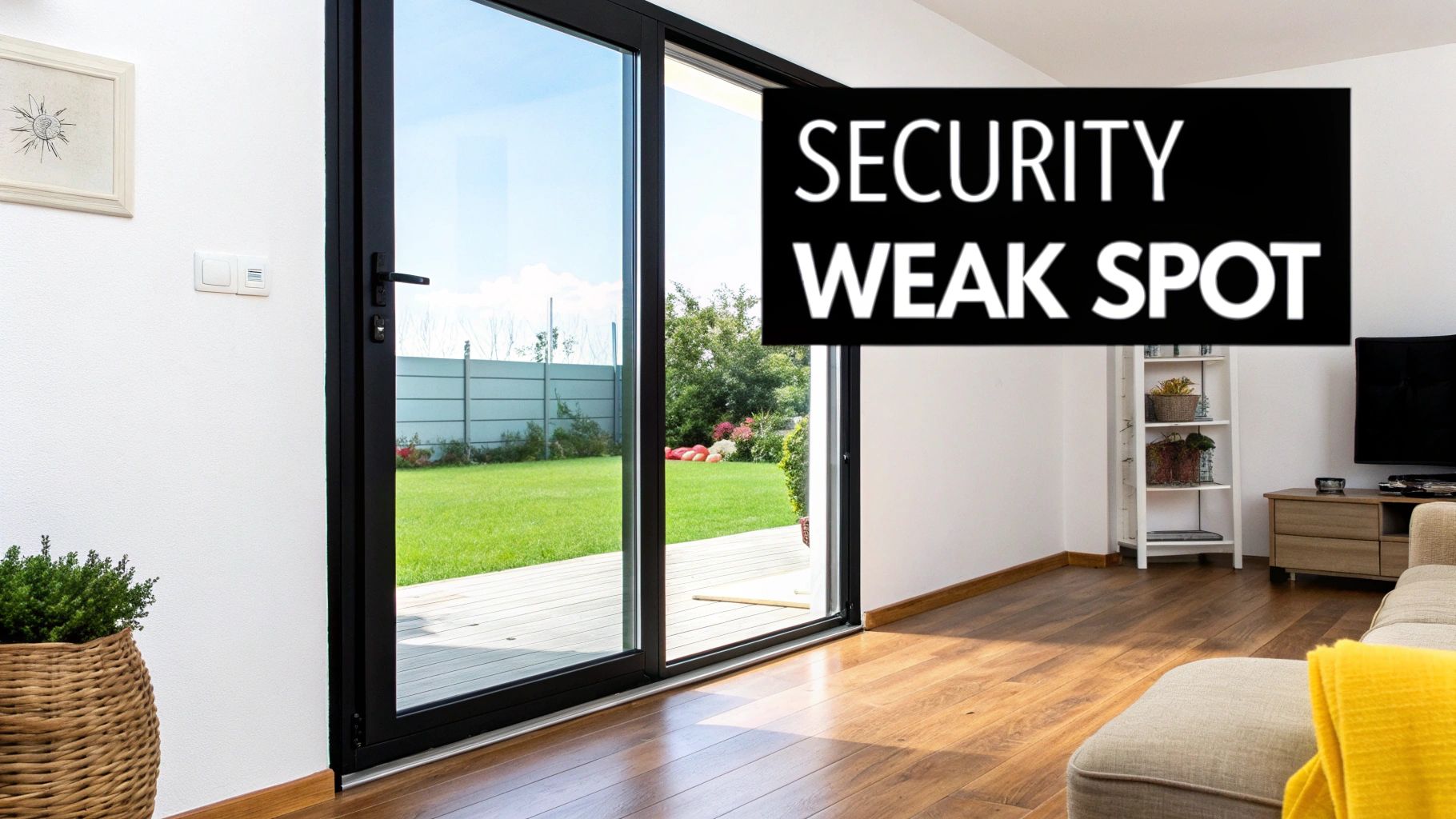
We all love sliding glass doors. They flood our homes with that beautiful Southern California light and connect our living spaces to the outdoors. But that convenience comes with a major security trade-off. For a burglar, that big, beautiful door often looks like a welcome mat.
Think about the standard lock on most sliding doors. It’s usually a simple latch mechanism. While it might keep the door from blowing open in a breeze, it offers very little resistance to a determined intruder. These basic latches can often be jiggled, pried, or simply forced open with a bit of leverage, providing a quiet and easy way in.
It's Not Just the Lock
The security problems go much deeper than just that weak latch. There are a couple of other glaring vulnerabilities that make these doors a prime target.
First, there's the track system. Many older sliding doors, and even some newer ones, can be lifted right out of their tracks from the outside. All it takes is a pry bar to create a small gap at the bottom. From there, an intruder can lift the entire door panel up and swing it out, bypassing the lock completely. It's a shockingly fast and effective technique.
Second, the glass itself is an obvious bullseye. A hard, sharp impact can shatter standard tempered glass, creating an instant opening. This "smash-and-grab" entry is loud, but it's over in seconds. The glass isn't just a physical weak point, either—it's a visual one.
Those large glass panels essentially turn your home into a storefront display. A potential thief can peer inside, spot valuables, and see if anyone is home, taking all the guesswork out of their operation.
A High-Risk Entry Point
These combined weaknesses are a well-known fact among criminals. According to security industry data, up to 22% of all home break-ins happen through sliding patio doors, making them one of the most targeted entry points. This is a particularly serious concern here in Southern California, in communities from Burbank to Beverly Hills, where beautiful, expansive glass doors are common. Find out more about how these entry points are exploited from these security experts.
To get you started, here’s a quick overview of the key vulnerabilities and the solutions we’ll be covering in this guide.
Common Sliding Door Weak Points at a Glance
| Common Vulnerability | Primary Risk | Effective Security Solution |
|---|---|---|
| Weak Factory Latch | Prying, jiggling, or forcing the lock open. | Auxiliary locks, security bars, or a dowel rod. |
| Lift-Out Risk | Door is lifted up and out of its track. | Anti-lift devices or Charley bars. |
| Glass Shattering | Forced entry through broken glass. | High-performance security window film. |
| High Visibility | Burglars can see inside to case the home. | Privacy or decorative window films. |
Understanding how to secure a sliding glass door means creating multiple layers of defense. The goal is to address each of these weak points—the lock, the track, and the glass—to build a security plan that protects your home and family without sacrificing the view you love.
Low-Cost Security Fixes You Can Implement Today
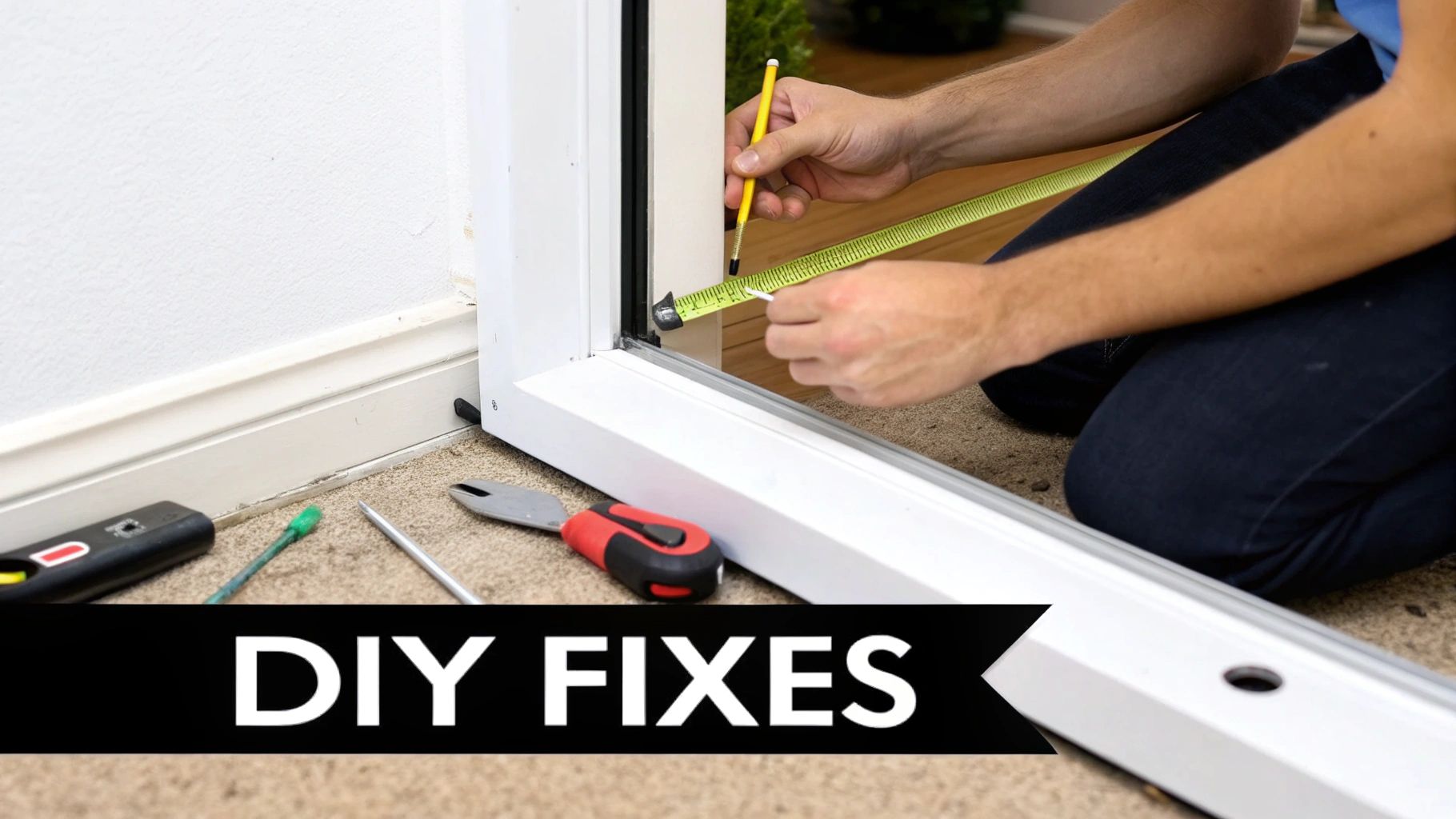
Securing your sliding glass door doesn't have to mean a complete overhaul or a huge expense. In fact, some of the most effective ways to stop a burglar are surprisingly simple and can be done in an afternoon with basic tools you probably already own.
These fixes go straight for the most common weak points: forcing the door open along its track or lifting it out completely. Getting these immediate, low-cost solutions in place is your first line of defense. They give you a major security boost right away, offering peace of mind while you think about bigger upgrades down the road.
Let's walk through some of the best DIY options I recommend to clients all the time.
The Classic Security Bar, Done Right
The old-school security bar or dowel rod is a classic for one simple reason: it works. When you drop a solid rod into the bottom track, you create a physical barricade. Even if a thief defeats the flimsy factory latch, that bar is going to hold the door shut.
But here's the catch—it only works if you do it correctly. I've seen countless people use a flimsy broomstick or a piece of wood that's too short. A poorly-fitted bar can be jiggled out of place in seconds, making it totally useless. What you need is a snug, precise fit.
Getting it right is easy:
- Close and lock the door to ensure the panel is seated properly in its frame.
- Measure the exposed track from the inside edge of your sliding door to the door jamb.
- Cut your material about 1/8 of an inch shorter than your measurement. That tiny gap makes it easy for you to pop the bar in and out but is too small for a criminal to get any leverage.
A thick wooden dowel is a great option, but for a little more strength, consider a solid PVC pipe or an adjustable security bar from a hardware store. Those commercial bars are fantastic because they often have padded ends to protect your door frame and adjust for a perfect fit without any cutting.
Installing Auxiliary Locks for Added Resistance
A security bar is a fantastic deterrent, but it only works when you're home and remember to put it in place. For more consistent, around-the-clock protection, you should absolutely install a secondary, or auxiliary, lock.
These are devices you mount directly onto the door and frame, adding another physical locking point that's completely separate from the main latch. They are a brilliant, low-cost upgrade.
A simple auxiliary lock can be the difference between a quick bypass and a failed entry attempt. Burglars are all about speed and simplicity. Adding another mechanical obstacle they didn’t expect is often enough to convince them to give up and move on.
You've got a few solid options when it comes to these locks:
- Pin Locks: Deceptively simple. You drill a hole through the sliding door's frame and into the stationary one, then slide a metal pin through both to lock them together.
- Foot-Operated Bolts: These are installed at the bottom of the door. You just step on a spring-loaded bolt to drive it down into the track or a pre-drilled hole in the floor.
- Loop Locks: This is a two-piece lock with a "U"-shaped catch on the frame and a locking lever on the door. It fastens the two panels securely and can often be set to allow the door to open a few inches for ventilation without compromising security.
These locks typically cost between $15 and $50 and are a quick install—usually under an hour with a drill and screwdriver.
Preventing the Dreaded Door Lift
One of the scariest vulnerabilities of an old sliding door is just how easily it can be lifted right out of its track. A burglar with a pry bar can create leverage, lift the door panel up, and swing the bottom free. The good news is that the fix for this is incredibly easy and practically free.
The goal is simple: reduce the clearance in the upper track so the door can't be lifted high enough to clear the bottom rail.
You can do this by installing dedicated anti-lift devices, but honestly, a few strategically placed screws in the overhead track work just as well. These screws act as stoppers, physically blocking the door from being raised. Just be sure not to drive them in so far that they scrape the top of the door as it slides. You want them to stick out just enough to block upward movement. It's an invisible modification that completely neutralizes a major security flaw.
Upgrading Your Locks to Resist Forced Entry
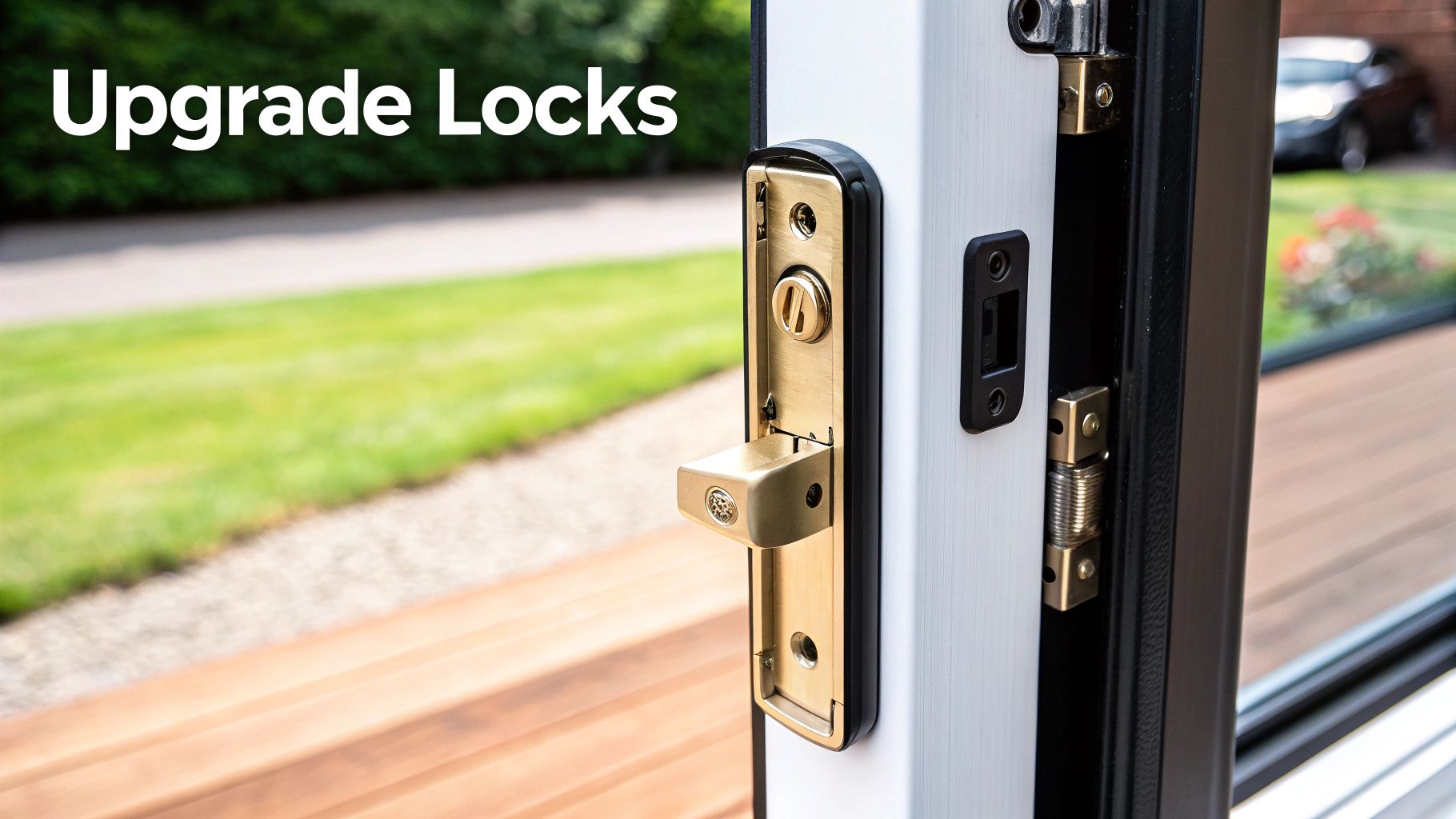
While quick DIY fixes add a layer of security, the single most powerful hardware change you can make is swapping out the lock itself. The factory-installed latch on most sliding glass doors is notoriously flimsy. It’s often just a simple hook that can be jiggled, forced, or bypassed with very little effort.
A real lock upgrade isn't just a minor improvement; it's a fundamental change in how you protect this common entry point. You're moving beyond a basic latch to a mechanism engineered to withstand serious, determined force. This is how you turn an easy target into a fortified barrier.
The Power of Multi-Point Locking Systems
If there's one upgrade that completely changes the game, it's a multi-point locking system. Unlike that standard latch securing your door at a single spot, this system engages the frame in several places at once—all with the turn of a single key or lever.
Think about it: one small bolt trying to hold a door shut versus three, four, or even five heavy-duty bolts locking into the frame from top to bottom. The difference in structural integrity is massive. This design makes it incredibly difficult for an intruder to pry the door open because the force they apply gets distributed across multiple anchor points instead of being focused on one weak spot.
Multi-point systems are a direct counter to the brute-force prying attacks that burglars rely on. Gaining entry becomes nearly impossible without loud, heavy equipment, which is exactly the kind of attention a criminal wants to avoid.
This style of lock essentially integrates the entire door panel into the frame, creating a cohesive, solid barrier. It’s a professional-grade solution that offers security far beyond what any simple auxiliary lock can provide.
Keyed Locks and Smart Technology Integration
Another impactful upgrade is replacing that standard interior latch with a proper keyed locking mechanism. This adds two critical layers of security that many homeowners don't think about.
- It stops outside manipulation. If a burglar breaks a small piece of glass to reach inside, they can't just flip a lever to unlock the door. They're met with a lock that requires a key.
- It prevents an easy exit. Should an intruder get into your home through another window, a keyed lock on the slider stops them from using it as a wide-open escape route for carrying out TVs and other large valuables.
For those who embrace modern tech, smart lock adapters for sliding doors are also a great option. These devices can be retrofitted onto certain lock types, giving you a whole new level of control:
- Lock and unlock the door remotely right from your smartphone.
- Get real-time alerts if the door is opened or tampered with.
- Integrate the door into a larger home security system, linking it to alarms and cameras.
This not only boosts security but adds convenience and peace of mind that traditional locks just can't match.
Of course, even the best lock is only as strong as the glass it's protecting. To fully secure your home, you have to reinforce the glass itself. You can learn more in our guide on how to protect windows from break-ins.
How Upgraded Locks Defeat Burglars
A strong, modern lock is designed to defeat common break-in tactics head-on. The flimsy factory latches are a known weakness, contributing to the fact that around 22% of break-ins happen through patio doors. Upgrading to a multi-point system, which can engage at four to eight different points along the frame, makes the door incredibly resistant to being forced.
Imagine this real-world scenario: a burglar jams a crowbar between your door and the frame. With a standard latch, the frame flexes, and that little hook pops out in seconds. But with a multi-point lock, the crowbar meets solid steel resistance at multiple points. The frame won't budge. The intruder would have to destroy the entire door and frame to get in—a loud, difficult, and time-consuming process that will almost certainly send them running to find an easier target.
Reinforcing the Glass Against Impact
A fancy new multi-point lock is a great start, but it only solves half the problem. Let’s be realistic: a determined intruder willing to make some noise isn’t going to fiddle with the lock. They'll go straight for the glass. That huge pane is the single biggest weakness of any sliding door, making it the preferred target for a quick smash-and-grab entry.
So, if you’re serious about security, reinforcing that glass isn’t just a good idea—it’s a necessity.
Most sliding doors you see in homes today are fitted with standard tempered glass. It’s called "safety glass" for a reason—when it breaks, it crumbles into thousands of tiny, dull-edged pebbles instead of big, dangerous shards. While that's great for preventing injuries, it’s terrible for security. A single solid hit can shatter the entire pane, and an intruder can just walk right in.
To really fortify a sliding glass door against a brute-force attack, you have two main paths: upgrade the glass itself or add a protective layer that changes how it stands up to impact.
Upgrading Your Glass Options
One of the most robust solutions is to replace the glass entirely. If you're doing a major renovation, this is the perfect time to consider it.
For a serious security upgrade, laminated glass is the top-tier choice. It’s made by sandwiching a tough, clear layer of polyvinyl butyral (PVB) between two panes of glass. It’s the same stuff used in your car’s windshield.
When laminated glass gets hit, it might crack into a spiderweb pattern, but that inner PVB layer holds everything together. The glass won't fall out, and the barrier remains intact. Of course, swapping out an entire glass panel is a bigger project and comes with a higher price tag. There are also other advanced options like ultra clear glass that offer different properties worth exploring.
But there’s a much more practical and highly effective route for most homeowners: applying a high-performance security film to the glass you already have.
How Security Film Fortifies Your Door
Think of security film as invisible armor for your glass. This isn't the flimsy tint you put on car windows to block the sun. We're talking about incredibly tough, tear-resistant sheets of polyester that are bonded directly to the interior surface of your glass.
Here’s what happens when an intruder tries to break through a window treated with security film: the glass still shatters, but the film tenaciously holds all the broken pieces in place. Instead of a gaping hole, the burglar is now faced with a flexible, durable, and surprisingly strong membrane of broken glass that's a nightmare to get through.
This completely changes the game. A quick, silent entry is now off the table. The intruder has to make a ton of noise, repeatedly hitting the window to try and tear a big enough hole in the film. That buys you critical time—time to hear them, call for help, and for your alarm to go off.
To give you a clearer picture, let's compare the main reinforcement methods.
Comparing Glass Reinforcement Options
| Reinforcement Method | How It Works | Primary Benefit | Aesthetic Impact |
|---|---|---|---|
| Tempered Glass | Heat-treated to crumble into small, dull pieces upon breaking. | Safety (reduces injury from sharp shards). | None. Standard on most doors. |
| Laminated Glass | A plastic interlayer (PVB) is sandwiched between two glass panes. | High Security. Holds glass together upon impact, preventing entry. | None. Looks like regular glass. |
| Security Film | A clear polyester film is applied to existing glass. | High Security. Holds shattered glass in a membrane, delaying entry. | Virtually invisible. |
Each option has its place, but for retrofitting an existing door, security film offers a fantastic balance of performance, cost, and ease of installation.
Choosing the Right Security Film Thickness
Security films come in different thicknesses, which are measured in mils (one-thousandth of an inch). The right one for you depends on the level of protection you're looking for.
- 4-7 Mil Films: This is a great starting point for residential security. It's more than enough to stop a casual smash-and-grab attempt and will significantly delay an intruder.
- 8-14 Mil Films: This is the sweet spot for serious home protection. Films in this range can withstand repeated blows from heavy objects like bricks, pipes, or a baseball bat.
- 15+ Mil Films: These are heavy-duty films, typically reserved for high-risk commercial or government buildings where you need a barrier against extreme force.
But here’s a pro tip: the film is only as good as its installation. For maximum effectiveness, the film needs to be anchored to the door frame using a specialized adhesive known as an "attachment system." This system bonds the film, the glass, and the frame together into one solid unit, making it incredibly difficult to push the entire pane out, even after the glass is completely shattered. Our team can walk you through the specifics of choosing the best security film for glass doors.
Ultimately, reinforcing the glass is the crucial final piece of the puzzle. When you combine a strong lock with impact-resistant glass or a professionally installed security film, you effectively eliminate the two weakest points of your sliding door. You turn what was once a major vulnerability into a real source of security and peace of mind.
Creating Your Layered Security Strategy
Real security isn’t about finding a single magic bullet. It’s about creating smart layers of defense that work together. Think of it like a fortress—each layer creates a new obstacle, forcing a potential intruder to make more noise, spend more time, and drastically increase their risk of getting caught.
This layered approach is fantastic because you can build a security plan that actually fits your home, your neighborhood, and your budget. Instead of a one-size-fits-all solution, you get to customize your defense. Let's walk through three practical strategies, from basic DIY fixes to a fully integrated system.
The Essential Security Plan
This is your starting point—a budget-friendly, high-impact plan focused on immediate DIY fixes. It's all about shutting down the most common, low-effort ways burglars get in, without needing a big investment. This plan is perfect for renters or anyone who wants a serious security boost right now.
The Essential plan boils down to two key actions:
- Block the slide: Get a security bar or even just a sturdy wooden dowel rod cut to the perfect length for your door's track. It’s a simple but incredibly effective physical stop.
- Stop the lift: Add a few screws into the upper track. This simple trick reduces that extra clearance, making it impossible for someone to just lift the door panel out of its frame.
This combination costs almost nothing but immediately defeats the two weakest points of a standard sliding door. Honestly, this should be the bare minimum for every home.
The Enhanced Security Plan
Ready to take it up a notch? The Enhanced plan builds on those essential fixes by tackling the more sophisticated weak points: the lock and the glass itself. This approach does require more of an investment, but what you get in return is professional-grade resistance against more determined intruders.
This mid-tier strategy integrates two game-changing upgrades:
- A Multi-Point Locking System: This is where you swap out that flimsy factory latch for a robust lock that secures the door to the frame in multiple places. It makes prying the door open practically impossible.
- Professional Security Film: Applying a high-quality 8-14 mil security film to the glass is a huge step up. It holds the pane together even after it's been shattered, stopping a smash-and-grab dead in its tracks and creating a major delay.
Put these two together, and you've created a formidable barrier. The lock can't be easily forced, and the glass can't be quickly smashed through. It’s a balanced, powerful strategy that delivers real, long-term peace of mind.
This decision tree can help you visualize which glass reinforcement option makes the most sense based on your priorities.
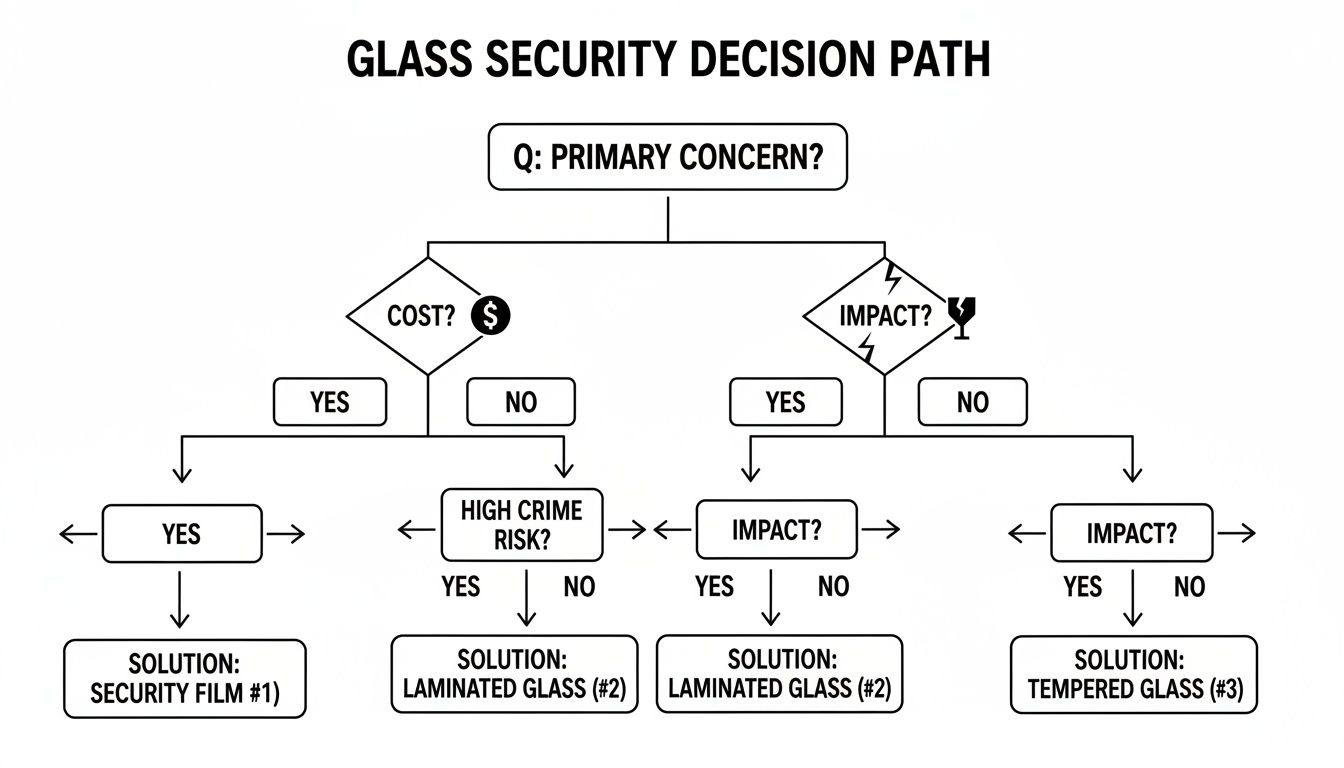
As you can see, while cost is always a consideration, the real benefit of security film is its ability to withstand direct, violent impact and buy you precious time.
The Maximum Protection Plan
For the highest level of security, this plan pulls everything together and adds a layer of modern technology. It creates an active, responsive defense system that doesn't just resist an intrusion but also alerts you—and the authorities—the second a threat is detected. This is the ultimate setup for anyone seeking truly comprehensive protection.
The Maximum Protection plan is where your security shifts from passive resistance to active deterrence. It’s about creating an environment where a break-in attempt is not just difficult, but is also immediately detected and broadcast.
This top-tier strategy brings in the electronics:
- Glass Break Sensors: These acoustic sensors are trained to detect the specific sound frequency of shattering glass, triggering an alarm instantly. You can learn more about how a break-glass alarm works as a critical part of your system.
- Door and Window Sensors: A simple magnetic sensor on the door frame will alert your security system the moment the door is opened, even a crack.
- Smart Home Integration: This is where it all comes together. Connecting your sensors and locks to a smart home system gives you remote monitoring, real-time alerts on your phone, and the ability to link up with security cameras.
By combining a physically fortified door with an intelligent alert system, you transform a vulnerable entry point into a nearly impenetrable part of your home's defense.
Common Questions About Securing Sliding Doors
Even with all the options laid out, it's natural to have a few lingering questions. When you're deciding how to secure a sliding glass door, you're really trying to find that sweet spot between cost, aesthetics, and the actual level of protection you feel comfortable with. Here are some of the most common things we get asked by homeowners, with direct answers to help you lock in your final decision.
Will Security Film Make My Door Look Ugly?
This is easily the number one concern we hear, and I'm happy to report the answer is a firm no. High-performance security films are engineered to be optically clear. Once they're installed, they are virtually invisible.
We're not talking about dark, privacy-style tints here. These are completely transparent films that won't alter the look of your glass, cut down on that beautiful natural light you love, or spoil your view of the backyard. The only way you'll even know it's there is the peace of mind you get from knowing your glass is reinforced. It’s a serious security upgrade that doesn't force you to make a single aesthetic compromise.
Is a Security Bar Enough Protection?
A good security bar or even a perfectly cut wooden dowel is an fantastic first line of defense. I highly recommend them. It’s a simple, effective tool that provides a strong physical and visual deterrent, stopping a burglar from simply prying the door open on its track. Every sliding door should have one.
But here’s the catch: a bar does absolutely nothing to protect the glass itself. An intruder can still just smash the pane, step right over the bar, and be inside your home in seconds. That's why a security bar alone isn't a complete solution. It's a critical piece of the puzzle, but it needs to be part of a layered approach that includes reinforcing the glass with a quality security film.
Think of it this way: the bar secures the door panel, while the security film secures the glass pane. You need to address both weak points to create a truly secure entry.
How Much Does Securing a Sliding Door Cost?
The investment can vary quite a bit, depending on how many layers of security you decide to add. Here's a realistic breakdown to give you an idea of what to budget:
- DIY Hardware: Simple but effective fixes like pin locks, anti-lift screws, or a good commercial security bar will typically run you anywhere from $20 to $75.
- Upgraded Locks: If you opt for a professionally installed multi-point locking system, you're looking at a more significant investment, usually between $300 and $800.
- Security Film: The cost for a professional installation of high-performance security film is based on the size of your door and the specific film you choose, but it generally starts in the low hundreds of dollars.
For the best all-around value, combining an upgraded lock with professional security film creates a formidable barrier against both forced entry and smash-and-grab attempts.
Can I Install Security Film Myself?
You'll see DIY security film kits all over the internet, but I strongly advise against going that route. Professional installation is the only way to guarantee the film will actually perform as intended when it matters most.
Certified installers have the right tools and, more importantly, the experience to get a flawless application—no bubbles, creases, or dust trapped underneath. It’s not just about looks; it's about performance. A professional job ensures maximum adhesion and strength. Plus, it almost always comes with a solid warranty covering both the film and the labor. An improperly installed film can easily fail under duress, right when you need it to hold strong.
Ready to turn your home's most vulnerable entry point into one of its strongest? The team at Fortress Security Films offers expert consultations and professional installations of high-performance security films for clients throughout Burbank and the greater Los Angeles area. Secure your home without sacrificing your view. Visit us at https://fortresssecurityfilms.com to schedule your free estimate today.
