


To truly secure a sliding glass door, you need to think about its three biggest weak spots: the flimsy factory lock, the exposed track it slides on, and the large pane of glass itself. If you're in a pinch, wedging a security bar in the track or adding an auxiliary foot lock are great quick fixes. For more permanent peace of mind, though, you’ll want to look at upgrading the main latch, applying security window film, and reinforcing the track to really stand up to a forced entry attempt.
Why Your Sliding Door Is a Security Risk
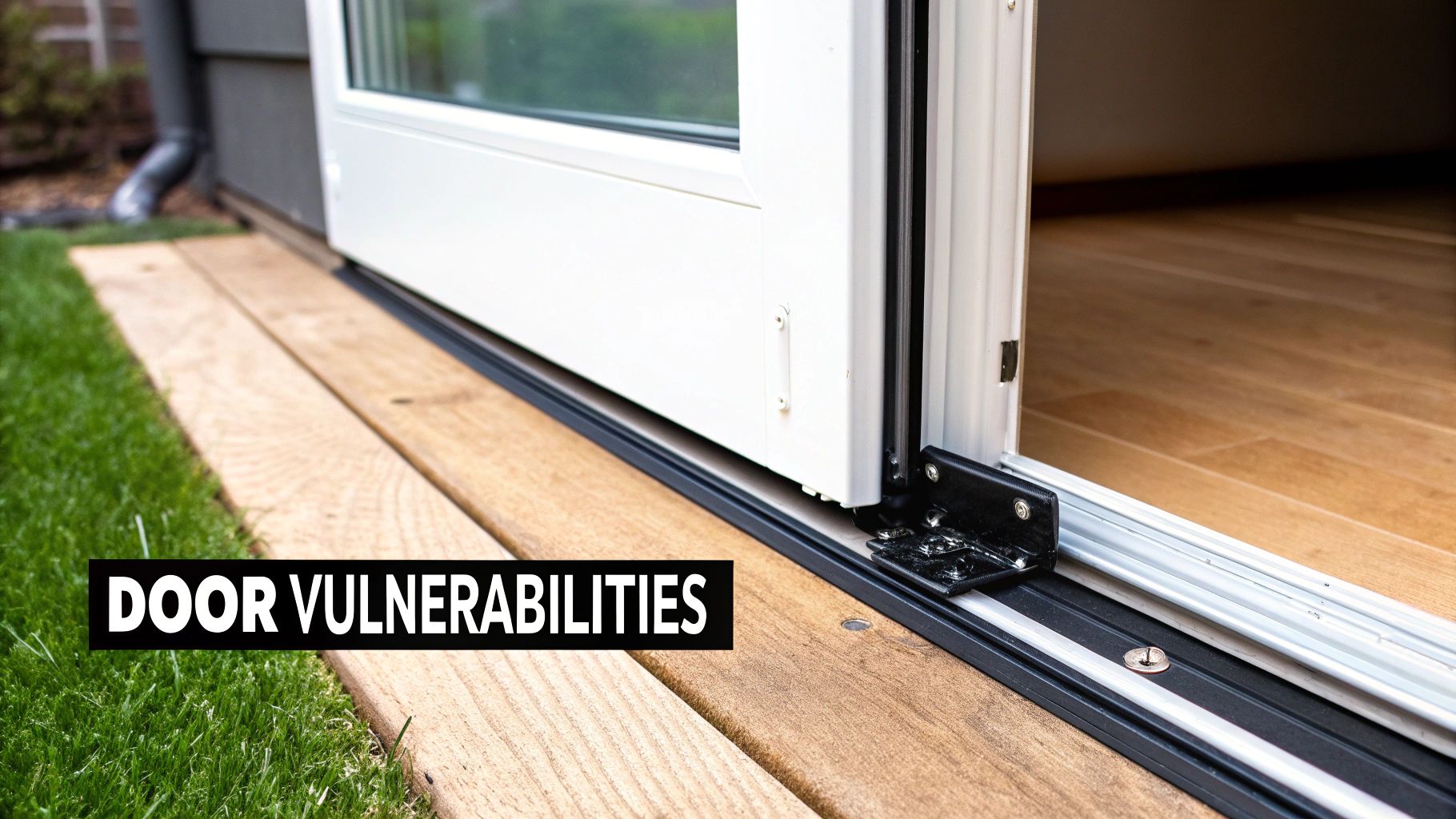
We all love sliding glass doors. They open up our homes, let in beautiful natural light, and connect us to the outdoors. The problem is, burglars love them too, but for entirely different reasons. Their design, which is great for views, often comes with built-in flaws that intruders are experts at exploiting.
The most common point of failure is that simple latch that came with the door. Let's be honest—it's usually flimsy. These locks are often designed more for keeping the door shut against the wind than for stopping a determined person. A little bit of force or even just a good jiggle can be enough to pop them open.
The Exposed Track and Shatter-Prone Glass
Another glaring issue is the track system. On many older models, it's shockingly easy to lift the door panel right off its tracks from the outside using a simple pry bar. Someone who knows what they're doing can bypass your lock entirely in just a few seconds.
And then there's the most obvious vulnerability: the glass. That huge, beautiful pane is an open invitation for a smash-and-grab entry. If it’s just standard, non-reinforced glass, a burglar can shatter it, reach in, and unlock the door from the inside, making even the best lock useless.
"Seeing your sliding door through the eyes of a burglar is the first step toward securing it. They don't see an architectural feature; they see a weak latch, a liftable panel, and a large pane of glass waiting to be broken."
These weaknesses aren't just theoretical. Statistics show that over 76% of home break-ins occur through doors or windows. More specifically, about 22% of burglars in the United States go straight for sliding glass doors, which are often located at the back of the house, out of sight from the street. The good news? Fortifying that door buys you precious time. FBI data shows 60% of burglars give up if they can't get in within 90 seconds.
Adopting a Layered Security Approach
The key to properly securing a sliding door is to use a layered approach. You can’t just rely on one fix. A truly secure door addresses each weak point with a dedicated solution.
A solid plan involves:
- Upgrading the Lock: Don't rely on the factory latch. Add a secondary, more robust locking mechanism.
- Securing the Track: Take steps to prevent the door panel from being lifted out of its frame.
- Reinforcing the Glass: Make the glass itself harder to break and penetrate.
Thinking in layers also includes considering what people can see from the outside. You can find some fantastic ideas for privacy window treatments for stylish security that add another barrier. By combining these strategies, you can turn your door from a security liability into a strong, fortified part of your home. The next sections will walk you through exactly how to do it.
Quick, Low-Cost Ways to Secure Your Door Right Now
You don't need to spend a fortune to make your sliding glass door significantly safer. If you're looking for a security boost on a budget or just need an immediate fix, there are a few surprisingly effective tricks of the trade. These methods target the most common weak points and can give you instant peace of mind while you plan for bigger upgrades.
Let’s start with the classic. Most of us have heard of dropping a wooden dowel or a cut broomstick into the door track. It might sound too simple to work, but it’s a time-tested and effective way to stop a door from being forced open. It’s a physical block that simply won't let the door slide.
The Dowel Rod Trick, Perfected
Using a dowel is a fantastic starting point, but getting the details right is what makes it truly effective. Don't just toss any old piece of wood in there. You're looking for something solid that won't splinter under pressure—a sturdy hardwood dowel or even a metal rod is a huge step up from a flimsy broom handle.
Here’s how to get the perfect fit:
- Shut and Lock the Door: First, make sure the door is completely closed and the factory lock is engaged.
- Measure the Exposed Track: Grab a tape measure and get the length of the bottom track that's exposed, running from the edge of the sliding door panel to the door jamb.
- Cut it Just Right: Cut your dowel or rod about a quarter-inch shorter than your measurement. That tiny bit of wiggle room makes it much easier to pop in and out without a struggle.
A properly measured rod isn't just a physical barrier; it's a visual one. When a would-be burglar peeks inside and sees that bar, they know that prying the flimsy latch is a waste of time. Often, that's enough to convince them to find an easier target.
Upgrade to a Charley Bar for a Stronger Brace
Think of a charley bar as the professional, heavy-duty version of a wooden dowel. These are adjustable metal bars that mount directly to the door frame and the sliding panel itself. When you're ready to lock up, the bar just swings down and braces the door shut, creating a rock-solid obstacle.
What makes it better than a loose dowel? A charley bar is physically anchored to the door system. This provides far more resistance if someone tries to lift the door off its track or use brute force to shove it open. It's a fantastic, budget-friendly upgrade that feels much more permanent and secure.
Pro Tip: A common mistake is installing a charley bar too high or low. For the best leverage against force, mount it horizontally near the middle of the door. That's the sweet spot for resisting pushing forces.
Stop the "Lift and Shift" with Track Blockers
One of the most unsettling weaknesses of older sliding doors is how easily they can be lifted right out of their tracks. Thankfully, a few simple and cheap devices are designed to stop exactly that.
These small but mighty locks are often called "track blockers" or "sliding door pins," and they get installed right into the door's track or frame. A couple of popular options include:
- Ventilation Locks: These are little thumb-turn locks that clamp down hard onto the door's track. They're great because they can secure the door shut or let you lock it while it's open a few inches for a breeze, all while preventing it from being lifted out.
- Sliding Door Pins: This is a more hands-on solution. You drill a small hole that goes through the frame of the sliding panel and continues into the stationary frame behind it. A hardened steel pin slides through both holes, physically bolting the two panels together.
These track-locking devices are a game-changer because they solve a problem that standard locks and even security bars don't always address. By pinning the moving part of your door to the stationary part, you completely foil one of the most common ways thieves bypass sliding doors.
Choosing The Right Hardware Upgrades
While a dowel in the track is a decent quick fix, it's just a starting point. To truly secure a sliding glass door, you need to upgrade the hardware. This is where you move from a temporary deterrent to a permanent, physical barrier that can stand up to real force.
The standard factory-installed latches on most sliding doors are notoriously weak—they're often the first point of failure. The other major vulnerability is the door panel itself, which can sometimes be lifted right out of its track. Serious hardware upgrades tackle both of these problems head-on, integrating new, robust locking mechanisms directly into the door and frame.
Evaluating Your Lock Options
There’s a whole world of security hardware out there, and the best one for your door depends on its design, your budget, and how comfortable you are with a bit of DIY. Some locks offer a simple but effective boost, while others provide a more comprehensive defense.
Let's walk through some of the most popular and effective choices I recommend to homeowners.
- Auxiliary Foot Locks: These are my go-to recommendation for a simple, powerful upgrade. Mounted at the bottom of the sliding panel, you just use your foot to press a hardened steel bolt down into the frame. It's brilliant because it stops the door from both sliding and being lifted out of the track.
- Loop Locks: You’ve probably seen these before. A U-shaped "loop" mounts to the door jamb, and a small post attaches to the door. When you close the door, you flip the loop over the post. It's a fantastic visual deterrent and surprisingly tough to defeat from the outside.
- Keyed Locks: If you want the convenience of locking and unlocking your patio door from the outside with a key, this is your solution. It functions just like a deadbolt on your front door, adding a serious layer of security. The installation is more involved, so this is one you might want to call a professional for.
This chart can help you figure out where to begin.
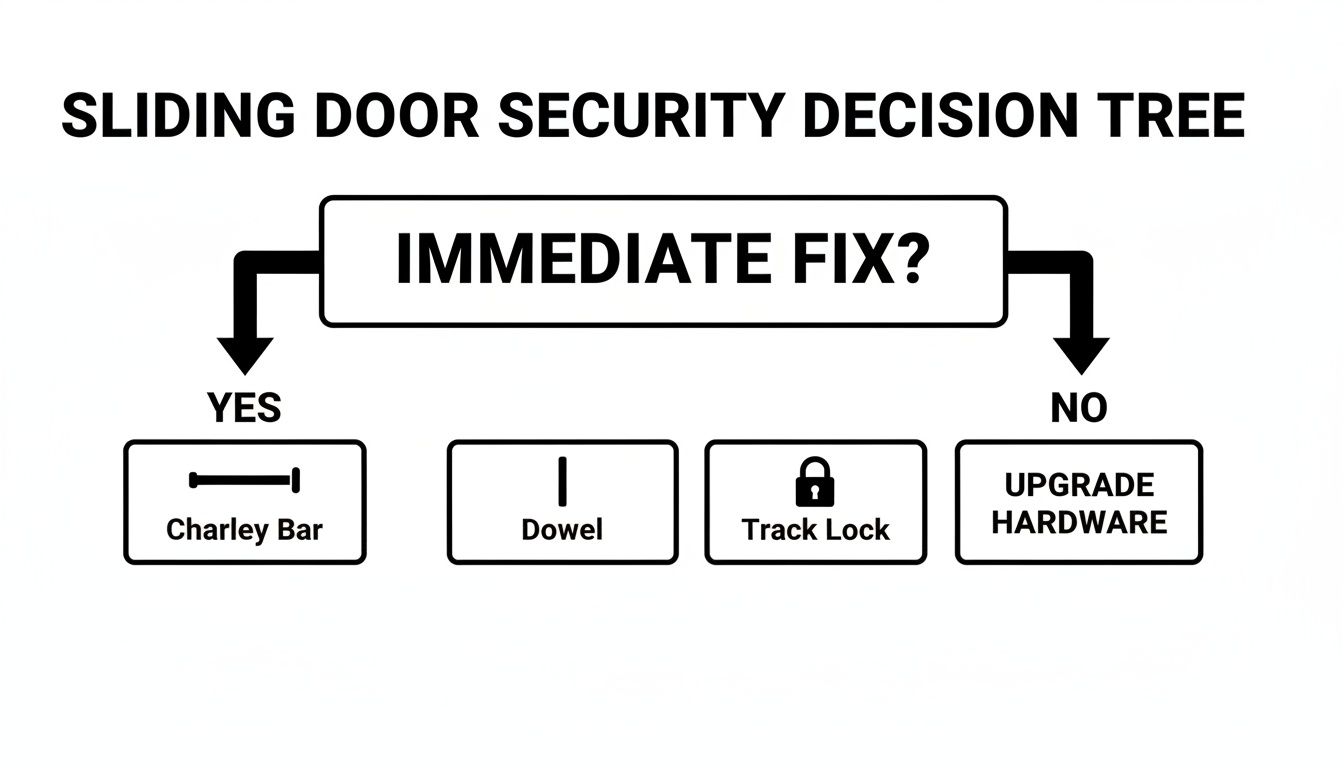
As the decision tree shows, when you're ready to move past quick fixes, upgrading your hardware is the most logical and effective next step.
Multi-Point Locking Systems: The Ultimate Upgrade
If you're looking for the absolute best security, a multi-point locking system is it. Instead of locking the door at a single spot, these systems have bolts that engage at multiple points along the frame—usually at the top, bottom, and middle.
This design distributes the force of any prying attempt across the entire door, making it incredibly difficult to breach. They are a bigger investment and almost always require professional installation, but they effectively turn your sliding door into a fortress. For anyone putting security above all else, this is the top-tier choice.
Reinforcing The Frame Against Prying
Even the best lock is useless if the frame it's attached to gives way. Burglars often use a crowbar to bend the frame just enough to bypass the lock. You can fight back by installing heavy-gauge steel frame reinforcers or strike plates. These simple additions make it much harder for a thief to get the leverage they need to pry the door open.
Upgrading your hardware is more than just adding one strong lock. It’s about building a system where multiple components work together to cover all the vulnerabilities, turning your door from a weak point into a stronghold.
The table below breaks down these hardware options to help you compare them at a glance.
Sliding Door Hardware Security Comparison
| Hardware Type | Security Level | Average Cost | Installation Difficulty | Best For |
|---|---|---|---|---|
| Auxiliary Foot Lock | High | $20 – $50 | Low (DIY-friendly) | Preventing both sliding and lifting with an easy-to-install device. |
| Loop Lock | Medium-High | $15 – $40 | Low (DIY-friendly) | Adding a strong visual deterrent and secondary locking point. |
| Keyed Lock | High | $50 – $150 | Medium (Pro may be needed) | Homeowners who need to lock and unlock the door from the outside. |
| Multi-Point Lock System | Very High | $300 – $800+ | High (Pro required) | Maximum security and transforming the door into a highly reinforced entry. |
| Frame Reinforcer | Medium | $15 – $30 | Low (DIY-friendly) | Anyone looking to add an extra layer of defense against prying attacks. |
Choosing the right hardware comes down to balancing your security needs with your budget and installation capabilities. For many, a simple foot lock or loop lock offers a significant security boost for a very small investment.
This layered approach is critical. Frighteningly, 22% of U.S. home invasions happen through backyard sliders, often because flimsy factory latches fail. In some areas, glass doors are breached in as many as 30% of property crimes. Investing in professional installation for these upgrades not only ensures they're done right but can also lead to insurance premium reductions of 20-30%.
For a really solid add-on, consider something like a Nuvo Iron slide bolt latch to beef up your door's locking mechanism. But remember, even with the best locks, the glass itself can still be a weak point. We cover that in our guide on how you can https://fortresssecurityfilms.com/how-to-secure-windows-without-bars/.
What About the Glass Itself? Reinforce It With Security Film
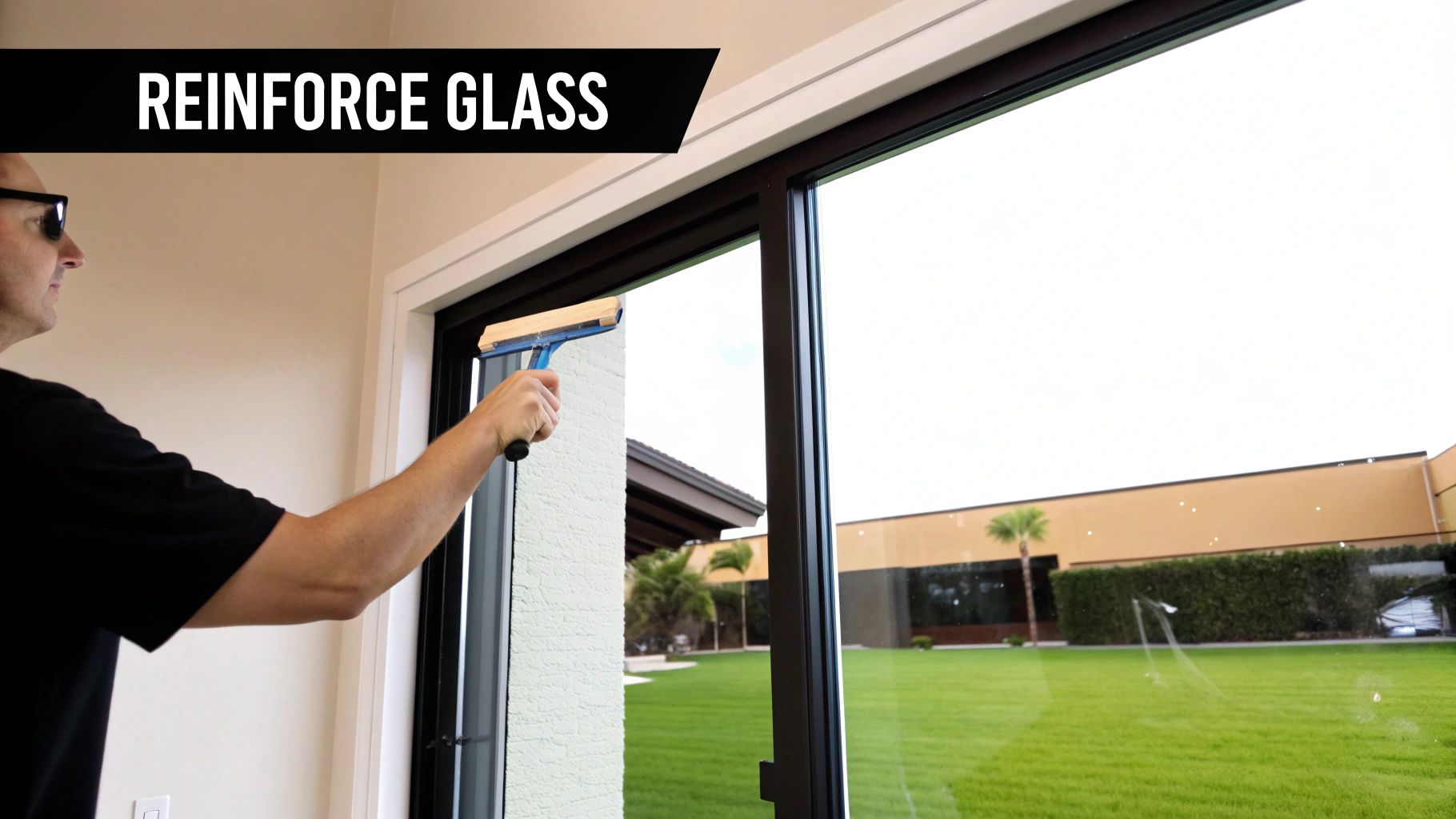
Upgrading locks and reinforcing the track are crucial moves, but let's be honest—they don't address the elephant in the room. The biggest vulnerability of a sliding door is, and always will be, the giant pane of glass.
A determined intruder can simply smash the glass, reach in, and unlock your door from the inside. Your fancy new locks are suddenly useless. This is where security window film comes in, and it's a non-negotiable layer of defense in my book.
This isn't just a decorative sticker. We're talking about a heavy-duty polyester sheet that bonds directly to your glass with an incredibly strong adhesive. Its whole purpose is to hold the glass together after it's been shattered. Instead of the glass exploding into a thousand pieces, the film creates a tough, spiderwebbed barrier, keeping the broken shards locked in place.
How Film Actually Stops a Break-In
Picture this: a burglar expects to tap your door, shatter the glass, and be inside in seconds. But when they strike a window treated with security film, the glass cracks but doesn't collapse. It just sits there, a fractured but solid wall.
Now, instead of a quick and quiet entry, they're forced to repeatedly hit the same spot, trying to tear a hole through the bonded glass. This creates a ton of noise and, more importantly, takes time.
A core principle of home defense is buying time. Security film turns a fragile pane of glass into a frustrating obstacle. It forces an intruder to waste precious seconds, dramatically increasing the odds they’ll just give up and run.
The numbers back this up. While 22% of burglaries still target sliding doors, glass with security film can require up to 10 times more force to get through. High-quality films can even boost shatter resistance by 200%. This simple upgrade can deter 85% of those opportunistic smash-and-grab attempts by delaying entry past that critical 60-second window.
More Than Just Security: The Other Perks of Film
While stopping a break-in is the main reason to get security film, it comes with a handful of other benefits that make it a fantastic investment for your home.
- UV Ray Protection: Think of it like sunscreen for your house. These films block up to 99% of damaging UV rays, preventing your floors, furniture, and art from fading in the sun.
- Storm and Debris Shield: If you live where bad weather is a concern, this film is a game-changer. It helps hold glass together against impacts from flying debris during a storm, which can prevent a window from blowing out completely.
- Accident Prevention: Life happens. A stray baseball or an accidental fall can easily shatter a glass door. The film contains the broken shards, drastically reducing the risk of a nasty injury.
You can learn more about security film for glass doors and see just how versatile it is here: https://fortresssecurityfilms.com/security-film-for-glass-doors/
Should You DIY or Hire a Pro?
You'll find plenty of DIY security film kits online, and it might seem like a good way to save some cash. But this is one of those jobs where I strongly advise going with a professional.
Trying to apply a huge sheet of film to a glass door without getting bubbles, creases, or tiny specks of dust trapped underneath is a nightmare. A sloppy application doesn't just look bad; it creates weak spots in the film that an intruder could potentially exploit.
A professional installer has the right tools, the experience, and a controlled process to guarantee a perfect, edge-to-edge application. They know how to prep the glass—a critical step for a solid bond—and they use professional-grade films that are often thicker and stronger than what you can buy yourself. Plus, their work usually comes with a warranty.
The film is only as good as its bond to the glass. A flawless installation ensures that bond is rock-solid, giving you the real protection you're paying for.
Integrating Alarms and Smart Home Technology
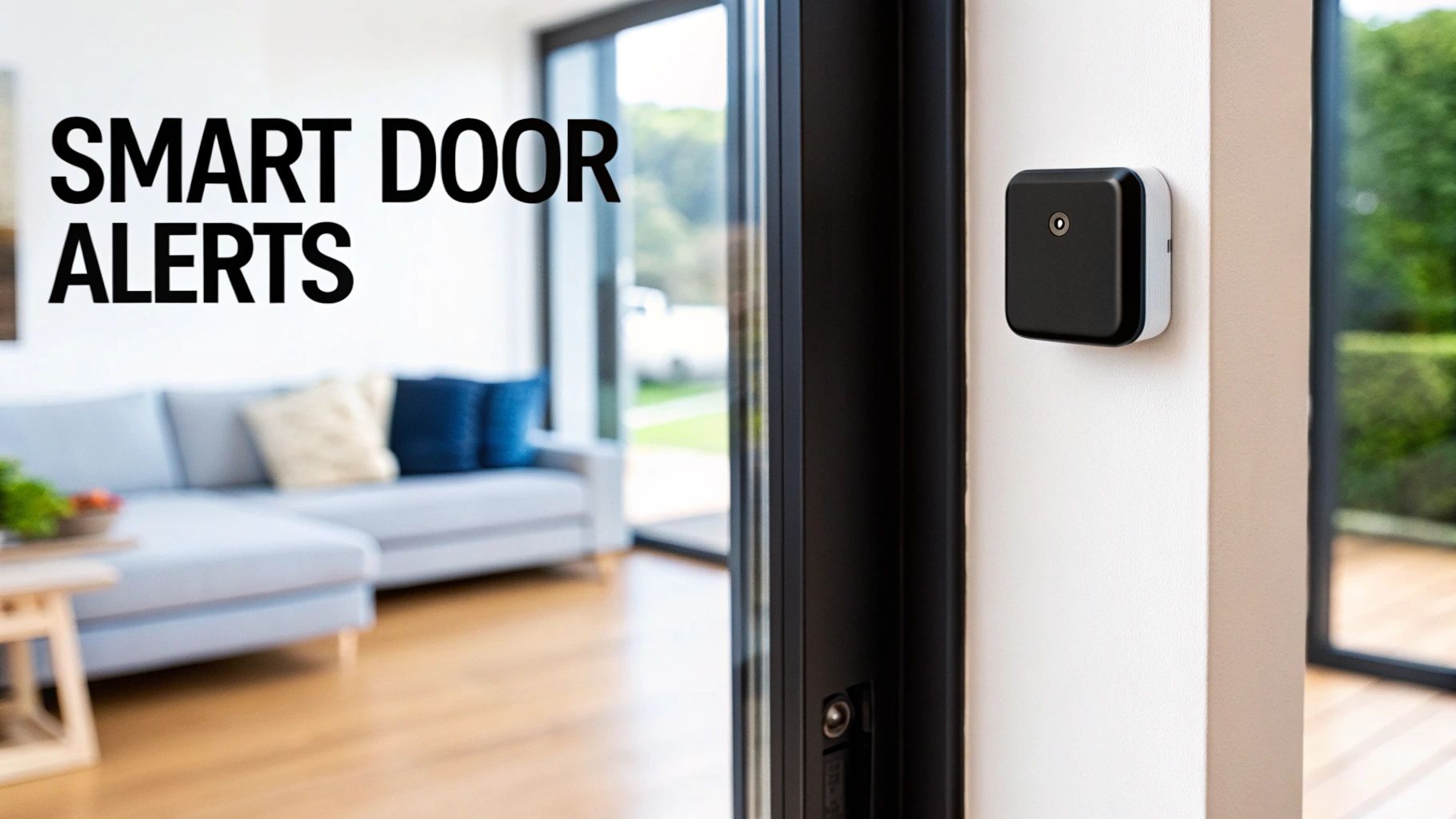
Upgraded locks and security films are excellent physical deterrents, but they are only part of the story. A truly secure door needs to do more than just resist an attack; it needs to alert you the moment trouble starts. This is where smart home alarms come in, turning your door from a passive barrier into an active part of your home’s defense network.
This digital layer acts as a 24/7 watchdog, giving you instant updates whether you're in the next room or halfway around the world. An intruder might be slowed by a good lock, but a blaring siren and an instant notification to your phone can send them running and get help on the way. It’s all about creating a system that responds to threats immediately.
Choosing the Right Sensors for Your Door
The heart of any smart security setup is its sensors, but not all are created equal. For a sliding glass door, a basic open/close sensor isn't enough—it only tells you after the door is already open. You want sensors that can detect an attempted break-in before it succeeds.
Here are the key sensors I recommend for total peace of mind:
Vibration or Shock Sensors: These are fantastic. You mount them directly on the door frame or the glass itself, and they’re calibrated to detect the high-frequency vibrations from someone trying to pry the door, lift it, or hit the glass. This can trigger an alarm before the door is breached, often scaring off an intruder immediately.
Glass-Break Sensors: These clever devices use a tiny microphone to listen for the specific sound frequency of shattering glass. A single sensor can usually cover an entire room, protecting your sliding door and any nearby windows. You can learn more about how a break glass alarm provides this critical layer of protection.
Motion Sensors: Think of this as your backup. While not attached to the door, a motion sensor placed inside and aimed at the door will catch anyone who manages to get past your other defenses. The second they step inside, the alarm goes off.
Smart Placement and System Integration
The sensor you choose is only as good as where you put it. Bad placement can lead to annoying false alarms from the dog jumping around, or worse, a complete failure to detect an actual intruder.
For a vibration sensor, I always mount it on the frame of the sliding panel itself. This spot is sensitive enough to detect someone messing with the lock or trying to lift the panel. For glass-break sensors, put them on an adjacent wall or the ceiling where they have a clear "line of sight" to the door, away from things like TV speakers that could set them off accidentally.
"A smart home security system gives your physical defenses a voice. A strong lock can resist force, but a sensor can scream for help. When combined, they create a formidable and intelligent barrier."
Once you've got them in place, the sensors connect wirelessly to your main security hub. This is the brain of the operation. When a sensor is tripped, the hub instantly fires off a notification to your smartphone, sounds a piercing siren, and can even alert a professional monitoring service.
This layered response ensures that nothing goes unnoticed. With a simple app, you can check your door's status, review alerts, and arm or disarm the entire system from anywhere. It's this integration of physical strength and digital intelligence that makes your sliding glass door truly secure.
Your Top Sliding Door Security Questions Answered
Even with all the options laid out, you're probably still weighing the pros and cons of different solutions. That’s smart. When it comes to your home's security, you want to be sure you're making the right call. Let's tackle some of the most common questions homeowners ask when they're figuring out how to lock down their sliding glass doors.
Are Sliding Doors Actually Easy to Break Into?
Right out of the box? Yes, many of them are. The standard latches that come from the factory are often flimsy and surprisingly easy to force open. On top of that, many older doors can simply be lifted right off their tracks by a determined intruder. Convenience and a great view are the main design points, not hardcore security.
But it doesn't have to stay that way. A sliding door that’s been properly upgraded is a whole different beast. By adding a good secondary lock, reinforcing the glass with security film, and tying it into your alarm system, you can make that door a real fortress. A fully secured sliding door can easily be tougher to get through than a standard front door with a single deadbolt.
Will Security Film Make My Glass Dark or Foggy?
That’s a big concern for a lot of people, but the answer is a definite no—as long as you use a quality product and have it installed correctly. Modern, high-end security films are optically clear. Once the film has fully cured, it's virtually undetectable. It’s designed to do its job without messing with your view.
You actually get some fantastic bonus benefits, too. These films block up to 99% of damaging UV rays, which is a huge help in preventing your floors, furniture, and art from fading in the sun. You get to keep all that beautiful natural light while adding a powerful layer of protection.
What’s the Single Best Thing I Can Do to Secure My Sliding Door?
Everyone wants that one silver bullet solution, but the most effective security always comes in layers. If you rely on just one single measure, you're leaving a weak spot somewhere else. The best strategy is to create multiple obstacles that work together.
Here’s how to think about building up your defense:
- First, add a better lock. This is your immediate fix. A security bar, a charley bar, or a foot-bolt lock instantly makes the door much harder to force open.
- Next, strengthen the glass. Address the door's biggest vulnerability by having a professional install security film. This completely shuts down the classic smash-and-grab attempt.
- Finally, add an alarm sensor. A glass-break or vibration sensor is your 24/7 electronic lookout. It ensures that if anyone even tries to tamper with the door, you (and potentially the authorities) will know immediately.
This layered approach is the professional standard for securing a sliding glass door. A strong lock buys you time, reinforced glass stops a brute-force entry, and an alarm system takes away an intruder's most valuable asset: secrecy. Together, they make your door an incredibly unappealing target.
Ready to turn a potential weak point into one of your home's strongest? The team at Fortress Security Films are experts in professional security film installation, giving your sliding glass doors an invisible shield of protection. Contact us today for a free consultation and secure your peace of mind.
