


Let's get straight to the point: you can expect to pay anywhere from $50 to $500 per square foot for bulletproof glass. The final number really comes down to the level of protection you need. A simple transactional window for a bank teller will be on the lower end, while a high-security barrier designed to stop powerful rifle rounds will push well beyond that.
Your Guide to Bulletproof Glass Pricing

Figuring out the cost of bulletproof glass isn't as simple as pricing a standard window pane. It's better to think of it as an investment in a complete security system, not just a single product. The total price is a sum of its parts, with each component chosen to defend against a specific threat.
The price tag can swing dramatically based on the security rating, material thickness, and composition. Globally, the typical range is somewhere between $100 and $500 per square meter, though more common varieties often fall into the $100 to $150 range. For a deep dive into market trends, the bulletproof glass market research from IMARC Group offers some great insights.
To give you a clearer picture, let's break down the average costs by the most common protection levels.
Estimated Bulletproof Glass Cost By Protection Level
When we talk about protection, the gold standard is the UL 752 rating. It's the industry's way of classifying how much force a piece of glass can withstand. As the UL level climbs to stop more powerful ammunition, the material gets more complex and, naturally, more expensive.
The table below gives you a quick snapshot of what to expect for just the glass itself.
| UL 752 Level | Protects Against | Typical Thickness | Estimated Cost per Sq. Ft. |
|---|---|---|---|
| Level 1 | 9mm Handgun | 1.25 inches | $50 – $100 |
| Level 3 | .44 Magnum Handgun | 1.5 inches | $100 – $250 |
| Level 5 | 7.62mm Rifle | 2.0 inches | $250 – $400 |
| Level 8 | High-Power Rifle (Multiple Shots) | 2.5+ inches | $400 – $500+ |
As you can see, the price per square foot is directly linked to the threat you're trying to stop. A higher UL 752 rating demands thicker, more advanced materials, and that's the biggest factor driving up the cost.
Knowing these baseline prices is a great start. Next, we’ll get into the nitty-gritty of what makes these materials work and how those differences will impact your final budget.
So, What Are You Actually Paying For?
To get a real handle on the cost of bulletproof glass, you have to look past the price tag and see what's going on inside the panel itself. It's not just a thick piece of glass. Think of it more like a high-tech sandwich, where every single layer has a critical job to do.
Together, these layers work in concert to catch and spread out the incredible force of a bullet. The "ingredients" in that sandwich are what really drive the price. They determine the panel's thickness, weight, clarity, and—most importantly—its ability to stop a threat.
The Raw Materials: What’s Inside Matters
The biggest factor in the final cost is what the glazing is actually made of. While there are plenty of custom blends out there, most bullet-resistant products rely on three core materials. Each has its own strengths and weaknesses that directly impact the price.
Let's break them down.
-
Monolithic Acrylic: This is your starting point and often the most budget-friendly option. It's a single, solid sheet of acrylic plastic. It's lighter than glass and has fantastic optical clarity, which is why you see it so often in places like bank teller windows or display cases where you need a clear view. Its main limitation? It's typically rated for lower-level handgun threats.
-
Laminated Polycarbonate: This is a step up in protection. It's a composite panel that usually sandwiches a softer, more flexible layer of polycarbonate between harder outer layers. That layered construction is incredibly effective at absorbing impact, making it much stronger than acrylic alone. It can handle more powerful handgun rounds.
-
Glass-Clad Polycarbonate (GCP): This is the top-of-the-line option, and its price reflects that. It combines the best of both worlds, layering traditional glass with tough polycarbonate. The outer glass layers give it durability and scratch resistance, just like a normal window, while the inner polycarbonate sheets do the heavy lifting of stopping the bullet.
The result? A panel that can defeat multiple rounds from high-powered rifles, giving you the highest level of security. That advanced engineering is precisely why GCP sits at the peak of the price range.
Choosing the Right Material for the Job
So, why would a jewelry store opt for acrylic while an embassy needs glass-clad polycarbonate? It all comes down to a classic balancing act: matching your security needs with your budget.
A local gas station worried about common handguns can get solid, reliable protection from a more affordable acrylic or laminated polycarbonate system. They don't need to over-engineer it.
On the other hand, a government facility or a high-risk corporate headquarters preparing for a worst-case scenario has to invest in the serious stopping power of GCP. There's really no other choice. Getting familiar with these material differences is the first step to building a realistic budget and figuring out what your project will truly cost.
How Protection Levels Drive Your Final Price
When you start pricing out bulletproof glass, you'll quickly discover that one factor outweighs all others: the protection level. Think of it like buying a winter coat. A light windbreaker is fine for a breezy fall day, but it's not going to cut it in a blizzard. For that, you need a serious, multi-layered parka. Bulletproof glass works the same way; it's engineered to stop specific threats, and the price goes up right alongside the power of the weapon it’s designed to defeat.
This is where the UL 752 rating system becomes crucial. It’s the industry-standard benchmark for classifying how resistant a material is to ballistic threats, with levels running from 1 to 10. Each level is certified to stop certain types of bullets from specific firearms. A higher UL rating means the glass is thicker, heavier, and built from a more complex stack of materials, which all adds up to a higher price tag.
Matching the Threat to Your Budget
Getting a handle on these UL levels is the key to making a smart investment. For example, a Level 1 panel is designed to stop three shots from a standard 9mm handgun. This is often the perfect fit for places like gas stations, convenience stores, or ticket windows, where the most probable threat is from a small-caliber weapon. It provides solid, reliable protection without the massive cost of a military-grade setup.
But if you're outfitting a government building, a high-value corporate headquarters, or a police station, you're dealing with a whole different threat profile. In these scenarios, you might need to jump all the way to a Level 8 rating, which can stop multiple rounds from a high-powered 7.62mm rifle. That level of security demands a much thicker, heavier, and more sophisticated glass-clad polycarbonate panel—making it one of the priciest options on the market.
This infographic breaks down the common materials used to achieve these different protection levels.
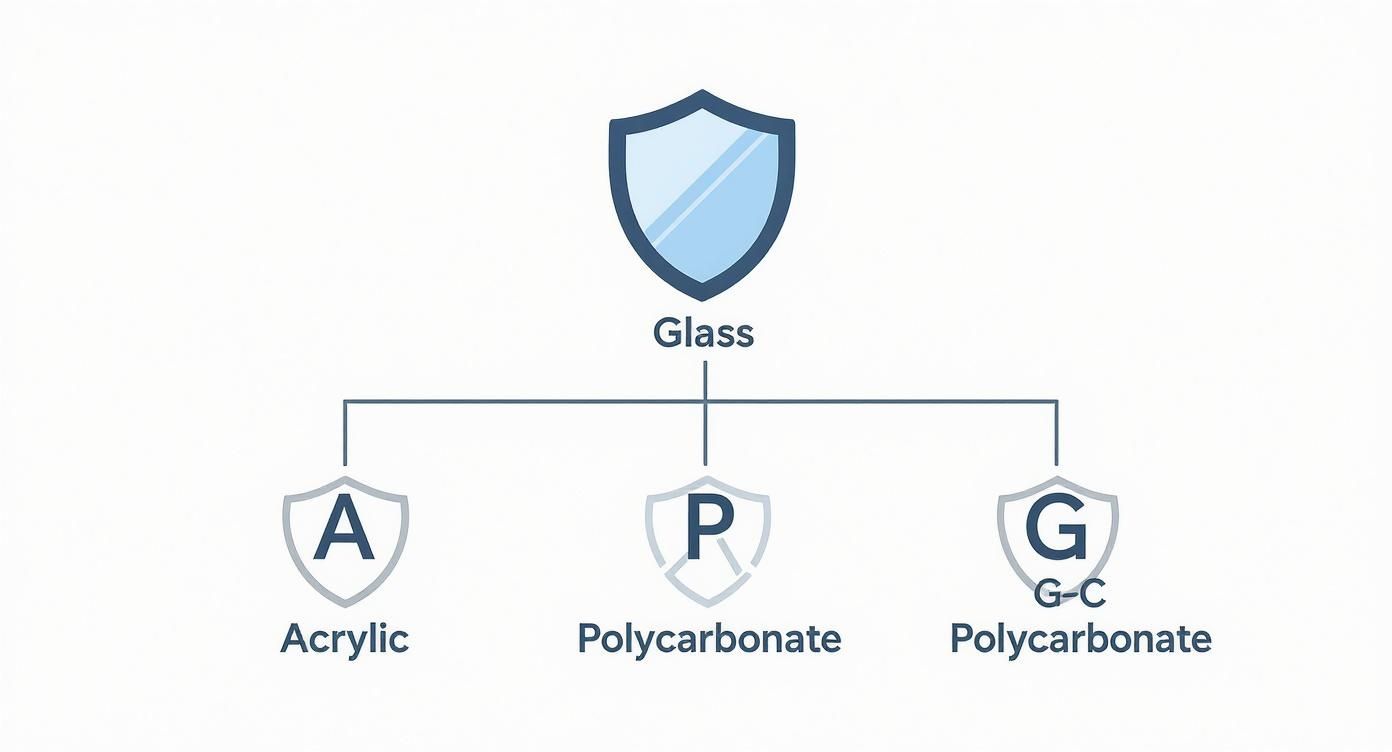
As you can see, the choice of material—whether it's a basic monolithic acrylic or an advanced glass-clad polycarbonate—is tied directly to the level of security you need, which in turn dictates your final cost.
To help you visualize how these ratings impact the final product and its cost, we’ve put together a comparison table. It clearly shows the relationship between the threat level, the material's specifications, and the average price you can expect to pay per square foot.
Cost Comparison Of UL 752 Ballistic Protection Levels
| UL 752 Level | Stops Ammunition From | Common Application | Average Cost Per Sq. Ft. |
|---|---|---|---|
| Level 1 | 9mm Full Metal Copper Jacket | Gas stations, retail stores, banks, schools | $50 – $75 |
| Level 2 | .357 Magnum Jacketed Soft Point | High-risk retail, check-cashing facilities | $65 – $90 |
| Level 3 | .44 Magnum Lead Semi-Wadcutter | Government buildings, police stations, high-security areas | $75 – $100 |
| Level 4 | .30 Caliber Rifle Lead Core Soft Point | High-threat government facilities, corporate HQs | $150 – $200 |
| Level 5 | 7.62mm Rifle Lead Core Full Metal Copper Jacket | Military installations, embassies, critical infrastructure | $175 – $225 |
| Level 8 | 7.62mm Rifle Lead Core Full Metal Copper Jacket (5 shots) | Maximum security facilities, military checkpoints, data centers | $250 – $350+ |
Notice how the price jumps significantly once you move from handgun-rated levels (1-3) to rifle-rated levels (4 and up). This reflects the serious engineering required to stop higher-velocity projectiles.
Why Higher Ratings Command a Premium
The price hike between levels isn't just arbitrary. It's a direct reflection of the advanced engineering and materials that go into making the glass. As you climb the UL scale, the glazing has to do more than just stop a more powerful bullet; it must also withstand multiple impacts without failing or allowing spall (fragments of glass) to fly off the "safe" side. This requires more layers, specialized adhesives, and an incredibly precise manufacturing process.
The core takeaway is simple: you are paying for performance. The higher the risk, the more robust the solution needs to be, and the price will reflect that. Overpaying for a Level 8 system in a low-risk environment is as inefficient as under-protecting a high-threat target.
Bulletproof glass is far from a one-size-fits-all product. Its price and performance are tightly linked to its security rating, which covers everything from small handgun rounds to high-powered rifle fire. The global market is complex, segmented by these security levels, various material types, and end-uses ranging from bank security to armored cars. You can discover more insights from Data Bridge Market Research on how these factors shape the industry.
By starting with a realistic threat assessment, you can zero in on the exact UL level your project requires. This ensures you get the protection you actually need without spending a dollar more than necessary—the smartest way to control your budget and get real value from your security investment.
Budgeting for More Than Just the Glass
When you start pricing out a bulletproof glass project, it’s easy to focus on the cost of the glass itself. But that's only one piece of the puzzle. A common—and potentially dangerous—mistake is thinking you can just swap out an old pane of glass for a new ballistic one. The reality is, the total cost involves several other critical components that you simply can't skip if you want the system to actually work.
If you don't account for these additional expenses, you're not just looking at a blown budget; you're looking at a security system that could fail when you need it most. From the specialized labor required for installation to the heavy-duty framing, every part has a purpose.
The Critical Cost of Professional Installation
Let's be clear: this is not a DIY job. Installing bulletproof glass is a highly specialized trade, a world away from standard window fitting. These panels are incredibly heavy, often weighing 10 times more than standard glass. They require expert handling, specialized equipment, and a deep understanding of how the entire security system works together.
Professional installation is non-negotiable, and the cost reflects that expertise. You should plan for installation fees to add anywhere from 20% to 50% of the material cost to your total bill. This isn't just for labor; it's for the peace of mind that comes from knowing your barrier has been installed without any weak points.
Why Your Existing Frames Are Not Enough
One of the biggest hidden costs that catches people by surprise is the need for brand-new, reinforced frames. Your building's existing aluminum or vinyl window frames were designed to hold a simple, lightweight piece of glass. Trying to force a heavy ballistic panel into one is like putting a bank vault door on a garden shed. The door might be tough, but the frame will give way instantly.
Your ballistic protection is only as strong as its weakest point. A high-rated glass panel becomes useless if the frame holding it can be easily pried away or fails under impact.
The frame has to be just as tough as the glass. That means it must be engineered from heavy-duty steel or reinforced aluminum, specifically designed to support the panel's immense weight and absorb the same level of force. This isn't an upgrade; it's a fundamental part of the system and a major line item on any legitimate quote.
Other Potential Expenses to Anticipate
Beyond the glass, the installation, and the new frames, a few other factors can creep into your final bill. It's smart to plan for these upfront to build a truly realistic budget.
- Shipping and Handling: These panels are massive and heavy. They can't be sent via standard mail; they require specialized freight shipping, which comes at a premium.
- Custom Sizing and Shapes: Need a window with an arched top or an unusual angle? Anything that isn't a standard rectangle requires custom fabrication, which will add to the manufacturing cost.
- Optional Upgrades: You can add all sorts of features, but they come at a price. Things like UV protection, anti-glare coatings, one-way mirroring, or built-in voice-transmission systems will increase the per-square-foot cost.
By taking these "extra" costs seriously from the very beginning, you can move from a rough guess to a solid financial plan. This complete picture ensures you budget correctly for a system that delivers real, reliable protection, without any nasty surprises when the final invoice arrives.
Smart Ways to Manage Your Security Budget
So, you've seen the numbers. Now, let's talk about how to get the protection you need without breaking the bank. Smart budgeting is the key to balancing real-world safety with real-world costs.
It all starts with a clear-eyed threat assessment. This step alone can save you thousands. You're not just buying glass; you're buying a specific level of protection. So, instead of defaulting to a costly UL Level 8 system just in case, let's match the solution to a realistic scenario.
For areas with lower perceived risk, like many homes or small offices, take a hard look at ballistic film. It's a retrofit solution that can start as low as $8 per square foot and provides solid resistance against shattering and smaller projectiles.
Finally, never settle for the first quote you get. Shopping around for both materials and installation can reveal a surprising range in pricing. I’ve seen certified installers' labor costs vary by as much as 20% to 30% for the exact same job.
Assess Your Real Risks
The biggest mistake you can make is overbuying. You need to understand your specific vulnerabilities to avoid it.
For instance, does a residential front door really need UL Level 5 protection? Probably not. A UL Level 1 or 2 is often more than sufficient.
Bring in a security consultant for a professional walkthrough. They can help you pinpoint the high-risk windows, doors, and entry points. By focusing your budget on these specific areas, you get the most bang for your buck.
“Spend on the threat you face, not on hypothetical worst cases.”
This targeted approach means you might only need a few high-grade panels instead of outfitting the entire building, drastically cutting both material and labor expenses. It’s about putting protection exactly where it matters most.
Compare Material Trade Offs
The world of bullet-resistant glazing isn't one-size-fits-all. Materials like acrylic, polycarbonate, and glass-clad polycarbonate come with very different price tags and visual clarity.
For example, acrylic can run around $50 per square foot, while top-tier glass-clad polycarbonate can soar past $300. Polycarbonate often hits a sweet spot for many businesses, offering a good blend of clarity and protection for about $100 per square foot.
Here’s a great strategy I recommend: mix and match your materials. Use the premium, crystal-clear glass for high-visibility, frontline zones and then switch to more affordable acrylic or film for less critical areas.
This kind of blending can slash your average cost by up to 40%.
You can also save by keeping the add-ons simple. Maybe you just need tinted or UV-coated panels instead of a pricey voice-activated transaction system.
- Bundle your orders. If you're outfitting multiple rooms, place a single large order to cut down on shipping premiums and lower the per-window freight cost.
- Time your installation. If it’s not an emergency, schedule the work during an installer's off-peak season to find more competitive labor rates.
- Create a hybrid system. Combine ballistic film with standard security glass for a balanced approach that gives you comprehensive coverage at a lower cost.
- Ask for discounts. When ordering more than five panels, always inquire about seasonal sales or bulk pricing.
And remember, bullet-resistant glass is just one layer of your defense. Exploring different types of home security systems can help you build a more complete plan for protecting your property.
No matter what, always insist on certified installers and read the warranty terms carefully to avoid surprise costs down the road. A few simple steps like these are all it takes to build an effective and optimized security budget.
Get Multiple Professional Quotes
Always get at least three itemized bids from certified installers. This is non-negotiable.
When you have the quotes in hand, here’s what to look for:
- Check the details. Make sure the quote breaks down the cost of framing, hardware, and labor. A vague quote is a red flag.
- Confirm the fine print. The warranty and any ongoing maintenance plans should be clearly spelled out in writing.
- Discuss payment. Ask about financing options or if they offer a phased installation to help spread the costs over time.
Common Questions About Bulletproof Glass Costs
When people start looking into bulletproof glass, the first question is always about the price. It's a significant investment, so it’s natural to want to understand what you’re getting into before you go too far down the road.
Let's break down some of the most common questions we hear from clients. We'll cover everything from home affordability and maintenance to what you can expect to pay for a professional installation.
Is Bulletproof Glass For Homes Affordable?
This really comes down to what level of protection you need. For most homeowners, the goal is to secure key entry points without turning their house into a fortress.
Luckily, lower-rated panels—think UL Levels 1 through 3—are quite accessible, typically running between $50 and $150 per square foot. Most residential projects focus on the front door, sidelites, and maybe a few exposed ground-floor windows. This strategic approach keeps the total cost manageable while significantly boosting your home's security where it matters most.
If you're on a tighter budget but still want to improve your home's defenses, high-performance security film is a great alternative. At around $8 to $15 per square foot, it won't stop a bullet like true ballistic glass, but it does a fantastic job of preventing smash-and-grab break-ins.
Does Bulletproof Glass Require Special Maintenance?
Yes, but it's not complicated. The key is to remember you're not just cleaning glass; you're caring for a multi-layered security product. The polycarbonate layers that give the glass its strength can be damaged by harsh chemicals or abrasive materials.
Stick to a simple solution of mild soap and water with a soft, non-abrasive cloth. It's also a good idea to inspect the frames and seals at least once a year. Catching a small crack in a seal early can prevent bigger problems down the line.
Think of it this way: proper care protects your investment and ensures the glass performs as intended if you ever need it. Neglecting it can shorten its lifespan and could even void your warranty.
“Routine care is key to keeping bulletproof glass at peak performance.”
How Much Does Installation Add To The Total Cost?
This is a big one, and it's where people often get surprised. As a rule of thumb, expect professional installation to add anywhere from 20% to 50% on top of the material cost.
Why so much? These panels are incredibly heavy and require specialized tools and expertise to handle and install safely. The complexity of the job also plays a huge role. A simple, flat window is one thing, but a custom-arched entryway or a series of angled windows might require on-site fabrication, which will drive up labor costs.
Whatever you do, don't try to save money by hiring a general contractor. A certified installer knows how to secure the framing and eliminate weak points. A bad installation can completely undermine the effectiveness of even the most expensive glass. Always ask for a detailed, itemized quote so you know exactly what you're paying for.
| Cost Component | Typical Percentage of Material Price |
|---|---|
| Installation Labor | 20% – 50% |
| Reinforced Framing | 15% – 25% |
| Custom Fabrication | 5% – 15% |
| Shipping and Handling | 3% – 10% |
Can I Use Ballistic Film Instead Of Glass?
Ballistic film is a fantastic security upgrade, but it's important to understand its limitations. It’s a retrofit product applied to your existing windows, and with a starting cost around $8 per square foot, it’s a very attractive option for boosting security on a budget.
The film works by absorbing impact and holding shattered glass together, which is incredibly effective at slowing down forced entry. While it can stop certain small-caliber handgun rounds, it simply doesn't offer the same certified protection as a true bullet-resistant glass panel.
So, here’s the bottom line: if your threat assessment calls for certified protection against high-powered handguns or rifles, you need to invest in ballistic glass. If you're looking to fortify secondary areas or simply make your home a much harder target for intruders, security film is an excellent and cost-effective choice.
For example, companies like Fortress Security Films offer nearly invisible films that reinforce glass against all sorts of threats. Their NIJ-certified ballistic film systems are a great middle ground, blending serious security with perfect clarity to protect your home without changing its appearance.
Looking for discreet window protection? Strengthen your existing glass with NIJ-certified security film from Fortress Security Films. Their installations come with a warranty and expert support. Visit Fortress Security Films today for a free quote and professional service that matches your security needs.
