


When it comes to our schools, a solid emergency plan isn't just a box to check—it’s a lifeline. We're talking about a living, breathing strategy that moves beyond simple compliance and builds a true culture of safety. The goal is to ensure every single person on campus, from the kindergartener to the principal, knows exactly what to do when a crisis hits. Whether it's a natural disaster, a medical issue, or a security threat, a well-rehearsed plan can minimize harm and, ultimately, save lives.
Why School Emergency Preparedness Is So Critical
Let's face it: the world has gotten more complicated. Schools are dealing with a wider range of potential threats than ever before. We see severe weather events on the rise and face increasingly complex security challenges. Because of this, having a robust, frequently practiced emergency plan is no longer optional.
A good plan isn't just about reacting to chaos; it's about weaving resilience into the very fabric of school life. This proactive mindset is what gives students, staff, and parents genuine peace of mind.
It's also crucial to remember that one size doesn't fit all. The response to an active intruder is completely different from the protocol for a tornado warning. By developing a flexible, all-hazards approach, you equip your community with the specific skills needed for any scenario. This is how you build the "muscle memory" required to act decisively when the pressure is on.
The Growing Need for Proactive Safety
The stakes couldn't be higher. A recent report paints a stark picture, revealing that a staggering 234 million school-aged children are in crisis situations around the world. That number has jumped by 35 million in just three years, driven by conflicts and climate-related disasters. This isn't some abstract threat; emergencies are happening, disrupting education and putting children in harm's way.
This reality demands that every school shifts from a reactive stance to a forward-thinking one. A truly secure environment is built on several key pillars working in concert:
- Risk Assessment: You have to know what you're up against. This means identifying the specific threats relevant to your school's unique location and community.
- Clear Protocols: In a crisis, confusion is the enemy. Establish simple, actionable steps for different emergency scenarios.
- Multi-Channel Communication: Create a system to get timely, accurate information to parents, staff, and students through multiple channels.
- Regular Training and Drills: A plan on paper is useless. Drills turn written instructions into instinctive actions for everyone on campus.
A great plan does more than just meet a requirement; it fosters a genuine culture of awareness and safety. When everyone from the principal to the youngest student understands their role, the entire school becomes a safer place.
A foundational piece of any comprehensive safety plan is knowing exactly who is on your campus at all times. To get a handle on this critical aspect of security and streamline your visitor check-in process, it's worth exploring a dedicated Visitor Management System for Schools. In the end, emergency preparedness is an ongoing commitment to protecting the most vulnerable among us and ensuring our schools remain the safe havens of learning they are meant to be.
Assembling Your Emergency Response Team
Let’s be honest: an emergency plan collecting dust on a shelf is useless. The real strength of any school safety strategy comes from the people who build it, own it, and are ready to put it into action. Your first move is to assemble a dedicated response team.
This isn't a job for a single administrator working in a vacuum. It demands a team effort, pulling together people with different skills and on-the-ground perspectives from every corner of your school community. Think of this group as your school's safety brain trust—their job is to see around corners, create clear protocols, and guide everyone through a crisis.
A plan written only by the front office often misses crucial details that teachers or maintenance staff see every single day.
Building a Cross-Functional Team
To build a plan that actually works, your team needs to mirror the school itself. Every member brings a unique viewpoint that helps spot weaknesses and create practical solutions that make sense in the real world. This collaboration builds a sense of shared ownership, turning a document into a living strategy everyone can get behind.
Your core team should have a seat at the table for representatives from these key areas:
- Administrators (Principal, Vice-Principal): They provide the leadership, sign off on resources, and are the ultimate decision-makers. They’re also the main link to the district and outside agencies.
- Teachers and Instructional Staff: These are your frontline responders. Their input is absolutely critical for creating classroom-specific procedures that are realistic and age-appropriate.
- Facilities and Operations Staff (Custodians, Maintenance): Nobody knows the physical building better. They understand the utility shut-offs, potential hazards, and the most secure access points. Their knowledge is irreplaceable.
- School Nurse or Health Staff: Their medical expertise is non-negotiable for planning how to handle health crises, manage student medical needs during an evacuation, and coordinate first aid.
- Counselors and Mental Health Professionals: Emergencies leave scars. These experts are essential for building a trauma-informed response and leading the emotional recovery efforts for students and staff afterward.
Don't stop there. Reaching outside your school walls can dramatically boost your plan's effectiveness. Invite a parent representative from the PTA/PTO and, crucially, a liaison from local first responders like the fire or police department. Building those relationships before an emergency is invaluable.
The following table breaks down who should be on your team and what they bring to the planning process.
Key Roles in a School Emergency Planning Team
| Role | Primary Responsibilities | Key Collaborators |
|---|---|---|
| School Administrator | Provides leadership, authorizes resources, acts as public information officer, and makes final decisions during a crisis. | District Leadership, First Responders, Media |
| Teacher Representative | Develops and vets classroom-specific procedures (e.g., lockdown, evacuation) and ensures plans are practical for students. | Other Teachers, Counselors, Students |
| Facilities Manager | Identifies structural vulnerabilities, manages utility shut-offs, and advises on evacuation routes and shelter-in-place locations. | First Responders, Maintenance Staff |
| School Nurse/Health Aide | Manages first aid supplies, plans for medical emergencies, and coordinates care for students with special health needs. | Local EMS, Public Health Department, Parents |
| School Counselor | Leads the development of trauma-informed response protocols and coordinates post-crisis mental health support for the community. | Teachers, Students, Parents, Community Mental Health |
| Parent Representative | Serves as a liaison to the parent community, helps disseminate information, and provides a parent's perspective on communication plans. | School Administration, PTA/PTO Members |
| First Responder Liaison | Advises on best practices, ensures the school's plan aligns with local agency protocols, and facilitates joint training exercises. | All Team Members, Local Police/Fire/EMS |
This collaborative structure ensures your plan is comprehensive, practical, and supported by the entire school community.
By assembling a team with varied expertise, you move beyond a top-down approach and create a plan built on collective ownership. This diversity is your greatest asset in anticipating the wide range of challenges your school might face.
Conducting a Realistic Risk Assessment
With your team in place, the next step is a clear-eyed risk and vulnerability assessment. This isn't about Hollywood disaster scenarios; it's a practical look at the specific threats your school is most likely to face. A generic plan copied from a template is a recipe for failure. Your plan must be tailored to your reality.
This diagram illustrates how a solid plan is built—it all starts with proactive preparedness, and risk assessment is the bedrock of that foundation.
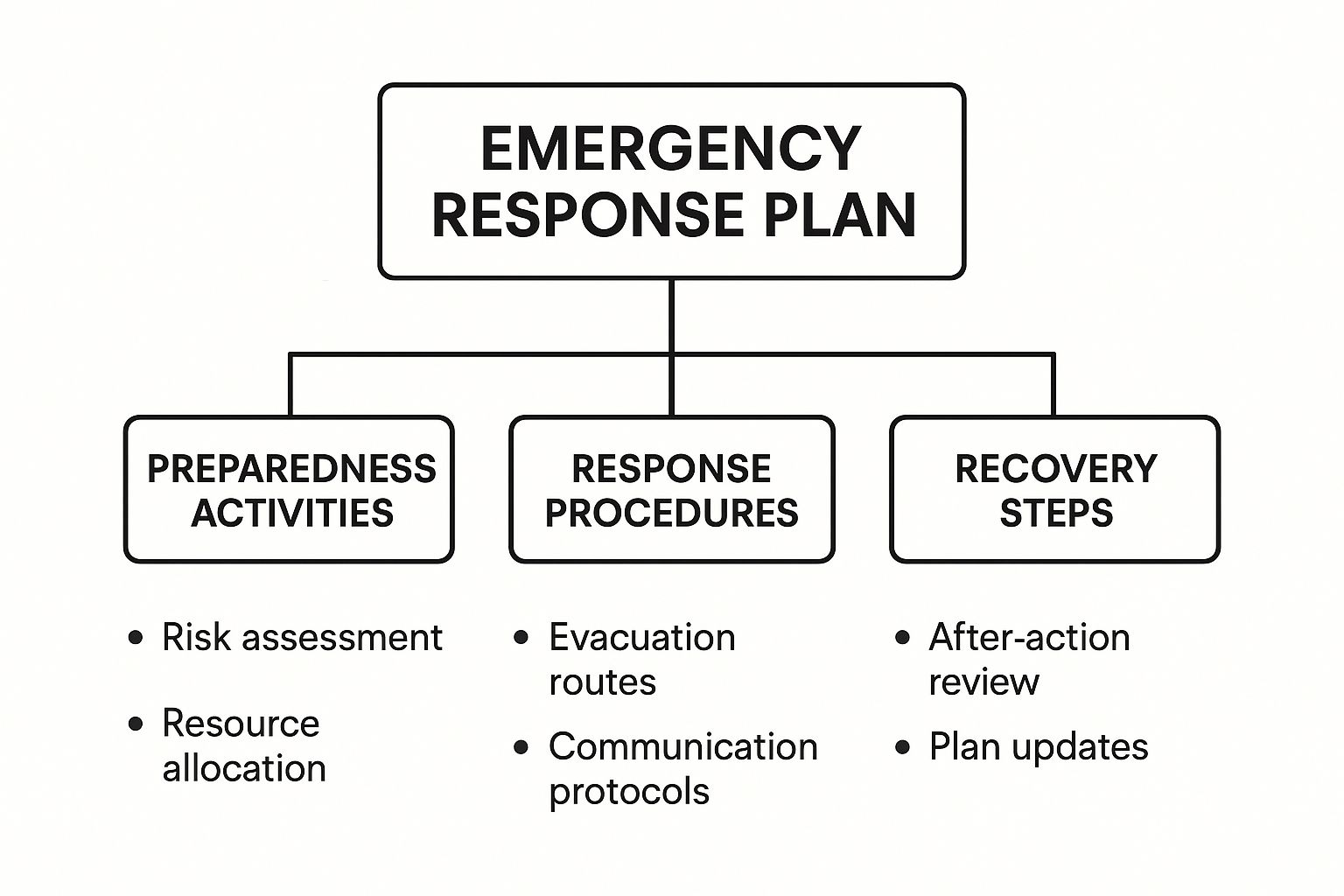
As you can see, everything you do in response and recovery rests on how well you prepare.
Start by brainstorming potential hazards based on your geography, community, and the school building itself. A school in Florida needs a hurricane plan. One near a major rail line has to prepare for a potential hazardous material spill. Don't forget to look inward, too—things like unsecured main entrances or areas with poor surveillance are internal vulnerabilities that need attention.
Once you have a list of potential risks, the team needs to analyze each one based on two simple questions:
- Likelihood: How likely is this to actually happen here?
- Impact: If it does happen, how bad would the consequences be for our students, staff, and building?
This simple matrix helps you prioritize. You'll naturally focus your time and money on preparing for the high-likelihood, high-impact events first. But you'll also have a plan for those less probable but catastrophic scenarios. This data-driven approach ensures your emergency preparedness for schools efforts are targeted where they'll do the most good. This assessment becomes the roadmap for everything that follows.
Designing a Flexible Emergency Operations Plan
A thick binder full of procedures sitting on a shelf isn't an emergency plan—it's a paperweight. In a real crisis, a rigid, one-size-fits-all plan is more likely to create confusion than clarity. The truth is, emergency preparedness for schools hinges on building a flexible, dynamic framework that can bend and adapt to whatever is happening in the moment.
The goal isn't to create a script that forces your team into a box. It’s to empower them with clear guidelines so they can make smart, decisive choices under immense pressure. After all, your response to a gas leak is worlds away from how you'd handle a tornado warning. One demands a swift evacuation, while the other requires hunkering down in an interior storm shelter. Treating them the same is a recipe for disaster.
Building Scenario-Based Protocols
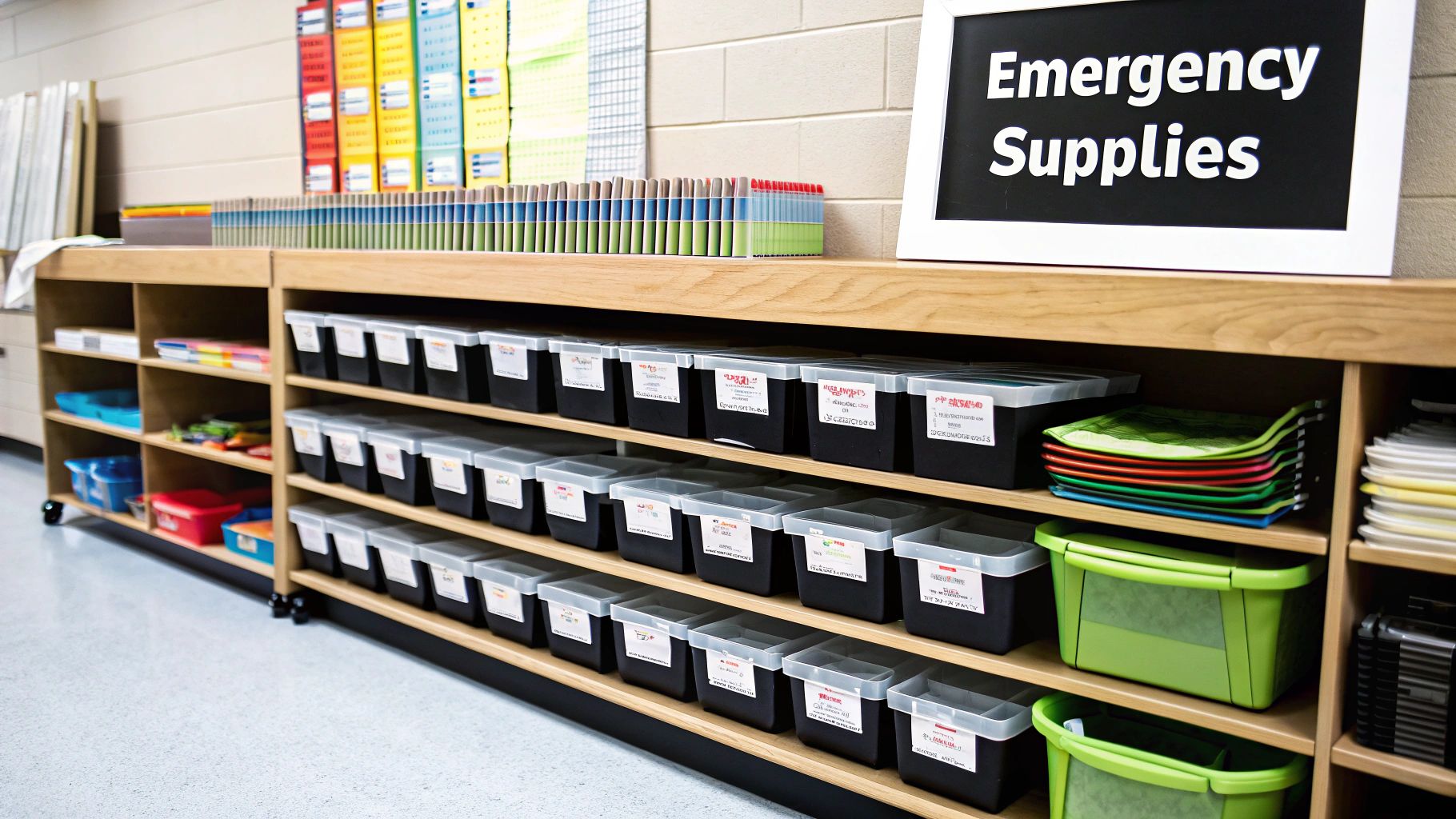
Instead of one massive, overwhelming document, think in terms of functional modules. Each module, or annex, should be a standalone guide for a specific hazard you identified in your risk assessment. This way, a teacher or administrator can grab the exact checklist they need without frantically flipping through pages of irrelevant information.
Think about how different these common scenarios are, and why their protocols must be distinct:
- Lockdown: This is for an immediate threat inside the building, like an intruder. The protocol is all about getting quiet, getting out of sight, and securing the room. Communication is kept to a minimum and is often covert.
- Shelter-in-Place: This response is for an external hazard, maybe a chemical spill from a nearby factory or even a police situation in the neighborhood. The focus shifts to getting everyone indoors, staying away from windows, and potentially shutting down HVAC systems to keep contaminated air out.
- Evacuation: Here, the building itself is the danger zone. Whether it's a fire, a credible bomb threat, or a structural issue, the priority is moving everyone off campus to a predetermined safe assembly point.
- Medical Emergency: This protocol needs to activate on-site medical staff, lay out a plan for clearing hallways so EMTs can get through, and define exactly how and when parents will be notified.
By creating separate, easy-to-digest protocols for each, you build the kind of "muscle memory" that leads to a calm, effective response. When the pressure is on, simplicity saves lives.
Establishing a Multi-Channel Communication Strategy
In any emergency, information is everything. When communication breaks down, chaos and panic are quick to follow. That's why a resilient, multi-channel communication strategy is the absolute nerve center of your EOP.
If your entire plan relies on the PA system, what happens when the power goes out? Or if the incident is happening in the main office? You need layers of communication—redundancy is the key.
The core principle of emergency communication is redundancy. If one channel fails, another must be ready to take its place instantly. There is no room for a single point of failure when lives are on the line.
Your strategy should weave together several methods to make sure you can reach everyone—staff, students, parents, and first responders—simultaneously.
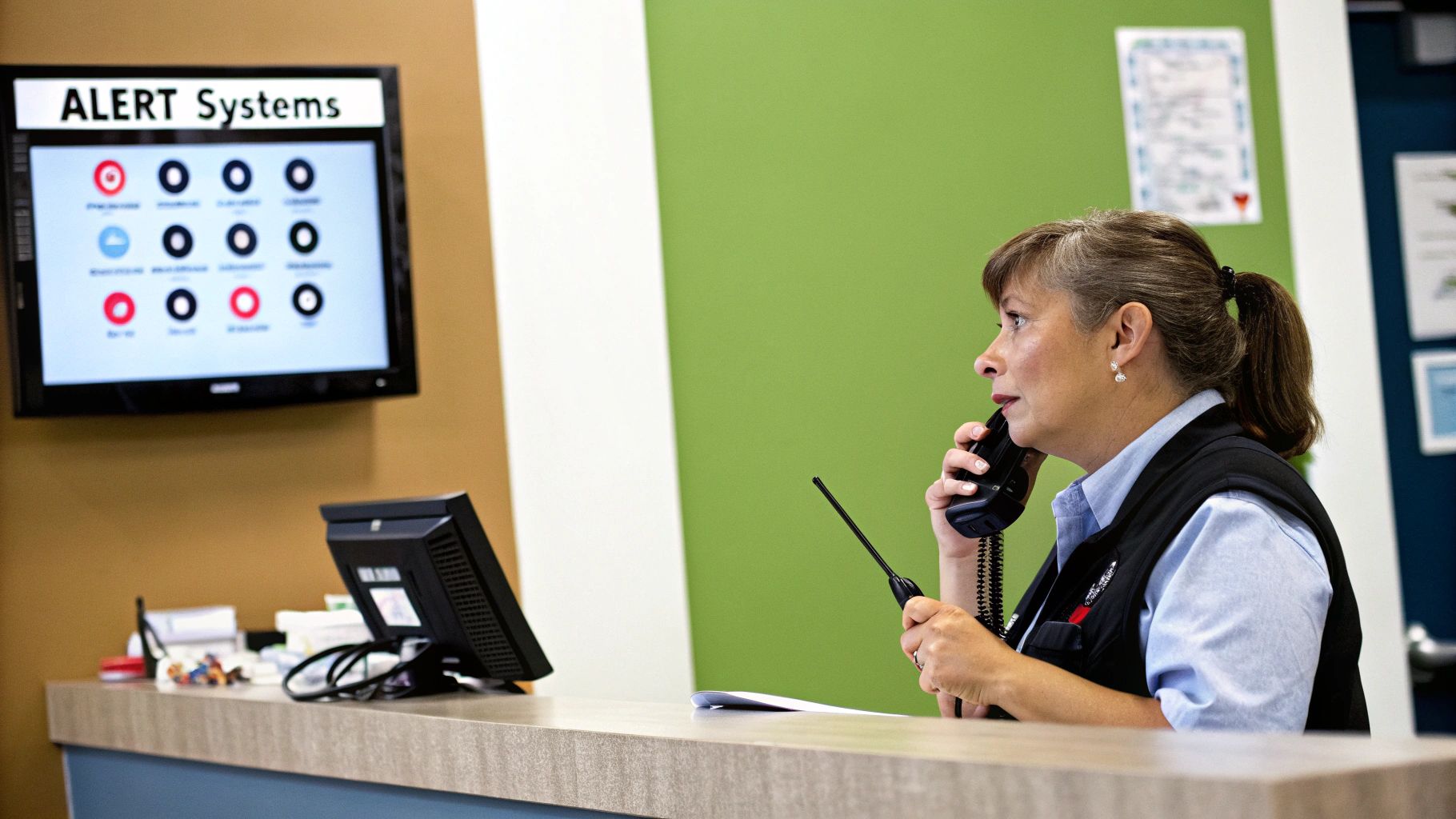
- Immediate On-Campus Alerts: These are your instant action tools. Think the PA system, two-way radios for key personnel, and visual alerts like strobe lights in loud areas like the gym, cafeteria, or shop classrooms.
- Mass Notification System: This is how you get the word out to parents and staff quickly. A good system should be able to blast out text messages, automated phone calls, and emails all at once, using pre-written templates for different scenarios.
- Website and Social Media: Use these platforms to provide ongoing, official updates to the broader community. Designate a single page on your school's website as the go-to source for information—this helps cut down on rumors and misinformation.
- Parent-Student Reunification Point: This is a huge, often-fumbled part of emergency response. Your communication plan must include a clear, methodical process for reuniting students with their parents at a designated, secure off-site location.
Ensuring Inclusivity for All Students
An effective EOP is an inclusive one. Period. Every single student, no matter their physical, sensory, or cognitive abilities, deserves a plan that is built with their specific needs in mind. Assuming a standard evacuation procedure will work for everyone is a critical and dangerous oversight.
Vulnerable populations are always disproportionately affected during emergencies. That’s why support for students with disabilities or other access and functional needs can't be an afterthought; it has to be woven into the fabric of every protocol you create.
For example, a student who uses a wheelchair will need a designated partner and a planned evacuation route that avoids stairs. A student who is hard of hearing won't be able to hear a lockdown announcement over the PA system, so they'll need visual cues like flashing lights. A student with autism might become overwhelmed by loud alarms and frantic activity, requiring a pre-practiced calming routine with a trusted staff member.
To build a genuinely inclusive plan, you need to:
- Create Individualized Plans: Sit down with parents, special education staff, and sometimes the students themselves to map out a personalized emergency plan for anyone who might need it.
- Maintain an Updated Registry: Keep a confidential, current list of students who require assistance, detailing what they need and who is assigned to provide that support.
- Provide Specialized Training: Make sure staff assigned to help students with specific needs are trained not only on their role but also on any specialized equipment they might have to use, like an evacuation chair.
- Incorporate Inclusivity in Drills: The only way to know if these individualized plans actually work is to practice them during your drills. This is non-negotiable.
Turning Your Plan into Action with Drills and Training
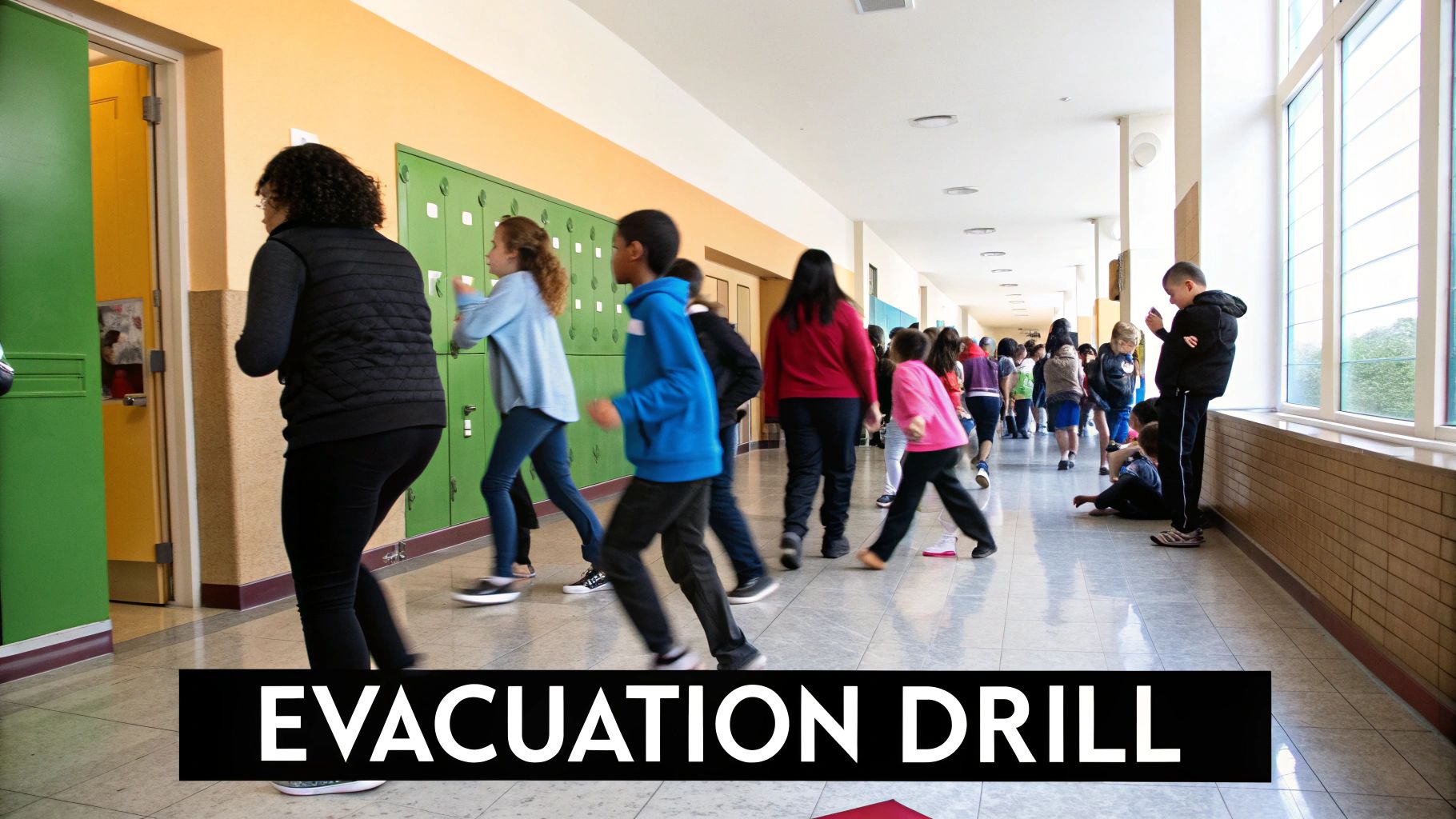
An emergency plan sitting in a binder is just paper. It only becomes a lifesaving tool when its procedures are second nature to your staff and students. This is where consistent, realistic training and drills come in—they are the bridge between a written protocol and a life-saving instinct. The whole point is to build muscle memory, so when a real crisis hits, everyone can act decisively and calmly without fumbling for a manual.
This goes way beyond the predictable fire drill we all grew up with. True emergency preparedness for schools is built on a foundation of varied, scenario-based exercises that reflect the actual risks your campus faces. Repetition is key, of course, but running the same simple drill over and over breeds complacency. A truly effective training program has to prepare your community for a whole range of possibilities.
Making Drills Realistic and Effective
The secret to a good drill is achieving realism without causing unnecessary fear. The goal is practice, not trauma. How you communicate with students and staff—before, during, and after—is what turns a drill into a positive, empowering learning experience.
Try mixing up the variables to keep everyone on their toes. For instance, what happens if the primary evacuation route is blocked during a fire drill? A simple "what-if" scenario like that forces people to think critically and adapt on the fly.
To really get the most out of your drills, I always recommend focusing on these elements:
- Vary the Scenarios: Don't just stick to evacuations. Run lockdown drills, shelter-in-place drills for severe weather, and even reunification exercises. This ensures your team is fluent in multiple response protocols.
- Use Functional Exercises: Go beyond the basic physical drill with "tabletop" exercises for your core emergency team. These are guided discussions where you walk through a simulated emergency, talking through roles and decisions. It's an incredible way to find gaps in your plan you never knew existed.
- Communicate Clearly: Always, always announce that it's a drill. Use clear, calm language, and make sure you're reassuring younger students. The goal here is to build confidence, not anxiety.
A drill's success isn't measured by perfect execution, but by what you learn from it. Every mistake or moment of confusion during practice is a priceless opportunity to strengthen your plan before a real emergency puts it to the test.
This commitment to constant practice is absolutely vital. A recent policy survey revealed a startling gap: while many governments endorse school safety frameworks, only 30% of schools actually review their emergency plans annually. That's a huge blind spot.
Conducting Post-Drill Debriefs
The most important part of any drill happens right after it ends. A thorough post-drill debrief—sometimes called a "hot wash"—is where you turn raw observations into actionable improvements. This meeting needs to happen immediately after the exercise, while the details are still fresh in everyone's minds.
Pull in your key players—administrators, teachers, facilities staff, the school nurse—and ask them to share what they saw. You have to create an environment where people can be honest and constructive, focusing on the process, not pointing fingers at individuals.
Here are the key questions that should guide every debrief:
- What Went Well? Always start here. Acknowledge successes to reinforce what people did right and boost morale. Did the PA system work perfectly? Were classrooms secured in record time?
- What Were the Challenges? Get specific about the friction points. Was there confusion over evacuation routes? Did anyone have trouble hearing the announcements over the noise?
- What Are Our Opportunities for Improvement? This is where you brainstorm concrete solutions. Maybe it means updating a checklist, scheduling more training for a specific department, or realizing you need to invest in better communication equipment.
For schools looking to get more creative, exploring Augmented Reality Education Examples can offer some incredible ideas for interactive training simulations. This technology can help create realistic scenarios without the logistical headache of a full-scale, campus-wide drill.
Turning Feedback into Action
Finally, a debrief is only useful if it leads to real change. You must assign responsibility for each improvement item and attach a clear deadline to it. Whether it's tweaking the reunification plan or clarifying lockdown procedures for substitute teachers, these follow-up actions are what truly harden your school's safety posture.
This cycle—drilling, debriefing, and refining—is the engine that keeps your emergency plan alive and effective. It ensures your school isn't just prepared on paper, but ready in practice for whatever comes its way.
Making Your Campus a Harder Target
When we talk about a school emergency plan, a lot of focus goes to drills and communication. That's all essential, but let's not forget the most tangible part of your defense: the building itself. Hardening your campus isn't about creating an imposing fortress; it’s about smart, layered security that buys you precious time when seconds are the only thing that matters.
Think of your security like layers of an onion. The outer layer is your campus perimeter, then the building exterior, and finally, the classroom itself. The idea is that an intruder has to peel back each layer, and every single one slows them down, giving your people more time to react and first responders more time to arrive.
Lock Down Your Access Points
The single biggest vulnerability I see on most campuses? Too many unlocked doors. An open campus is an open invitation for trouble. The fix is surprisingly simple: funnel every single visitor through one, and only one, monitored point of entry during school hours.
This single entrance should lead directly into the main office. No exceptions. Every parent, volunteer, or delivery person needs to sign in, show ID, and get a visitor badge. It sounds incredibly basic, but this one process creates a crucial record of who is on your campus and stops anyone from just wandering the halls.
Put Security Tech to Work (The Right Way)
Technology is a fantastic force multiplier, but it's just a tool—not a magic wand. Cameras and access control systems are only as good as the people and the plan behind them.
- Surveillance Cameras: Don't just stick them up anywhere. Place them strategically at entrances, in high-traffic hallways, and to cover blind spots. Their real value isn't just for a post-event recording; it's for giving you and law enforcement real-time eyes on the situation as it unfolds.
- Access Control Systems: Electronic key card systems are a game-changer. The ability to lock every exterior door on campus with a single button press from the main office is invaluable during a lockdown.
- Integrated Communication: Modern systems can tie your PA announcements, automated phone alerts, and even flashing strobe lights together. This ensures that when you send out an emergency alert, it gets to everyone, instantly, through multiple channels.
A quick word of caution: Technology supports your plan; it never replaces it. A brand-new camera system is just expensive wall art if no one is trained to monitor it and knows exactly what to do when they see something wrong.
Reinforce the Building Itself
Beyond controlling who gets in, the physical structure of your school presents some of the best opportunities for beefing up security. And these upgrades don't have to break the bank.
One of the most obvious weak points in any building is glass. Those big, beautiful windows in your entryway and classrooms are, unfortunately, also the easiest way for someone to force their way inside. This is where window security film becomes an absolute no-brainer.
This isn't just a simple tint. Security film is a heavy-duty, optically clear polymer that gets applied directly to your existing glass. It won't stop a bullet, but when the glass is struck and shatters, the film holds all those dangerous shards together in the frame. That simple act can delay an intruder by 30 to 90 seconds. In an active threat scenario, 90 seconds is an eternity. It's enough time for teachers to lock down, for students to get to safety, and for help to get on scene.
These kinds of structural investments are about building resilience. The financial and human toll of disasters on education is staggering. Globally, disasters cause an average annual loss of $35.9 billion to the education sector. Yet, as a recent analysis on disaster risk reduction points out, a shocking 12% of governments report having systematic funding to make school infrastructure safer.
Secure the Classroom as the Final Safe Haven
When all else fails, the classroom becomes the safe room. Every single classroom door needs to have a lock that can be secured from the inside. A teacher should never, ever have to open the door and step into a potentially dangerous hallway to lock it.
Other simple, powerful additions can make a huge difference. Bolt tall bookshelves to the wall so they can't be tipped over in an earthquake. Use colored tape on the floor to mark the safest area of the room, away from windows and the door, so students know exactly where to go during a lockdown drill without a single word being said.
Each of these physical measures—from visitor funnels to window film—adds another layer of protection. They are all deliberate steps toward making your campus a harder target and, ultimately, a safer place for your students and staff.
Answering Your Top Questions About Our School's Emergency Plan
Even the most thorough plan can leave parents, staff, and students with questions. That's completely understandable. Being transparent and addressing these concerns head-on is a huge part of building a safe and trusting school community. Let's walk through some of the most common questions we hear.
How Will You Communicate with Us During an Emergency?
This is, without a doubt, the number one concern for every parent, and for good reason. Our entire communication strategy is built around getting you clear, accurate information as quickly as possible, without creating more panic. We use a few different channels to make sure the message gets through.
Here’s what you can expect:
- Mass Notification System: This is our first and fastest way to send urgent alerts. It pushes out automated text messages, emails, and phone calls to every contact we have on file. This is why it’s critical that your contact information is always up-to-date in our system.
- Official School Website: We’ll post updates on a specific emergency page on our website. Think of this as the single source of truth—it's the best place to go to cut through any rumors or misinformation that might be flying around.
- Social Media Channels: We may also post brief updates on the school's official social media accounts, but these will almost always point you back to our website for the full details.
We make a conscious choice not to bombard you with minute-by-minute updates. Our first priority is always handling the actual situation on campus. As soon as we have verified information and it's safe to share, we will.
A quick piece of advice for parents: please stick to our official channels. During a crisis, social media and group chats can become a breeding ground for rumors. Rely on direct communication from the school to get the real story.
How Do You Support Students with Disabilities or Medical Needs?
This is a non-negotiable part of our planning. Every single student with a known disability, medical condition, or other specific need has an Individualized Emergency Plan. We build these plans together with parents, special education staff, and our school nurse.
These individualized plans map out exactly what a student might need, like:
- A specific staff member assigned to provide one-on-one help during an evacuation or lockdown.
- Pre-planned evacuation routes that are fully wheelchair accessible.
- Clear protocols for managing essential medication or medical devices.
- The use of visual or non-verbal cues for students who might not respond to a standard alarm.
These aren't just documents that sit in a file. We practice these individual plans during our drills, making sure both the students and their support staff know exactly what to do.
Why Conduct Active Shooter Drills? Aren't They Traumatic for Kids?
This is such an important and sensitive question. The unfortunate reality is that firearms have become the leading cause of death for American children, which makes preparing for an active threat a tragic necessity. But how these drills are conducted is everything.
Our entire approach is built around empowerment, not fear. We follow proven best practices to keep student anxiety to a minimum:
- Drills are always announced. We never conduct surprise active shooter drills. Ever.
- We use age-appropriate language. The way we explain a lockdown to a five-year-old is completely different from how we talk about it with a teenager.
- We focus on the procedure, not the threat. The drill is all about simple, clear actions: lock the door, turn off the lights, move out of sight, and stay quiet. We do not use simulated gunfire or anything else that could be traumatizing.
The goal is to build muscle memory around a protective action, the same way we do for a fire drill. After any drill, our teachers and school counselors are always available to chat with any student who feels anxious.
What Should I Do as a Parent if There’s an Emergency at School?
Your first instinct will be to race to the school. We get it. But we have to ask you: please do not come to the campus. When parents arrive, it can quickly create traffic jams that block police, fire, and ambulance access. It also creates a more chaotic and potentially dangerous scene for everyone involved.
Instead, here’s how you can help us keep everyone safe:
- Wait for official communication from the school.
- Keep an eye on our designated channels for instructions on where and when you can pick up your child.
- Help us keep phone lines open by not calling the school repeatedly. Our staff needs to focus entirely on managing the emergency.
We have a very structured reunification process that takes place at a secure, off-site location. Following these steps helps us account for and protect every single student.
At Fortress Security Films, we know that a secure building is an essential layer in any school's safety plan. Our advanced window security films can dramatically delay forced entry, buying precious time for students and staff to get to safety and for first responders to arrive. Strengthen your school's physical defenses and learn how we can help create a safer learning environment.
