


When you hear "commercial window film," what comes to mind? For many, it's just a simple layer of tint. But that's like comparing a high-performance wetsuit to a pair of swim trunks. They’re in completely different leagues.
Think of commercial window film as a sophisticated, multi-layered upgrade that's professionally bonded to your existing glass. It's essentially high-performance armor for your building's windows, engineered to solve nagging business problems right at the source—things like unbearable heat, blinding glare, security weak spots, and a lack of privacy.
What Are Commercial Window Films
At its heart, commercial window film is a serious architectural enhancement. We're not just talking about darkening the glass; we're talking about a precisely engineered material that filters the sun's energy, strengthens the glass itself, and can even add a touch of design flair. It turns your standard windows into a much smarter part of your building's overall system.
By installing these films, you're essentially retrofitting your windows to solve specific operational headaches. Maybe it's the intense afternoon sun that turns the corner office into a sauna, or the fishbowl effect of a ground-floor conference room. Film is a direct, effective solution.
More Than Just Tinting
It’s easy to lump commercial films in with the basic tint you see on cars, but that’s a common mistake. While both manage light, the products we use in commercial settings are built for extreme durability, pristine optical clarity, and specialized performance. They have to stand up to the daily demands of a business environment.
This is an investment in your building's efficiency, the security of your property, and the well-being of everyone inside. The market is catching on, too. The global window film industry is expected to jump from USD 14.5 billion in 2025 to nearly USD 26 billion by 2035, largely because businesses are looking for smart, energy-saving upgrades. You can dig into the market trends and data yourself over at FactMr.com.
Solving Problems at the Source
Instead of just cranking the AC all day or pulling down the blinds and working in the dark, window film gets to the root of the problem. It works directly on the glass, acting as a selective gatekeeper. It lets in the good stuff—natural light—while rejecting what you don't want, like excessive heat and damaging UV rays.
Think of it this way: Your windows are the weakest link in your building's defense against energy loss and security threats. Commercial window film is the shield that reinforces those weak points, often without anyone even knowing it's there.
This proactive approach creates a more stable, comfortable indoor environment. That small change can have a huge ripple effect, improving everything from employee focus to a customer's first impression.
To make it even clearer, here's a quick breakdown of how different films solve common business challenges.
Commercial Window Film Quick Solution Guide
This table matches common pain points we hear from clients with the specific film solution designed to fix them.
| Common Business Problem | Primary Window Film Solution | Key Benefit |
|---|---|---|
| High Energy Bills & Hot Spots | Solar Control Film | Reduces HVAC load and lowers cooling costs by up to 30%. |
| Uncomfortable Screen Glare | Anti-Glare Film | Improves screen visibility and reduces employee eye strain. |
| Smash-and-Grab Theft Risk | Security Film | Delays forced entry, protecting assets and people inside. |
| Lack of Office Privacy | Decorative/Frosted Film | Creates confidential spaces without blocking natural light. |
As you can see, it's about choosing the right tool for the job. A well-chosen film is a targeted solution that delivers a tangible return on investment.
A Look at the Main Types of Window Films
You wouldn't use a screwdriver to hammer a nail, right? The same logic applies to commercial window films. Each type is engineered to solve a very specific problem, and picking the right one is the key to getting real value from your investment. The right film can completely change how a building feels and performs, while the wrong one is just a missed opportunity.
This infographic breaks down some of the most common building issues that a well-chosen window film can tackle head-on.
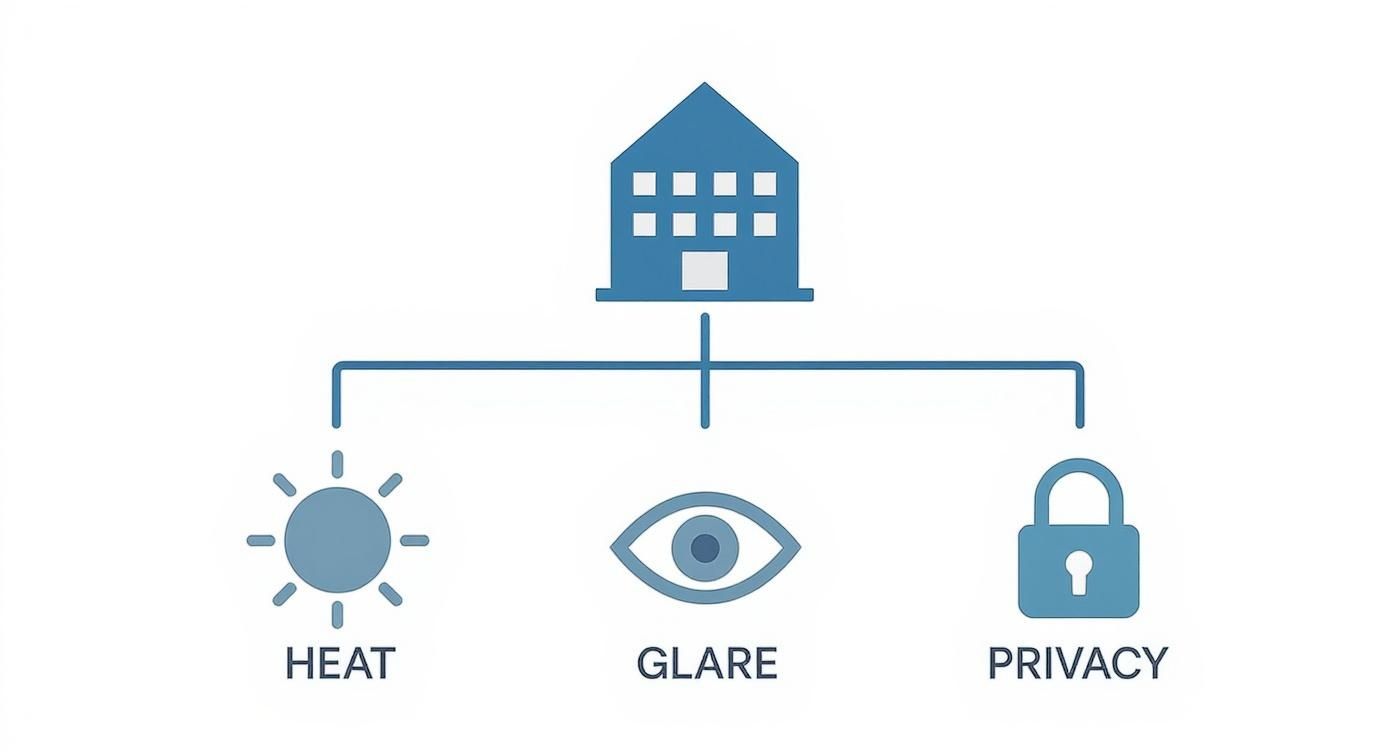
As you can see, problems like heat, glare, and privacy are top-of-mind for property managers, and thankfully, there’s a targeted film solution for each one.
Solar Control Films for Energy Efficiency
By far the most common type, solar control films are the true workhorses of the industry. Think of them as a highly advanced filter for sunlight. Their main job is to reject a huge chunk of the sun's heat-generating infrared rays before they can bake your interior, all while letting the good stuff—natural light—pour in.
This one upgrade can be a game-changer for your energy bills. By cutting down on solar heat gain, these films can reduce the load on your HVAC system by up to 30%. Those are serious savings. It's no wonder the global market for these films is expected to jump from USD 2.40 billion in 2024 to nearly USD 4 billion by 2032, as detailed in this Fortune Business Insights report.
Solar films generally fall into two camps:
- Ceramic Films: These are the high-tech, modern option. They use non-metallic nano-ceramic particles to absorb and repel heat without looking like a mirror. They offer fantastic performance with crystal-clear visibility, making them perfect for high-end retail or offices where you want to kill the heat but keep the view.
- Metallic Films: These films have micro-layers of metal that are great at reflecting solar energy away from the building. They're incredibly effective but often have a more mirrored, reflective look from the outside, which isn't always the right aesthetic choice.
Security and Safety Films for Asset Protection
This category is all about hardening your building's weakest points. Security and safety films are made from much thicker layers of heavy-duty polyester and are bonded to the glass with an incredibly strong adhesive. Their primary job isn’t to be bulletproof, but to hold shattered glass together when it breaks.
The real benefit of security film is that it buys you time. By keeping the glass pane intact, it creates a tough, frustrating barrier that dramatically slows down anyone trying to smash their way in.
That delay is everything. It gives people inside a chance to get safe and law enforcement precious time to respond. These films are measured in thickness (mils), with most commercial jobs using films between 4 to 15 mil. They are an absolute must for ground-floor windows, glass doors, and any other glass that could be a target. For protection against more serious threats, you'll want to look at specialized systems, which we cover in our guide to ballistic-rated window film systems.
Decorative and Privacy Films for Aesthetics
Beyond just performance, window films are an incredible design tool. Decorative films can instantly change the entire look and feel of a glass wall or window, giving you the premium appearance of etched or sandblasted glass without the high cost and permanent commitment.
They're incredibly versatile and perfect for:
- Creating Privacy: Frosted and opaque films are a go-to for conference rooms, private offices, and glass partitions. They let diffused light flow through the space while blocking direct lines of sight.
- Adding Branding: Custom-cut logos and brand patterns can be applied directly to glass, reinforcing your company's identity in lobbies, storefronts, and throughout the office.
- Enhancing Design: With a huge range of textures, colors, and patterns available, you can add a sophisticated architectural element to any plain glass surface.
Specialty Films for Unique Challenges
Finally, some problems require a very specific tool for the job. These specialty films are designed to solve unique, and often frustrating, issues.
- Anti-Graffiti Films: Think of this as a screen protector for your glass. It’s a thick, clear, sacrificial film applied to the exterior. When someone tags it with spray paint or scratches it, you just peel off the damaged film and replace it. It costs a tiny fraction of what it would to replace the entire glass panel.
- Bird-Strike Deterrent Films: These films have subtle patterns that are highly visible to birds but nearly invisible to us. They are a simple, effective way to prevent birds from colliding with large panes of glass—a crucial feature for any building trying to be more environmentally conscious.
Each of these film types serves a distinct purpose, turning a simple pane of glass into a multi-functional asset that boosts your building's safety, efficiency, and design.
How to Read Window Film Spec Sheets
When you're choosing a commercial window film, the decision often boils down to a few key numbers on a spec sheet. At first glance, these documents can feel like they're written in another language, full of industry acronyms and percentages.
The secret is to stop thinking of it as a technical manual and start seeing it as a nutritional label for your windows. Each number tells you a specific story about how the film performs and how it will change your building's comfort, security, and energy bills. Once you crack the code, you can compare products like a pro and match them perfectly to your goals.
Key Performance Metrics Unpacked
Let's translate the most important specs into real-world benefits. These are the core figures that will dictate how a film behaves once it's on your glass.
-
Visible Light Transmission (VLT): This one is straightforward. VLT measures the percentage of visible light that gets through the film. A low VLT means a darker tint, while a high VLT is almost perfectly clear. Think of it like sunglasses—a 15% VLT is like a dark pair of shades, perfect for cutting glare, whereas a 70% VLT lets in tons of natural light.
-
Total Solar Energy Rejected (TSER): If you’re focused on energy efficiency, this is your most important number. TSER is the film’s total heat-blocking power, combining its ability to block visible light, infrared rays (the main source of heat), and UV light. The higher the TSER, the better the heat rejection and the bigger your potential energy savings.
-
UV Rejection: You’ll almost always see this at 99% or higher on any quality commercial film. This metric confirms the film is doing its job protecting your interiors—furniture, flooring, artwork, and retail merchandise—from the ultraviolet rays that cause fading and sun damage.
These three numbers work in tandem. The gold standard is a film with a high VLT and a high TSER, which means it blocks a massive amount of heat without making your space feel like a cave.
Security Ratings and Film Thickness
When your priority shifts from solar control to physical protection, the specs you care about change, too. Here, it’s all about the film’s thickness and how well it stands up to impact.
Film thickness is measured in mil (one-thousandth of an inch). It might sound minuscule, but in the world of security film, a few mil makes a world of difference.
- 4-7 Mil Films: This is the range for standard safety films. They're great for preventing injury from accidental glass breakage or handling minor impacts.
- 8-14 Mil Films: Now we’re in serious security territory. Films in this range are engineered to dramatically delay intruders during a forced entry attempt, buying precious time.
- 15+ Mil Films: These are the heavy-hitters, reserved for high-risk environments where blast mitigation or advanced threat protection is a must.
When you see a film’s thickness on a spec sheet, you’re looking at its raw strength. A thicker film bonded with a strong adhesive creates a formidable barrier that holds shattered glass together, turning a vulnerable entry point into a resilient shield.
Putting It All Together
Decoding a spec sheet is really a balancing act. It's no surprise that the architectural window film market is projected to hit USD 7.74 billion by 2034, largely driven by demand for advanced films that do it all. For example, modern nano-ceramic films deliver incredible heat rejection without a dark or mirror-like appearance. Most commercial projects find a sweet spot with films in the medium-thickness range, which makes up about 55% of the market and offers a fantastic blend of performance and durability. You can explore more architectural film market trends on PrecedenceResearch.com.
To make navigating these spec sheets even easier, here’s a quick-glance decoder for the most common terms.
Window Film Specification Decoder
This table breaks down the technical jargon on a spec sheet, explaining what each term measures and why it should matter to your business.
| Technical Term | What It Measures | Why It Matters For Your Business |
|---|---|---|
| VLT (Visible Light Transmission) | The percentage of visible light that passes through the film. | Determines the tint level and how much natural light is preserved. |
| TSER (Total Solar Energy Rejected) | The total amount of solar energy (heat) blocked by the film. | Higher TSER directly translates to lower cooling costs and improved comfort. |
| Glare Reduction | The percentage by which the film reduces intense, bright light. | Improves screen visibility for employees and comfort for customers. |
| Film Thickness (Mil) | The physical thickness of the polyester film. | A thicker film provides greater resistance to forced entry and impact. |
By focusing on these core numbers, you can cut right through the marketing fluff and make a truly informed decision. You'll be able to choose a film that delivers exactly what your business needs.
Understanding the ROI of Window Film
The technical specs are impressive, sure, but for any savvy business owner or property manager, it all boils down to one question: What’s the payback? It’s time to move past the features and talk about financial sense. When you do, you quickly realize window film isn't just another expense—it's a smart capital improvement that actively pays for itself.
The return on investment for commercial window film comes from a few different angles. You've got the direct, easy-to-measure savings, and then you have the powerful indirect benefits that quietly boost your bottom line. Getting a handle on both is the key to seeing the full picture.
Direct ROI from Energy Savings
The most obvious financial win is the immediate and ongoing reduction in your energy bills. Think of solar control films as a thermal shield for your building, drastically cutting down on the solar heat pouring through your windows.
This takes a massive load off your HVAC system, which is almost always one of the biggest line items on a commercial building's operating budget. By rejecting a huge chunk of the sun's heat, your air conditioning simply doesn't have to cycle on as often or work as hard to keep the space comfortable.
The result? A real, measurable drop in energy use. It's not uncommon for businesses to see their cooling costs fall by as much as 30%, leading to a full payback on the film in just 2 to 5 years.
After that break-even point, every dollar you save on energy is pure profit that goes on for the life of the film—often 15 years or more.
Indirect ROI That Drives Value
Beyond the utility bill, commercial window films deliver some serious returns that are a bit harder to plug into a spreadsheet but are just as important for a healthy, profitable business.
-
Improved Employee Productivity: Glare isn't just annoying; it's a productivity killer. When you cut the harsh glare on computer screens, you reduce eye strain and mental fatigue. That creates a more comfortable and focused team, and comfortable employees are always more productive.
-
Increased Tenant Retention: In a competitive market, keeping good tenants is everything. A building known for hot spots and blinding sun is a building tenants will leave. Solar control films create a stable, pleasant indoor environment, which is a huge factor in keeping tenants happy and renewing their leases.
-
Enhanced Asset Protection: UV-blocking films are essentially sunscreen for your building's interior. By blocking over 99% of damaging UV rays, they protect everything from retail merchandise and office furniture to flooring and artwork from fading. This extends the life of your assets and preserves their value.
Security Films and Financial Mitigation
The ROI for security film is a different kind of calculation—it’s all about loss prevention. A single smash-and-grab can cost you thousands in stolen goods, repairs, and business downtime.
The thicker security films create a tough barrier that significantly delays anyone trying to break in, which is often enough to make them give up and move on. That layer can be the difference between a broken window and a catastrophic financial hit. We get into the nitty-gritty of the numbers in our guide to security window film cost.
On top of that, insurance companies love to see proactive risk management. Many carriers offer lower premiums to businesses that install certified security films. It's another direct financial benefit. By shoring up your building’s weakest points, you’re not just protecting your stuff—you’re actively improving your financial risk profile.
The Professional Installation Process
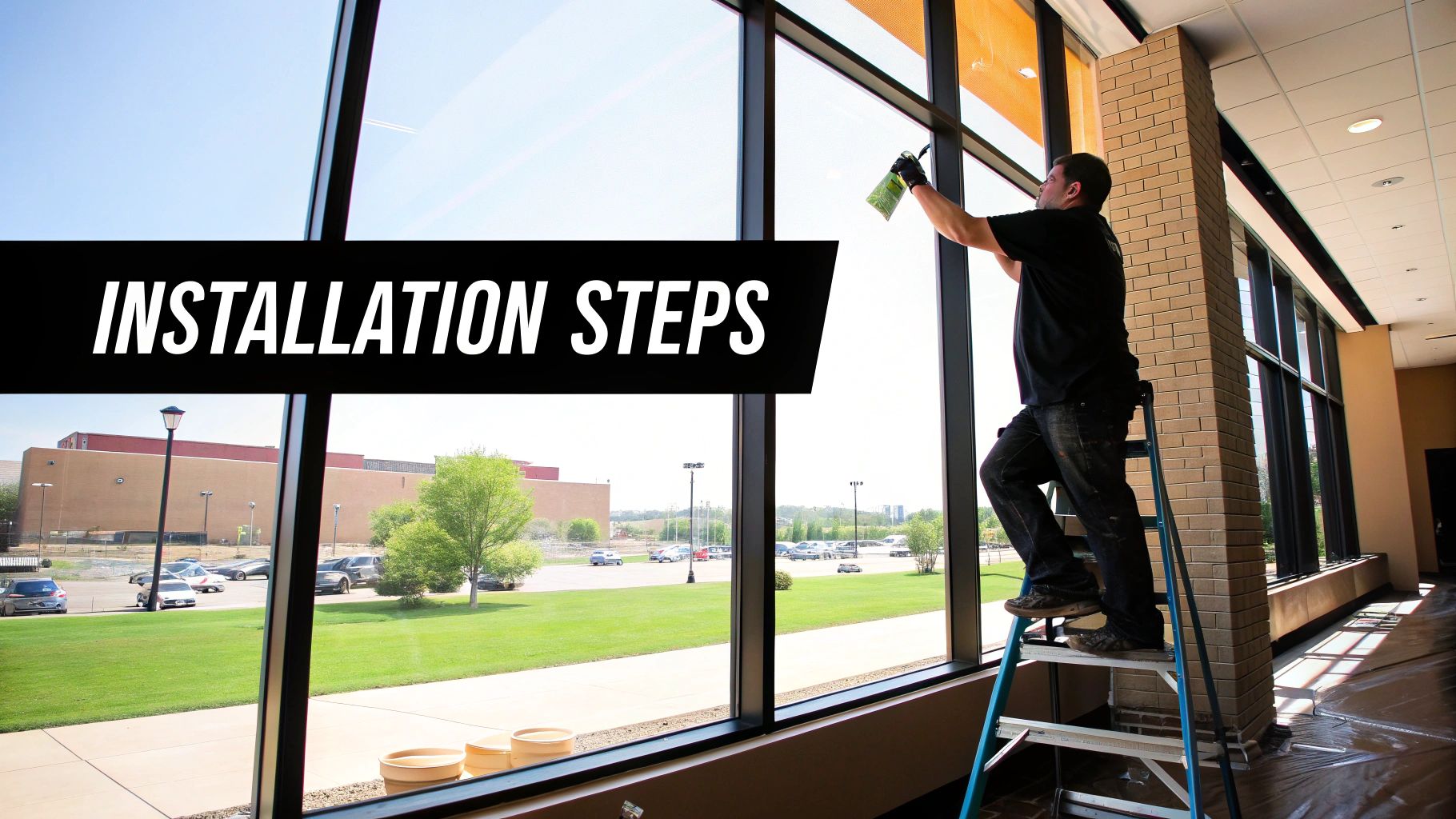
The thought of any work being done on a commercial property often brings up images of noise, dust, and disruption. It’s a major reason many business owners put off upgrading their windows. But installing commercial window films isn't a messy construction project; it’s a clean, technical service.
A professional installation is surprisingly quiet and efficient. Experienced crews can work around your schedule—often after hours or on weekends—to make sure your business operations don't skip a beat. The entire process, from the first measurement to the final walkthrough, is designed to be as seamless as possible.
The Project Lifecycle From Start to Finish
A high-quality installation is all about the details. It follows a well-defined process that guarantees the film performs exactly as it should for years to come. Managing this process effectively is key, and it helps to have a baseline for understanding contractor management principles.
Here’s a look at the typical stages involved:
- Initial Glass Survey: A technician comes to your property to get the lay of the land. They’ll measure each window, identify the type of glass, and note any potential challenges, like hard-to-reach areas or pre-existing coatings.
- Solution Consultation: With the survey data and your specific goals in mind, they’ll recommend the best film for the job. You’ll get a clear explanation of the specs, along with a detailed quote and project timeline.
- Site Preparation: The install team will give you a simple checklist for getting the area ready. This usually just means clearing some space around the windows to give them room to work safely and efficiently.
- Glass Cleaning and Application: This is where the magic happens. The crew thoroughly cleans every inch of the glass to ensure a perfect bond. They then apply the film using a special solution, squeegee out the moisture, and trim the edges for a flawless, custom fit.
- Final Inspection and Curing: Before they leave, the team conducts a quality check to catch any imperfections. They’ll also walk you through the curing process and give you instructions for long-term care.
Setting Expectations for Timelines and Disruption
How long will it take? A small retail storefront might only be a half-day job, while a large office building could take several days. No matter the scale, the top priority is always minimizing the impact on your business.
A key advantage of hiring a professional crew is their flexibility. Installers frequently work after business hours, overnight, or on weekends to ensure that your daily workflow is completely unaffected.
This commitment to working around your schedule is a hallmark of a professional service. You can get a better sense of what to expect during a professional window security film installation and see how we focus on a hassle-free experience.
Understanding the Post-Installation Curing Phase
Once the film is on the glass, it needs time to "cure." This is the period where the last bits of moisture from the application solution evaporate through the film, allowing the adhesive to create a permanent bond with the glass. This can take anywhere from a few days to a few weeks, depending on the film and the weather.
Don't be alarmed if you see a few small water bubbles or a slightly cloudy look at first. This is a temporary and expected part of the process. As the film fully cures, these will disappear completely, leaving you with a crystal-clear, durable finish. The most important thing is to avoid touching or cleaning the windows during this critical time to ensure a perfect, long-lasting result.
What to Expect After Installation: Maintenance and Warranties
You've made the investment, the film is on the glass, and your space already feels better. So, what’s next? Keeping that film in pristine condition and understanding your warranty is key to making sure it performs for the long haul.
Think of the film’s top layer like the clear coat on a high-end car. It’s incredibly tough and designed to resist scratches, but it’s not invincible. A little bit of know-how goes a long way in protecting it.
Keeping Your Film Looking Brand New
Once the film has fully cured (your installer will tell you how long, but it's usually about 30 days), cleaning is a breeze. The main things to remember are to avoid anything abrasive and to stay away from ammonia. Harsh chemicals and scratchy materials are the enemy of your film’s protective hard coat.
Here’s the simple routine we recommend:
- The Right Tools: Stick with soft microfiber cloths or a good-quality rubber squeegee. No scouring pads or rough paper towels.
- The Best Cleaner: A few drops of mild dish soap in a spray bottle of water is perfect. If you grab a store-bought cleaner, just double-check the label to ensure it’s ammonia-free.
- A Gentle Touch: Clean with smooth, overlapping strokes. There’s no need to scrub aggressively.
That’s really all it takes. This simple care routine will keep your windows looking great and ensure the film can do its job for years to come.
Making Sense of Your Warranty
Any reputable commercial window film comes with a manufacturer's warranty. This is your assurance that the product itself is free from defects. While the fine print varies a bit between brands, a quality warranty is pretty comprehensive.
A solid manufacturer warranty is the ultimate sign of a product's quality. It covers things that shouldn't happen—like bubbling, peeling, cracking, or the film changing color. These are all signs of a product defect, not a problem with the installation itself.
For most commercial projects, you can expect a warranty to last anywhere from 10 to 15 years. This means if the film fails because of a manufacturing flaw during that time, it gets replaced on their dime. Always get a copy of the warranty from your installer and file it away with your other important building documents.
Staying on the Right Side of Building Codes
Sometimes, window film isn't just about comfort or security—it's about compliance. In Southern California, we have some of the strictest energy codes in the country, and solar control films can be a huge help in meeting those thermal performance standards.
Beyond energy savings, the right film can contribute valuable points toward LEED (Leadership in Energy and Environmental Design) certification, a big deal for green building credentials. And don't forget about reflectivity; many cities have ordinances limiting how much glare a building can produce. A knowledgeable installer will guide you to a film that not only performs well but also keeps you fully compliant with all local codes.
Got Questions About Commercial Window Films?
Even after digging into the benefits and the tech specs, you're bound to have a few more practical questions. I get it. This is a big investment in your building's performance and safety, so you need straight answers. We've heard just about every question in the book from property owners and facility managers over the years, so we’ve pulled together the most common ones right here.
Think of this as that final conversation before you commit. We'll cover the day-to-day concerns that pop up before, during, and after a film installation, giving you the confidence to make the right call.
Will Window Film Actually Damage My Glass?
This is easily the number one question we hear, and it’s a fair one. The short answer is no—a high-quality film installed by a professional crew will not damage your glass. These films are engineered from the ground up to work with modern commercial glass.
The adhesives create an incredibly strong bond, but they don't chemically react with or alter the glass surface. Years down the road, a pro can remove the film cleanly, leaving no residue behind. The real key here is twofold: using the right film for your specific type of glass and having it installed by certified technicians who know exactly what they're doing.
A common myth is that film causes "thermal stress" that can crack the glass. While this is exceptionally rare, any good consultant will first identify your glass type (like annealed, tempered, or double-paned) and match it with a compatible film to completely eliminate that risk. It's all about a safe, effective application.
How Long Does This Stuff Actually Last?
Commercial-grade window films are built to last. Most of the top-tier products we use come with a manufacturer's warranty of 10 to 15 years, but in our experience, their real-world lifespan often goes far beyond that. With just basic care, you can expect your film to keep performing for decades.
Of course, a few things affect how long it will last:
- Film Quality: Premium films from reputable brands use more stable materials, like specific metals and dyes, that are highly resistant to fading and breaking down over time.
- Your Climate: Here in sunny Southern California, the constant UV and heat really put films to the test. The good news is, professional-grade films are designed specifically for these harsh conditions.
- The Installation: A perfect installation is the foundation for a long life. Getting the edges sealed just right and ensuring the glass is perfectly prepped prevents any peeling or bubbling down the line.
Can You Put Film on the Outside of the Windows?
Yes, absolutely. Exterior-grade window films are a specialized tool in our toolkit for certain situations. We typically use them when getting to the inside of the glass is a major headache, or for some types of modern low-emissivity (Low-E) glass that can build up too much heat if a film is applied internally.
These exterior films are tough. They're manufactured with an extra-durable, scratch-resistant hard coat to stand up to rain, sun, and everything else the weather throws at them. While they perform incredibly well, they do face a harsher environment, so their warranty is usually a bit shorter than interior films—typically in the 5 to 7-year range. An experienced installer can tell you if an exterior film is the right—and safest—call for your building.
Ready to make your property more secure, comfortable, and efficient? The experts at Fortress Security Films offer professional consultations and installations designed for your building's unique challenges. Get your free estimate today and find the right solution for your business.
