


At its core, commercial window film is a thin, high-performance polyester layer applied directly to glass. But it's much more than that—it's a smart upgrade for your building that works 24/7 to boost energy efficiency, bolster security, and improve the overall look and feel of your property.
Why Smart Buildings Rely on Commercial Window Film
It's helpful to think of commercial window film less like an accessory and more like an essential piece of a modern, efficient building. It's a high-tech layer for your existing glass that brings immediate performance gains, all without the massive cost and headache of a full window replacement.
Property managers and architects are increasingly spec'ing this solution because it solves multiple problems at once. From taking a sledgehammer to energy costs to protecting people and property, window film offers a fantastic return on investment. It's a silent workhorse that turns a building's most vulnerable points—its windows—into one of its strongest assets.
Core Performance Benefits
The real power of commercial window film goes way beyond just a simple tint. This is engineered technology designed to deliver measurable improvements in several key areas.
- Massive Energy Savings: In the summer, the film rejects solar heat, and in the winter, it helps keep your paid-for heat inside. This lightens the load on your HVAC system, often cutting cooling costs by up to 30%.
- Critical UV Protection: Window film is like sunscreen for your building, blocking up to 99.9% of the damaging UV rays that cause fading. This keeps your furniture, flooring, artwork, and retail merchandise looking new for longer.
- Enhanced Safety and Security: Specially designed security films make glass incredibly difficult to break. This is a powerful deterrent against break-ins, but it also contains dangerous glass shards during accidents or severe weather. It's a key part of the toolkit for modern smart security solutions.
- Improved Occupant Comfort: Nobody likes squinting through intense glare or dealing with frustrating hot spots near windows. Film tames the sun, creating a far more comfortable and productive environment for employees, customers, or tenants.
A smart building is an efficient building. Commercial window film is one of the most cost-effective ways to upgrade glass performance, directly impacting operational costs, occupant well-being, and property resilience.
While window film is a foundational upgrade for smart buildings, other technologies can work alongside it. For instance, some businesses integrate things like smart LED glass window signs for eye-catching, dynamic advertising. Ultimately, adding a multifunctional film layer is the first step toward unlocking real-world returns from your windows.
Exploring Your Commercial Window Film Options
Picking the right window film for your building isn't nearly as complicated as it might sound. The best way to think about it is like choosing the right tool for a specific job—each type of film is engineered to solve a particular problem. Whether you're trying to slash energy costs, beef up security, or just give your space a new look, understanding the main categories will help you find the perfect fit.
The world of window film is surprisingly diverse. There are specialized products designed to tackle everything from brutal summer heat and distracting glare to serious security threats. Let's break down the main players so you can make a smart decision that pays off for your business.
Solar Control Films
Imagine your windows as giant magnets for the sun's heat. Solar control films are like a high-tech filter, stopping a huge chunk of that solar energy right at the glass, before it has a chance to heat up your building. That’s their whole purpose: taming the sun.
These films are masters at reducing heat gain, which keeps your interior spaces much cooler and more comfortable, especially when the summer sun is beating down. By easing that solar load, they take a massive strain off your HVAC system, leading to some serious energy savings. A fantastic side effect is a dramatic cut in glare, making it easier for everyone to see their screens and work without squinting.
It’s no surprise, then, that solar control has become the biggest player in the commercial window film market, pulling in over 46% of global revenue in 2023. These films can chop cooling costs by up to 25%, making them a no-brainer upgrade for any building owner looking to cut down on operating expenses. For a deeper dive into market trends, you can learn more about the latest window film research.
Safety and Security Films
While solar films fight the sun, safety and security films are designed to handle physical threats. This stuff is a whole different animal—it's much thicker and tougher, bonded to the glass with an incredibly powerful adhesive. The goal is simple: hold shattered glass together upon impact.
Think of it as reinforcing your building's weakest link. An untreated window is an open invitation for trouble, easily smashed by an intruder, a stray golf ball, or severe weather. Security film transforms that fragile pane into a surprisingly strong barrier.
This delivers two huge benefits:
- It Deters Break-ins: The film makes forced entry a real pain. Instead of the glass crashing down, it stays in the frame, creating a frustrating delay that often convinces would-be thieves to just give up and move on.
- It Contains Hazards: In an accident, a natural disaster, or even a blast, the film stops deadly shards of glass from flying through the room. This one feature can be the difference between a mess and a tragedy, protecting everyone inside from serious injury.
Security film is an invisible shield. It reinforces your building's most vulnerable entry points without altering its appearance, providing peace of mind and critical protection against a range of modern threats.
The infographic below really brings to life the core benefits that these films deliver, from tangible savings to essential protection and comfort.
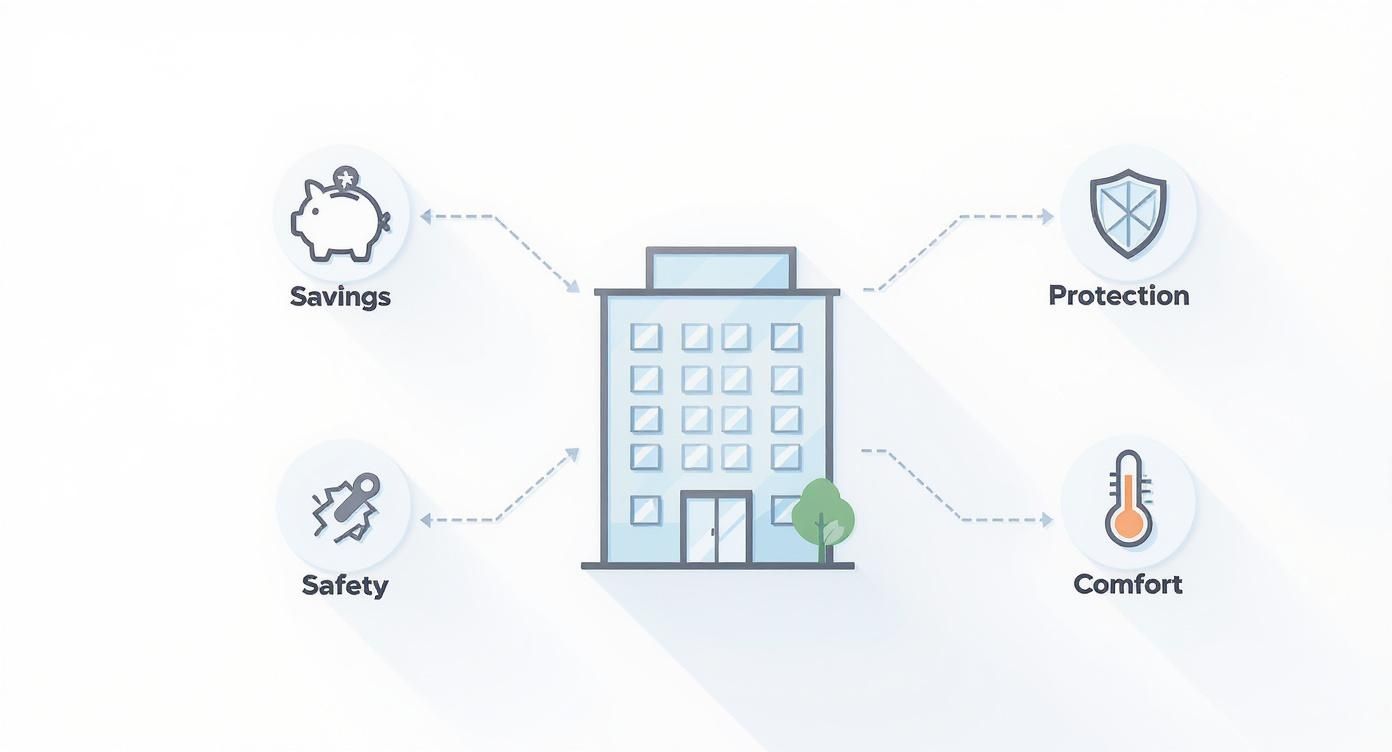
It’s a great visual for understanding how a single upgrade can offer multiple returns, proving that window film is a strategic investment for any commercial property.
To make these distinctions even clearer, here’s a quick comparison of the main film types.
Comparing Commercial Window Film Types
This table gives you a quick-glance comparison of the main types of commercial window film, highlighting their primary functions, best use cases, and key benefits.
| Film Type | Primary Function | Ideal Application | Key Benefit |
|---|---|---|---|
| Solar Control | Heat & Glare Reduction | Offices, retail, any building with high sun exposure | Lowers energy bills, improves comfort |
| Safety & Security | Shatter Resistance | Ground-floor windows, government buildings, schools | Intruder deterrence, blast mitigation, injury prevention |
| Decorative | Aesthetics & Privacy | Conference rooms, storefronts, interior glass partitions | Custom branding, stylish privacy, high-end look for less |
| Specialty | Niche Problem-Solving | Vandalism-prone areas, buildings in 4-season climates | Graffiti protection, year-round energy savings |
Each option offers a unique value, allowing you to create a solution perfectly matched to your property's needs.
Decorative and Privacy Films
Beyond pure performance, window films are an aesthetic powerhouse. Decorative films are the creative chameleons of the group, used to completely transform the look of glass for branding, privacy, or just adding some architectural flair. They come in what feels like a million different patterns, textures, and colors.
Some of the most popular uses include:
- Frosted Films: These give you that classic sandblasted or etched-glass look. They’re perfect for adding privacy to conference rooms and offices without sacrificing natural light.
- Branded Films: Think custom-cut logos, lettering, or brand patterns applied to a storefront or office entrance. It’s a sharp way to reinforce your brand identity.
- Patterned Films: From simple stripes and dots to complex geometric designs, these can add a touch of sophistication to any glass surface.
This type of commercial window film is an incredibly smart way to get high-end design results without the jaw-dropping cost of specialty glass. It’s fully customizable and can be swapped out easily if you rebrand or just want a new look down the road.
Specialty Films
Finally, we have the specialty films. This category is for products engineered to solve very specific, and sometimes unusual, problems that standard films don't cover.
A couple of great examples are:
- Anti-Graffiti Films: This is a thick, clear, and totally removable film applied to the outside of glass or other smooth surfaces. It acts as a sacrificial layer against spray paint, scratching, and acid etching. If it gets vandalized, you just peel off the film and replace it—saving the glass.
- Low-E Films: Low-emissivity films are the ultimate all-season solution. On top of rejecting summer heat, they have a special coating that reflects indoor heat back into the room during the winter. This boosts your insulation and helps lower your heating bills.
Each of these film types brings a distinct set of benefits to the table, giving you the power to create a solution that precisely matches your building's operational, security, and aesthetic goals.
The Real-World Benefits of Installing Window Film
Let's move past the technical jargon for a moment. While the science behind commercial window film is fascinating, what really matters are the tangible, day-to-day results you'll see. The true value comes from its measurable impact on your bottom line and your building's environment.
This isn't just about sticking a layer of plastic on your windows. It's about turning a simple upgrade into a multifaceted investment that makes your space more comfortable, productive, and secure for everyone inside.
Slash Your Energy Costs Year-Round
The first place you'll feel the impact is on your utility bills. Think of your windows as thermal floodgates. In the summer, they let solar heat pour in, forcing your HVAC system into overdrive just to keep things bearable.
Solar control film acts as a reflective shield, rejecting a huge chunk of that heat before it ever enters your space. In fact, some films can slash cooling costs by up to 30%, a game-changer in hotter climates. The industry is always pushing forward, with low-emissivity (low-E) films now offering incredible insulation without killing your natural light. You can review the data on window film technology to see just how far things have come.
But this isn't just a summertime fix. When winter rolls around, that same film helps trap your precious indoor heat, keeping it from escaping through the glass. This two-way performance gives your HVAC system a break all year long, leading to consistent savings on both cooling and heating.
Boost Employee Comfort and Productivity
An uncomfortable office is an unproductive office. It's that simple. Unchecked sunlight causes two massive headaches for employees: blinding glare and frustrating hot spots.
Glare makes looking at a computer screen a miserable experience, leading to eye strain and fatigue. Meanwhile, the desks near the windows can feel like an oven for half the day, rendering prime real estate unusable.
Commercial window film tames the sun.
- Cuts Down on Annoying Glare: It dials down the intensity of direct sunlight, so your team can actually see their screens without squinting or constantly adjusting their seating.
- Evens Out Interior Temperatures: By stopping solar heat at the window, it gets rid of those miserable hot spots, creating a consistent, comfortable temperature for everyone.
When your team isn't fighting the environment, they can focus on their work. A more comfortable crew is a more productive crew, plain and simple.
A comfortable employee is a productive employee. By controlling glare and heat, window film removes common environmental distractions, allowing your team to focus on their work, not on the sun.
This boost in daily comfort often leads to higher employee satisfaction and retention—a powerful, if often overlooked, return on investment.
Protect Your Assets from UV Damage
Ever notice how furniture or flooring near a window fades over time? That's the destructive power of ultraviolet (UV) radiation. Standard glass does next to nothing to stop it, leaving your valuable interiors exposed.
Think of high-quality window film as a powerful, invisible sunscreen for your building. It blocks up to 99.9% of harmful UV rays, virtually eliminating the single biggest cause of fading. This is absolutely essential for preserving the look and life of your furniture, flooring, artwork, and retail merchandise.
Imagine the cost of replacing faded office chairs, refinishing sun-bleached floors, or writing off damaged inventory. Window film acts as a proactive shield, extending the life of your assets and saving you a fortune in replacement costs down the road.
Reinforce Security and Mitigate Hazards
Let's be honest: your building's windows are its weakest points. A standard pane of glass is an open invitation for intruders and can become a serious hazard during an accident or storm.
This is where safety and security films completely change the game. These are thicker films applied with a powerful adhesive, creating a tough membrane that holds shattered glass together. This offers two critical layers of defense:
- Deterrence: Even after multiple impacts, the film keeps the glass locked in its frame. This makes forced entry incredibly difficult and noisy, often convincing a would-be burglar to give up and move on.
- Containment: During a natural disaster or explosion, the film prevents glass shards from flying through the air like daggers, protecting occupants from potentially life-threatening injuries.
It effectively turns a vulnerability into a shield, giving you peace of mind that you’ve protected both your property and the people inside it.
How Different Industries Use Window Film
The real value of commercial window film shines when you see it applied in the real world. This isn't some one-size-fits-all solution; it's a versatile tool that solves specific problems for everyone from high-end retail shops and corporate towers to schools and hotels. The application is always strategic, tailored to the unique safety, operational, and design needs of the space.
Looking at how different businesses put window film to work is the best way to understand its benefits. Each example is a small case study, showing how a simple upgrade can deliver a surprisingly powerful return on investment.
Retail and Storefronts
For any retailer, the storefront windows are prime marketing real estate. They need to be crystal clear and inviting to showcase merchandise, but they also create a ton of headaches. We're talking about sun damage, blinding glare, and major security weak points.
This is where window film becomes a retailer's best friend, tackling all these issues in one go:
- UV Protection: Think of it like sunscreen for your inventory. Films that block 99.9% of UV rays prevent thousands of dollars in merchandise—from clothing to furniture—from fading. This keeps products looking fresh and protects the bottom line.
- Glare Reduction: Solar films cut down on that harsh glare that makes customers squint. The result is a much more pleasant shopping experience where the products, not the blinding sun, are the main attraction.
- Enhanced Security: Smash-and-grab robberies are a constant threat. For these situations, installing commercial retail security film is a crucial first line of defense, making it incredibly difficult for thieves to break through the glass and get to your high-value goods.
Corporate and Office Buildings
In the corporate world, it all comes down to employee comfort, productivity, and keeping operational costs in check. Those beautiful, large glass windows in modern offices can actually work against these goals by creating hot spots and distracting glare.
A layered approach with window film is often the answer. Solar control films are a go-to for managing heat and glare, which can dramatically lower energy bills and make workspaces more comfortable. At the same time, decorative films come into play on interior glass, like conference room walls and private offices.
Decorative films give you the elegant, high-end look of etched or frosted glass for a fraction of the cost. They create the privacy needed for important meetings without sacrificing that open, light-filled aesthetic everyone loves.
This combination boosts morale, cuts overhead, and makes the entire office more functional and stylish.
Government and Educational Facilities
When it comes to schools, universities, and government buildings, nothing is more important than the safety of the people inside. Windows are almost always the most vulnerable entry points, whether from forced entry, vandalism, or even severe weather.
Here, safety and security films are non-negotiable. This isn't your standard tint; it's a thick, durable layer designed to hold shattered glass together upon impact. This provides two life-saving benefits:
- It Delays Intruders: By holding the glass in the frame, the film creates a tough barrier that buys critical time for law enforcement to arrive during a break-in attempt.
- It Prevents Injury: During a storm or an accident, the film stops deadly shards of glass from flying across a room, protecting students, staff, and visitors from serious harm.
Hospitality and Hotels
In the hospitality game, guest experience is king. Hotels lean on window film to keep guests comfortable, ensure their privacy, and run the property more efficiently. Solar films are perfect for guest rooms with big windows, stopping them from turning into greenhouses and easing the strain on the HVAC system.
You’ll also see decorative films used throughout common areas like spas, gyms, and restaurants. They can create beautiful privacy screens or add a sophisticated design element to glass partitions. By cutting energy costs while making guests happier, window film offers a clear and valuable win for any hotel operator.
Bringing Your Window Film Project to Life
Alright, you've seen what commercial window film can do. Now, how do you go from idea to reality? The process is actually pretty simple once you break it down. Success really hinges on two things: picking the right film for the job and getting it installed by a pro.
Think of it this way: you’re translating your building’s problems—whether it's killer energy bills or annoying glare—into a practical solution that will pay you back for years.
How to Choose the Right Film
Before you even pick up the phone to call an installer, take a minute to think about your specific needs. The film that works wonders for a sunny hotel in Florida is going to be completely different from the one a downtown retail store needs for smash-and-grab protection.
Here’s what you need to nail down first:
- What's Your Main Goal? Are you trying to cut your cooling costs? Bolster security? Reduce glare on computer screens? Protect merchandise from fading? Be crystal clear on your top priority, because that’s what will guide your selection.
- What’s Your Climate Like? If you're in a hot, sunny region, you’ll want a powerful solar control film that excels at rejecting heat. But if you have four distinct seasons, a Low-E film that helps keep heat in during the winter and out during the summer is a much smarter play.
- Which Way Do Your Windows Face? Your south and west-facing windows get absolutely blasted by the sun. These spots will likely need a stronger, more reflective film than your north-facing windows to keep things comfortable.
The technology today is seriously impressive. Top-tier films can block up to 99% of damaging UV rays and slash solar heat gain by as much as 78%. It’s no wonder they’re becoming a standard upgrade in modern buildings. For a deeper dive into market trends, you can explore detailed reports on the global window film market.
Finding an Installer You Can Trust
Let me be clear: the installation is just as critical as the film itself. A botched job means bubbles, peeling, and a solution that fails long before it should. Finding a great installer is non-negotiable.
A professional installation is seamless. The film should look like it’s part of the glass, performing exactly as promised. This is absolutely not a DIY job—the technician's skill is what makes or breaks the project.
When you start talking to installers, you need to vet them properly. Don't be afraid to ask the tough questions.
Key Questions to Ask Any Potential Installer:
- What film brands do you recommend and why? A pro will have their preferred brands based on experience and can clearly explain the differences between them.
- Are you licensed, bonded, and insured? This is a must. It protects you, your property, and holds them accountable.
- Can I see a portfolio or speak to some of your other commercial clients? Hearing from past customers is the best way to know if they deliver on their promises.
- What exactly does the warranty cover? You need to know the details—what's covered (bubbling, fading, etc.) and for how many years.
- Can you walk me through your installation process? They should be able to explain everything from prep work to the final clean-up, so you know what to expect on installation day.
Putting in the effort upfront to select the right film and the right installation partner is the surest way to a headache-free project and a building that performs better than ever.
Calculating Your Return on Investment
For any building manager or property owner, the decision to upgrade always comes down to the numbers. The performance benefits of commercial window film are great on paper, but you need to know how that investment actually translates into a financial return. Having a clear way to look at this shows you how the film doesn't just improve your building—it actively pays you back.
The calculation really starts with direct energy savings. By rejecting a significant amount of solar heat, the film eases the workload on your HVAC system. That alone can slash your cooling costs by up to 30%. To get a good estimate, you'd look at your building's current energy use, the type of windows you have, and your local utility rates to project what you could save each year.
Understanding the Payback Period
The payback period is simply the time it takes for the savings to cover the initial cost of the film. For commercial window film, this is often surprisingly quick. Think of it as the breakeven point—the moment the film stops being an expense and starts generating pure profit. It's not uncommon for projects to pay for themselves in just a few years from energy savings alone.
A simple way to view ROI is by comparing the upfront cost to the ongoing, year-after-year savings on your utility bills. Once the film has paid for itself, every dollar saved is a direct boost to your net operating income.
This straightforward financial metric gives you a powerful justification for the project, making it an easy sell for stakeholders focused on the bottom line. Calculating the specific security window film cost is the perfect first step in this analysis.
Accounting for Intangible Returns
Beyond the utility bills, window film delivers significant value that protects your bottom line in other ways. These "intangible" returns add some serious weight to the ROI calculation, even if they don't show up as a line item on an energy statement.
Just think about these powerful financial benefits:
- Asset Protection: The film acts like a powerful sunblock for your interiors by blocking 99.9% of UV rays. This prevents expensive fading of furniture, flooring, and retail merchandise, extending the life of assets worth thousands of dollars.
- Increased Tenant Satisfaction: Who wants to work or shop in a building with blinding glare and uncomfortable hot spots? A more comfortable environment leads to happier tenants, which can directly improve lease renewals and reduce vacancy rates, protecting your rental income.
- Enhanced Security: A single deterred break-in can save you more than the entire cost of the film installation. You avoid the cost of stolen property, repairs, and potentially higher insurance premiums.
When you start adding these tangible and intangible benefits together, the financial case for commercial window film becomes incredibly compelling. It's not just an expense; it’s a smart, strategic investment in your property’s long-term value and performance.
Common Questions About Commercial Window Film
Even with all the benefits laid out, it's natural to have a few lingering questions. Building owners and property managers often have the same final concerns before they're ready to move forward with a commercial window film project. Getting those questions answered is the last step to feeling confident in your decision.
Think of this as our FAQ, where we tackle the most common things people ask us every day. We'll clear the air on durability, aesthetics, and upkeep so you have the full picture.
How Long Does Commercial Window Film Last?
When you have a high-quality film installed by a pro, you’re looking at a solution that’s built to last. Most films from top-tier manufacturers come with a 10 to 15-year warranty, and honestly, many installations hold up even longer with just basic care.
Of course, the exact lifespan will shift based on the film you choose, the climate you're in, and how much direct sun those windows get hammered with day after day. The good news is the warranty has your back, covering problems like cracking, peeling, bubbling, or demetallizing. It’s a solid investment.
Will Installing Window Film Make My Building Too Dark?
That’s probably the biggest myth we have to bust, but the short answer is no. Today’s window film technology is light-years ahead of the dark, bubbly tint you might be picturing from the 90s. Many modern films are "spectrally selective"—a fancy way of saying they're smart enough to block the invisible stuff (infrared heat and UV rays) while letting most of the visible light stream right through.
You can slash heat and cut annoying glare without making your interior feel like a cave. It’s all about preserving that bright, natural light that makes a space feel welcoming while keeping the view crystal clear for everyone inside.
Can Window Film Be Installed on Any Type of Glass?
Pretty much, yes. Window film works great on most glass you'll find in a commercial building—single-pane, double-pane insulated units, tempered glass, you name it. That said, there are some exceptions. Certain high-performance films can create thermal stress on specific types of glass, which could lead to damage.
This is exactly why you need a professional consultation, not just an order form. An experienced installer will actually look at your windows, figure out how they’re constructed, and then recommend a film that’s 100% safe and effective for your building. It takes the guesswork out of the equation.
How Do I Clean Windows with Film Installed?
Cleaning windows with film is incredibly easy. The only real rule is to give the film about 30 days to fully cure after it's installed.
Once that waiting period is over, just follow these simple steps:
- Grab a soft, clean cloth or a synthetic sponge.
- Mix a few drops of mild dish soap into a spray bottle of water.
- Wipe the surface gently. A soft rubber squeegee works perfectly, too.
The big thing to remember is to avoid anything abrasive. That means no harsh chemical cleaners, no ammonia-based products, and definitely no scrubby pads that could scratch the film’s protective topcoat.
Ready to secure your property and enhance its performance? The experts at Fortress Security Films can provide a detailed assessment and recommend the perfect solution for your building. Protect your assets and people with industry-leading technology. Get your free consultation today
