


Ever had that heart-stopping moment when a rock kicks up from the highway and smacks your windshield? You’re not alone. Car windshield protection film is essentially a heavy-duty, crystal-clear screen protector designed specifically for this moment. It's a high-tech layer applied to the outside of your windshield, built to take the hit from rocks and road debris so your glass doesn't have to.
This film acts as a sacrificial barrier, saving you from the hassle and expense of chips and cracks.
An Invisible Shield for Modern Vehicles
While the idea sounds simple, its value has skyrocketed with modern vehicle technology. The windshield in a new car isn't just a piece of glass anymore; it's the nerve center for your Advanced Driver-Assistance Systems (ADAS). All those cameras and sensors for lane-keep assist and emergency braking are mounted right there.
Even a small rock chip that turns into a running crack can disrupt these systems, forcing a full windshield replacement. And that’s where things get really expensive.
Why Windshield Replacement Costs Have Soared
Gone are the days of a quick, cheap windshield swap. For most new cars, replacing the glass is only half the battle. The real kicker is the mandatory recalibration of all those ADAS sensors. This isn't a simple DIY job; it requires specialized tools and trained technicians, driving the price way up.
- Older Vehicles: You might get away with a replacement for around $500.
- Modern Vehicles (2018+): Brace yourself. Costs can easily climb to $1,500 to $1,800 or even more because of the integrated tech.
Suddenly, windshield protection film looks less like an accessory and more like a savvy financial decision. It’s your first line of defense, preserving the original factory glass and its perfectly tuned systems.
More Than Just Impact Resistance
Stopping rock chips is its primary mission, but a good quality film does more. It helps maintain the integrity of the original factory seal around the windshield—a critical component for preventing leaks and ensuring structural safety in a rollover.
Think of it like this:
The film takes the brunt of the impact from flying debris, sacrificing itself so your expensive, high-tech windshield doesn't have to. It's about proactive protection versus reactive, costly repairs.
This guide will walk you through everything you need to know about this invisible shield. We’ll break down how it works, what types are out there, what a professional installation should look like, and how it delivers real long-term value. By the time we’re done, you’ll see exactly how this technology can save you from big bills and bigger headaches down the road.
The Technology Behind the Shield
At a glance, you might mistake windshield protection film for a simple sheet of plastic. But that couldn't be further from the truth. Think of it less like cling film and more like a high-tech, invisible suit of armor for your glass. Its real magic lies in a sophisticated, multi-layered construction where each layer has a specific job.
This complex engineering is what truly separates a quality film from a cheap knock-off. It’s not just about stopping a rock in its tracks; it’s about doing it without distorting your view or ruining your car’s clean look. The whole point is to create something incredibly tough that you forget is even there.
The Anatomy of Protection
A high-performance windshield film is an advanced composite. While the exact recipe is a trade secret for most brands, the core ingredients are pretty consistent across the board. Understanding what makes up these layers helps you see why professional-grade materials are worth the investment.
Here's a breakdown of the fundamental layers:
- Adhesive Layer: This is what marries the film to your glass. A good adhesive is strong enough to hang on through scorching summers and freezing winters, yet it's designed to peel off cleanly years down the road, leaving zero sticky mess behind. Critically, it has to be perfectly clear to avoid any visual distortion.
- Shock-Absorbing Core: This is the workhorse of the film. It's almost always made from thermoplastic polyurethane (TPU), a seriously impressive material. TPU is flexible, but it’s also tough as nails, with an incredible ability to absorb and spread out the force of an impact. When a piece of gravel smacks the windshield, this layer flexes, distributing the energy so the glass beneath doesn’t have to take the full hit.
- Scratch-Resistant Hard Coat: The very top layer is a durable hard coat that takes all the daily abuse. It’s the frontline defender against scuffs from wiper blades, sandblasting on the highway, and general road grime. Many top-shelf films even have a "self-healing" property, where minor scratches literally vanish with a little heat from the sun.
This layered design means the film can tackle multiple threats at once—from a sudden impact to the slow grind of daily driving.
More Than Just Impact Resistance
Stopping rock chips is the main reason people get this film, but the technology packed into it delivers a few other major perks for your comfort and safety. It’s engineered to do a lot more than just protect glass.
A top-tier film is a multi-functional tool. It not only provides a physical barrier against debris but also a filter against invisible threats like UV radiation, preserving your car’s interior and protecting your skin.
One of the most valuable bonus features is UV rejection. A premium film can block over 99% of harmful ultraviolet rays. This is huge. It stops your dashboard from cracking, keeps your leather from fading, and essentially puts sunscreen on your car’s interior. More importantly, it protects your skin during long hours on the road.
Of course, none of this matters if you can't see clearly. Optical clarity is absolutely non-negotiable. High-end films are manufactured with incredible precision to ensure there’s no haze, no blur, and no weird "orange peel" texture. The goal is to provide protection so flawless you don’t even know it’s there. That perfect blend of toughness, UV protection, and crystal-clear vision is what modern windshield film is all about.
Key Benefits for Your Vehicle and Safety
Sure, the main reason people get car windshield protection film is to stop rocks from causing chips. But honestly, that’s just scratching the surface. Once you install this nearly invisible shield, you start to see a whole range of benefits that protect your car, make driving more enjoyable, and even add a layer of safety you might not expect.
Think of it less like a simple screen protector and more like a multi-purpose upgrade for your windshield. It’s not just passively waiting for an impact; it's actively working to keep your car in top shape and you safer behind the wheel.
Superior Impact and Debris Resistance
This is the most obvious win. We've all been there—driving down the highway when a truck kicks up a piece of gravel that smacks right into the glass. That heart-stopping sound usually means a new chip or crack.
Windshield protection film changes the game. Its specialized material is engineered to absorb and distribute the force of these impacts. What would have been a starburst crack becomes, at worst, a tiny mark on a replaceable film. It’s the ultimate defense against the daily assault of road debris.
Preserving Your Vehicle's Interior with UV Rejection
Beyond stopping rocks, a quality windshield film is a formidable barrier against the sun. Most top-tier films are designed to block over 99% of harmful UV rays, and the difference this makes inside your car is huge.
Here's what that UV protection really does for you:
- Saves Your Dashboard: It stops the relentless sun from fading, drying out, and eventually cracking the materials on your dash.
- Keeps Upholstery Fresh: Your seats, whether they're leather or fabric, are shielded from the bleaching effect of the sun, helping them look new for years.
- Lowers Cabin Temperature: By deflecting a good chunk of solar energy, the film helps your car stay noticeably cooler on hot, sunny days.
This level of protection is a big reason the automotive film market is booming. The global market for these films hit USD 7.59 billion, and it's projected to keep growing as more drivers seek out solutions that combine safety with interior preservation. If you want to dive deeper, you can find more about the car window tinting benefits that overlap with these protective features.
Maintaining Critical Structural Integrity
Here’s something most people don’t realize: your windshield is a key part of your car’s safety structure. It's not just a window. In a serious rollover accident, the windshield provides crucial support to keep the roof from caving in. It’s also essential for the proper deployment of the passenger-side airbag.
By preventing cracks and keeping the original factory seal intact, windshield protection film helps ensure your car’s structural backbone remains strong. A compromised windshield can fail under pressure, so keeping it pristine is a vital part of your vehicle's overall safety system.
It's a benefit that flies under the radar, but it's arguably one of the most critical. The film helps your car’s built-in safety features work exactly as the engineers intended when you need them most.
Enhancing Clarity and Preserving Resale Value
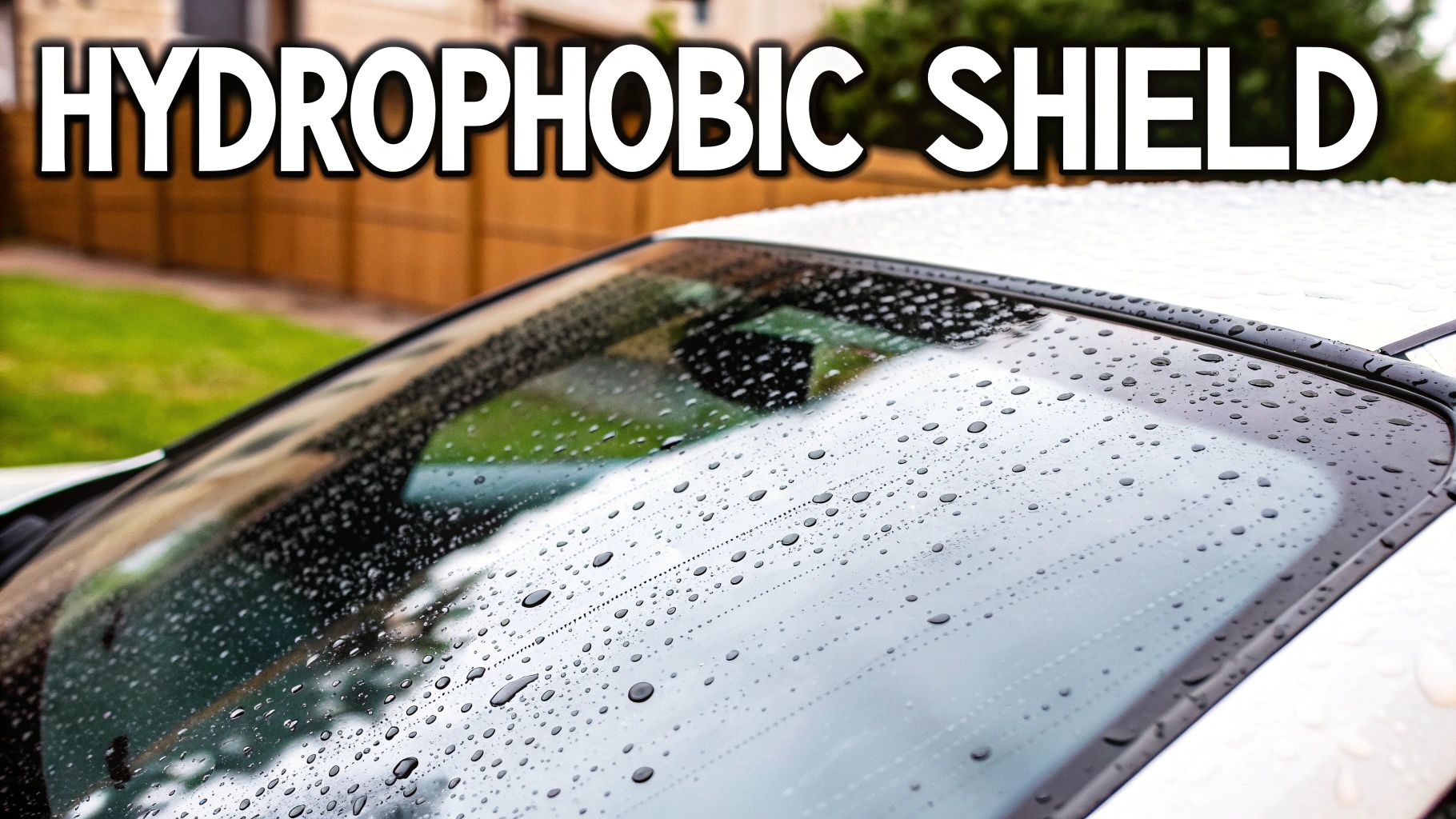
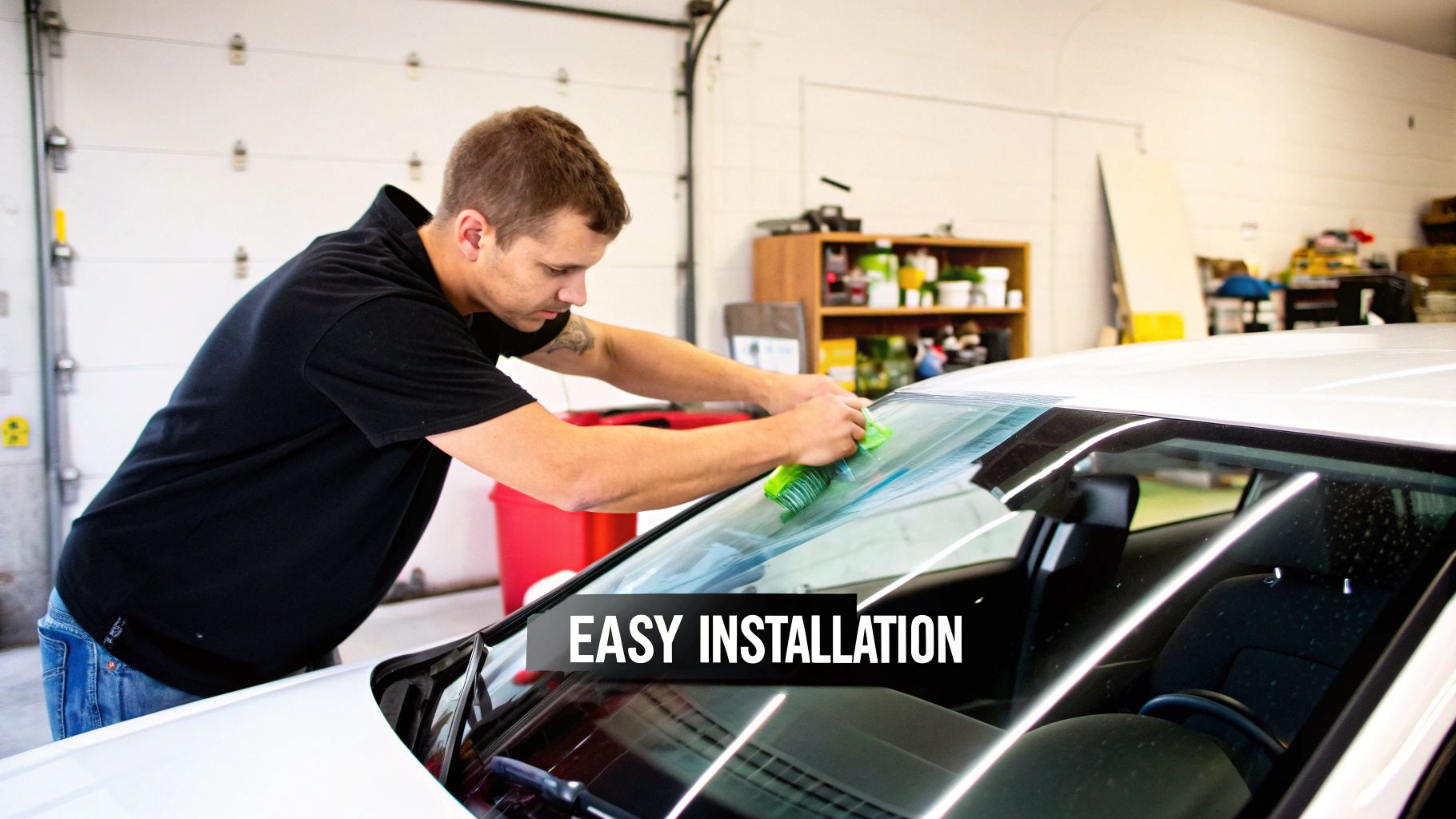
Many modern films also have a hydrophobic top coat, which is a fancy way of saying it repels water. Rain beads up and zips right off the glass, drastically improving your visibility in a downpour. It’s like having a permanent, high-end rain repellent that makes driving in bad weather much less stressful.
When you add all these benefits together, you get one major financial plus: a higher resale value. A windshield covered in pits and chips is a big turn-off for potential buyers. By keeping your original, factory-installed glass in perfect condition, the film makes your car look better and hold its value when it's time to sell.
This is the same principle behind paint protection film (PPF), which uses similar technology to protect your car’s paint. Both are smart investments in maintaining your vehicle's condition and value.
How to Choose the Right Protection Film
Walking into the world of windshield protection film can feel a bit like stepping onto a car lot—so many options, so much technical jargon. But don't get overwhelmed. Picking the right film isn't about memorizing specs; it’s about understanding your driving habits and knowing what to look for.
Think of it this way: not all films are created equal. Just like you wouldn't put budget tires on a high-performance sports car, the film you choose should match your vehicle and how you use it. The needs of a daily city commuter are vastly different from someone who regularly takes their truck down gravel roads.
Decoding the Different Film Types
At their core, most modern windshield films are made from a tough, flexible material called thermoplastic polyurethane (TPU). But that's just the starting point. Manufacturers enhance this base layer to create different tiers of products, mainly standard TPU films and more advanced nano-ceramic options. Each offers a distinct mix of protection, clarity, and cost.
This chart gives you a quick visual on the kind of performance you can expect from a top-tier windshield protection film.
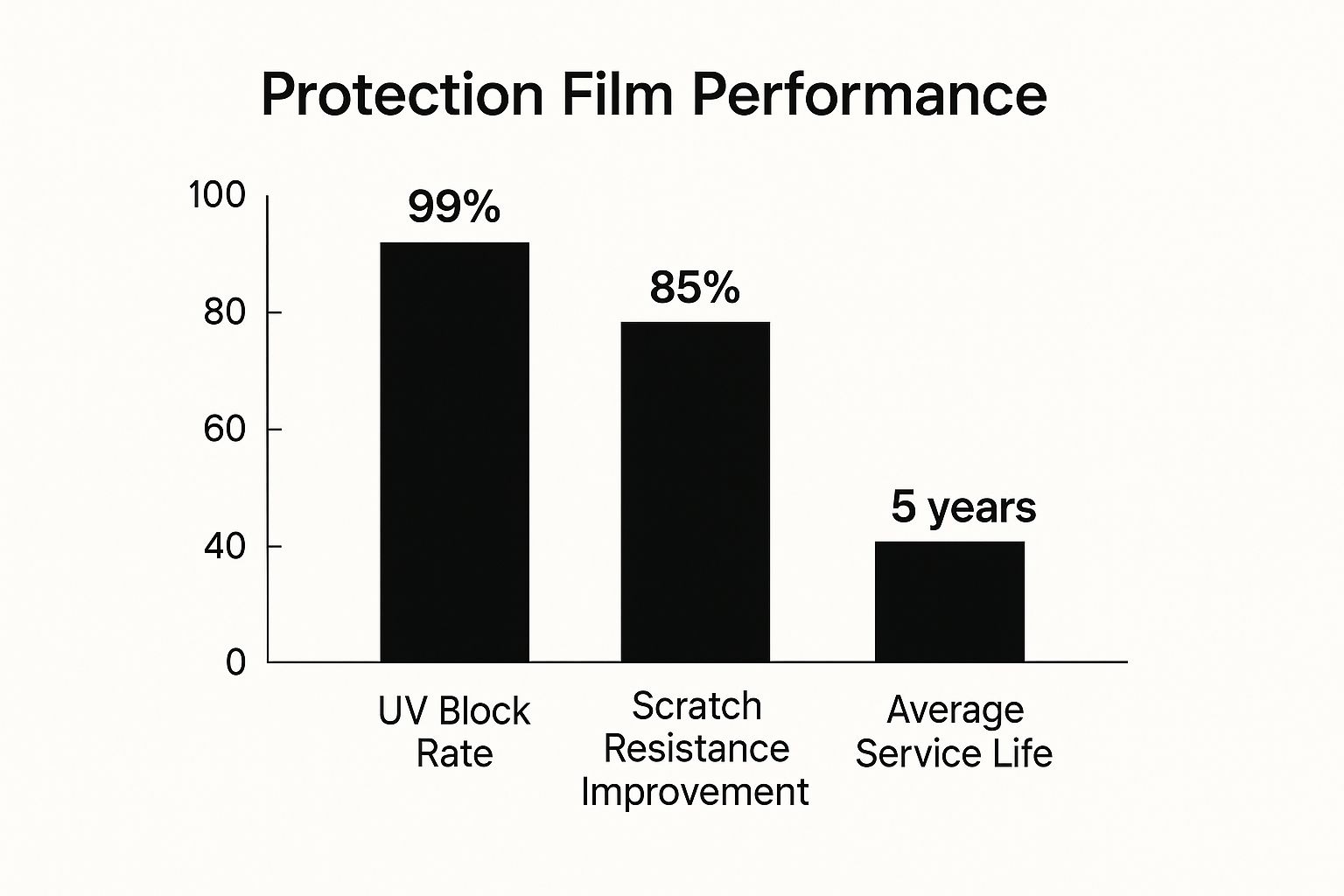
As you can see, a quality film does more than just stop rocks—it delivers incredible UV protection and makes the glass far more resilient to the daily grind.
-
Standard TPU Films: These are the reliable workhorses of the industry. They do an excellent job of absorbing impacts from road debris, making them a fantastic, cost-effective way to prevent chips and cracks. For most drivers, a high-quality standard TPU film provides more than enough protection.
-
Nano-Ceramic Coated Films: This is the top-shelf option. These films have microscopic ceramic particles embedded within the TPU layers. This technology boosts performance across the board, giving you superior scratch resistance, incredible optical clarity, and top-notch heat rejection that keeps your car's interior noticeably cooler.
It's no surprise that the demand for these advanced films is skyrocketing. The global automotive window film market was valued at USD 5.3 billion and is expected to more than double to USD 11.7 billion by 2034. This growth is all thanks to drivers wanting better safety, UV protection, and comfort. You can dive deeper into the trends by checking out this report on the growth of the automotive film market.
To help you sort through the options, here’s a quick comparison of the different film types you'll encounter.
Comparison of Windshield Protection Film Types
| Film Type | Key Technology | Primary Benefit | Average Lifespan | Relative Cost |
|---|---|---|---|---|
| Standard TPU | Thermoplastic Polyurethane | Excellent impact absorption | 5-7 years | $$ |
| Nano-Ceramic | TPU with embedded ceramic particles | Superior scratch & heat resistance | 7-10+ years | $$$ |
| Self-Healing | TPU with a top-coat that repairs minor scratches | Maintains a flawless appearance | 7-10 years | $$$$ |
This table should give you a good starting point for deciding which technology aligns best with your budget and expectations.
Key Factors to Guide Your Decision
Once you have a general idea of the type of film you want, it’s time to look at the details. Knowing what to ask an installer will not only help you get the best product but also shows you've done your homework.
Here are the three big things to focus on:
- Film Thickness (mils): This is a measure of how thick the film is, where one mil is one-thousandth of an inch. Generally, a thicker film means better impact protection, but there’s a sweet spot. If a film is too thick, it can start to distort your view. Most quality windshield films are engineered to provide maximum protection without compromising clarity.
- UV Protection Percentage: This is non-negotiable. Look for a film that blocks 99% or more of harmful UV rays. Pretty much any reputable film will meet this standard, which is critical for protecting your car's dashboard from fading and cracking and, more importantly, protecting your skin on long drives.
- Warranty Terms: A manufacturer's warranty says a lot about their confidence in the product. Don’t just ask how long it is; ask what it covers. Does it protect against yellowing, bubbling, or delaminating? A solid warranty gives you peace of mind that your investment is protected.
Choosing a film is like picking the right gear for a hike. Your trail shoes for a walk in the park are different from the heavy-duty boots you’d need for a rocky mountain climb. Similarly, your choice of windshield film should align with the conditions your car faces every day.
Finally, a quick but important note: always check local laws. Some states have specific regulations about windshield applications, particularly around how much light must be able to pass through. Any professional installer will know the local rules inside and out and will make sure your new film is both effective and completely legal.
The Professional Installation Process
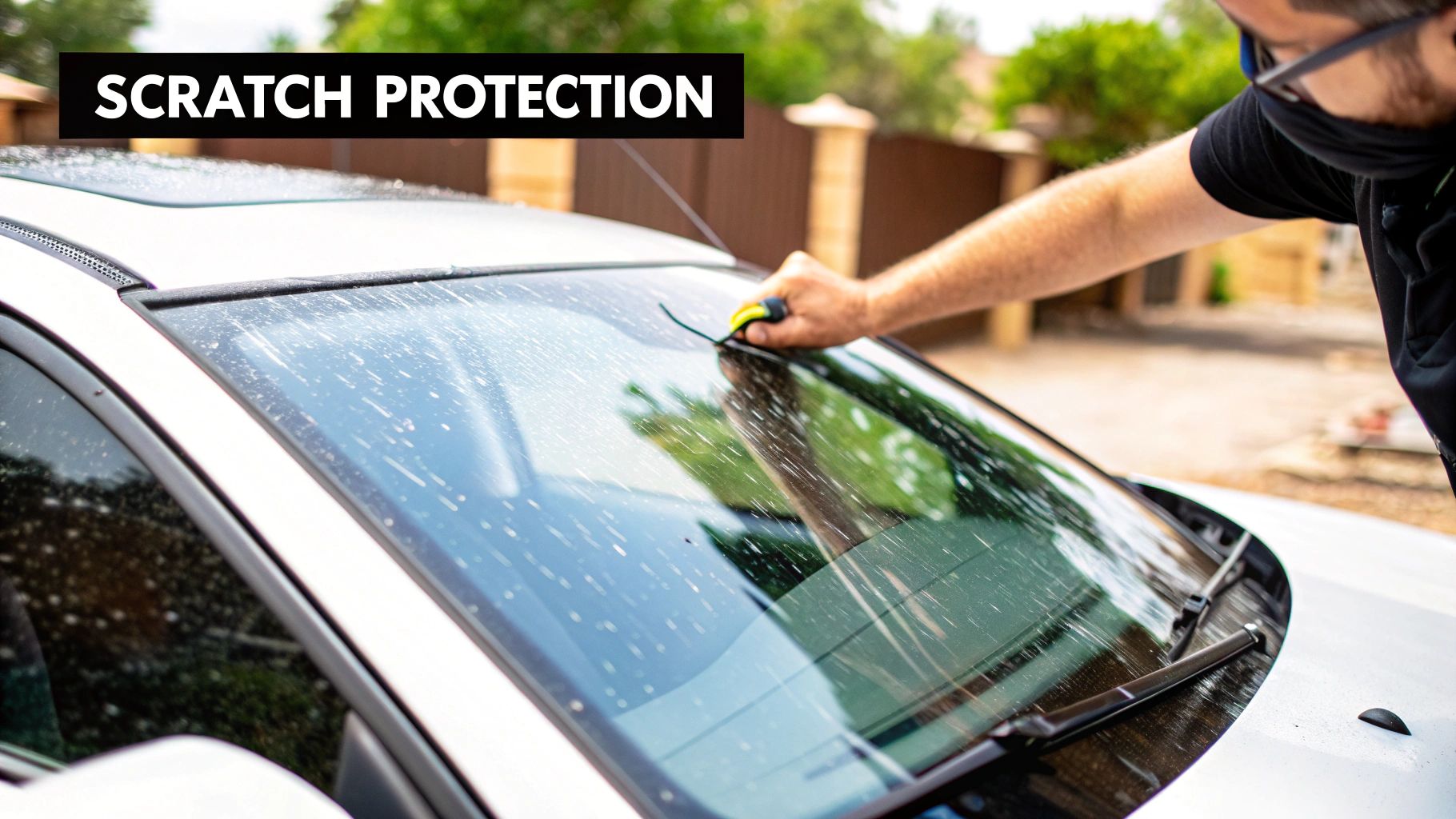
Even the absolute best car windshield protection film is worthless without a perfect installation. This is definitely not a weekend DIY job. Getting that flawless, invisible finish demands a surgeon's touch, specialized equipment, and a meticulously clean environment. A pro install is the only way to guarantee the film performs as it should, giving you maximum protection without sacrificing even a tiny bit of optical clarity.
When you bring your vehicle to a reputable installer, the process is far more complex than just applying a big sticker. It’s a delicate, multi-step operation where every single detail counts, from the first wipe to the final cure. Let's break down what a truly top-tier installation involves.
Stage 1: Meticulous Preparation
The first—and arguably most crucial—step is all about preparing the glass. We're talking about more than just a quick spray and wipe. A professional installer will deep clean the exterior of your windshield with special solutions, often using a clay bar to lift every microscopic bit of contamination. That means getting rid of all the road grime, oils, bug splatter, and stubborn mineral deposits from water spots.
Think of it this way: any single dust particle or spec of debris trapped under the film becomes a permanent, glaring imperfection. A completely pristine surface isn't just a goal; it's an absolute necessity for a bubble-free finish.
This obsessive cleaning ensures the film's adhesive gets a perfect, uniform grip on the glass. Skip this, and you're asking for bubbles, peeling edges, and a look that screams amateur hour.
Stage 2: Precision Cutting and Fitting
Once the glass is surgically clean, the film itself is prepped. Most modern shops use computer-guided plotters that cut the film to the exact dimensions of your vehicle’s make and model. This digital precision means a perfect fit every time and, more importantly, it means no one is taking a razor blade to your car's glass or paint.
Next up is the shaping. Windshields have all sorts of complex curves, so the flat sheet of film needs to be heat-shrunk to match those contours perfectly. Using a heat gun, the technician skillfully molds the film so it lays flush against every curve. This is where real skill comes in, as it prevents stress points that could cause the film to lift or distort down the road.
Stage 3: The Slip and Squeegee Application
With the film cut and shaped, it’s time to apply it. The installer will spray a special liquid, called a "slip solution," onto both the windshield and the film's adhesive side. This lets them float the film into the perfect position without it instantly sticking to the glass.
Once it's aligned, the real art begins. Using a variety of professional-grade squeegees, the technician methodically pushes the slip solution out from under the film, always working from the center outwards. This requires just the right amount of pressure and a steady hand to chase out every last drop of moisture and every air bubble, locking in that seamless bond and crystal-clear finish. While similar in concept, this process is quite different from a typical security window film installation on a flat building window, where the deep curves of automotive glass present a unique challenge.
Stage 4: Curing and Post-Installation Care
After the film is on, it enters a critical curing phase. You can usually drive your car away shortly after the job is done, but the adhesive still needs time to fully set. Any microscopic moisture trapped underneath needs to evaporate completely. This can take anywhere from a few days to a couple of weeks, depending on the type of film and the local climate.
During this time, you’ll be given a few simple rules to follow for a perfect result:
- No Car Washes: Steer clear of high-pressure car washes for at least the first week.
- Go Easy on the Wipers: Use your wipers as little as possible.
- Be Patient: Don't be alarmed by small hazy spots or tiny water pockets. They are normal and will vanish as the film fully cures.
Following these simple guidelines is the final step to ensuring your car windshield protection film bonds perfectly and gives you years of invisible, dependable protection.
Breaking Down the Cost and Long-Term Value
Let's talk about the price tag. Investing in windshield protection film is one of those things that can make you pause. It's not a small purchase, so it’s completely fair to wonder if it's really worth it. The key is to look past the initial number and see it for what it is: a smart financial move that saves you a lot of money down the road.
A professional installation for a good quality film usually runs somewhere between $400 and over $800. A few things can move that price up or down, like the specific film you choose—a high-end nano-ceramic film is going to cost more than a standard TPU, for example. The shape of your windshield also plays a big part. Big, curvy glass takes more skill and time to get just right, which naturally affects the final bill.
If you're curious about what goes into pricing different types of films, our guide on security window film cost gives you a much deeper look.
The Real Cost of a Broken Windshield
Now, let's put that one-time investment into perspective. A simple rock chip repair might set you back around $100, and it's easy to collect a few of those over the years. But the real wallet-buster is a full-on windshield replacement. On today's cars, that's a whole different ballgame.
For modern vehicles loaded with Advanced Driver-Assistance Systems (ADAS), you're easily looking at a bill for over $1,000. That's because it's not just about swapping the glass; all those sensitive cameras and sensors have to be perfectly recalibrated, which is a complicated and expensive job.
Think of it this way: installing windshield protection film changes the game from paying for reactive repairs to investing in proactive protection. It's one predictable cost to prevent a whole series of unpredictable—and much larger—ones.
A Clear Return on Investment
When you look at it like that, the value proposition is pretty clear. Avoiding just one full replacement more than pays for the film itself. It’s no wonder the broader window film market, currently valued at USD 11.53 billion, is booming.
As car technology gets more complex, more and more owners are realizing that these films are an essential safeguard, not just a nice-to-have accessory. For a deeper dive into the industry trends, you can check out this window film market report.
Ultimately, windshield protection film isn't just another add-on. It’s a financial tool that helps keep your vehicle’s value intact and shields you from those nasty, out-of-the-blue repair bills. It turns a potential major expense into a planned, one-time investment.
Answering Your Top Questions About Windshield Film
Alright, you've seen what this film can do, but a few practical questions are probably still rattling around in your head. That's a good thing—it means you're taking this decision seriously. Let's tackle some of the most common concerns we hear from drivers just like you.
Think of this as the final check-in before you decide. We'll clear up any lingering doubts about day-to-day use, longevity, and even the legal side of things.
Will I Even Be Able to See Through It?
This is the big one, and the answer is a resounding yes. A high-quality, professionally installed film is optically clear and basically invisible. You won't have to deal with any weird distortion, haziness, or extra glare that could mess with your view, whether you're driving at noon or midnight.
The magic is in two parts: a top-tier product and an installer who knows what they're doing. If you can actually see the film after it's on, something's not right.
How Long Will This Stuff Actually Last?
You can expect a quality windshield protection film to hold up for two to five years. Of course, that's not a hard and fast rule. The final lifespan depends on the specific film you get, the climate you live in, and what your daily drive looks like. If your commute involves getting pelted by sand and gravel on the highway, your film will likely wear faster than one on a car that sticks to city streets.
The best films come with a solid manufacturer's warranty covering issues like yellowing, cracking, or bubbling. And when it’s time for a replacement, a professional can peel it right off without leaving a trace on the glass, making it ready for a new layer.
Can I Still Use My Wipers?
Absolutely. Go right ahead. The film is built tough with a scratch-resistant coating specifically designed to handle regular use of your windshield wipers.
Just one pro tip: make sure your wiper blades are in good shape. Worn-out, gritty blades can be rough on any surface, and that includes a protective film. Keeping them clean and replacing them when needed will go a long way.
Is Windshield Protection Film Even Legal?
Laws can vary depending on where you live, but here’s the good news: most reputable protection films are made to comply with legal standards for light transmission. They're designed to protect, not to tint or obstruct your view.
To be 100% sure, your best bet is to chat with your installer. They'll know the local vehicle codes inside and out and can guarantee the film you pick is fully compliant.
At Fortress Security Films, we're all about giving you top-tier protection that keeps your vehicle safe without ever getting in the way of your view. Ready to put a shield between your windshield and the road? Explore our advanced automotive solutions at fortresssecurityfilms.com.
