


When you think about burglar-proofing your home, you're really creating layers of defense to stop a forced entry in its tracks. It's about more than just one lock. A truly secure window combines reinforced glass from something like security film, upgraded locks that replace flimsy factory models, and smart sensors that create a serious barrier against any would-be intruder.
Why Windows Are a Burglar's First Choice
Let's face it: windows are almost always the weakest point in a home's security, and burglars know this all too well. Their goal is simple: get in and out fast, without making a scene. Unfortunately, the standard windows on most homes are an open invitation.
Most break-ins aren't masterfully planned heists; they're crimes of opportunity. A burglar scouting a neighborhood is looking for the easiest target, and an unprotected window screams "easy." They're far more likely to take a shot at a vulnerable window than risk the noise and effort of kicking in a reinforced door.
The Weak Spots Burglars Love to Exploit
Homeowners often miss the most glaring security flaws in their own windows, but intruders are experts at spotting them. Knowing what they look for is the first step to building a defense that actually works.
Here are the key weaknesses they'll target:
- Standard Factory Latches: Those simple little latches that come on most windows? They're built to keep out the rain, not a crowbar. They can be easily jiggled, forced, or pried open with basic tools in seconds.
- Untempered Glass: Your average windowpane shatters with surprisingly little noise or effort. It’s perfect for a quick smash-and-grab entry. A single, sharp impact is often all it takes for them to be inside.
- Obvious Signs of Wear: An intruder can spot a weak point from the street. Older wooden frames with signs of rot or aluminum frames with exposed, easily removed screws are a dead giveaway that entry will be simple.
The only truly effective strategy for securing your windows is a layered one. When you combine reinforced glass with better locks and add detection technology, you create a barrier that makes your home a much tougher target—and far less appealing to a criminal looking for an easy score.
Even the most exclusive homes aren't immune to these basic security oversights. As seen in a recent look at celebrity break-ins, fundamental vulnerabilities are exploited time and again. The ultimate goal isn't just to stop an intruder who is already trying to get in, but to convince them to give up and move on before they even start.
Making Your Window Glass Unbreakable
The glass itself is almost always a window's weakest link. A burglar's go-to move is often a swift, hard strike to shatter the pane and get inside fast. So, your first line of defense is making that simple tactic as loud, slow, and frustrating as humanly possible.
By reinforcing the glass, you turn a major vulnerability into a serious obstacle. The idea is to make a potential break-in so difficult that the intruder gives up and moves on. Luckily, you’ve got a few fantastic options that work for different budgets and security needs.
Security Window Film: A Smart First Layer
One of the most popular and effective ways to beef up your existing windows is with security film. This isn't just a flimsy tint; it's a thick sheet of clear polyester that gets applied directly to the inside surface of the glass. While the film won't stop the glass from cracking, it does something crucial: it holds all the shattered pieces together in the frame.
Instead of the glass caving in on the first hit, the film creates a tough, web-like barrier. This completely foils the quick, quiet entry a burglar was banking on. Now, they're stuck having to bash the window repeatedly, making a ton of noise and wasting valuable time. To get a better sense of how it works, you can find a great breakdown in this guide on security film for home windows.
It's no surprise these films are becoming more common. The global market for security window film hit around $1.5 billion in 2025 and is on track to nearly double to $2.8 billion by 2033. Homeowners are catching on to the real-world benefits.
Upgrading to Laminated or Tempered Glass
If you're looking for protection that's built right into the window from the start, laminated and tempered glass are the gold standards.
- Laminated Glass: This is basically the same stuff used for your car's windshield. It’s a sandwich of two glass panes with a tough vinyl interlayer. When it gets hit, the glass might crack, but that interlayer holds everything together, standing up to some serious punishment.
- Tempered Glass: This glass goes through a special heat-treating process that makes it about four times stronger than regular glass. Its main safety feature, though, is how it breaks—into small, relatively harmless pebble-like pieces instead of jagged shards. It’s tough, but it won’t resist a prolonged attack like laminated glass will.
I've seen the difference firsthand. A smash-and-grab thief will likely give up on a window with security film after one or two failed hits. But a determined intruder with a crowbar can eventually get through it. Laminated glass, on the other hand, will stand up to a much more violent and sustained assault, buying you precious time.
When you're weighing your options, it helps to see how they stack up against each other.
Comparing Window Glass Reinforcement Options
| Reinforcement Method | Estimated Cost (per sq. ft.) | DIY Friendliness | Impact Resistance Level |
|---|---|---|---|
| Security Film | $7 – $15 | Moderate | High |
| Tempered Glass | $15 – $25 | Low (Pro Install) | High |
| Laminated Glass | $20 – $40+ | Low (Pro Install) | Very High |
| Polycarbonate Panels | $25 – $60+ | Moderate | Maximum |
This table gives you a quick snapshot of what to expect. While professional-grade glass offers superior protection, security film provides an excellent balance of cost and effectiveness that makes it a great choice for many homeowners.
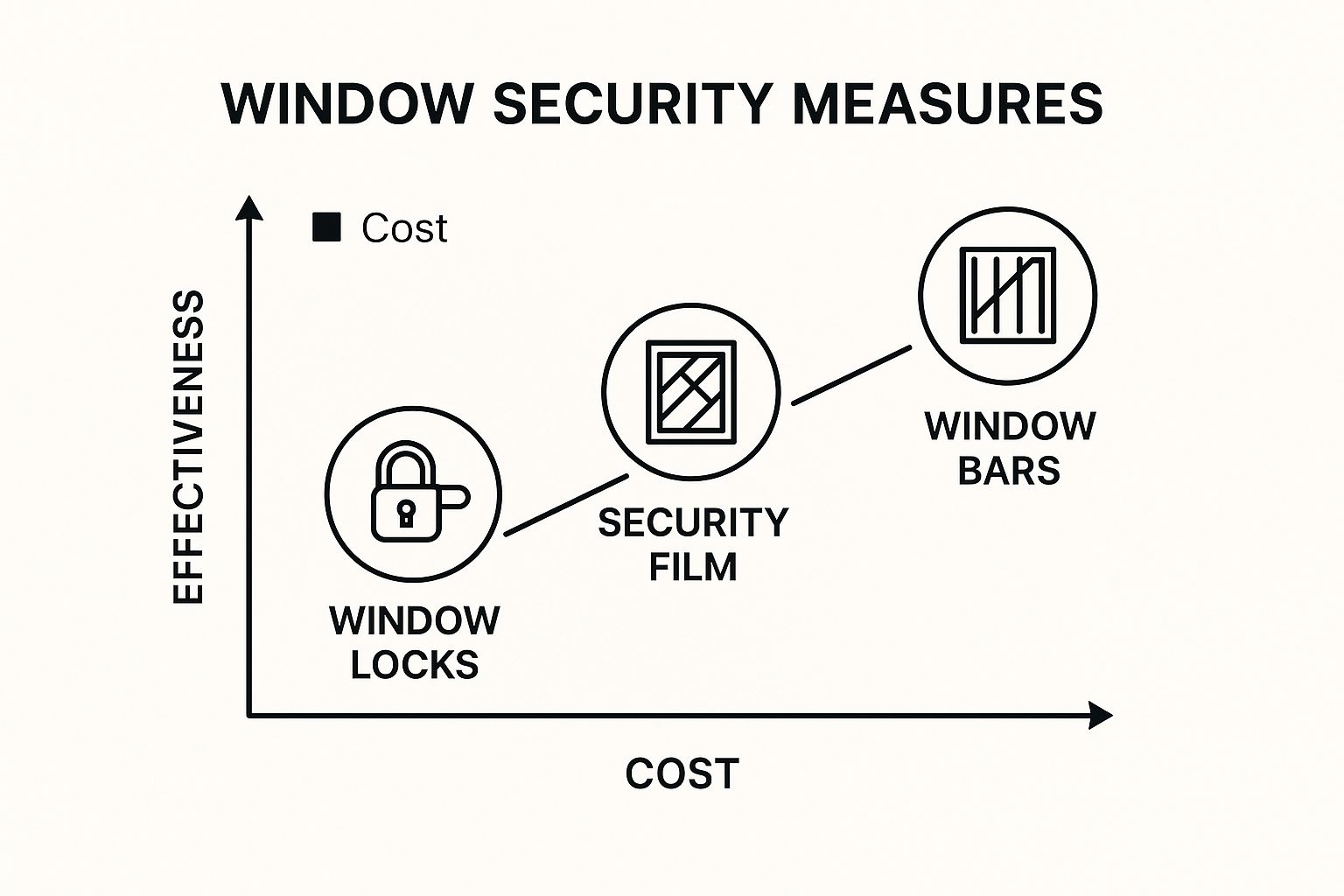
As you can see, security film hits a sweet spot, delivering impressive results for a reasonable investment. It's an ideal starting point for most homes.
The Ultimate Defense: Polycarbonate Panels
When you need the absolute highest level of security, nothing beats polycarbonate. This stuff is a thermoplastic that's practically indestructible—it’s the same material used for bullet-resistant glass.
To put it in perspective, polycarbonate is 250 times more impact-resistant than glass. It's the strongest transparent material you can put in a window frame. While it’s certainly a bigger investment, it provides an unmatched defense against even the most determined forced entry attempts. For people in high-risk areas or those protecting valuable assets, the peace of mind that comes with polycarbonate is often worth every penny. It sends a clear message: this home is not an easy target.
Securing Window Locks and Frames for Good
So you've reinforced your window glass. That's a great first step, but it only solves half the problem. A burglar who can't smash the glass will immediately go for the next weakest links: the lock and the frame.
Let's be honest, the flimsy factory latches that come standard on most windows are there to keep the rain out, not to stop a crowbar. They simply aren't designed to withstand a determined attack. This is where we need to shift our focus from the glass itself to the mechanical strength of the entire window assembly. Upgrading these parts isn't just a good idea; it's a non-negotiable part of any serious burglar proofing windows strategy.
Upgrading Beyond Standard Window Latches
That small, simple latch on your window is almost certainly its most vulnerable point. The good news is that there are several powerful and affordable upgrades that can turn it into a real obstacle. Each offers a different kind of protection, so you can mix and match depending on the window's style and where it's located.
-
Key-Operated Locks: These work just like a deadbolt on your front door. You need a key to open the window from the inside, which is a game-changer. A burglar who breaks the glass can't just reach in and flip the latch; they're still locked out.
-
Sash Jammers: I'm a big fan of these. They are small, rotating arms you install on the frame. When you flip one down, it pivots over the window sash, physically blocking it from being pried open. They are incredibly simple but shockingly effective against brute force.
-
Ventilation Locks: Also known as window wedges or pins, these clever devices let you lock a window in a slightly open position for a breeze without sacrificing security. They stop the window from being forced open any further from the outside.
Think of your window security like a chain. The glass is one link, the frame is another, and the lock is a third. If any one of them is weak, the entire chain fails. Strengthening the lock is one of the fastest and most impactful upgrades you can make.
Reinforcing the Window Frame Itself
A heavy-duty lock is pointless if the frame it's attached to is flimsy. Burglars know how to exploit weak points like aging wood or thin vinyl. Your goal here is to make sure the entire structure can stand up to the force of someone trying to pry it open.
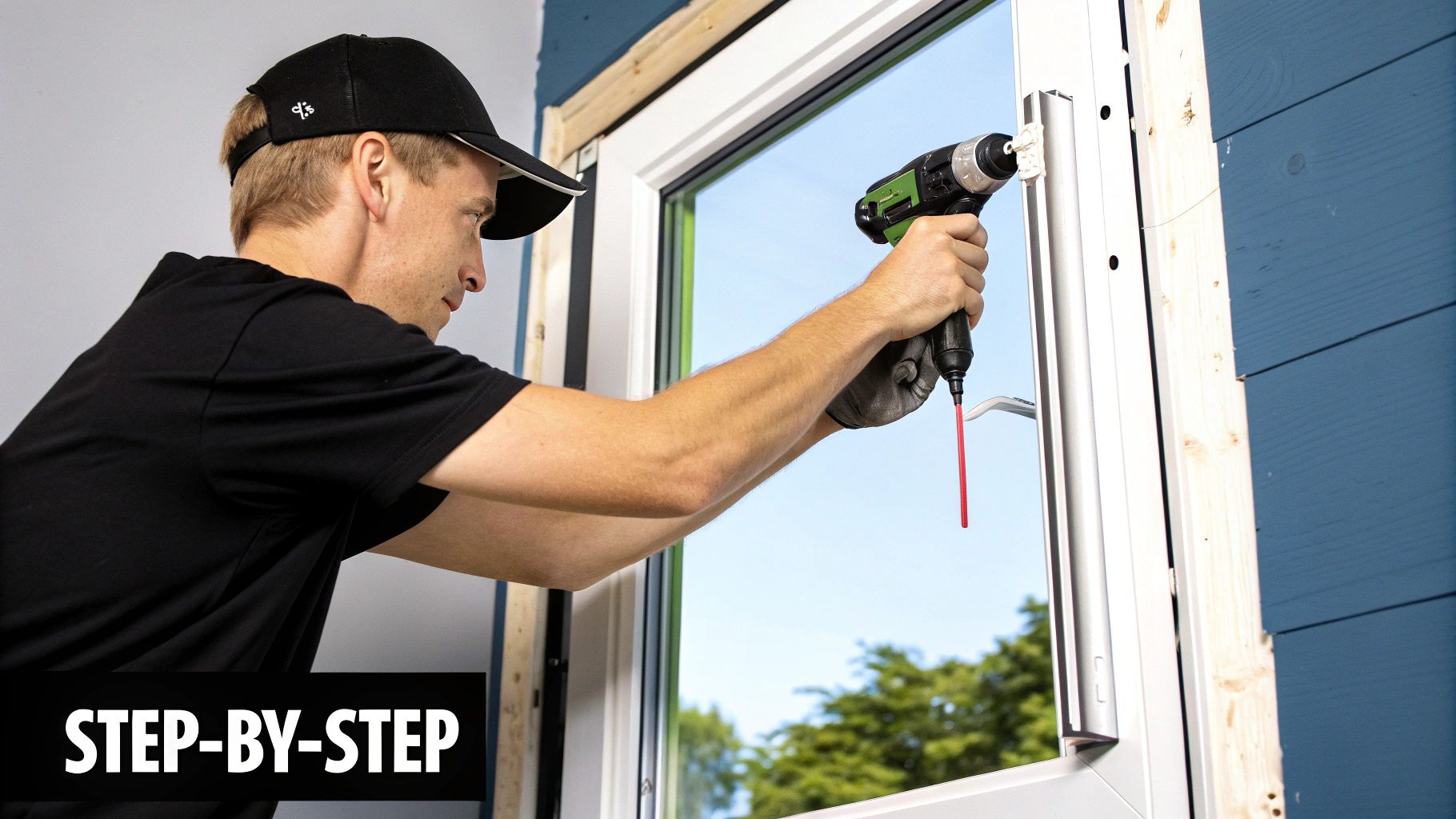
Fortunately, reinforcing most frames is a straightforward DIY project. For wooden frames, one of the most effective tricks in the book is to replace the short, factory-installed screws in your locks and hinges with 3-inch or longer screws. This simple change means the screws bite deep into the solid wood stud framing of your house, not just the thin window frame itself. It’s a massive strength upgrade.
For vinyl and aluminum frames, give them a good look-over for any signs of weakness or corrosion. Make sure all the components are securely fastened and consider adding a couple of sash jammers for extra structural support. These small additions make a world of difference in how a window holds up under pressure.
Special Considerations for Sliding Windows and Doors
Sliding windows and glass doors have their own unique vulnerabilities. Their locking mechanisms are often easily jimmied, and sometimes the entire panel can be lifted right off its track.
-
Charlie Bar: This is a classic for a reason. It's a hinged security bar that folds down to brace a closed sliding door or window, physically stopping it from being slid open. Simple and effective.
-
Pin Locks: This method involves drilling a small hole through the sliding panel's frame and into the fixed frame behind it. You just insert a hardened steel pin to lock the two together, making it impossible to slide open.
The demand for better physical window security is clearly growing. In fact, the global market for anti-theft windows—a key part of burglar proofing windows—was valued at around $5 billion in 2025 and is projected to grow by 7% annually. You can discover more insights about this growing market and the materials driving it. This trend really underscores a widespread understanding among homeowners: strong physical barriers are the true foundation of home security.
Adding a Layer of Smart Electronic Security
Physical barriers like reinforced glass and heavy-duty locks are your first line of defense, but they’re only half the story. Their job is to slow an intruder down. Electronic security, on the other hand, is what gets them caught. It creates the noise and attention that burglars absolutely hate.
Think of it like this: physical security is the wall, but electronic security is the watchtower. It’s the active alert system that screams for help the moment a breach is even attempted, notifying you and, more importantly, the authorities. That immediate response is often the difference between a close call and a major loss.
Choosing the Right Window Sensors
Not all window sensors are built the same. They're designed to detect different kinds of threats, and frankly, using the wrong one is a great way to deal with frustrating false alarms. Picking the right sensor for the right window is the key to an effective system.
Here’s a breakdown of what you'll find on the market:
-
Magnetic Contact Sensors: These are the workhorses of home security. You've seen them before—a simple two-piece sensor on the window frame and the sash. The second that connection breaks when the window is opened, the alarm trips. They’re perfect for any window you might actually open, like an upstairs casement or a kitchen window you use for ventilation.
-
Glass-Break Sensors: These sensors have a tiny microphone that's tuned to listen for one specific sound: the high-frequency crunch of shattering glass. The beauty here is that one sensor can often cover multiple windows in a room, making them a smart choice for large picture windows or a sunroom. They’re for the smash-and-grab scenario.
-
Vibration or Shock Sensors: A bit more sensitive, these trigger an alarm when they detect the heavy impact or vibration of someone trying to force a window open. I really like these as an early-warning tool because they can go off before the lock fails or the glass actually shatters.
Pro Tip: For the best electronic defense, layer your sensors. I always recommend using contact sensors on every single accessible window that opens. Then, add a glass-break sensor in rooms with big, vulnerable panes of glass. This way, you're covered whether someone tries to be sneaky or just smashes their way in.
DIY Smart Systems vs. Professional Monitoring
So you've picked your sensors. Now, how do you want to be notified when one goes off? You've got more choices today than ever before.
A DIY smart home setup is incredibly popular. It links your sensors directly to your phone through an app. You get instant alerts, and you can often trigger sirens or lights right from your screen. The big perks are control and no monthly fees. The downside? You're the one on call, responsible for monitoring the alerts and calling the police.
On the other end of the spectrum, professionally monitored systems connect your home to a 24/7 call center. When an alarm is triggered, a trained person verifies the emergency and dispatches help—police, fire, or medical—for you. This is the ultimate peace of mind, especially if you travel or can't always get to your phone. There's no single "right" answer; it really comes down to your budget, lifestyle, and how much responsibility you want to take on.
When It’s Time to Bring in the Heavy Hitters
Let's be honest, standard security film and a few extra locks are great for everyday peace of mind. But what if your situation demands more? For homeowners in high-risk areas, those protecting high-value assets, or anyone who simply refuses to compromise on safety, it's time to look at the top tier of burglar proofing windows.
We're talking about solutions engineered to stop a determined, well-equipped intruder in their tracks.
Thankfully, this doesn't mean turning your home into a fortress with ugly, clunky bars. Modern security screens have evolved dramatically. Today’s options are often sleek, made from high-tensile steel mesh or even transparent polycarbonate, blending right into your home's design. They provide a formidable physical barrier without sacrificing your home's curb appeal.
Leveling Up to Impact-Resistant and Ballistic Glass
When you need the absolute best in window defense, the conversation turns to specialized glazing. This is where you get into materials like impact-resistant and ballistic (bulletproof) glass—the kind of protection that can defeat threats that would shatter normal glass in seconds.
- Impact-Resistant Glass: Think of this as hurricane glass. It's built with multiple layers of glass bonded together with a tough polymer interlayer. The whole point is to withstand repeated, heavy blows from something like a sledgehammer or crowbar.
- Ballistic (Bulletproof) Glass: This is the ultimate choice. It’s made of multiple, thick layers of glass and plastics like polycarbonate. Each layer works to absorb a projectile's energy, slowing and stopping it before it can get through.
This level of security is a serious investment, but for certain situations, it’s non-negotiable. It's the standard for jewelry stores and government buildings, but it's also a smart move for homes with irreplaceable art collections or for public figures who need that next level of safety. You can learn more about how this tech applies to homes in this guide to ballistic film for windows.
The whole philosophy behind high-security glazing is buying time. The goal is to make breaking in so loud, difficult, and time-consuming that any would-be intruder gives up and flees long before they get inside.
A Growing Need for Serious Protection
The rising demand for this technology tells its own story. The market for ballistic glass is expected to jump from $11.56 billion in 2025 to over $30 billion by 2032. That's a massive increase, driven by a growing awareness of security needs around the world.
This isn't just a trend for commercial buildings anymore. Advanced burglar proofing windows are becoming a core part of high-end residential security plans, giving homeowners a powerful tool to protect what matters most.
Got Questions About Window Security? Let's Clear Things Up.
When you start looking into how to burglar-proof your windows, a few common questions always pop up. It's natural to wonder about the cost, how it will look, and whether you can handle the job yourself. Getting straight answers is key, so let's tackle the big ones I hear from homeowners all the time.
The first thing on everyone's mind is usually the price tag. Is this stuff actually worth the money? While you could go all out with something like ballistic glass, you don't have to. Far more affordable options, like high-quality security films or better locks, give you a massive security boost for a pretty reasonable cost. It's less of an expense and more of an investment in your safety—a few hundred dollars now could save you from thousands in losses and a whole lot of stress later.
Will This Make My House Look Like a Prison?
I get this one a lot. Nobody wants to feel like they're living in a fortress, and you definitely don't want to kill your home's curb appeal. The good news is, modern window security is designed to be incredibly discreet.
- Security Films: When properly installed, these films are completely invisible. You get the protection without changing the look of your home one bit.
- Modern Security Bars: We're not talking about those old, ugly iron bars anymore. Today's designs can be genuinely stylish and even add to your home's architectural look. You can also get bars made from clear polycarbonate that are tough as nails but don't block your view.
- Low-Profile Locks: Things like sash jammers and upgraded window locks are small and barely noticeable. They add a serious layer of security without looking clunky or out of place.
The whole point is to make your home a tougher target without sacrificing its welcoming feel. And there are plenty of great products out there that strike that perfect balance.
The best security is the kind a burglar doesn't notice until it's too late. A window that unexpectedly holds strong against a heavy blow is often all it takes to send them running.
Can I Do This Myself?
For some of these upgrades, absolutely. If you're comfortable with a drill, you can definitely handle projects like swapping out factory screws for longer, beefier ones or adding a few sash jammers. These are quick wins that make a real difference.
However, some jobs are best left to the pros. Applying security film, for instance, requires real skill to get a seamless, bubble-free finish. If it’s not done perfectly, its effectiveness is compromised. The same goes for installing laminated glass—it needs to be measured and fitted with precision to work correctly. Knowing your limits is important; calling in a professional for the more technical installations ensures you're actually getting the protection you paid for.
At Fortress Security Films, we live and breathe this stuff. We focus on advanced, subtle security that keeps you safe without making your home look like a bunker. Check out our residential and commercial solutions at https://fortresssecurityfilms.com to see how we can help.
