


Let's be clear: the term "burglar-proof window" is a bit of a misnomer. Nothing is truly unbreakable, but these windows are engineered systems designed to make a forced entry incredibly difficult, noisy, and time-consuming. They integrate reinforced frames, advanced security glass or film, and multi-point locking hardware to create a barrier that most intruders will simply give up on.
What Really Makes a Window Burglar-Proof
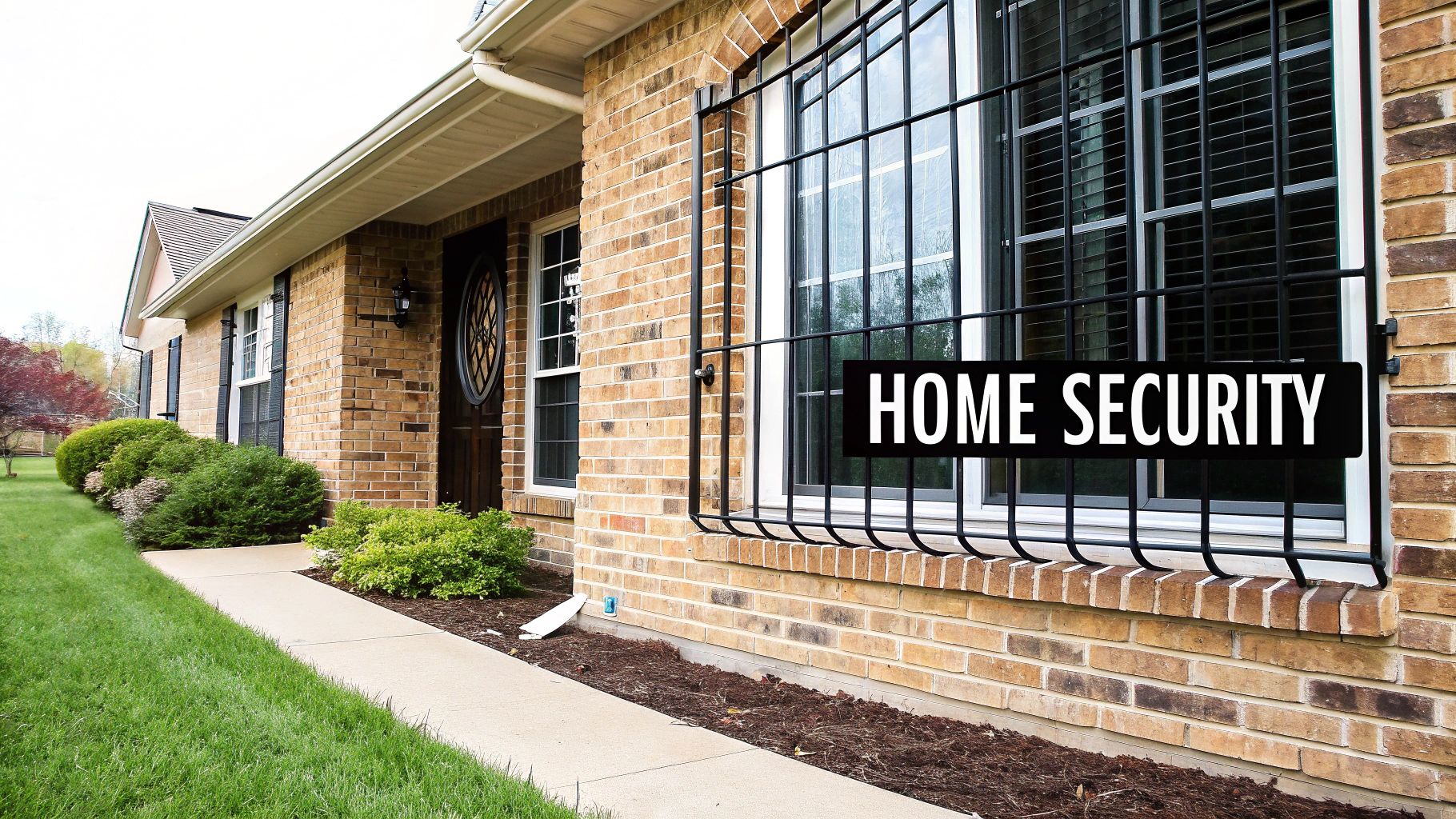
Think of it this way: a standard window is like a flimsy interior door. It looks the part, but a solid kick will pop it right open. A security-focused window, on the other hand, is like a commercial-grade steel fire door. It’s not just one piece doing the work; it’s an entire system built for defense.
True security comes from how all the parts work together. After all, a window is only as strong as its weakest point. A burglar will always probe for that weak spot, whether it's prying the frame, shattering the glass, or manipulating the lock.
The Three Pillars of Window Security
To get that bank-vault level of protection, you need three key elements working in concert.
- Reinforced Frames: The frame is the skeleton of the window. We're talking about materials like steel-reinforced uPVC, heavy-duty aluminum, or solid hardwood that won't buckle or warp when a crowbar is jammed into it.
- Advanced Glazing: This is where the magic happens. Instead of standard glass that shatters on impact, these windows use laminated glass or are upgraded with thick security films. This material is designed to absorb repeated blows and stay in one piece, stopping a quick smash-and-grab.
- Multi-Point Locking Mechanisms: A single lock is just a single point of failure. Multi-point systems bolt the window sash to the frame in several places at once. It's like having multiple deadbolts engaged with one turn of a handle, eliminating leverage points.
The real goal isn't to make a window indestructible. It's about creating layers of resistance. Each feature is designed to frustrate and delay an intruder, taking away the two things they need most: speed and silence.
This layered approach is what makes the system effective. It buys you precious time to react and allows your alarm system to do its job. A truly secure window is a key part of any plan to prevent a home burglary, turning your home from an easy target into a fortress.
The Core Technologies Behind Secure Windows
To really get what makes a "burglar-proof" window so tough, you have to look past the glass itself. The magic isn't in making glass unbreakable; it's in engineering it to fail in a very specific, very secure way that keeps bad guys out.
The two workhorses in this field are laminated glass and security films. While they get there differently, they both share a common goal: stop the glass from shattering into a pile of removable shards. Instead of a quick, clean break, they create a stubborn, noisy obstacle that holds the pane together even after repeated hits.
The Glass Sandwich: Laminated Glass Explained
Think of a sturdy sandwich. You've got two pieces of bread with a really strong, sticky filling holding it all together. That’s essentially how laminated glass works. It's built with two or more layers of regular glass fused together by a tough, clear interlayer, usually made of polyvinyl butyral (PVB).
This "glass sandwich" design is what gives it its incredible strength. When a would-be intruder smashes it with a hammer or brick, the outer glass layer will crack, but that PVB interlayer grabs onto all the broken pieces. It absorbs the force and prevents the pane from collapsing, keeping the window sealed tight.
Someone can keep hitting it, but they'll never get a clean opening to slip through. All they'll create is a spiderweb of cracks held firmly in place by a surprisingly resilient polymer—making a quiet smash-and-grab impossible.
Wearing Armor: Security Film Technology
If laminated glass is a built-from-the-ground-up solution, security film is like adding a custom-fitted suit of armor to your existing windows. These films are micro-layered, tear-resistant sheets of polyester that are professionally applied to the interior surface of your glass. Once installed, they're optically clear and virtually invisible.
When a window with security film is struck, the glass still shatters, but the film holds all those dangerous shards together in one piece. This prevents the broken glass from being knocked out of the frame. For the best results, the film is often anchored to the window frame with a special attachment system, creating a single, unified barrier that refuses to be pushed in.
Key Takeaway: Both laminated glass and security films are designed to do one thing exceptionally well: deny immediate entry. They trade the brittle failure of normal glass for a tough, flexible defense that withstands sustained attacks.
This visual breakdown clearly compares different burglar-proofing methods, highlighting the trade-offs between security level and cost.
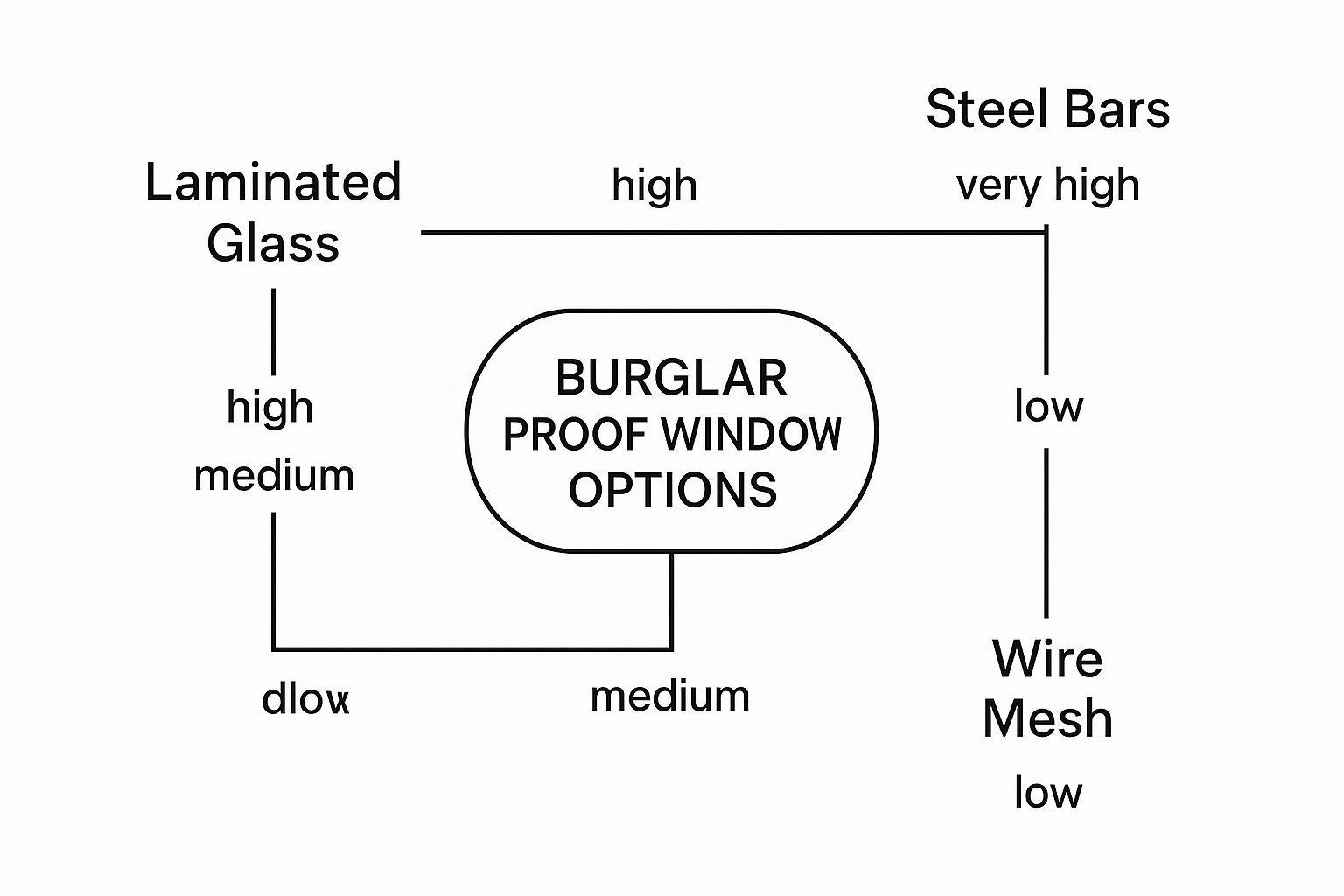
As you can see, steel bars offer top-tier security for a lower cost, but something like laminated glass delivers a very high level of protection without turning your home into a fortress and sacrificing its aesthetic appeal.
Comparing Key Security Window Technologies
Each of these security glazing technologies has its own unique strengths. The table below breaks down how they work, what they do best, and where they fit into a home security plan.
| Technology | How It Works | Primary Benefit | Best For |
|---|---|---|---|
| Laminated Glass | A tough polymer interlayer (PVB) is sandwiched between two or more layers of glass. | High-impact resistance and noise reduction, built directly into the window. | New construction, window replacements, or areas needing both security and soundproofing. |
| Security Film | A multi-layered polyester film is applied to existing glass, often anchored to the frame. | A cost-effective retrofit that holds shattered glass together. | Upgrading existing windows without full replacement, especially on ground-floor or vulnerable panes. |
| Polycarbonate | A solid sheet of thermoplastic polymer is used instead of glass. | Extreme impact strength and durability, far surpassing glass. | High-risk areas, commercial properties, or homeowners seeking the absolute highest level of protection. |
Ultimately, the best choice depends on whether you're building new, retrofitting, or looking for maximum-security applications.
Polycarbonate Glazing: The Premium Option
When you need the absolute highest level of protection, you step up to polycarbonate glazing. Polycarbonate is a type of thermoplastic that is wildly stronger and more impact-resistant than any kind of glass.
Think of the clear, protective riot shields used by law enforcement—that's the kind of strength we're talking about. Polycarbonate can take an incredible amount of force without cracking or breaking. While lighter than glass, it's a staggering 250 times stronger, making it the top choice for homeowners who want ultimate peace of mind.
These technologies all fall under the umbrella of security glazing, a category that also includes specialized products like bulletproof and hurricane-impact windows. For instance, the market for bulletproof transaction windows—which share similar security goals—was valued at roughly $500 million in 2025 and is projected to grow at a CAGR of 7% through 2033. This growth is driven by advanced materials like ballistic glass-clad polycarbonate, which resists both forced entry and gunfire. You can dig deeper into this specialized market by reading the full research on advanced security windows.
Key Features to Look for in Your Windows
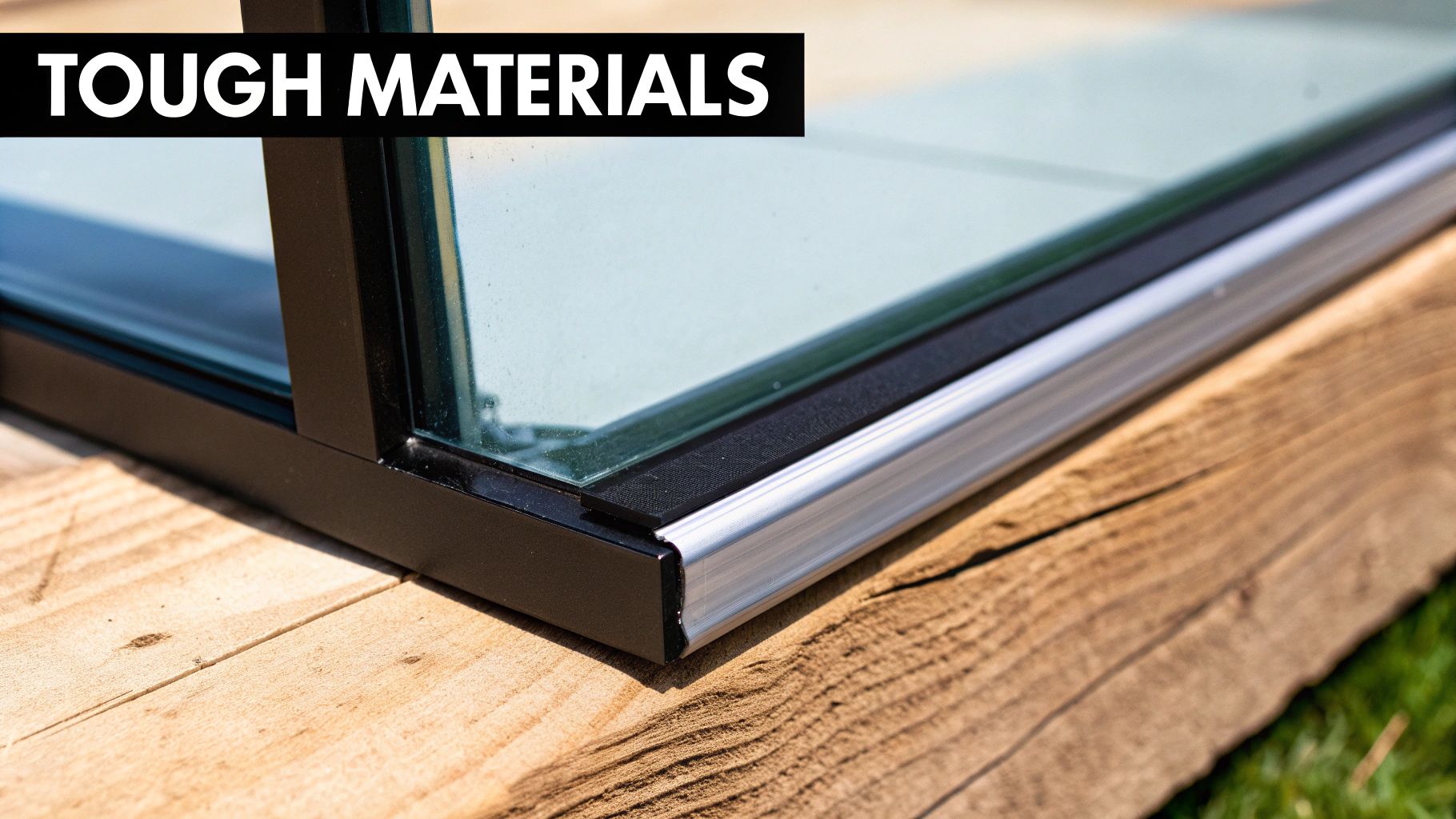
A truly secure window isn't just about the glass. It's a complete system where every single part has to work together to create a barrier that can stand up to a real-world attack. Intruders are pros at spotting the weakest link, so when you're sizing up your options, you need to look at the entire window assembly.
Think of it like a chain—the strongest link is worthless if it's connected to a flimsy one. The same exact principle applies to burglar-proof windows. The toughest security glass in the world won't do you any good if it’s sitting in a weak frame that can be pried open with a crowbar.
Let's walk through the features that are absolute non-negotiables. Once you understand how each part contributes to the window's overall strength, you can ask the right questions and pick a system that delivers genuine protection.
Robust and Reinforced Frames
The window frame is the backbone of the whole unit. It's what holds everything in place and, more often than not, it's the first thing an intruder will attack with a leverage tool. A standard, flimsy frame can be bent, warped, or split with surprisingly little force, letting a burglar bypass the glass and locks completely.
To stop that from happening, you need a frame built from materials specifically designed to resist brute force.
- Steel-Reinforced uPVC: This is a great combination of low-maintenance uPVC with a hidden strength. A galvanized steel core runs through the internal chambers, giving the frame incredible rigidity and stopping it from flexing under pressure.
- Heavy-Duty Aluminum: Aluminum is naturally strong and durable, making it an excellent choice for security frames. For the best performance, look for thermally broken aluminum, which has an insulating barrier to boost energy efficiency without sacrificing an ounce of strength.
- Solid Hardwood: Dense hardwoods can offer solid security, but only if they are thick enough and meticulously maintained. The big drawback is their vulnerability to rot if neglected, which can seriously compromise their integrity over time.
A reinforced frame is your first line of defense. It ensures the entire window stays anchored to your home, even when someone is trying their hardest to get in.
Advanced Multi-Point Locking Systems
A single, basic lock on a window is a single point of failure. It's often the most vulnerable part of the whole window and can be forced or jimmied open pretty easily. This is where multi-point locking systems completely change the game.
Picture a bank vault door. It doesn’t just have one bolt in the middle; it has massive bolts that engage all around the frame. A multi-point lock does the same thing for your window.
With a single turn of the handle, a multi-point lock drives multiple steel bolts into different points on the window frame—usually the top, bottom, and middle. This spreads any force evenly across the entire structure, removing the leverage points burglars rely on to pry a window open.
This mechanical advantage is crucial. It essentially fuses the window sash and frame into one solid unit, making it incredibly difficult to separate them.
Key Locking Mechanism Features
Not all multi-point locks are created equal. As you compare different windows, keep an eye out for these specific high-security features:
- Mushroom Head Cams: Instead of simple rollers, these bolts are shaped like mushrooms. They hook securely into the frame's keep (the metal plate), making it almost impossible to pull the sash away from the frame.
- Shootbolts: These are powerful steel bolts that fire out from the top and bottom of the sash and lock directly into the window frame itself. They provide incredibly strong vertical locking points.
- Hinge-Side Security: Also called "dog bolts," these security features keep the hinge side of the window locked to the frame, even if a burglar tries to attack the hinge pins. This is a must-have, especially for any window that opens outwards.
By focusing on these key elements—a reinforced frame and a sophisticated multi-point locking system—you ensure your burglar-proof windows have no obvious weak spots. You're building a comprehensive defense that will frustrate and deter even the most determined intruder, giving you real peace of mind.
More Than Just Security: Your Window's Hidden Benefits
When you think about burglar-proof windows, it’s easy to focus solely on security. But seeing them as just a defense expense misses a huge part of the story. The very technology that makes these windows a nightmare for intruders also delivers a whole host of unexpected upgrades to your daily life.
It's actually pretty simple. The same tough, laminated glass built to stop a crowbar also stands up to Mother Nature’s worst. That means it offers serious impact resistance during hailstorms or high winds, giving you peace of mind year-round. This dual-purpose protection turns a simple security purchase into a smart, all-around investment in your home's resilience.
This overlap is shaking up the market. Demand for burglar-proof windows now runs parallel to the growing need for impact-resistant windows, especially in storm-prone areas. In fact, the global impact-resistant window market is set to grow significantly from 2025 to 2030. Homeowners want windows that do it all—safety, durability, and energy efficiency. You can discover more insights about the impact-resistant window market on gminsights.com.
Creating a Quieter Sanctuary
Beyond keeping things out, one of the first things you'll appreciate is the quiet. The multi-layered construction that absorbs the force of a blow is also incredibly good at dampening sound waves.
That laminated interlayer—the secret sauce for security—is also a fantastic acoustic insulator. It effectively disrupts vibrations from street traffic, barking dogs, or loud neighbors, stopping them before they disturb your peace.
The result is a more serene home environment. It's a perk you get to enjoy every single day, not just during a potential break-in. For anyone living on a busy street, this noise reduction alone can be life-changing.
Protecting Your Valuables from the Sun
Here's another benefit most people don't think about: top-tier protection from ultraviolet (UV) radiation. Standard glass lets in a ton of UV light, which is the main culprit behind faded furniture, bleached hardwood floors, and discolored artwork.
The polymer interlayer in laminated security glass, however, is designed to block over 99% of harmful UV rays. Think of it as a permanent, invisible layer of sunscreen for everything inside your house.
By installing burglar-proof windows, you are not just securing your home from external threats; you are also preserving the life and vibrancy of everything inside it. This protection helps maintain your property's value by preventing costly sun damage over time.
This means your favorite couch, cherished photos, and valuable decor stay vibrant for years longer. It's another way these windows offer a complete upgrade, boosting your home's security, comfort, and long-term value in ways you might not have expected.
Understanding the Cost and Return on Investment
Let's talk about the bottom line. When you're looking at upgrading to burglar-proof windows, the cost is naturally a primary concern. It's best to think of this not as a simple window replacement, but as a serious investment in your home's security infrastructure. The price tag directly reflects the advanced engineering and beefed-up materials needed to create a truly effective barrier against intruders.
Several key variables are going to shape the final cost of your project. Picture it like customizing a new car—the base model has one price, but every performance upgrade you add changes the final number. The same idea applies here.
Breaking Down the Cost Factors
There's no one-size-fits-all price tag for security windows. Each component plays a part in the window's strength and, as a result, its cost.
- Window Size and Style: Bigger windows simply need more material, from the reinforced frame to the specialized glass, which drives up the price. Likewise, complex designs like bay windows or custom architectural shapes will cost more than a standard double-hung or casement window.
- Frame Material: Your choice between steel-reinforced uPVC, heavy-duty aluminum, or premium hardwood will definitely impact the cost and performance. These reinforced frames are an essential part of the security system and are more expensive than their standard, off-the-shelf counterparts.
- Glazing Technology: This is where a big chunk of the investment goes. Laminated glass, with its tough polymer interlayer, is already a step up in cost from basic double-glazing. If you upgrade further to thicker security films or premium polycarbonate, the price will increase accordingly.
- Custom Features and Hardware: High-security multi-point locking systems, specialized handles, and unique finishes all contribute to the final tally.
This growing focus on home protection isn't just a local trend; it's happening globally. The market for anti-theft windows was valued at roughly $5 billion in 2025 and is on track to grow at a compound annual rate of about 7% through 2033. By that time, the market is expected to hit an estimated $9 billion, which shows a clear shift toward making security a priority in home construction.
Calculating Your Return on Investment
While the upfront cost is higher, the return you get from burglar-proof windows goes way beyond the initial receipt. It’s an investment that pays you back in ways you can both see on paper and feel in your daily life. It's helpful to consider how these upgrades fit into your overall home improvement ROI.
Think of a security window like a comprehensive insurance policy for your home. You pay for it hoping you'll never need it, but its true value becomes immeasurable at the first sign of a threat.
Here’s how you get your money's worth over time:
- Potential Insurance Discounts: Many insurance companies will actually cut you a break on your premiums for installing certified security upgrades. These windows can significantly lower your home's risk profile, leading to real, tangible savings on your annual policy.
- Increased Property Value: Security is a huge selling point for potential homebuyers. Professionally installed security windows are a major feature that can make your home more attractive on the market and boost its value.
- Priceless Peace of Mind: This is the one return you can't put a price tag on. The deep-seated comfort that comes from knowing your home is a hardened target—and your family is safer for it—is truly invaluable.
Your Top Questions About Burglar-Proof Windows, Answered
Deciding to upgrade your home’s security is a big step, and it's natural to have questions. When you're looking into burglar-proof windows, you need real-world answers, not just technical specs. We've gathered the most common questions homeowners ask to give you the clarity you need to move forward with confidence.
Let's cut through the noise and get straight to what you're wondering about, from how these windows actually perform under pressure to what they'll look like on your home.
Are Burglar-Proof Windows Truly Unbreakable?
Let's be honest: the term "burglar-proof" is a bit of a misnomer. A better way to think of it is "burglar-resistant." Given enough time and the right heavy-duty tools, almost anything can be broken. But that’s not really the point. The goal here isn't to be literally indestructible; it's to make breaking in so difficult, so loud, and so time-consuming that a burglar gives up and moves on.
These windows are designed to take a serious beating from common break-in tools like crowbars, hammers, and bricks. The sheer amount of noise and effort it takes to even try to get through one completely robs an intruder of the two things they rely on most: speed and stealth. This commotion buys you precious time and almost guarantees someone will notice, making your home a terrible target.
A normal window can be smashed and entered in less than a minute. A security window turns that quick smash-and-grab into a loud, drawn-out ordeal that puts any would-be thief in the spotlight. They’ll almost always choose an easier house.
Can I Just Make My Existing Windows More Secure?
Absolutely. You don't necessarily have to rip out your windows for a major security upgrade. The most popular and effective way to do this is by having a professional install a high-quality security film. This is a tough, clear laminate that holds the glass together even after it’s been shattered.
But there's a crucial second step: for the film to work properly, it has to be paired with an attachment system that bonds it to the window frame. Without that, an intruder could just break the glass and push the entire pane—film and all—right out of the frame. You can also add stronger locks or secondary deadbolts for good measure. While these upgrades make a huge difference, it's worth noting that a purpose-built security window with a reinforced frame and multi-point locking system will always be the top-tier solution.
Do Security Windows Look Bad or Ruin My Home's Vibe?
This is probably the biggest worry people have, and the answer is a firm no. Gone are the days of ugly bars or bulky frames. Today's burglar-proof windows and security films are designed to be completely invisible to the naked eye. They look just like high-end standard windows.
You can get them in pretty much any style, material, or finish you can imagine, so they’ll blend right in with your home's architecture. In fact, they often do more than just protect—they can actually improve your home.
- Better Insulation: The extra layers in laminated glass or the film itself add a buffer against the elements, improving your home's energy efficiency.
- Lower Energy Bills: Many security windows come with Low-E coatings and argon gas fills, the same tech found in premium energy-efficient windows.
- Crystal Clear Views: High-quality security films are optically clear, so they won't distort your view or make your home feel darker.
You really don't have to choose between a beautiful home and a safe one. You can have both.
Ready to secure your home without compromising its beauty? At Fortress Security Films, we specialize in advanced, nearly invisible window protection that stops intruders in their tracks. Learn more about our residential security film solutions and get a free consultation today!
