


When you start looking into the cost of burglar-proofing your windows, you'll find a pretty wide spectrum. On the low end, a simple DIY security film might only set you back $200. At the other extreme, you could be looking at over $2,500 for a single, high-impact replacement window.
What you end up paying really boils down to the security solution you land on, the quality of the materials, and whether you bring in a pro to handle the installation.
What Is the Real Cost of Burglar Proof Windows?
Figuring out the cost is a bit like buying a car. You can go for the base model that gets the job done, or you can start adding on features for better performance and comfort. A simple security film is like the standard package—it offers a decent baseline of protection for an affordable price. A professionally installed, laminated glass window with reinforced frames is the fully-loaded, premium model.
Every decision you make, from the type of glass to the locking hardware, will influence the final number on your invoice. Let's break down the main components that make up that final price.
The Core Cost Components
When you get a quote, you're not just paying for a pane of glass. The total cost is a sum of its parts, and understanding these parts helps you see where your money is going and where you might be able to save.
- Materials: This is the actual product you're buying. It could be shatter-resistant film, laminated glass, a sheet of polycarbonate, or steel security bars. The material's strength and technology are, without a doubt, the biggest drivers of the base cost.
- Labor and Installation: This fee covers the professional's time and expertise. Getting the installation right is absolutely critical. A poorly applied film can bubble and peel, and an improperly set window can be easily bypassed, making the whole investment pointless.
- Added Features: Think of these as the upgrades. Things like advanced multi-point locking systems, integrated alarm sensors, or even custom finishes to match your home's aesthetic will add to the total but can also seriously boost your security and peace of mind.
A Snapshot of Average Costs
To give you a rough idea, let's look at a common choice: security bars. Adding bars to fortify windows is a tried-and-true method. For a typical project, you can expect to spend somewhere between $725 and $1,750, with most homeowners paying an average of around $940 per installation.
That range is mostly dictated by the material. Standard steel or aluminum will be on the lower end, while decorative wrought iron costs more due to its superior strength and custom craftsmanship. For a deeper dive, it's always worth checking the latest security bar installation pricing from home improvement experts.
To make it even clearer, here’s a quick look at the average costs you can expect for a few different window security options, broken down for a single, standard-sized window.
Estimated Cost for Burglar Proofing One Window
This table provides a quick reference for what you might expect to pay per window for some of the most common security upgrades. Keep in mind that these are averages and can shift based on your location and the specific product you choose.
| Security Type | Average Material Cost | Average Installation Cost | Total Estimated Cost |
|---|---|---|---|
| Security Film | $50 – $150 | $100 – $400 | $150 – $550 |
| Laminated Glass | $300 – $700 | $200 – $500 | $500 – $1,200 |
| Polycarbonate/Plexiglass | $100 – $400 | $150 – $450 | $250 – $850 |
| Security Bars/Grilles | $150 – $500 | $200 – $600 | $350 – $1,100 |
As you can see, the final cost is a blend of the product itself and the labor required to get it installed correctly. For simpler jobs like film, you might save on installation, whereas a full glass replacement requires more skilled labor.
Key Takeaway: The "burglar proof windows cost" isn't a fixed price. It's a flexible range that you control based on your budget and how much security you truly need. The right choice could be a simple retrofit or a complete, high-end replacement.
What Actually Drives Your Final Price?
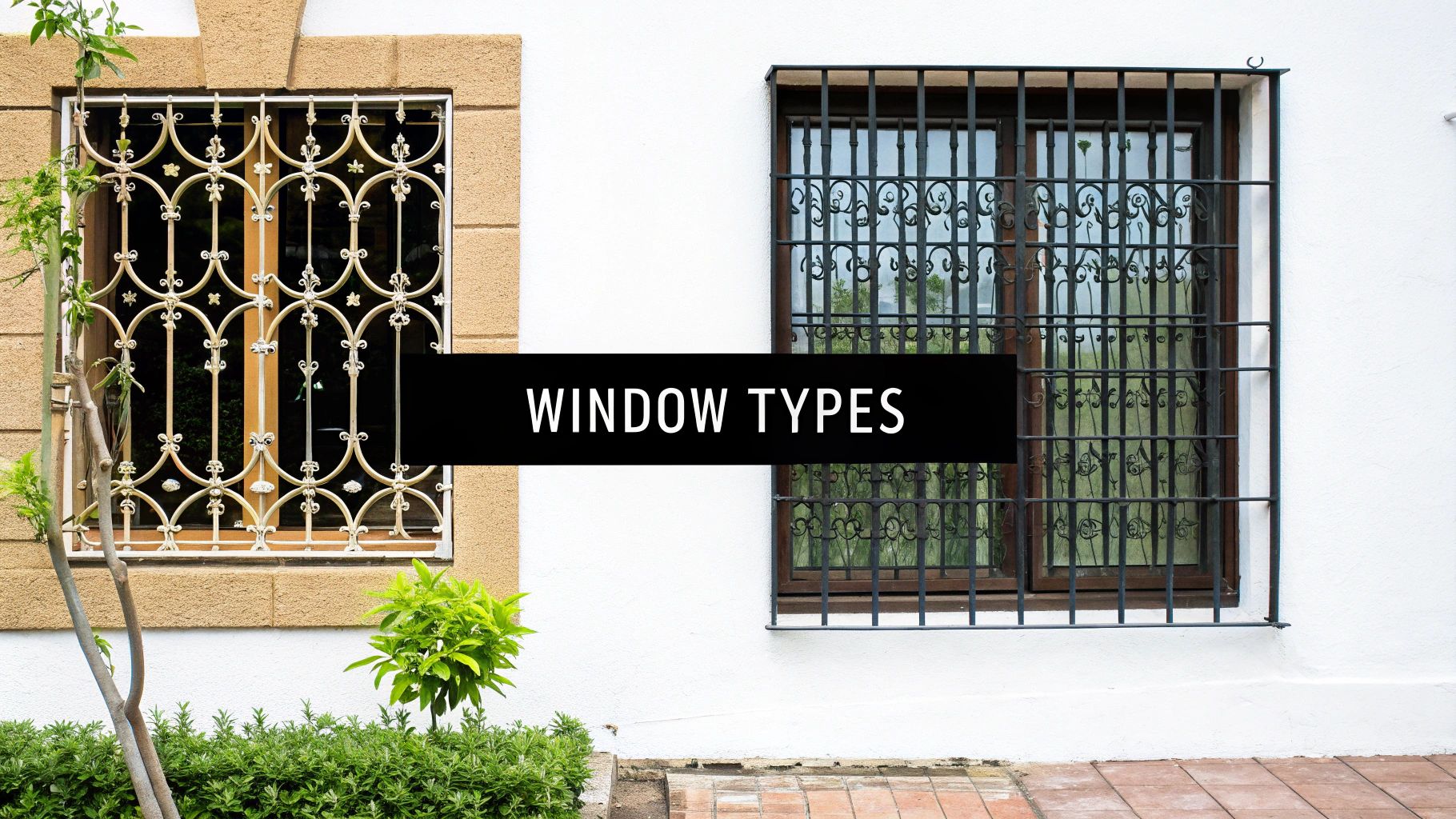
So, why can the cost of burglar-proofing windows swing so wildly from one house to the next? It all comes down to the layers of security you decide to build.
Think of it like buying a car. The base model gets you from A to B, but it’s the engine upgrade, the advanced safety package, and the premium sound system that really shape its performance and final sticker price. Securing your windows works the same way.
Your total investment hinges on three key variables: the core security materials you choose, any extra features you add on, and how complex the professional installation is. Let's break down how these pieces fit together so you can build a budget that makes sense for your security needs.
Core Security Materials: The Foundation of Your Defense
The material you select is, by far, the biggest chunk of your final bill. This is the primary barrier standing between a potential intruder and your home, and each option comes with a different level of protection and a different price tag.
-
Security Film: This is a popular and affordable retrofit. A strong polyester film is applied directly to your existing glass, designed to hold the pane together even if it shatters. It's a great way to delay entry, but its effectiveness really depends on the film's thickness and a flawless installation.
-
Laminated Glass: This is a significant step up. It involves sandwiching a tough polymer interlayer (usually PVB) between two sheets of glass. This construction makes the window incredibly difficult to smash through because the interlayer clings to the glass fragments, keeping the window intact even after repeated blows.
-
Polycarbonate: Often hailed as the top-tier option for impact resistance, polycarbonate is a powerful thermoplastic that's a staggering 250 times stronger than glass. While it offers incredible security, it's also the priciest and can sometimes yellow with age if it doesn't have a good UV-protective coating.
Naturally, as the material gets stronger and more durable, the cost rises with it.
Added Features and Customization
Beyond the glass itself, several other components can add to the total price. These are the add-ons that can boost both security and day-to-day function, but they will bump up the overall expense.
Advanced locking mechanisms are a common upgrade. Instead of a single, simple latch, you could opt for a multi-point locking system that bolts the window into the frame at several spots, making it extremely difficult to pry open.
Integrated alarm sensors are another smart addition. These can be wired right into your home security system, sounding the alarm the instant someone tampers with, opens, or breaks the window.
Expert Insight: Don't forget about the window's size and style. It's a cost driver people often overlook. A huge, custom-arched window will always cost more to secure than a small, standard-sized one. It simply requires more material and specialized labor to get a perfect, secure fit.
The Role of Installation Complexity
Finally, the cost of labor can change quite a bit depending on how tricky the job is.
Applying security film to an easily accessible, ground-floor window is a pretty straightforward and affordable task. For homeowners considering this route, the Fortress Security Films blog is a great resource for exploring different film options.
On the other hand, tearing out an old window on the third floor to install a heavy laminated glass unit is a different story. That job involves more risk, more time, and specialized equipment, which all translate to a higher installation fee. Things like working with tricky frame materials or needing to modify the wall opening will also add to the final labor bill.
Choosing the Right Type of Window Security
Deciding on the best way to secure your windows isn't a one-size-fits-all situation. The perfect solution for your home is going to be a balance of how much security you really need, what you want it to look like, and of course, your budget.
Think of it like choosing tires for your car. A basic set gets you from A to B just fine. But if you're driving in rough conditions or want better performance, you invest in high-performance tires for superior grip and safety. Window security works the same way—some options are good, while others are built for maximum defense.
Let's break down the most common approaches to help you find the right fit for your home.
Security Bars and Grilles
Bars and grilles are the old-school, classic approach. They’re a very visible deterrent, and their main advantage is sheer brute force. A well-installed set of steel bars makes it incredibly difficult for an intruder to physically get through a window. Simple as that.
The biggest downside, however, is how they look. They can make a home feel a bit like a fortress, which isn't for everyone. It's also critical to check with your HOA and local fire codes, as you may need a quick-release mechanism for emergency escapes.
Shatterproof Security Film
This is easily one of the most popular upgrades for existing windows. A professional applies a thin, totally transparent layer of tough polyester to the inside of your window pane. If a burglar tries to smash the glass, the film holds all the shattered pieces together. This makes it a nightmare to get through, slowing them down and often forcing them to give up entirely.
It’s a fantastic, cost-effective choice that doesn't change your home's appearance at all, making it a great first step in boosting your security.
Laminated and Tempered Glass
If you're ready for a more integrated solution, upgrading the glass itself is a powerful move. Laminated glass has a tough polymer interlayer sandwiched between two panes of glass—it's the same technology used in car windshields and is incredibly hard to break through. Tempered glass, on the other hand, is heat-treated to be about four times stronger than regular glass and shatters into small, pebble-like pieces instead of dangerous shards.
These are typically part of a full window replacement, which is a more significant investment. Window replacement costs are on the rise, with the average now sitting around $1,047 per window. As you might expect, options like triple-pane windows that also increase security can cost more, but they often bring long-term energy savings. You can get a better sense of these expenses by checking out detailed window replacement pricing from Modernize.com.
Fully Integrated Security Windows
For the ultimate in home protection, nothing beats a fully integrated security window. These are purpose-built units that combine multiple layers of defense, often featuring laminated or polycarbonate glass, a reinforced frame made of steel or aluminum, and an advanced multi-point locking system. They're designed from the ground up to stop intruders.
This image breaks down the key factors that drive up the cost, from the raw materials to the complexity of the installation.
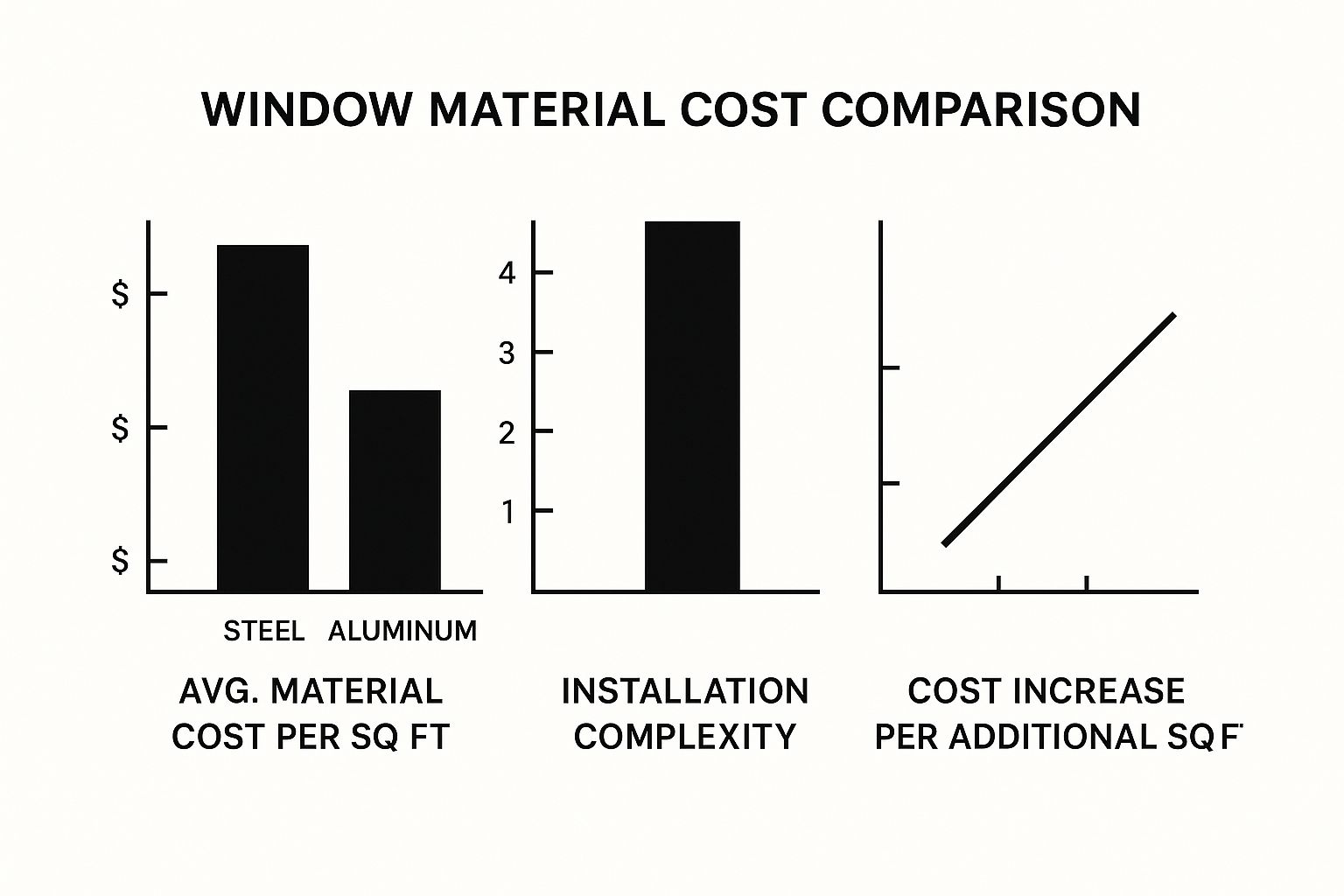
As you can see, while stronger materials like steel have a higher initial cost, the difficulty of the installation itself is a huge part of the final price tag.
To make the decision a bit easier, let's put these options side-by-side. Seeing how they stack up in terms of cost, security, and aesthetics can help you zero in on the best choice for your specific needs.
Burglar Proof Window Options Comparison
| Solution Type | Average Cost per Window | Security Level (1-5) | Aesthetic Impact | Best For |
|---|---|---|---|---|
| Security Film | $100 – $300 | 3 | Minimal to None | Budget-conscious homeowners & renters wanting a quick, invisible upgrade. |
| Security Bars/Grilles | $150 – $500 | 4 | High (Visible) | Maximum physical deterrence where aesthetics are a secondary concern. |
| Tempered Glass | $400 – $900 | 3.5 | None | New window installations or replacements needing added strength and safety. |
| Laminated Glass | $500 – $1,200 | 4.5 | None | Homeowners seeking high-level, integrated security without altering looks. |
| Integrated System | $1,000 – $3,000+ | 5 | Minimal (Frame) | High-security needs, offering a complete, top-tier protective solution. |
This table shows a clear trade-off: as the security level increases, so does the cost. The key is finding that sweet spot that makes you feel safe without breaking the bank.
Weighing the Costs of DIY vs. Professional Installation

When you're looking at ways to secure your home, the thought of saving a few bucks with a DIY project is always tempting. But when we're talking about window security, the true burglar proof windows cost isn't just about the price tag on the materials. The decision to go it alone or hire a pro is a serious one, forcing you to balance upfront savings against the performance and peace of mind you get down the road.
For what seems like a simple job, like applying security film, the DIY route can feel like a no-brainer. You buy the film, skip the labor costs, and pocket the savings. Simple, right? Not so fast.
The effectiveness of security film hinges on a perfect, flawless application. Even a tiny air bubble or a slightly misaligned edge creates a weak spot—a seam for a potential intruder to pry at. Even worse, a botched installation almost always voids the manufacturer's warranty, leaving you completely unprotected if the film fails when you need it most.
The True Value of Professional Expertise
Hiring a professional installer may seem like just another line item on the invoice, but what you’re really paying for is experience. Their fee covers specialized tools, a deep understanding of the product, and a guarantee that the job is done right.
These pros know the subtle differences between vinyl, wood, and aluminum frames. They understand how different types of glass behave. This kind of hands-on knowledge is absolutely essential for more complex jobs, like installing laminated glass or entire security window units where precision is non-negotiable. If you want to see what that level of detail looks like, you can explore the steps of a professional window security film installation process.
Critical Safety Consideration: Professionals are also up-to-date on local building codes, especially the ones concerning fire escape routes (egress). A DIY job installing security bars on a bedroom window, for example, could easily violate fire safety laws, trapping someone inside during an emergency.
Breaking Down the Costs
In the end, it really boils down to risk versus reward. You might save a couple of hundred dollars doing it yourself, but a professional ensures your security investment actually performs as advertised from day one.
- DIY Approach: You'll have a lower initial cash outlay, but you're taking on the risk of poor performance, voided warranties, and even dangerous safety violations.
- Professional Installation: The upfront cost is higher, but it comes with a guarantee of performance, compliance with safety codes, and the peace of mind that comes from proven expertise.
When you weigh the real-world value of guaranteed protection and safety, the cost of a professional installation often reveals itself as a smart, long-term investment in your family's security.
Calculating Your Return on a Security Investment
It’s easy to look at the burglar-proof windows cost as just another line item on a budget, but that’s really missing the point. Think of it less like an expense and more like a long-term investment—an investment in your property, sure, but more importantly, in your family’s safety. When you shift your perspective like that, the true return becomes much clearer.
This isn't just a feel-good idea; the value shows up in tangible, dollars-and-cents ways. For starters, many homeowner's insurance companies are happy to give you a discount for making your home a harder target. By installing professionally certified security windows or films, you can often knock a decent chunk off your annual premiums, giving you a direct financial return year after year.
Financial and Intangible Gains
On top of that, beefed-up security is a huge selling point in the real estate market. Potential buyers see a home with high-quality security features as a safer, more valuable asset. This means you can often recoup a good portion of your initial investment when it's time to sell, which makes it a smart financial move for the long haul.
But let's be honest, the most important returns don't show up on a spreadsheet. The real payoff is the peace of mind you get from knowing your home is a fortress against potential threats. This isn't just an investment in hardware; it's an investment in feeling secure every time you lock the doors at night.
The True Value of Deterrence: Upgraded window security sends a clear message. A would-be intruder is always looking for the path of least resistance, and they're far more likely to skip a home with visibly reinforced windows and move on to an easier target.
Measuring the Impact on Safety
This deterrent effect is very real. Modern solutions like laminated glass and security films have a proven track record of stopping break-ins before they happen. In fact, security experts have found that strong window reinforcements can slash burglary attempts by over 70%. That’s a massive drop, creating a genuinely safer environment for everyone inside. You can see more on this by checking out the impact of modern window security on sirixmonitoring.com.
Ultimately, the ROI is a mix of all these things. The same logic of creating safer environments applies in other places, too, which you can see in our guide on security window film for schools. When you add up the insurance savings, the boost in home value, and the priceless value of deterrence and safety, the initial cost starts to look like one of the wisest investments you can make.
Answering Your Top Questions About Window Security Costs
As you start exploring the different ways to secure your windows, it's totally normal for a bunch of questions to come up. Getting a handle on the costs, safety details, and best strategies is the key to feeling good about your decision. We've put together the most common questions we hear from homeowners about the cost and logistics of burglar-proofing windows to give you clear, straightforward answers.
Think of this as the final piece of the puzzle, helping you move forward with a solid plan that fits your home and your budget perfectly.
Do I Need to Secure Every Window in My House?
The short answer? Probably not. A more strategic approach is almost always the smarter—and more cost-effective—way to go. You get a much bigger bang for your buck by focusing on the most vulnerable spots first.
Start with a walkthrough of your ground floor. These windows are the low-hanging fruit for intruders because they’re so easy to get to. Pay extra attention to windows on the back or side of your house, since they’re often hidden from the street and give a potential burglar plenty of cover.
Other places to put high on your list include:
- Basement Windows: These are a classic, and often forgotten, entry point for burglars.
- Windows Near Doors: A burglar could easily smash one of these to reach in and unlock the door.
- Easily Accessible Upper-Floor Windows: Got a window over a flat roof, next to a big tree, or on a balcony? That’s a much higher risk than a window on a sheer second-story wall.
By locking down these high-risk areas first, you build a strong defensive perimeter without having to spend a fortune upgrading every single piece of glass in your home.
Strategic Security: The real goal isn't just to bolt on more hardware; it's to think like an intruder would. When you identify and reinforce the easiest targets, your home suddenly becomes a much less attractive option, and you get the best possible security for your money.
Will Security Upgrades Block My Emergency Exits?
This is one of the most important safety questions you can ask. The answer really depends on the type of security you choose. Keeping your home secure is vital, but it should never, ever compromise your ability to get out safely during a fire or other emergency.
Permanent security bars or grilles can absolutely become a dangerous trap if they aren't the right kind. Fire and building codes are incredibly strict about this, for good reason. They require any sleeping area, like a bedroom, to have a clear, working egress window for escape.
If you’re thinking about security bars for a bedroom, you must choose a model that has an approved quick-release mechanism. These allow you to open the bars from the inside with a simple lever or push of a button, ensuring you can get out fast when every second is critical.
Can I Fortify My Existing Windows Without Replacing Them?
Absolutely! In fact, this is one of the most popular and budget-friendly ways to tackle window security. A full window replacement is a major undertaking, but retrofitting what you already have can give you a massive security boost for a fraction of the cost.
There are a few really effective ways to do this:
- Apply Shatter-Resistant Security Film: This is a fantastic choice for making existing glass much tougher to break through.
- Upgrade Window Locks: Swapping out the flimsy factory latches for stronger, more robust locks can make a surprising difference.
- Install Window Sensors: Modern sensors can connect to your home alarm system, giving you an instant alert if a window is opened or broken.
These upgrades work together to turn your existing windows into a much more formidable barrier, all without the cost and mess of a full replacement project.
Does the Cost of Window Security Vary by Location?
Yes, where you live definitely has an impact on the final burglar proof windows cost. Just like any other home improvement project, labor rates are a huge piece of the puzzle. You can expect to pay more for installation in a major city than you would in a more rural town.
Beyond labor costs, things like local supply chains for certain materials and even regional demand can nudge the prices up or down. Your area might also have specific building codes or permit fees that add to the overall cost. The best way to know for sure is to get a few quotes from local, reputable installers to see what the going rate is in your market.
Ready to secure your home with a solution that is both incredibly strong and virtually invisible? Fortress Security Films provides advanced glass protection that reinforces your existing windows against forced entry without changing their appearance.
Learn more about our residential security film solutions and get a free consultation today.
