


Let's get one thing straight right away: there's no such thing as a truly impenetrable window. A "burglar-proof" window is really a complete security system where every part—the glass, the frame, and the locks—works in concert to create a serious obstacle for would-be intruders. Think of it like a security chain. Its overall strength is only as good as its weakest link, which is why a holistic defense is so crucial for your home.
Understanding the Anatomy of a Secure Window
A standard window is often the path of least resistance for a burglar. It’s riddled with vulnerabilities that can be exploited with simple tools and very little effort. To build an effective defense, you have to start thinking like a thief and see your windows through their eyes. The goal isn't to turn your home into an unbreachable vault, but to make breaking in so difficult, loud, and time-consuming that they'll just give up and look for an easier target.
A genuinely secure window system reinforces three critical areas, transforming a weak spot into a hardened layer of your home's defense.
- Glazing (The Glass): Your typical single-pane glass shatters with a single, sharp hit. Security-focused glazing, on the other hand, is built to take a beating, holding together even after it cracks.
- Frame (The Structure): Flimsy vinyl or old, rotting wood frames can be pried open with a crowbar, completely bypassing both the lock and the glass. Secure frames are made from much tougher materials and are often reinforced on the inside to stand up to brute force.
- Locks and Hardware (The Fasteners): A simple, single latch is almost always the first thing to fail. Upgraded locking mechanisms, like multi-point systems, bolt the window sash to the frame in several places at once, spreading out the force and making it nearly impossible to pry open.
Why Your Window’s Weakest Link Matters Most
Imagine for a second that you’ve installed a high-tech, impact-resistant pane of laminated glass. You feel safer, knowing it can stop a hammer. But what if that fancy glass is sitting in a weak, flexible vinyl frame held shut by one flimsy latch? An intruder won't even bother with the glass. They'll just use a pry bar to bend the frame and pop the entire window sash right out. All that expensive glass becomes useless.
This is a classic mistake—focusing on just one feature. The only way to create a window that's genuinely secure is to take a holistic approach. Every single component has to be strong enough to do its job and support the others.
A secure window isn’t just a product; it’s a system. The glass must resist shattering, the frame must resist prying, and the locks must resist forcing. When all three elements are fortified, they create a synergy that dramatically increases the effort and time required for a break-in.
To understand how these parts come together, let's break down the core components of a truly secure window system and see how they stack up against standard, off-the-shelf parts.
Core Components of a Secure Window System
| Component | Role in Security | Standard vs. Secure |
|---|---|---|
| Glazing | Resists direct impact and shattering. | Standard: Single-pane or basic double-pane glass that breaks easily. Secure: Laminated or polycarbonate glass that holds together under repeated blows. |
| Frame | Provides structural integrity and resists prying/bending. | Standard: Hollow vinyl or unreinforced wood that can be easily bent or broken. Secure: Reinforced steel, aluminum, or composite frames built to withstand force. |
| Locks | Secures the sash to the frame, preventing it from being opened. | Standard: A single, simple latch that offers minimal resistance. Secure: Multi-point locking systems with several bolts, key-operated locks, and robust hardware. |
| Anchoring | Attaches the entire window unit to the house structure. | Standard: Short, minimal screws that can be pulled out. Secure: Long, heavy-duty screws that anchor the frame deep into the wall studs. |
Each element plays a vital part. Upgrading just one while neglecting the others leaves a glaring vulnerability for an intruder to exploit.
The Growing Demand for Better Protection
This integrated view of security is catching on as more homeowners make safety a top priority. You can see this shift in the window and door industry, where the market was valued at $25.9 billion in a recent year and is projected to climb to $34.4 billion by 2032. This growth is being fueled by a rising demand for enhanced security features like anti-theft and impact-resistant glass, both in new homes and renovations.
These core principles of layered physical security aren't just for windows and doors. Think about how businesses protect valuable equipment with things like secure charging unit solutions; it's the same idea of creating robust, multi-faceted protection systems. The goal is always to identify the weak points and systematically strengthen them. In the next sections, we'll dive deeper into each of these three critical window components to show you exactly what to look for.
Choosing Your Security Glazing Solution
If you're serious about making your windows burglar-proof, you have to start with the glass. It's your primary line of defense. While frames and locks are definitely important, the glazing is what really stands between an intruder and easy entry. There are several ways to fortify your glass, each with its own level of protection, so let's break down the options to help you find the right fit.
A truly secure window isn't just one thing—it’s a system. The glazing, frame, and locks all have to work in concert to create a barrier that's tough to beat.
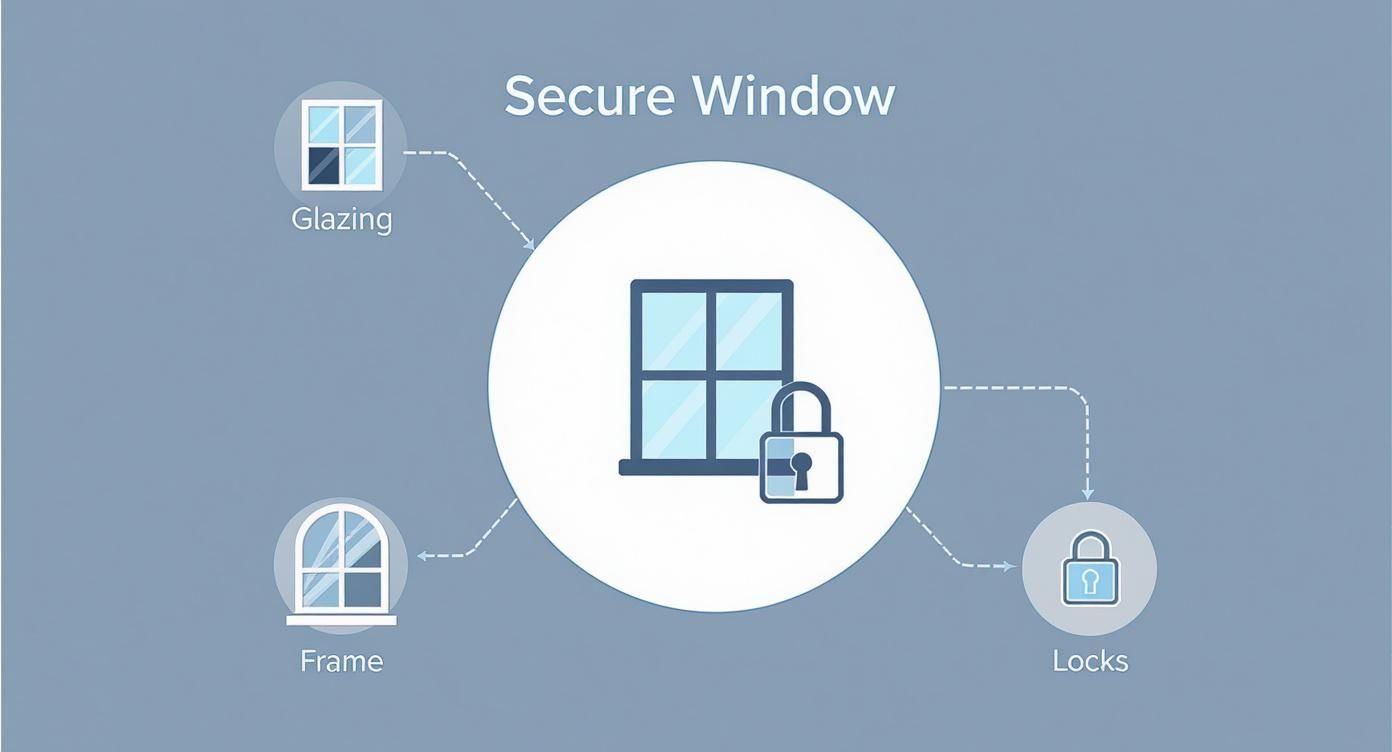
As you can see, these three components are completely interconnected. If one part is weak, the entire window's security is compromised.
H3 The Accessible Upgrade: Security Film
For most homeowners, security film is the easiest and most affordable way to start reinforcing windows. Think of it as an invisible suit of armor for your glass. This tough, clear polyester film gets applied directly to the inside surface of your window panes.
Now, it won't stop the glass from breaking. What it does do is hold all the shattered pieces together, thanks to a powerful adhesive. Instead of the glass collapsing, it creates a flexible, spiderweb-like barrier that's incredibly frustrating for an intruder to get through. The noise and time it takes to bypass a filmed window is usually more than enough to send them packing.
H3 Laminated Glass: The Security Sandwich
Taking a step up in protection, you have laminated glass. The best way to picture it is as a high-tech "glass sandwich." You have two layers of glass with a tough, clear layer of polyvinyl butyral (PVB) bonded between them.
When someone tries to smash it, the outer glass might crack, but that resilient PVB interlayer absorbs the shock and holds all the shards in place. No hole is created. This forces a would-be burglar to make a lot of noise with repeated hits just to even try to get through. It's no wonder laminated glass is a go-to for certified burglar proof window systems.
As a bonus, this layered design is great at blocking up to 99% of UV rays and provides some excellent sound insulation.
H3 Tempered Glass: Strength Through Science
Tempered glass is made by heating standard glass to extreme temperatures and then cooling it rapidly. This process creates intense stress within the glass, making it about four times stronger than normal glass. It’s the same stuff used for your car's side windows.
Its main security advantage is simply being harder to break with brute force. The trade-off? When it finally does break, it crumbles into thousands of small, pebble-like cubes instead of sharp, dangerous shards. While this is a great safety feature, it means the glass doesn't hold together as a barrier the way laminated glass or security film does.
Tempered glass is designed for safety after it breaks. Laminated glass and security film are designed to stay in place as a barrier while being attacked. Your primary security goal will determine which is right for you.
To help you sort through these choices, here’s a quick side-by-side comparison. Each option presents a different mix of security, cost, and practicality.
Comparing Your Security Glazing Options
| Glazing Type | Security Level | Average Cost | Key Advantage |
|---|---|---|---|
| Security Film | Good | Low | Can be retrofitted to existing windows for an immediate security boost. |
| Tempered Glass | Better | Medium | High impact resistance and shatters into safe, small cubes. |
| Laminated Glass | Best | High | Resists penetration by holding shattered glass together, creating a tough barrier. |
This table gives you a clear snapshot of where each solution shines. Security film is a fantastic, cost-effective upgrade, while laminated glass offers the most robust defense for everyday residential and commercial needs.
H3 Ultimate Protection: Polycarbonate and Bullet Resistance
When you need the absolute highest level of security, you're talking about polycarbonate and bullet-resistant glass. Polycarbonate, a type of plastic, is a beast—it's 250 times more impact-resistant than glass and is practically unbreakable. You'll find it in high-security places like banks and government facilities.
Bulletproof glass is a complex, multi-layered product engineered to stop bullets. This is a serious market, valued at $11.56 billion and projected to more than double to $30.38 billion in just seven years, which shows the growing demand for top-tier protection. You can learn more about the growth of the bulletproof glass market on coherentmarketinsights.com. While these options are overkill for most homes, they represent the pinnacle of what glazing technology can achieve.
Why Your Frames and Locks Matter Most
You can have the toughest, most unbreakable glass on the market, but if it's sitting in a flimsy frame, you've essentially built a bank vault with a screen door hinge. Burglars are all about finding the path of least resistance. More often than not, that path isn't smashing through the glass—it's prying the whole window open. The real heavy lifters in a truly burglar proof window system are the frame and the locks.
A seasoned intruder knows that many standard window frames, especially older or builder-grade vinyl, can be bent or broken with a simple crowbar. They can often bypass the glass and the lock entirely, popping the entire window sash out of its housing in just a few seconds. This is why fixating only on the glass can give you a dangerous false sense of security.
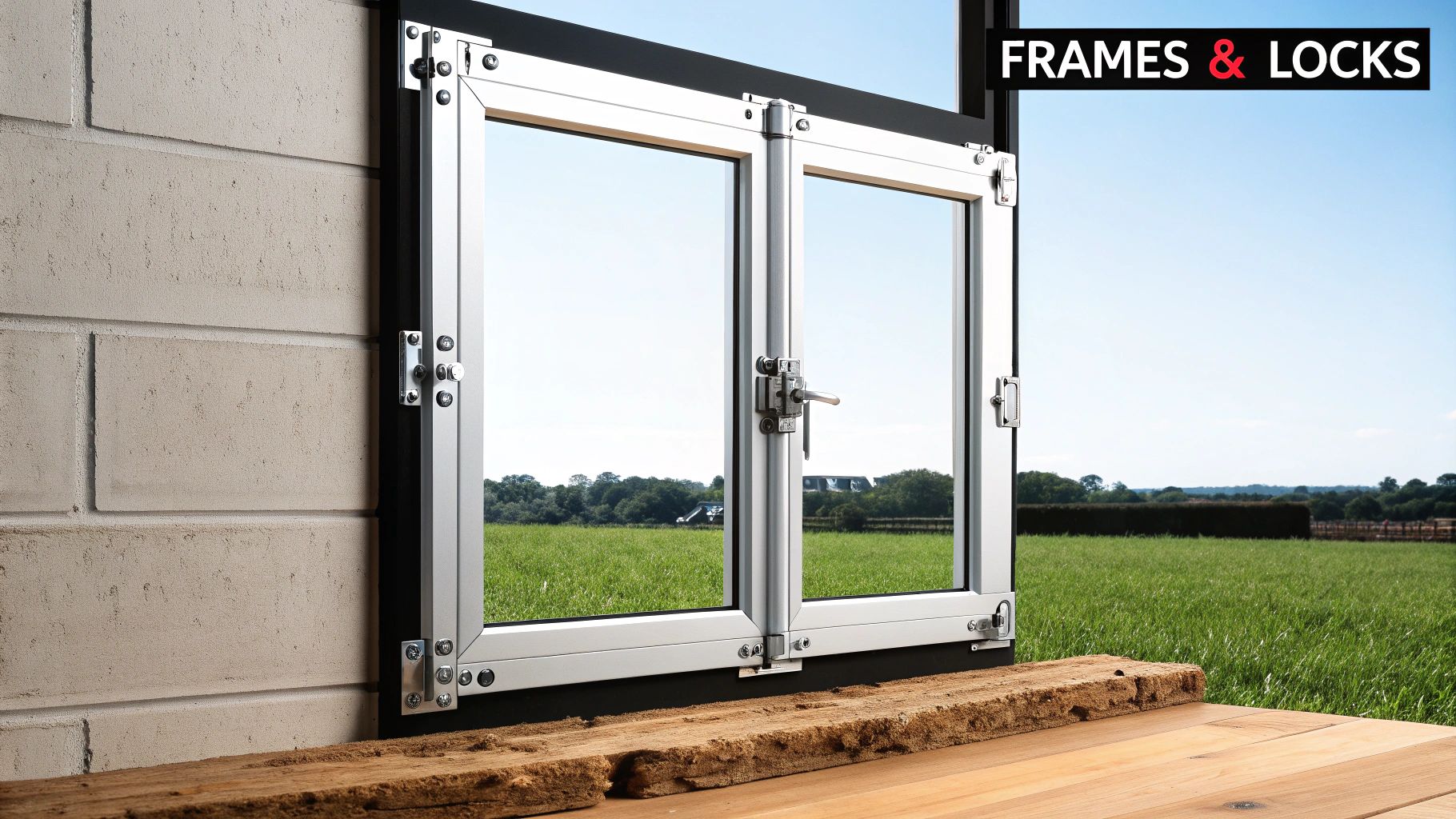
The Foundation Your Frame Provides
Think of the window frame as the skeleton of your window's security. A weak skeleton will collapse under pressure, no matter how strong the muscles attached to it are. The material and build of your frame are what determine its ability to stand up to a brute-force attack.
Not all frame materials are created equal, and the differences are huge when it comes to security.
- Standard Vinyl: It's a popular choice because it's affordable and energy-efficient. The problem? Basic vinyl frames are often hollow and flexible, which makes them a prime target for prying.
- Wood: Beautiful and traditional, for sure. But older wood frames can rot and weaken, and even new ones can be splintered or forced open if they aren't built and maintained correctly.
- Aluminum: Lightweight yet surprisingly strong, aluminum is a big step up from standard vinyl. It resists bending and warping, making it much harder to pry.
- Steel-Reinforced uPVC: This is the gold standard. These look like regular uPVC frames on the outside, but they have a steel core running through them. That reinforcement provides incredible strength and rigidity against forced entry.
The main takeaway here is that a secure frame needs internal reinforcement. This is what stops it from flexing when someone tries to jam a pry bar into it, and it's what keeps your security glass locked firmly in place.
Locking Down Your Defenses
If the frame is the skeleton, the locks are the muscles holding everything tight. That single, flimsy latch found on most residential windows? It's a burglar's best friend. It can often be defeated with a good shake or by sliding a thin piece of metal through the gap. Upgrading your locking hardware is one of the single most effective security improvements you can make.
The biggest vulnerability in most windows isn't the glass. It's the single point of failure created by a standard latch. A multi-point locking system gets rid of that weak spot by distributing force across the entire frame.
This is where multi-point locking systems shine. Instead of securing the window at just one point, these systems shoot several bolts into the frame all at once when you turn the handle. This spreads any force across the whole structure, making the window incredibly difficult to bust open.
Other crucial pieces of hardware to look for include:
- Hinge Bolts (or Hinge Dogs): These are fixed bolts on the hinge side of the window. When you close it, they lock into the frame, preventing someone from simply lifting the window off its hinges—a common break-in tactic.
- Key-Operated Locks: This adds another layer of defense. You need a key to open the window from the inside, which stops a burglar from breaking a tiny piece of glass, reaching in, and flipping the handle.
An intruder wants to be fast and quiet. A window with a reinforced frame and a multi-point locking system robs them of both. The time, effort, and noise it takes to defeat a system like this are huge deterrents, usually enough to make them give up and find an easier target. When you're choosing a burglar proof window, always inspect the frame and locks just as carefully as you inspect the glass.
Making Sense of Security Ratings and Certifications
https://www.youtube.com/embed/9u-asS7Ldys
When you start shopping for a burglar-proof window, you’ll find yourself in a sea of acronyms and technical specs. It can feel like learning a new language, but getting a handle on these certifications is the only way to know if a product actually delivers on its promises. These ratings aren't just marketing fluff; they’re hard-earned proof that a window has stood up to a battery of intense, standardized attacks.
Think of a security certification as a window's final exam after being put through the wringer. Independent labs play the role of a determined burglar, armed with a specific set of tools—from screwdrivers and crowbars to drills. They have a stopwatch and a strict set of rules, and their one goal is to create an opening big enough for a person to slip through. If the window withstands the assault for the required time, it passes the test and earns its rating.
The Key Standards You Need to Know
While you'll find various local and regional standards, a few are recognized across the board as the gold standard for home and business security. Understanding what these mean will help you choose wisely.
One of the most common and respected certifications you'll see is PAS 24. This is a British standard, but it’s widely referenced for its thoroughness. It doesn't just test the glass; it evaluates the entire window assembly—the frame, the locks, the hinges—against a simulated break-in. A window with a PAS 24 certification has proven it can fend off the most common burglary tactics under controlled lab conditions.
Another major player is Secured by Design (SBD). This is actually a UK police initiative that takes things a step further. For a product to get the SBD seal of approval, it first has to pass a tough standard like PAS 24. Then, it has to meet additional design criteria that law enforcement has identified as critical for deterring crime.
Don't Confuse Security with Energy Efficiency
It’s incredibly easy to mix up security ratings with the other labels you'll find on a window, particularly those related to energy performance. You'll often see stickers from the National Fenestration Rating Council (NFRC), which detail things like U-factor and Solar Heat Gain Coefficient. These are vital for understanding how well a window insulates your home, but they tell you absolutely nothing about how it stands up to an intruder.
A window can be a superstar at saving you money on your energy bills, with a top-tier NFRC rating, yet fold in seconds against a pry bar. Always look for separate, dedicated security certifications to confirm a window’s strength.
When you're looking for a genuine burglar-proof window, you need to be sure you're reading the right report card. The truly top-tier products will often have both, proving they are both energy-efficient and tough as nails.
How to Confirm a Window's Security Claims
So, how do you know a manufacturer's claims are legitimate? You don't have to take their word for it. Here’s how you can verify a window’s rating.
- Ask for the Certificate: Any reputable manufacturer or installer should have no problem providing you with the official certification documents for the exact window model you're buying.
- Look for Permanent Marks: Certified windows usually have a permanent mark, either etched into the glass or on a label inside the frame, that indicates the standard it meets (like "PAS 24").
- Check the Official Database: Organizations like Secured by Design keep a public list of all the products that have earned their certification. You can go online and check for yourself if the window you're considering is on the list.
By learning to read these ratings, you stop being a passive buyer and become a savvy consumer. You can see past the sales pitches and focus on what really counts: tested, verified proof that your windows will help keep you safe.
Proper Installation for Lasting Protection
You can buy the toughest burglar proof window on the market—one with laminated glass, a steel-reinforced frame, and a multi-point locking system—but if it's installed poorly, its security value drops to almost zero. A high-tech window is only as strong as its installation. This process is so much more than just sticking a frame into a hole; it's about forging a seamless, fortified bond between the window and the very structure of your home.
Think of it like a master locksmith installing a high-security lock. A novice might get the lock on the door, sure, but it could be loose, misaligned, or easy to bypass. The expert ensures every single component integrates perfectly to create a truly secure barrier. The exact same principle applies here. A sloppy installation leaves gaps and weak points that a determined intruder will absolutely find and exploit.
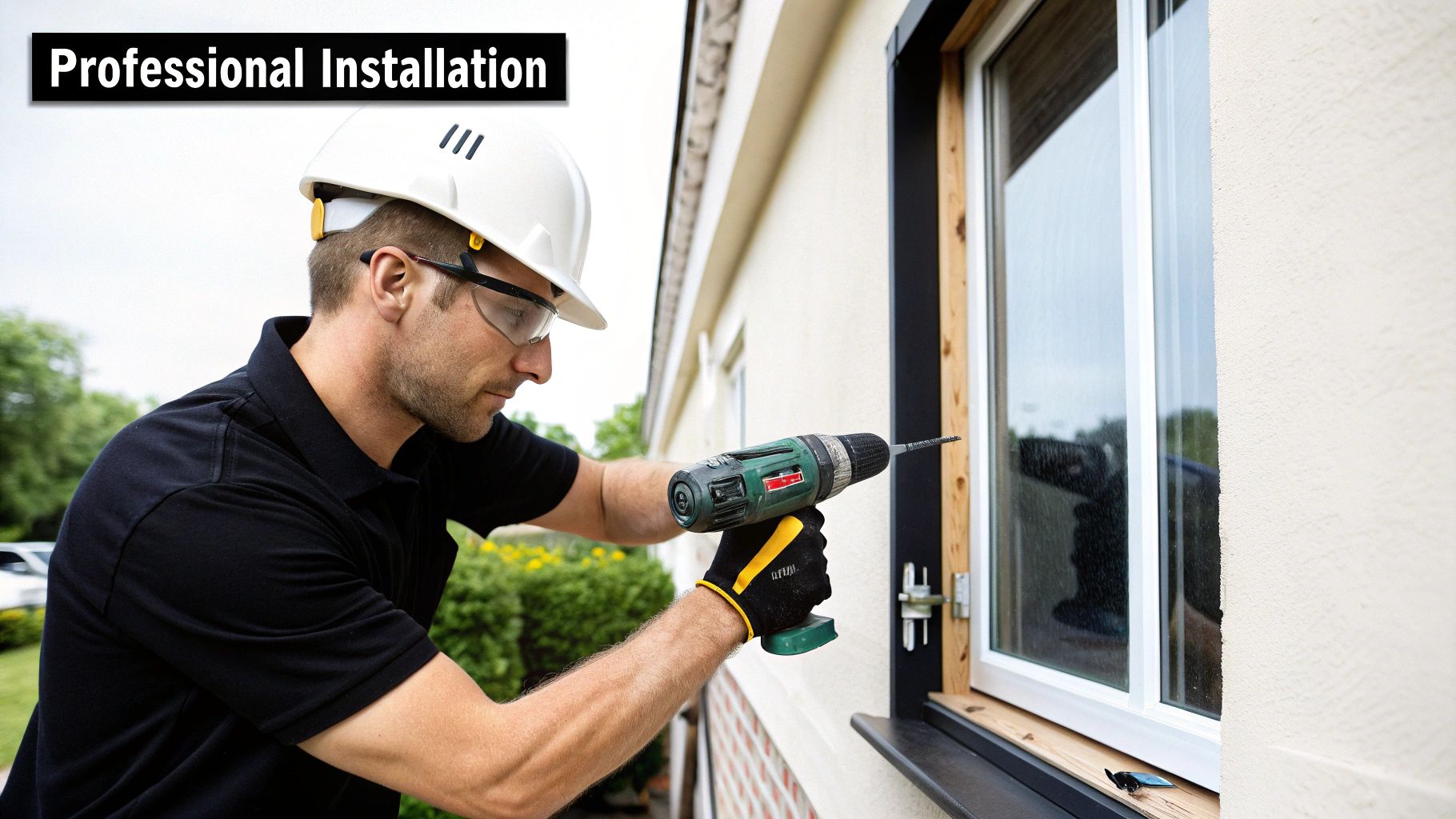
Why Professional Installation Is Not Negotiable
Trying to DIY a security window installation is a gamble you don't want to take. The job demands a level of precision and structural understanding that goes way beyond your typical weekend home improvement project. Two of the most critical parts of the job are secure anchoring and proper sealing—get either one wrong, and you've wasted your money.
Secure anchoring is all about using long, heavy-duty screws to fasten the window frame directly into the structural studs of your wall. This is what allows the entire unit to stand up to the brute force of a crowbar or even a sledgehammer. A DIY job might use screws that are too short, only grabbing onto the siding, which offers almost no real resistance.
Proper sealing creates a weatherproof and tamper-resistant barrier around the entire frame. Professionals have specific techniques and use high-grade sealants to eliminate any gaps where a pry bar could get a foothold. An amateur seal job not only tanks your security but also invites water leaks and drafts.
Vetting Your Window Installer
Choosing the right installer is just as important as choosing the right window. You need a team that has specific, hands-on experience with security installations. A general contractor or a standard window company might not have the specialized skills needed for these products.
Here's a practical checklist to run through with any potential installer:
- Do you have experience with security-rated windows? Ask them to talk about past projects where they installed products with certifications like PAS 24.
- What type of fasteners do you use? They should be able to tell you the exact length and type of screws they use to anchor the frame to the building’s structure.
- Can you walk me through your sealing process? A pro will easily detail the multi-step process they follow to guarantee a secure, weatherproof fit.
- Are your technicians certified or factory-trained? Many top window manufacturers offer specific training programs for their security lines.
A professional installation is the final, critical step that activates the full potential of your security window. Without it, you’re left with a product that looks secure but has hidden, fatal flaws.
Long-Term Care for Peak Performance
Once your new windows are professionally installed, a little routine maintenance goes a long way in ensuring they provide top-tier protection for years. This isn't complicated stuff; it's just about doing periodic checks to keep the whole system in prime condition.
- Inspect Locking Mechanisms: A few times a year, open and close each window and engage all the locks. The movement should feel smooth and solid. If you feel any grinding or resistance, it might be time for an adjustment.
- Check the Seals: Take a walk around and visually inspect the seals around the window frames, both inside and out. Look for any signs of cracking, shrinking, or peeling. A compromised seal is a potential weak spot.
- Clean the Tracks: Keep the window tracks free of dirt and debris. This simple step ensures the window can close completely, allowing the locks to engage properly without anything getting in the way.
This easy upkeep preserves the integrity of your burglar proof window system, protecting your investment and giving you lasting peace of mind.
Understanding the Cost and Real ROI
Let's talk numbers. Deciding to install burglar-proof windows is a serious step, and the cost is obviously a big part of that decision. There's no single price tag; the final bill is a mix of a few key things that shape both what you pay upfront and the value you get back over time.
Think of it less as just another household expense and more like a long-term investment in your home's safety and market value. It's a lot like a kitchen renovation—the materials you choose and how complex the job is will set the price. The biggest cost drivers are the type of glass, the strength of the frame, and the details of the installation.
Breaking Down the Investment
The good news is that there are options for almost any budget and security goal. Here’s a general idea of what to expect for different levels of protection:
- Security Film Application: This is the most affordable way to start. Having a pro apply a high-quality security film usually runs between $9 to $20 per square foot. It's a fantastic upgrade for your existing windows.
- Laminated or Tempered Glass Replacement: If you're swapping out the glass but keeping your frames, you're looking at about $30 to $60 per square foot. This is a significant jump in security compared to standard window panes.
- Full Window Replacement: For a complete, certified burglar-resistant window—including a reinforced frame and multi-point locks—the price can be anywhere from $800 to over $2,500 per window. The final cost depends on the size, style, and security rating.
Homeowners are clearly taking security more seriously. The global market for anti-theft windows is sitting at around $5 billion right now and is expected to climb to almost $9 billion in the next eight years. This trend shows just how much people are willing to invest in solid protection for their homes. You can dig deeper into this market growth on archivemarketresearch.com.
The Tangible Returns Beyond Security
While the peace of mind you get is immediate, the real return on investment (ROI) from burglar-proof windows shows up in some very practical ways.
First off, you might see a break on your insurance bill. Many insurance companies offer lower premiums for homes with certified security features because they know it drastically reduces the chances of a break-in and a subsequent claim.
A secure window system is an asset that pays dividends in safety, savings, and property value. It transforms a potential liability into a feature that actively protects and enhances your home.
Second, you're heading off a potentially huge loss. The cost of a single burglary—when you factor in stolen items, property damage, and the emotional stress—can easily dwarf the price of a full window upgrade.
And finally, high-quality security windows are a major selling point that can boost your home's resale value. In today's market, buyers are looking for homes that feel safe and secure, and these kinds of features can make your property the obvious choice.
Got Questions? We’ve Got Answers.
Even with all this information, you probably still have a few lingering questions. That’s perfectly normal. Let's tackle some of the most common things homeowners ask when they start thinking seriously about securing their windows.
Can I Actually Burglar-Proof the Windows I Already Have?
Absolutely. In most situations, you can make your existing windows significantly tougher without ripping them out and starting from scratch. Applying a high-quality security film is one of the most effective upgrades. It won't stop the glass from cracking, but it will keep it held together in the frame, creating a stubborn barrier that’s incredibly difficult to get through.
Beyond the glass itself, think about the hardware. Swapping out standard, flimsy locks for robust multi-point locking systems can make a world of difference. Adding secondary locks or hinge bolts also makes it much harder for someone to simply pry the window open. These upgrades give you a huge security boost for a relatively modest investment.
Are Secure Windows Also Energy-Efficient?
You'd be surprised how often the answer is yes. Many of the same features that make a window tough also happen to make it a great insulator.
Think about it: laminated glass and multi-pane units are fantastic for security, but that layered construction is also brilliant at dampening sound and preventing heat transfer. This means a quieter home and lower energy bills. When you're shopping, keep an eye out for products that boast both security certifications (like PAS 24) and energy ratings (like an NFRC label).
Choosing a window with dual certifications means you don't have to compromise. You get top-tier protection and long-term energy savings in one package, making it a smart financial decision for your home.
How Much Security Is "Enough"?
This really comes down to your personal situation and what helps you sleep at night. You have to weigh a few factors: What’s your neighborhood like? Is your house set back from the road and isolated? Do you have valuables that might make you a target?
A layered defense is always the best strategy. For the average home, a combination of security film or laminated glass paired with strong, multi-point locks provides more than enough protection to deter the vast majority of would-be intruders. However, if you live in a higher-risk area or just want the ultimate peace of mind, investing in a fully certified burglar-resistant window system is a decision you’ll never regret.
Ready to turn your home's weakest points into its strongest? Fortress Security Films provides advanced, nearly invisible security film that reinforces your glass against break-ins without changing the look of your home. It's a powerful, discreet barrier to protect what matters most.
Get Your Free Security Consultation Today at https://fortresssecurityfilms.com
