


When you think about securing your home, what comes to mind first? For most people, it's alarms and security cameras. While those are great tools, they have one major drawback: they’re reactive. They tell you after someone has already broken in.
Real security means adding a proactive layer to your defense, and that often starts with shoring up your home’s weakest points: the windows. This is where bulletproof house windows come into play.
Why Home Security Is More Than Just Alarms
Let's clear one thing up right away. The term "bulletproof" is a bit of a misnomer. In the security industry, we prefer the term bullet-resistant, because no material is truly invincible against every possible threat. These advanced window systems are engineered to stop specific types of projectiles, creating a powerful physical barrier that alarms and cameras just can't offer.
Here’s a simple way to look at it: an alarm system is like a smoke detector. It’s absolutely essential for warning you of danger, but it doesn't do a thing to actually stop the fire. Bullet-resistant windows are more like a fire-rated door. They physically contain the threat, buying you and your family critical time to react and find safety.
The Shift to Proactive Protection
The whole philosophy around home security has evolved. It’s no longer just about detection. Homeowners are realizing the immense value of physical barriers that can stop an intruder before they ever set foot inside. Since windows and glass doors are the go-to entry points for burglars, they should be the first place you look to fortify.
Upgrading to bulletproof house windows gives you a few powerful advantages that standard security gadgets miss:
- Constant, Passive Defense: A bullet-resistant window is on the job 24/7. You don't have to arm it or turn it on. It’s always working.
- Deterrence and Delay: A criminal who sees a reinforced window is often deterred from even trying. If they do attempt a break-in, the fortified glass creates a major delay, giving law enforcement more time to arrive.
- True Peace of Mind: There's a unique sense of security that comes from knowing your home’s most vulnerable spots are physically hardened, something a blinking alarm light just can't replicate.
True home security is layered. It combines electronic monitoring with physical hardening to create a comprehensive defense. A fortified window doesn't just stop a threat; it can prevent the attempt from ever happening.
At the end of the day, incorporating this technology turns a potential weakness into a formidable strength. Of course, a complete security plan involves more than just windows. For a broader perspective, you can explore some of the best ways to improve building security and create a truly multi-faceted defense for your home.
How Bullet Resistant Windows Actually Work
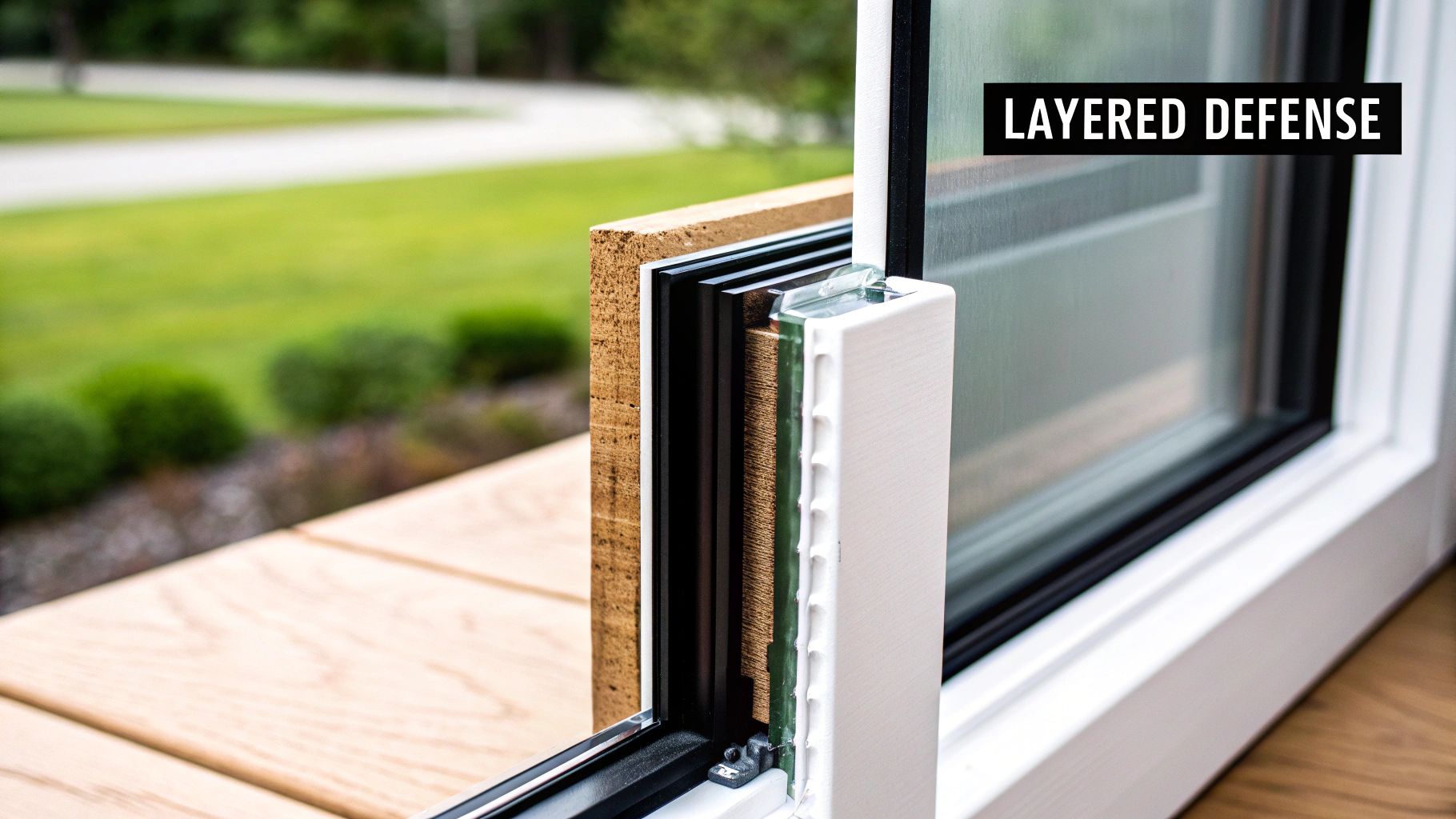
Let's think about how these windows stop a bullet. Imagine someone throws a baseball at you, hard. If you try to catch it with a thin sheet of plastic, it's just going to shatter. That's your standard, single-pane window—brittle, and it offers almost no real defense against a high-speed impact.
Now, picture catching that same baseball with a stack of thick blankets. The ball hits the first blanket, slows down a bit, then the next, and the next, until it safely loses all its momentum. That’s the core idea behind bullet-resistant windows.
It’s not about a single, magical material that’s impossible to break. It’s all about a smart, layered system that works together to absorb and spread out the incredible energy of a projectile. Every layer has a job to do, slowing the bullet and dispersing its force until the threat is neutralized. This multi-layer approach is what turns a simple pane of glass into a real security barrier.
The Science of Stopping Power
The real genius is in the construction of those layers. Most bulletproof systems for homes use a strategic mix of materials—some hard, some soft. You'll typically find hard glass on the outer layers to shatter the bullet, while the inner layers are made of flexible materials like polycarbonate, which essentially act as a "catcher's mitt."
Here's what happens in that split second when a bullet hits the window:
- The Outer Glass Shatters: The first impact does a lot of work. It flattens the bullet's tip and absorbs a huge chunk of its initial energy right away.
- The Inner Layers Stretch: Next, the flexible, durable layers of polycarbonate or polyvinyl butyral (PVB) absorb the rest of that momentum. Think of it like a trampoline catching a falling weight—it gives and deforms without breaking.
- The Energy Is Dispersed: The force is spread out across the entire pane, which keeps the bullet from pushing through the last layer and into your home.
This "give" is absolutely critical. If the material were completely rigid, the focused pressure would just punch a hole right through it. It's the combination of brittle and flexible layers that gives these windows their amazing stopping power.
A key thing to remember is that the window is designed to sacrifice itself to protect you. It will crack and spiderweb on impact. Its job isn't to look pretty after an attack; its job is to stop the bullet from getting through.
The growing demand for this kind of protection isn't just a hunch. The market for bulletproof safety windows was recently valued at around $2.11 billion and is expected to climb to $2.26 billion as security becomes a bigger priority for families and businesses. You can read the full research about the bullet proof window market to see the data for yourself.
Core Materials in Residential Systems
For homeowners, there are generally three main ways to get this level of protection. Each offers something a little different, and understanding them is the first step toward figuring out what your home needs.
- Ballistic Security Film: This is a tough, multi-layered polyester film that gets applied directly to your existing glass. While it's not truly "bulletproof" on its own, a thick film (8 mil or more) is fantastic for holding shattered glass together. It can seriously slow down an intruder and reduce the danger from blasts or flying debris. It's a great foundational security layer.
- Laminated Glass: Think of your car's windshield. This is made by sandwiching a tough plastic interlayer (PVB) between two or more sheets of glass. It’s excellent for stopping smash-and-grab attempts and, depending on its thickness, can even stop rounds from certain handguns.
- Polycarbonate and Glazed Systems: This is the top tier of protection. These are complex systems built with multiple layers of both glass and polycarbonate—a super-durable, clear thermoplastic. By alternating the hard glass with the soft polycarbonate, these windows can achieve high NIJ ratings capable of stopping multiple shots from very powerful firearms.
At the end of the day, all three options use the same principle of layered energy absorption. The real difference is in the thickness, the specific materials used, and the number of layers, which all add up to determine the level of protection you get for your home and family.
Understanding NIJ Ratings for Your Home
When you start looking into bulletproof windows, you’ll see terms like “NIJ Level 3” or “NIJ Level 8.” This isn't just industry-speak—it's the language of safety. These ratings are a standardized system that tells you exactly how much protection a window or security film can provide.
Think of it like the SPF rating on sunscreen. A higher SPF gives you more protection from the sun. In the same way, a higher rating from the National Institute of Justice (NIJ) means the window has been tested and certified to stop more powerful, and often multiple, projectiles. It’s an independent, government-backed standard, which takes all the guesswork out of the equation.
To earn an NIJ rating, a product has to go through some serious testing. Under controlled lab conditions, it's shot at with specific types of ammunition from a set distance. This process ensures that when a product claims it can offer a certain level of protection, it's been proven to do so reliably.
Decoding the Most Common NIJ Levels
For a typical home, you don’t need the same level of protection as a bank vault or a military base. The goal is to match the security level to the most realistic threats you might face. Statistically, handguns are far more common in home-related incidents than high-powered rifles, so that's where residential protection usually focuses.
Here are the ratings you'll most likely encounter for your home:
-
NIJ Level 1: This is the baseline for ballistic protection. It's designed to stop lower-velocity handgun rounds, like a .22LR or a .380 ACP. While it’s better than nothing, most security experts suggest starting a bit higher for more dependable security.
-
NIJ Level 2: This is a serious step up. A Level 2 rating means the window can stop more powerful and common handgun ammunition, including 9mm and .357 Magnum rounds. It offers a great balance of protection and cost for most homes.
-
NIJ Level 3: This is often seen as the gold standard for high-level residential and commercial security. It's certified to stop multiple rounds from a .44 Magnum, one of the most powerful handguns out there. This level brings exceptional peace of mind against a wide array of potential threats.
You might see higher levels, like Level 4 through Level 8, which are built to stop armor-piercing rifle rounds. While you can get them, they're generally reserved for government buildings or military sites because of their massive cost, weight, and thickness.
For the vast majority of homeowners, focusing on NIJ Levels 2 and 3 provides a highly effective and practical defense against the most probable threats, without turning your home into an over-engineered fortress.
Choosing the Right Level for Your Needs
So, how do you decide what’s right for you? It really comes down to a personal risk assessment. Think about your location, any specific weak points on your property, and what your ultimate security goals are.
Someone in a quiet, remote area might feel that Level 2 is more than enough for their ground-floor windows. On the other hand, a high-profile home in a busy urban center might find the robust protection of NIJ Level 3 is a much more fitting investment.
To help you visualize the differences, here’s a quick breakdown of how these ratings apply to a residential setting.
Common NIJ Ballistic Ratings Explained for Homeowners
This table simplifies the most common NIJ ratings you'll come across, showing what they stop and where they make the most sense for a home.
| NIJ Level | Protection Against | Common Residential Use Case |
|---|---|---|
| Level 1 | Lower-velocity handgun rounds (e.g., .22LR, .380 ACP) | A foundational layer of ballistic defense, but often bypassed for stronger options. |
| Level 2 | Higher-velocity handgun rounds (e.g., 9mm, .357 Magnum) | A strong, balanced choice for securing main entry points and ground-floor windows. |
| Level 3 | Powerful handgun rounds (e.g., .44 Magnum) | The premium choice for homeowners seeking maximum protection against common firearm threats. |
| Level 8 | High-power rifle rounds (e.g., 7.62mm) | Generally considered excessive for residential use; typically found in military or government facilities. |
At the end of the day, these ratings give you the knowledge you need to have a productive conversation with a security professional. By understanding what the levels mean, you can clearly define your needs and make sure you’re investing in a solution that gives your family the right amount of protection—balancing safety, aesthetics, and your budget.
Choosing Between Retrofit Films and Full Replacements
When you start looking at upgrading your home’s security, one of the first big decisions you'll face is whether to reinforce your existing windows or rip them out and start fresh. It’s a classic dilemma: do you apply a high-performance security film, or do you install a brand-new, fully rated bullet-resistant window system? The right answer comes down to your budget, how much protection you really need, and how much disruption you're willing to handle.
Think of it like upgrading your front door. Applying a thick security film is a lot like adding a heavy-duty deadbolt and a reinforced strike plate—it makes what you already have significantly stronger and much harder to kick in. A full replacement, on the other hand, is like installing a brand-new steel door with a multi-point locking system and a reinforced frame. One is a powerful enhancement; the other is a complete, certified security solution built from the ground up.
The Case for Security Window Film
Security film is what we call a retrofit solution, meaning we apply it directly onto your existing glass. This makes it a really popular first step for homeowners who want a serious security boost without the cost and mess of a full window replacement. A professional-grade film, especially one that's 8 mil or thicker, is designed to do one thing incredibly well: hold shattered glass together.
Instead of exploding into a million dangerous pieces, the glass cracks but stays in the frame, creating a tough, flexible barrier. This is a game-changer for:
- Forced Entry Deterrence: It can take a burglar several minutes of loud, repeated smashing to get through a window treated with quality security film. That delay and noise are often more than enough to make them give up and find an easier target.
- Blast and Storm Mitigation: The film is brilliant at containing glass fragments during an explosion or a hurricane, protecting everyone inside from flying debris.
- Cost-Effectiveness: Let's be frank—retrofitting with film is significantly cheaper than replacing entire window units. It puts a high level of protection within reach for many more homeowners.
While security films are fantastic for stopping break-ins and controlling damage, it's critical to know that they are not rated to stop bullets on their own. They make the glass much, much stronger and safer, but they do not provide certified ballistic protection by themselves.
The Power of Full Replacement Systems
For anyone who needs certified, lab-tested stopping power, a full replacement with a rated bulletproof house window is the only way to go. These aren't just windows; they're complete systems engineered from scratch—the glass, the inner layers, and the frame—all designed to work in concert to defeat specific threats. They are tested and certified under the demanding standards set by the National Institute of Justice (NIJ).
When you invest in a full replacement, you're getting:
- Certified Ballistic Protection: You get a guaranteed level of protection (like NIJ Level 3) that has been scientifically proven to stop specific types of ammunition. There's no guesswork.
- Complete System Integrity: The frame is just as important as the glass. These replacement systems come with ballistic-rated frames designed to handle the immense weight of the glazing and absorb the force of an impact without failing.
- Maximum Peace of Mind: For high-risk properties or for homeowners who simply want the highest level of security available, there is no substitute for a fully integrated, rated system.
This visual decision tree can help you map out which threat level—and therefore which type of window system—makes the most sense for your home's security plan.
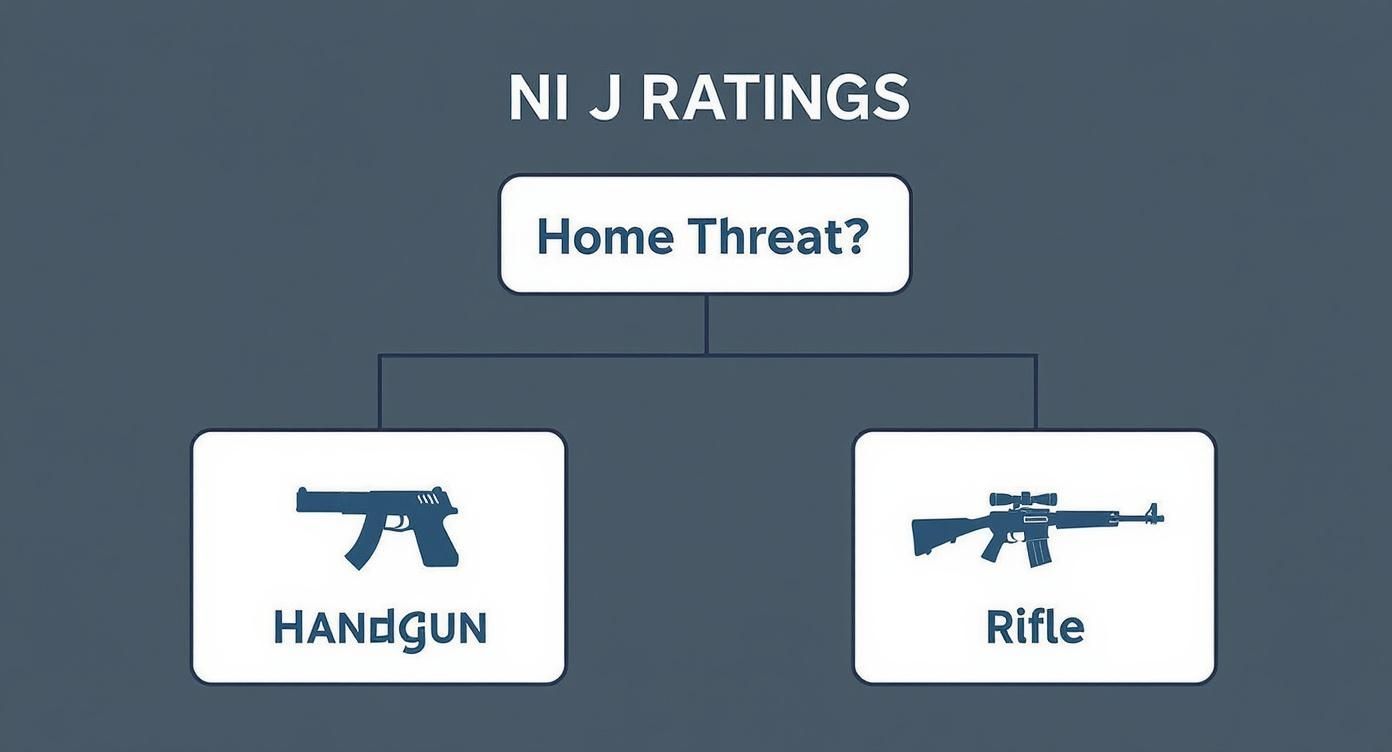
As the infographic shows, handgun threats are often handled by lower NIJ levels, which might be achievable with laminated glass systems. But once you get into rifle threats, you really need the robust construction of higher-rated glazed polycarbonate replacements.
Making an Informed Decision
Ultimately, the choice hinges on your personal threat assessment and what your budget allows. The demand for these solutions is growing fast; North America is a major player in the global bulletproof glass market. The U.S. market alone was valued at $2.61 billion and is expected to more than double, hitting $5.86 billion by 2032. You can find more insights on the bulletproof glass market growth on snsinsider.com.
For many homeowners, a hybrid approach actually works best. You could install full NIJ-rated replacement windows on the most vulnerable ground-floor entry points while applying a heavy-duty security film to the upper-story windows. This kind of layered strategy puts maximum protection right where you need it most, helping you get the most out of your security investment.
The Real Cost and Long-Term Value of Bulletproof Windows
When you're serious about protecting your home, the conversation eventually turns to cost. Let's be upfront: investing in bulletproof house windows is a significant decision, and the price tag isn't a simple, one-size-fits-all number. It's a direct reflection of the level of protection you need, the size of your project, and the specific materials you choose.
Think about it like buying a vehicle. You could get a reliable family sedan, or you could get a military-grade armored truck. Both are "vehicles," but they offer vastly different capabilities at vastly different price points. Window security is the same—it ranges from surprisingly affordable retrofits to complete, high-end systems, and the cost scales with the solution's strength.
Breaking Down the Numbers: What to Expect
For many homeowners, the first step into enhanced window security is with a retrofit solution like security film. This is often the most budget-friendly approach, priced by the square foot, and it delivers a huge upgrade in security against forced entry without having to rip out your existing windows.
If you need certified ballistic protection, however, you’re looking at a full window replacement. These are complete, engineered systems priced on a per-window basis and represent a more substantial investment. A smaller project might run anywhere from $7,000 to $10,000, while more comprehensive installations can easily exceed $25,000. To give you a sense of the material costs, high-end, rifle-rated glass can be around $500 per square foot for just the glazing itself.
What Drives the Final Quote?
When you get a quote, several key factors will determine the bottom line. Understanding them will help you see exactly where your money is going.
- Protection Level: This is the big one. The NIJ rating you choose directly impacts the cost. A window designed to stop a handgun (like an NIJ Level 3) will naturally be less expensive than one engineered to stop high-powered rifle rounds (like an NIJ Level 8).
- Window Size and Style: A large picture window or a custom-arched design simply requires more material and engineering than a small, standard-sized pane. Operable windows, like casements or double-hungs, are also more complex and costly than fixed ones.
- Frame Material: The glass is only half the battle. The frame has to be robust enough to hold the heavy ballistic glazing and withstand an attack. Upgrading from a standard frame to reinforced steel or ballistic aluminum is crucial for performance and adds to the overall cost.
- Labor and Installation: This is not a DIY job. The expertise required for a proper, secure installation is critical. Your quote will include the cost of labor, which can vary based on your region and the complexity of the job.
More Than an Expense: The Return on Your Investment
The initial price is just one side of the coin. Installing bulletproof house windows is an investment that pays you back over the long term, in ways you can both see on paper and feel every day.
Investing in certified security upgrades isn't just an expense; it's a strategic addition to your property's value and your family's safety. The return comes in the form of lower risks, potential savings, and priceless peace of mind.
One of the first places you might see a tangible return is on your homeowner's insurance bill. Many insurance providers offer significant premium discounts for homes with professionally installed, certified security features because you've dramatically lowered their risk of a major claim.
Down the road, these windows become a powerful selling point that can measurably increase your property's resale value. For safety-conscious buyers, a home with this level of proven protection stands head and shoulders above the competition. But honestly, the most important return isn't something you can put a price on—it's the quiet confidence you feel knowing your home is a true sanctuary, secure against the unexpected.
What to Expect During the Installation Process
The idea of a major home project can seem daunting, but getting ballistic windows installed by a professional crew is actually a very straightforward and organized affair. Let's walk through what you can expect, from the first measurement to the final inspection. Knowing the steps helps take the mystery out of it, whether you're going with a security film retrofit or a full window replacement.
Everything kicks off with an in-depth consultation. A certified technician will come to your home to take precise measurements of every window. They'll also inspect your existing frames and the surrounding wall structure to see what they're working with, while talking through your specific security concerns. This is your chance to lock in the NIJ protection level you need and any design choices to make sure the new windows look right at home.
The Installation Timeline
Once your custom-made windows or security films are ready, the on-site work is surprisingly fast. The total time really just depends on the size and complexity of your project.
-
Security Film Application: This is the faster path. For a typical single-family home, a skilled team can usually have the entire job done in just one to two days. The process is meticulous: they thoroughly clean the glass, carefully apply the film, and squeegee it out to create a perfect, invisible bond.
-
Full Window Replacement: Pulling out old windows and installing new ballistic units is a bit more hands-on. You can generally expect this to take three to five days. Crews work systematically, tackling one window at a time to minimize how long your home is open to the outside.
When it comes to ballistic security, your entire system is only as strong as its weakest link. This is why professional installation is not just recommended—it's absolutely critical. A frame that isn't seated properly or glass that's poorly anchored can create a major vulnerability, undermining the very protection you paid for.
Why Certified Installers Are Essential
Putting in a ballistic window is about more than just carpentry; it’s about engineering an integrated security shield. Certified installers are trained in the physics of how these materials absorb and deflect impact. They ensure that every single component—from the heavy-duty frame to the specialized sealants—works together to deliver the certified protection level.
This kind of expertise is in demand all over the world. The Asia-Pacific market for bulletproof glass, for example, is booming and projected to hit $2.73 billion as security becomes a bigger priority for homeowners and businesses alike. You can dig into more of this data by checking out the fastest-growing markets for bulletproof glass on cognitivemarketresearch.com.
Before the crew shows up, they'll give you a quick prep list, which usually just means moving furniture and decor away from the windows. Once they’re finished, they’ll do a final walkthrough with you. You'll get to inspect their work, they'll show you how everything operates, and they'll answer any questions you have about care and maintenance, leaving your home secure and spotless.
Common Questions About Bulletproof Windows
Even after getting familiar with the tech, most homeowners still have a few lingering questions. It's completely normal. Let's tackle some of the most common ones head-on so you can feel confident about your decision.
Will Bulletproof Windows Make My House Look Like a Bunker?
Not at all. This is probably the biggest myth out there, and I'm happy to bust it. Modern bullet-resistant windows and security films look virtually identical to standard, high-end windows.
The advanced materials are optically clear, so you won't lose a bit of natural light or sacrifice your beautiful views. Plus, you can get them in all the same frame styles and materials you're used to—from classic wood to modern aluminum—so they'll blend right in with your home's design. Your security upgrade will be our little secret.
Should I Upgrade Every Single Window in My Home?
You certainly can, but it’s often not necessary. A much smarter, more budget-friendly approach is to think like an intruder and pinpoint the most vulnerable spots in your home.
We usually focus on:
- Ground-floor windows: These are the easiest and most obvious targets.
- Windows near doors: Sidelights and windows right next to your front or back door are weak points.
- Hidden windows: Any window tucked away from street view by trees, fences, or the shape of your house is an open invitation.
Working with a security pro can help you identify these key areas. This way, you put your money where it will have the biggest impact, fortifying the entry points that truly matter.
Can I Get a Discount on My Home Insurance?
There's a very good chance you can. Many insurance companies see professionally installed ballistic windows as a major risk reduction, and they'll often reward you with lower premiums. When you make it incredibly difficult for someone to break in, you're also lowering the likelihood of a major theft or damage claim.
Pro Tip: Give your insurance agent a call before you sign on the dotted line. Ask them what kind of discounts they offer for certified ballistic or forced-entry resistant windows. Be sure to find out exactly what paperwork they'll need, like an NIJ rating certificate, to apply the discount.
How Do I Clean and Maintain These Windows?
You'll be happy to hear that maintenance is a breeze—it's pretty much the same as taking care of regular windows. For most types of bullet-resistant glass, a soft cloth and a simple, mild cleaning solution are all you need. These things are built to last.
The only small difference comes if you choose a security film. You'll just need to avoid ammonia-based cleaners (like some blue window sprays) because they can eventually weaken the film's adhesive. Your installer will give you simple, specific care instructions to keep your windows looking and performing their best for years to come. A quick check-up every few years just to look at the seals and frames is also a good idea.
Ready to secure your home without sacrificing its style? The experts at Fortress Security Films can walk you through a custom plan that fits your home, your family, and your budget. Contact us today for a free security consultation.
