


Let's be clear from the start: there's no single product that can make your car truly "bulletproof." However, bullet-resistant film for car windows adds a serious layer of defense against a whole range of threats. This isn't just a thick window tint; it’s a sophisticated security upgrade designed to absorb and disperse the energy from an impact, making your vehicle's glass much, much stronger. It’s the key to turning your car's most vulnerable entry points into a real barrier.
Demystifying Bullet Resistant Window Film
First things first, let's clear the air on the term "bulletproof." It’s a bit of a misnomer that gets thrown around a lot. In the security world, almost everything is technically bullet-resistant.
Think of it like this: a life vest and a submarine both offer protection in the water, but they operate on entirely different levels. A life vest is designed to keep you afloat from the surface, while a submarine is built to withstand the crushing pressure of the deep sea.
Bullet-resistant film works the same way. It's engineered to stop specific types of bullets for a limited number of hits. It won't make your sedan invincible like a tank, but it absolutely can buy you precious, life-saving seconds to escape a dangerous situation. Its job is to delay, deter, and defend.
The Science of Strength
So, how does a thin film stop a bullet? The magic is in its multi-layered construction.
Picture stacking several sheets of incredibly tough, flexible plastic wrap together. When something hits the top layer, the force isn't concentrated in one spot—it spreads out across all the layers beneath it.
That’s precisely how this film works, just on a high-tech scale. It's built from micro-thin layers of advanced polymers bonded together.
- Energy Absorption: The moment a projectile or blunt object makes contact, the film’s flexible layers absorb the initial shock.
- Force Dispersion: That impact energy is instantly distributed across the entire surface of the window, dramatically weakening the force at the point of impact.
- Containment: Even if the glass behind the film does crack or shatter, a powerful adhesive holds all the dangerous shards in place, preventing them from flying into the cabin.
This technology fundamentally changes how your car's windows behave. Instead of instantly shattering, the glass holds its form, frustrating smash-and-grab attempts and acting as a crucial shield during a violent attack.
The growing interest in this kind of protection isn't just a niche trend. The global bulletproof glass market, which includes these advanced films, was valued at around $5.02 billion and is expected to more than double, reaching $11.25 billion by 2032. This boom is fueled by a rising demand for armored vehicles for VIPs, officials, and everyday security-conscious drivers. You can read more about the factors driving the global bulletproof glass market to see why. This isn't just about high-level security anymore; it reflects a broader shift toward taking proactive safety measures.
To break it down, here’s a quick look at what this technology really means for your vehicle.
Bullet-Resistant Film at a Glance
| Feature | What It Means for You |
|---|---|
| Multi-Layer Polymer Construction | Spreads impact force across the glass, preventing it from shattering inward. |
| Ballistic Resistance | Can stop certain handgun rounds, giving you critical time to escape an attack. |
| Forced Entry Delay | Makes it incredibly difficult for thieves to break a window with a bat or hammer. |
| Shatter Containment | Holds broken glass together, protecting you from dangerous shards in a crash or attack. |
Ultimately, this film turns a weak point into a shield, giving you a defensive advantage when you need it most.
How Film Protection Levels Actually Work
Not all security films are created equal. Far from it. When you're looking into bulletproof film for car windows, you need to understand what the different protection levels actually mean in the real world. This isn't just about technical specs; it's about matching the right defense to the threats you're most likely to face.
Think of it like this: a simple bicycle helmet is great for a casual ride around the neighborhood, but you wouldn't trust it on a racetrack. For that, you need a full-face motorcycle helmet engineered for high-speed impacts. Security films work on the very same principle—each level is designed for a specific kind of threat.
From Deterrence to Defense
At the most basic level, you have films designed for smash-and-grab deterrence. These are generally thinner, often between 8 to 14 mil (thousandths of an inch). While they won't stop a bullet, they make breaking a window with a hammer or a brick an absolute nightmare for a would-be thief.
Instead of shattering instantly, the glass fractures but stays held together by the film. This creates a tough, frustrating barrier that buys you precious time and often convinces the attacker to just give up and flee. As you move up the protection scale, the films get thicker and more advanced, shifting from a simple deterrent into a true defensive shield.
Understanding NIJ Ballistic Standards
When we start talking about stopping bullets, the gold standard for testing and certification comes from the National Institute of Justice (NIJ). The NIJ system provides a clear, reliable framework for a film's ballistic resistance, so you know exactly what it can handle.
The whole point of an NIJ rating is to take the guesswork out of security. It’s a certification that proves a product can reliably stop a specific type of projectile, turning a vague promise of safety into a verified, life-saving capability.
Most automotive films are designed to counter handgun threats, and that's where the most common NIJ ratings come into play.
Comparing NIJ Ballistic Film Protection Levels
To make sense of the ratings, it helps to see what common NIJ protection levels can stop in terms of real-world threats. This table breaks down what you can expect from each tier.
| Protection Level | Common Threats It Can Stop | Typical Film Thickness |
|---|---|---|
| NIJ Level I | Low-velocity rounds like .22 LR and .380 ACP | Varies, often layered |
| NIJ Level IIA | Standard 9mm and .40 S&W rounds | Thicker multi-layer systems |
| NIJ Level II | Higher-velocity 9mm rounds and the powerful .357 Magnum | Substantial multi-layer build |
| NIJ Level IIIA | High-powered .357 SIG and .44 Magnum rounds | The thickest, most robust films |
This tiered system lets you choose a film that matches the threats you’re genuinely concerned about, from a random act of violence to a more targeted attack.
This focus on verified protection is why the bullet-resistant auto glass market, currently valued at $1.6 billion, is expected to more than double to $3.3 billion by 2032. This explosive growth is driven by everyone from government agencies and high-profile individuals to everyday citizens who simply want peace of mind. For anyone serious about vehicle security, understanding ballistic window film options is the critical first step.
Everyday Benefits Beyond Ballistic Defense
Let's be honest, the term "bulletproof" gets your attention. But the real story behind bulletproof film for car windows is the collection of practical, everyday perks that make driving safer and more comfortable. These advantages go way beyond stopping bullets, making the film a smart upgrade for just about any driver.
One of the biggest pluses is how it stops thieves in their tracks. A standard car window is a weak spot; a quick smash and a thief is inside. Security film completely changes the game. It makes the glass so tough to break through that even repeated blows with a heavy object won't get them in quickly. That delay is usually enough to send a would-be burglar looking for an easier target.
More Than Just Security
Beyond stopping criminals, this film is your silent bodyguard against road hazards and accidents. If you're ever in a collision, the film’s powerful adhesive keeps the shattered glass from exploding into the car. Instead of a dangerous spray of sharp fragments, the glass is held together, drastically lowering the risk of injury to you and your passengers.
This infographic breaks down how different film thicknesses offer various levels of protection, from basic smash-and-grab prevention to serious ballistic defense.
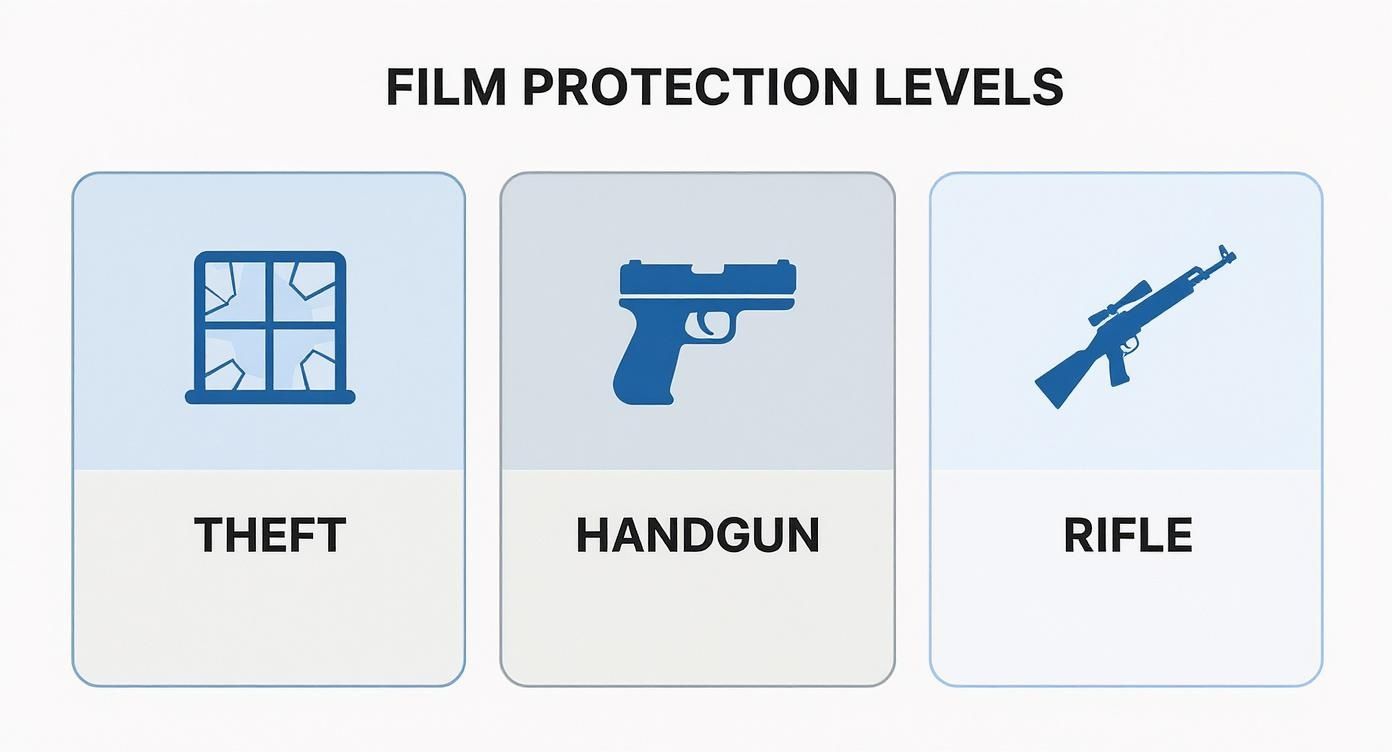
As you can see, even the films that aren't technically rated for ballistic threats create a major roadblock for forced entry—which is, by far, the most common threat drivers face.
Another fantastic benefit is the film's incredible UV protection. It’s designed to block up to 99% of the sun's damaging ultraviolet rays. This gives you a two-for-one deal:
- Protects Your Car's Interior: It stops the relentless sun from fading your dashboard, cracking your leather seats, and aging your trim. Your car’s interior stays looking new for much longer.
- Protects Your Skin: It acts like a shield, protecting you from constant UV exposure on long drives and reducing your long-term risk of sun damage.
Think of it as sunscreen for your car. It’s not just protecting the vehicle; it’s creating a healthier, more pleasant space for everyone inside.
When you add it all up, security film is a truly multi-functional upgrade. To see how these features overlap with other enhancements, you can read more about the wide range of car window tinting benefits. At the end of the day, you're investing in peace of mind, accident safety, and the long-term health of your vehicle.
Why Professional Installation Is Not Negotiable
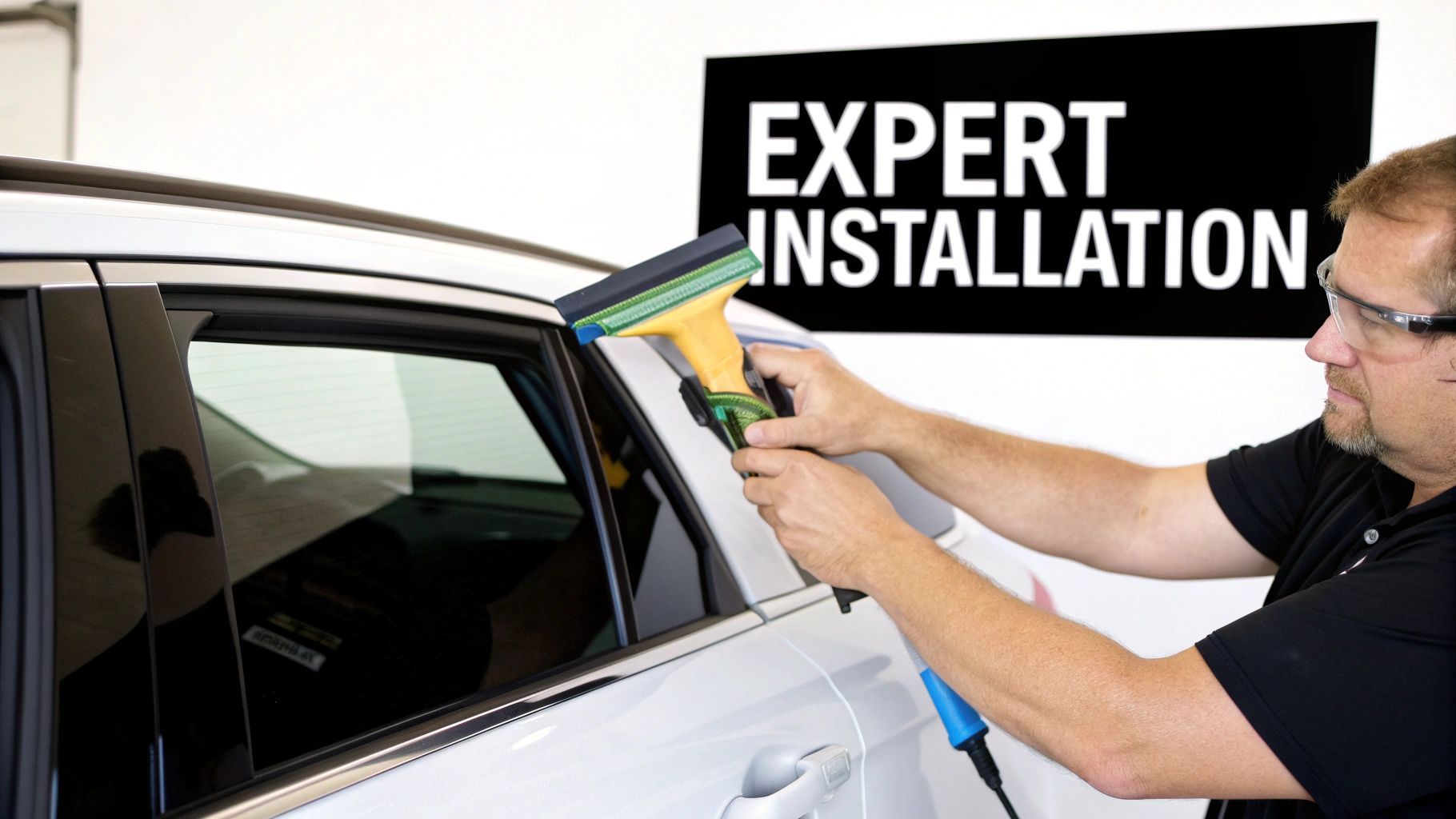
When it comes to installing bulletproof film for car windows, this is one of those upgrades where "do-it-yourself" is a definite "don't." The film's incredible strength is only half the equation; the other half is a perfect, professional application. To put it simply, the film is only as good as its installation.
Think of it like a parachute. You could own the most advanced parachute money can buy, but if it's packed wrong, it's just dead weight when you jump. It’s the same thing here. An installation with bubbles, peeling corners, or trapped debris completely undermines the film’s ability to absorb and deflect an impact.
What the Pros Do Differently
A certified technician's work is a meticulous craft, honed through experience and impossible to replicate without the right tools and a clean, controlled space. You absolutely want to find installers with proven expertise. When you're searching, look for shops that employ ASE and Repairpal certified professionals to be sure you're getting top-tier talent.
Their process is methodical and precise, involving several key steps:
- Deep Glass Preparation: It starts with a deep clean that goes way beyond a simple wipe-down. Every last speck of dust, oil, and grime is removed to ensure the film's adhesive can form a truly powerful bond with the glass.
- Precision Cutting: The film is cut to the exact specifications of your vehicle's windows, often using a digital plotter for flawless accuracy. This guarantees complete, edge-to-edge coverage with no weak spots.
- Heat-Shrinking for a Perfect Fit: Automotive glass isn't flat. Installers use a heat gun to skillfully shrink and contour the film to every curve of your window. This process, called thermoforming, prevents the film from ever bubbling or pulling away.
- Seamless Application: A special slip solution allows the installer to float the film into the perfect position. Then, they use a squeegee with practiced skill to push out every bit of air and water, creating a finish that's crystal clear and completely fused to the glass.
A professional installation isn't just about making the film look good—it's about activating its protective properties. The process creates a molecular-level bond between the film and the glass, turning two separate components into a single, unified security barrier.
If you’re thinking about this level of protection, it’s worth understanding what a proper job entails. For a closer look at the whole process, this guide on security window film installation breaks down why trusting an expert is the only way to get the security you're paying for.
Who Actually Uses Bulletproof Film?
You might think ballistic window film is just for secret agents or the armored trucks you see on the news. The truth is, the people who rely on this technology are a lot more diverse than you'd expect. From high-profile executives to everyday families, many are looking for a practical, invisible layer of security.
Think about a CEO leaving the office late at night. Crossing a quiet, empty parking garage can be nerve-wracking. But with security film, their car's windows are no longer an easy target. That reinforced glass can be the difference-maker, giving them the crucial seconds needed to drive away from a potential carjacking. For this kind of user, the film delivers powerful protection without screaming "armored vehicle."
Everyday People Seeking Peace of Mind
But it’s not just the rich and famous. Imagine a family living in a neighborhood where crime rates are on the rise. For them, installing security film is an investment in their safety. It's about preventing a smash-and-grab at a red light or stopping someone from breaking into the car while they're inside. It provides a real sense of confidence during daily commutes.
The real power of security film lies in its ability to turn a car's most vulnerable points—its windows—into a tough barrier. It buys you the one thing you need most in a crisis: time. Time to think, react, and get away.
This technology has also made big waves in the luxury car world. When you own a high-end vehicle, the last thing you want is a security feature that ruins its sleek, factory look. Owners want protection that’s both incredibly effective and completely invisible.
The Rise in the Luxury Automotive Market
The luxury market, in particular, has embraced this technology. Affluent buyers are demanding better security, and the industry is listening. In fact, a recent analysis revealed that the luxury automotive sector makes up about 29.8% of the entire bulletproof glass market.
This growing demand has pushed premium car brands to offer bullet-resistant glass and films as standard or optional features. You can learn more by reading this in-depth bulletproof glass market report.
What this trend really shows is a major shift in how we view vehicle security. It's no longer a clunky, obvious add-on. Instead, it’s a sophisticated, integrated feature that adds real value. Whether it's a government agent needing discreet protection or a real estate professional showing homes in unfamiliar areas, the applications are surprisingly broad. At the end of the day, anyone who puts a premium on their safety on the road is a perfect candidate for this technology.
Untangling the Myths from Reality
When you start looking into bulletproof film for car windows, you quickly run into a lot of confusing claims and murky regulations. Let's cut through the noise and separate what's real from what's just plain wrong, so you can make a decision that’s smart, safe, and legal.
First things first, let's bust a huge myth: that any dark, thick tint can stop an attack. That couldn't be further from the truth. Standard window tint is great for privacy and blocking UV rays, but it has zero ability to stop a projectile or even a determined smash-and-grab thief. Real security film is an entirely different beast—it's a sophisticated, multi-layered polymer specifically engineered to take a punch and spread the force of the impact.
Another common misunderstanding is that this film makes your windows completely unbreakable. While it massively boosts the glass's strength, nothing you can buy for a regular car will make it truly indestructible. The film's real job is to keep the window from being breached and to hold all the dangerous shards of glass together. This is what buys you precious seconds to drive away from a threat.
The point of security film isn’t to turn your car into an invincible tank. It’s all about delaying an attacker, preventing them from getting inside quickly, and giving you that critical window of opportunity to escape.
Staying on the Right Side of the Law
Once you've got the facts straight, you have to deal with the legal stuff. The rules for modifying car windows can be surprisingly tricky, and they change a lot depending on where you live—not just state to state, but even country to country. Getting it wrong can mean big fines and being forced to strip the film off your car.
Before you even think about installation, you absolutely have to check your local laws. There are two main things you need to pay close attention to:
- Visible Light Transmission (VLT): This is just a fancy term for how much light is allowed to pass through your windows. Nearly every state has strict limits on how dark your front, side, and rear windows can be. That’s why most high-level security films are actually clear—to avoid breaking tint laws.
- Ballistic Material Rules: Some places have specific regulations about using "body armor" or other ballistic materials on a civilian vehicle. You need to make sure the upgrade you’re planning is even allowed where you drive.
Your best bet is to check the website for your local Department of Motor Vehicles (DMV) or even talk to a local law enforcement agency for the most current information. A reputable installer is also a fantastic guide here; they deal with these rules every day and can make sure your vehicle stays 100% compliant.
Answering Your Top Questions
Getting into the specifics of any security upgrade is where the real questions pop up. Let's tackle some of the most common things people ask when they're thinking about adding bulletproof film to their car windows.
How Much Does Professional Installation Cost?
The cost really depends on what you're trying to achieve. A basic shatter-resistant film aimed at deterring smash-and-grab theft might only set you back a few hundred dollars.
On the other hand, if you're looking for high-level, multi-layered ballistic protection across your entire vehicle, the investment can easily run into several thousand. The final price tag is a mix of your car's size, the film's specific NIJ rating, and the installer's skill level. It's always a smart move to get a few detailed quotes from certified pros.
Will It Interfere with Power Windows or Sensors?
When done right, absolutely not. A professional installation of quality film won't mess with your power windows at all. While the thickest ballistic films might need a small adjustment during the install, any experienced technician will know exactly how to handle it.
It's crucial to double-check with your installer that the film you choose is compatible with any sensors or antennas built into your car's glass.
A proper installation ensures the film becomes a seamless, invisible part of your vehicle. It enhances security without sacrificing the factory functionality you rely on every day.
What Is the Proper Way to Care for the Film?
Thankfully, looking after the film is pretty straightforward. The most important part is patience: you need to let it fully cure for about a week after installation. Don't clean it or roll the windows down during this time.
Once it's cured, just stick to a soft microfiber cloth and a gentle, ammonia-free cleaner. Never use abrasive pads or sharp objects, as you can easily scratch the surface and compromise its protective strength.
How Long Does Bulletproof Film Last?
Top-tier ballistic films, when installed by a professional, are built to last for years—often for the entire life of the vehicle. Most reputable brands back their products with solid warranties, covering things like peeling, bubbling, or discoloration for 10 years or even a lifetime.
Ready to fortify your vehicle with the industry's leading protection? At Fortress Security Films, we provide advanced, NIJ-certified ballistic film systems designed for maximum safety and invisible integration. Secure your peace of mind by exploring our automotive solutions today.
