


Right off the bat, let's get one thing straight: the term "bulletproof" is a bit of a misnomer. In the security industry, we prefer the term bullet-resistant. It’s a crucial distinction. These windows aren't designed to be an impenetrable wall, but rather a sophisticated system built to absorb and diffuse a bullet's immense energy.
Their real job is to stop a specific type of threat, buying you precious, life-saving seconds in a worst-case scenario.
How Do Bullet-Resistant Windows Actually Work?
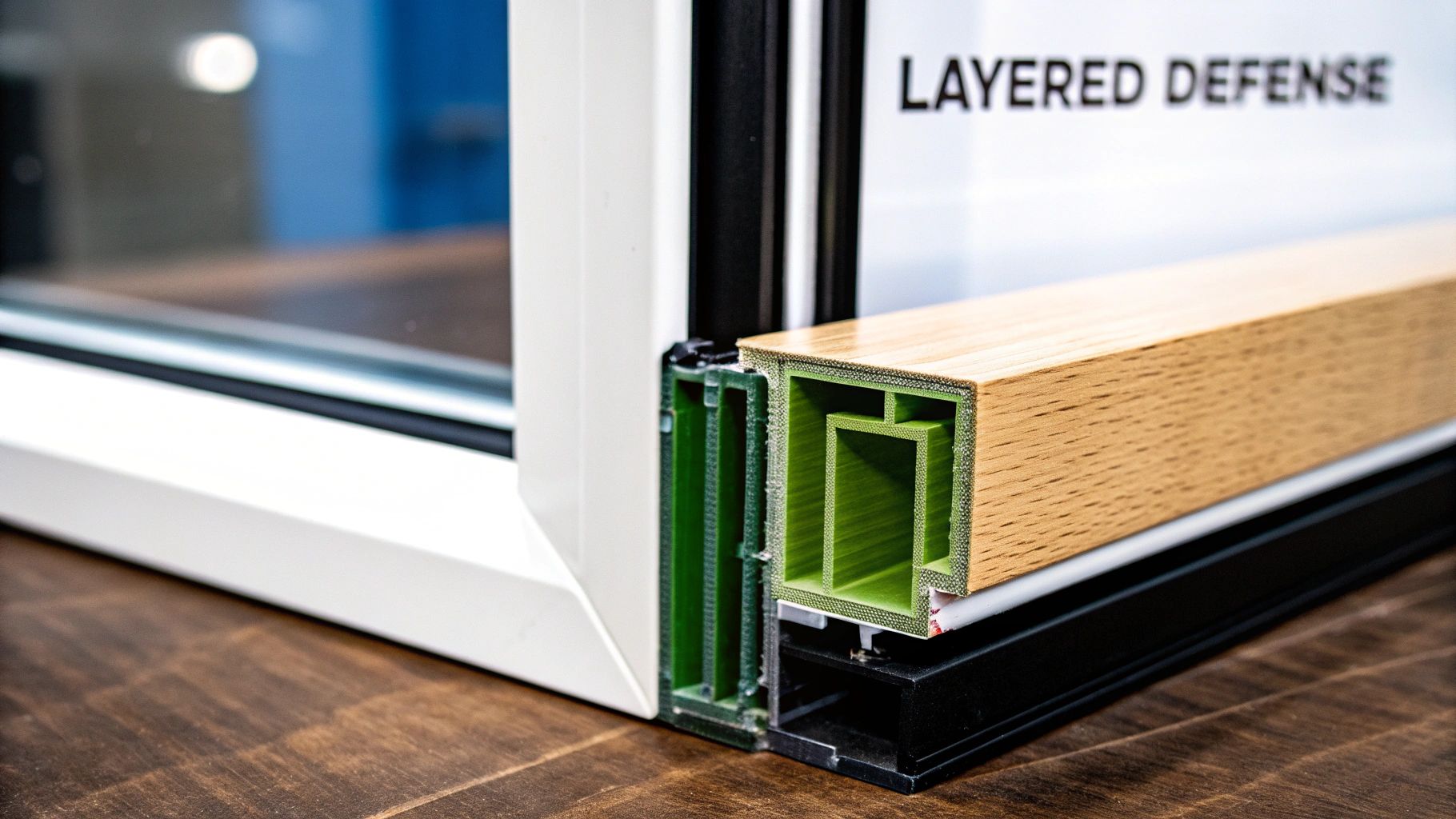
The magic behind a bullet-resistant window is a process called lamination. Instead of one impossibly thick slab of glass, you're looking at a carefully engineered sandwich of different materials. Each layer has a specific job to do when it comes to stopping a ballistic threat.
Think of it like this: if you throw a baseball at a brick wall, the wall might crack or even shatter from the focused impact. But if you throw that same ball into a catcher's mitt, the mitt gives way, absorbing and spreading out the energy to bring the ball to a dead stop. Bullet-resistant glass is the catcher's mitt.
The Layered Defense System
When a bullet hits the window, it triggers a chain reaction that neutralizes its kinetic energy in a fraction of a second. The entire system has to work in perfect concert to keep the projectile from getting through.
This defense relies on two types of layers working together:
- Hard Outer Layers: The layers facing the threat are usually made from hardened glass or a tough acrylic. Their first job is to meet the bullet's force head-on, causing the projectile to instantly deform and flatten out. This single action is huge—it slows the bullet down and spreads its impact over a much larger area.
- Flexible Inner Layers: Between these hard outer layers, you’ll find softer, more elastic materials like polycarbonate or polyvinyl butyral (PVB). After the outer layer flattens the bullet, these flexible interlayers take over, stretching and flexing to absorb the rest of the energy and literally "catch" the projectile.
The name of the game is energy dispersion. The window forces the bullet to waste all its momentum by first shattering the hard outer glass and then fighting its way through the gummy, flexible inner layers. It’s a process of systematic energy drain.
From Impact to Full Stop
The second a bullet makes contact, the outer glass layer fractures into a spiderweb pattern. But here’s the key—the powerful adhesive quality of the inner layer holds all those broken shards in place. This prevents what's known as "spalling," where glass fragments could fly inward and cause injury, and it keeps the barrier structurally sound.
With its initial punch absorbed, the now-deformed bullet expends the last of its energy trying to push through the incredibly tough and flexible core. It’s this combination of brittle hardness and elastic strength that gives bullet-resistant windows their incredible stopping power. The glass starts the job, and the plastic finishes it.
Understanding this layered defense is the foundation for everything else. It’s how we provide real protection for homes, storefronts, and schools across Southern California, and it's what allows us to choose the right level of security for any situation.
Decoding NIJ and UL Security Ratings
When you start looking into bullet-resistant windows, you'll quickly run into a bunch of acronyms and technical ratings. It can feel a little overwhelming, but the two most important names to know are the National Institute of Justice (NIJ) and Underwriters Laboratories (UL). Think of them as the official referees in the security world. They run products through rigorous, standardized tests to make sure they actually deliver the protection they promise.
These ratings aren't just random numbers. They're a precise language that tells you exactly what kind of threat a window can stop, from a small-caliber handgun to a high-powered rifle. Learning to speak this language is the first real step in choosing the right defense for your Southern California property.
And it's a growing conversation. The global market for bullet-resistant glass hit about $9.3 billion in 2023 and is expected to climb to $29.5 billion by 2033. This surge, detailed in recent industry analysis, shows just how seriously people are taking security these days.
Understanding UL 752 Ratings
You've probably seen the UL logo on everything from your toaster to your TV. Underwriters Laboratories is a global safety science leader, and their UL 752 standard is the go-to benchmark for bullet-resistant glazing in civilian life. It’s what banks, high-end retailers, and secure government buildings rely on.
The UL 752 standard is broken down into eight distinct levels. Each one is tested against specific types of ammunition, fired at certain velocities, and in particular patterns. For most homes and businesses in places like Beverly Hills or Arcadia, the lower-to-mid-range levels provide more than enough protection.
- UL Level 1: This is a great baseline. It's engineered to stop at least three shots from a 9mm handgun, a common firearm used in robberies. You’ll often find this level of protection at places like 24-hour convenience stores or customer service windows.
- UL Level 3: Here, the protection gets a serious boost. This level is tested to withstand multiple rounds from a .44 Magnum—one of the most powerful handguns out there. It's a popular choice for jewelers, financial institutions, and homeowners looking for a truly formidable barrier.
Interpreting NIJ Standards
The National Institute of Justice sets the bar for body armor used by law enforcement and the military. While their focus is on personal protection, the NIJ standards are also widely applied to ballistic glass, especially in armored vehicles and ultra-secure buildings. The NIJ’s testing is often seen as more focused on stopping specific, more severe threats.
While you’ll see UL ratings more often on buildings, the NIJ standard is a crucial benchmark when you’re facing the most serious risks. The real key is matching the rating—whether it’s UL or NIJ—to the actual threats your property might face.
The NIJ system is also tiered, with each level designed to defeat increasingly powerful ammunition. This helps government agencies and high-risk facilities specify exactly the kind of stopping power they require.
- NIJ Level IIIA: This is roughly equivalent to UL Level 3, designed to stop powerful handgun rounds up to a .44 Magnum. It's a very common spec for personal protection details and secure rooms.
- NIJ Level III: Now we’re talking about rifle protection. This level is tested to stop 7.62mm NATO rounds, the type fired from rifles like an AK-47. This is the kind of heavy-duty protection needed for government buildings, embassies, and critical infrastructure.
- NIJ Level IV: This is the highest practical level of protection, engineered to stop a single armor-piercing .30-06 rifle round. This is reserved for the most extreme-risk situations imaginable.
The table below gives a clearer picture of how these common levels stack up and what they’re designed to do.
Comparison of NIJ and UL Bullet Resistance Levels
| Protection Level | Typical Firearm Protection | Common Applications |
|---|---|---|
| UL Level 1 | 9mm Full Metal Jacket (FMJ) | Retail counters, gas stations, check-cashing facilities |
| UL Level 3 | .44 Magnum Lead Semi-Wadcutter (LSWC) | Banks, high-end retail stores, schools, luxury homes, government offices |
| NIJ Level IIIA | .44 Magnum and 9mm rounds | Secure facilities, armored vehicles, personal protection |
| NIJ Level III | 7.62mm FMJ rifle rounds (e.g., AK-47) | Police stations, military bases, critical infrastructure, data centers |
| NIJ Level IV | .30 caliber armor-piercing (AP) rifle rounds | High-risk government and military installations, panic rooms |
Ultimately, choosing the right level isn't about picking the biggest number. It's about conducting a realistic threat assessment. A suburban home in Palos Verdes simply has different security needs than a federal courthouse. Once you understand what these ratings really mean, you can make a smart, informed decision that gives you effective and appropriate protection.
Choosing Between Full Glazing and Security Film
When it comes to securing your windows against attack, you’ll eventually face a critical choice: Do you need the full-scale, certified protection of bullet-resistant glazing, or is reinforcing your existing windows with a high-tech security film the better route? The right answer really boils down to your specific security goals, the structure of your property, and of course, your budget.
Think of it like this: installing full glazing is like building a brand-new fortress wall. It’s a complete replacement of your current window and frame with a thick, multi-layered unit that’s been engineered and lab-tested to meet strict NIJ or UL standards. Security film, on the other hand, is like reinforcing the wall you already have. It’s a specialized, micro-layered polyester sheet applied directly to your existing glass to dramatically boost its strength and shatter resistance.
The Case for Full Bullet-Resistant Glazing
When nothing but the highest level of ballistic protection will do, full glazing is the undisputed heavyweight champion. These aren’t just panes of glass; they are complete systems where the glazing, frame, and hardware are all designed to work in concert to defeat a specific threat level. This is the only way to achieve top-tier, certified security.
The biggest advantage of glazing is its certified stopping power. When you have a UL Level 3 window installed, you're getting a system that has been proven in a laboratory to stop multiple rounds from a .44 Magnum. For high-risk locations, that level of assurance is simply non-negotiable.
- Maximum Protection: Engineered to stop specific types of ammunition, as certified by industry standards like UL and NIJ.
- Integrated System: The frame and glass are built as a single, cohesive unit, which eliminates the weak points you'd find in a piecemeal approach.
- Perfect for New Construction: It can be designed right into new building plans from the very beginning.
But this level of protection comes with some serious trade-offs. The installation is a major construction project that involves ripping out your old windows and frames. Because the glazing is so thick and heavy, it often requires structural reinforcement to the building itself, and the cost can be quite high—often running several thousand dollars for a single window.
The Strengths of Retrofit Security Film
For many property owners in Southern California, the mission isn't to build an impenetrable fortress but to add a powerful, discreet layer of defense. This is where ballistic-grade security film, like the solutions we provide at Fortress Security Films, really shines. This isn't your standard window tint. It’s an optically clear, advanced material engineered specifically to absorb and disperse impact energy.
When something—whether it’s a brick or even a bullet from a smaller handgun—hits a window treated with security film, the film holds all the shattered glass together. This accomplishes two crucial things: it denies an intruder immediate entry and it prevents deadly glass shards from flying into the room.
Security film transforms your weakest entry point—the glass—into a surprisingly resilient barrier. It buys you time, which is the single most valuable asset you have in any security crisis.
While it doesn’t carry the same official ballistic rating as thick glazing, it provides formidable resistance against forced entry, smash-and-grab robberies, and even severe weather. For many situations, the advantages are undeniable:
- Cost-Effective: It's a fraction of the cost of a full glazing replacement.
- Discreet Protection: The film is virtually invisible, so it doesn't change your property's appearance.
- Rapid Installation: A professional installation can be done with minimal disruption to your home or business.
- Enhanced Safety: It dramatically reduces the hazard from flying glass during any kind of impact.
It’s important to be clear: while advanced films can resist some low-velocity projectiles, their primary rating is for impact and forced entry, not certified bullet-stopping power like multi-layered glazing. However, when it’s professionally installed with an attachment system that anchors the film to the window frame, it creates an incredibly tough barrier that can frustrate and deter even the most determined attackers.
Ultimately, making the right choice comes down to a realistic assessment of the risks you face and what you truly need to achieve.
Real-World Security Applications
It's one thing to talk about the science behind bullet-resistant glass, but where the rubber really meets the road is in how these solutions stand up to real-world threats. The best choice isn't always the thickest, most expensive option. It's about making a smart, strategic decision based on the specific risks your property actually faces.
Think about it: a high-end jewelry store on Rodeo Drive has a completely different threat profile than a suburban home in Orange County. Each requires a tailored approach to security.
Tailoring Protection to Your Environment
For that Rodeo Drive boutique, the primary fear is a brazen, daytime smash-and-grab robbery. In that scenario, a full bullet-resistant glazing system is a no-brainer. It's not just a physical barrier; it’s a powerful visual deterrent that tells would-be thieves to look for an easier target. The goal is to make breaching the storefront so time-consuming and difficult that it's simply not worth the risk.
Now, let's consider that quiet suburban home. The homeowner's main concern is likely preventing a forced entry or burglary, especially at night. They want peace of mind. Here, applying a high-performance security film to the existing windows is often the perfect fit. It makes the glass incredibly hard to break, buying the family precious time to react and for police to arrive. It's a massive security upgrade without a full window replacement.
This thought process—weighing your budget against your specific security goals—is key to finding the right path.
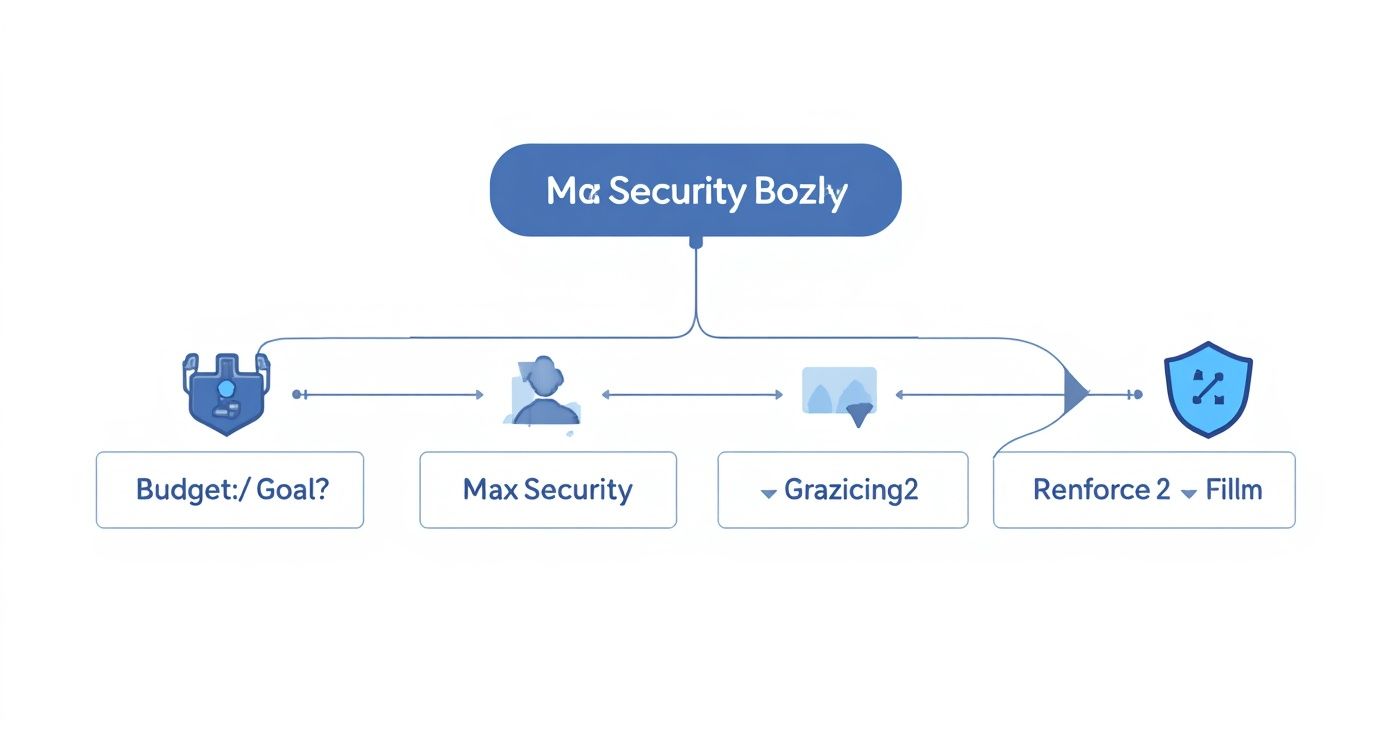
As the diagram shows, while full glazing offers certified, bullet-stopping power, security film is a potent and more accessible upgrade for defending against forced entry.
This principle of matching the solution to the specific need applies across all kinds of environments. Every application of bullet proof windows or film is a calculated response to a unique threat.
-
Schools and Campuses: Here, the priority is the safety of students and staff. Security film is frequently applied to main entrances and ground-floor windows. It's designed to delay an intruder, giving everyone inside crucial minutes to initiate lockdown procedures.
-
Government Buildings: Courthouses, police stations, and other public offices need certified protection against more serious threats. For them, multi-layered bullet-resistant glazing is the standard, protecting personnel and ensuring critical services can continue uninterrupted.
-
Financial and Retail Counters: We've all seen them at banks, 24-hour convenience stores, and pharmacies. These transaction windows have certified ballistic ratings to protect employees in high-risk, public-facing roles. The market for these windows was estimated at USD 500 million in 2025 and is only expected to grow.
The most effective security plan is one that addresses the most probable risks first. A jewelry store needs a different defense than a classroom, and recognizing this is the key to a smart investment in safety.
Creating a Comprehensive Defense Strategy
At the end of the day, installing bullet-resistant windows or films is just one piece of a much larger security puzzle. It’s a vital piece, of course—it hardens your property's weakest points. But it performs best when it's part of a layered system that includes alarms, surveillance cameras, and controlled access points.
To see how these elements work together, it helps to explore general security best practices that cover comprehensive property defense. By understanding how all the layers of protection support each other, you can build a truly secure environment for your home, business, or community space here in Southern California. The right application can turn your glass from a vulnerability into a vital line of defense.
The Installation and Maintenance Process
You can have the most advanced security product in the world, but it’s only as good as its installation. This is especially true for bullet-resistant windows and ballistic films. Professional installation isn't just a good idea—it's absolutely critical to making sure the system works as promised and meets its certified rating.
Even a small mistake during installation can create a weak spot, turning your state-of-the-art security barrier into little more than just a window.
When you work with certified professionals, you're ensuring every single component, from the heavy-duty glazing to the frame and anchors, is set perfectly. The process is a precise craft, transforming a box of high-tech materials into a fully integrated shield.
The Professional Installation Workflow
Getting your property secured is a structured, multi-step process. We’ve refined it over the years to be as precise and undisruptive as possible. Whether it's for a home in Palos Verdes or a retail storefront in Beverly Hills, these core steps are key to guaranteeing performance.
A typical professional installation unfolds in three key phases:
- Initial Site Assessment: First things first, a technician visits your property. They'll take exact measurements of every window and closely inspect the existing frames and wall structure. This is where we spot potential challenges and figure out the best way to anchor everything securely. It’s all about creating a custom plan from the get-go.
- Meticulous Installation: For security film, this means deep-cleaning the glass to create a perfectly sterile surface before the film is applied with special tools to avoid any bubbles or flaws. For full glazing systems, it's a much more involved job of removing the old window, preparing the opening, and carefully setting the new, heavy-duty unit in place.
- Final Inspection and Curing: Once the installation is done, the technician does a final, detailed inspection to make sure the fit and seal are perfect. If you've had security film installed, there's a curing period—usually a few weeks—where any leftover moisture evaporates and the adhesive fully bonds to the glass.
A professional installation does more than just fit a window into a wall; it validates the product's security rating. Without it, you're left with a false sense of security and a voided manufacturer's warranty, leaving your investment unprotected.
Long-Term Care and Maintenance
Taking care of your bullet-resistant windows or security film is surprisingly simple, but it’s vital for keeping them clear and effective for years to come. The biggest risk is using harsh chemicals or abrasive materials, which can damage the surface and weaken its performance.
Just follow a simple maintenance routine, and your security investment will stay in top shape.
- Gentle Cleaning Solutions: Always stick to a soft, non-abrasive cloth (microfiber is perfect) and a mild mix of soap and water. If you use a glass cleaner, make sure it’s ammonia-free. Harsh chemicals can eat away at the film's protective layers.
- Avoid Sharp Objects: This one is a biggie. Never use razor blades, scrapers, or rough scouring pads on the surface. They can cause permanent scratches.
- Periodic Integrity Checks: Every so often, take a quick look at the window seals and film edges. You’re looking for any signs of peeling or damage. It's rare with a pro installation, but catching an issue early is the best way to ensure the system lasts.
By following these simple guidelines, you can be confident your security solution will continue to provide reliable, crystal-clear protection for your Southern California property for decades.
Understanding the Costs and True Value
Let's talk about the price of bullet proof windows. It's not as simple as picking a product off a shelf; it’s a serious conversation about investing in a powerful layer of security for your home or business. The final number on the quote depends heavily on a few key factors that directly tie into the level of protection you're getting.
The biggest driver of cost is, without a doubt, the protection level. A UL Level 1 system, designed to stop rounds from a common handgun, is going to be a different investment than an NIJ Level III system engineered to defeat a high-powered rifle. Naturally, the size of the window, how complex the installation is, and the type of frame reinforcement needed will also shape the final price.
This isn't just a niche product. North America drives a huge portion of the global demand, making up roughly 35-39% of the market, thanks to a strong focus on security in both public and private life. If you're curious about the bigger picture, you can get a good overview of the global bulletproof glass market and its trends.
The Real Return on Your Investment
Sure, there's an upfront cost, but the real value of bullet-resistant systems is in the long-term return on investment (ROI). We're not just talking about a physical barrier; we're talking about everything that barrier protects. For a Southern California homeowner, that ROI is the peace of mind that comes with knowing your family is safe—and you can't put a price on that.
For a business owner, the math is even more straightforward. Think about what a single smash-and-grab costs: thousands in stolen merchandise, property damage, and the headache of being closed for repairs. Preventing just one of those incidents can often cover the entire cost of the security upgrade.
The biggest return is the one you’ll never see: the attack that was never attempted. A visibly secured property sends a clear message, convincing criminals to move on to an easier target. You’re not just stopping a break-in; you're avoiding the financial and emotional chaos that comes with it.
More Than Just a Barrier
The benefits don't stop at just deterring threats and protecting people. When you invest in a serious security upgrade like ballistic film or full glazing, it can positively affect other financial aspects of owning your property.
Here are a few other ways you get value:
- Potential Insurance Discounts: Many insurance companies will offer lower premiums for properties with proven security enhancements. They know you're a lower risk.
- Keeping Your Business Running: For a retail store or office, these systems protect more than just your inventory. They ensure you can open for business the next day without costly interruptions.
- Boosting Property Value: High-end security is a major selling point, especially in luxury markets. It can add real, tangible value to your home or commercial building.
When you’re thinking about the long-term investment, it helps to see it as part of your property's core infrastructure, much like budgeting for annual home maintenance costs. This isn’t just an expense; it's a foundational investment in lasting security and peace of mind.
Your Top Questions, Answered
Making a big decision like upgrading to bullet proof windows naturally comes with questions. It’s a serious investment in your safety, and you need to know how it will all work in the real world. You’re probably wondering about the look, the installation process, and how long it will last.
Let's dive into the most common questions we get from clients. Our goal is to give you straightforward answers so you can feel completely confident about protecting your property.
Will Bullet Proof Windows Look Different?
This is probably the number one concern we hear, especially from homeowners in places like Palos Verdes or high-end retailers in Beverly Hills. You want top-tier security, but you don't want your property to look like a fortress.
The good news is, modern ballistic glass and security films are designed to be incredibly clear. For most applications, you'd be hard-pressed to notice any difference at all. High-quality security films are virtually invisible, maintaining the beautiful, natural look of your windows while adding a powerful shield. Even the thickest, highest-rated glazing systems use advanced manufacturing to minimize distortion and keep your view crisp and clean.
Do These Windows Require Special Frames?
The glass is only half the battle; the frame holding it is just as crucial. Whether you need a new one really depends on which solution you choose.
If you’re going with a full bullet-resistant glazing system, the answer is a definite yes. The frame is an integral part of the certified barrier. It has to be engineered from heavy-duty materials like reinforced steel or aluminum to handle the same level of force as the glass. A standard window frame would buckle and fail immediately, creating a massive weak point and rendering the expensive glass useless.
For security films, on the other hand, your existing frames are usually fine. The film's primary job is to keep the glass shards together within that frame. That said, to get the absolute best performance against forced entry, we often recommend an attachment system that mechanically bonds the film and glass to the frame, turning the entire window into a single, unified, and much stronger barrier.
Can I Install Ballistic Security Film Myself?
It can be tempting to go the DIY route to save a few dollars, but when it comes to security film, we strongly advise against it. This is a job where professional installation is absolutely critical for both performance and your safety.
A flawless application is non-negotiable for achieving the rated protection level. DIY jobs often result in bubbles, peeling, and weak points that compromise the film’s integrity during an impact. More importantly, it will void the manufacturer's warranty, leaving your investment unprotected.
Our certified technicians use specialized tools and proven techniques to create a perfect, contamination-free bond between the film and the glass. That precision is what guarantees your security system will perform exactly as designed when you need it most.
How Long Do These Security Solutions Last?
This is an investment in long-term peace of mind, and you can expect the durability to match. High-quality bullet-resistant glazing is incredibly tough and built to last for decades—often for the entire life of the building.
Ballistic-grade security films also have an impressive lifespan. Top manufacturers typically back their products with warranties of 10-15 years for commercial installations and even lifetime coverage for residential projects. These warranties cover issues like bubbling, cracking, or peeling, so you can be sure your investment stays effective and looks perfect for years to come.
Ready to secure your property with a solution that’s as strong as it is discreet? The experts at Fortress Security Films are here to help you design a system that meets your exact needs. Contact us today for a complimentary security consultation.
