


When you hear "bulletproof windows," you might picture a bank teller's window or an armored car. But what exactly are they when it comes to your home?
In reality, they’re more accurately called bullet-resistant. These aren't just single panes of extra-thick glass. Instead, they’re sophisticated systems built with multiple layers of specialized glass and strong polymer, all laminated together. When a projectile hits, this multi-layer sandwich works to absorb and spread out the energy of the impact, stopping it from getting through.
Why Homeowners Are Investing in Ballistic Windows
Think of bullet-resistant windows as the ultimate silent guardian for your home's most vulnerable entry points. While an alarm system is great for alerting you to a problem, a ballistic window is designed to physically stop the threat in its tracks. It’s a proactive barrier that works around the clock.
This isn't just about worst-case scenarios involving firearms. It’s about creating total peace of mind and a formidable defense against any kind of forced entry. For many, it's a key part of a larger strategy for effectively keeping uninvited visitors off your property.
The growing interest in this kind of home security is easy to see in the market. The global demand for bulletproof windows was valued at around USD 2.11 billion and is expected to more than double, hitting about USD 4.5 billion by 2035. People are clearly taking home fortification more seriously than ever.
What You Will Learn in This Guide
So, is this high-level security the right move for you? This guide will walk you through everything you need to know, breaking it all down in simple terms.
We’ll cover:
- The Science Behind the Strength: How do these windows actually stop a bullet? We'll look at the technology.
- Your Protection Options: Should you go for a security film or a full window replacement? We’ll compare the two.
- Cost and Budgeting: A realistic look at the factors that determine the final price tag.
- Professional Installation: What really happens when the pros come to install your new windows.
By the time you're done reading, you'll have a solid understanding of how these advanced windows work and what it takes to add this powerful layer of security to your home.
How Bullet Proof Windows Actually Stop a Bullet
It’s easy to picture a bulletproof window as a single, super-thick sheet of glass, but the reality is a lot more sophisticated. The science behind how these windows stop a bullet is less about brute force and more about cleverly managing energy.
Think of a baseball catcher snagging a 100-mph fastball. They don't just hold their mitt still and let the ball slam into it. Instead, they absorb the energy by moving their glove backward with the impact. A bullet-resistant window works on a similar principle, but with layers. It's a laminated sandwich of different materials, and each layer has a specific job to do. This multi-layered approach is precisely why "bullet-resistant" is a more accurate term than "bulletproof."
The Science of the Sandwich
The real magic happens in the way the rigid and flexible layers work together. It’s a carefully engineered system designed to methodically strip a bullet of its destructive force.
-
Outer Glass Layers: These are the first line of defense. When a bullet hits, this hard, brittle layer is designed to shatter. This isn't a failure—it's the first crucial step. As the glass breaks, it flattens the bullet's tip and absorbs a huge chunk of its initial kinetic energy.
-
Inner Polymer Layers: Tucked between the glass are flexible layers of polymer, usually polycarbonate or polyvinyl butyral (PVB). This material acts like the catcher’s mitt. It's tough yet elastic, so it absorbs and spreads the remaining force of the now-deformed bullet across a much wider area.
This one-two punch is what stops the threat. The glass shatters the bullet's momentum, and the polymer catches it, preventing it from passing through. The polymer also performs another critical job: holding all the broken glass fragments together. This is known as spall control, and it stops dangerous shards from flying into the room.
The infographic below shows how these layers come together to create a full security solution, turning your home's traditional weak points into fortified barriers.
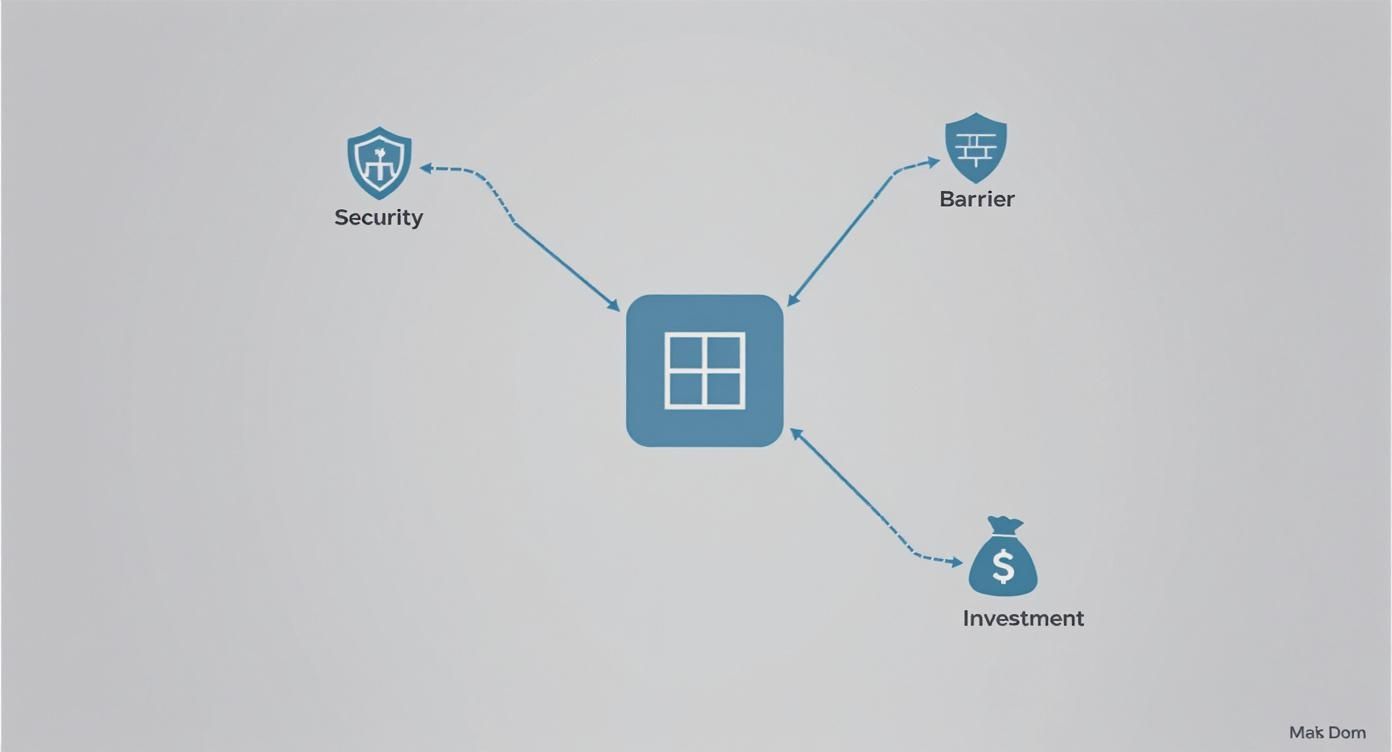
As you can see, the benefits go far beyond just stopping a bullet. It's about comprehensive security, a stronger physical barrier, and a smart investment in your home's safety.
Not All Protection Is Created Equal
Since different firearms pack wildly different punches, bullet-resistant windows are rated using a standardized system. This lets you match the level of protection to the specific threats you're concerned about.
The industry standard is the UL 752 rating system, which certifies a window's ability to stop specific types of ammunition fired from specific weapons.
The UL 752 standard provides a clear, tested benchmark for ballistic resistance. It classifies materials into ten distinct levels, from Level 1, designed to stop rounds from a 9mm handgun, up to Level 10, which can withstand military-grade threats.
This system takes the guesswork out of choosing the right product. To help you understand what these levels mean in practical terms, here’s a quick breakdown of the most common ratings for residential applications.
Understanding UL 752 Ballistic Protection Levels
This table breaks down the common UL 752 protection levels, showing the firearm and ammunition each is rated to stop, helping homeowners match protection to their needs.
| UL 752 Level | Rated To Withstand Firearm Type | Common Ammunition | Typical Application |
|---|---|---|---|
| Level 1 | Medium Power Handgun | 9mm Full Metal Copper Jacket | Standard residential security, deterring handguns |
| Level 2 | High Power Handgun | .357 Magnum Jacketed Soft Point | Homes needing elevated protection from handguns |
| Level 3 | Super Power Handgun | .44 Magnum Lead Semi-Wadcutter | High-risk residences or "safe room" windows |
| Level 4 | High Power Rifle | .30-06 Rifle | Government buildings, high-threat commercial sites |
| Level 8 | High Power Rifle (Multi-Shot) | 7.62mm NATO FMJ | Military-grade protection, critical infrastructure |
As you can see, a Level 1 window is often plenty for residential situations, while a home in a higher-risk area might need Level 3 protection. The demand for these advanced materials is growing quickly; the global bulletproof glass market was valued at around USD 5.02 billion and is projected to hit USD 11.25 billion by 2032.
While the goal is different, you can see similar engineering principles in other multi-layered window technologies like double glazing, which also use layers to achieve a specific result—in that case, thermal insulation instead of ballistic resistance.
The construction of these windows is a fantastic example of material science in action. While a security film can offer a basic layer of shatter resistance, true ballistic protection only comes from these engineered, multi-layered systems. You can learn more about the differences by checking out our guide on ballistic window film options. Every component, from the glass to the polymer, plays a vital role in turning a home’s most fragile feature into a source of strength.
Choosing Your Protection: Security Film vs. Full Replacement
When you start looking into fortifying your home's windows, you'll quickly find yourself at a fork in the road. Do you go with a security film, or do you opt for a full-on replacement with bullet-resistant windows? This isn't really a choice between something that works and something that doesn't. Think of it more as a "good vs. best" situation, where the right answer depends entirely on your security goals and what you're prepared to invest.
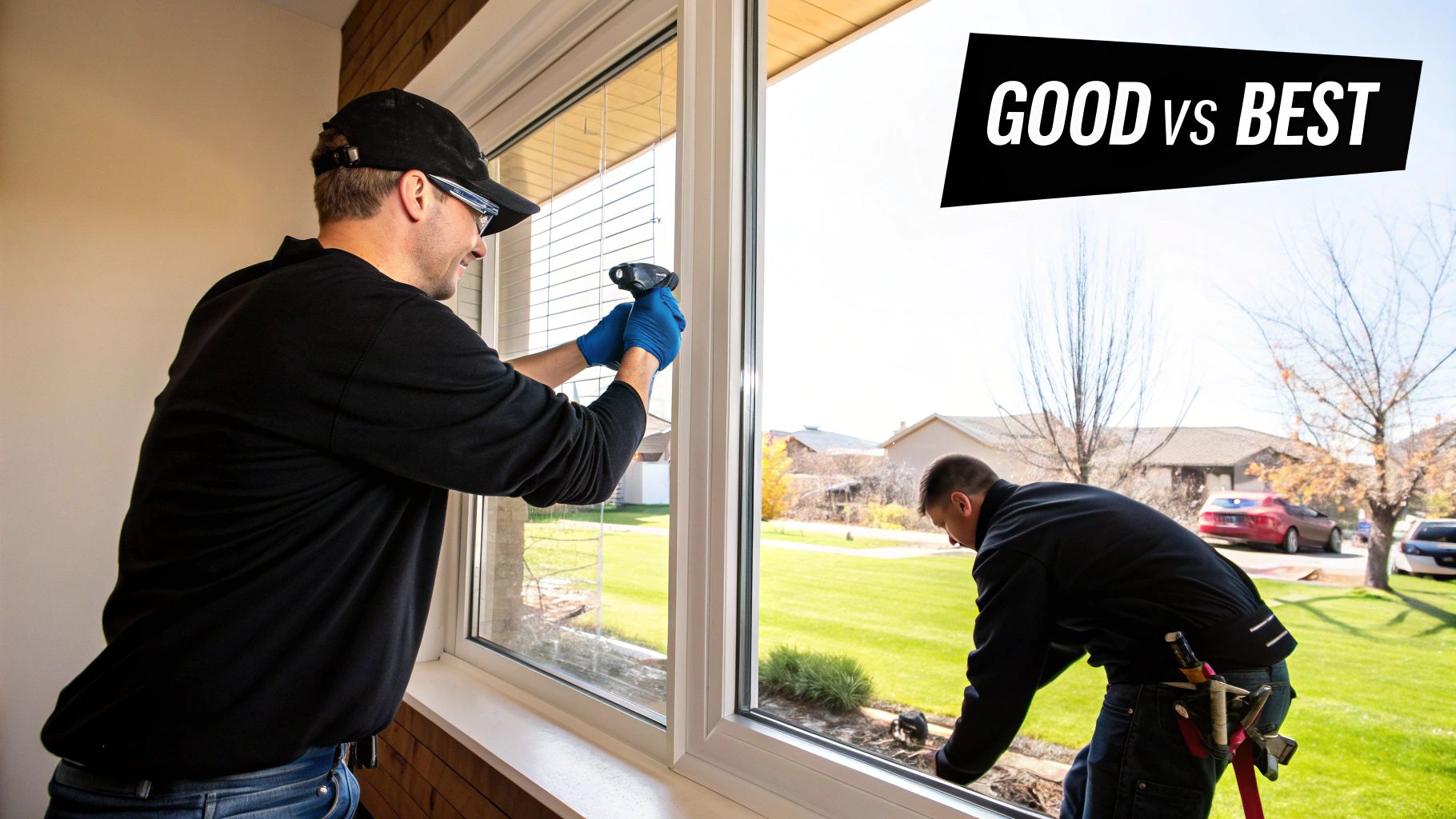
Security window film is a fantastic starting point. It’s a thick, multi-layered polyester sheet applied directly to your existing window panes. This simple addition dramatically increases how much abuse your windows can take, making them a much harder nut to crack for any would-be intruder.
The Good Option: Security Window Film
Think of security film as giving your existing glass a coat of armor. Normally, a sharp impact shatters glass, sending dangerous shards everywhere and creating an easy entry point. A window treated with security film, however, is designed to keep all those broken pieces held tightly together.
This simple change creates a surprisingly powerful deterrent. It’s especially effective against smash-and-grab burglaries. A thief expecting to shatter a window in a second or two will instead be met with a frustrating, spider-webbed mess that just won't give way. That unexpected delay is often all it takes for them to give up and move on.
That said, it's really important to have realistic expectations here.
While some extra-thick films might carry a UL 752 rating, your average security film is not designed to stop bullets. Its job is to resist blunt force and forced entry, not a high-velocity projectile.
So, for making your home a tougher target for break-ins or adding a layer of protection against severe weather, security film is a smart, budget-friendly choice. It’s a solid defensive upgrade without the hefty price tag of a full replacement.
The Best Option: Full Window Replacement
Now, if you're looking for genuine ballistic protection, there's really only one way to go: a full replacement with a professionally engineered bullet proof house window. This is more than just a pane of glass; it’s a complete system. Every single component, from the multi-laminated glazing to the heavily reinforced frame, is built to work in concert to stop specific ballistic threats.
Unlike a film you add on later, a full replacement window provides certified, lab-tested security. These units come with a specific UL 752 rating, which is your guarantee that it can stop ammunition from certain firearms. It takes all the guesswork out of the equation.
The benefits of a complete system go far beyond just stopping bullets, too.
- Integrated Strength: The window and frame are a single, cohesive unit. Sticking a bullet-resistant pane into a flimsy residential frame creates a massive weak point. A true bullet proof system ensures the entire installation is fortified.
- Superior Performance: You'll notice a huge difference in sound insulation, with outside noise significantly dampened. The multi-layer construction is also great for thermal performance, which can help lower your energy bills.
- Long-Term Durability: These systems are built to last for decades. They are a permanent upgrade to your home, typically only needing replacement every 20 years or so if the internal layers begin to degrade from UV exposure.
Ultimately, the choice between security film and a full replacement comes down to an honest look at your personal needs. This table breaks down the key differences to help you decide.
| Feature Comparison | Security Window Film | Full Replacement Bullet Proof Window |
|---|---|---|
| Primary Protection | Forced entry, impact, shatter resistance | Certified ballistic protection (UL 752 rated) |
| Ballistic Capability | Very limited to none (unless specifically rated) | Guaranteed to stop specific firearm threats |
| Cost | Lower initial investment | Significant investment, priced per square foot |
| Installation | Retrofitted onto existing glass | Requires removal of old window and professional install |
| Additional Benefits | UV protection, basic shatter safety | Superior sound insulation, energy efficiency |
If your main concern is deterring break-ins and improving general safety without breaking the bank, security film is a great "good" option. But if your personal risk assessment calls for proven protection against firearms, a full replacement is the "best"—and only—definitive solution for creating truly bullet proof house windows.
What to Expect from Professional Installation
Putting in bullet proof house windows isn't your average weekend home improvement project. It's a highly specialized security upgrade where every single detail matters. This isn't like swapping out an old window for a new one; it's a precise process that requires trained experts from start to finish to make sure the system works exactly as it’s designed to. Let’s walk through what you can expect, so you can feel good about both the product and the team you hire.
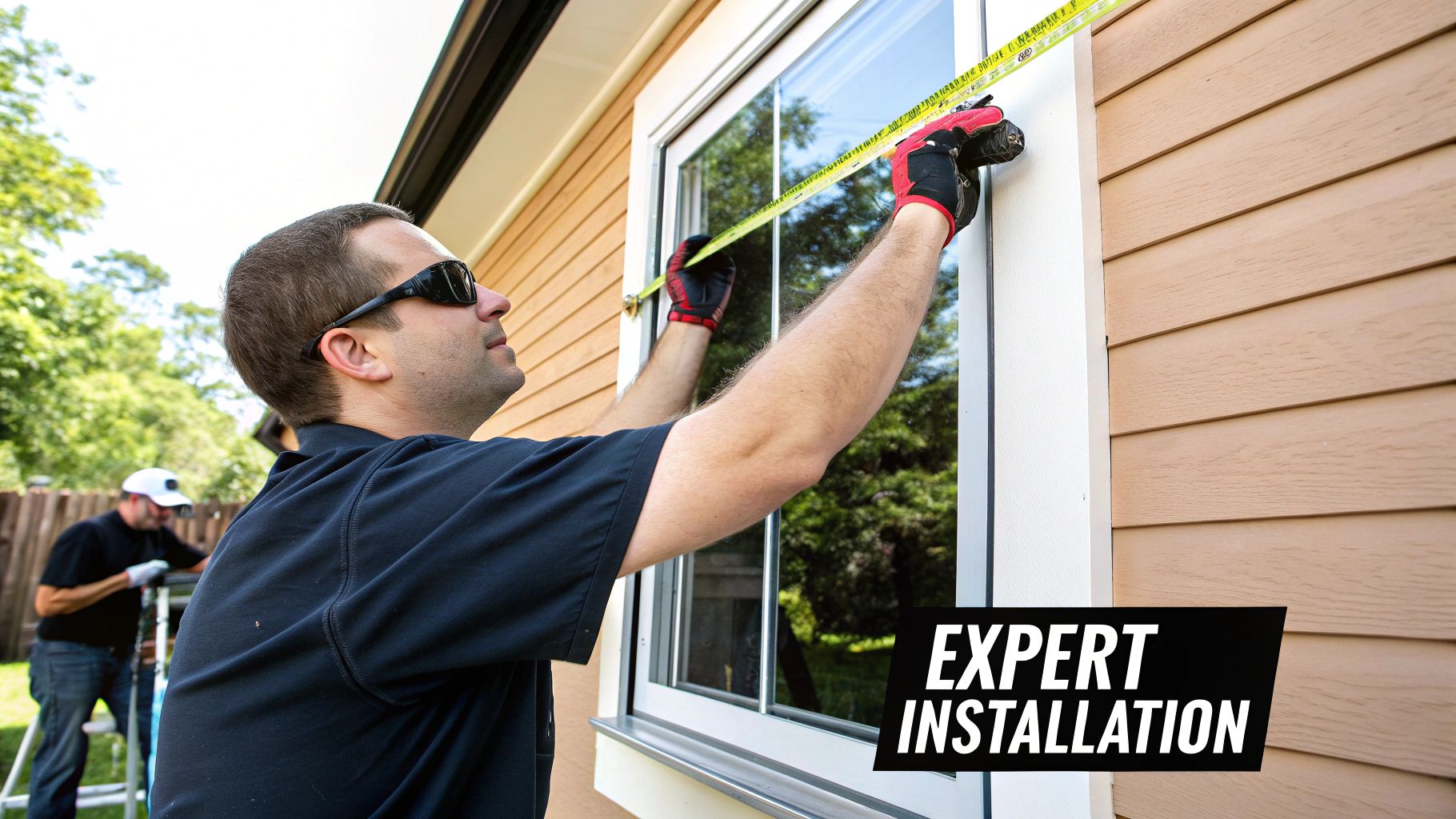
The real work starts long before the crew shows up with their tools. It all begins with a thorough on-site consultation to understand your needs and evaluate your home's existing structure.
The Initial Consultation and Structural Assessment
First things first, a professional team will visit your home to take meticulous measurements of every window opening. They're doing more than just getting the dimensions right, though. They're also performing a crucial structural assessment of your walls and window frames.
This step is non-negotiable. Why? Because bullet proof house windows are incredibly heavy. A window rated for lower-level threats can weigh 7-10 pounds per square foot, while a high-level, rifle-rated pane can easily top 30 pounds per square foot. The installers have to be certain your home's frame can handle that extra load without any risk of sagging or structural failure down the road.
The Importance of the Frame and Mounting
It’s a common mistake to think the ballistic glass does all the heavy lifting. The truth is, the entire window is a system—the glass, the frame, and the mounting all have to work in perfect harmony to stop a threat. Putting a high-tech bullet-resistant pane into a standard flimsy frame is a recipe for disaster.
A ballistic window is only as strong as its installation. The frame and its anchoring system are just as important as the glass itself, as they must withstand the immense kinetic energy transferred during an impact.
Professional installers use specially designed, heavily reinforced frames, typically made of steel or armored aluminum. They then anchor the entire unit directly into your home's structural studs using specialized techniques. This creates a rock-solid installation that prevents the window from being knocked out of the wall, either by a physical attack or the force of a bullet. The glass stops the bullet, but the frame and anchoring contain the force.
Vetting Your Installer Key Questions to Ask
Choosing the right installation team is probably the most important decision you'll make. A sloppy installation can completely negate the window's protective power, turning a significant security investment into a false sense of security. To make sure you’re hiring true professionals, here are a few questions you should always ask:
- Are you certified to install this specific brand and UL level? Top manufacturers often have training programs that installers must pass to handle their products correctly.
- Can you provide references from past residential jobs? There's no better way to vet a team than by talking to their previous clients about their experience.
- What is your process for the structural assessment? A good installer can walk you through exactly how they'll confirm your home is ready for the new windows.
- Is your team fully licensed and insured? This is a must. It protects you from any liability if an accident or damage happens on your property.
Fortifying your home with this level of protection demands real expertise, much like other advanced security upgrades. To get a sense of the precision involved in these kinds of jobs, you can learn more about the detailed process of security window film installation to see how different protective solutions are handled by professionals.
Breaking Down the Cost of Bullet Proof Windows
So, you're thinking about a major security upgrade like bullet proof house windows. Naturally, the first question on your mind is, "What's this going to cost me?" While it would be nice to have a simple price-per-square-foot answer, the reality is a lot more involved. The final number on your quote depends on several key variables that all come together to determine the window's performance, strength, and overall effectiveness.
Figuring out these factors is the first real step toward setting a realistic budget. Think of it less as an expense and more as a direct reflection of the level of protection you're choosing for your home and family.
This kind of investment is also part of a much bigger global trend. As crime rates and geopolitical tensions rise, so does the demand for advanced protective materials. The bulletproof security glass market, currently valued at USD 8.7 billion, is expected to skyrocket to nearly USD 19.5 billion by 2032. You can discover more insights about this growing market on snsinsider.com to see just how much this industry is expanding.
Protection Level: The Biggest Cost Driver
The single biggest factor that will move the price tag up or down is the window's UL 752 protection level. This rating isn't just a number—it's a certified guarantee of what that window can actually stop. Every time you go up a level, it means more material, more sophisticated engineering, and more intense testing, all of which directly add to the cost.
It’s a bit like choosing body armor. A basic vest that can stop a handgun round is worlds apart from a full suit engineered to defeat a high-powered rifle, and the price reflects that complexity. The same principle applies here.
A UL Level 1 window, rated for something like a 9mm handgun, will be far more affordable than a UL Level 3 window designed to handle a .44 Magnum. If you need protection from rifles (Levels 4-8), the price jumps significantly. That’s because you need specialized materials and much thicker layers to stop those high-velocity projectiles.
The cost difference between a handgun-rated window and a rifle-rated window can be dramatic. High-power rifle-rated glass can cost around $500 per square foot or more, reflecting the advanced technology needed to stop such a powerful threat.
Window Size and Frame Material
Once you’ve settled on a protection level, the window’s physical traits come into play. It makes sense that larger windows cost more since they require more ballistic material. But don't overlook the frame—it's just as critical and adds a good chunk to the final quote.
- Standard Vinyl or Wood Frames: These are a non-starter. They simply can't support the immense weight of ballistic glass or handle the force of an impact.
- Reinforced Aluminum: This is a popular choice for many homes. It strikes a great balance between the strength you need and aesthetics that don't look out of place.
- Steel Frames: For top-tier security, steel is the gold standard. It provides maximum strength and durability, but it's also the most expensive option.
The style of the window matters, too. A custom-arched window, for instance, will require more labor and manufacturing precision than a standard rectangular one, which will be reflected in the cost.
Comparing Security Film and Full Replacement Costs
It helps to look at the entire cost spectrum, from the most affordable options to the most secure systems. The price gap between simply applying a security film and doing a full-frame replacement is huge.
If you're looking for a more accessible starting point, it’s a good idea to dig into the factors influencing security window film cost. This will give you a clear baseline for what an entry-level security upgrade might look like.
To put it all into perspective, I've put together a table comparing how different cost factors play out depending on whether you're looking at a basic upgrade or a high-end replacement.
Key Factors Influencing Window Cost
| Cost Factor | Low-End Impact (e.g., Security Film/Level 1) | High-End Impact (e.g., Level 8 Rifle-Rated) | Why It Matters |
|---|---|---|---|
| Protection Level | Non-ballistic; shatter and impact resistance | Ballistic rated from UL Level 1 up to Level 8 | This is the window's core function and the primary driver of its cost. |
| Material Cost | $15 – $25 per sq. ft. installed | $250 – $500+ per sq. ft. installed | The price reflects the complexity of the materials, from simple film to multi-laminate glass. |
| Installation | Applied directly to your existing glass | Requires a structural assessment and specialized labor | Full replacements are incredibly heavy and need expert installation to be effective. |
In the end, the price of bullet proof house windows should always be weighed against the invaluable peace of mind they bring. By understanding what really drives the cost, you can make an informed decision that aligns perfectly with both your security needs and your budget.
Looking After Your High-Security Windows
You’ve made a serious investment in your home's security with bullet proof windows. That's a huge step. But just like any specialized piece of equipment, they need a little bit of care to keep them in top shape. The good news is that these windows are built tough, so keeping them looking and performing their best is surprisingly simple.
Think of it this way: you wouldn't take a high-performance car through a rough brush-filled car wash. The same logic applies here. A little routine maintenance ensures your windows can do their job for decades, protecting both your investment and your family.
The Right Way to Clean and Inspect
Cleaning will be your most common task. Because these windows are made of multiple layers, sometimes with special coatings, you have to be gentle. Using the wrong cleaners or tools can easily scratch the surface or damage the materials, which hurts both clarity and protective strength.
Always check the manufacturer's instructions first, but these general tips are a safe bet for almost any system:
- Go Soft: Stick with clean microfiber cloths or soft sponges. Paper towels might seem harmless, but they can be abrasive and leave lint all over the glass.
- Keep Cleaners Mild: A bit of mild dish soap mixed with warm water is all you really need. Absolutely avoid ammonia-based cleaners (like standard Windex) or any harsh solvents. They can eat away at the polycarbonate layers and ruin any protective coatings.
- Rinse and Dry: Once clean, give the window a good rinse with plain water. To avoid spots, gently dry it with a fresh microfiber cloth or a soft rubber squeegee.
Beyond just cleaning, it’s smart to give your windows a quick inspection once or twice a year. Just take a few minutes to look them over closely.
Pro Tip: Pay special attention to the edges of the glass and the frame. Look for any hint of delamination—where it looks like the layers are starting to separate—or any cracking or peeling in the sealant that holds the window in place.
Spotting these little things early means you can get them fixed before they turn into bigger problems that could compromise the window's integrity. Proper care is about more than just a clear view; it’s about making sure your silent guardian is always ready to do its job. With a little attention, you can easily get the full lifespan out of your windows, which is often 20 years or even more.
Got Questions About Bullet Proof Windows? We've Got Answers.
Thinking about installing bullet proof windows in your home is a big decision, and it’s natural to have a lot of questions. Beyond the technical specs and the cost, you’re probably wondering how they’ll actually work in your day-to-day life. Getting straight answers is key to feeling confident that you're making the right call for your family's safety.
Here, we'll tackle the most common questions we hear from homeowners, breaking down the real-world implications of this powerful security upgrade.
Will They Look Different From Regular Windows?
This is easily one of the first things people ask, and the answer is almost always a pleasant surprise: no, they don't have to. Today's bullet proof windows are designed to look just like any other high-quality window, blending right in with your home's style.
Of course, windows with higher UL ratings will be thicker to account for the extra protective layers, but manufacturers go to great lengths to ensure crystal-clear optical quality. With tons of frame styles and finishes available, you can match your home’s existing look perfectly. For most homes, the difference is so subtle that no one would ever know, meaning you don't have to trade curb appeal for peace of mind.
Can Installing These Windows Lower My Home Insurance?
In many cases, yes! When you have a certified, professionally installed bullet-resistant window system, you’re dramatically lowering the risk of break-ins, vandalism, and property damage. Insurance companies love to see homeowners take proactive steps like this, and they often reward them for it.
A serious security upgrade like ballistic windows signals a lower risk profile to your insurer. That shift can often lead to a welcome reduction in your home insurance premiums, putting real money back in your pocket.
The best way to find out what you could save is to talk directly with your insurance agent. Make sure you have the documentation for the window's UL 752 rating and proof of professional installation handy—this will help them determine the exact discounts you qualify for.
Are They Also Good Against Break-ins and Storms?
Absolutely. This is one of the biggest, and frankly, most underrated perks of installing bullet proof glass. The very same layered construction designed to stop a bullet makes the window incredibly tough against other threats.
- Forced Entry: Forget about crowbars, hammers, or bats. An attacker could wail on a ballistic window all day and get nowhere. The tough polymer interlayer holds everything together, creating a frustratingly strong barrier that sends intruders packing.
- Severe Weather: The same logic applies to mother nature. During a hurricane or tornado, these windows offer outstanding protection against flying debris, giving you a multi-purpose defense system in a single product.
How Much Do Bullet Proof Windows Weigh?
The weight of a bullet proof window can vary quite a bit, and it all comes down to the UL protection level. A window rated for handguns (UL levels 1-3) might weigh around 7 to 10 pounds per square foot.
But if you’re looking at a window rated to stop a high-powered rifle, the weight can jump to over 30 pounds per square foot. This is precisely why a professional structural assessment isn't just a suggestion—it's essential. An experienced installer needs to verify that your home's framing can safely support that much weight for decades to come.
At Fortress Security Films, we believe real security starts with clarity and confidence. If you're ready to explore how ballistic-rated solutions can protect your home, our experts are here to walk you through every step. Contact us for a personalized consultation to get started.
