


Let's get one thing straight right away—there’s no such thing as truly "bulletproof" glass. The term you'll hear from security experts is bullet-resistant glass. It's a critical distinction. This material isn't designed to be an unbreakable wall, but rather a sophisticated energy-absorbing barrier. Think of it less like a rigid shield and more like a highly advanced catcher's mitt for a bullet.
How Bullet-Resistant Glass Really Works
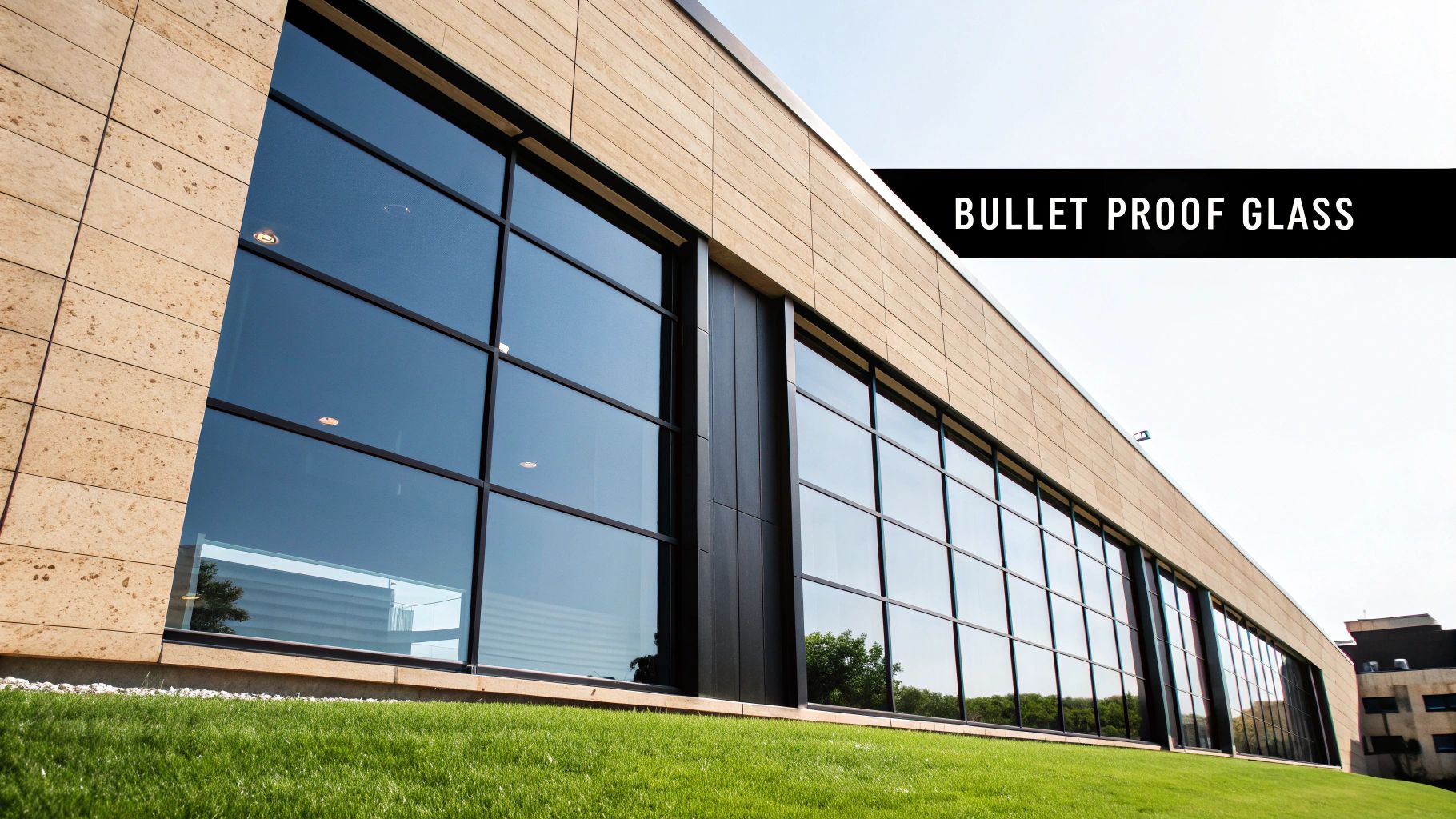
The secret behind its strength lies in a carefully engineered process of deforming and delaminating to absorb a bullet's immense kinetic energy. When a projectile hits the outside surface, that first layer of hardened glass is actually meant to shatter. This initial impact does a huge amount of work, absorbing a significant chunk of the bullet's forward momentum.
But the real magic happens in the layers that follow. Sandwiched behind that first glass pane is a flexible interlayer, usually made from a tough polymer like polycarbonate. This material is incredibly elastic; instead of breaking, it stretches and gives way, almost like a trampoline catching a falling weight. This action spreads the remaining force across a much wider area, slowing the bullet down until it stops completely. It's this layered construction that ultimately contains the threat.
The crucial takeaway is that bullet-resistant glass is a system designed for controlled failure. It works precisely because its layers break, stretch, and deform in a specific sequence to safely dissipate deadly force.
Why This Technology Matters More Than Ever
Grasping this concept is vital for anyone looking to upgrade their security. With rising security concerns around the globe, the demand for reliable protection has never been higher, and the market for this technology is expanding fast.
In fact, the global bulletproof glass market is projected to hit roughly $5.85 billion in 2025 and is expected to keep growing at a rate of 10.3% each year through 2033. This isn't just for military or government buildings anymore; this growth reflects a serious need for advanced security in commercial, and even residential settings. You can explore more data about this expanding market and what's driving it.
This guide will walk you through everything you need to know about bullet-resistant glass, from how it's made to the specific ratings that tell you what it can stop. By the end, you'll have a clear, practical understanding to help you make an informed decision for your own safety needs.
How Bullet-Resistant Glass Actually Works
The real magic behind bullet-resistant glass isn’t a single, super-strong material. It's actually a clever layering of different materials, working together like a team. Think of it less like a solid wall and more like a high-tech safety sandwich. This layered construction is precisely what gives the glass its incredible ability to absorb and stop the immense energy of a bullet.
So, how does it do it? Picture a stack of materials bonded together. You have rigid layers of glass alternating with a flexible, plastic-like material, usually polycarbonate. Each layer has a specific job to do when a projectile hits.
The outer layer of glass takes the first hit. It’s designed to absorb the initial, brutal shock and shatter on impact. This act alone dramatically slows the bullet down. The energy that makes it past this first line of defense is then caught by the flexible polycarbonate layer. Instead of shattering, this tough material gives and stretches, acting almost like a catcher's mitt. This elasticity is the secret sauce—it spreads the remaining force over a much wider area, safely stopping the projectile in its tracks.
The Materials That Make a Difference
The exact combination and thickness of these materials determine just how much protection the glass offers. The whole assembly is fused together using intense heat and pressure, creating a single, optically clear panel that looks just like a normal window but performs on a completely different level.
The main players in this construction are:
- Tempered Glass: This isn't your average window pane. It's heat-treated to be much stronger, designed to crumble into small, relatively harmless chunks instead of long, dangerous shards when it breaks.
- Polycarbonate: This is the workhorse of the system. It’s a super-tough thermoplastic known for its incredible impact resistance and flexibility, which is what allows it to "catch" the bullet's energy.
- Interlayers: Thin films of materials like polyvinyl butyral (PVB) act as the powerful adhesive that holds the glass and polycarbonate layers together, ensuring the panel stays in one piece even after it’s been hit.
It's a brilliant one-two punch. The hard glass flattens the bullet upon impact, while the flexible polycarbonate absorbs its forward momentum, stopping it cold.
This method of layering tempered glass and polymer interlayers is the industry standard. Of course, manufacturers are always trying to find the right balance between protection and practicality, as the high cost and sheer weight of these panels can be a challenge. Major companies are constantly exploring lighter, more advanced composites to make these security systems more practical for a wider range of uses. You can read more about innovations in the building bulletproof glass market to see where the technology is headed.
Beyond Traditional Laminated Panels
While laminated glass is the most well-known type of bullet-resistant glazing, it's not the only game in town. New materials and technologies are always emerging.
For example, a different approach is to use ballistic window film, a specialized product applied over existing glass. While it doesn't offer the same level of ballistic protection as a true laminated panel, it significantly enhances a window's resistance to forced entry and impact, offering an effective retrofit solution without replacing the entire window unit.
Understanding Ballistic Protection Levels
It's a common mistake to think all bulletproof glass is the same. In reality, it’s not a one-size-fits-all solution. The right choice boils down to a simple question: what kind of threat are you trying to stop?
To bring some order to this, the industry relies on a rating system from Underwriters Laboratories known as UL 752. Think of it as a standardized strength test for security glass, certifying exactly what kind of firepower a panel can withstand.
Getting a handle on these levels is the single most important part of picking the right product. A pane of glass rated for a handgun just won't hold up against a rifle round. That's why matching the protection level to a realistic threat assessment is key—it keeps you from being under-protected or overspending on security you don’t actually need.
The UL 752 standard is broken down into eight primary levels. Each one is rigorously tested to defeat a specific number of shots from a particular firearm and ammunition type. The scale is progressive: Level 1 is designed to stop smaller handgun rounds, while Level 8 can defeat multiple shots from a high-powered military rifle.
Matching Protection to the Threat
So, how do you choose? It’s all about context. A 24-hour convenience store, where the primary concern might be a robbery with a common handgun, is often well-served by a Level 1 or Level 2 system.
On the other hand, a critical government facility or a high-value financial institution faces more severe threats. For them, a much higher rating, like a Level 8, is necessary to protect against powerful, high-velocity rifle fire.
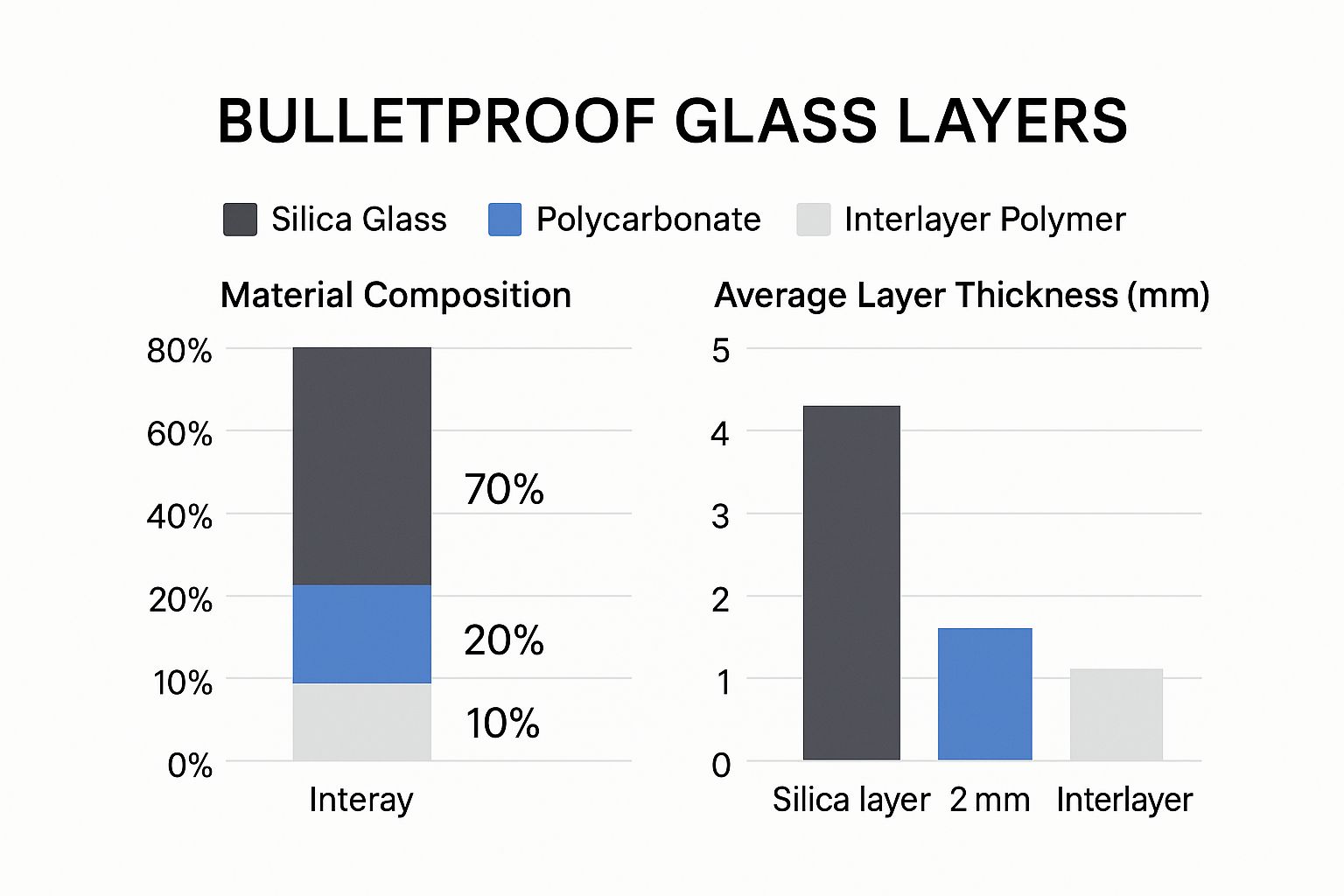
As you can see, the thickness and complexity of the material stack up as the protection level increases. It's a precise blend of different materials engineered to absorb and disperse a massive amount of energy in an instant.
The real goal isn't just stopping a bullet; it's about stopping the right bullet. A solid risk assessment is the foundation for choosing a UL 752 level that gives you peace of mind without breaking the bank.
A Clear Look at UL 752 Levels
To make sense of the technical jargon, it helps to see what these ratings mean in the real world. This table breaks down what each level is designed to protect against, translating the numbers into actual firearm threats.
UL 752 Bullet Resistant Protection Levels Explained
| UL 752 Level | Rated to Stop (Firearm Type) | Ammunition Type | Common Application |
|---|---|---|---|
| Level 1 | Small Caliber Handgun | 9mm Full Metal Jacket (FMJ) | Gas Stations, Pharmacies |
| Level 2 | High Power Handgun | .357 Magnum Soft Point | Banks, Check Cashing Stores |
| Level 3 | Super Power Handgun | .44 Magnum Lead SWC | Police Stations, Government Buildings |
| Level 4 | High Power Rifle | .30-06 Rifle FMJ | High-Security Facilities, Data Centers |
| Level 5 | Military Assault Rifle | 7.62mm Rifle FMJ | Military Bases, Embassies |
| Level 6 | Multiple 9mm Handgun | 9mm FMJ (Multiple Shots) | High-Risk Corporate Offices |
| Level 7 | Multiple Rifle Shots | 5.56mm Rifle FMJ | Critical Infrastructure |
| Level 8 | High Power Military Rifle | 7.62mm Rifle FMJ (Multiple Shots) | Maximum Security Government Sites |
This chart clearly illustrates how the protection scales with the threat. From a simple 9mm handgun to multi-shot rifle attacks, there’s a specific rating designed to meet the challenge.
Real World Uses For Security Glass
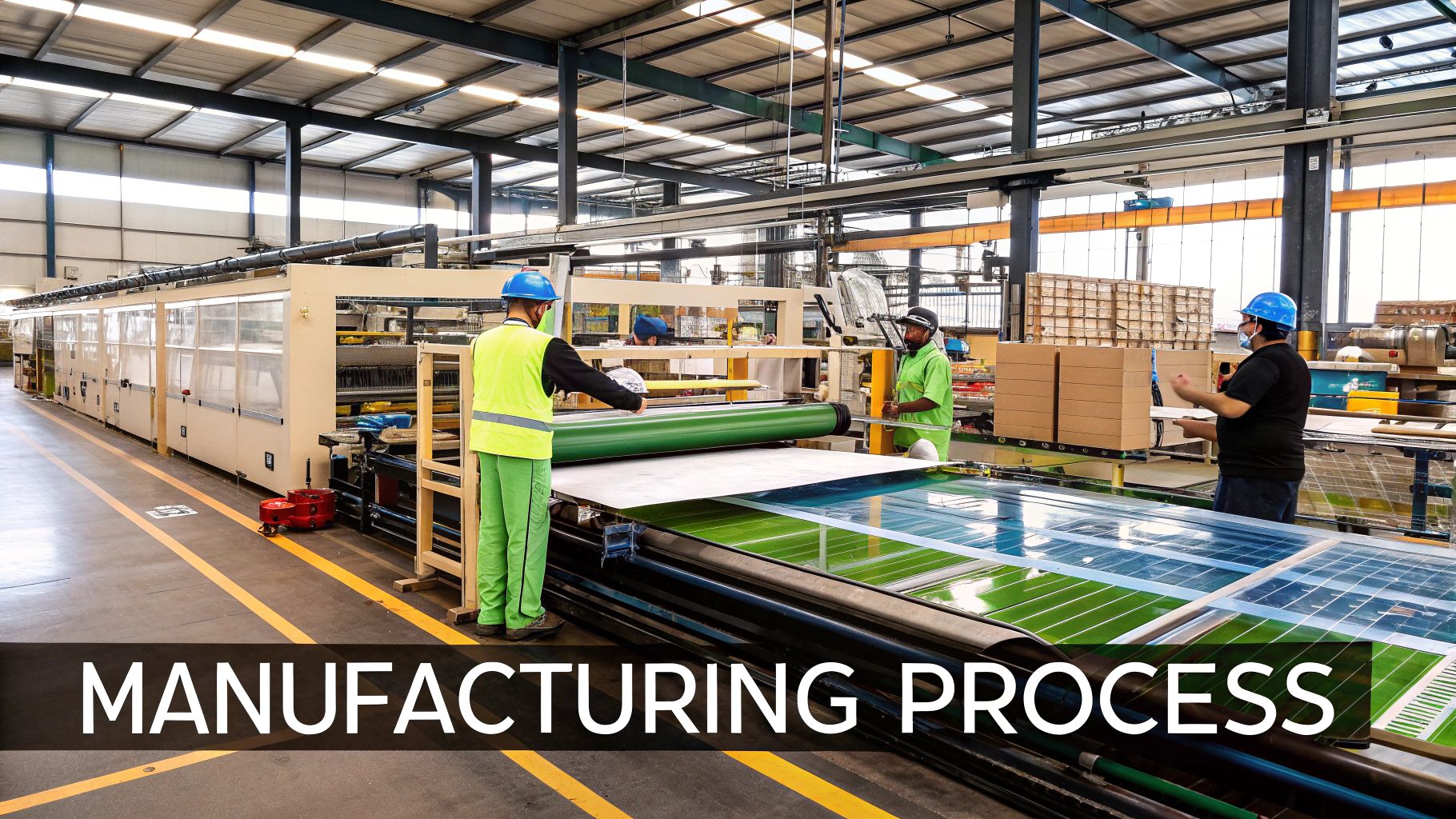
When you hear "bulletproof glass," what’s the first thing that comes to mind? For most people, it's a bank teller window. And while that’s certainly a classic example, this incredible security technology shows up in more places than you might think, quietly protecting people in all sorts of daily situations.
Its real strength lies in its ability to offer a tough, invisible shield. This makes it perfect for any place that needs to keep people and property safe without feeling like an imposing fortress. From late-night convenience stores to schools, its applications are widespread and more important than ever.
Commercial And Public Sector Security
In the business world, bullet-resistant glass is a powerful deterrent, especially in places that are most vulnerable. Think about businesses that stay open late or handle a lot of cash—they're often seen as easy targets, which makes top-notch security non-negotiable.
You’ll find it in places like:
- Gas Stations and Convenience Stores: Keeping overnight staff safe from potential robberies.
- Pharmacies: Protecting pharmacists and securing controlled medications from theft.
- Luxury Retail and Jewelry Stores: Stopping smash-and-grab attempts on high-value items in their tracks.
- Government Buildings and Courthouses: Safeguarding public servants, employees, and visitors in sensitive environments.
The demand for these solutions is booming. According to Allied Market Research, the global bulletproof glass market was valued at $9.3 billion in 2023 and is expected to climb to $29.5 billion by 2033. This surge reflects growing security concerns on a global scale.
Protecting Schools And Residences
The peace of mind that comes with security glass is perhaps most valuable in our schools and homes. More and more educational institutions are incorporating ballistic glass into their safety plans, reinforcing entryways, administrative offices, and classroom windows to create secure areas. This can buy precious time during an active threat, giving law enforcement a critical window to respond. We cover a range of options for schools in our guide on https://fortresssecurityfilms.com/security-window-film-for-schools/.
For homeowners, bullet-resistant windows and doors can turn a house into a sanctuary. It’s about providing an unmatched level of protection against forced entry and home invasions.
This kind of security is no longer just for the super-rich. Many families are choosing to install bullet-resistant glass in key areas like master bedrooms or dedicated safe rooms, creating a final line of defense. This type of glass is a key part of any robust home defense strategy, as outlined in a practical guide on how to prevent break-ins.
Specialized Automotive Protection
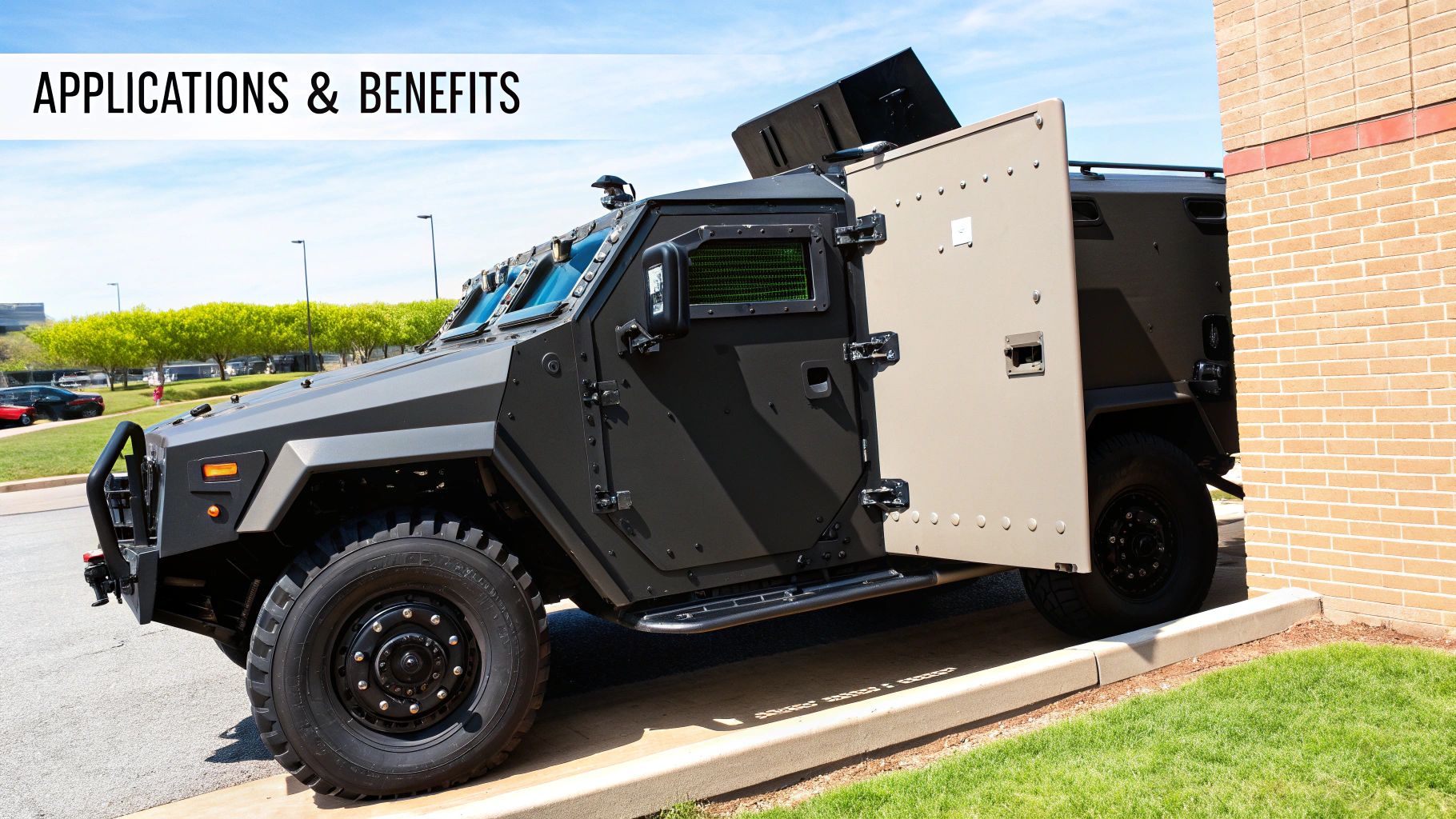
The use of bullet-resistant glass isn't limited to buildings; it’s also crucial for vehicle security. High-profile individuals, corporate executives, and law enforcement agencies often depend on armored vehicles fitted with ballistic glass for safe transport.
This turns a regular car into a mobile safe zone, capable of protecting occupants from ambushes or direct attacks while on the move. It’s security that goes wherever you do.
Key Factors That Influence Cost and Installation
When you decide to invest in bulletproof glass, you're making a serious commitment to security. But what does that commitment actually cost? It's not as simple as a price-per-square-foot, because every project is unique. The final number really comes down to a handful of critical factors that shape the complexity and materials needed for the job.
The biggest single driver of cost is, without a doubt, the UL 752 protection level. Think of it like this: a panel rated at Level 1 is designed to stop a few rounds from a small handgun. A Level 8 panel, on the other hand, needs to stop multiple shots from a high-powered rifle. The difference in materials and manufacturing is immense. That Level 8 panel can easily cost ten times more than a Level 1 panel of the exact same size because it's packed with multiple, thick layers of specialized glass and polycarbonate.
Breaking Down the Primary Cost Components
Once you've settled on a protection level, other details come into play that can really move the needle on your budget. Custom features and the sheer scale of the project are huge factors.
Here’s what typically influences the final quote:
- Material Makeup: Are you going with an all-glass laminate, or a more advanced (and often pricier) glass-clad polycarbonate? Each has its own cost and performance profile.
- Custom Features: Need a one-way mirror finish, privacy tints, or an energy-efficient coating? These add-ons will naturally increase the price. The same goes for special scratch-resistant surfaces.
- Project Size and Shape: The total square footage is obviously a major factor. But don't forget about complexity—curved glass or odd angles require custom fabrication, which always adds to the bottom line.
It's often helpful to see how different security solutions compare. If you're weighing your options, you can get a better sense of pricing across the board by looking at a detailed breakdown of security window film cost.
The most important thing to remember is that the glass is just one piece of the puzzle. The frame holding it is just as critical—if not more so—for delivering real protection.
Why Professional Installation Is Non-Negotiable
You can't just pop a sheet of bullet-resistant glass into a standard window frame and call it a day. A regular wood or aluminum frame would shatter or tear apart on the first impact, no matter how strong the glass is. The entire system—the glazing, the frame, and how it’s mounted—has to work together to absorb a bullet's force.
This is exactly why professional installation isn’t just a good idea; it’s the only way to do it right. Certified installers work with ballistic-rated steel or heavy-duty aluminum frames built to handle the incredible weight of the glass and the violent shock of an impact. A shoddy installation completely undermines the protective qualities of the glass, making your investment worthless and giving you a dangerously false sense of security.
Making the Right Choice for Your Safety
Choosing the right security glass is a big decision, but you're now equipped with the essential knowledge to make an informed one. The goal isn't just to install a barrier, but to create a system that genuinely meets your needs.
Let's circle back to the most important point: the term is bullet-resistant, not bulletproof. This isn't just semantics; it’s about understanding that this product is engineered to absorb and slow a bullet’s energy, buying you precious time. It’s a dynamic defense, not an impenetrable wall.
True security isn't just about buying a product; it's about investing in the right solution for a specific threat. An informed choice provides genuine peace of mind.
At the end of the day, it all comes down to matching the UL protection level to your specific risks. By taking a clear-eyed look at the potential threats you face, you can select a system that provides real protection.
Whether you're securing a home, a business, or a vehicle, a well-informed decision is your strongest asset. You now have the understanding to build a safer environment.
Common Questions We Hear About Bulletproof Glass
Even after you get the basics down, you probably still have a few practical questions. It's a big investment, after all. Let's walk through some of the most common things people ask before they decide to upgrade their security.
Can Bulletproof Glass Actually Be Broken?
Yes, absolutely. This is probably the biggest misconception out there. The correct term is bullet-resistant, because nothing is truly "bulletproof." Think of it as a barrier designed to buy you time.
Every panel is rated to stop a certain number of bullets from a specific type of firearm. It’s built to hold up against a defined threat, giving you that critical window to react, find cover, or call for help. A determined attacker with a more powerful weapon or enough time will eventually get through.
How Much Heavier Is It Than Regular Glass?
The difference is night and day. Bullet-resistant glass is far thicker and heavier than the standard glass in your home or car, and that weight increases dramatically with the protection level.
Here’s a rough idea:
- A Level 1 panel, meant to stop a small handgun, might be under an inch thick.
- A Level 8 panel, designed to stop high-powered rifle rounds, can be over two inches thick and weigh a ton compared to a normal window pane.
This is exactly why the frame and all the mounting hardware need to be just as tough. The weight alone is a huge factor.
Simply put, a standard window or door frame will fail catastrophically under the weight and force of a ballistic impact, rendering even the best glass completely ineffective.
Can I Just Put It In My Existing Window Frames?
We get this question all the time, and the answer is almost always no. I understand the desire to save on costs, but trying to retrofit a heavy ballistic panel into a standard frame is asking for trouble.
Your typical home or business window frames were never engineered to support that kind of weight, let alone absorb the violent shock of a bullet strike. For the system to work, the entire assembly—glass, frame, and hardware—must be rated to the same protective standard. This means a complete replacement is the only safe and effective way to do it.
How Long Does Bulletproof Glass Last?
Properly made ballistic glass is built to last for decades without any loss in its protective strength. The main thing that can affect it over time is UV radiation from the sun, which can sometimes degrade the plastic interlayers.
You might see this as a slight yellowing or haziness over many years. To prevent this, top-tier manufacturers build UV inhibitors right into their products. You'll find that most reputable systems come with a solid manufacturer's warranty, usually in the five- to ten-year range, that covers issues like delamination or other defects.
Ready to enhance your security with a solution that's both powerful and discreet? The experts at Fortress Security Films can provide a comprehensive assessment to determine the ideal protection for your home, business, or vehicle. Contact us today to explore your options.
