


A break glass alarm is a clever piece of security tech designed to listen for one very specific sound: the sharp, high-frequency crack of shattering glass. Think of it as an early warning system. It's meant to trip an alarm the second a window or glass door breaks, which is often long before an intruder actually gets inside.
Understanding the Break Glass Alarm

Imagine a security guard with superhuman hearing, tuned to pick up only the unique acoustic fingerprint of glass being smashed. That's essentially what a break glass alarm does. While other sensors, like the magnetic contacts on a door, wait for it to be opened, a glass break sensor goes off right at the moment of impact.
This early detection is what makes it so valuable. It gives you a critical head start—alerting you, your security company, and the authorities the very instant your perimeter has been breached. That extra time can be the deciding factor in stopping a break-in before it gets any further.
Core Function and Purpose
Motion detectors are great for catching movement inside a room, but a break glass alarm focuses squarely on the windows and glass doors themselves. After all, these are usually the weakest points of any building. A burglar can easily smash a small pane to reach in and unlock a door, completely bypassing those standard contact sensors.
The break glass alarm is there to plug that exact security hole. It ensures that even a window that doesn't open is still fully monitored. It's a simple concept, but incredibly effective, making it a must-have layer for any serious security setup, whether at home or for a business.
A break glass alarm isn't just a nice-to-have accessory; it’s a core part of your perimeter defense. It specifically targets a common break-in method that other sensors would miss, giving you a much stronger shield against intruders.
Here’s a quick breakdown of the key parts inside a typical break glass alarm.
| Component | Function |
|---|---|
| Microphone | Listens for the high-frequency sound waves of shattering glass. |
| Processor | Analyzes the sound to confirm it matches the signature of a genuine break. |
| Transmitter | Sends a signal to the main security panel to trigger the alarm. |
| Power Source | Can be wired into the building's electricity or powered by long-lasting batteries. |
How These Alarms Detect Intruders
You might be surprised to learn how smart modern break glass alarms actually are. Think of them less like a simple microphone and more like a tiny sound engineer, trained to listen for one very specific audio event. It doesn't just react to any loud bang; it carefully analyzes sounds to tell the difference between a real break-in and a false alarm.
This impressive accuracy comes down to a clever two-step verification process. The sensor is programmed to recognize the unique sound signature of breaking glass, which nearly always unfolds in two distinct stages.
The Two-Factor Sound Test
First, the device listens for the initial impact. When something hits a windowpane, it creates a low-frequency "thud" or "flex" sound. This is the first red flag, but it's not enough to set off the alarm by itself. After all, a kid's ball bouncing off the window or even a loud knock could make a similar noise.
The sensor is waiting for what comes next. Immediately after that initial thud, it listens for the high-frequency "shatter"—that sharp, piercing sound of glass actually fracturing. Only when the alarm detects both the low-frequency impact followed by the high-frequency shatter, in that exact order and within a split second, does it trigger.
This dual-sensing method is what makes the technology so reliable. By requiring two different sound profiles in a specific sequence, the system can ignore everyday noises like clattering dishes, a dog barking, or a door slamming shut. This intelligence is crucial for preventing false alarms.
This simple diagram breaks down the three-step process, from the initial impact to the final alert.
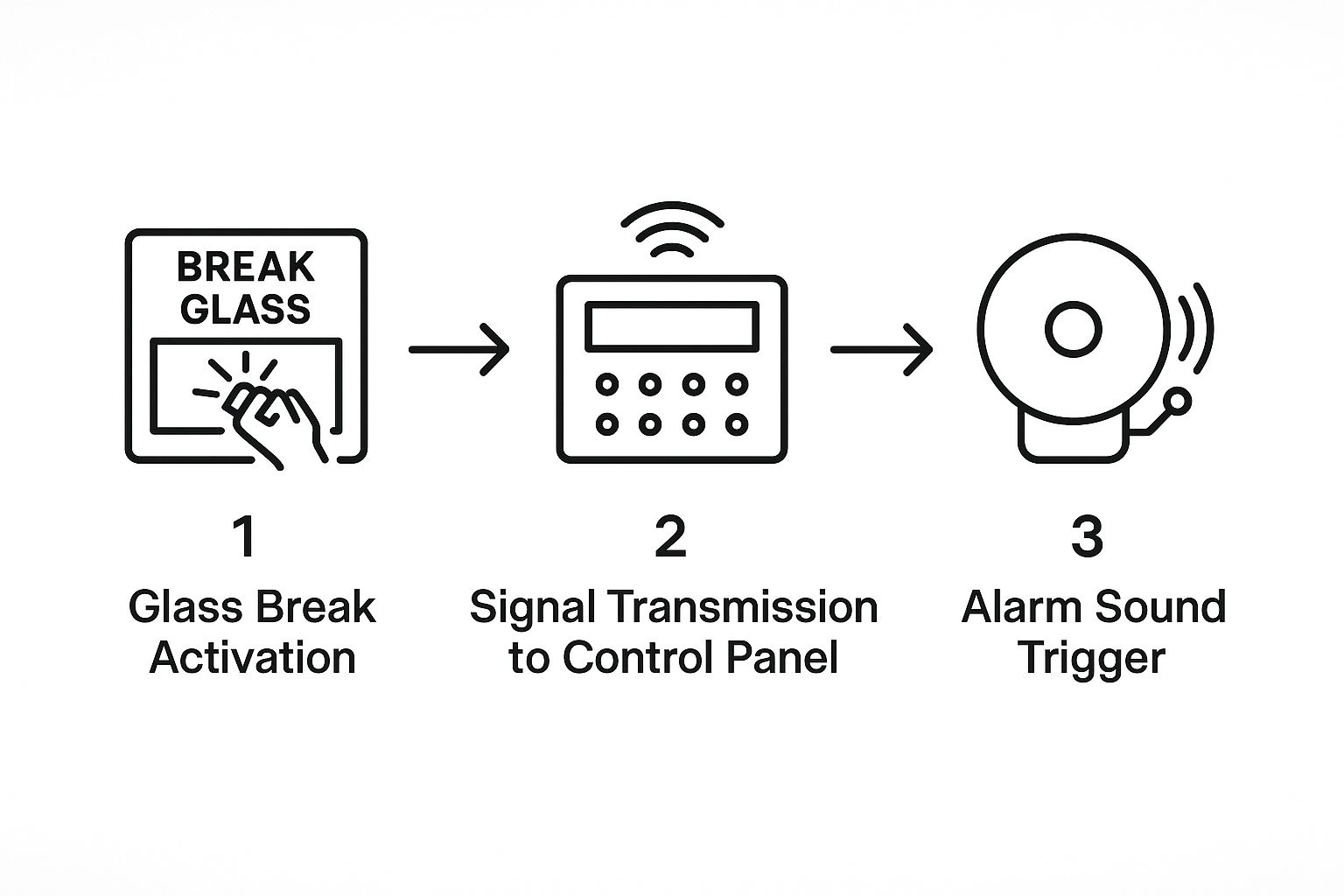
As you can see, the process is direct and immediate, ensuring a fast response the very moment a window is broken.
Acoustic vs. Shock Sensors
While most modern alarms are acoustic, it’s good to know the different technologies out there. Each has its place in a solid security setup.
-
Acoustic Sensors: These are the most common. They have a built-in microphone tuned to the specific frequencies of breaking glass. The real advantage here is that a single sensor can often cover multiple windows within a 20-25 foot radius, making them perfect for larger rooms.
-
Shock Sensors (Vibration Sensors): These devices are a bit different. They mount directly onto the windowpane or frame itself. Instead of listening, they feel for the specific vibrations and shockwaves created when glass is struck. They're incredibly effective but have one key limitation: they only protect the single pane of glass they're attached to.
The market for these sensors is growing quickly, with wireless models becoming the standard. This boom is driven by demand in new construction and just how easy it is to add wireless sensors to smart home setups. Plus, as the acoustic technology gets better at filtering out false alarms, more people are trusting and adopting them. You can dive deeper into the growth of glass break sensors to see the trends for yourself.
For most homes and businesses, a strategically placed acoustic break glass alarm offers fantastic coverage and peace of mind. Now that you understand how this two-factor detection works, you can see how such a simple device adds a powerful and precise layer of security to your property.
The Key Benefits of Installing Glass Break Sensors
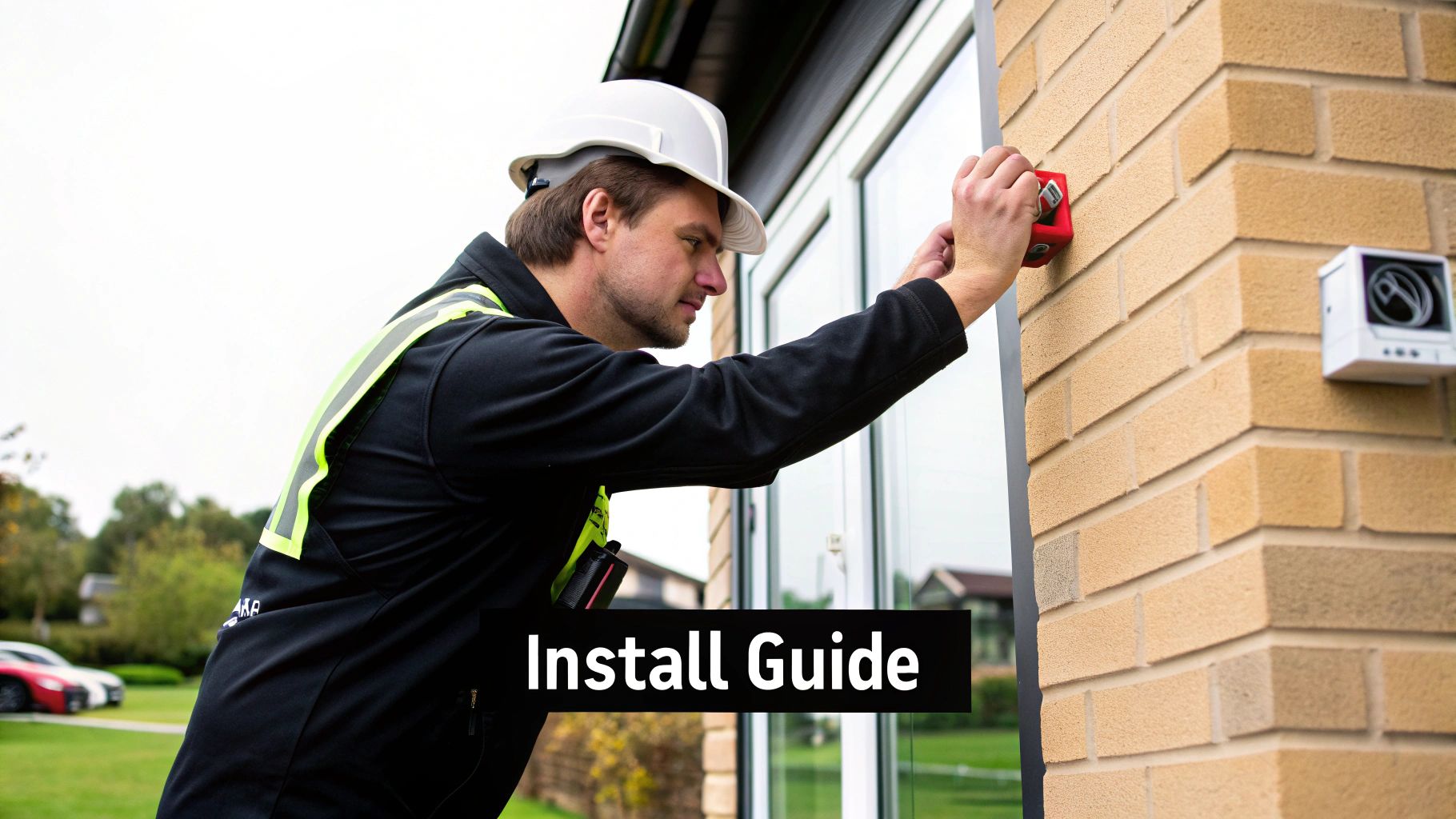
Knowing how a break glass alarm works is one thing, but seeing its real-world value is what really matters. The benefits go far beyond just a loud siren; these sensors add a critical layer of protection that can completely shift your security strategy. For any home or business owner, installing them translates directly to greater safety and genuine peace of mind.
The biggest advantage is simple but incredibly powerful: early detection. Your standard door and window contacts only go off after a door or window is actually opened. A break glass alarm, on the other hand, trips the moment the glass shatters—often while the intruder is still outside.
This early warning gives you priceless seconds. That little bit of extra time is what allows you and your family to react, get to a safe place, and call for help before an intruder even steps foot inside. It's the difference between reacting to a breach and stopping one cold.
Gain Precious Time with Early Detection
Think about how a typical break-in happens. A burglar often smashes a small pane of glass to reach in and unlock a door or window, completely bypassing the contact sensor on the frame. By the time they open the door to trigger that alarm, they're already in.
A break glass sensor completely flips that script. The alarm sounds at the very first sign of forced entry—the shattering glass itself.
This immediate response is a powerful deterrent. A loud, unexpected alarm will often send an intruder running before they can follow through, preventing theft, damage, and a potentially dangerous confrontation.
This early alert is especially crucial in larger buildings where it might take longer for people to realize there's a threat. Protecting vulnerable glass is a core part of any complete security plan, a principle that applies just as much to homes as it does to commercial properties. For instance, a major part of improving school safety involves securing large glass entryways, which is why specialized strategies like using https://fortresssecurityfilms.com/security-window-film-for-schools/ are so important.
Deter Burglars Before They Even Get Inside
Burglars are opportunists looking for an easy target. They scout for properties with obvious weak spots and little resistance. A home or business with a visible, comprehensive security system—including sensors and alarm company decals—signals that it's just not worth the risk.
A break glass alarm specifically targets one of the most common and fastest ways burglars get in. Windows are almost always seen as the weakest link in a building's perimeter. By actively monitoring them, you take that easy option off the table.
Here’s a quick look at why this deterrent factor works so well:
- Increased Risk: An alarm that goes off before they're even inside dramatically increases their odds of getting caught.
- Loss of Stealth: The element of surprise vanishes, forcing them to abandon their plan.
- Psychological Impact: A blaring siren creates panic and confusion, making it impossible for an intruder to think clearly.
At the end of the day, a break glass alarm does more than just detect a break-in; it actively works to stop it from happening in the first place. It fortifies your most vulnerable points, secures your perimeter, and gives you the confidence that comes from knowing your property is truly protected.
How to Choose the Right Break Glass Alarm
Picking the right break glass alarm isn't as simple as grabbing the first one off the shelf. Every property is different, and what works for a small apartment won't be the best fit for a sprawling office. Your home's layout, the security system you already have (or plan to get), and your budget are all going to steer your decision.
The first big choice you'll face is between wired and wireless models. Wired alarms are the old guard—incredibly reliable because they're physically connected to your main security panel. You never have to worry about batteries, but installation can be a real project, often needing a pro to snake wires through your walls. On the flip side, wireless sensors are all about flexibility. You can stick them just about anywhere, making them perfect for DIY setups or for adding security to a home where tearing into drywall isn't an option.
Assessing Your Property’s Unique Needs
Before you even start shopping, take a quick tour of your own space. Think like an intruder for a moment. The perfect sensor for a quiet house in the suburbs might get easily confused in a noisy downtown shop.
Here are a few things to keep in mind to find the right match:
- Number of Windows: How many glass windows and doors are you trying to protect? If you have a sunroom or a wall of windows, a single acoustic sensor covering a 20-25 foot radius is a much smarter and more cost-effective choice than putting an individual shock sensor on every single pane.
- Room Layouts: Open-concept living rooms are very different from a series of small, closed-off offices. Things like heavy drapes, thick walls, or even a large bookshelf can muffle the high-frequency sound a sensor is listening for. You might need a couple of sensors to cover a space with lots of sound-blocking obstacles.
- Background Noise: Is your home on a busy street where trucks rumble by? Is your business next to a construction site? High levels of ambient noise can be a real challenge for these sensors, which brings us to a non-negotiable feature.
If you take away one thing, let it be this: always choose a break glass alarm with adjustable sensitivity. This feature is your best defense against false alarms. It lets you dial in the sensor to ignore everyday clatter—like dropping a plate—while still being sharp enough to catch the distinct sound of shattering glass.
Wired vs Wireless Break Glass Alarms
So, which one is right for you? Let's break down the pros and cons of wired and wireless models to make that decision a little easier. There's a clear trade-off between installation ease and long-term maintenance.
This table puts their key differences side-by-side.
| Feature | Wired Alarms | Wireless Alarms |
|---|---|---|
| Installation | More complex, often requires a professional to run wires through walls. | Simple DIY installation, can be placed almost anywhere within range. |
| Reliability | Extremely reliable with a constant power source and direct connection. | Highly reliable, but dependent on battery life and signal strength. |
| Cost | Lower upfront cost for the device, but higher installation expenses. | Higher device cost, but little to no installation expense. |
| Flexibility | Fixed placement, difficult to move once installed. | Very flexible, easy to move or reposition as needed. |
| Compatibility | Best for new construction or integration with traditional security panels. | Ideal for existing homes and smart home systems like Alexa or Google Home. |
At the end of the day, picking the right break glass alarm is a balancing act. You have to weigh reliability against convenience and cost. By taking a good, hard look at your property and understanding what each type of sensor brings to the table, you can confidently choose the protection that makes sense for your most vulnerable entry points.
Installation Tips and Best Practices

A break glass alarm is only as reliable as its installation. Get it right, and the device will accurately pick up on a genuine threat while ignoring everyday sounds. A bad setup, on the other hand, can lead to frustrating false alarms or, worse, a complete failure to detect a break-in.
The secret is all about strategic placement. Think of the sensor like an ear—it needs a clear line of… sound… to the windows it’s meant to be guarding. Obstacles like walls, bulky furniture, or even heavy drapes can muffle the unique sound of shattering glass, making your alarm blind to the very event it's designed to detect.
For the best coverage, try mounting the sensor on the ceiling in the middle of the room or on a wall directly opposite the windows. This vantage point gives it an unobstructed path to hear any glass in its typical detection radius of 20 to 25 feet.
Avoiding Common Installation Pitfalls
Even a perfectly placed sensor can be tricked by its surroundings. Knowing what can interfere with your break glass alarm is key to making sure it works reliably and doesn't wake you up in the middle of the night for no reason.
One of the biggest culprits is other high-frequency noise. Placing a sensor too close to a clattering dishwasher, a blaring speaker, or even a hook where you hang jangling keys can fool the device into thinking a window has been smashed.
To get flawless performance from your alarm, try to avoid placing it:
- Near noisy areas: Steer clear of kitchens, laundry rooms, and home theaters.
- In rooms with a lot of echo: Large, empty spaces with tile or hardwood floors can distort sounds.
- Next to sources of vibration: A rattling air vent or a loose window frame can sometimes trigger false alarms.
Pro Tip: Once installed, always test your alarm. Use the manufacturer's recommended procedure or a dedicated glass break simulator to confirm the sensor is calibrated correctly and communicating with your main security panel.
Integrating Alarms into a Layered Security Strategy
A break glass alarm is a fantastic tool, but it truly shines as part of a complete security system. It's just one player on the team, and every component has a specific job to do.
This concept, known as layered security, means that if an intruder manages to bypass one defense, another is already in place to stop them. Your break glass alarm guards the perimeter, motion sensors watch the interior, and door/window contacts secure the most common entry points.
For a truly rock-solid defense, combine these electronic sensors with physical deterrents. A great example is pairing your alarm with a professional window security film installation, which makes the glass itself much harder to break in the first place.
This layered philosophy shows how far security has come. Break glass alarms first became popular in the 1980s and 90s, and the introduction of wireless models in the 2010s made them more accessible than ever. Today, they're a standard and affordable component of any comprehensive security setup. You can dive deeper into the history and market growth of these detectors to see just how they became an industry staple.
Common Questions About Break Glass Alarms
Even after you get the basic idea behind break glass alarms, some practical questions always pop up. It's one thing to know how they work, but another to figure out if they’re actually right for your home or business. Let's dig into the questions we hear most often to help you decide with confidence.
Getting these details straight is key to building a security plan that you can truly rely on.
Will They Work with Laminated or Tempered Glass?
This is a great question, and the answer isn't a simple yes or no. Standard break glass alarms are designed to listen for the very specific, high-frequency sound of regular plate glass shattering. But specialty glass types break in completely different ways.
-
Tempered Glass: This type of glass is made to crumble into tiny, relatively harmless pieces. While it makes a unique sound, it's often still within the range a good acoustic sensor can pick up. You'll want to check the manufacturer's specs to be sure.
-
Laminated Glass: This is where things get tricky. Laminated glass has a plastic interlayer that holds it together when it's hit. It will crack and spiderweb, but it won’t create that loud shattering sound. A standard break glass alarm will almost certainly miss it. For this kind of glass, you’d be better off with a shock sensor mounted directly on the pane.
Can a Barking Dog or Loud TV Set Off the Alarm?
This is probably the number one worry for homeowners—the thought of a false alarm in the middle of the night. Thankfully, with modern alarms, it’s rarely a problem. The best sensors use a dual-detection method, meaning they need to "hear" two things in quick succession: the low-frequency thud of an impact, followed by the high-frequency shatter of the glass.
A dog barking or an explosion in a movie might hit those high frequencies, but they won't have that initial impact sound. This two-step verification for sound makes false alarms from everyday noises extremely rare. For more tips on fine-tuning your security, feel free to explore our security blog.
The real intelligence in these sensors is their ability to recognize a sequence of sounds, not just a single loud noise. That’s what gives you peace of mind, knowing the alarm will only go off when there's a real threat.
How Many Sensors Do I Need for My Home?
Figuring out the right number is more about smart placement than trying to cover every single window. A single acoustic sensor usually has a range of about 20 to 25 feet as long as it has a clear line of sight.
Here’s a simple way to map out what you need:
- Pinpoint Vulnerable Spots: Start with ground-floor rooms that have lots of windows or large glass patio doors.
- Find a Central Location: One sensor placed on the ceiling in the middle of an open-plan living room can often cover all the glass in that space.
- Consider Obstacles: Sound can't travel through walls. Thick curtains and bulky furniture can also muffle it. Any room that's fully separated by a wall will need its own sensor.
This kind of strategic thinking is why the demand for smarter security is growing. The global market for these devices was valued at around USD 2 billion in 2025, and it’s climbing fast as people become more security-conscious. As companies keep innovating, these alarms are becoming a go-to feature in modern security. You can find more details about the glass alarm market trends on datainsightsmarket.com.
At Fortress Security Films, we know that the best security is layered security. A break glass alarm is a fantastic alert system, but our security films strengthen the glass itself. This creates a powerful physical barrier that can slow intruders down or stop them completely. Secure your weakest entry points by exploring our solutions at https://fortresssecurityfilms.com.
