


Finding the best windshield protection film is about more than just a simple accessory; it's about wrapping your windshield in an invisible shield. This shield is your first line of defense against the daily onslaught of rock chips, road debris, and even the sun's damaging UV rays. High-end options, particularly advanced nano-ceramic films, provide incredible impact resistance and heat rejection, which helps preserve your car's value and boosts your safety behind the wheel.
Let's break down what this essential automotive technology is all about.
Your Guide to an Invisible Shield
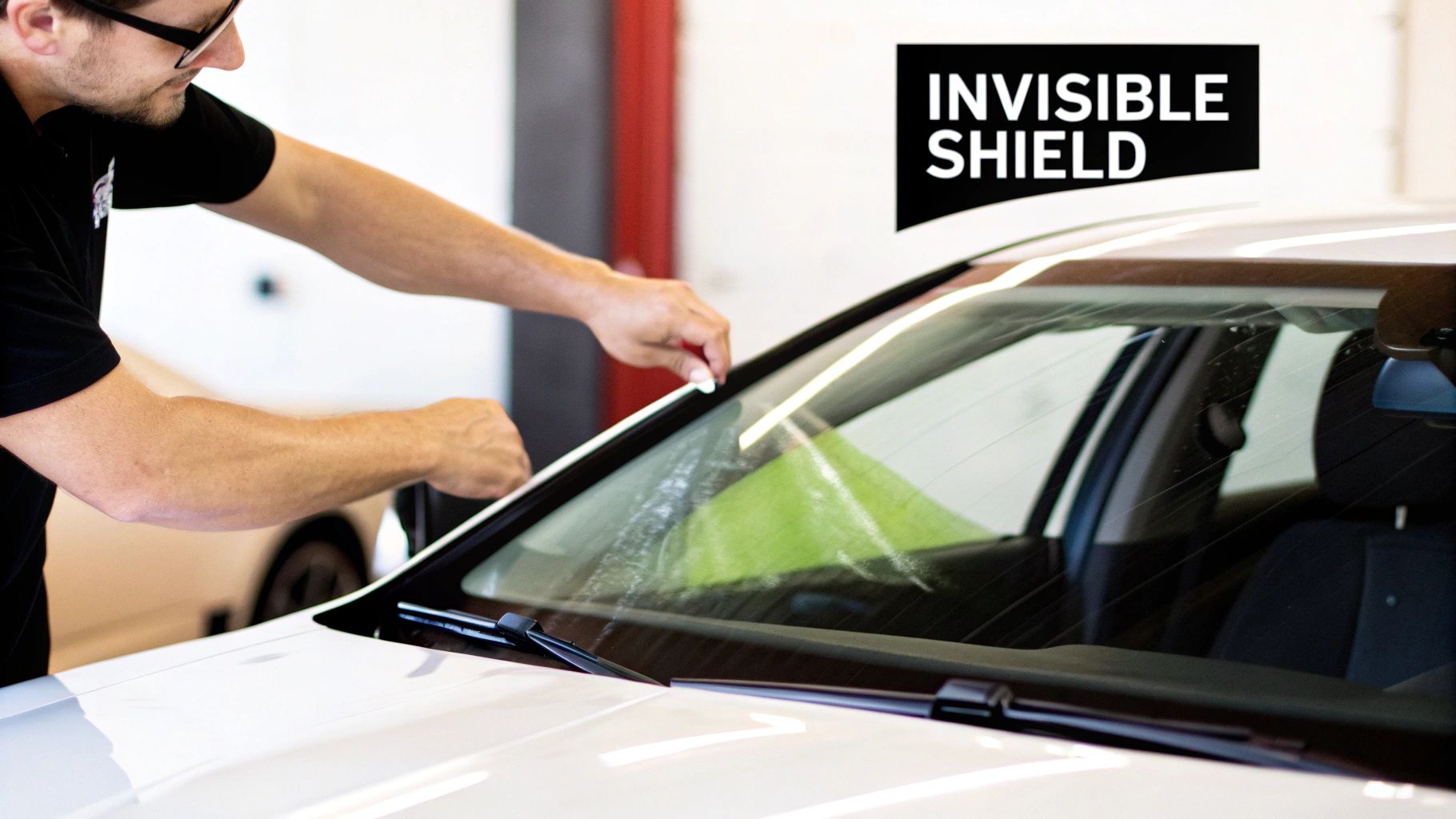
Think of windshield protection film like a heavy-duty screen protector for your car. You wouldn't leave your new smartphone screen exposed to scratches and cracks, right? This specialized film works on the same principle, but it's engineered to handle stones, gravel, and other debris kicked up on the highway.
It's a small investment that prevents a much bigger headache. A single rock chip can quickly spiderweb into a full-blown crack, forcing a replacement that can easily cost over $1,000, especially for modern cars loaded with camera and sensor technology. This isn't just about avoiding a hefty repair bill; it's a smart upgrade that improves your driving experience and protects your vehicle's structural integrity.
The True Value of Protection
This kind of protection is becoming more critical than ever. Take a look at the nearly vertical windshields on vehicles like the Ford Bronco or Jeep Wrangler—they're practically magnets for flying debris compared to the sloped glass on most sedans. Every single drive, whether it's a commute on the freeway or a weekend adventure, puts your glass at risk.
A quality windshield protection film can make your glass up to 6 times more resistant to impact from common road hazards like gravel. This dramatically lowers the odds of getting chips and cracks, saving you money and the hassle of a repair.
But the benefits of a top-tier windshield film go way beyond just stopping rocks. It's a comprehensive solution for any modern driver.
- Preserves Vehicle Value: A flawless, original factory windshield is a huge selling point. The film keeps your original glass pristine and free from the pitting and chips that accumulate over time.
- Enhances Safety: If a severe impact does occur, the film helps hold the shattered glass together, which can prevent shards from entering the cabin and injuring you or your passengers.
- Reduces UV Exposure: The best films block over 99% of harmful UV rays. This not only protects your skin but also prevents your dashboard and upholstery from fading and cracking.
This guide will walk you through the different options out there, from standard films to high-tech nano-ceramic technologies, so you can see how this simple upgrade delivers so much value. For a wider view on keeping your vehicle in top condition, you might also want to explore the best ways to protect car paint. Ultimately, the goal is to arm you with the knowledge to pick the perfect invisible shield for your car, giving you total peace of mind every time you get behind the wheel.
How Windshield Protection Film Actually Works
So, how does this perfectly clear, paper-thin film actually stop a rock from chipping your windshield? It’s easy to think of it like a giant screen protector for your car, but the science behind it is far more impressive.
The real job of the film is to take the hit. When a rock or road debris smacks your glass, the film’s multi-layered, flexible construction acts like a miniature shock absorber. It takes the sharp, focused energy of that impact and spreads it out across a much larger area. This distribution of force is the key—it prevents the energy from concentrating on one spot and causing the glass to fracture.
This isn't just a niche product anymore. People are catching on to how well it works. The global market for these films hit about USD 593.2 million in 2024, and windshield films alone now make up roughly 33% of the entire automotive glass film market. That’s a huge slice of the pie, showing just how essential this protection has become for drivers. If you're interested in the numbers, you can dig deeper into the automotive film market's growth and trends with recent industry reports.
The Anatomy of an Invisible Shield
A quality windshield protection film isn't just one layer of plastic. It’s a sophisticated laminate, with each layer doing a specific job. While the exact recipe can vary between brands, the best ones share a similar DNA.
- Adhesive Layer: This is what holds everything together. It's an incredibly strong, optically clear glue that bonds the film to your windshield. A good adhesive is crucial; it prevents bubbling or peeling, even when faced with blazing sun or freezing temperatures.
- Thermoplastic Polyurethane (TPU) Base: This is the muscle of the film. TPU is an amazing material—it's tough, elastic, and highly resistant to scrapes and abrasion. This is the layer that provides the real impact absorption, flexing on impact to soak up the kinetic energy without tearing.
- Self-Healing Top Coat: Here’s where the magic happens. The outermost layer is a special coating designed to resist minor scratches. Everyday wear from things like wiper blades can literally disappear with a little heat from the sun, keeping the film looking new and your vision clear.
Put it all together, and you get a powerful, invisible barrier that keeps your original factory glass in pristine condition.
Beyond Impact: The Role of Material Science
While the layers provide the physical defense, the materials inside those layers are what give the film its more advanced features, like blocking heat and UV rays. This is where you start to see the real difference between a basic film and a premium one.
Think of it this way: a basic film is like a simple raincoat—it just keeps the water off. A more advanced film is like a high-tech GORE-TEX jacket. It not only repels water but also breathes and helps regulate your temperature. The materials make all the difference.
Two of the top technologies you’ll see on the market today are ceramic and nano-ceramic films.
Ceramic Films
These films are infused with tiny, non-metallic ceramic particles. Their superpower? Rejecting heat. The ceramic particles are fantastic at absorbing and reflecting infrared (IR) light—the part of the sun's spectrum that you feel as heat.
Because there's no metal in them, ceramic films won't mess with your electronics. That means no interference with your phone signal, GPS, or the advanced driver-assistance systems (ADAS) that rely on sensors behind your windshield. This makes them a great fit for any modern, tech-filled car.
Nano-Ceramic Films
This is the top-of-the-line stuff. Nano-ceramic films take the same idea but use even smaller ceramic nanoparticles packed more densely together. This lets them block a staggering amount of infrared heat without affecting how clear the film is. In fact, these films often have the best optical clarity you can get, giving you maximum protection from both impacts and heat without ever compromising your view.
Key Features to Compare Before You Buy
Moving from what the film does to what the specs on a product sheet actually mean can be a bit jarring. You're suddenly hit with a wall of acronyms—VLT, IR, UV—and it's easy to get lost. But understanding these numbers is the single most important part of picking the right film. Let's break down what they mean so you can compare products like a seasoned pro.
These specs aren't just for show; they directly translate to how the film performs in the real world. One film might be a beast at blocking heat, while another is all about brute strength. Knowing what you're looking for ensures you get the protection you're actually paying for.
Understanding Optical Clarity and VLT
First things first: a windshield film’s most important job is to be completely invisible. This is where Visible Light Transmittance (VLT) comes in. It’s simply a percentage of how much visible light gets through the film and into your eyes. For a windshield, you want this number to be as high as possible—think 90% or more.
A high VLT guarantees your view isn't darkened, especially at night. Some lower-end films can create a slight haze or visual distortion, but the premium stuff is engineered to be optically perfect. When it's installed right, you shouldn't even notice it’s there.
Decoding Heat and UV Rejection
This is where the really impressive technology comes into play. Sure, stopping rock chips is the main event, but managing the sun’s assault is a very close second. Two key metrics tell you everything you need to know about how well a film keeps your cabin comfortable and safe from the sun.
- UV Rejection: This tells you how much of the sun's damaging ultraviolet radiation gets blocked. UV rays are the culprit behind a faded dashboard and can be harmful to your skin. Any quality film worth its salt should block over 99% of both UV-A and UV-B rays.
- Infrared (IR) Rejection: This is the big one for comfort. Infrared light is the part of the solar spectrum that you feel as heat. A high IR rejection percentage means the film is actively stopping that heat from cooking your car's interior. High-end nano-ceramic films can knock out over 90% of infrared radiation, making a massive difference on a hot day.
The demand for this level of comfort and protection is skyrocketing. In 2024, the windshield segment dominated the automotive film market with a 69.5% share, a trend largely fueled by consumers wanting superior UV and heat-blocking performance. You can dig into more data on the growth of the automotive films market to see how these technologies are shaping what people buy.
Key Takeaway: Don't mix up VLT with heat rejection. The best films deliver the best of both worlds: a super high VLT for see-through clarity and incredibly high IR and UV rejection for a cool, protected cabin. You get all the benefits without any of the tint.
The Importance of Film Thickness
Beyond light and heat, we need to talk about raw toughness. A film’s ability to resist impacts is directly related to its thickness, which is measured in mils (one-thousandth of an inch). It might not sound like much, but small differences in thickness have a huge effect on durability.
Most windshield protection films fall between 4 to 8 mils. As a general rule, a thicker film provides better protection against bigger impacts at higher speeds. If you spend a lot of time on highways or live down a gravel road, choosing a thicker film is a smart move for an extra layer of defense.
This simple diagram shows the multi-layer sandwich that gives these films their strength.
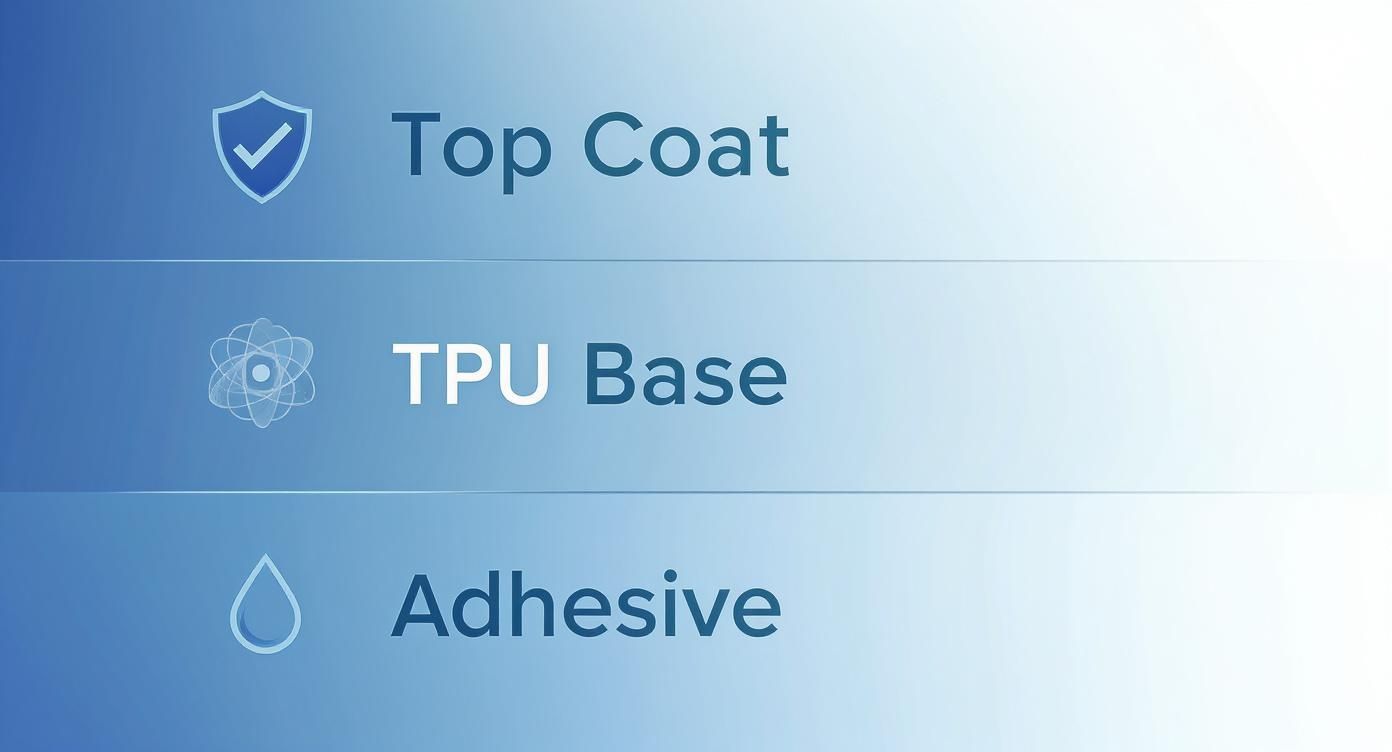
From the durable TPU base to the self-healing top coat, each layer has a job to do, working together to absorb impacts and shrug off daily abuse.
Windshield Protection Film Technology Comparison
Not all films are created equal. The material technology used to achieve these performance specs varies significantly, impacting everything from heat rejection to longevity.
| Feature | Standard TPU Film | Carbon Film | Ceramic Film | Nano-Ceramic Film |
|---|---|---|---|---|
| Primary Function | Impact resistance | Impact & moderate heat rejection | Impact & good heat rejection | Maximum impact & heat rejection |
| Heat Rejection (IR) | Low (0-20%) | Moderate (40-60%) | High (70-85%) | Very High (90%+) |
| Clarity | Good to Excellent | Good | Excellent | Excellent |
| Signal Interference | None | None | None | None |
| Cost | $ | $$ | $$$ | $$$$ |
This table gives you a quick snapshot of how the different film types stack up. A basic TPU film is great for pure impact protection on a budget, but if you want to seriously cut down on heat, you'll need to step up to a ceramic or nano-ceramic option. By weighing these key features—VLT for clarity, IR/UV rejection for comfort, and thickness for durability—you can look past the marketing hype and focus on the data that really matters for your ride.
Navigating the Professional Installation Process
You can buy the best film on the market, but it's only as good as the person installing it. While the thought of a DIY project can be appealing, getting that flawless, invisible finish that makes windshield protection film so effective is a true craft—one best left to the pros. This isn't just about looks; a perfect installation is critical for the film to do its job and protect your glass for years to come.
Trying to install it yourself is often a one-way ticket to frustration. A single speck of trapped dust, a stubborn air bubble, or a slightly crooked edge doesn't just look bad; it can actually weaken the film and ruin your investment. A professional installer has the clean environment, the right tools, and the muscle memory that only comes from hundreds of applications.
What to Expect During Installation
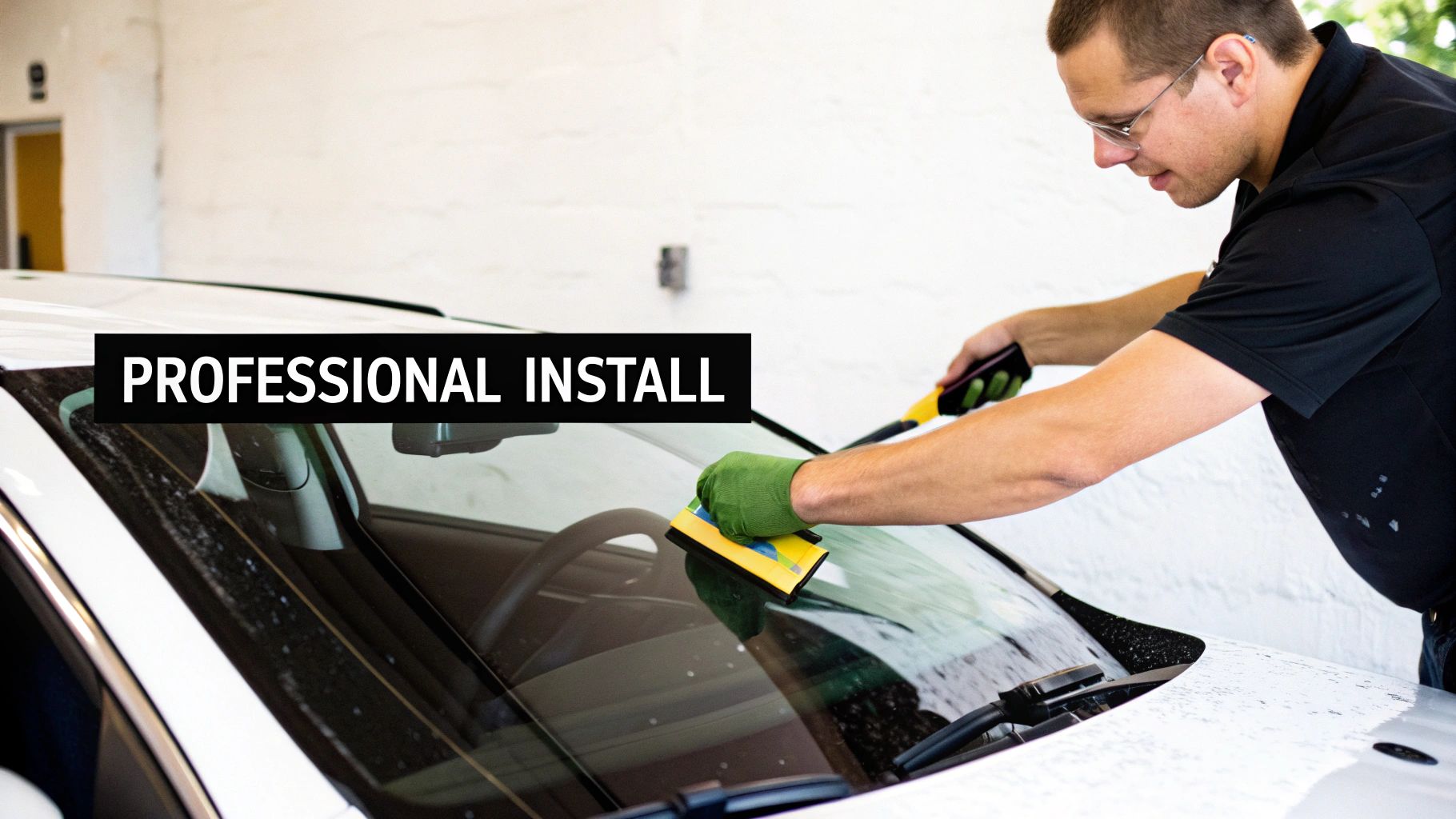
A professional install is a surprisingly detailed process. It's a careful dance of deep cleaning, precision fitting, and expert application that takes a few hours to get just right.
-
Thorough Decontamination: It all starts with cleaning—and I mean really cleaning. The installer will scrub every inch of your windshield, clearing away any trace of dirt, oil, and grime from the glass and the surrounding trim. This ensures nothing gets trapped underneath.
-
Precise Fitting and Cutting: Next, they'll lay a large sheet of film on the outside of the windshield. Using a heat gun, they expertly shrink the film to match the exact curves of your glass. This heat-molding step is what guarantees a custom, glove-like fit before they trim it to size.
-
Clean Room Application: With the film perfectly shaped, it's time for the real magic. The installer moves to the inside of the vehicle, using a special slip solution to float the film into the perfect position. Then, with a squeegee and practiced hands, they methodically press out every drop of liquid and air, creating a crystal-clear bond to the glass.
-
Curing and Final Inspection: Once the film is on, it needs time to set. The installer will give it a final look-over for any imperfections and tell you what to expect during the curing process. This usually means no car washes or windshield wipers for a couple of days while the bond fully hardens.
Factors That Influence Cost
The price tag for a professional installation isn't just a random number. Several key things determine the final cost, so you know you're paying for the specific service your vehicle needs.
- Vehicle Make and Model: The size and shape of your windshield are huge factors. A massive, heavily curved windshield on a modern SUV is a much bigger job than the small, flat glass on a compact car.
- Film Quality: The film itself is a big part of the cost. A standard TPU film is more budget-friendly, whereas a top-tier nano-ceramic film with advanced heat-blocking tech will naturally be a bigger investment.
- Labor and Shop Rate: An installer’s experience, certifications, and even their shop's location will influence the price. Reputable shops might charge more, but you’re paying for expertise that guarantees a perfect result and a warranty you can count on.
Think of professional installation not as an extra cost, but as part of the product itself. The installer’s skill is what truly activates the film's protective power and ensures it lasts.
How to Find a Reputable Installer
Choosing the right shop is just as important as choosing the right film. You want to find certified installers who specialize in protection films and are proud to show off their past work. Before you hand over your keys, don't be shy about asking some direct questions.
- What film brands do you carry, and why did you choose them?
- Are your technicians certified by the film manufacturer?
- What, exactly, does your installation warranty cover?
- Can I see some examples of your work on a car like mine?
By understanding what goes into a great installation and knowing what to ask, you can feel confident that your investment in windshield protection film will pay off with years of invisible, reliable defense against the road ahead.
Looking After Your Windshield Film for the Long Haul
You've made a great choice by investing in windshield protection film. Now, a little bit of care will go a long way in making sure it lasts and does its job, keeping your glass pristine. Honestly, keeping it in top shape is pretty simple, but it makes a huge difference.
The First Few Days Are Crucial
Right after installation, the film enters a curing period that's absolutely vital. This usually takes about 48 to 72 hours. During this window, the adhesive is forming a permanent bond with your windshield, and you don’t want to mess with that process.
It’s simple: just leave it alone. That means no windshield wipers and definitely no car washes until it's fully set.
How to Keep It Clean (The Right Way)
Once the film has cured, cleaning is easy. The main thing to remember is to be gentle—you want to protect that special top coat that gives the film its self-healing properties.
- DO stick to ammonia-free glass cleaners. Ammonia is the enemy of film adhesive; it can break it down over time, leading to bubbling or a yellowish tint.
- DO use a clean, soft microfiber cloth. It’s the perfect tool for lifting away dirt without creating micro-scratches.
- DON'T ever use abrasive scrubbers, scouring pads, or even rough paper towels. They will permanently scuff up the film's surface.
- DON'T reach for razor blades or scrapers to deal with stubborn gunk. You'll cut right through the film, guaranteed.
Got some dried-on bug guts or sticky tree sap? Just soak the spot for a few minutes with some mild, soapy water. Then, a gentle wipe with your microfiber should do the trick. A little patience here saves you a big headache later.
Knowing When It's Time for a Replacement
A top-tier windshield film can last for years with the right care. But remember, it's a sacrificial layer. It's designed to take a beating so your expensive windshield doesn't have to. Eventually, it will show signs of a life well-lived.
Keep an eye out for tell-tale signs like the edges starting to peel, the film looking discolored or yellow, or bubbles and blisters popping up that don't disappear. When you see these, the film has done its job and it's time for a fresh layer.
Understanding your warranty is also a big piece of the puzzle. Most manufacturer warranties cover defects—things like the adhesive failing or the film yellowing for no reason. What they don't cover is damage from road debris, using the wrong cleaning products, or just normal wear and tear. Make sure you talk this over with your installer so you know exactly what’s covered.
The window film industry is booming—it's expected to jump from USD 14.5 billion in 2025 to USD 26.0 billion by 2035. As you can imagine, this means films are constantly getting better and warranties are improving. You can dive deeper into these window films market projections to see where the industry is headed.
Follow these straightforward tips, and you’ll get the maximum life out of your film, keeping your windshield safe and clear for years.
Choosing the Right Film for Your Needs
https://www.youtube.com/embed/lpPhZtkHCuQ
Now that we’ve covered the technical side of things, it’s time to get practical. Picking the right windshield protection film isn't about finding the "best" one on the market; it's about finding the one that perfectly fits your car, your climate, and your life.
Think of it as creating a custom-tailored shield for your vehicle. What are you trying to protect it from most? A little self-assessment goes a long way here. The answer is different for a highway warrior than it is for someone cruising through a sun-drenched city.
Matching the Film to Your Driving Reality
Let's translate the specs we've discussed—impact resistance, UV filtering, and heat rejection—into real-world driving scenarios. This is where the rubber meets the road, literally.
-
The Highway Commuter: If you spend your mornings and evenings on the freeway, you know the sound of rocks and debris pinging off your windshield. Your biggest enemy is impact damage. For you, a thicker film, somewhere in the 6-8 mil range, is going to be your best friend, offering the toughest defense against those inevitable rock chips.
-
The Sunbelt Driver: Live in a place like Arizona, Florida, or Texas where the sun is relentless? Your car is basically an oven on wheels for half the year. In this case, your priority should be a film with high IR (Infrared) rejection. A quality nano-ceramic film will make a night-and-day difference in your cabin temperature and save your dashboard from cracking and fading.
-
The Off-Road Adventurer: Own a Jeep Wrangler, a Ford Bronco, or another vehicle with a steep, almost-vertical windshield? You might as well have a target painted on your glass. A strong, impact-focused film is an absolute must-have to avoid a cycle of constant, expensive windshield replacements.
At the end of the day, your daily driving habits are the best compass. A city dweller might care more about UV protection to keep their car's interior looking new, while someone out in the country needs that hardcore impact strength. Be honest with yourself about what matters most, and the right choice will become much clearer.
As you weigh your options, it's also smart to check out some general strategies for finding the best aftermarket auto parts to ensure you're investing in a quality product.
While this guide gives you the knowledge to start the conversation, the final step should always involve talking to a pro. A certified installer can look at your specific vehicle, hear about your concerns, and give you a personalized recommendation. They’re the ones who can ensure you not only get the perfect film but also a flawless installation that will last for years.
Got Questions? We’ve Got Answers.
Even after getting the full rundown on windshield protection film, a few questions might still be bouncing around in your head. That's perfectly normal. Let's tackle some of the most common ones we hear from drivers every day.
Is This Stuff Actually Legal?
Yes, absolutely. High-quality windshield protection film is legal just about everywhere. The reason is simple: it’s optically clear. Unlike window tint, which is designed to darken glass and has strict laws governing its use on the front windshield, this film is virtually invisible.
That said, it never hurts to be 100% sure about your local rules. Laws can have their own little quirks from one state to another. A professional installer will know the local regulations inside and out, ensuring your film is fully compliant and giving you one less thing to worry about.
How Will My Insurance Company Feel About This?
Most of the time, they’ll see it as a good thing. Installing a clear protective film on your windshield usually won’t cause any issues with your insurance policy. In fact, it's often viewed as a smart, preventative upgrade. Think about it—the film is there to stop a tiny rock chip from becoming a massive crack that requires a full replacement claim.
Here's some perspective: Replacing a modern windshield, especially one with all the ADAS cameras and sensors, can easily cost over $1,000. The film is a small investment to prevent that big expense, a fact that insurance companies tend to appreciate.
It's still a good idea to give your insurance agent a heads-up. Some might even note it as a safety feature on your policy.
Can the Film Be Taken Off Later?
Of course. The film is designed to be a sacrificial layer, and it can be removed and replaced without any drama. Professional-grade films use a special semi-permanent adhesive that bonds securely but allows for a clean removal.
When the film has taken a few too many hits and starts to look worn, a certified technician can get it off safely. They have the right tools and solutions to gently soften the adhesive, letting the old film peel away without leaving a mess or damaging the glass. After a quick prep, a fresh new layer can be installed, making your windshield's protection good as new.
Will This Film Mess with My GPS or Car’s Sensors?
This is a huge question for anyone with a modern car, and thankfully, the answer is a firm no—provided you're using the right kind of film. High-quality ceramic and nano-ceramic films are specifically engineered to be completely signal-friendly.
These advanced films are non-metallic, which means they have zero metal particles to block or interfere with electronic signals. This guarantees that all your critical systems will work perfectly, including:
- GPS navigation
- Satellite and AM/FM radio
- Toll transponders (like E-ZPass)
- Advanced Driver-Assistance Systems (ADAS) that use cameras mounted behind the windshield
When you choose a premium, non-metallic film, you can rest easy knowing your car’s tech will perform just as it was designed to, all while being shielded from road debris.
At Fortress Security Films, we're all about providing that invisible layer of confidence for your vehicle. Our certified technicians deliver a perfect installation that protects your windshield without affecting clarity or performance. Ready to protect your investment? Explore our automotive solutions and drive with total peace of mind. Find out more at https://fortresssecurityfilms.com.
