


Feeling a bit lost when you hear the term ballistic window tint? Let's clear things up. This isn't your average window film. It’s a sophisticated, multi-layered security shield designed to make standard glass dramatically stronger against extreme impacts.
At its core, this system keeps shattered glass from exploding inward, containing the dangerous fragments and seriously slowing down anyone trying to break through.
What Ballistic Window Tint Truly Is
Think of it this way: standard window tint is like a pair of sunglasses for your property, providing great privacy and UV protection. Ballistic window tint, on the other hand, is like a flexible suit of armor for that same glass. Its main job isn't to look good; it's to absorb and spread out the raw energy of a heavy blow across the entire window.
This technology is a security system first and foremost, not just a simple upgrade. It takes one of the most vulnerable parts of any building or vehicle—the glass—and turns it into a tough, resilient barrier. The film itself is incredibly strong, but its true magic happens when it's bonded to the glass, creating a unified defense.
The Core Function: A Reinforcement System
The key idea to remember is that ballistic tint reinforces the glass you already have. It's engineered to do two critical things when things get violent:
- Fragment Retention: It holds the thousands of tiny, razor-sharp shards of glass together, keeping them locked in the frame. This single feature is a game-changer for protecting people inside from devastating secondary injuries.
- Forced Entry Delay: By keeping the window pane in one piece, even after it's been shattered, the film creates a major headache for an intruder. That delay gives people inside crucial time to get safe and for help to arrive.
This reinforcement is precisely why it's become such a vital tool in modern security. You can see the demand in the numbers, too. The overall bulletproof glass market is expected to rocket from USD 7.37 billion in 2022 to a staggering USD 14.90 billion by 2029. North America is the biggest player, owning over 33% of the global market back in 2021, which really highlights how seriously people are taking these security measures.
It's important to be clear about one thing: the name "ballistic window tint" can set the wrong expectation. While the film provides incredible impact resistance, it's one part of a bigger system. The real-world protection you get depends on the film's thickness, the type of glass it's on, and how it’s installed. It doesn't magically make your window "bulletproof" by itself.
With this foundation, we can now dig into the science behind how this film actually works. Understanding these basics is essential, whether you're looking into security film for home windows or for a high-stakes commercial building.
How Ballistic Window Film Technology Works
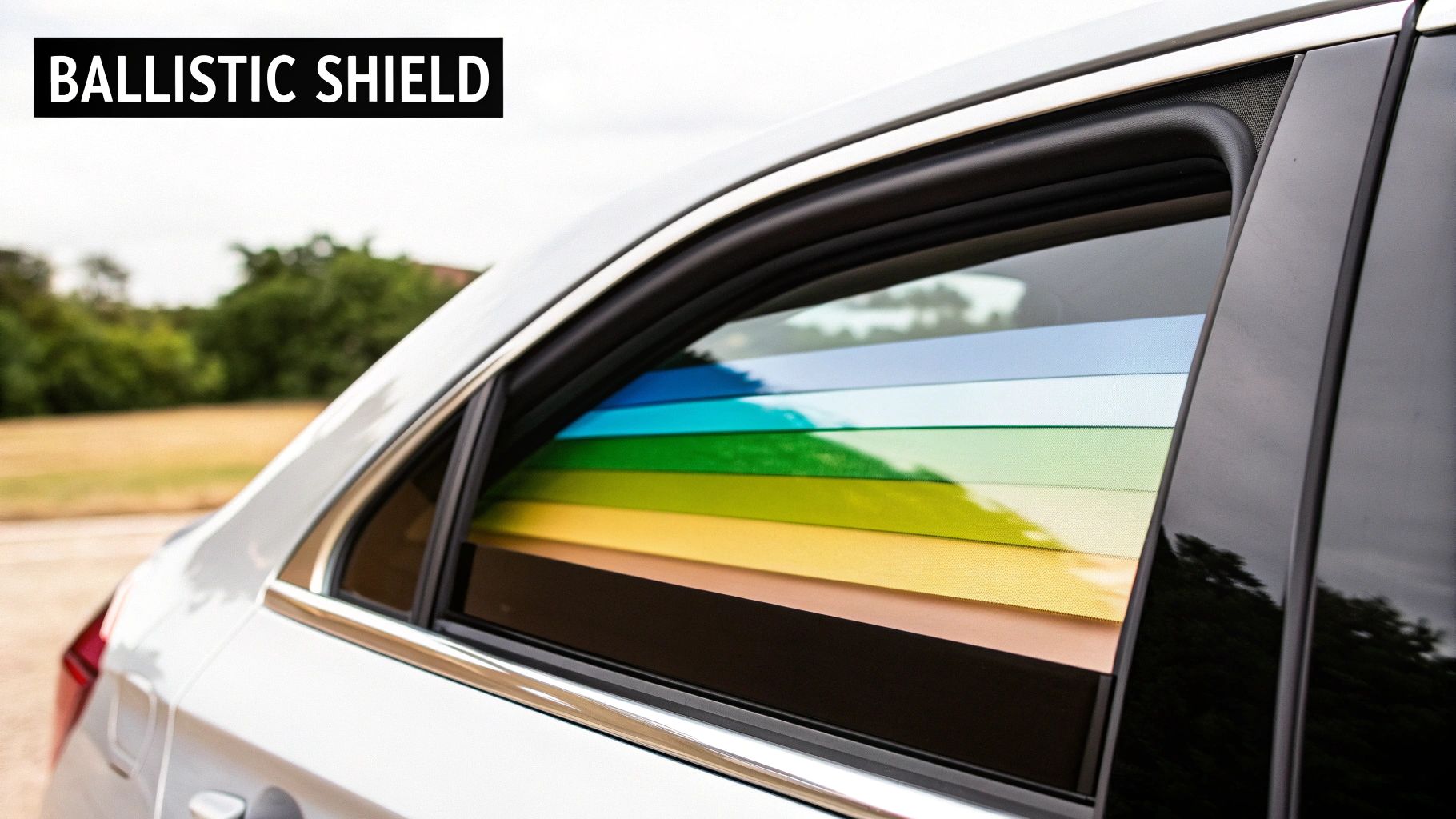
The incredible protective power of ballistic window tint isn't magic; it's a smart application of materials science. The core ingredient is a material you're probably already familiar with: polyethylene terephthalate (PET). It’s the same polymer used in plastic bottles, but engineered to a much higher standard of strength and resilience.
But it’s not just a simple sheet of plastic. The real strength comes from layering. Top-tier security films are built from many micro-thin layers of PET, all bonded together with intense heat and pressure. Each individual layer is paper-thin, but when stacked together, they form a barrier with serious tensile strength and puncture resistance.
A good analogy is plywood. A single, thin veneer of wood is pretty flimsy. But when you laminate several layers together, alternating the grain direction, you get an incredibly strong and rigid board. Ballistic film uses this same layering principle to achieve its toughness.
The Science of Energy Dispersion
At the end of the day, the film’s main job is to manage impact energy. The entire system is built around the principle of energy dispersion. When something—a projectile, a hammer, or a shockwave—hits the window, the film instantly goes to work, absorbing that focused kinetic energy and spreading it out across the entire surface of the glass.
Think about how a spiderweb catches a bug. The insect doesn't just snap the one thread it hits. The force radiates through the whole web, and dozens of interconnected threads work together to absorb the impact and halt the bug in its tracks. Ballistic film works in a similar way, turning the whole window pane into one big shock absorber.
This ability to spread out the impact force is what prevents a total, catastrophic failure. The glass will likely crack or even shatter, but instead of exploding into a spray of dangerous shards, it remains held together by the film.
This is the key to its safety value. It stops flying glass, which is often the biggest cause of injury in a blast or break-in. The window stays in its frame, maintaining a barrier and buying you critical time to react.
The Critical Role of Adhesives
The film itself is only one part of the system. The other, equally important part is the specialized adhesive that bonds it to the glass. This isn’t your average craft glue. Manufacturers use aggressive, pressure-sensitive adhesives that form a near-permanent, molecular-level bond with the glass.
This powerful bond is what allows the energy dispersion to happen. If the adhesive were weak, the film would just delaminate on impact, rendering it useless. A proper bond ensures the film and glass work as a single unit to resist an attack. It's also what provides the crucial fragment retention, locking all those broken pieces of glass safely in place.
It's this combination of multi-layered PET, the principle of energy dispersion, and a high-strength adhesive that transforms a fragile piece of glass into a formidable security component.
Understanding Ballistic Protection Levels
Diving into the world of security ratings can feel like you’re learning a new language. You'll see a lot of acronyms and numbers, but what do they actually mean? When we're talking about ballistic window tint, getting a handle on these standards is crucial. They tell you exactly how the product will perform against real-world threats.
The single most important thing to understand is this: a ballistic rating doesn't apply to the film alone. It certifies the entire system—the glass, the film, and the frame attachment, all working in concert.
Think of it like building a reinforced concrete wall. The glass is the concrete, and the film is the steel rebar running through it. You wouldn't judge the wall's strength by looking at the rebar on its own, right? Its real power comes from how it reinforces the concrete. It’s the same with a ballistic window system. A super-thick film on a thin, flimsy pane of glass simply won’t cut it.
This infographic gives a quick visual of how the complete system works to deflect and absorb an impact.
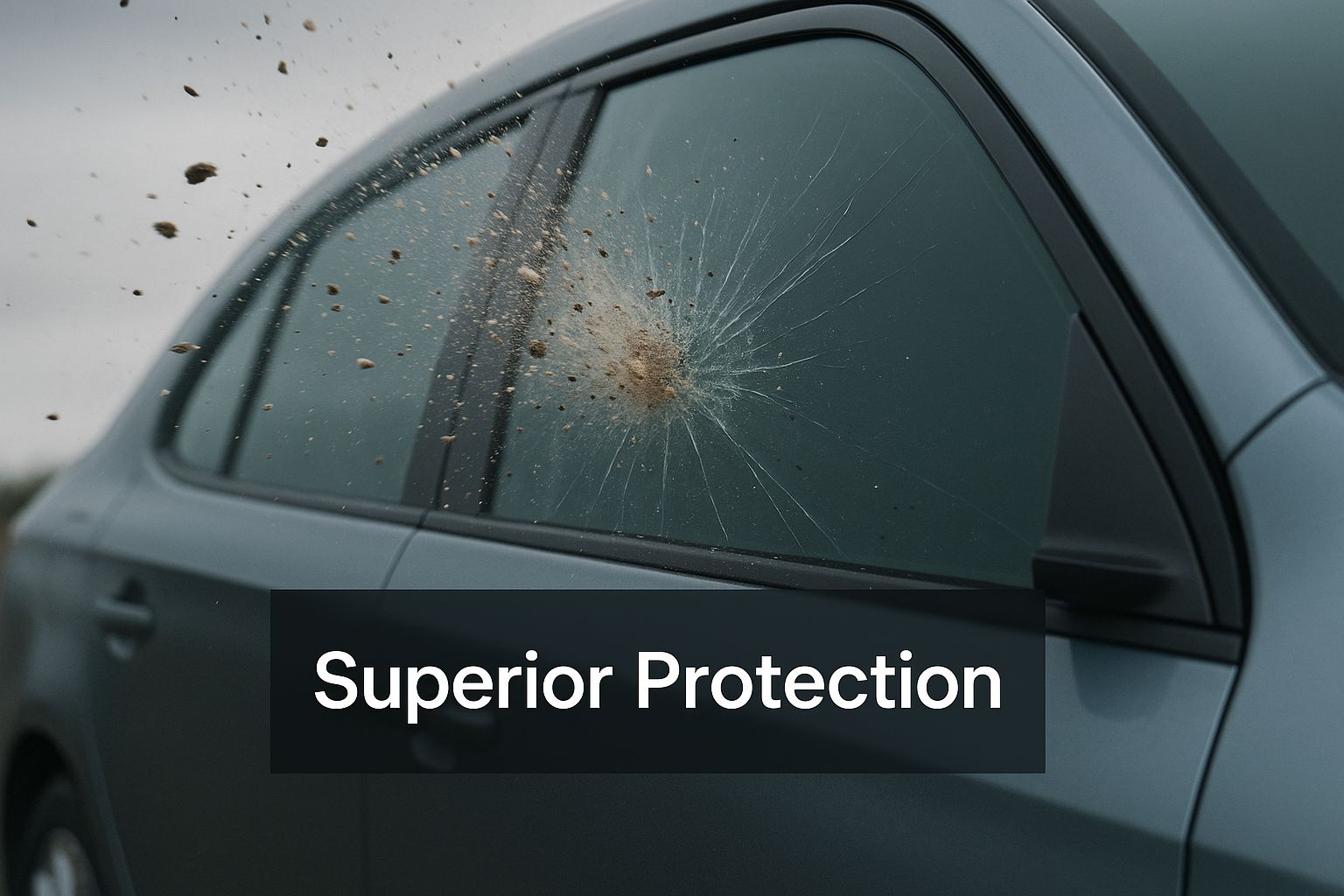
As you can see, the goal is to keep the threat out by holding everything together, maintaining that critical protective barrier.
Decoding the Industry Standards
In the United States, two main organizations set the benchmarks for ballistic resistance: the National Institute of Justice (NIJ) and Underwriters Laboratories (UL). While their testing protocols vary a bit, they both aim to give a reliable, consistent measure of what a security product can stop.
- NIJ Standard 0108.01: This is the standard you often hear about in law enforcement circles. It was developed primarily for body armor but is widely used as a reference for all kinds of ballistic materials.
- UL 752: This is the go-to standard for commercial buildings. It's designed specifically for bullet-resisting equipment like windows, bank teller partitions, and security doors.
These standards aren't one-to-one, but together they create a clear hierarchy of protection that helps you make an informed decision.
From Handguns to High-Powered Rifles
Each protection level is tested to defeat a specific type of bullet fired from a specific type of gun. The levels build on each other, so a product with a higher rating can stop everything the lower levels can, plus its own specified threat. Matching the right level to your security needs is the key.
For instance, a rating like UL 752 Level 1 is certified to stop three shots from a 9mm handgun. This is a very popular choice for high-end retail stores or homes looking to protect against smash-and-grabs and other common crimes involving handguns.
As you go up the scale, the protection gets dramatically stronger.
One crucial point: there’s no such thing as "bulletproof." Given enough firepower and time, any barrier can be breached. The correct term is bullet-resistant. The goal of a ballistic window system is to resist a specified number of rounds from a specific weapon, buying precious time for people inside to get to safety or for help to arrive.
Ballistic Protection Levels and Common Threats
To make these ratings more concrete, let's break down how they stack up against real-world threats. This table connects the dots between the protection level, the ammunition it's designed to stop, and where you would typically find that level of security being used.
| Protection Level (Example) | Ammunition Resistance (e.g., Handgun, Rifle) | Glass & Film System Requirements | Common Applications |
|---|---|---|---|
| UL 752 Level 1 | 9mm Handgun | A thick security film (14-21 mil) on standard glass. | High-end retail, residential homes, and corporate offices worried about forced entry. |
| NIJ Level IIIA | .44 Magnum Handgun | A multi-layer film system, often paired with a polycarbonate laminate. | Police vehicles, government buildings, and secure facilities needing powerful handgun protection. |
| UL 752 Level 8 | 7.62mm Rifle (like an AK-47) | A very thick, complex system of layered glass, polycarbonate, and specialized films. | Military bases, embassies, and critical infrastructure where rifle threats are a primary concern. |
What this shows is that as the threat level rises, the complexity and thickness of the glazing system increase right along with it. The goal isn't just to pick the highest number. It's about doing a realistic threat assessment and choosing the ballistic window tint system that gives you the right level of protection for your specific situation.
The Hidden Perks: More Than Just Ballistic Resistance
Sure, the main event for ballistic window tint is stopping bullets and other high-speed threats. That’s its headlining act. But thinking of it only in those terms is like saying a smartphone is just for making calls. The real value is in the layers of protection and everyday comfort it brings to the table, turning a simple pane of glass into a high-performance shield.
A Tough Barrier Against Forced Entry
Think about how a typical break-in happens. Speed is the criminal's best friend. They expect to smash a window and be inside in a matter of seconds. Ballistic film throws a massive wrench in that plan.
When struck, the glass will crack, but the film holds all those dangerous shards tightly together. Instead of a gaping hole, the intruder is met with a stubborn, rubbery barrier that refuses to give way. The quick smash-and-grab turns into a noisy, prolonged struggle, drawing unwanted attention and dramatically increasing the odds of them just giving up and running.
Keeping You Safe When It's Not an Attack
Life is unpredictable. Ballistic tint acts as a silent guardian during events that have nothing to do with crime. In a hurricane or a severe earthquake, windows can become one of the biggest hazards, exploding inward and sending deadly shrapnel flying. This film keeps the glass contained.
The same idea applies to blast mitigation. During an explosion, it’s often the flying glass, not the blast wave itself, that causes the most severe injuries. Ballistic film can be the difference-maker, holding the window together and protecting everyone inside.
Here’s a quick rundown of these crucial safety benefits:
- Smash-and-Grab Deterrent: It slows intruders down so much that they often abandon the attempt.
- Blast Protection: Catches deadly glass fragments during an explosion, shielding occupants from harm.
- Storm and Quake Safety: Reinforces windows against extreme weather and seismic shocks, keeping the elements and dangerous debris outside.
It's about maintaining the building's envelope. By keeping the window intact during a crisis, ballistic film doesn't just protect you from glass—it keeps the chaos out, giving you vital time to react.
The Everyday Advantages You'll Appreciate
Here’s the impressive part: this incredible security upgrade also comes with all the perks of a premium, high-end window tint. It’s not just sitting there waiting for an emergency; it’s working for you every single day.
For starters, it blocks up to 99% of damaging ultraviolet (UV) rays. This is huge for protecting your skin and preventing the sun from fading your car’s interior, your furniture, or your flooring.
It also does a fantastic job of rejecting solar heat. By blocking a significant amount of the sun's thermal energy, the film helps keep your car or building much cooler and more comfortable. Your air conditioning won't have to work nearly as hard, which translates directly into lower energy bills.
The demand for these comfort-focused features is already massive. Just look at the automotive tinting market, which was valued at USD 7.59 billion in 2024, largely driven by people wanting UV and heat protection. This proves how much people value the exact same benefits that ballistic film offers as a bonus.
Finally, just like any good tint, it adds a layer of privacy that keeps prying eyes out. When you combine this with its core strength, ballistic window tint becomes a key player in a multi-layered defense, slotting in perfectly with comprehensive car security systems. It’s a single investment that pays off in countless ways.
Where Ballistic Window Tint Makes a Real-World Difference
The science behind ballistic window tint is fascinating, but its real value shines when you see it in action. This isn't just some theoretical defense system; it's a practical, life-saving solution being put to work every day in vehicles, buildings, and even homes to protect people and property.
The demand for this kind of proactive security is booming. Ballistic films are a major player in the global bulletproof glass market, which hit a valuation of around USD 5.02 billion in 2024. Experts predict that number will more than double, reaching USD 11.25 billion by 2032. This surge is fueled by growing security concerns and the need for better, lighter protective materials for our most important buildings and vehicles.
Protecting People on the Move
Vehicles are, by their nature, vulnerable targets. When you're in transit, you're exposed. Ballistic film changes that equation by reinforcing the weakest points—the glass—giving occupants critical protection and the driver a chance to get out of a dangerous situation.
You'll find it being used in several key areas:
- Executive Transport: For corporate leaders, politicians, and other high-profile individuals, a vehicle can be a target. Ballistic film offers a discreet but powerful shield against ambushes or targeted attacks.
- Cash-in-Transit (CIT) Vans: These armored trucks are magnets for armed robbers. Hardening the windows makes it incredibly difficult for criminals to smash their way in and get to the cash.
- Law Enforcement Vehicles: Police cars and SWAT vehicles face unknown dangers on every call. Ballistic tint can mean the difference between a projectile entering the cabin or being stopped cold, giving officers a crucial tactical advantage.
Essentially, this technology turns regular automotive glass into a resilient barrier. You can see more on how car window security film creates this protective layer for all kinds of vehicles.
Securing Buildings and Key Infrastructure
The applications for buildings are just as vital. Here, the focus is on fortifying vulnerable entry points against everything from a simple smash-and-grab to a coordinated attack.
Government facilities like embassies and courthouses have relied on ballistic film for years. It's not just about stopping bullets; it's about blast mitigation. The film holds shattered glass together, preventing deadly flying shards during an explosion—a critical feature in these high-threat environments.
In the commercial world, it’s all about deterrence and delay. Ballistic film transforms a storefront's biggest vulnerability—its beautiful glass facade—into a serious obstacle, buying precious time for security or police to arrive.
This is why high-end retail is a huge adopter. Luxury boutiques, facing a wave of smash-and-grab robberies, use ballistic tint to stop thieves in their tracks. A hammer or a bat won't get them through the glass quickly, frustrating their efforts and protecting millions in merchandise.
A Shield for Our Schools and Homes
Perhaps the most important applications are the ones that protect the most vulnerable. Schools are increasingly integrating ballistic window tint into their security protocols. By reinforcing classroom windows and main entrances, they create a delay during an active threat—a delay that can save lives.
And it’s not just for institutions anymore. This technology is making its way into private homes. Whether you're a public figure, live in a high-crime neighborhood, or simply want an added layer of security, ballistic film offers powerful, invisible protection against home invasions. It makes sure your windows are no longer an easy way in for an intruder. From federal buildings to family homes, it’s a versatile tool for a much safer world.
Choosing and Installing Ballistic Window Tint

Picking out the right ballistic window tint is a huge first step, but the job is only half done. How that film gets put on your windows is every bit as critical as the product you choose. Let's be clear: this is absolutely not a weekend DIY project. For this technology to work as intended, professional installation is the only way to go.
Why? Because the film itself is just one part of a complete security system. To do its job, the film has to be securely anchored to the window frame itself. If it isn't, a powerful impact could just pop the entire pane of glass—film and all—right out of the frame. That completely defeats the purpose.
The Importance of Attachment Systems
Think of it like this: the film is the shield, but the attachment system is what bolts that shield to the wall. A shield just leaning against the wall will topple with the first hard push. An attachment system creates a powerful mechanical bond between the film, the glass, and the window frame, turning them into a single, resilient unit that can absorb and withstand incredible force.
Installers generally use one of two methods to get this done:
- Wet Glaze Systems: This technique uses a high-strength structural silicone sealant to bond the film's edges directly to the glass and frame. It forms a tough, yet flexible, seal that’s fantastic at absorbing and distributing the energy from an impact.
- Mechanical Systems: These are beefier, physical anchoring systems. They often involve metal battens or frames that are bolted directly to the window frame, physically clamping the filmed glass in place. This approach offers maximum strength and is the go-to for high-security buildings.
Finding a Certified Installer
Choosing your installer requires some real homework. You're not just hiring someone to apply a tint; you're bringing in a security professional. The level of detail and skill required is worlds apart from standard tinting. In fact, looking at providers of specialized automotive services can really put into perspective the difference between cosmetic work and a true security installation.
Before you sign any contracts, make sure you ask these questions:
- Are you certified by the manufacturer? Proof of certification means they've been properly trained to install the specific product you're buying.
- What’s your experience with security films? A company that mainly does solar or decorative tinting might not have the chops for a security job. Ask to see examples of their previous security projects.
- Which attachment system do you recommend for my building? A real pro will carefully inspect your window frames and give you a clear reason why a wet glaze or a mechanical system makes more sense for your specific needs.
The installer’s expertise is a force multiplier for the technology. A premium ballistic film installed poorly will underperform, while a standard film installed by a master technician with the right attachment system will deliver reliable protection.
Understanding the Cost Factors
Investing in ballistic window film is investing in safety, and the price tag can vary quite a bit. Several factors will influence the final quote, and knowing what they are helps you set a realistic budget. The whole process is much more complex than a standard tint job, which is why a thorough on-site consultation is essential. You can get a good feel for what's involved by learning more about the steps behind security window film installation.
Here’s what drives the cost:
- Film Thickness: Thicker films, measured in mils, provide more resistance but also come at a higher price.
- Window Complexity: Large panes, odd shapes, or windows that are difficult to access will naturally require more time and labor.
- Attachment System: Mechanical systems are generally more expensive to install than wet glaze systems due to the extra hardware and labor involved.
Working through these details with an installer you trust is the key to making sure your investment gives you the protection—and the peace of mind—you’re looking for.
Frequently Asked Questions
When you're exploring security upgrades, you're bound to have questions. Here are some of the most common ones we hear about ballistic window tint, with straight answers to help you make the right call for your property.
Is Ballistic Window Tint the Same as Bulletproof Glass?
This is the most important distinction to make: no, they are not the same thing. Think of it like this: ballistic window tint is like adding a suit of high-tech armor to your existing glass. It’s an incredibly strong security film that reinforces what's already there.
Its main job is to absorb and disperse the energy from an impact, holding the glass together even after it shatters. This creates a tough, flexible barrier that's incredibly difficult to get through.
Actual bulletproof glass is a different beast entirely. It's a heavy-duty, purpose-built product constructed from multiple layers of glass and polycarbonate. It's designed from the ground up to stop bullets and requires a complete replacement of your current windows and often the frames, too.
How Much Does Ballistic Window Tint Cost?
There's no simple, off-the-shelf price for a professional installation. The final cost really depends on the unique details of your project, and getting it right requires a hands-on assessment.
A few things will shape the final quote:
- Film Thickness: Stronger, thicker films offer more protection but come at a higher price point.
- Total Square Footage: Naturally, the more glass you need to cover, the more it will cost.
- Window Complexity: Simple, flat panes are more straightforward than large, curved, or hard-to-reach windows that demand more labor.
- Attachment System: Anchoring the film to the frame with a mechanical system is the gold standard for security, but it's more involved and costly than a standard application.
This is why we always start with an on-site consultation. It's the only way to provide an accurate quote that truly reflects the needs of your building.
Can Ballistic Tint Be Installed on Any Window?
Mostly, yes—the film itself is compatible with standard annealed, heat-strengthened, and tempered glass. The bigger question, however, isn't just about the glass pane; it's about the entire window assembly.
A professional installer isn't just looking at the glass. They're evaluating the whole system. The window frame has to be strong enough to handle the force of an attack on the newly reinforced glass. A great film in a weak, rotting frame is a security risk waiting to happen.
The film and the frame have to work together. A thorough evaluation ensures the entire system will perform as a single, solid unit when you need it most.
Ready to turn your most vulnerable entry points into a powerful layer of defense? At Fortress Security Films, we specialize in providing advanced security solutions that protect what matters most. Contact us today for a professional security consultation.
