


Imagine having a layer of security so advanced it's completely invisible, giving you that deep sense of peace without turning your beautiful home into a fortress. That's exactly what modern armored glass for homes delivers. It's a highly specialized type of glazing engineered to stand up to forced entry and even ballistic threats, securing your home's most vulnerable points.
Your Home’s Invisible Shield
When most people hear "armored glass," they picture the thick, distorted panels you might see at a bank teller's window—not something you'd want in your living room. But residential security glazing has come a long, long way.
The term ‘bulletproof’ is also a bit of a myth. In the security industry, we refer to it as bullet-resistant glass. It's designed to absorb and disperse the energy of a powerful impact, not to be completely indestructible. Think of it like a car's airbag system: a sophisticated safety feature you hope you never need, but its very presence provides profound comfort and a critical layer of protection. This is about creating a true sanctuary where your family feels safe from the outside world.
More Than Just Basic Security
Let's face it: standard windows are often the weakest link in your home's security. An intruder can shatter one in seconds and gain immediate access. Armored glass flips the script, transforming a weak point into a formidable barrier.
The goal here is to create a delay. We're talking about precious seconds or even minutes that give you time to react, call for help, or get to a safe room. More often than not, that delay is all it takes to convince an intruder to give up and move on. Best of all, this technology elevates your security without sacrificing your home's aesthetic.
The real beauty of residential armored glass is how seamlessly it blends into your home’s design. It provides incredible protection that you'll never see, preserving natural light and stunning views while fortifying your peace of mind.
What’s the Secret to Its Strength?
The incredible resilience of armored glass comes down to its multi-layered construction. Instead of a single pane of standard glass, it's a composite of multiple layers of glass and tough polymer materials bonded together.
Here’s how this powerful combination works to stop a threat:
- Deform the projectile: The hard outer layer of glass is designed to flatten an incoming object, whether it's a hammer strike or a bullet.
- Absorb the energy: The flexible inner layers, typically made from materials like polycarbonate, act like a shock absorber, soaking up and spreading out the force of the impact.
- Prevent penetration: By working in concert, these layers stop the threat from getting through.
This is where the technical side of armored glass meets the very human need for security. Now that you have a sense of the basics, we can dive deeper into how it works, the different types available, and how to choose the right solution to protect your home and family.
Decoding the Layers of Protection
Not all security glass is created equal. When you're looking to protect your home, understanding the different types of armored glass for homes is the first step to making a choice you can feel confident about. We'll break down how these advanced materials work to create an invisible shield for your family, starting from the basics.
Of course, if you're building from scratch, security can be woven into your home's design right from the get-go. Thinking about the fundamentals of choosing the best windows for new construction provides a great foundation before adding these specialized layers.
Laminated Glass: The Spiderweb Effect
The most fundamental technology you'll find in residential security glazing is laminated glass. It’s not a single sheet of glass but a "sandwich"—at least two layers of glass fused together with a tough, flexible polymer interlayer, typically Polyvinyl Butyral (PVB).
Think about what happens when you throw a rock at a regular window. It shatters instantly, leaving a gaping, dangerous hole. Now, imagine throwing that same rock at a spiderweb. The web gives, absorbs the impact, and holds the rock. Laminated glass works on the same principle. When it’s hit, the glass might crack, but that powerful interlayer holds all the pieces together.
This "spiderweb effect" keeps the window sealed and makes it incredibly difficult for an intruder to break through, buying you precious time. It’s no surprise that luxury homes and gated communities are increasingly retrofitting with multi-layered laminated glass, which now has a significant market share in North America. Its ability to absorb an impact and prevent dangerous shards from flying is a critical safety feature for any family.
Polycarbonate Composites: A Kevlar Vest for Your Windows
When you need to step up your protection, you enter the world of polycarbonate composites. If laminated glass is the tough spiderweb, think of polycarbonate as the Kevlar vest for your windows. It’s a remarkably strong yet lightweight thermoplastic that can be layered with glass to create an incredibly formidable barrier.
Just how strong is it? Polycarbonate is up to 250 times more impact-resistant than glass of the same thickness. By integrating it into a glass-clad composite, you get phenomenal stopping power without the bulky, heavy windows you might picture when you hear "bulletproof glass."
Innovations using lightweight polycarbonate composites can make modern armored glass up to 50% thinner and 30% lighter than traditional all-glass versions. This allows for seamless integration into existing residential window frames without compromising your home's architectural style.
Insulated Ballistic Glass: Security Meets Efficiency
Protecting your home shouldn't mean sacrificing energy efficiency. With Insulated Ballistic Glass, often built as an Insulated Glass Unit (IGU), you don't have to choose. This design cleverly combines a multi-layered ballistic pane on one side with a standard glass pane on the other, separated by a sealed gap filled with air or an inert gas.
This setup delivers two huge wins for any homeowner:
- Uncompromised Security: The inner ballistic layers provide the robust forced-entry and bullet resistance you need.
- Superior Insulation: That sealed gap acts as a thermal break, drastically reducing heat transfer. Your home stays warmer in the winter and cooler in the summer, which can make a real difference on your energy bills.
For anyone living in a climate like Southern California, where the sun and heat are a constant battle, an IGU is a smart investment. You get elite-level protection without giving up the thermal performance you expect from modern, high-end windows.
To help you see the options side-by-side, we've put together a quick comparison.
Comparing Security Glazing Options for Your Home
This table compares the key features, benefits, and typical applications of different types of armored glass and security films to help homeowners make an informed choice.
| Glazing Type | Primary Protection | Key Benefit | Best For |
|---|---|---|---|
| Laminated Glass | Forced-Entry, Impact | Holds glass together upon breaking | Deterring burglars and storm protection |
| Polycarbonate Composite | Forced-Entry, Ballistic | High strength-to-weight ratio | Homes needing higher, rated protection |
| Insulated Ballistic Glass | Ballistic, Thermal | Combines security with energy savings | All-in-one security and efficiency upgrades |
Each of these technologies offers a unique set of advantages. Your final choice will depend on your specific security goals, your home's location, and your budget.
Understanding Ballistic Ratings and Performance Levels
When you start looking into armored glass for your home, you're buying a very specific promise of protection. But what does that promise actually mean? The answer lies in standardized ballistic ratings, which are essentially a universal language that tells you exactly what a piece of glass can stop.
These ratings cut through the marketing fluff. Instead of vague claims about being "strong," they provide a clear, test-backed guarantee of performance. The two most trusted names setting these standards are the National Institute of Justice (NIJ) and Underwriters Laboratories (UL). For homes and most civilian uses, the UL 752 standard is the one you'll see most often.
Translating Ratings Into Reality
A good way to think about these ratings is to compare them to the SPF on sunscreen. SPF 15 gives you some basic protection, but SPF 50 is a much tougher, more durable shield against the sun. Ballistic ratings work the same way. A Level 1 UL 752 rating can stop rounds from a standard 9mm handgun, while a much higher Level 8 rating is built to stop multiple shots from a high-powered rifle.
This system puts you in the driver's seat. It allows you to match the level of protection to the level of risk you're comfortable with. You probably don't need to turn your home into a fortress capable of stopping military-grade weapons if your main concern is just stopping a common burglar.
The chart below shows how different types of armored glass are constructed to achieve these protective ratings.
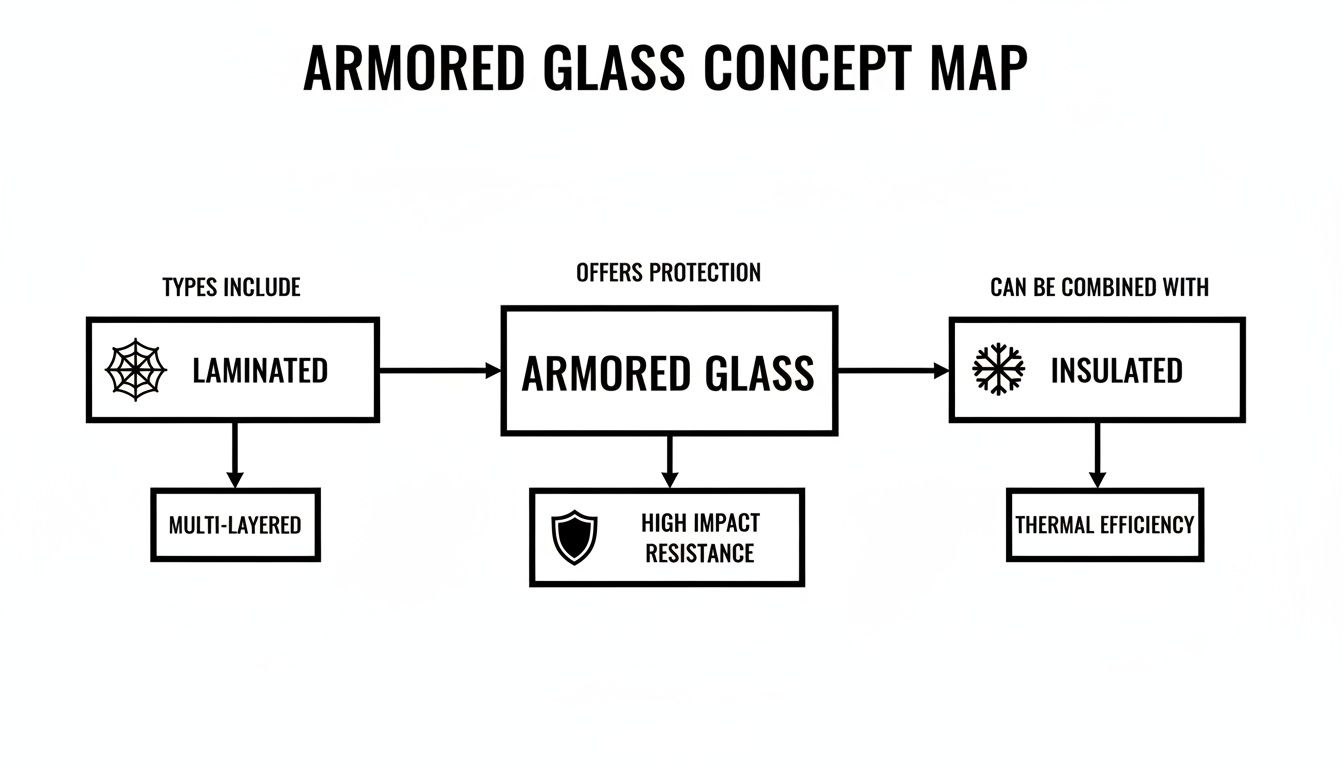
As you can see, it's the combination of materials—like laminated glass, tough polycarbonate, and even insulated layers—that gives the final product its unique security and efficiency features.
What the Key UL 752 Levels Mean for Your Home
Let's unpack what the most common UL 752 levels really mean for your home's security. Knowing the difference between these tiers is key to making a smart decision for your family.
-
Level 1 Protection: This is the starting point for true ballistic-rated glass. It's tested to stop at least three shots from a 9mm handgun, which is one of the most frequently used firearms in residential crimes. This level is a fantastic choice for homes where the main goal is to prevent forced entry and deter opportunistic criminals.
-
Level 2 Protection: Taking it up a notch, Level 2 is engineered to stop three shots from a more powerful .357 Magnum handgun. This is a solid option for homes in more urban areas or for anyone who wants a more robust defense against a broader range of common handgun threats.
-
Level 3 Protection: This level offers a serious jump in stopping power. It's rated to stop three shots from a .44 Magnum, a truly powerful handgun. You'll often see this level chosen for luxury homes or by clients who want an incredibly strong deterrent against serious threats.
It’s important to know these ratings aren't just arbitrary numbers. They're based on strict, repeatable tests that specify the exact caliber, the bullet's velocity, and the number of impacts the glass has to take without letting anything through.
For most homeowners, UL 752 Levels 1 through 3 hit the sweet spot. They offer excellent protection against common handgun threats, maintain fantastic optical clarity, and are a manageable weight for installation. These levels are designed to counter the threats most families face without needing major, costly changes to your home's structure.
Moving Beyond Handguns to Rifle Protection
For those who need an even higher level of security due to specific or more severe threats, there are ratings designed to stop rifle rounds.
- Level 4 and Above: We're now in the territory of defeating high-velocity rifle rounds, like those from an AR-15 or a powerful hunting rifle. While this is less common for a typical suburban home, it's the right choice for dedicated safe rooms, high-risk properties, or for anyone who requires the highest possible level of personal security.
Choosing the right level really comes down to doing an honest threat assessment for your property and your family. The goal is to make a smart investment that’s perfectly matched to your needs, giving you real protection and peace of mind. After all, you want to feel secure in your home, not like you're living in a bunker.
What’s the Real Cost and Return on Your Investment?
Let's talk numbers. When homeowners start looking into something as significant as armored glass, the first question is almost always about the price. It's completely understandable. But thinking of it as just another line item on a budget misses the point entirely.
This isn't an expense; it's a permanent capital improvement. You're making a direct investment in your property's value, your family's safety, and the kind of daily peace of mind that's hard to quantify. To get a handle on the project, it helps to have a good foundation for estimating renovation costs so you can set a realistic budget from the start.
Breaking Down What Drives the Cost
The final quote for a project like this is a sum of its parts. Once you see what goes into it, the pricing starts to make a lot more sense.
- Type of Glazing: A basic laminated glass built to stop a break-in is going to be priced very differently than a multi-layered composite designed to stop a bullet.
- Ballistic Rating: As you climb the protection ladder—from UL Level 1 up to Level 8—the materials get more complex and the manufacturing process more intensive. This is where you see the biggest price jumps.
- Window Size and Shape: It's simple geometry. Larger windows mean more material. If you have custom arches or unique shapes, that adds another layer of complexity to both fabrication and installation.
- Installation Complexity: Swapping glass into existing frames is usually more straightforward (and less costly) than installing it during new construction. Tricky-to-reach windows on a second or third story might also require more time and special equipment, bumping up the labor costs.
As a ballpark figure, you can expect professionally installed armored glass to run anywhere from $100 to over $400 per square foot. The final number really depends on the specific combination of those factors. It’s a serious investment, but its long-term value is just as serious.
More Than a Purchase, It’s an Asset Upgrade
The true worth of armored glass isn't just in what it costs, but in what it gives back. This is an upgrade that starts providing a return the day it’s installed, offering both tangible financial benefits and intangible security.
Think of it as adding a permanent asset to your home’s portfolio. The first and most immediate return you'll likely see is a drop in your homeowner's insurance premiums.
By making your home significantly harder to breach, you're fundamentally lowering your property's risk profile in the eyes of an insurer. Many providers recognize this and offer substantial discounts for homes with certified security upgrades like armored glass.
Calculating Your Long-Term Return
The return on investment (ROI) for armored glass is a mix of hard numbers and priceless benefits. When you look at the full picture, the upfront cost becomes much easier to frame as a smart, strategic decision for your property and your family.
Here's how it pays you back:
- Insurance Premium Discounts: It’s not uncommon for homeowners to see their premiums drop by 15% to 20% after installing certified security glazing. Over a decade or two, that adds up to real money that directly chips away at the initial cost.
- Increased Property Value: Security is a premium feature in the housing market. A home with professional-grade security enhancements like armored glass stands out, often appraises for more, and becomes a major selling point for savvy buyers.
- Priceless Peace of Mind: This is the one you can’t put a number on. The feeling of being truly safe and secure in your own home is, for many, the most important return of all.
We're seeing this play out globally. In markets where security is a top concern, residential installations are on the rise. Even with average costs around USD 200 per square meter, homeowners are seeing that ROI through insurance discounts of 15-20%, making it a sound financial move.
What to Expect From Consultation to Installation
Upgrading to armored glass is a major home improvement project, so it's natural to wonder what the whole process actually looks like. It’s far more precise than a typical construction job. From the first conversation to the final polish, the entire experience is built around a clear, professional plan designed just for your home.
Let's walk through the roadmap, so you know exactly what's involved in taking your home's security to the next level.
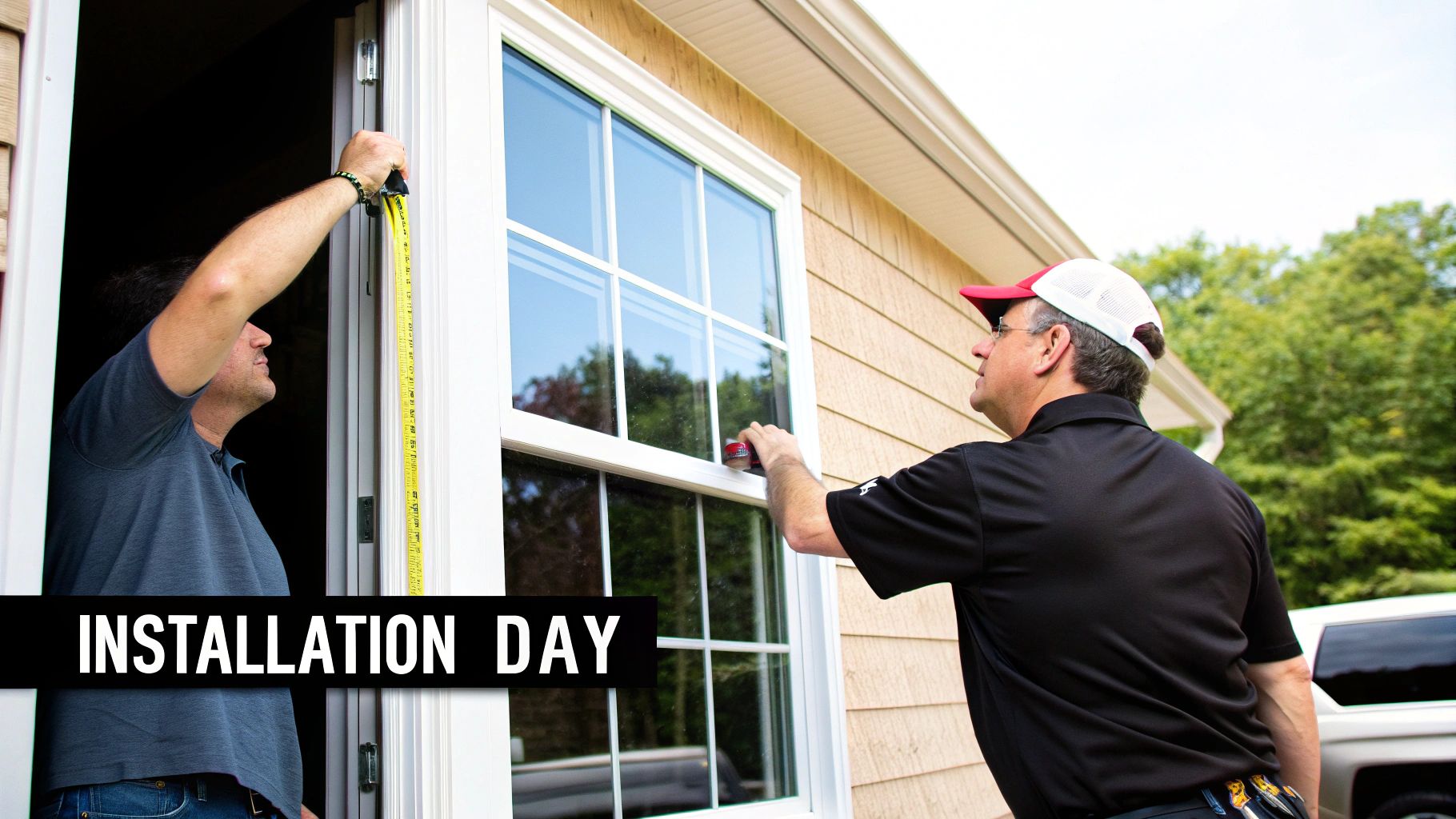
Think of it as a collaborative effort. We move step-by-step from figuring out your home’s unique weak points to manufacturing a perfect fit, and finally, installing it with surgical precision. This approach guarantees you get the right protection without compromising your home's look and feel.
Step 1: The Initial Security Assessment
Everything starts with a detailed security assessment at your home. A specialist isn't just there to measure windows; they're there to understand your property's specific risks and what you want to achieve. This is the crucial first step.
During this visit, we'll talk through:
- Vulnerability Points: We'll identify which windows or glass doors are the easiest targets for a break-in, considering things like location, visibility from the street, and how easy they are to access.
- Threat Level Analysis: This is just a frank conversation about your concerns. Are you worried about simple smash-and-grab burglaries, or do you need a much higher level of ballistic protection?
- Aesthetic Integration: We’ll make sure the final product looks like it belongs. We’ll discuss frame options, tints, and any other coatings to match your home’s architectural style.
This initial meeting is all about creating a security blueprint tailored to you. The expert will break down the different types of armored glass for homes and help you find that sweet spot between maximum protection and practical value.
Step 2: Custom Fabrication and Timeline
Once we have a solid plan, your project heads to the fabrication stage. This is where your custom-designed armored glass is built from the ground up to your exact specifications. Each pane is cut and laminated in a highly controlled facility to ensure it meets the specific performance rating we agreed upon.
Because every piece of armored glass is custom-made, the typical lead time from final measurements to installation day is between 6 to 10 weeks. This window allows for painstaking manufacturing and quality checks, so your new windows perform exactly as promised.
While your glass is being crafted, our installation team will get in touch to coordinate a schedule that causes the least disruption to your life.
Step 3: The Professional Installation Process
On the big day, our team of certified technicians arrives ready to work efficiently and respectfully. They’ll use protective coverings on your floors and furniture and will be meticulous about cleaning up as they go.
The installers will carefully remove your old glass and replace it with the new armored units. They work methodically, one window at a time, to ensure a perfect fit that’s fully sealed and weatherproofed. Most residential projects, depending on the number of windows, are completed within 1 to 3 days.
Before they leave, the team will do a final walkthrough with you. They'll inspect the work, show you how everything operates, and answer any questions you have about taking care of your new windows. We want you to feel not just safer, but completely confident in your investment.
A Homeowner's Checklist for Choosing the Right Security Partner
Picking the right kind of armored glass for your home is a huge step, but it's only half the journey. The other critical piece of the puzzle is finding the right team to install it. After all, even the best product is only as good as its installation—a flawless job by a certified pro is what ensures your investment actually works when you need it most.
This isn't like hiring a regular contractor. You're bringing someone into your home and trusting them with your family's safety. A real security partner has the experience, the transparent process, and a deep understanding of what makes residential projects so different from commercial ones.
To help you sort through the options and make a confident choice, we've put together a practical checklist. Use these questions to find a trustworthy professional who will get the job done right the first time.
Verify Credentials and Experience
Before you get into the nuts and bolts of your project, cover the basics. A reputable company will be more than happy to show off its qualifications and a history of happy clients. Don't be shy about asking direct questions to get a feel for their background.
Start with these fundamentals:
- Are your installers certified? You're looking for specific certifications in security glazing. This proves they've been professionally trained to handle these advanced materials correctly.
- Can you show me a portfolio of local residential work? Seeing is believing. Ask for examples of homes in your area, maybe even similar in style to yours, to get a real sense of their work quality.
- How many years have you been installing residential armored glass? You want a team with a long track record of working in homes, not just on commercial storefronts. The demands are completely different.
This first round of questions is a great way to quickly weed out installers who might not have the specific expertise you need, letting you focus on the true professionals.
Evaluate Product Knowledge and Transparency
A true expert doesn't hide behind jargon; they make complex topics easy to understand. They should act as your guide, clearly explaining the differences between products and helping you figure out which one is the perfect fit for your specific situation. This conversation is your best chance to gauge how deep their knowledge really goes.
A trustworthy security partner won't use high-pressure sales tactics. Their goal is to educate you, lay out the options clearly, and help you make the best decision for your security goals and budget.
Ask them where they source their products and what makes their materials a better choice. They should be able to break down all the benefits, from a specific ballistic rating to energy efficiency features, in a way that makes sense. A transparent partner gives you all the information you need upfront.
Finally, think long-term. Ask them directly about the warranties they offer—both on the armored glass itself and on the installation labor. What does their aftercare support look like if an issue ever comes up down the road? A solid warranty and a clear support plan are the hallmarks of a company that stands behind its work, giving you peace of mind for years to come.
Common Questions We Hear About Residential Armored Glass
You’ve learned a lot about the technology, but you probably still have a few practical questions. It’s only natural. Let’s tackle some of the most common things homeowners ask us before they decide to upgrade.
Will Armored Glass Make My Home Look Like a Bunker?
Not at all. This is one of the biggest misconceptions we run into. The days of thick, distorted "bulletproof" glass are long gone. Today's security glazing is impressively discreet.
Modern armored glass is designed to be optically crystal-clear and virtually identical to a standard high-end window. We can maintain your home's unique style, even with custom shapes or large picture windows, while adding a hidden layer of serious protection. Your security will be felt, but never seen.
How Does This Affect My Home's Energy Bills?
Believe it or not, it can actually lower them. Most of our armored glass solutions are built as Insulated Glass Units, or IGUs. Think of it like a sandwich: multiple panes of glass with a sealed pocket of air or gas trapped in the middle. This gap is a fantastic thermal barrier.
So, you end up with two huge benefits in one product:
- Forced-entry and ballistic protection from the specialized layers.
- Superior thermal insulation that keeps your home cooler in the summer and warmer in the winter.
This is a game-changer, especially here in Southern California where A/C costs can be a real concern. You get to upgrade your security without taking a hit on energy efficiency.
Is Security Film Just as Good?
Security film is a fantastic product, but it’s designed for a different job. A high-quality security film is great for holding shattered glass together. It’s an effective way to slow down a smash-and-grab burglar and offers solid protection against flying debris in a storm.
Here’s a good way to think about it: Security film is an upgrade that reinforces your existing glass. Armored glass is a complete, engineered system built from the ground up to defeat specific threats.
Crucially, security film does not have a ballistic rating and will not stop a bullet. The right choice really comes down to your personal security goals. For many people, a top-tier security film provides all the peace of mind they need. For those facing more serious risks, rated armored glass for homes is the only way to go. They're both valuable, just in different weight classes.
Ready to figure out the right solution for your home? The experts at Fortress Security Films offer one-on-one consultations to talk through your needs and design a system that protects your family without changing the look of your home. Secure your home today.
