


Think of anti shatter film as an invisible shield for your glass. It's not just a sticker; it's a high-tech safety net bonded directly to your windows, designed to hold dangerous shards together when the glass breaks. This simple addition provides crucial protection against everything from break-ins and severe weather to everyday accidents.
Unlocking the Power of Invisible Protection
Glass is almost always the most vulnerable point in a building. A stray baseball, a violent storm, or an attempted break-in can instantly turn a window into a major source of danger and damage. This is precisely where the surprisingly powerful technology of anti shatter film for windows steps in to provide a critical layer of defense.
It works by combining a powerful adhesive with multiple layers of tough, resilient polyester. Once applied, the film creates a formidable membrane that absorbs and disperses the force from an impact. Instead of shattering into countless sharp projectiles, the glass might crack, but it stays held together in the frame.
To put it simply, here’s a quick breakdown of what anti shatter film does and why it matters.
Anti Shatter Film At a Glance
| Key Feature | Primary Benefit |
|---|---|
| Multi-Layer Polyester Construction | Creates a tear-resistant barrier that absorbs impact energy. |
| High-Tensile Adhesive | Forms a powerful bond with the glass, preventing shards from scattering. |
| Holds Glass in Place | Drastically reduces the risk of injury from flying glass fragments. |
| Maintains Window Integrity | Delays forced entry and protects interiors from weather after a break. |
This core function—mitigating the hazard of broken glass—is what makes this film so valuable in so many different settings.
The Core Function of Security Film
The main job of this film is straightforward: make broken glass less dangerous. This simple function delivers several key benefits that enhance safety and security, and the market is taking notice.
The global anti-shatter film market was valued at around USD 654.5 million in 2024 and is expected to hit USD 1.26 billion by 2032. This growth is all thanks to the film's proven ability to hold shattered glass together. If you're interested in the numbers, you can learn more about these industry findings.
At its heart, anti shatter film transforms your weakest points into a source of strength. It buys you precious time during an emergency and drastically reduces the risk of injury from flying glass.
In this guide, we'll dive into the technology behind the film, uncover its surprising extra benefits, and walk through how to choose the right solution for your home, business, or school. You'll quickly see why it’s a smart investment for anyone serious about upgrading their property's safety.
How Window Film Reinforces Your Glass
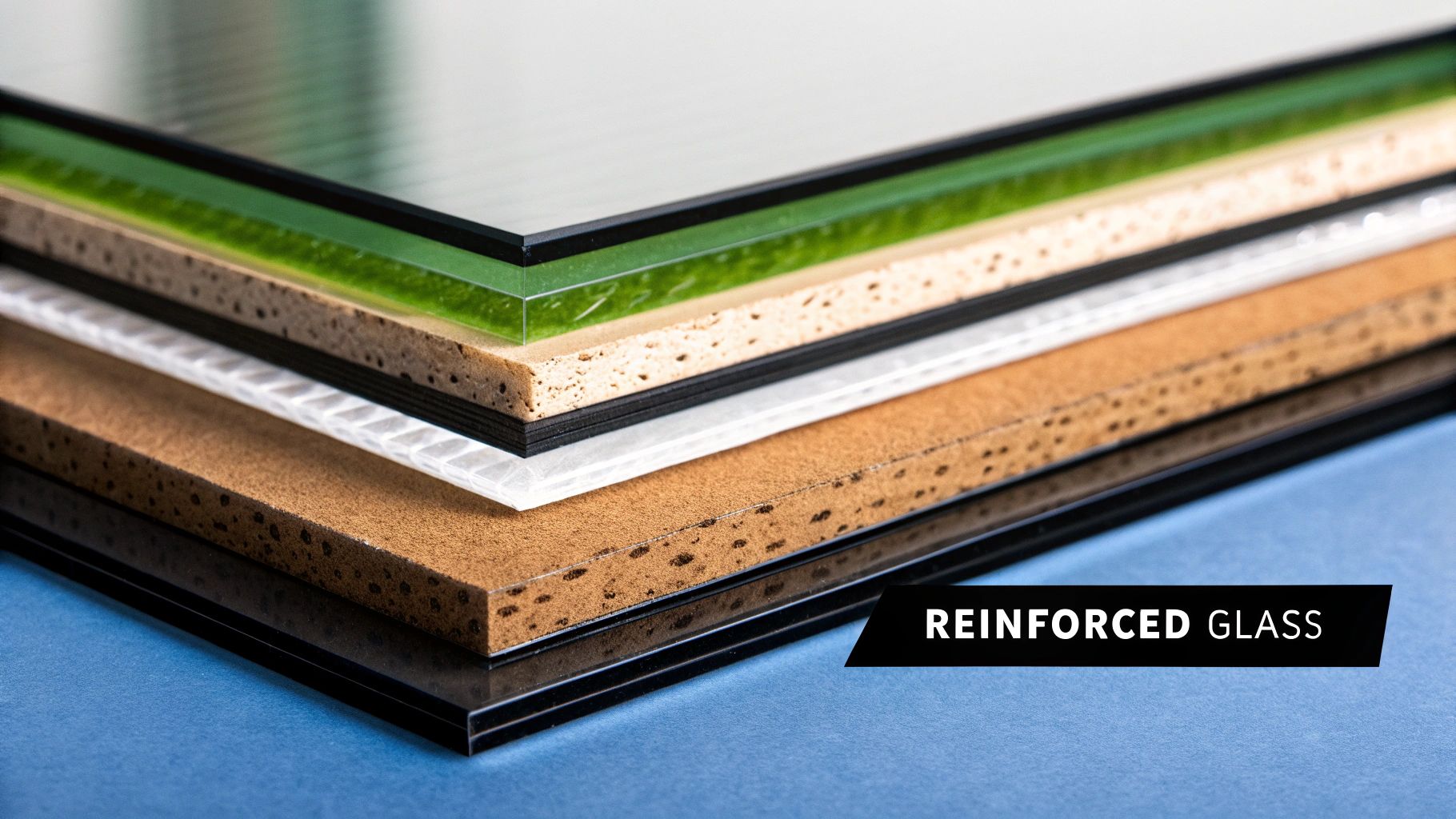
It’s hard to believe that something so thin can offer any real protection. At first glance, anti-shatter film is almost invisible. But its strength doesn't come from being bulky; it comes from smart engineering and some seriously powerful chemistry.
Think about plywood for a second. One thin sheet of wood veneer snaps easily. But when you laminate several layers together, with the grain going in different directions, you create something incredibly strong. Anti-shatter film works on the exact same principle, just on a microscopic and completely transparent scale.
The Science of Layered Polyester
At the heart of any security film is its polyester construction. High-quality films are built from multiple layers of a special grade of polyester, all laminated together into a single, tough sheet. This layering process is what gives the film its incredible tensile strength and tear resistance.
When something hits a regular window, that impact energy shoots through the glass, creating fractures that cause it to shatter instantly. The film completely changes that equation.
Instead of letting the glass explode, the film acts as a shock absorber. The impact energy gets dispersed across the entire surface of the window, like ripples spreading in a pond. This prevents the force from concentrating on a single point, dramatically lowering the chance of the glass failing catastrophically.
But even if the glass does crack under a heavy blow, the film’s most important job is just getting started.
The Critical Role of Adhesive Bonding
The real secret weapon here is the film's specialized, pressure-sensitive adhesive. This isn't your everyday glue. It's an advanced acrylic bonding agent engineered to form a molecular connection with the glass surface, essentially making the film a permanent part of the window.
This incredible bond is what contains the danger after an impact. The adhesive tenaciously grips every shard of broken glass, holding the entire pane together in the frame like a cracked, but intact, sheet. It’s this containment that prevents deadly, razor-sharp shards from flying through the air during a storm, explosion, or break-in attempt.
Measuring Strength in Mils
So, how do you measure the strength of a film? It all comes down to its thickness, which is measured in mils (one-thousandth of an inch). A thicker film means more layers of polyester and a greater ability to absorb and distribute impact.
- Basic Safety (4-7 mils): This is great for homes. It protects against accidental breakage from a stray baseball and can deter a quick smash-and-grab burglar.
- Enhanced Security (8-14 mils): You’ll see this on commercial buildings, schools, and high-risk residential properties. It offers serious resistance to forced entry and severe weather.
- Maximum Protection (15+ mils): This is the top tier, reserved for places like government buildings, high-end retail, and jewelry stores where security is paramount.
While we're talking about buildings, the same principles apply everywhere glass is used. The inherent weakness of glass is universal, and understanding the practical side of it, like in this guide on replacing side view mirror glass, shows why reinforcement is so often needed. By combining tough, layered polyester with a powerful adhesive, security film turns one of your property's weakest points into a real source of strength.
Exploring Benefits Beyond Shatter Protection
The main job of anti shatter film for windows is obvious: it holds glass together when it breaks. But if you stop there, you’re missing the bigger picture. It’s like buying a top-of-the-line smartphone just to make calls—you'd be ignoring a ton of other powerful features that make your life better every single day.
These films do more than just react to a sudden impact; they actively protect you from the invisible threats and surprise costs that can crop up over time. From stopping the sun from bleaching your furniture to making your home a harder target for burglars, the perks go way beyond just keeping glass in one piece.
Let’s dig into these other critical benefits.
Shielding Your Home From Harmful UV Rays
We all love a sunny room, but that sunlight carries a hidden threat: ultraviolet (UV) radiation. Those rays are the single biggest reason your furniture, flooring, artwork, and curtains fade over time, slowly ruining your most valued possessions.
Good anti-shatter films are like a powerful screen, blocking over 99% of harmful UV rays. Think of it as putting sunscreen on your entire house. The film filters out the most destructive part of the solar spectrum, keeping the color and condition of your interiors intact for years, all while letting the nice, visible light stream in. This protection even helps your family by cutting down on daily UV exposure.
It's not just about looks. By preventing your furnishings from aging prematurely, the film protects the financial investment you've made in your home's decor.
This infographic gives you a quick rundown of the key benefits, from UV protection and security delays to potential energy savings.
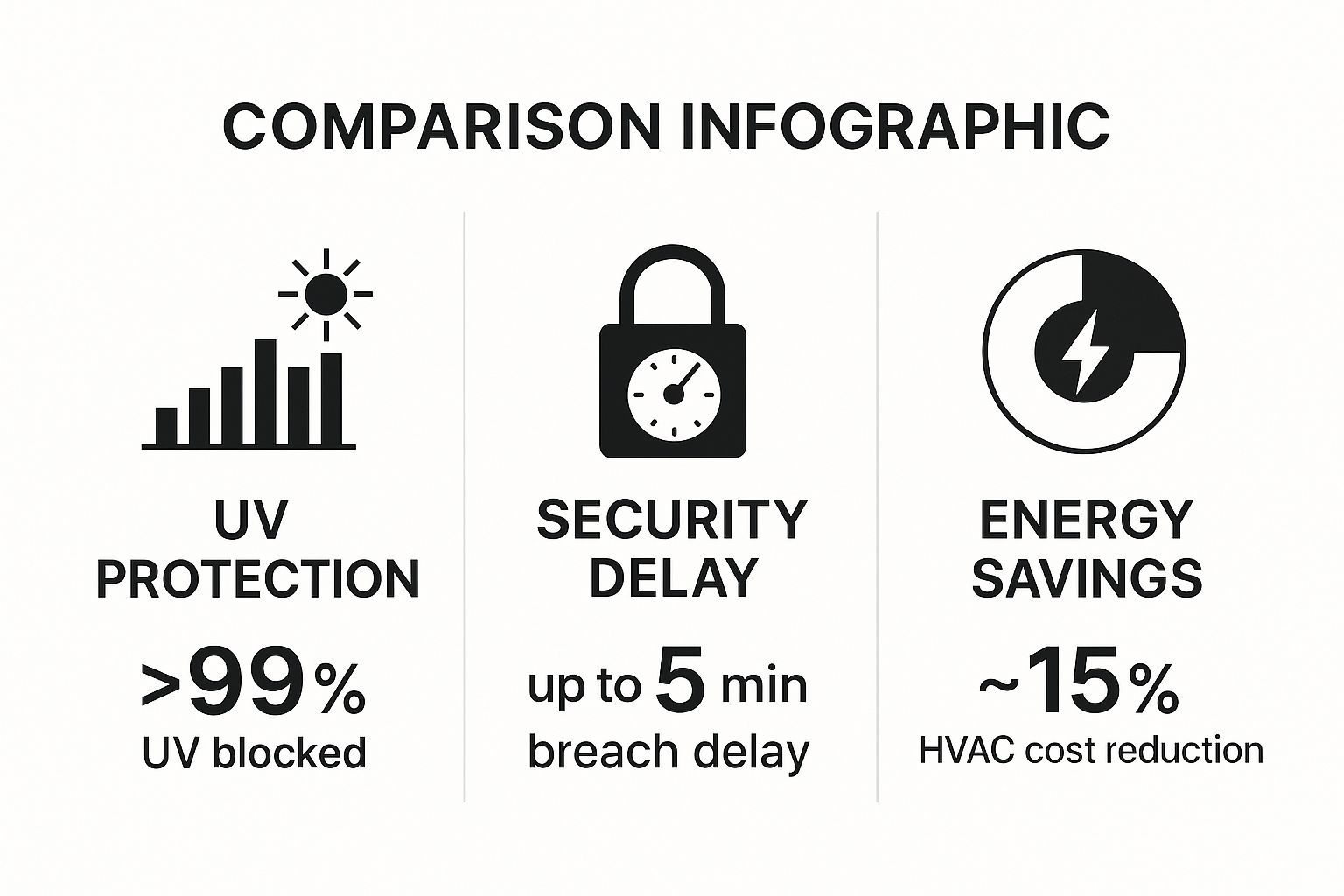
As you can see, you’re getting a lot of bang for your buck. One product ends up solving for safety, preservation, and even efficiency.
Enhancing Security and Deterring Intruders
For a burglar, a standard window is an open invitation. It’s quick and relatively quiet to break. Anti-shatter film completely changes that equation.
By holding the glass together even after it’s been smashed, the film creates a tough, flexible barrier that frustrates and slows down anyone trying to get in. Instead of a simple smash-and-grab, a criminal now has to deal with a stubborn, reinforced surface that takes a lot of time and effort to get through.
That delay is everything.
- It gives people inside precious time to react and get to safety.
- It gives security systems a chance to trigger and alert the authorities.
- The extra noise and effort dramatically increase the intruder's risk of getting caught, which is often enough to make them give up and run.
This extra security is also a huge asset in severe weather. If you want to dive deeper into that specific use, you can learn more about using window film for hurricane protection.
Improving Energy Efficiency and Reducing Costs
Here’s a benefit that often flies under the radar: some anti-shatter films can actually make your home more energy-efficient. Many security films are designed with solar control properties that reflect a good chunk of the sun's heat, working a lot like a high-performance window tint.
During hot summer months, this helps keep your home noticeably cooler, which means your air conditioning doesn't have to work nearly as hard. Come winter, that same film acts as an extra layer of insulation, helping to keep precious heat from escaping through the glass. This improved climate control translates directly into lower energy use and real savings on your utility bills.
This blend of safety and efficiency is why the market is booming. The safety and security window film market is expected to jump from USD 1.2 billion in 2024 to USD 2.5 billion by 2033. That growth is being driven by homeowners and businesses who want better intrusion protection and the bonus of thermal insulation, which can cut a building's energy loss by up to 30%.
How to Choose the Right Anti Shatter Film
Picking the right anti shatter film for windows can feel overwhelming, but it doesn't have to be. Not all films are created equal, and the best choice always boils down to what you’re trying to achieve. The perfect film for a coastal home facing hurricanes is entirely different from what a downtown retail store needs to stop a smash-and-grab.
Think of it like choosing tires for your car. You wouldn't put standard street tires on a truck built for rugged, off-road trails. In the same way, you need to match the film's specifications to the specific threats you're up against. If you break down your needs first, you can navigate the options with confidence and find the perfect fit.
The demand for these solutions is booming. The global market for all window films, including safety and anti-shatter products, was valued at USD 12.45 billion in 2024 and is expected to climb to USD 18.65 billion by 2033. This growth is fueled by a growing awareness of the need for better glass protection, UV filtering, and energy efficiency. You can discover more insights about these market trends.
Define Your Primary Objective
Before you even glance at a product spec sheet, ask yourself one simple question: What is the main problem I am trying to solve? Your answer will steer every other decision you make.
- Residential Safety: Is your top priority protecting your family from everyday accidents, like a stray baseball hitting a window or a child running into a glass door?
- Forced Entry Prevention: Are you a business owner looking to slow down burglars and prevent smash-and-grab thieves from making off with your inventory?
- Storm and Blast Mitigation: Do you live somewhere prone to severe weather, or do you need a higher level of protection from potential explosions?
- Privacy and Aesthetics: Are you looking for security that also comes with a tinted or frosted finish to block prying eyes?
Once you have a crystal-clear objective, you can start matching it to the right technical features. This clarity is the key to sifting through all the options out there.
Decode the Technical Specifications
When you start comparing films, you’ll see three key numbers that really matter: thickness (in mils), Visible Light Transmission (VLT), and UV rejection. Getting a handle on these will empower you to make a smart choice.
1. Film Thickness (Mils)
This is the single most important factor for security. Measured in mils (one-thousandth of an inch), thickness is directly related to the film's strength and its ability to absorb an impact. Put simply, thicker films offer much greater protection.
Choosing the right thickness is always a balance between your threat level and your budget. For most homes, a 4 to 8 mil film provides excellent protection against common hazards. Commercial properties, on the other hand, often need 8 mils or more to be effective.
2. Visible Light Transmission (VLT)
VLT is just a fancy way of saying how much visible light gets through the film. A higher VLT percentage means the film is clearer and lets in more natural light. An optically clear security film might have a VLT of 80% or higher, making it practically invisible once installed. A tinted security film designed for privacy could have a VLT of 35% or lower.
3. UV Rejection
This number tells you how much harmful ultraviolet radiation the film blocks. Nearly all high-quality anti-shatter films block over 99% of UV rays. This is a huge benefit, as it protects your skin while also preventing your furniture, carpets, and artwork from fading in the sun. It's a standard feature you should always look for.
Comparing Film Types for Common Scenarios
To make things even clearer, let's look at how different film specifications line up with real-world needs. The table below breaks down the common thicknesses and their best-fit applications.
As you might expect, the https://fortresssecurityfilms.com/security-window-film-cost/ is often tied directly to the film's thickness and any extra features like tinting, so understanding this relationship is key to budgeting for your project.
Comparison of Anti Shatter Film Thickness and Applications
| Film Thickness (Mils) | Primary Application | Level of Protection |
|---|---|---|
| 4 – 7 Mils | Residential homes, small offices | Protects against accidental impacts and deters casual smash-and-grab attempts. |
| 8 – 14 Mils | Retail storefronts, schools, high-risk homes | Offers significant resistance to forced entry, severe weather, and vandalism. |
| 15+ Mils | Government buildings, jewelry stores, high-security zones | Provides maximum protection against determined attacks and blast mitigation. |
By first nailing down your main goal and then matching it to the right thickness and VLT, you can be sure you’re investing in a solution that gives you the exact level of protection—and peace of mind—that you're looking for.
Understanding the Film Installation Process
Choosing a high-quality anti shatter film for windows is a great first step. But the film itself is only half the equation. The other, arguably more critical half, is a perfect installation. When done right, the film performs exactly as it should and is virtually invisible. A bad job, on the other hand, means bubbles, peeling, and a serious hit to your security.
Applying security film is a true craft. It takes skill, the right tools, and an almost fanatical attention to detail. Whether you’re thinking about hiring a pro or tackling it yourself, you need to know what a good installation actually looks like. A professional’s methodical approach is designed to catch any potential problems before they start.
The Professional Installation Method
A certified installer doesn’t just show up and slap film on your windows. It’s a systematic process, and every single step is there to guarantee maximum adhesion, clarity, and durability.
The work really begins well before the film ever comes near the glass. It starts with a detailed consultation. A technician will measure your windows down to the millimeter and talk with you about your security goals. They’ll also check out the glass type and the condition of the window frames to make sure you’re getting the right solution.
Once they're on-site, the most important part of the job begins: preparation. The installer meticulously cleans the glass, getting rid of every last speck of dust, grime, or oil. This isn't just a quick wipe-down; they use special scrapers and cleaning solutions to create a pristine surface. Why? Because a single trapped hair or piece of dust will turn into a permanent, ugly bubble under the film.
The secret to an invisible, bubble-free application isn't the squeegee—it's the relentless focus on a completely contaminant-free environment. Professionals know that what you can't see beforehand is exactly what you will see afterward if the glass isn't perfectly prepared.
The Challenge of a DIY Installation
The idea of installing anti-shatter film yourself might seem like a good way to save money, but the reality is much tougher than it looks. This is especially true for the thicker security-grade films. The material isn't nearly as forgiving as a simple decorative sticker, and one mistake can force you to scrap the whole sheet and start over.
Here are a few of the common headaches DIY installers run into:
- Bubbling and Creasing: Trapped air or water pockets are incredibly hard to get out without the proper technique. They look terrible and distort your view.
- Contamination: It’s amazing how easily dust, pet hair, or tiny fibers floating in the air can get stuck under the film, creating permanent blemishes.
- Improper Trimming: You need a rock-steady hand and razor-sharp, specialized blades to cut the film perfectly to the edge of the glass. Anything less results in jagged edges or gaps.
This is why professional installation is almost always the way to go. Technicians have the training and experience to navigate these issues, making sure your investment is protected. If you're curious about the nitty-gritty, this detailed overview of the security window film installation process is a great resource. In the end, a pro ensures the film not only looks flawless but also gives you the high-level protection you're paying for.
Real-World Scenarios for Window Film
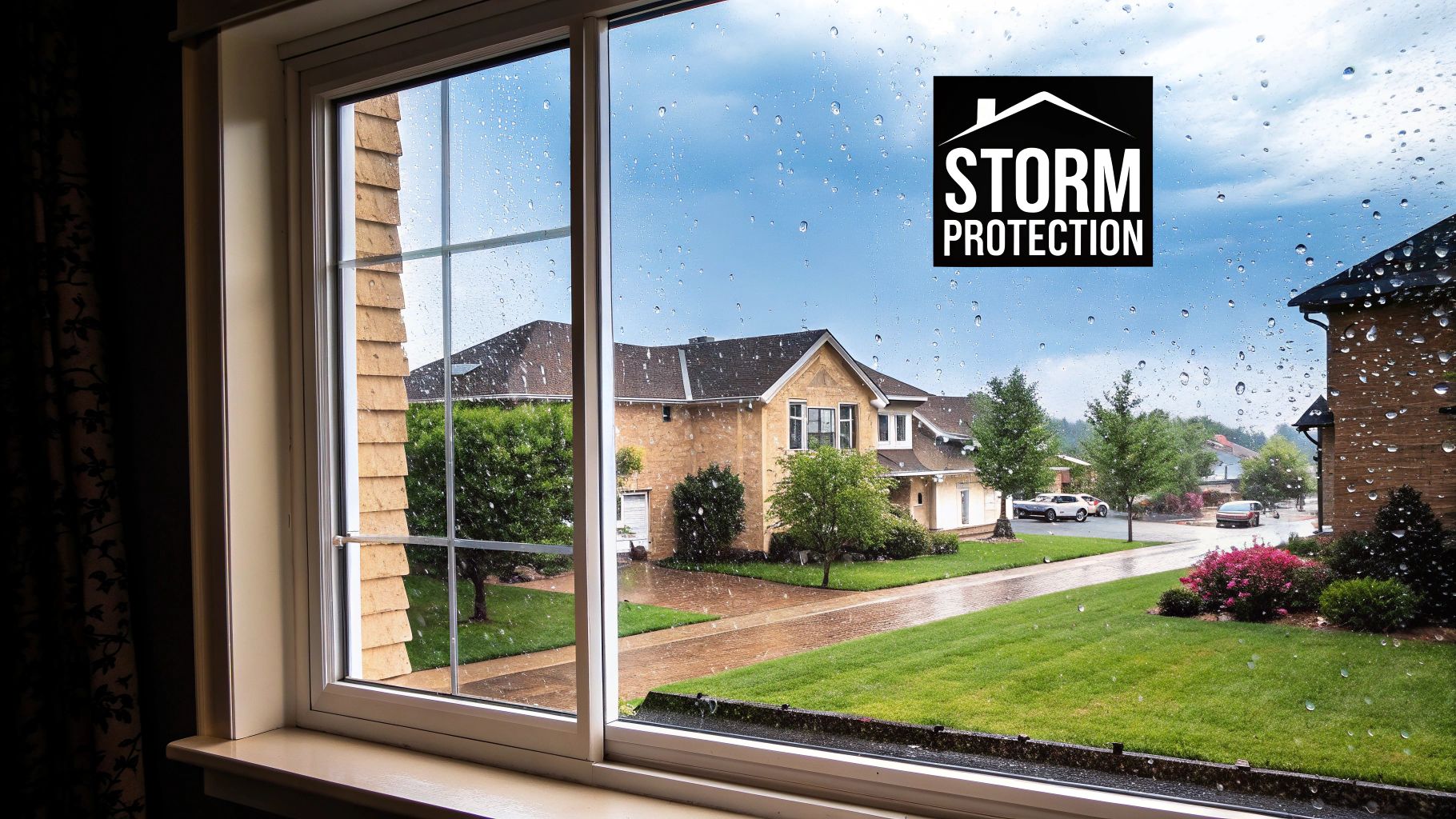
The technical specs are one thing, but the true value of anti-shatter film for windows really clicks when you see how it holds up in the real world. This is where the theory meets reality, providing genuine peace of mind in homes, businesses, and public spaces every single day.
From protecting a family during a hurricane to stopping a thief in their tracks, this nearly invisible layer of defense is making a huge difference where it counts.
Residential Safety in High-Risk Areas
Let’s start with a home in a coastal area where hurricanes are a real threat. When a major storm hits, high winds can turn everyday debris into high-speed projectiles. An unprotected window will instantly shatter, exposing the home's interior to destructive wind and rain and scattering dangerous shards of glass everywhere.
Now, imagine that same home with anti-shatter film on its windows. A flying tree branch might still crack the glass, but the film holds all the pieces together in the frame. The home's protective envelope remains intact, preventing water damage and keeping the family safe from flying glass. Suddenly, one of the weakest points of the house becomes a reliable line of defense.
By keeping the window intact, the film prevents the sudden pressure changes that can lead to catastrophic roof failure during a hurricane, providing a critical line of defense for the entire structure.
Commercial Defense Against Smash-and-Grab Theft
Think about a luxury retail shop on a busy city street. These stores are constant targets for smash-and-grab thieves who can break a window, grab thousands of dollars in merchandise, and disappear in less than a minute. The result isn't just lost inventory—it's also expensive repairs and lost business.
This is where a thick security film, usually 8 mils or more, changes the game. When a thief tries to smash the fortified glass, it will crack and spiderweb but won't give way. The stubborn resistance completely foils their plan for a quick entry. The noise and extra time it takes to get through almost always sends them running empty-handed, protecting the store's assets and deterring future break-ins.
Protecting Public and Educational Spaces
Schools, government offices, and other public buildings have a massive responsibility to keep people safe. But all that beautiful glass in entryways and classrooms can also be a serious security risk.
In these sensitive places, anti-shatter film provides a crucial, low-profile security upgrade. It reinforces glass against everything from forced entry and vandalism to the blast pressure from a nearby explosion. That extra resilience buys precious time for people inside to find safety and for first responders to arrive. It's a smart, effective way to boost security without making the building feel like a fortress, maintaining a welcoming environment while putting safety first.
Got Questions About Anti-Shatter Film? We’ve Got Answers.
It's completely normal to have a lot of questions when you're looking into something as important as anti-shatter film for your windows. It’s a fascinating technology, but there's a lot of misinformation out there. We’ll clear things up with straightforward answers to the questions we hear most often.
Think of this as your quick-start guide to understanding what these films can—and can't—do.
Is Anti-Shatter Film the Same Thing as Bulletproof Glass?
This is probably the most important question we get, and the answer is a firm no. It’s a critical distinction. Anti-shatter film is bullet-resistant, which is a world away from being bulletproof. The film is designed to absorb the immense energy of a projectile and hold the shards of glass together, which can slow a bullet down or even deflect it.
True bulletproof glass, on the other hand, is a completely different animal. It's an incredibly thick, multi-layered beast made of glass and polycarbonate, engineered from the ground up to stop high-powered rounds cold. Security film adds a powerful layer of defense that can buy you precious time, but it won't stop a direct hit like a dedicated armored window will.
How Long Does Anti-Shatter Film Actually Last?
When you have a high-quality film put on by a professional, you can expect it to last a long time—typically anywhere from 10 to 20 years. A few things can affect that lifespan, like the quality of the film itself, how much direct sunlight it gets hammered with every day, and just general wear and tear.
Reputable manufacturers stand behind their products with solid warranties. These usually cover things like bubbling, peeling, or the film turning a weird color, giving you confidence that your investment is protected.
The single biggest factor in how long your film lasts? Professional installation. Getting it right from the start means the film adheres perfectly and won't fail prematurely.
Can I Put This Film on Any Kind of Window?
Pretty much, yes. Anti-shatter film works great on most flat glass surfaces you'll find, whether it's an old single-pane window, a modern double-pane unit, or even tempered glass. But there are a few "watch-outs."
With double-pane windows, also called insulated glass units (IGUs), you have to be careful. The wrong type of film can trap too much heat between the panes, creating thermal stress that could break the window's seal. That's a costly mistake.
This is why getting an expert opinion is so important. A professional installer will:
- Take a look at your specific windows to see what you're working with.
- Recommend a film that’s 100% compatible and won't cause damage.
- Make sure the installation doesn't accidentally void your window manufacturer's warranty.
Will the Film Make My Windows Dark or Look Weird?
Absolutely not. One of the best things about modern anti-shatter film for windows is that it's designed to be optically clear. Once it's on, you shouldn't even notice it's there. No distortion, no haze, nothing.
Now, if you want a tint for privacy or to cut down on glare, you can get that. Films are rated by their Visible Light Transmission (VLT). A crystal-clear safety film has a high VLT, letting all that beautiful natural light pour in. A tinted security film combines protection with a lower VLT for shade and privacy. You get to choose.
Ready to transform your most vulnerable entry points into a source of strength? At Fortress Security Films, we specialize in advanced, nearly invisible protection for homes, businesses, and vehicles. Our certified technicians deliver flawless installations backed by a commitment to your complete peace of mind. Discover how our tailored solutions can safeguard your property.
