


Imagine a security guard with superhuman hearing, trained to listen for one specific sound—the shattering of glass. That’s essentially what an alarm glass break sensor is for your home or business. It’s an immediate warning system, designed to trigger an alarm the very instant an intruder tries to smash their way in through a window.
Understanding Your First Line of Defense
Most security systems wait for a door or window to actually open before sounding the alarm. A glass break sensor is different; it offers proactive protection right at the perimeter.
Think of it as your first alert. This early warning gives you a critical time buffer, often scaring off intruders before they even get a foot inside. It's the difference between knowing someone is trying to get in versus finding out they're already in the hallway.
This technology is built to handle two main threats:
- Deliberate Break-ins: It instantly recognizes the unique sound or vibration signature of glass being forcefully broken.
- Environmental Damage: The sensor can also alert you to windows shattered by severe weather or accidents, helping you prevent further damage from the elements.
The Growing Need for Proactive Security
Securing these vulnerable glass entry points is getting more attention than ever. The global market for glass break sensors is expected to jump from USD 1,974.7 million in 2025 to USD 3,500.0 million by 2035.
This isn't just a trend; it's a direct response to a real-world problem. Burglars target windows in over 30% of residential break-ins around the world, making them a huge weak spot in most security plans.
A glass break sensor isn't just another piece of hardware; it’s a strategy. It shifts your security from reactive to proactive, alerting you at the point of attack, not after a breach has already happened.
To give you a clearer picture, here’s a quick overview of what these sensors bring to the table.
Alarm Glass Break Sensor At a Glance
| Feature | Description | Primary Benefit |
|---|---|---|
| Detection Method | Senses the specific frequency of breaking glass (acoustic) or the physical impact (shock). | Provides an immediate alert at the very first sign of a forced entry attempt. |
| Coverage Area | A single sensor can often monitor multiple windows within a room, typically up to a 25-foot radius. | Offers cost-effective protection for entire rooms, not just individual windows. |
| Integration | Easily connects with existing alarm systems, smart home platforms, and professional monitoring services. | Creates a seamless, layered security system that works together. |
| Best Use Cases | Ideal for ground-floor rooms, areas with large glass panes, and properties with sliding glass doors. | Protects the most common and vulnerable entry points targeted by intruders. |
| Proactive Alerting | Triggers the alarm before an intruder gains entry, unlike door/window contact sensors. | Deters criminals and provides crucial extra time for you or law enforcement to react. |
This table shows how a seemingly simple device can play a massive role in a well-rounded security setup, turning a potential vulnerability into a actively monitored defense.
Combining Detection with Delay
An alarm glass break sensor is the "detect" part of a modern security strategy. To make it truly effective, you need to pair it with a "delay" solution—and that's where security window films come in.
While the sensor is sounding the alarm, the film physically holds the shattered glass together. This creates a tough, stubborn barrier that significantly slows an intruder down. This powerful one-two punch turns your weakest point into a fortified obstacle. To see how this layered approach works in practice, check out our guide on https://fortresssecurityfilms.com/window-burglar-proofing/.
Of course, glass break sensors are just one part of a complete safety plan. For more general advice on securing your property, these host tips on how to keep your rental safe offer some great insights. Combining specialized tools with broad security knowledge is the key to creating a truly resilient defense.
The Science Behind How Glass Break Sensors Work
Ever wonder how that little device on your wall knows the difference between a window breaking and a plate smashing on the floor? It’s not magic. It’s a clever mix of physics and smart engineering designed to give you the earliest possible warning of a break-in. An alarm glass break sensor is built to cut through the noise of daily life and pinpoint real threats with incredible precision.
Security systems rely on two main technologies to get the job done. Each one looks for different physical clues of a break-in, and knowing the difference shows just how advanced these sensors really are. One acts like a meticulous sound engineer, while the other is more like a spider, sensing vibrations in its web.
This concept map breaks down the sensor's core job: detecting threats to prevent break-ins and mitigate other hazards.
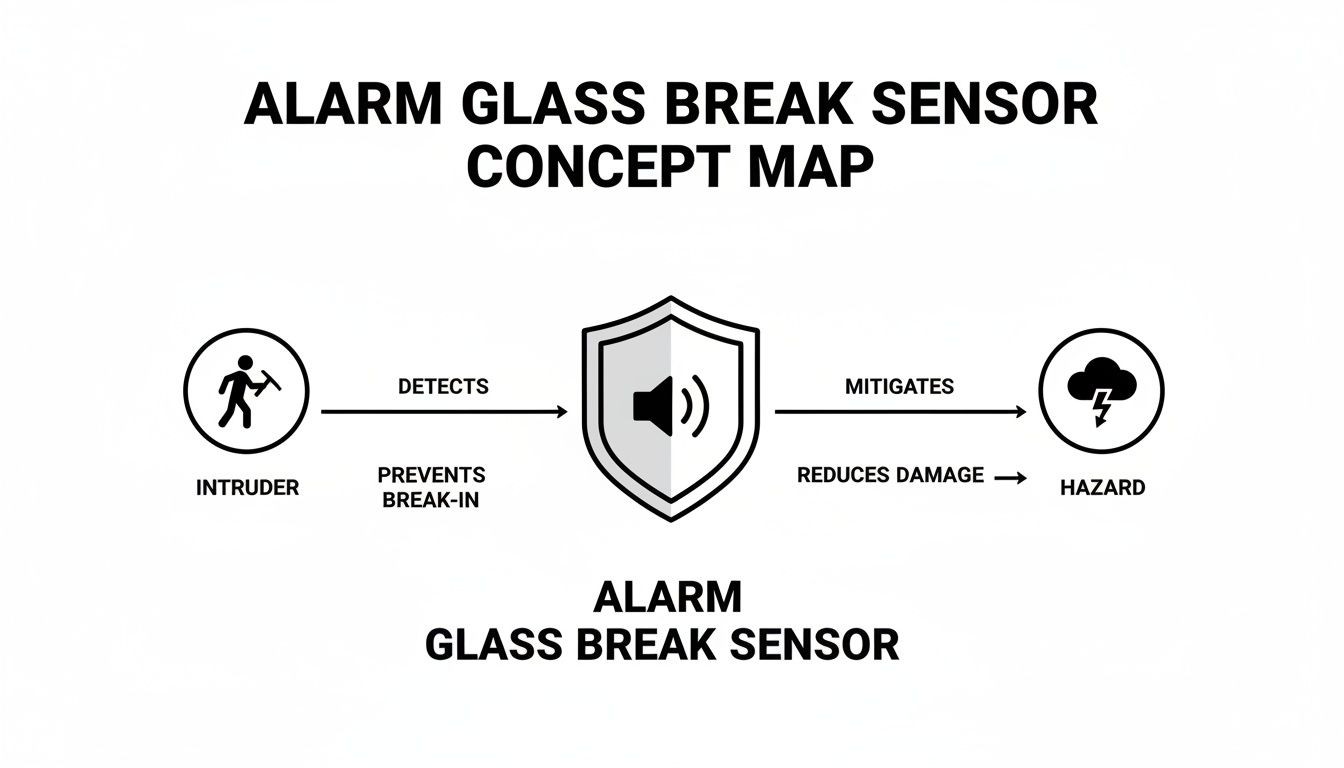
As you can see, the sensor is all about detection and alerting. It creates a vital layer of protection right at the most vulnerable spots around your property.
The Sound Engineer: Acoustic Sensors
By far the most common type you'll encounter is the acoustic sensor. The best way to think of it is as a highly specialized sound engineer. Its only job is to listen for the unique, two-part audio signature of breaking glass. It isn't just waiting for a loud crash—that could be anything. It’s analyzing the sound on a much deeper level.
When an intruder smacks a window, two very different sounds happen almost instantly:
- The Low-Frequency "Thud": First comes the sound of the initial impact. This is a dull, low-frequency wave that travels through the air as the rock, crowbar, or fist hits the glass.
- The High-Frequency "Crash": Right after that thud, the glass gives way and shatters. This creates a sharp, piercing, high-frequency sound that’s unmistakable.
An acoustic sensor is programmed to sound the alarm only when it hears both of these sounds, in that exact order, and within milliseconds of each other. This two-factor authentication for sound is what makes it so good at ignoring false alarms. A dropped glass in the kitchen might make the high-frequency crash, but it won't have that low-frequency impact thud right before it.
This intelligent filtering is what separates a real security sensor from a simple microphone. It’s not just about how loud a noise is; it’s about recognizing the specific acoustic fingerprint of a window being forced open, which makes it far more reliable.
The Spider's Web: Shock Sensors
The other type of sensor works on a completely different principle. A shock sensor, which you might also hear called a vibration sensor, doesn’t listen for sound in the air. Instead, it feels for the physical shockwaves traveling through the glass pane itself.
Think about a spider sitting in its web. It doesn't need to see or hear a trapped fly; it feels the vibrations the instant the fly hits a strand. That's exactly how a shock sensor operates. You mount it directly onto the window, where a super-sensitive internal component waits to detect any jarring movement.
When a window is struck, the impact sends tiny shockwaves rippling through the glass. The sensor picks up on these vibrations, and if they’re strong enough to cross a certain threshold, the alarm is triggered. Because it relies on direct contact, it's incredibly accurate for the single window it’s protecting.
Since they only care about physical impact, shock sensors couldn't care less about loud noises in the room. This makes them a fantastic choice for noisy environments or for guarding a specific, high-value window. The trade-off, of course, is that while one acoustic sensor can cover a whole room of windows, you’ll need a dedicated shock sensor for every single pane of glass you want to protect.
Creating a Fortified Barrier with Security Film
An alarm glass break sensor is fantastic at its job: detection. The second a window shatters, it screams for help, giving you an instant alert that your home has been breached. But what if you could do more than just know about the problem? What if you could physically stop an intruder in their tracks? This is where a simple detection device becomes part of a much bigger, smarter strategy.
When you pair a glass break sensor with high-performance security window film, you transform a vulnerable piece of glass into a serious obstacle. This is the core idea behind a professional security principle known as "Detect and Delay." Your sensor handles the "detect," and the film provides the "delay."
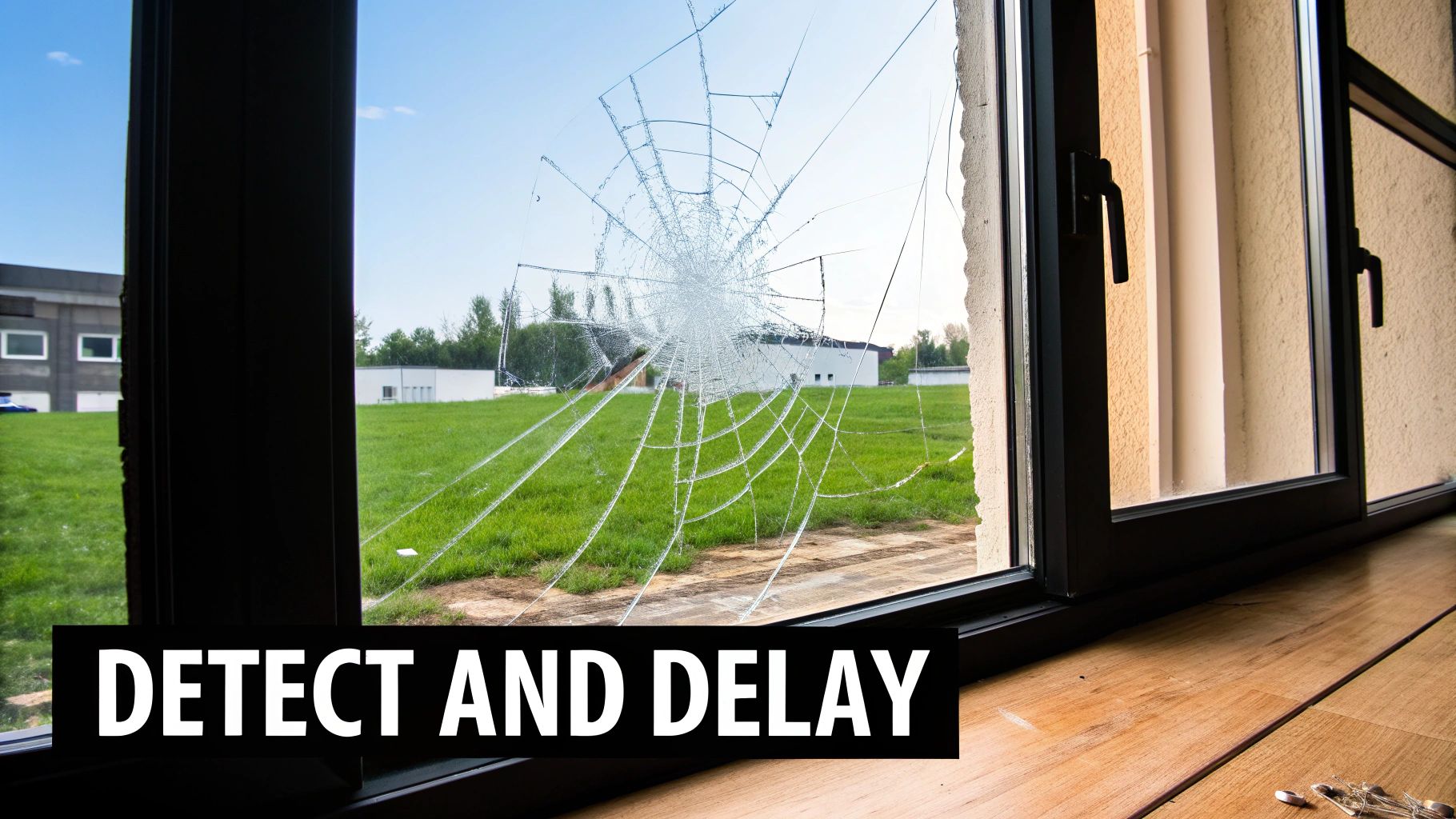
This one-two punch is far more effective than either solution on its own. It buys precious time for police to arrive while the burglar is still struggling to get inside.
How Security Film Delivers the Delay
Think of security film as an invisible, high-strength net bonded directly to your glass. It’s a micro-thin sheet of advanced polymer that a professional applies to the interior surface of your windows, where it fuses with the glass itself.
Now, if an intruder strikes a window treated with this film, the glass will likely still crack and shatter. That’s a good thing—it’s what triggers your alarm glass break sensor. But here's the magic: the film holds all those broken shards of glass together. The window doesn't collapse; it remains an intact barrier.
Instead of a quick, quiet entry, the intruder is now faced with a loud, frustrating, and exhausting problem. They have to repeatedly smash the window, trying to tear their way through the tough, resilient film. It’s noisy, it’s difficult, and most importantly, it’s incredibly slow.
The Power of Buying Time
In a break-in, every single second counts. While an intruder is stuck outside, your alarm is blaring, lights might be flashing, and help is on the way. The delay created by security film turns what could have been a fast smash-and-grab into a high-risk, drawn-out ordeal for the criminal.
An unprotected window can be breached in less than 10 seconds. With professionally installed security film, that same window can withstand a determined attack for several minutes, often forcing the intruder to give up and run.
This added time is the single most valuable asset you have during an intrusion. It's the critical buffer that allows your alarm and the authorities to do their jobs effectively.
The Synergy of Detect and Delay in Action
Let's walk through a real-world scenario to see how this layered defense works.
- The Impact: A burglar tries to force entry by smashing a ground-floor window with a rock.
- Instant Detection: Your acoustic glass break sensor hears the tell-tale sound of the impact and shattering glass. It instantly triggers your home's loud siren and sends a signal to your monitoring service.
- Physical Delay: The security film does its job, holding the broken glass in a single sheet. The intruder can't just climb through the opening.
- Increased Exposure: The burglar is now in a terrible spot. They have to keep making a huge racket, trying to bash their way through the window, all while the alarm is screaming. Most will cut their losses and flee.
- Successful Response: Those crucial minutes bought by the security film give law enforcement more than enough time to be dispatched and arrive on the scene, often before the intruder ever sets foot inside.
This layered approach is so powerful because it ensures that even if one part of your security is challenged, another is already picking up the slack.
Choosing the Right Film for Your Needs
Not all security films are the same. Their toughness is measured in mils (one-thousandth of an inch), and thicker films offer more resistance. For most homes, a film between 8 and 14 mils thick strikes the perfect balance between powerful protection and crystal-clear visibility.
It’s also absolutely critical that the film is installed with a structural silicone attachment system. This bead of adhesive anchors the film directly to the window frame, making the entire unit exponentially stronger. To get a better sense of your options, you can learn more about security film for home windows and see how it works.
By combining this powerful physical barrier with the electronic vigilance of an alarm glass break sensor, you close a major security gap and turn your home’s weakest points into sources of strength.
Strategic Placement for Maximum Protection
A top-of-the-line glass break sensor is just a fancy paperweight if you stick it in the wrong spot. Its entire job depends on where you put it. Getting the placement right isn't just about screwing it to a wall; it's about thinking strategically to maximize its hearing range while cutting down on those frustrating false alarms.
Think of an acoustic sensor like a security guard with superhuman hearing. For that guard to do their job, they need a clear, unobstructed path—not a line of sight, but a "line of sound"—to every window and door they're supposed to be protecting. Anything that blocks or muffles that sound path creates a dangerous blind spot.
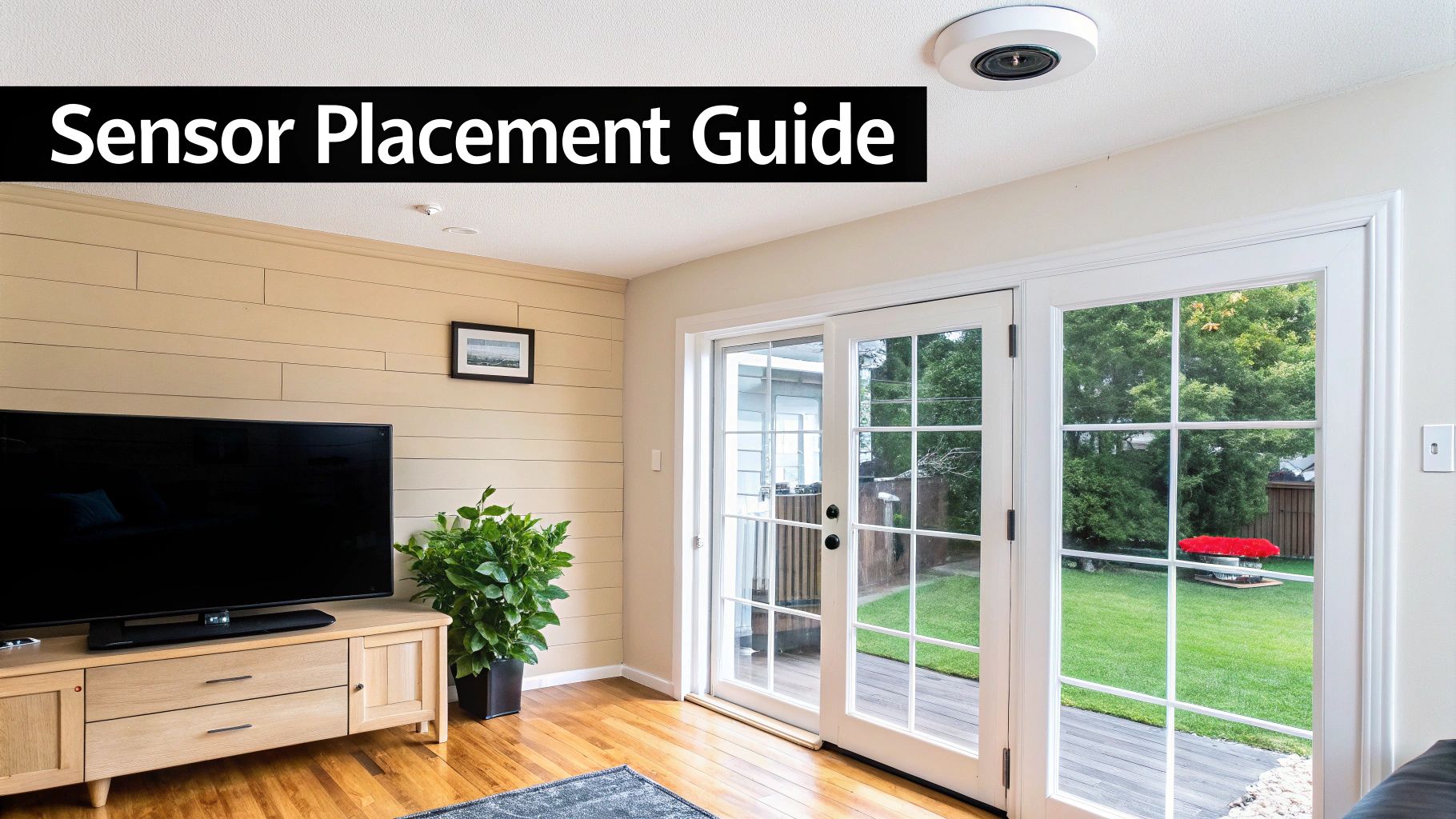
The photo above is a great example. Placing the sensor on the ceiling gives it a perfect, unobstructed audio path to those large glass doors—a classic weak point for any home.
Finding the Sweet Spot for Installation
The goal is simple: place the sensor where it can "hear" all the glass in a room without anything getting in the way. Most sensors have a range of about 20-25 feet, but always check the specs for your specific model.
Here are a few universal rules of thumb that professionals follow:
- Go Opposite: The best spot is usually the wall directly across from the windows you're protecting.
- Aim High: A ceiling mount is often even better. It gives the sensor a bird's-eye view, making it much harder for furniture or other objects to block the sound.
- Keep a Clear Path: Make sure there aren't any big, bulky things like entertainment centers, tall bookshelves, or heavy cabinets between the sensor and the glass. These items can easily absorb or deflect the high-frequency sounds the sensor is listening for.
- Cover More with Less: If you have a room with windows on multiple walls, find a central spot that's within range of all of them. One well-placed sensor can often secure an entire room.
High-Priority Areas to Secure First
Let's be practical—not all windows are created equal in the eyes of a burglar. When you're deciding where to put your sensors, start with these high-risk zones.
- Ground-Floor Rooms: This is the low-hanging fruit for intruders. Living rooms, dining rooms, and home offices with lots of windows should be your top priority.
- Secluded Windows: Walk around the outside of your house. Any windows on the back or sides that are hidden from the street are prime targets because they offer cover.
- Sliding Glass Doors: These are notoriously easy to break. A single sensor placed on the opposing wall is a perfect way to keep an eye on this major vulnerability.
- Basement Windows: People often forget about the basement, but those small windows offer a discreet way in. Don't leave them unprotected.
Common Placement Mistakes to Avoid
Knowing where not to put your sensor is just as important as knowing where it should go. A bad location can make even the most expensive sensor completely useless.
So many people treat sensor placement as an afterthought. They'll hide it behind a curtain or tuck it in a cluttered corner to make it look nicer, but in doing so, they've effectively deafened the very device that's supposed to be listening for trouble.
Make sure you steer clear of these installation pitfalls:
- Behind Curtains or Blinds: Heavy fabrics are great at dampening sound. If you put a sensor behind them, it will almost certainly fail to detect a break.
- In "Acoustically Dead" Rooms: A room with thick carpeting, heavy drapes, and lots of plush, overstuffed furniture will absorb sound waves like a sponge, seriously cutting down your sensor's effective range.
- Near Noisy Things: Try to avoid installing sensors right next to air vents, rattling ceiling fans, or speakers. While modern sensors have good noise-filtering tech, constant background hums and vibrations can interfere with their accuracy.
Choosing the Right Sensor for Your Property
Picking the right alarm glass break sensor isn’t a one-size-fits-all deal. The best choice for a quiet suburban home is going to be very different from what a busy downtown retail store or a sprawling school campus needs. The real key to effective security is matching the sensor's capabilities to your specific environment and the risks you face.
Every property has its own unique weak spots and daily routines. For a homeowner, convenience and blending security into a smart home might be the biggest factors. For a business owner, though, the top priorities are rock-solid coverage for a large glass storefront and a direct line to a professional monitoring service.
H3: Solutions for the Modern Homeowner
In a residential setting, people want security that just works—quietly, in the background, without being an eyesore or a pain to manage. The focus is all about ease of use, aesthetics, and fitting into a connected lifestyle.
This is where wireless models really shine. They're incredibly simple to install, often just needing an adhesive strip to mount, and they can be placed discreetly on ceilings or walls. More importantly, many of today's sensors are built to link right into popular smart home ecosystems.
- Smart Home Compatibility: Look for sensors that play nicely with platforms like Alexa or Google Home. This means you can arm and disarm with your voice and get instant alerts on your phone if a window breaks while you're away.
- Discreet Design: Many residential sensors are small and sleek, designed to blend in with your decor so they don't scream "security system."
- Pet-Friendly Technology: Worried about false alarms from a barking dog? Advanced sensors are smart enough to tell the difference between Fido and an actual glass break, which saves you a lot of headaches.
Security for Retail and Commercial Spaces
Business environments throw a whole different set of challenges into the mix. Think large glass facades, lots of foot traffic, and the constant threat of theft. This calls for a more robust, specialized solution. Commercial-grade sensors are built tougher and designed for wider coverage to protect valuable inventory.
In these settings, glass break sensors are a true game-changer. Retail theft cost U.S. businesses a jaw-dropping USD 112.9 billion in 2023, with break-ins through glass being a common entry method in 52% of incidents. Modern sensors that combine acoustic and shock wave analysis deliver a 98% reliability rate even in noisy commercial areas, making them a critical layer of defense.
For a retailer, a glass break sensor isn't just a gadget; it's an operational asset. It provides the immediate alert needed to thwart smash-and-grab attempts, protecting merchandise and minimizing business disruption.
Protecting Schools and Institutions
When it comes to schools, government buildings, and other institutions, the security needs go to an even higher level. Here, the main goals are preventing unauthorized access, keeping students and staff safe, and making sure the system itself is protected from tampering.
- Tamper-Proof Hardware: Institutional-grade sensors often have tamper switches that will sound an alarm if someone tries to pry the device off the wall or disable it.
- Centralized Management: These systems need to tie into a central security console, giving administrators a bird's-eye view of the entire campus from one command center.
- Durability: The hardware is simply built to take more of a beating than residential models, ensuring it holds up for years in a high-traffic environment.
This idea of picking the right tool for the job extends beyond just buildings. Thinking through the process for other safety devices, like an RV propane detector replacement, highlights the same core concept: you have to tailor the protection to the specific needs and risks. The goal is always to match the technology to the threat.
Sensor Feature Comparison by Use Case
Choosing the right sensor can feel overwhelming, but breaking it down by your specific needs makes the decision much clearer. Whether you're a homeowner looking for convenience or a facilities manager securing a campus, the right features are what count.
This table provides a quick side-by-side comparison to help you pinpoint the best alarm glass break sensor for your property.
| Feature | Homeowner | Retailer/Commercial | School/Institution | Automotive |
|---|---|---|---|---|
| Primary Concern | Convenience and smart home integration. | Large area coverage and asset protection. | Tamper resistance and centralized control. | Vehicle security and immediate mobile alerts. |
| Ideal Model Type | Wireless, aesthetically pleasing designs. | Commercial-grade with wide detection radius. | Hardwired, durable, and tamper-proof models. | 12V DC wired, compact, and vibration-resistant. |
| Key Feature | Alexa/Google Home compatibility. | Integration with professional 24/7 monitoring. | Central security console integration. | Adjustable sensitivity and shock sensor pairing. |
| Installation Focus | DIY-friendly, quick and easy setup. | Professional installation for optimal coverage. | Professional installation with system lockdown. | Professional or experienced DIY installation. |
| Typical Environment | Quiet to moderate background noise. | Noisy, high-traffic areas. | Variable, from quiet classrooms to loud gyms. | High-vibration, fluctuating temperatures. |
Ultimately, this comparison shows that there isn't one "best" sensor—only the best sensor for your situation. By focusing on your environment's unique demands, you can invest in a solution that provides genuine peace of mind.
Frequently Asked Questions About Glass Break Sensors
Even after you get the hang of how these sensors work, a few practical questions always pop up. This is where we’ll tackle the most common things people ask, giving you straight answers so you can feel totally confident in your security choices. Let's clear up any lingering doubts about pets, sensor range, and how these devices play on a larger security team.
Will My Dog Barking Set Off the Alarm?
This is probably the number one question from pet owners, and for good reason—nobody wants a security system that cries wolf every time the mailman walks by.
The good news is, modern acoustic sensors are incredibly smart. They aren't just listening for any old loud noise. They're specifically tuned to recognize the unique, two-part sound frequency of breaking glass.
Think of it like this: your ears can easily tell the difference between a dog barking and a plate smashing, even if they're both loud. An advanced sensor does something similar. It's listening for the low-frequency thud of an impact followed immediately by the high-frequency shatter of the glass itself. A dog's bark just doesn't produce that specific acoustic signature, so the chances of it triggering a false alarm are almost zero.
This sophisticated audio analysis is the secret sauce in any quality alarm glass break sensor. It lets the device ignore all the normal household noises—like barking dogs, dropped pans, and loud movies—and focus only on the real deal.
How Far Can a Sensor Detect Sound?
Figuring out a sensor's range is key to making sure you don't have any dangerous blind spots. For most standard acoustic glass break sensors, you can expect an effective detection radius of about 25 feet (roughly 7.6 meters).
This means a single, well-placed sensor can often cover all the windows and glass doors in a typical room, as long as there’s a clear path for the sound to travel. For instance, one sensor mounted on the ceiling or a wall in an average-sized living room can easily protect several windows at once.
But you should always double-check the manufacturer's specs for the exact model you're using. To be sure you have full coverage, just do a quick walkthrough:
- Map Out Your High-Risk Rooms: Start with ground-floor rooms with lots of windows or a sliding glass door.
- Measure the Distances: Pace out the distance from where you plan to put the sensor to the window farthest away.
- Look for Gaps: If you have a really large room or a weird L-shape, you might need a second sensor to make sure every pane of glass is within earshot.
Are Wireless or Wired Sensors Better?
The whole wireless vs. wired debate really boils down to what you value more: ease of installation or set-it-and-forget-it reliability. Neither one is flat-out "better"—they just fit different situations.
This quick comparison should help you decide what’s right for you.
| Feature | Wireless Sensors | Wired Sensors |
|---|---|---|
| Installation | Super easy. Most use simple adhesive tape, making them perfect for DIY projects or renters. | More involved. You have to run wires through the walls to the alarm panel. Best for new builds or when a pro is handling it. |
| Flexibility | You can stick them almost anywhere within the panel's range and move them easily if you rearrange a room. | Placement is dictated by where you can run wires. Once they're in, they're not moving. |
| Reliability | Very reliable, but you're counting on good battery life and a solid wireless signal. | The gold standard. They have a constant power source and a hardwired connection that never drops. |
| Maintenance | Needs new batteries every 3-5 years or so. | Pretty much zero maintenance once installed. |
Glass break detectors are a cornerstone of modern security, listening for that distinct sound of breaking glass to achieve up to 95% detection accuracy while filtering out background noise. Because they're so easy to install, wireless models are the go-to choice in 70% of homes, and their batteries can often last for more than five years. You can dig into more stats on device trends in this market research report.
Do I Still Need Door and Window Contact Sensors?
Yes, absolutely. A huge mistake people make is thinking a glass break sensor can replace a standard contact sensor. The truth is, they're two different tools for two different jobs. For real security, you need them working together.
Here’s why a layered defense is so critical:
- Contact Sensors Catch the Sneaky Intruder: A contact sensor goes off when a door or window is simply opened. A savvy burglar might try to quietly pry a window open or find one that's unlocked. In that situation, a glass break sensor would never make a peep.
- Glass Break Sensors Catch the Forceful Intruder: On the other hand, a smash-and-grab burglar isn't going to bother with locks—they'll just break the glass and climb in, leaving the window frame closed. A contact sensor would be useless here, but the glass break sensor would sound the alarm instantly.
When you use both, you create a security net that covers the most common ways burglars get in. A system that detects both a smashed window and a pried-open door leaves no obvious weakness for someone to exploit. For a deeper dive, check out our guide on how a break glass alarm fits into your overall security strategy.
At Fortress Security Films, we know that true security is built in layers. An alarm glass break sensor provides that critical first alert, but our security films provide the physical barrier that actually slows intruders down, giving you and the police precious time to respond. Protect your property’s weakest points by visiting us at https://fortresssecurityfilms.com to schedule a free security consultation.
